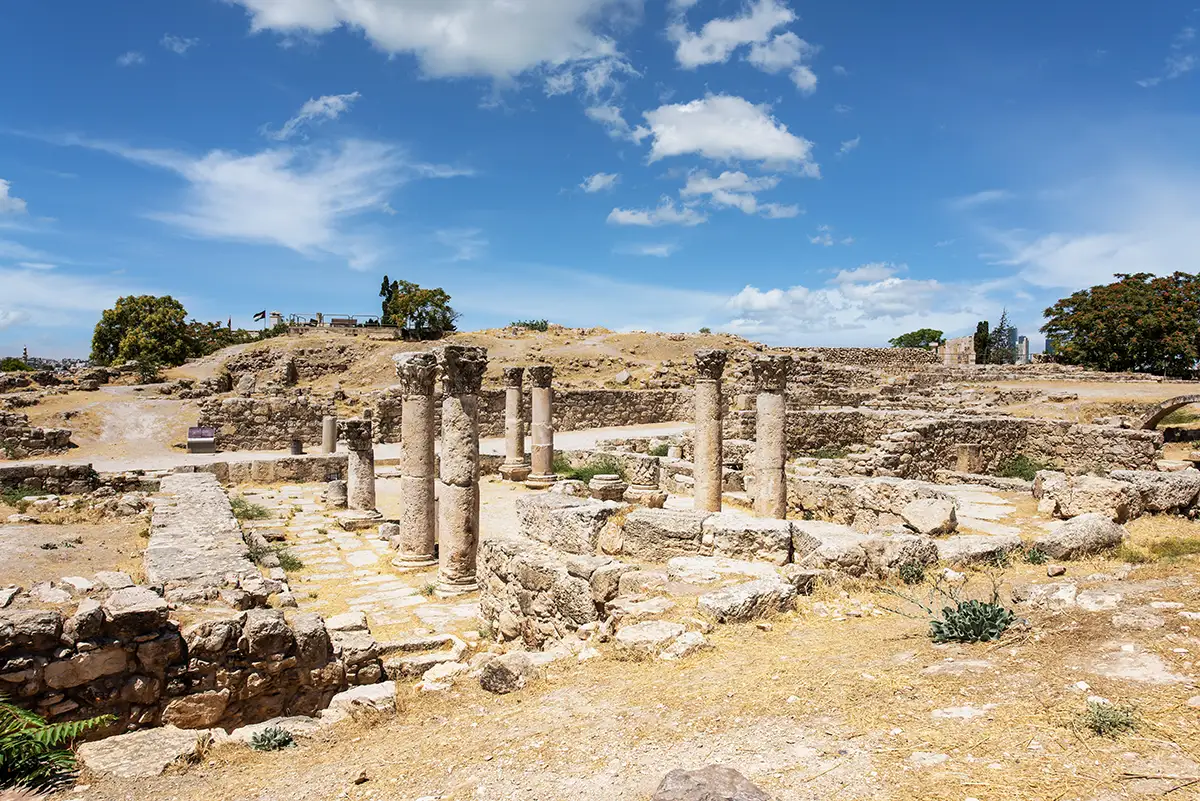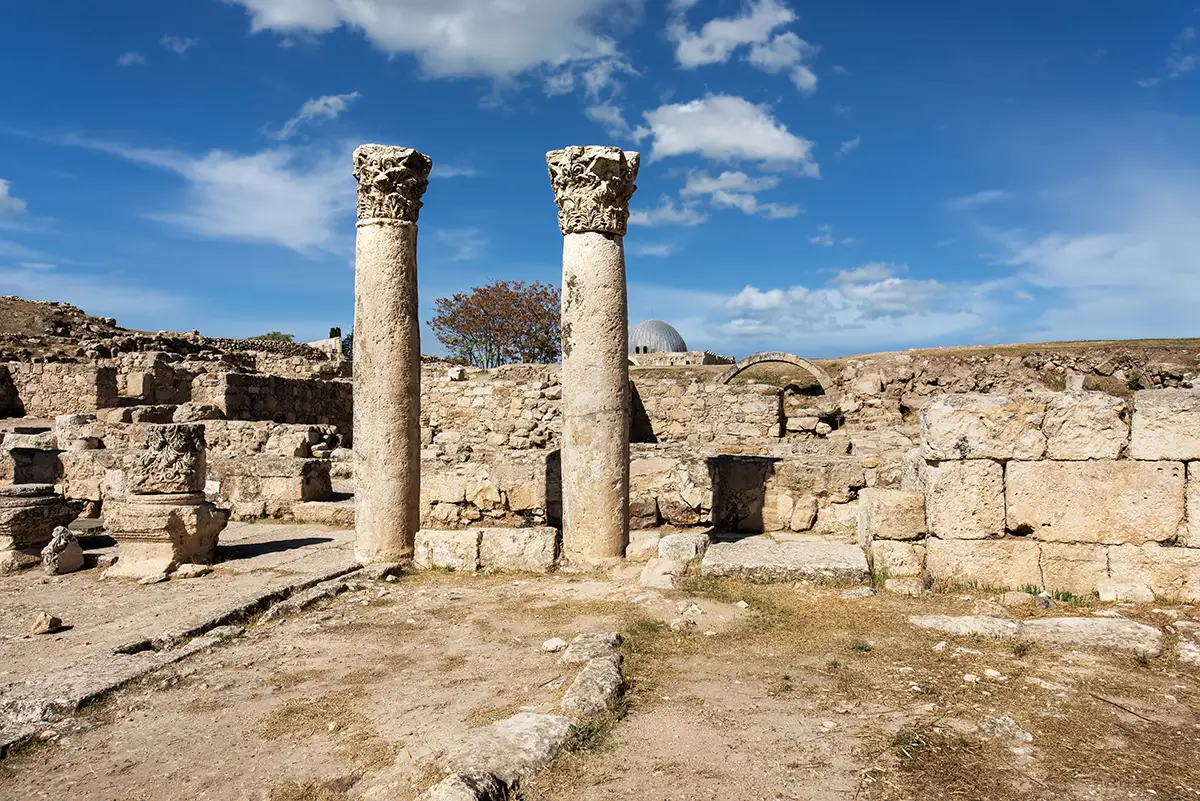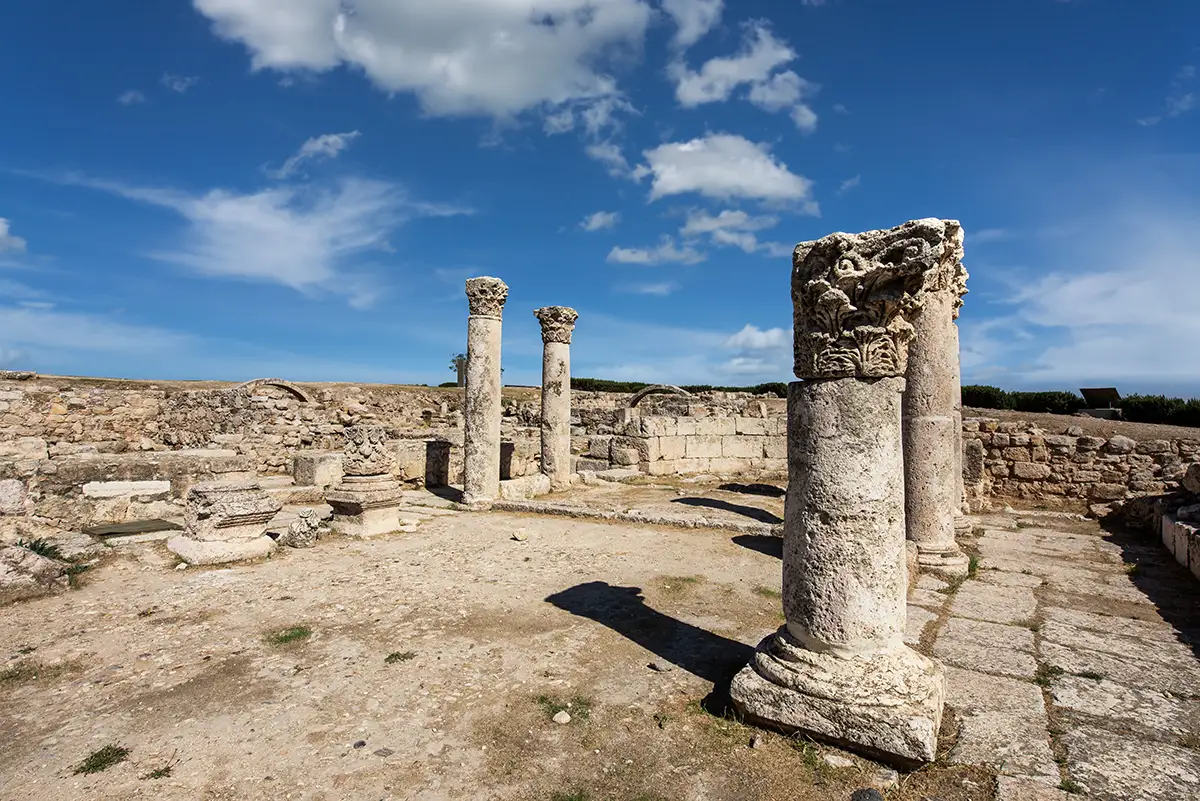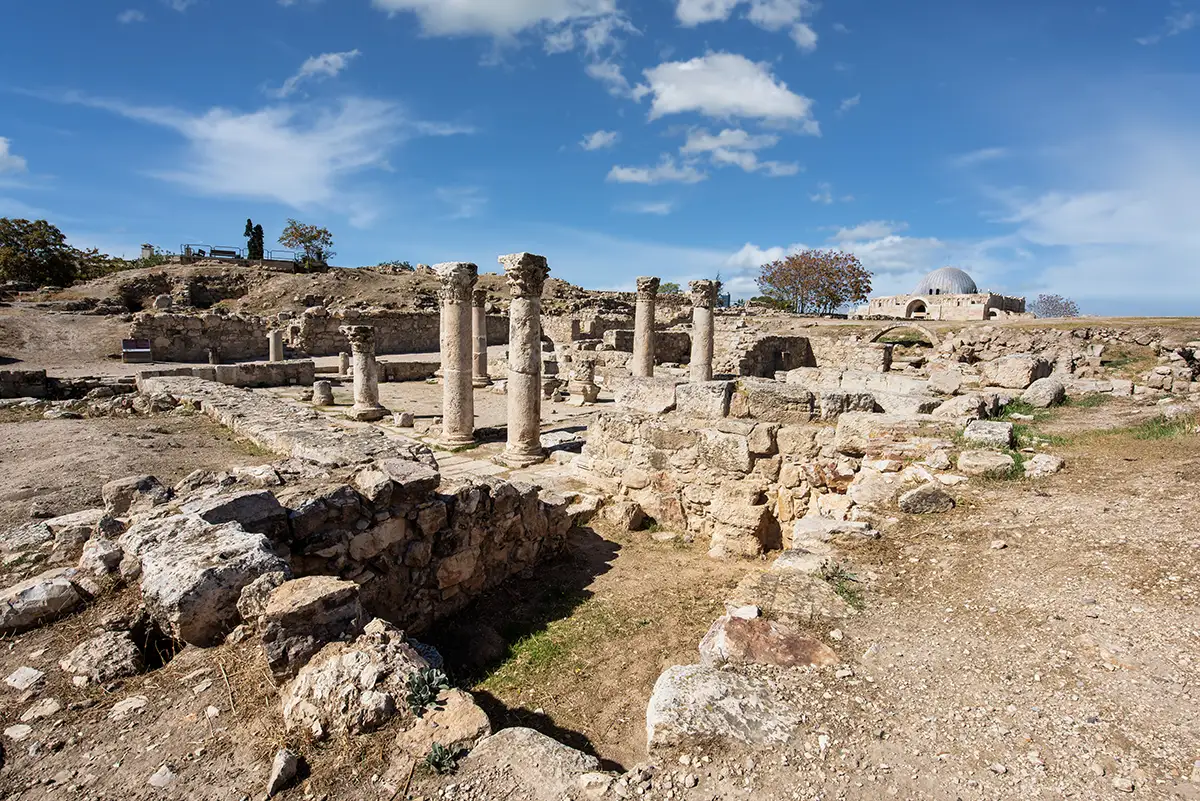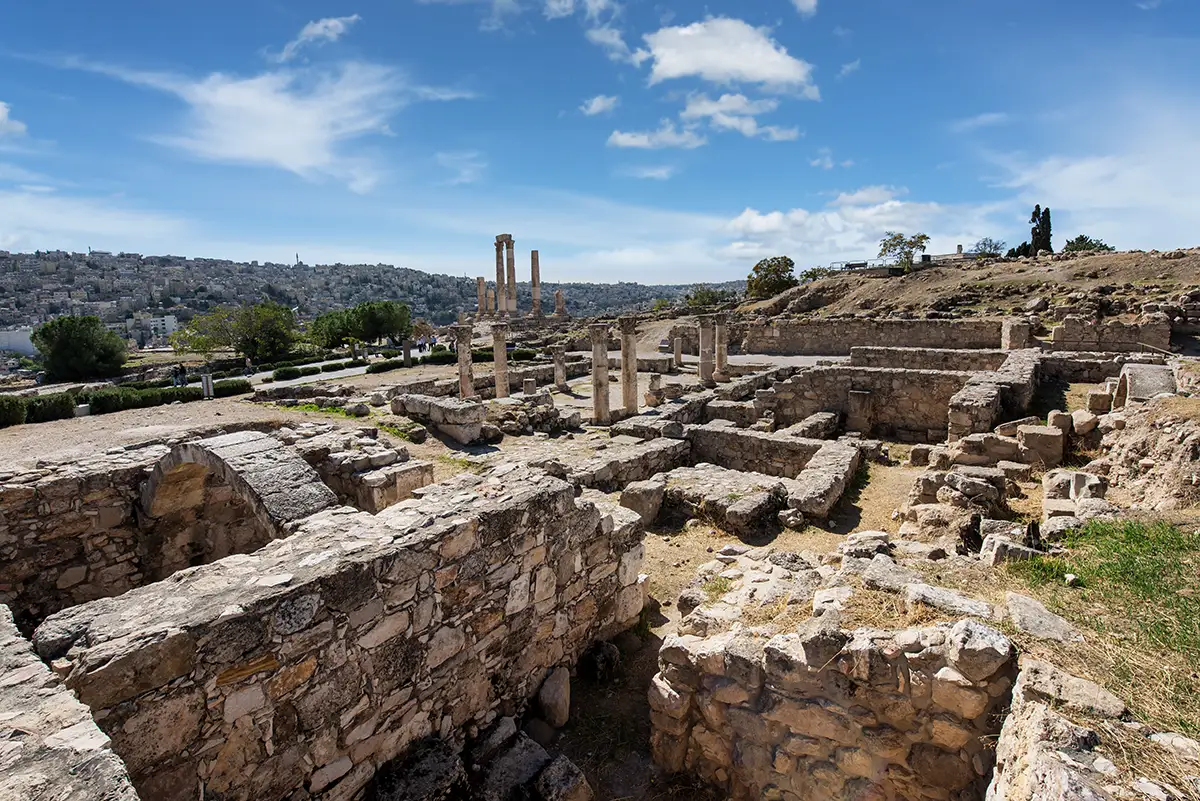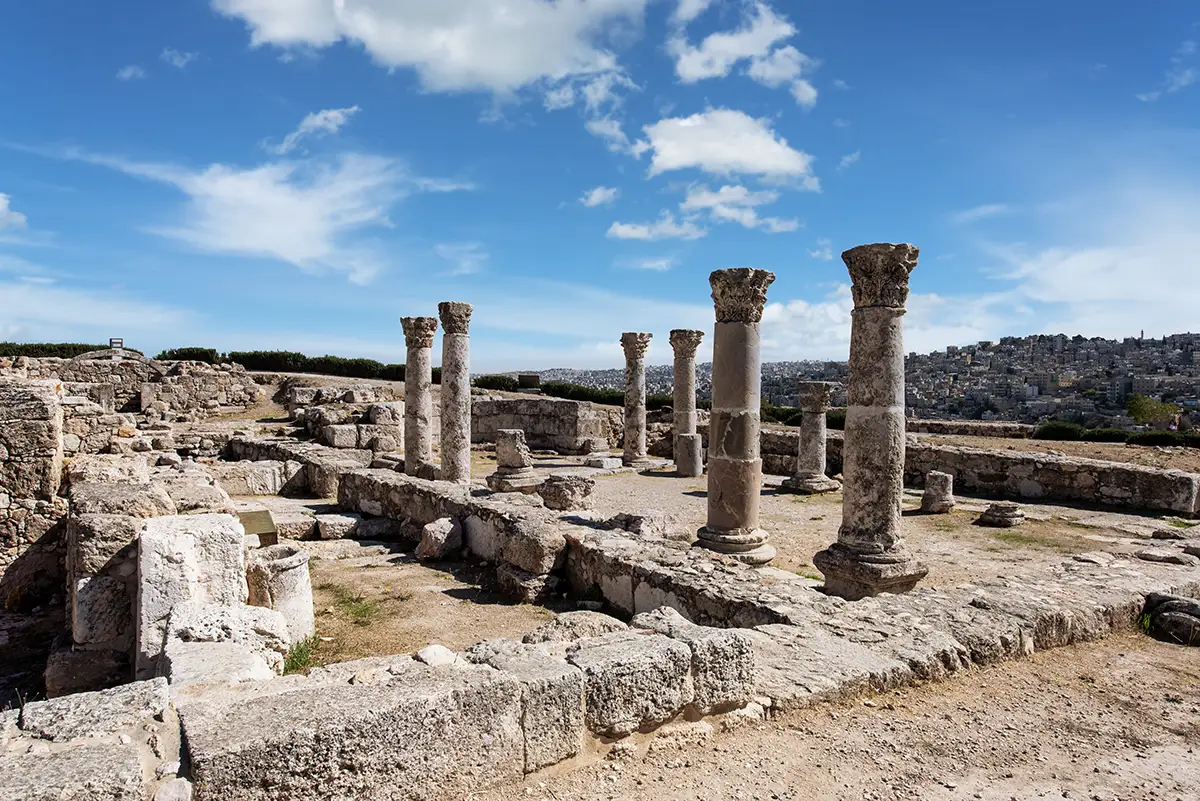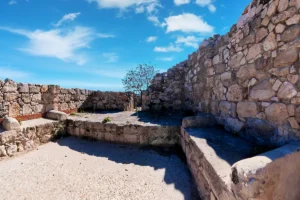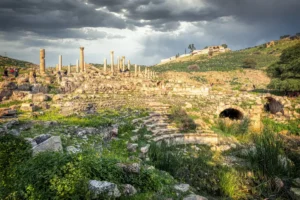












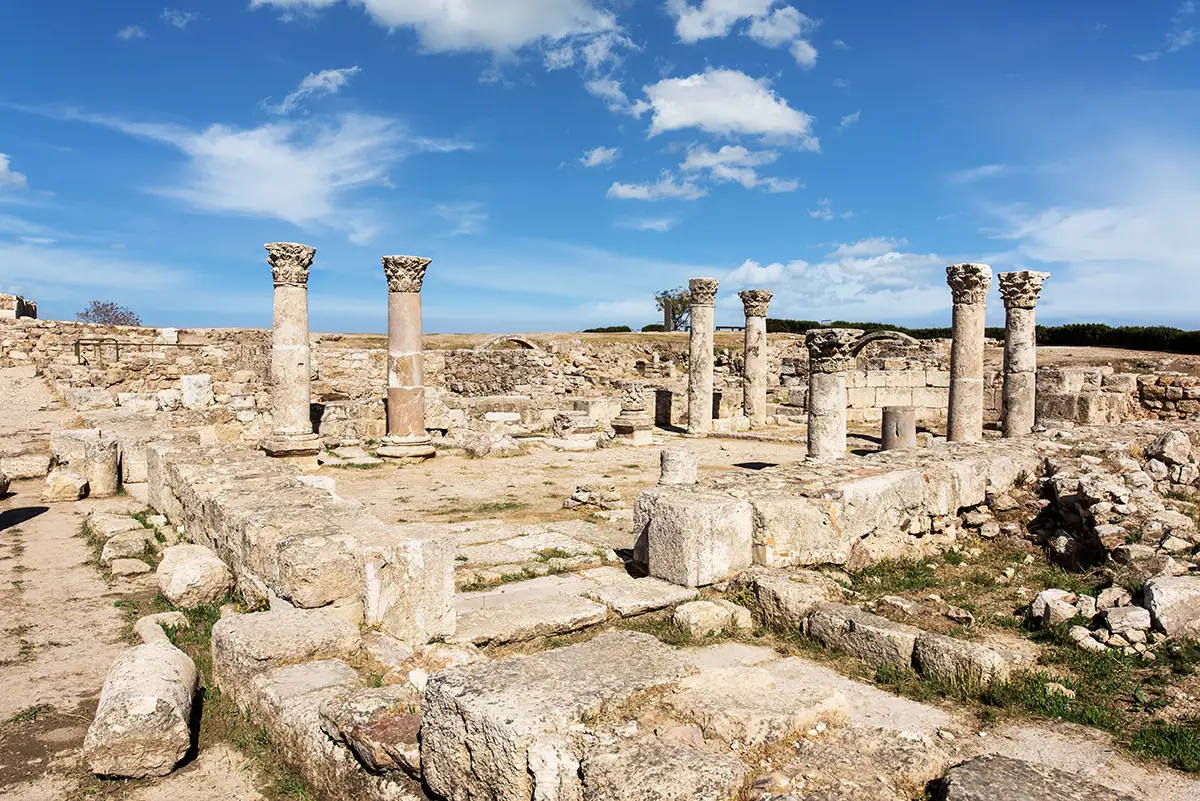



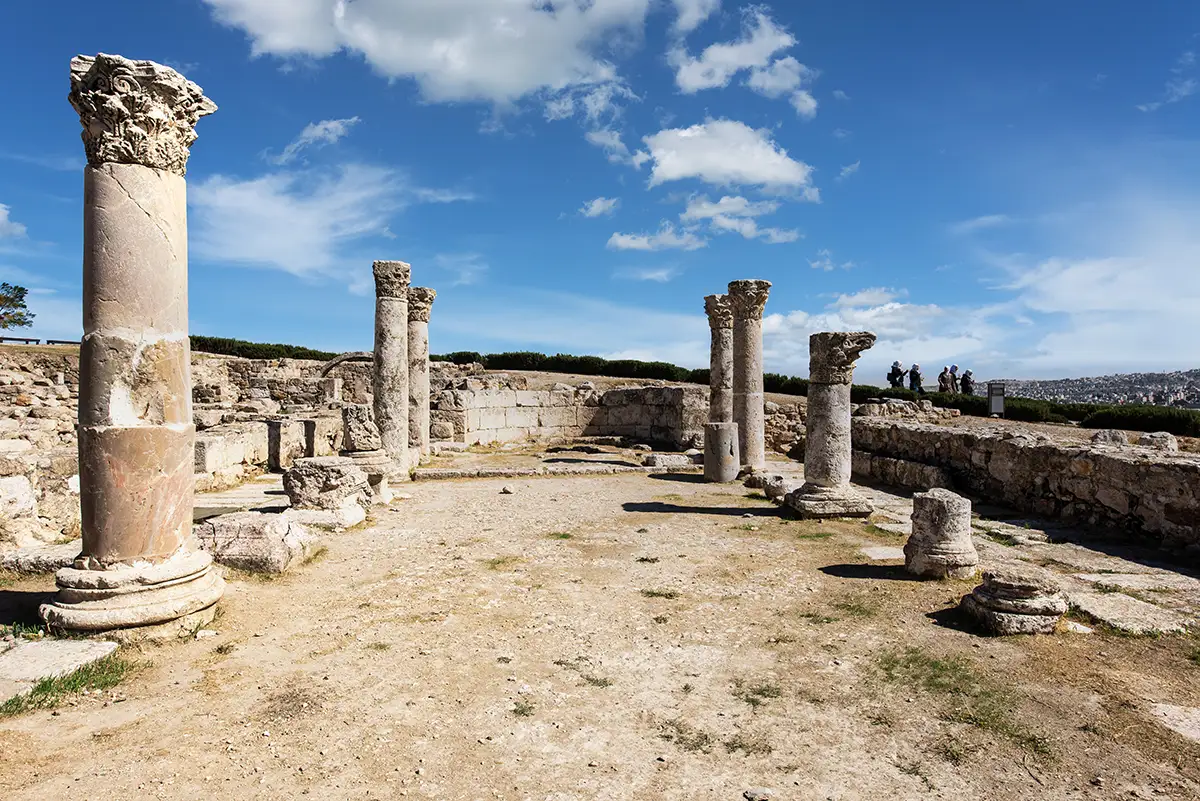
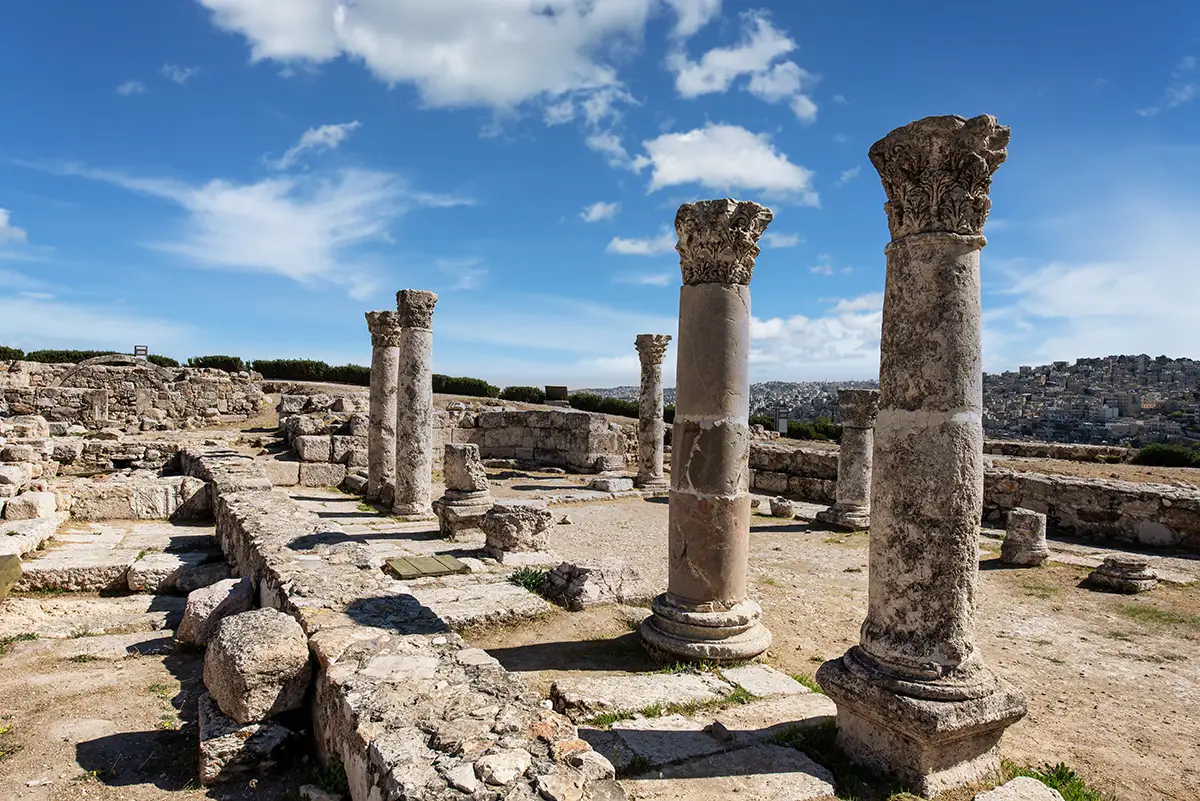
The Byzantine Church is a ruined basilica on the Amman Citadel, built in the 5th century and one of the oldest churches in the city. Standing columns, a mosaic floor and a fragment of a Greek inscription remain, and much of its stone came from the Roman temple nearby.
Where Is the Byzantine Church?
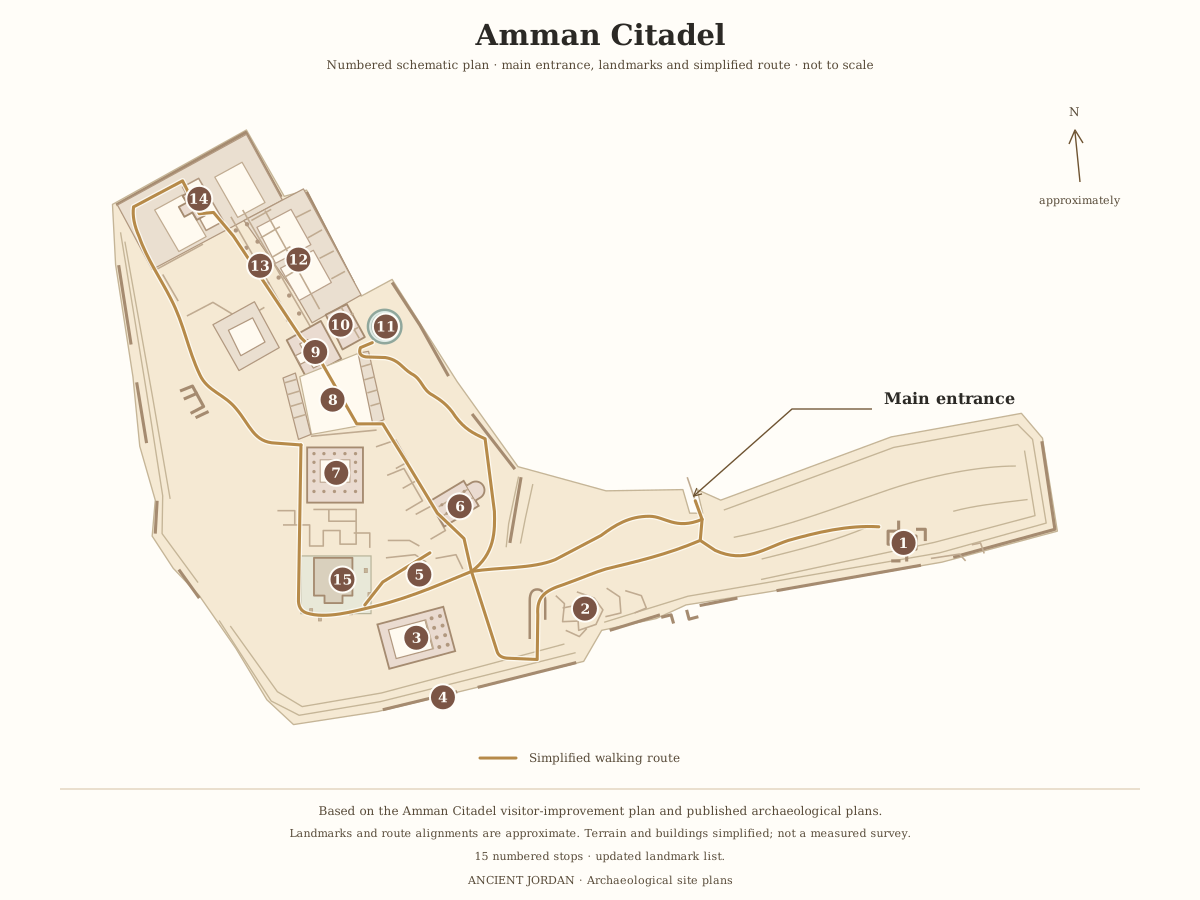
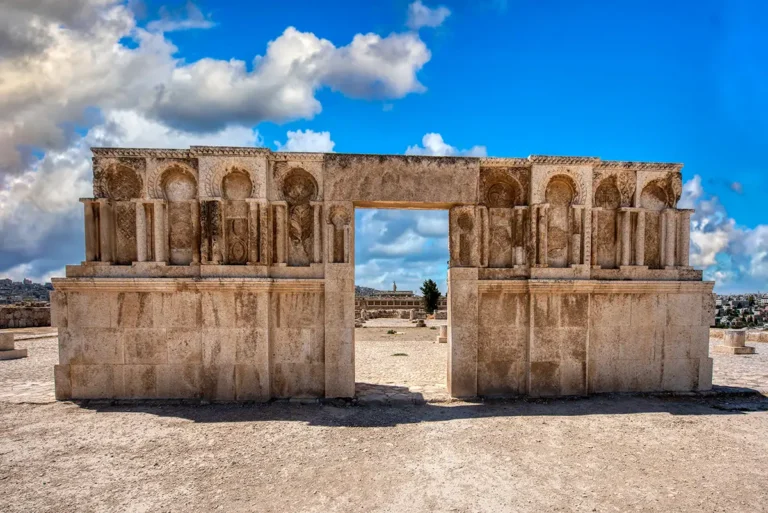
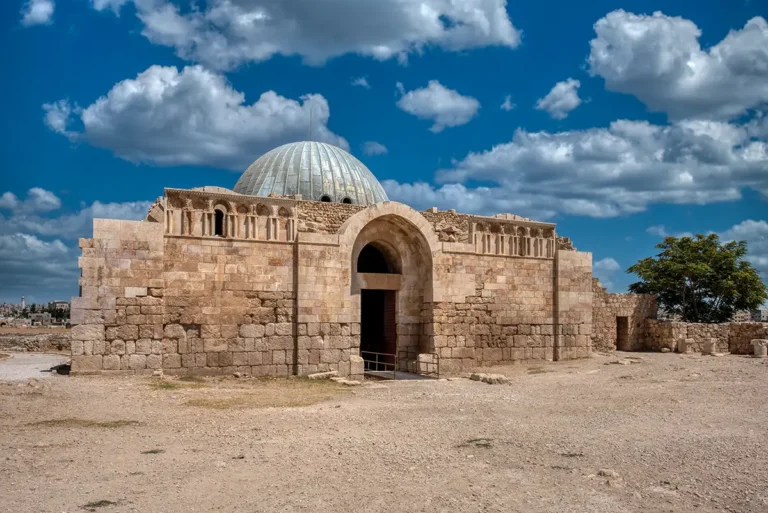
The church stands north of the Temple of Hercules, beside the Umayyad Palace complex and about 60 m north of the Bronze Age Cave. It is the sixth stop on our Amman Citadel route, and the Umayyad stops follow it.
Historical Context and Origin
According to the official information board, the church dates to the 5th century and has a basilica plan. A later study of the excavation suggests that the mosaic floor was added in the 6th century. The church was excavated by Fawzi Zayadine in 1975 and 1977.
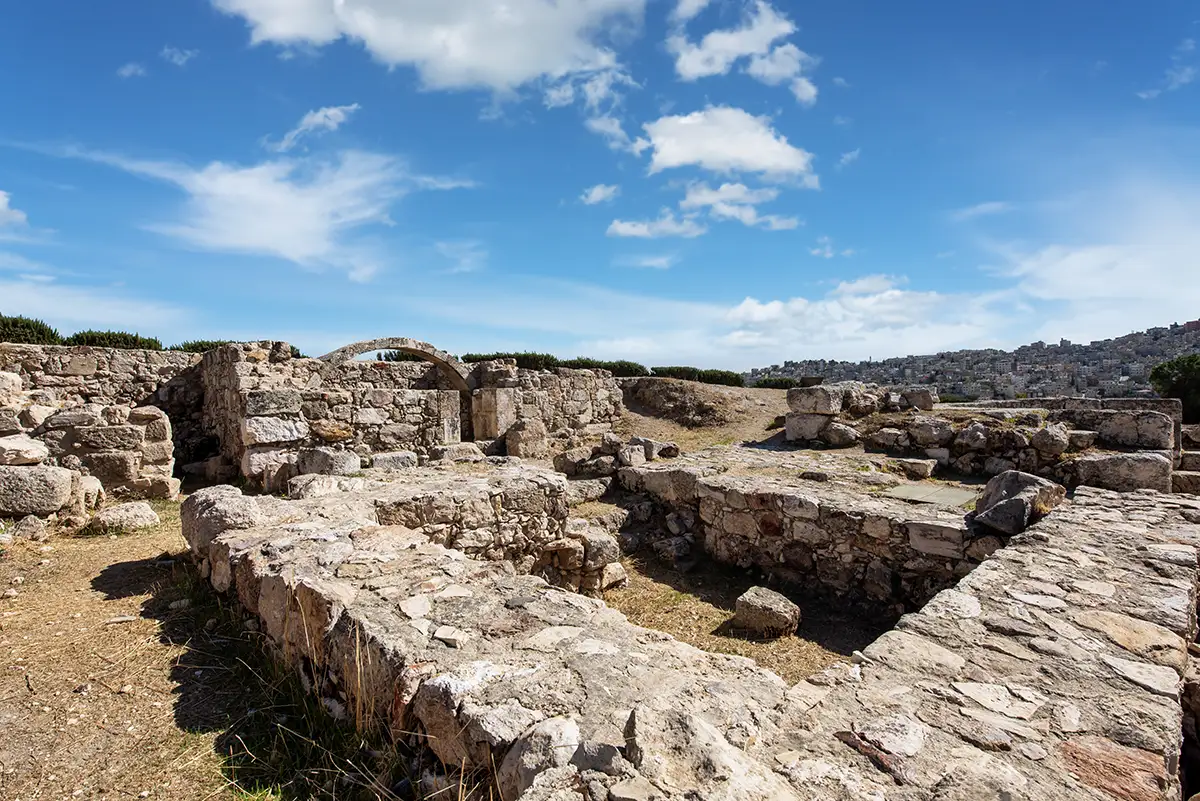
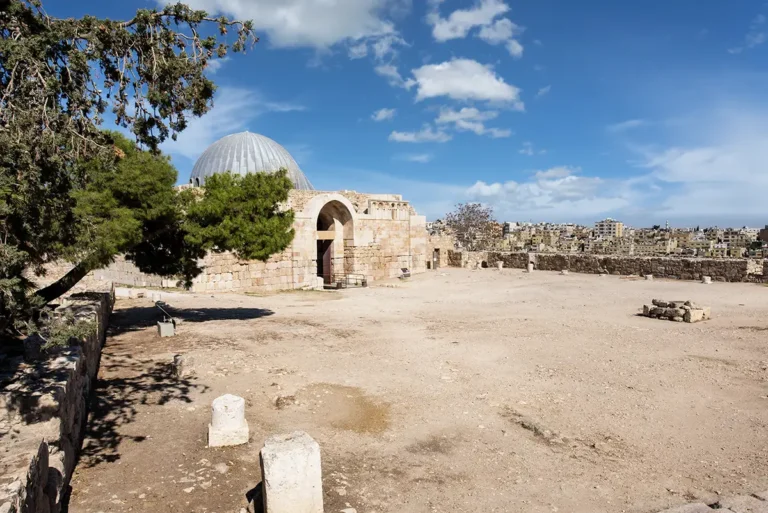
In the Umayyad period the building was reused. An atrium floor, rooms beside the north colonnade and water channels belong to that later phase. The board adds that some of the rectangular rooms completing the aisles may also have been added in the Umayyad period.
Architectural Design
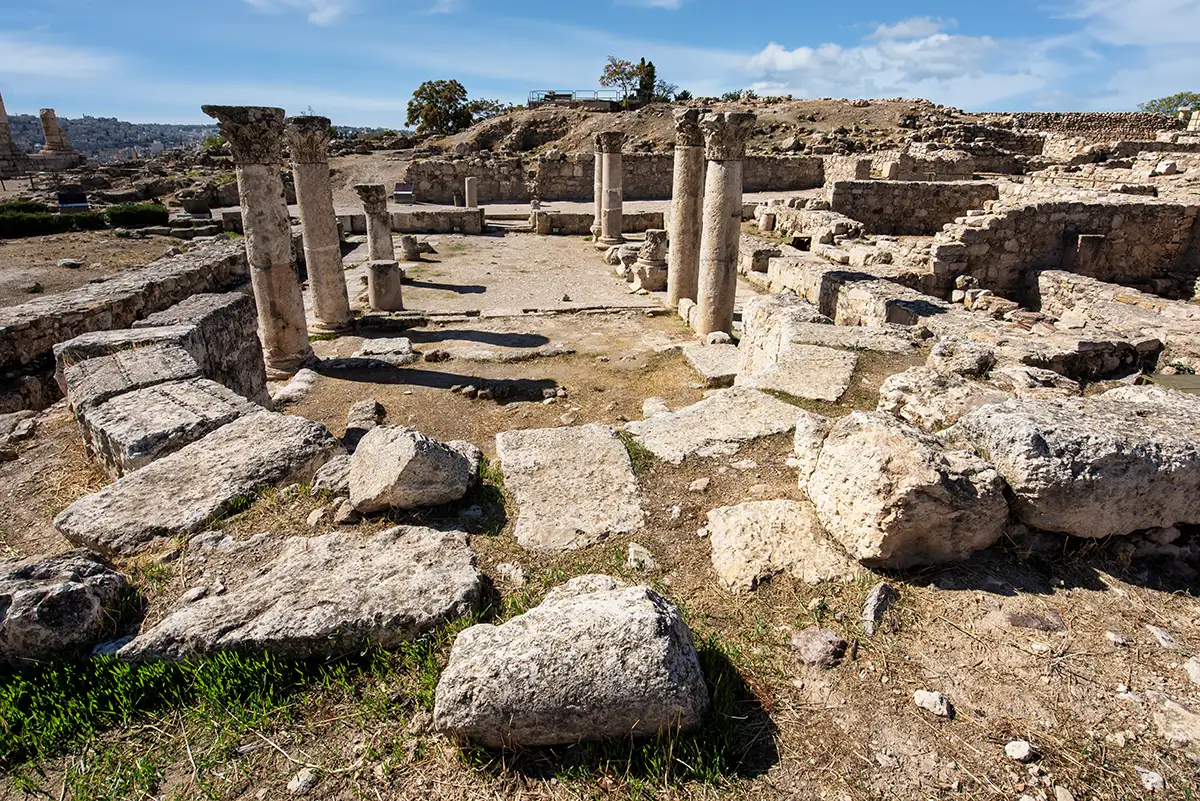
The church is a basilica about 20 m long, with a central nave and two side aisles. A semicircular apse at the east end is separated from the nave by a chancel screen. The apse is round inside and square outside, and the aisles are paved with flagstones. The entrance is on the west side.
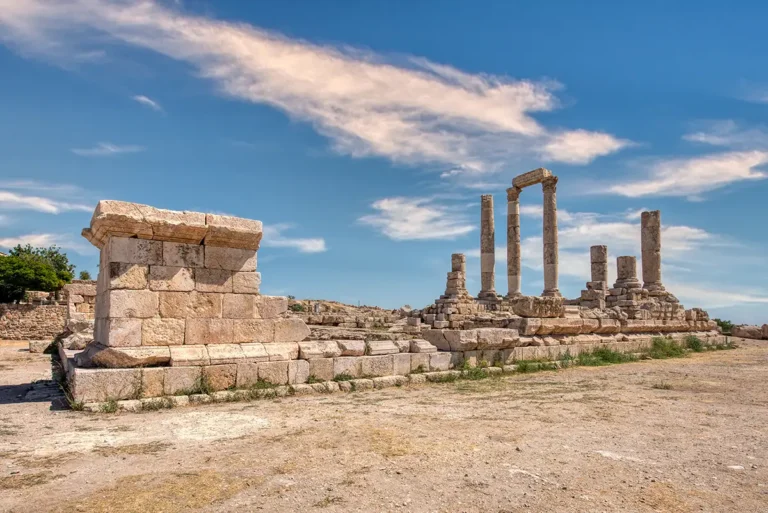
The nave has a mosaic floor, a common feature of Byzantine churches. Corinthian capitals decorated with acanthus leaves were taken from the Temple of Hercules and reused in the church, and some column bases belong to the temple precinct.
Basilica Plan
A central nave and two side aisles, about 20 m long, with the entrance on the west.
Apse and Chancel
A semicircular apse at the east end, round inside and square outside, separated from the nave by a chancel screen.
Mosaic Nave
A geometric mosaic floor, with a fragmentary Greek inscription near the apse; the aisles are paved with flagstones.
Reused Roman Stone
Corinthian capitals and some column bases were taken from the Temple of Hercules and its precinct.

The Byzantine Church, Amman Citadel
Simplified plan of the Byzantine Church, after Zayadine (1978)
Open drawingThe Mosaic Inscription
A fragmentary Greek inscription in the mosaic near the apse records that the floor was laid with care. The board gives its words.
Mosaic Inscription of the Byzantine Church
Translation as given on the Ministry of Tourism and Antiquities and Department of Antiquities information board at the site. The inscription is fragmentary and is set in the mosaic near the apse. The excavation report compares the floor to 6th-century mosaics at Mukhayyat and Rihab. A separate Roman dedication slab, probably taken from the Temple of Hercules, was also found in the church.
(…) was paved with mosaics by diligence and care (…)
Water Storage and Later Use
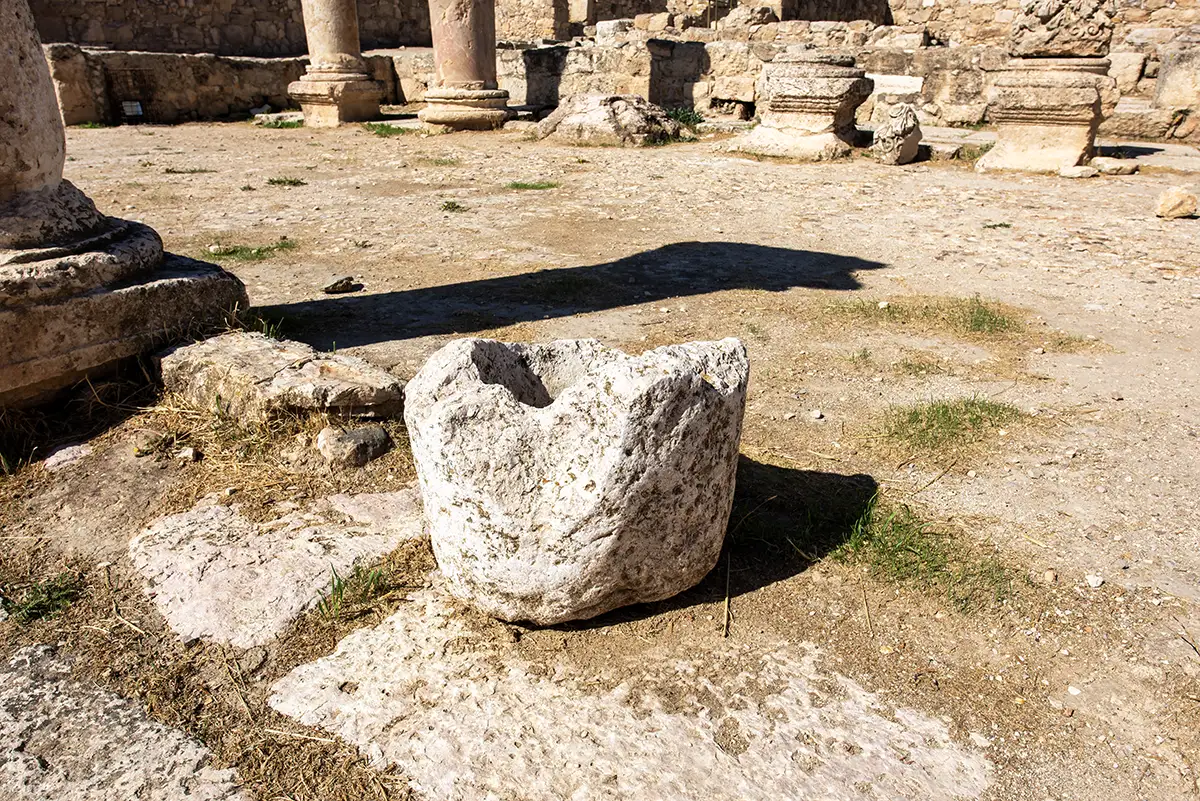
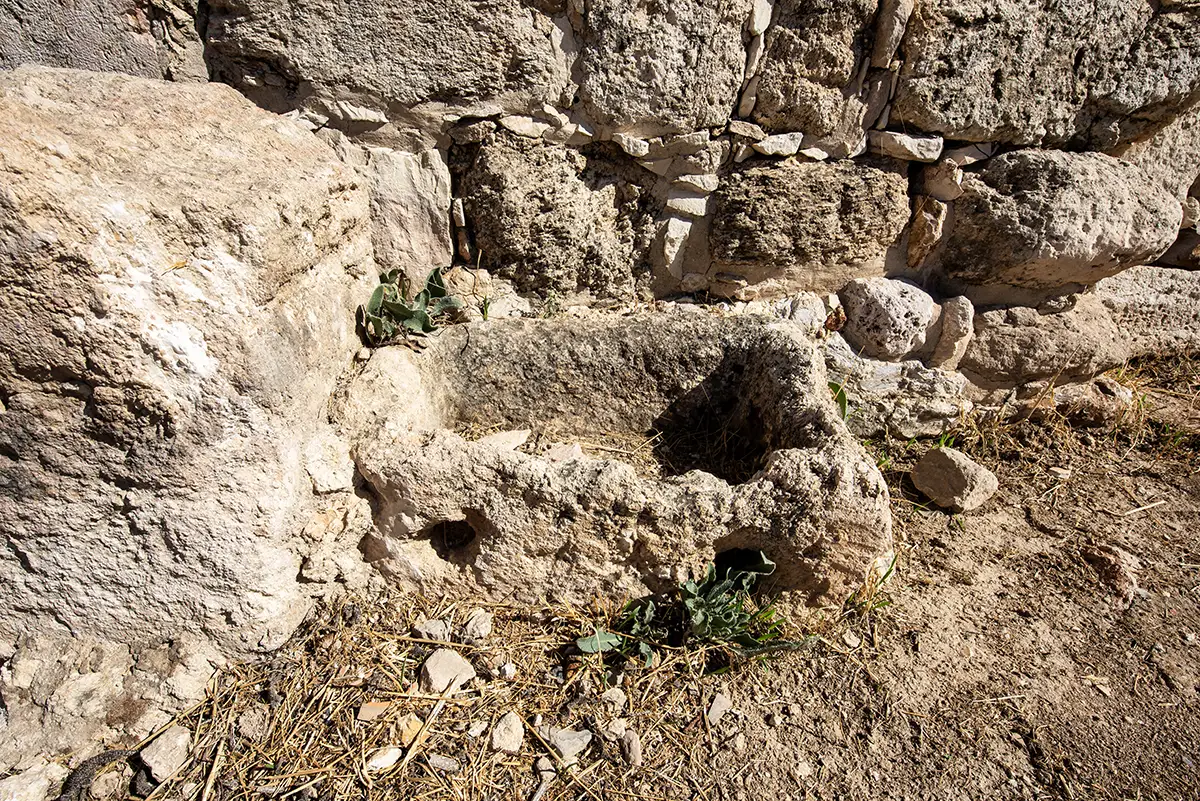
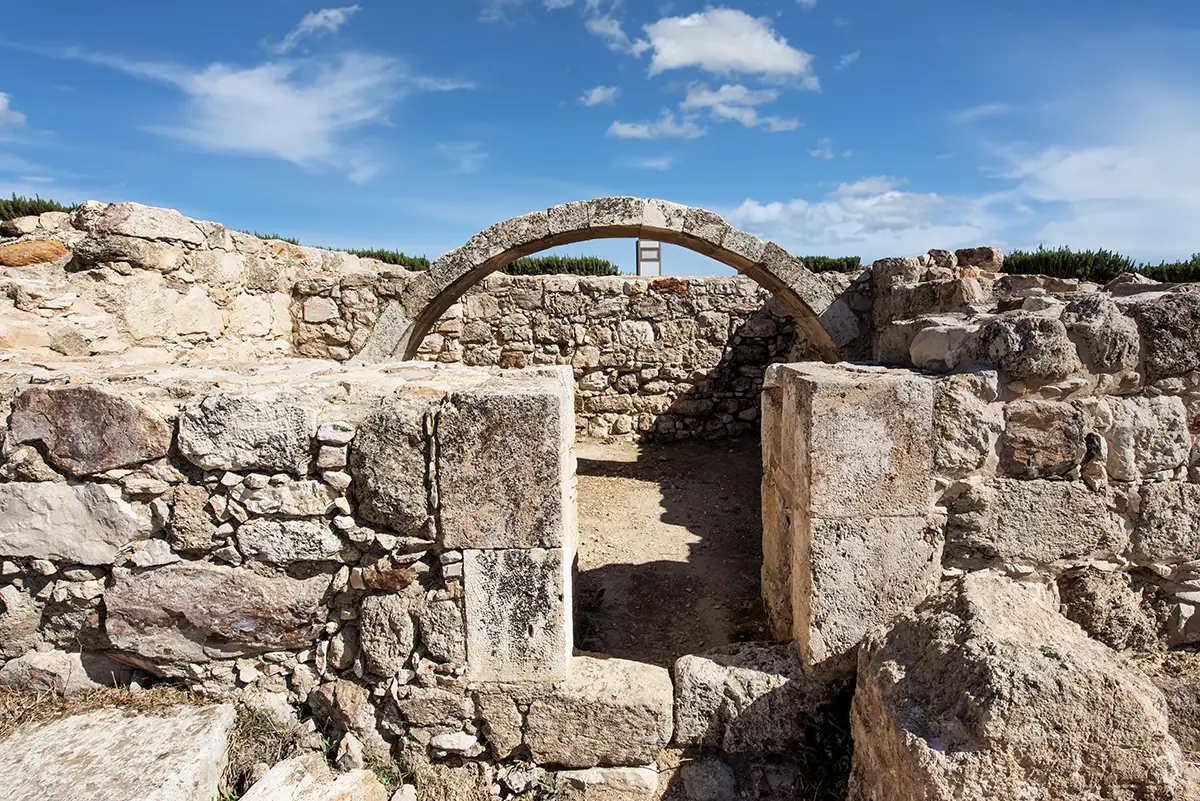
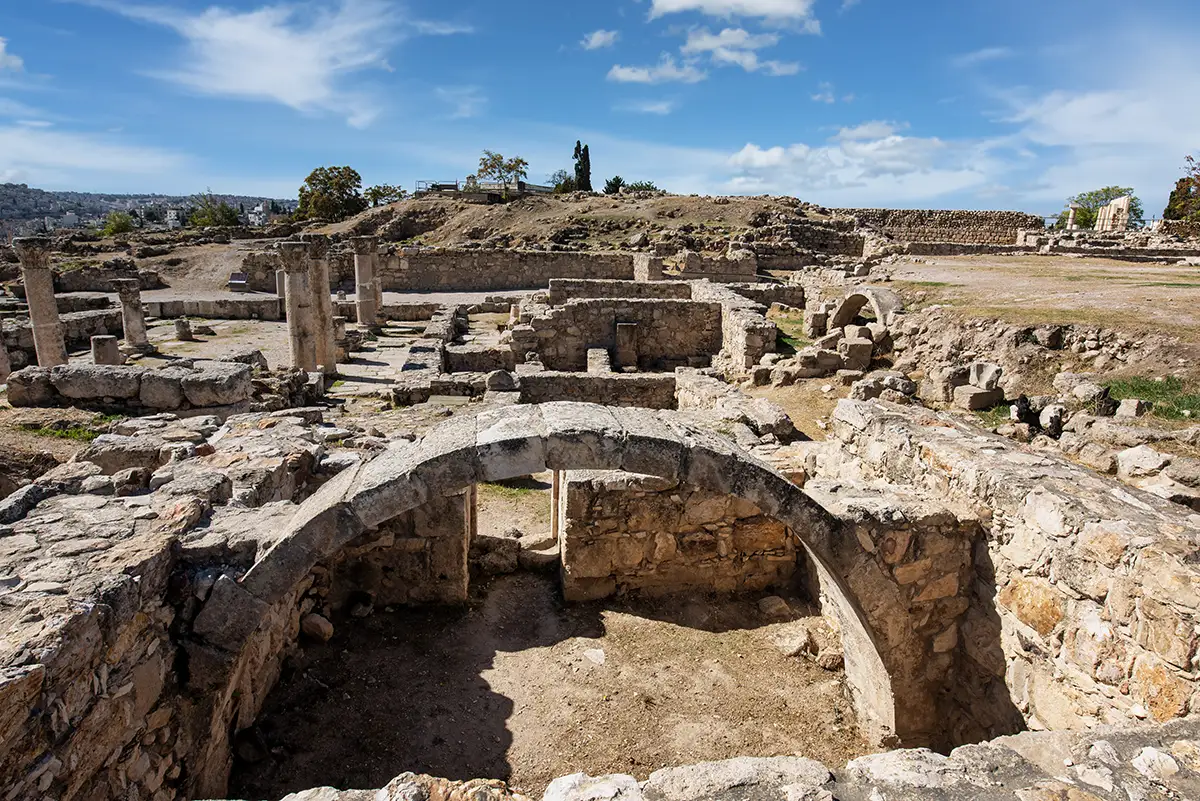
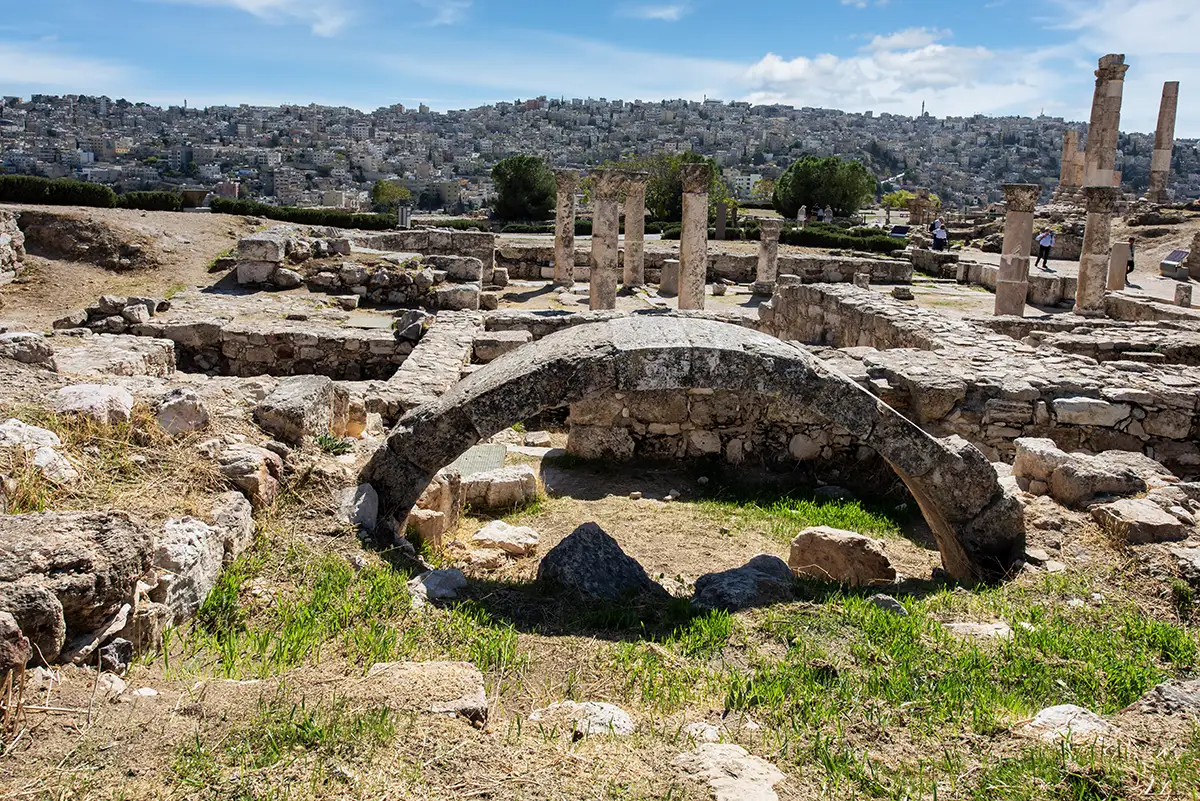
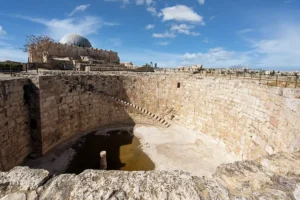
Cisterns were cut into the church. A channel from the southwest corner fed a large rectangular cistern in the south aisle, and a second cistern lies in the north aisle. The stone arches and vaulted chambers in the ruins are part of this water system and the later rooms.
Visiting the Byzantine Church Today
The church is part of the Amman Citadel visit and is covered by the Citadel ticket (3 JOD for visitors, 0.25 JOD for residents) and by the Jordan Pass. The Citadel is open from 8:00 to 16:00 from November to March, to 17:30 in April and May, and to 18:30 from June to September; in Ramadan it is open from 9:00 to 17:00.
An information board in English and Arabic stands at the church, with a plan and a legend marking the niche, chancel screen, nave and entrance. Visitors can walk into the church. Look for the standing columns, the mosaic in the nave and the openings of the cisterns, and do not climb the ancient walls. About 15 minutes is enough.
Further reading: Ministry of Tourism and Antiquities and Department of Antiquities information board at the site; Fawzi Zayadine, “Excavations on the Upper Citadel of Amman, Area A (1975 and 1977)”, Annual of the Department of Antiquities of Jordan 22 (1977–78); North-East Insulae Project, Church of the Citadel, Philadelphia.