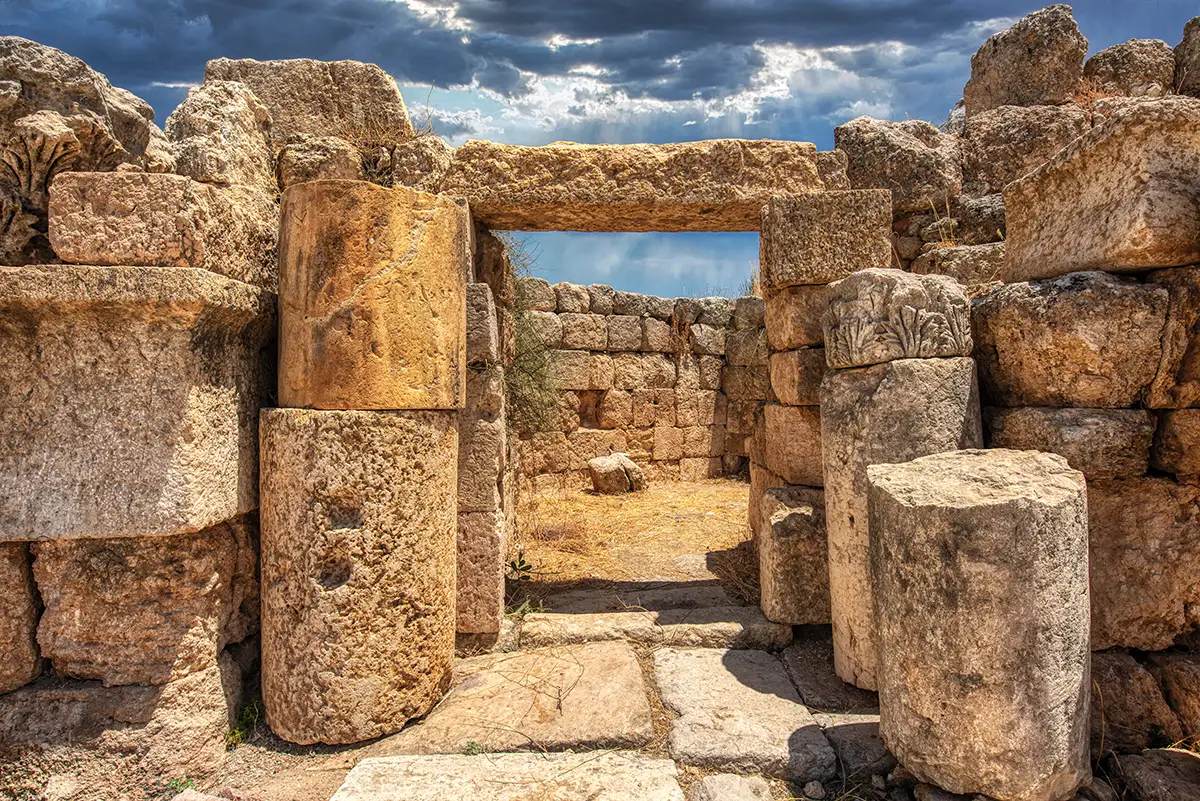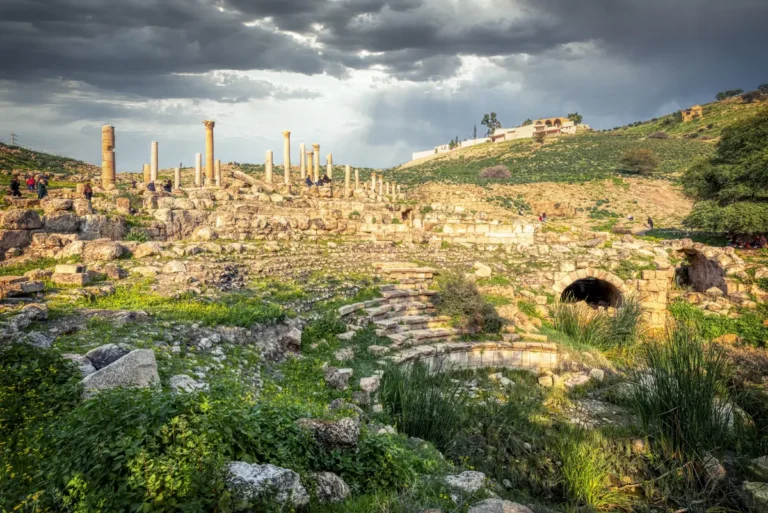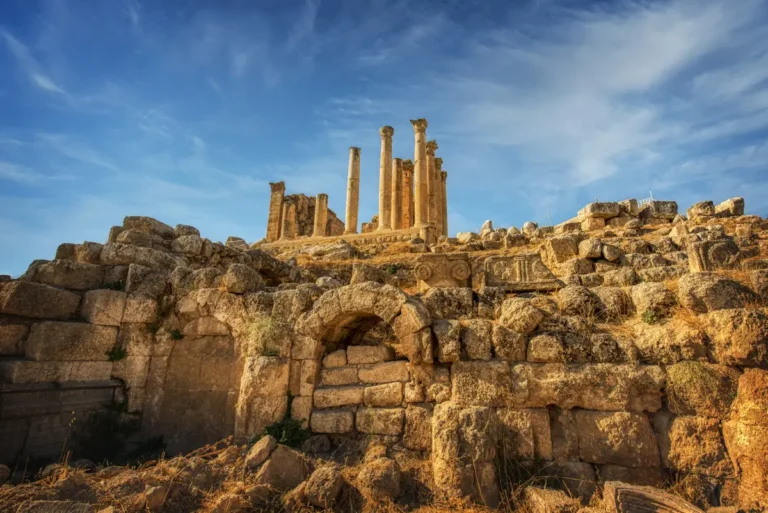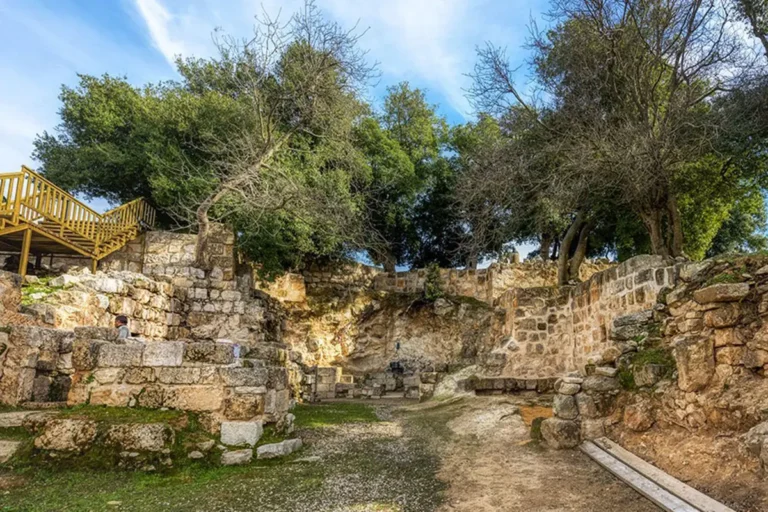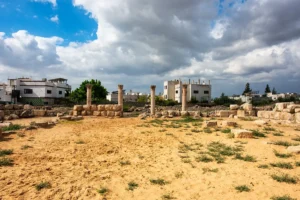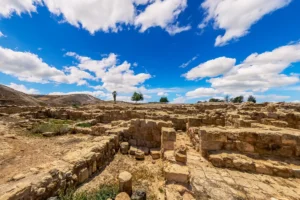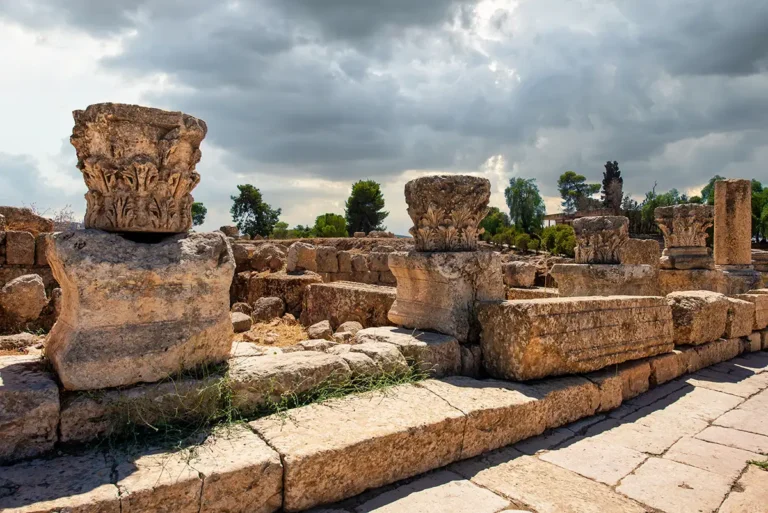
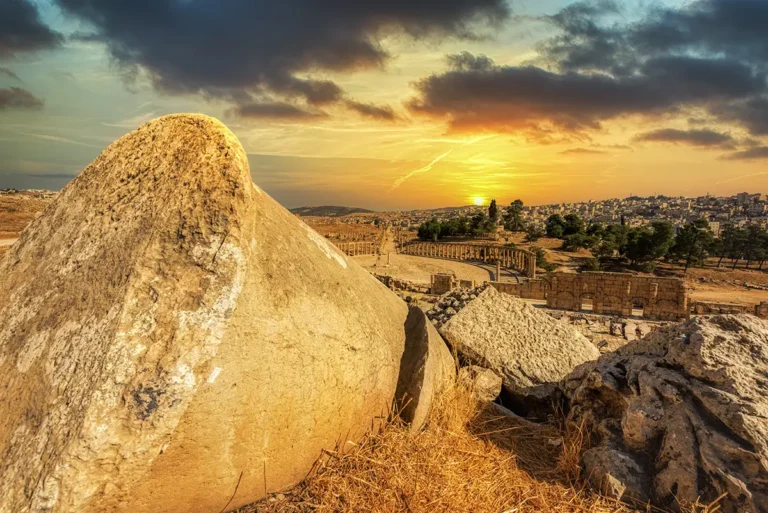
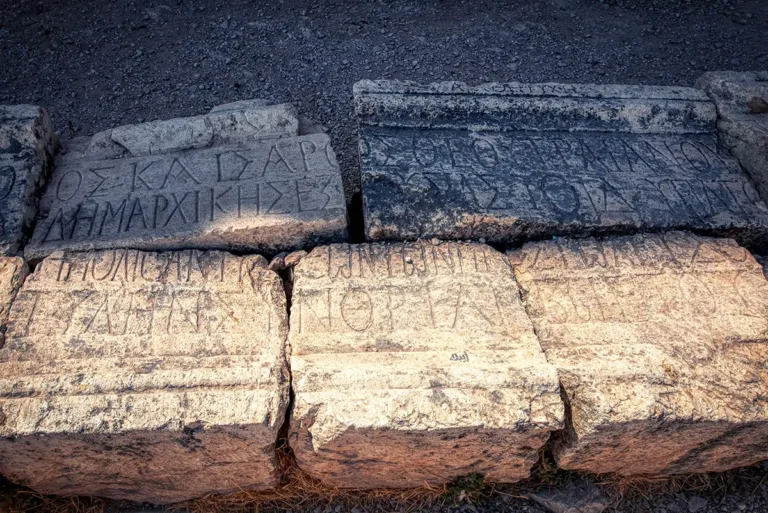
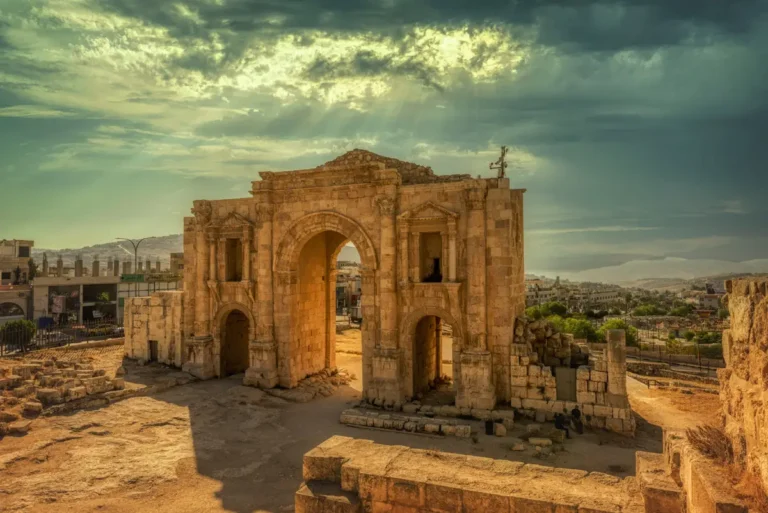

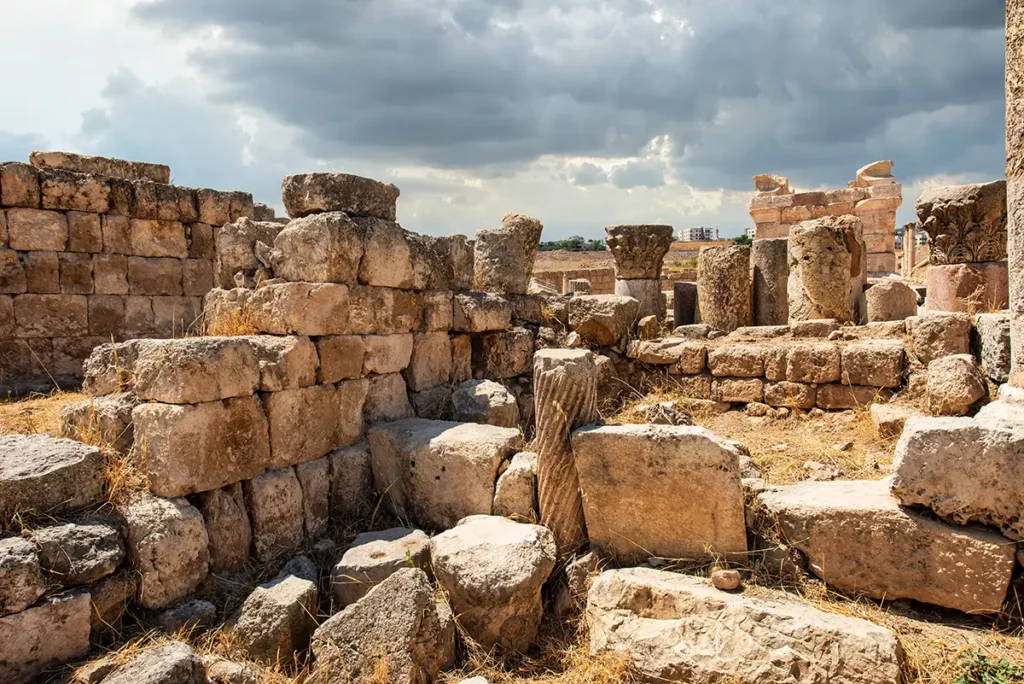
Behind the columns of Gerasa’s main street, shopkeepers and craftspeople traded for almost six hundred years. The Shops of the South Cardo look modest today — low walls, thresholds and reused stones — but they record one of the city’s busiest and longest-lived commercial districts, from Roman shopfronts to early Islamic credit records.
Where Are the Shops of the South Cardo?
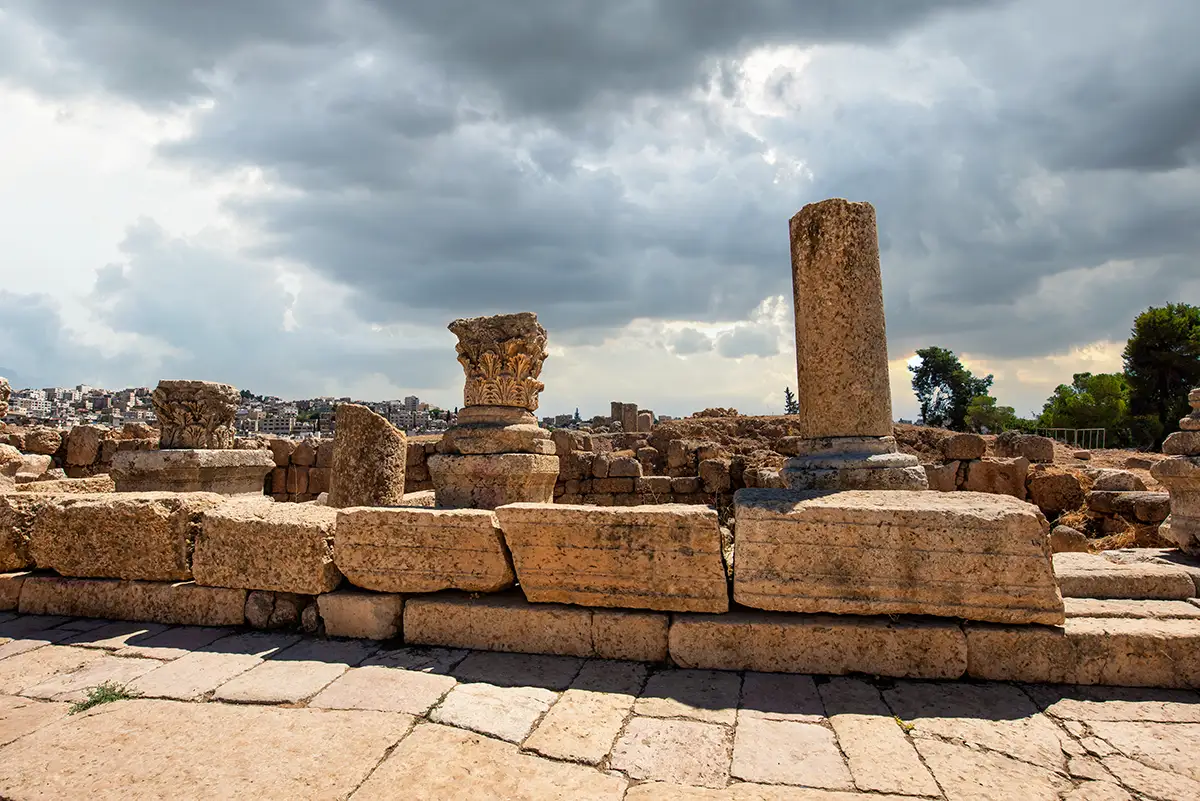
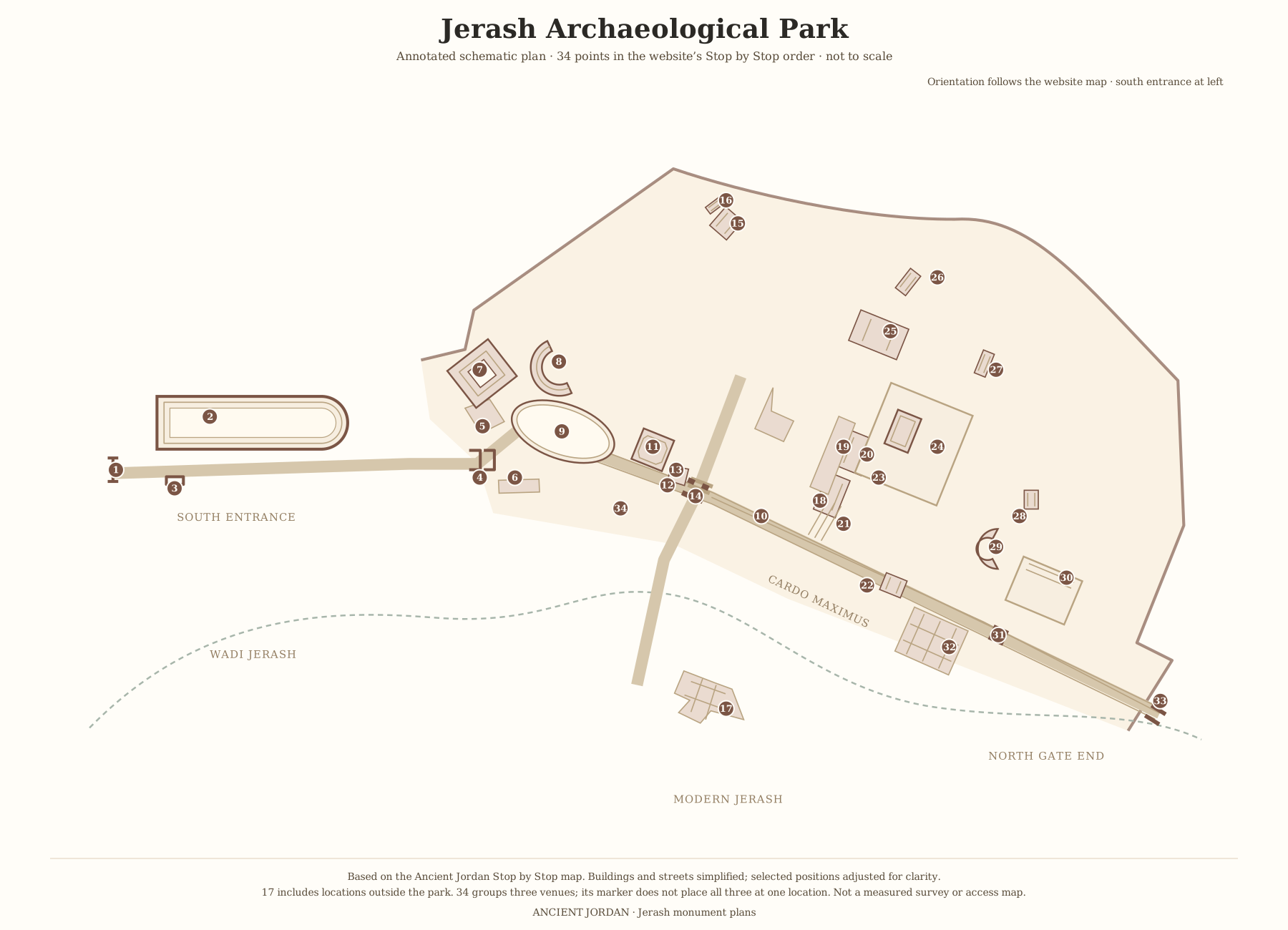
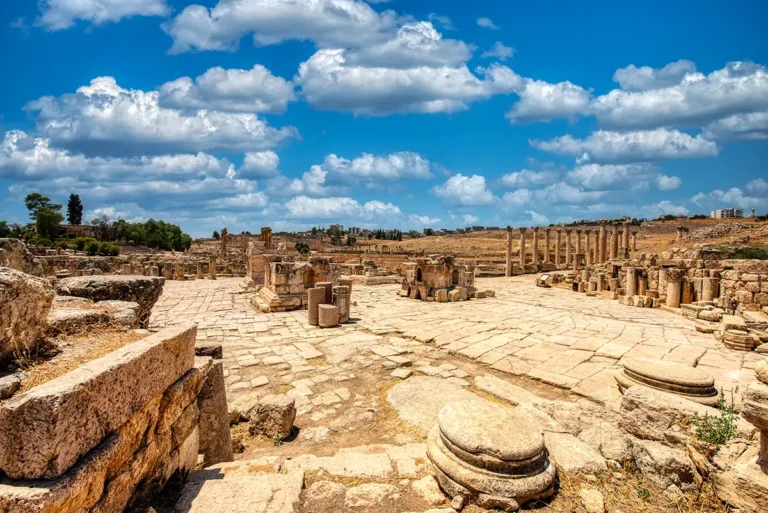
The shops line the southern stretch of the Cardo Maximus, between the Oval Plaza and the South Tetrapylon. The best-preserved group flanks the entrance to the Macellum, the city’s food market.
It was a prime position: on the main route through the city, beside the market and close to the sanctuaries and public buildings that drew people every day.
Historical Context and Origin
In the 2nd century AD eight shops were built on either side of the Macellum entrance, and through the 2nd and 3rd centuries merchants and craftspeople traded along the city’s main routes. The street did not stay in its Roman form. In the Byzantine period new shops spread into the old porticoes and pavements, and from the 7th century onward shopkeepers kept extending and adapting their premises under Umayyad rule.
The district was still trading around AD 800. From the Abbasid period comes one of its most personal finds: a marble slab in Arabic recording the debts customers owed to a shopkeeper.
Architectural Design
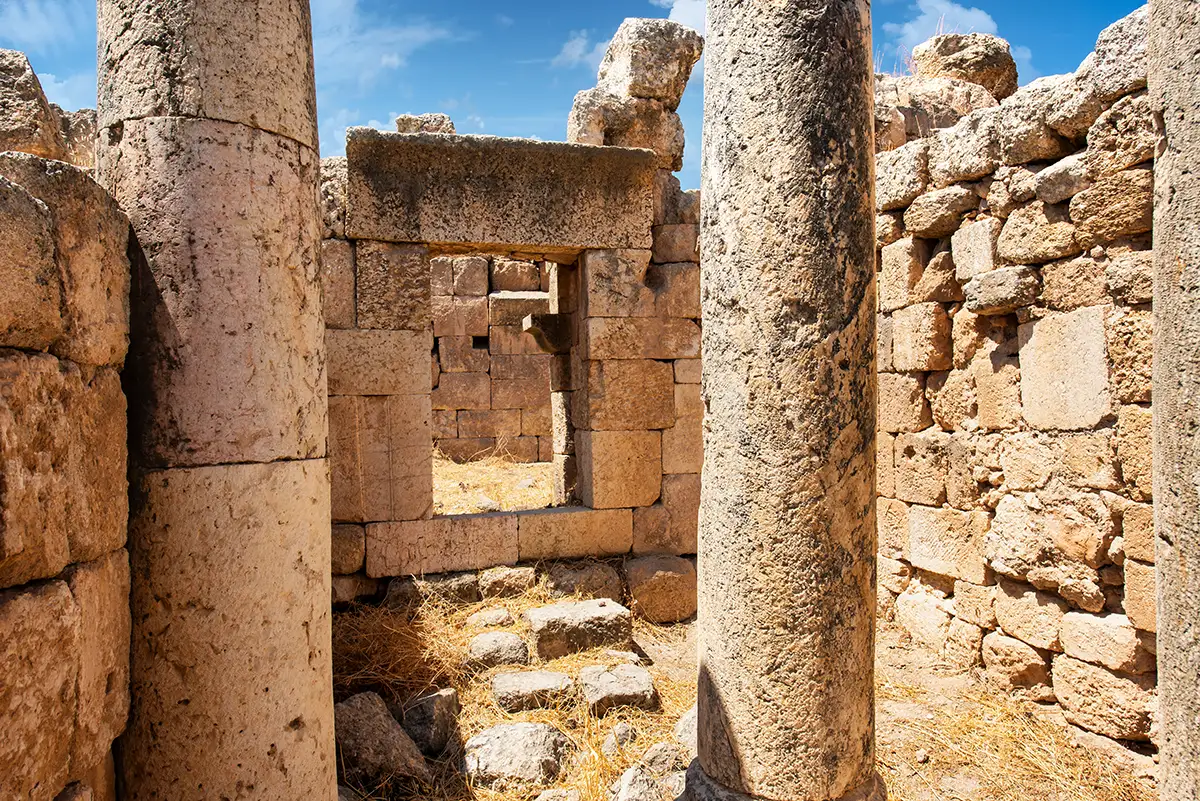
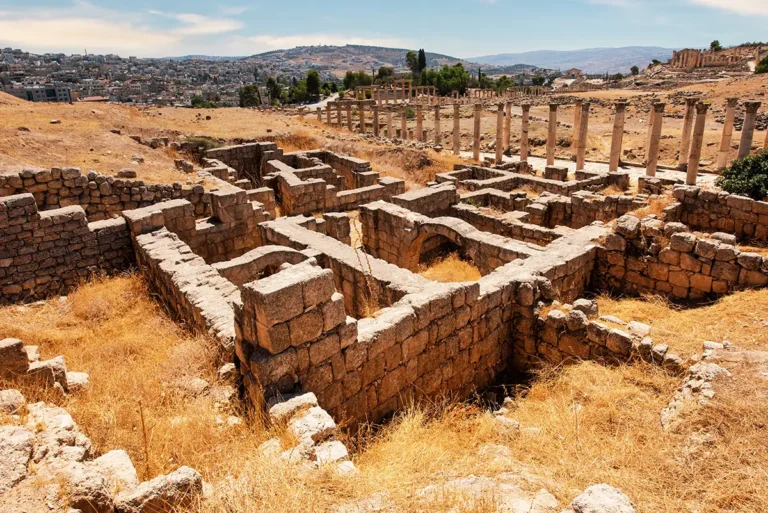
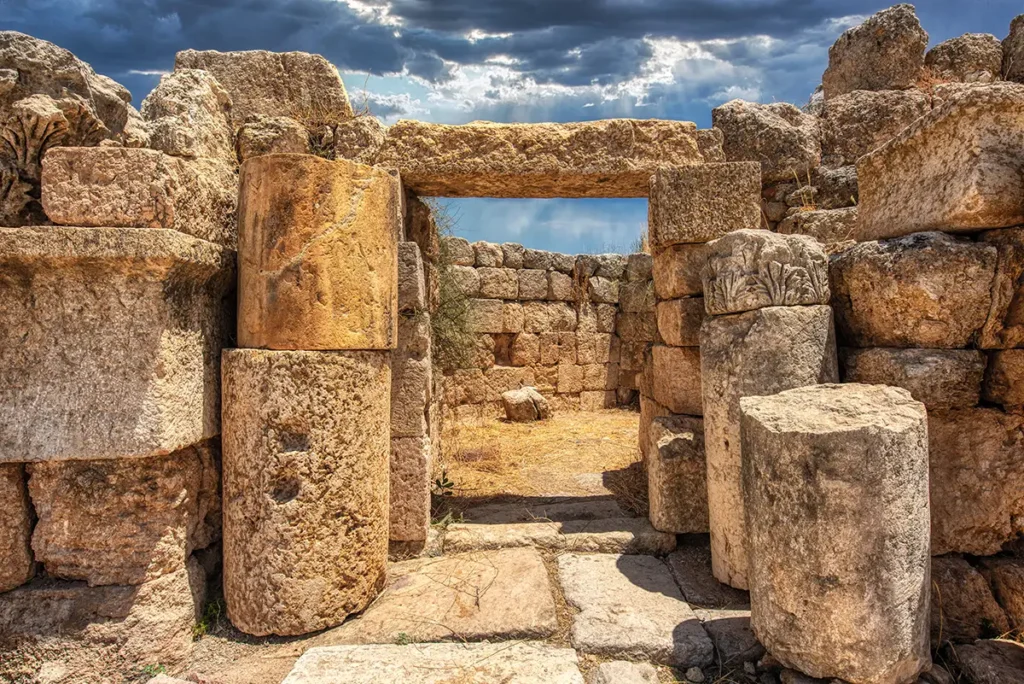
The Roman shops were small rooms opening onto the covered walkway of the Cardo, with formal façades that matched the street’s grand design. Later shops were built directly onto the old sidewalk in front of these façades, so that, over time, trade took over much of the space once meant for pedestrians — probably driven by the merchants themselves rather than the city.
Eight Roman Shopfronts
Formal 2nd-century façades flank the entrance to the Macellum — the clearest picture of the street’s original frontage.
Shops on the Pavement
From the Byzantine period, new shops spread into the porticoes and pavements in front of the old façades.
The Arabic Debt Slab
A marble slab in Arabic script lists sums owed to a shopkeeper by his customers — probably Abbasid.
Local Pottery
Finds include a vessel decorated with rings and animal heads in relief, made by skilled local potters.
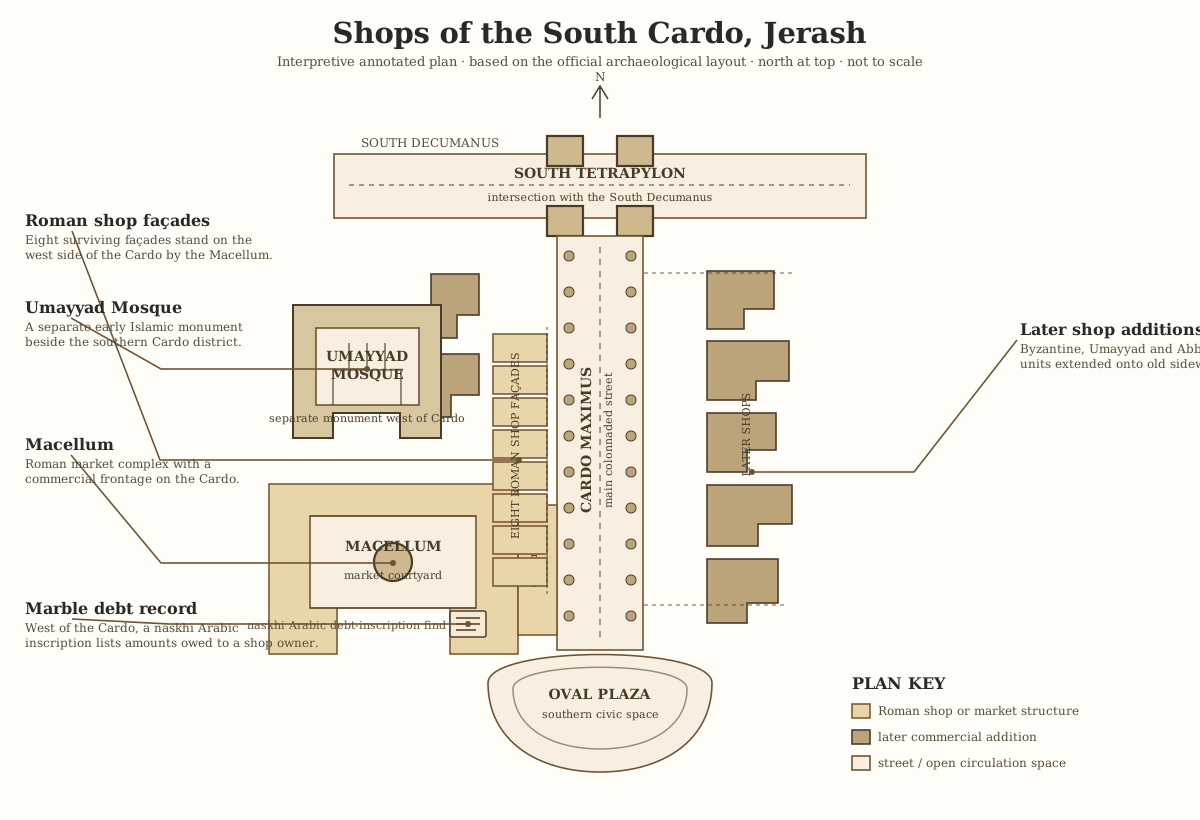
jerash-shops-of-the-south-cardo-schematic
Tap the drawing to open it full size.
Open drawingA Street That Kept Trading
Rather than a sign of decline, these changes show a living city. Byzantine and early Islamic shopkeepers reused walls, reshaped rooms and pushed their shops forward, turning a spacious Roman avenue into a densely packed market street. Finds such as mosaic floors, pottery and the Arabic debt slab bring the people behind the walls into view: shopkeepers, customers and neighbours who bought on credit and kept accounts.
Visiting the Shops of the South Cardo Today
Look first for the eight Roman shopfronts by the Macellum entrance, then for the low walls of later shops built out over the pavement. Comparing the two is the key to the site: the formal Roman street and the busy market that grew over it.
The shops take about 15 minutes and fit naturally between the Oval Plaza, the Macellum and the South Tetrapylon. Low morning or afternoon light makes the room outlines easier to read.