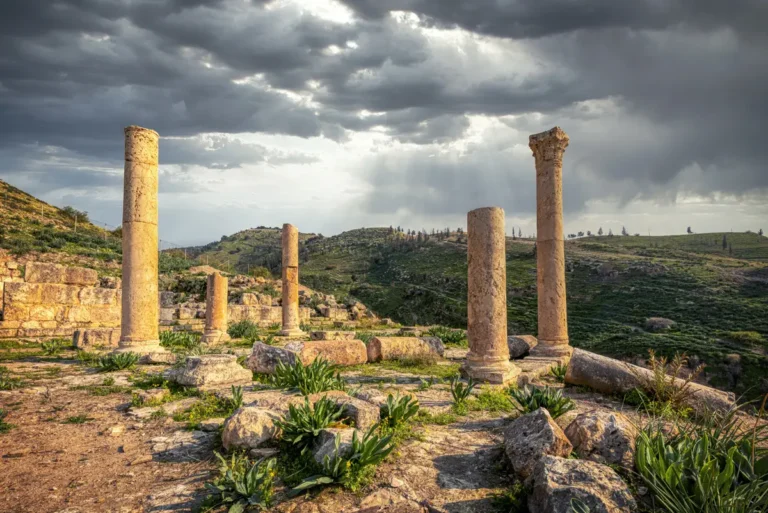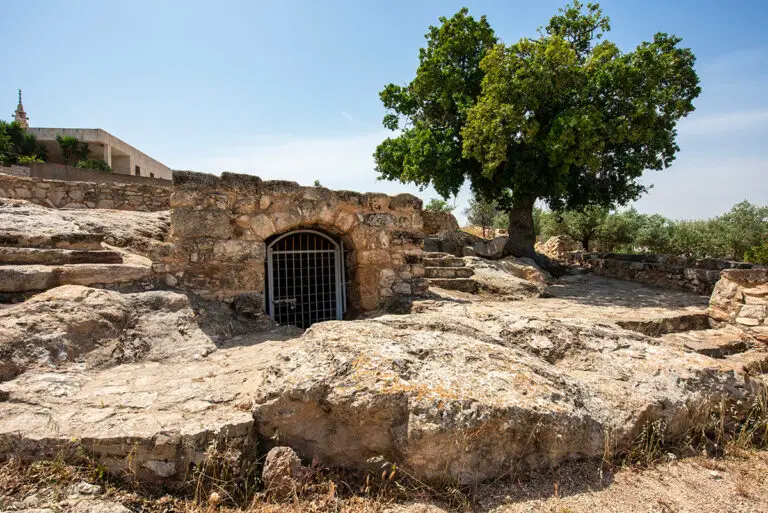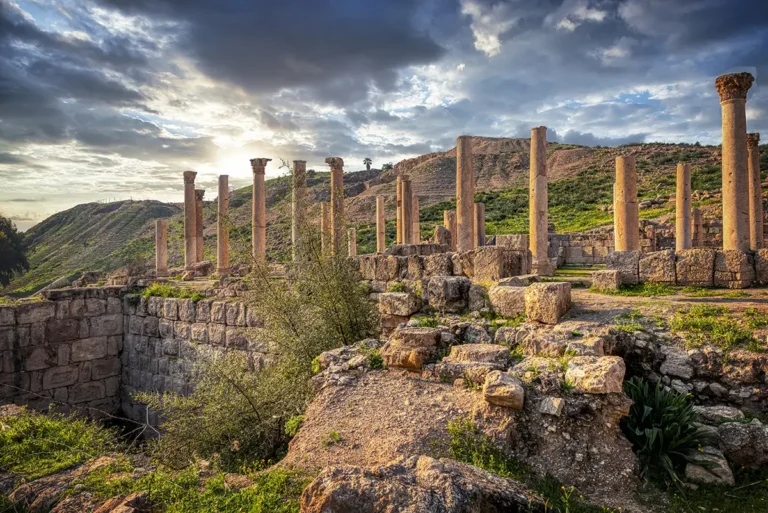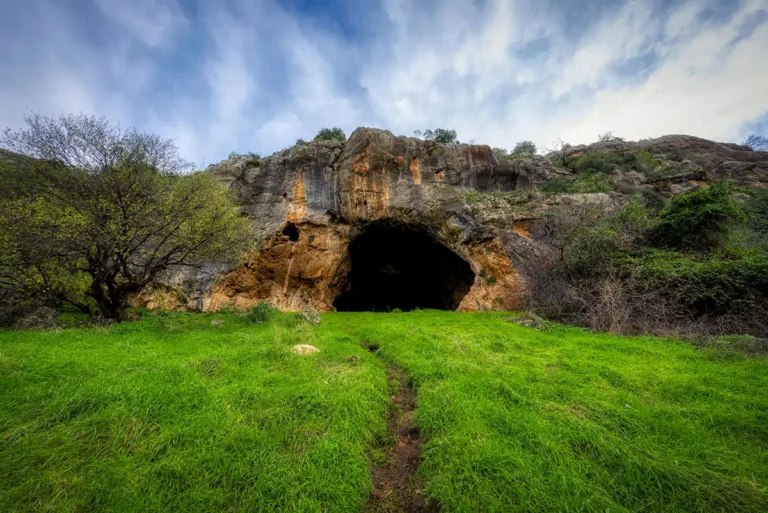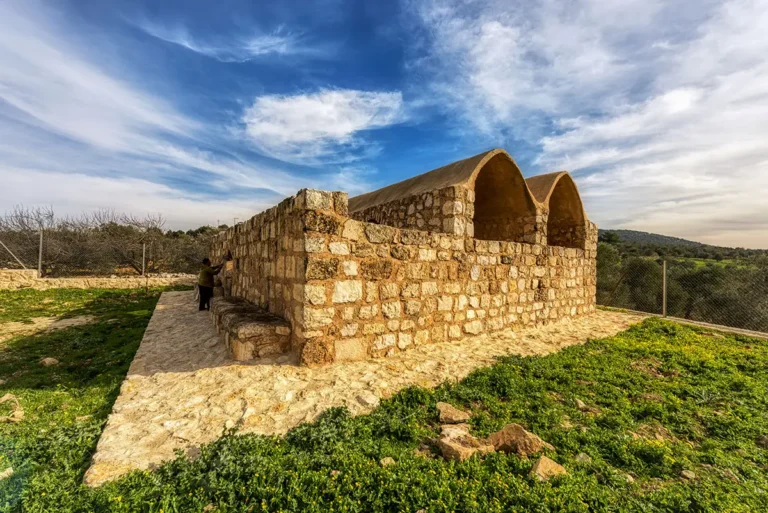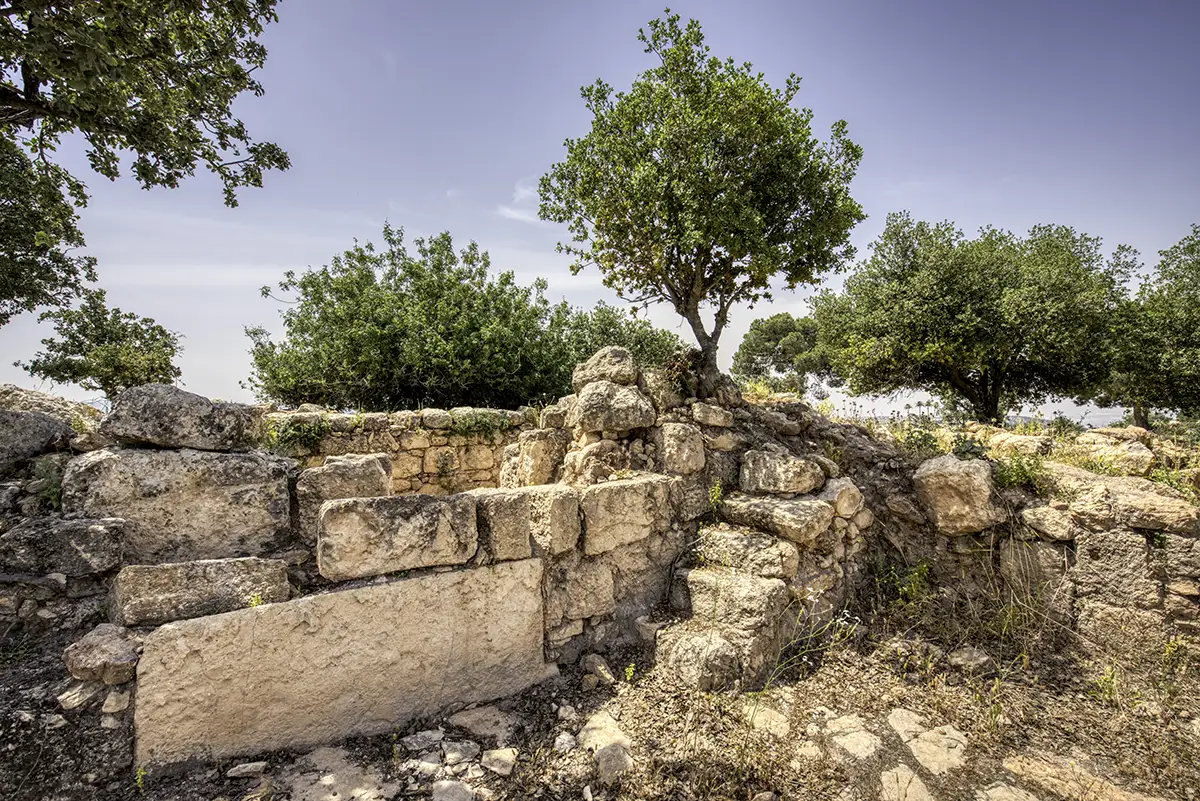


Among olive and carob trees in the hills of al-Kura, the low walls of a Byzantine church face the cave that local people call the Cave of Christ. Archaeologists know the site as Khallit ‘Isa — and its mosaic floors still speak, through seven Greek inscriptions, of the priests and families who built and cared for it.
Where Is Jesus Church?
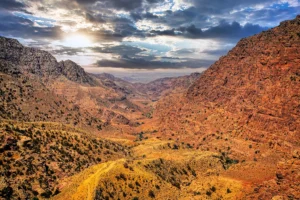
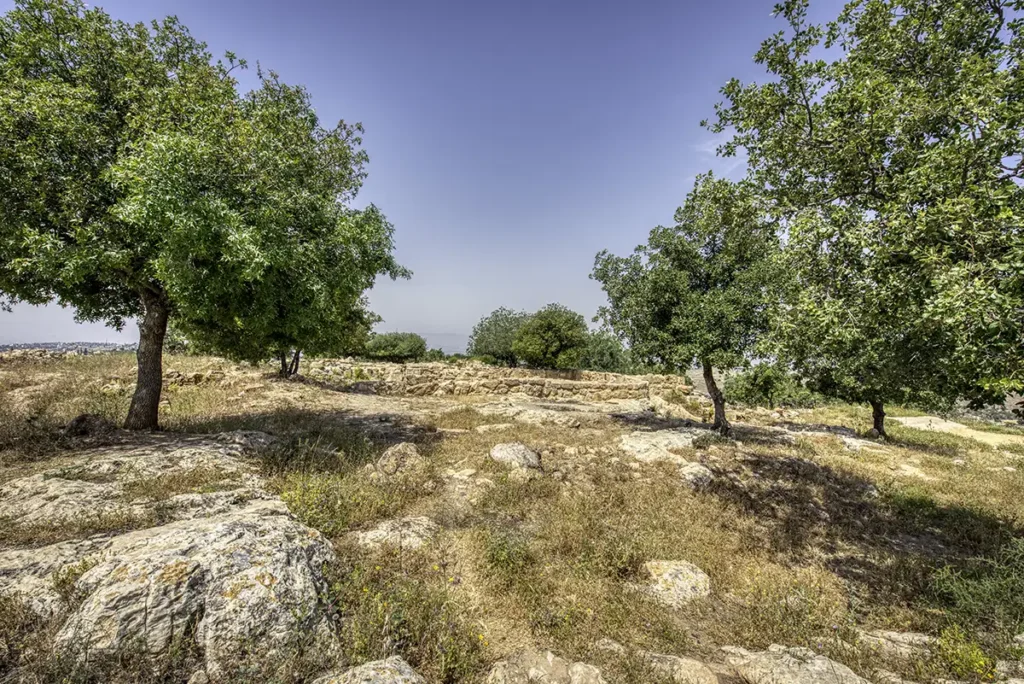
The church lies in the al-Kura district of Irbid Governorate, near the village of Bayt Idis, a few kilometres east of Pella. It stands on a hillside facing Jesus Cave, with views over the hills that fall towards the Jordan Valley.
Historical Context and Origin
The church was built in the Byzantine period, when the hills around Pella were dotted with villages and churches. Its inscriptions describe it as a martyrion — a shrine to a martyr whose name is no longer legible — and suggest that the village may have been called Seron. One inscription is dated “year 507, in the seventh indiction”, but scholars disagree on which local calendar it uses: proposals range from the mid-5th century to AD 604 or 612/613.
Architectural Design
The church is a three-aisled basilica with mosaic floors. Around it, openings in the bedrock lead down into small rock-cut chambers, and low stone walls mark rooms and courtyards on the slope.
Three-Aisled Basilica
A church divided into a nave and two aisles, built on the hillside.
Seven Inscriptions
Greek texts set in the mosaic floors name priests, deacons and a buried woman.
A Martyr’s Shrine
The inscriptions describe the church as a martyrion, a shrine to a martyr.
Rock-Cut Chambers
Openings in the bedrock lead to small underground chambers.
The Kyras inscription
English summary after the Cult of Saints database (University of Oxford, E02632). The Greek texts of the seven mosaic inscriptions are published in SEG 51, 2060–2066. Another inscription records an offering by the deaconess Kyra for her son Elias and her father Marinos.
Lord, remember Kyras, daughter of the deacon Marinos, who lies here, and save her children Elias and Porphyria.
The Mosaic Inscriptions
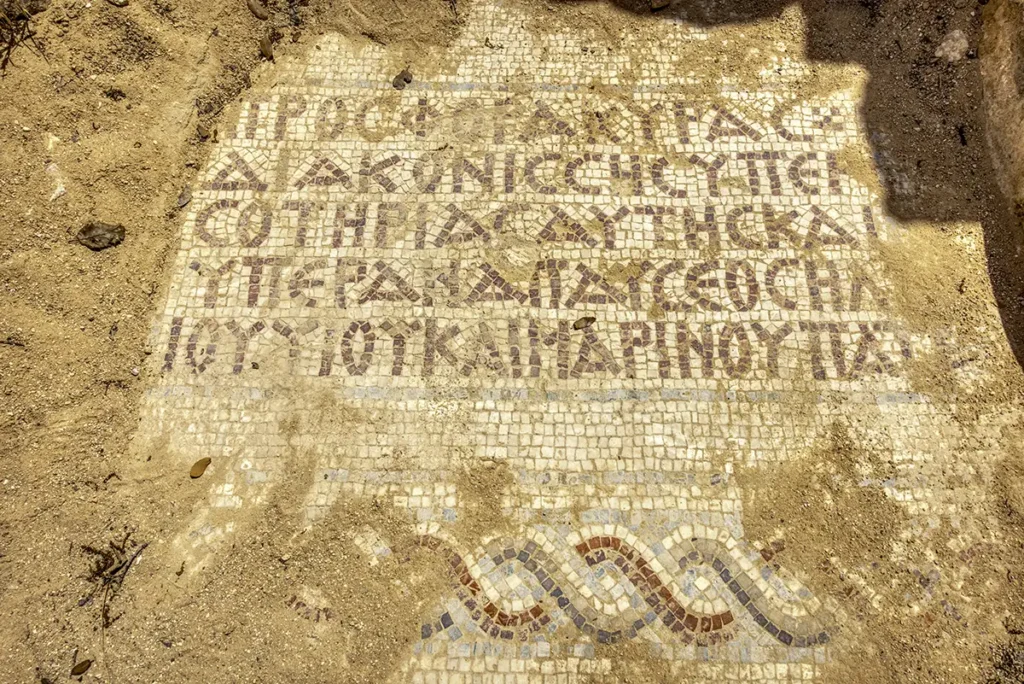
Seven Greek inscriptions are set into the floors. They record that the martyr’s shrine was paved under the priest Porphyras and later restored under Ameros. Two ask God to remember Kyras, daughter of the deacon Marinos, who was buried in the church, and to save her children Elias and Porphyria; another records an offering by the deaconess Kyra for her son Elias and her father Marinos. Together they offer a rare glimpse of a Christian village family and of women serving in its church.
Destruction, Rediscovery, and Restoration
The Department of Antiquities excavated the church in 2000, led by I. Melhem and A. Al-Husan, and continued excavation and restoration in 2001. A project funded by the European Union with UNESCO, launched in 2023, planned to stabilise the walls, conserve the mosaics and add fences and visitor trails.
Visiting Jesus Church Today
The church is open and free to visit. It is reached by a narrow local road and is best combined with Jesus Cave across the slope. There is no visitor centre, so bring water. Our photo album shows the mosaics and rock-cut chambers.
Further reading: Oxford Cult of Saints — Khallit ‘Isa inscriptions (E02632); Yon & Bader, SHAJ 13 (2019).