

On the plateau above the great canyon of Wadi al-Mujib, Al-Lahun was settled again and again for some five thousand years. Belgian excavations here uncovered an Early Bronze Age town, an Iron Age village and fortress, a Nabataean temple and an early Islamic caravanserai — layer upon layer of history on the edge of one of Jordan’s most dramatic landscapes.
Where Is Al-Lahun?
The site lies on the northern plateau of Wadi al-Mujib — the biblical Arnon — about 30 km south-east of Madaba, between the ancient King’s Highway and the modern Desert Highway. It stands at about 720–750 metres above sea level, near Dhiban, the capital of ancient Moab. Umm ar-Rasas is a short drive to the east.
Historical Context and Origin
Flint tools show that people came here in prehistory. In the Early Bronze Age I (about 3200–3000 BC) Al-Lahun was a settlement — the only one of that phase known in Moab — and in the Early Bronze Age II–III it became a walled town of about 4.7 hectares, with olive presses. In the 12th–11th centuries BC a village of houses stood inside an oval precinct wall; it was later replaced by a large Iron Age fortress on the road south from Dhiban, perhaps a grain store. The Nabataeans built a small temple and a dam; there are Roman and Byzantine remains, an early Islamic building that became a caravanserai and later a farm, a Mamluk mosque and a late Ottoman village.
Architectural Design
The Early Bronze Age town was enclosed by a wall 5–5.5 metres thick. The Iron Age village lined the inside of an oval wall enclosing about 17,000 square metres, and the later fortress followed the contour of the hill with watchtowers. The small Nabataean temple was built of local limestone.
The Early Bronze Age Town
A walled settlement of about 4.7 ha with olive presses — one of the earliest in Moab.
The Iron Age Village and Fortress
A 12th–11th-century BC village inside a precinct wall, later covered by a large fortress with towers.
The Nabataean Temple
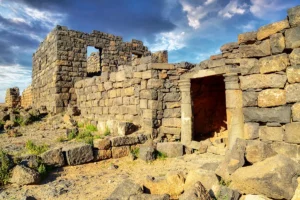
A small temple of local limestone, excavated and restored.
The Canyon
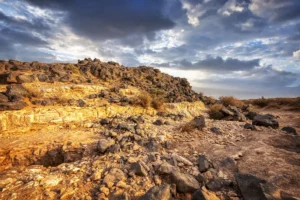
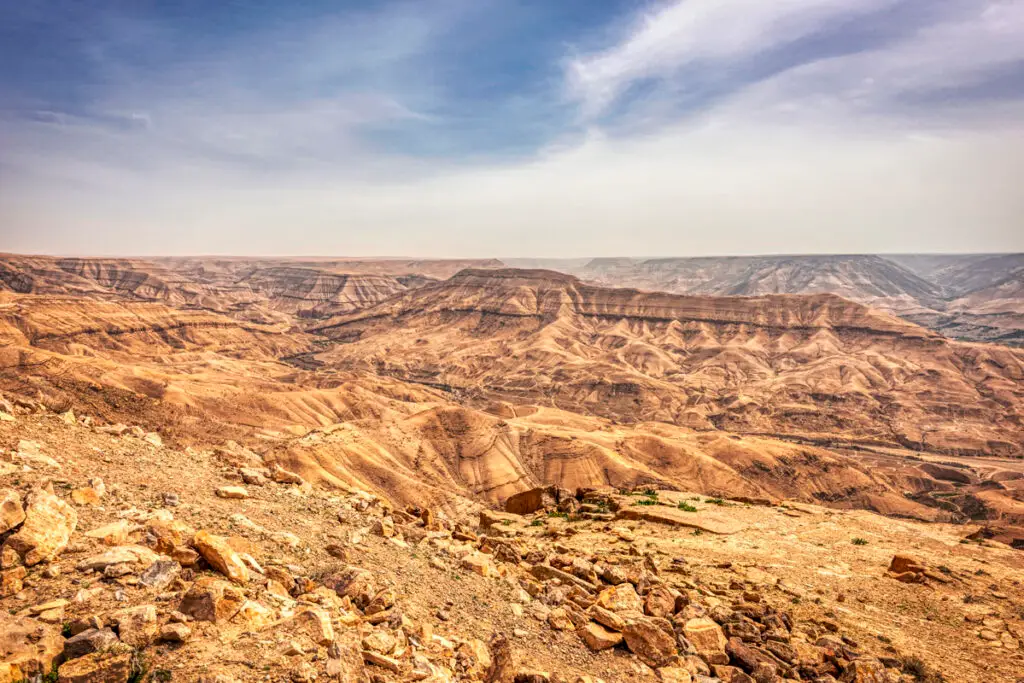
The site stands on the rim of Wadi al-Mujib, the biblical Arnon, with views deep into the gorge.
Excavation and Restoration
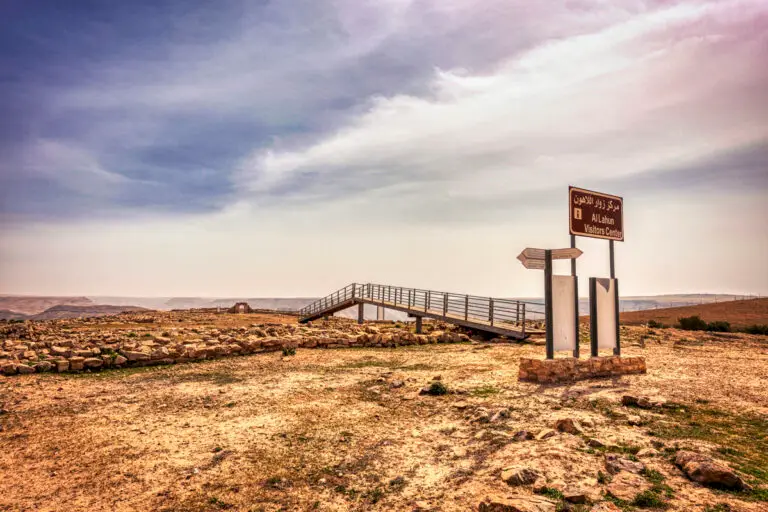
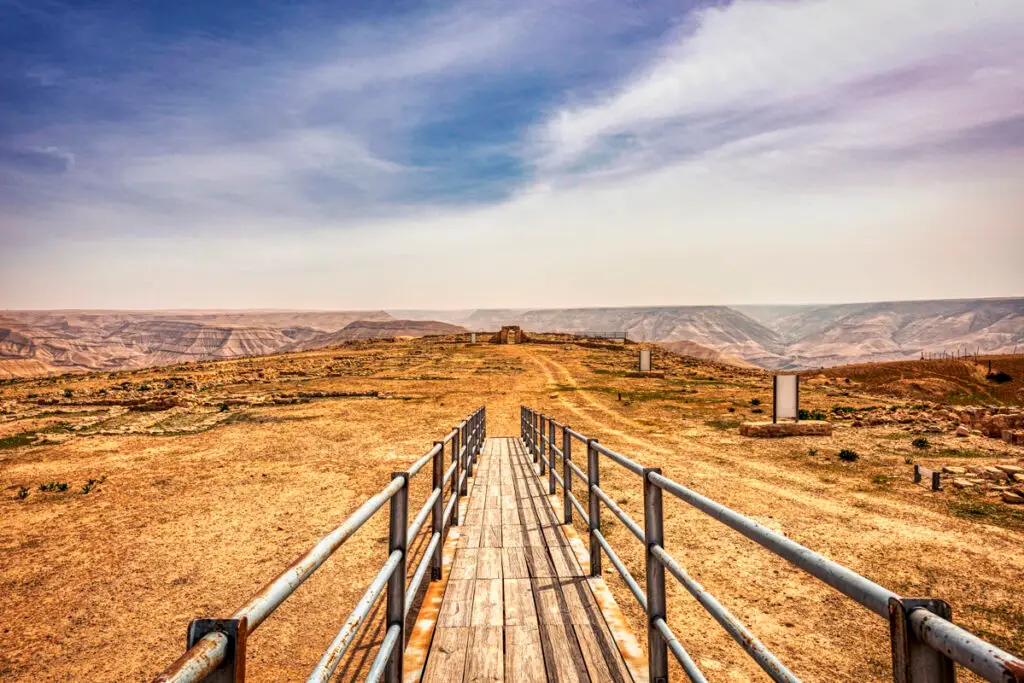
From the late 1970s until 2000 the Belgian Committee of Excavations in Jordan, directed by Denyse Homès-Fredericq of the Royal Museums of Art and History in Brussels, worked here with the Department of Antiquities. The Nabataean temple was restored, and a walkway with information panels now crosses the site.
Visiting Al-Lahun Today
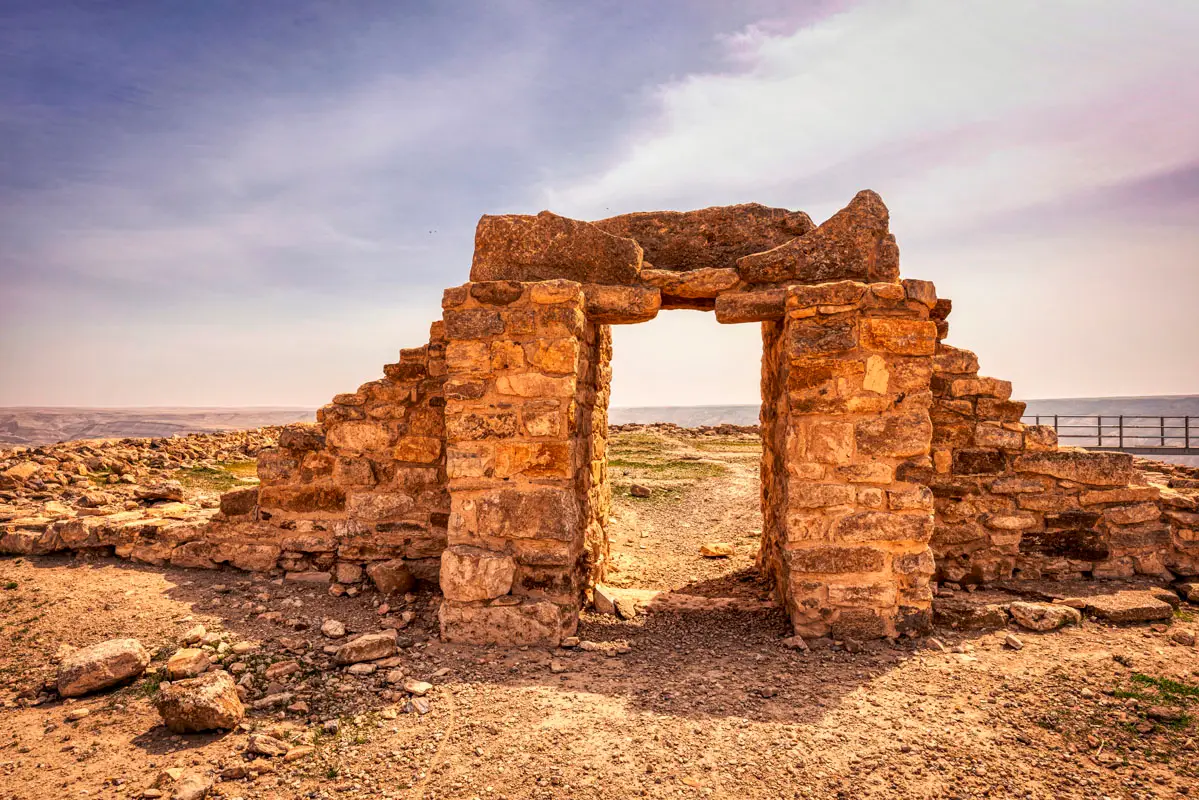
Follow the walkway across the plateau past the excavated rooms and the stone doorway to the edge of the canyon, where the view over Wadi al-Mujib is spectacular, especially in the late afternoon. The site is open and exposed, so bring water and a hat.
Further reading: Madaba Museum: Lehun.