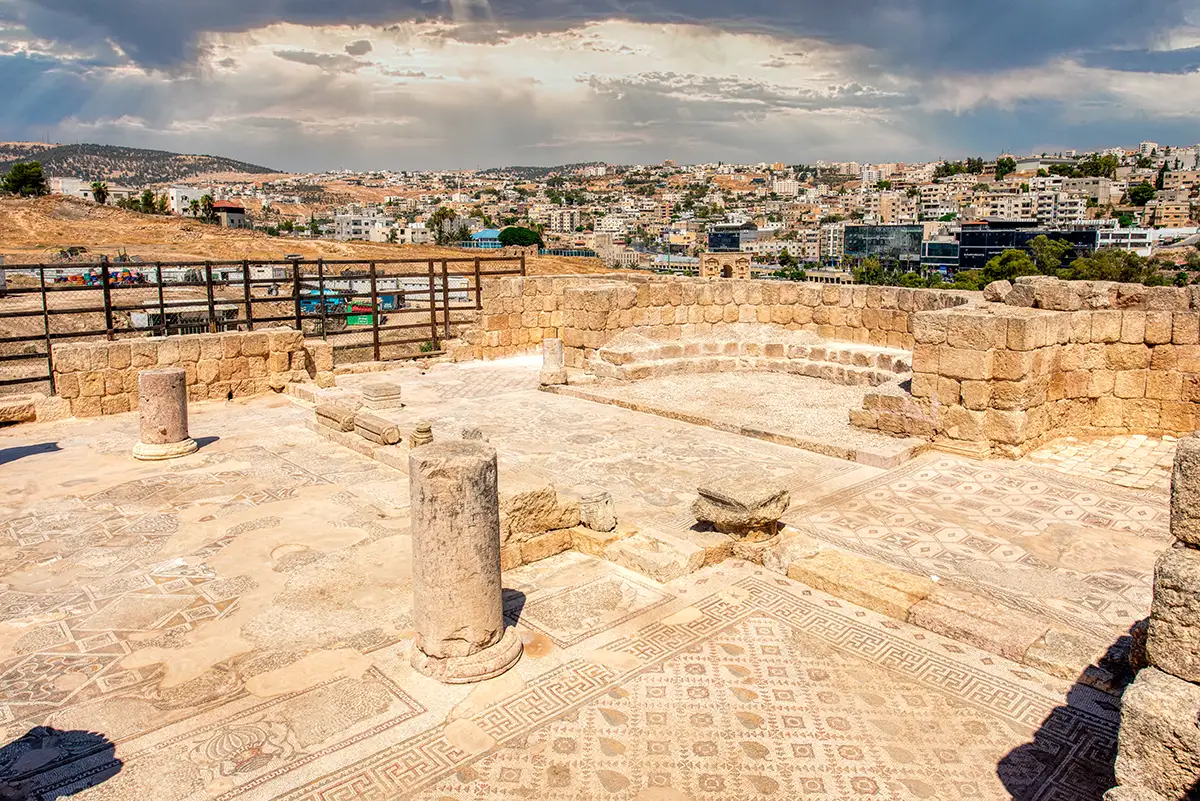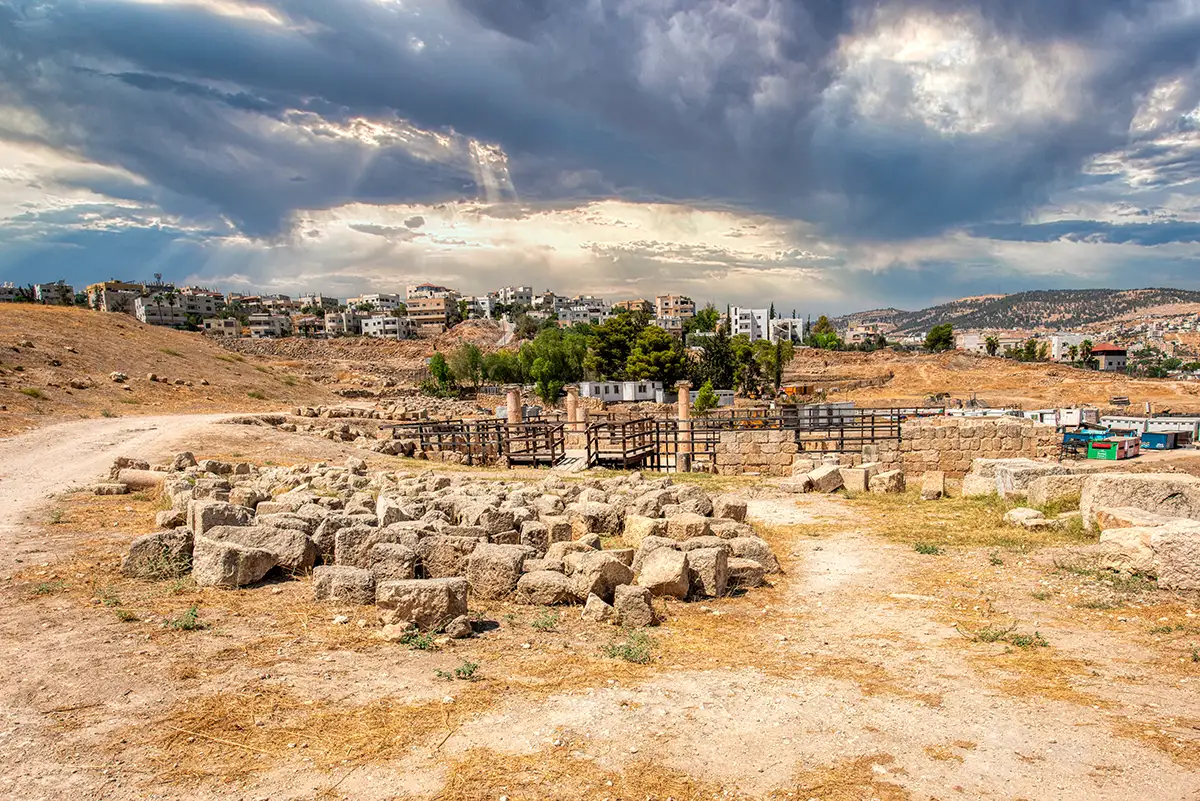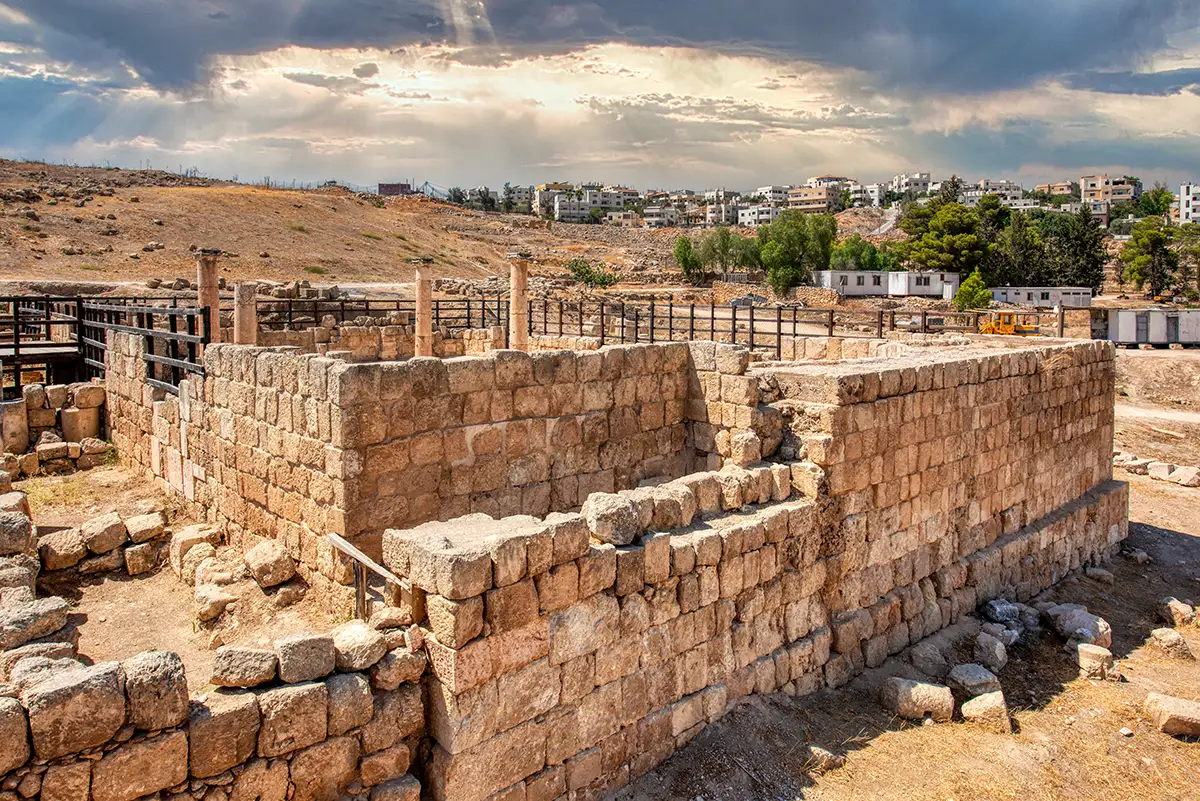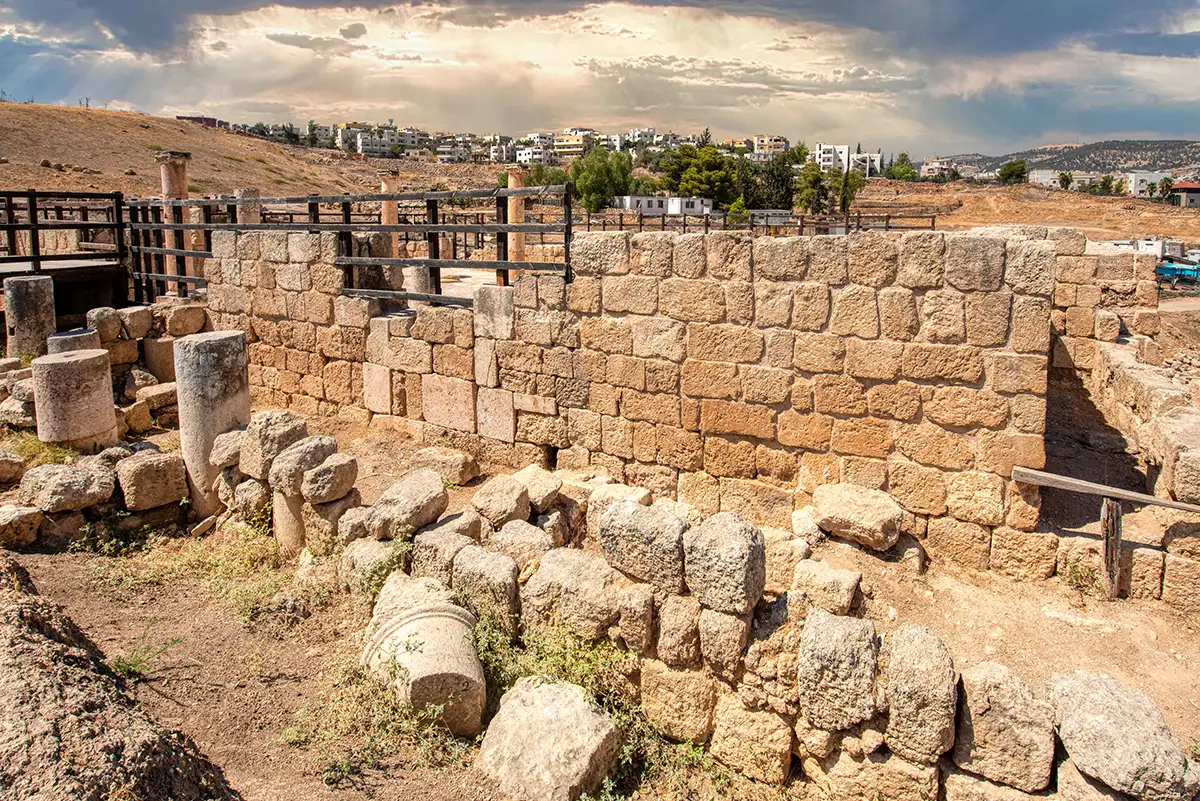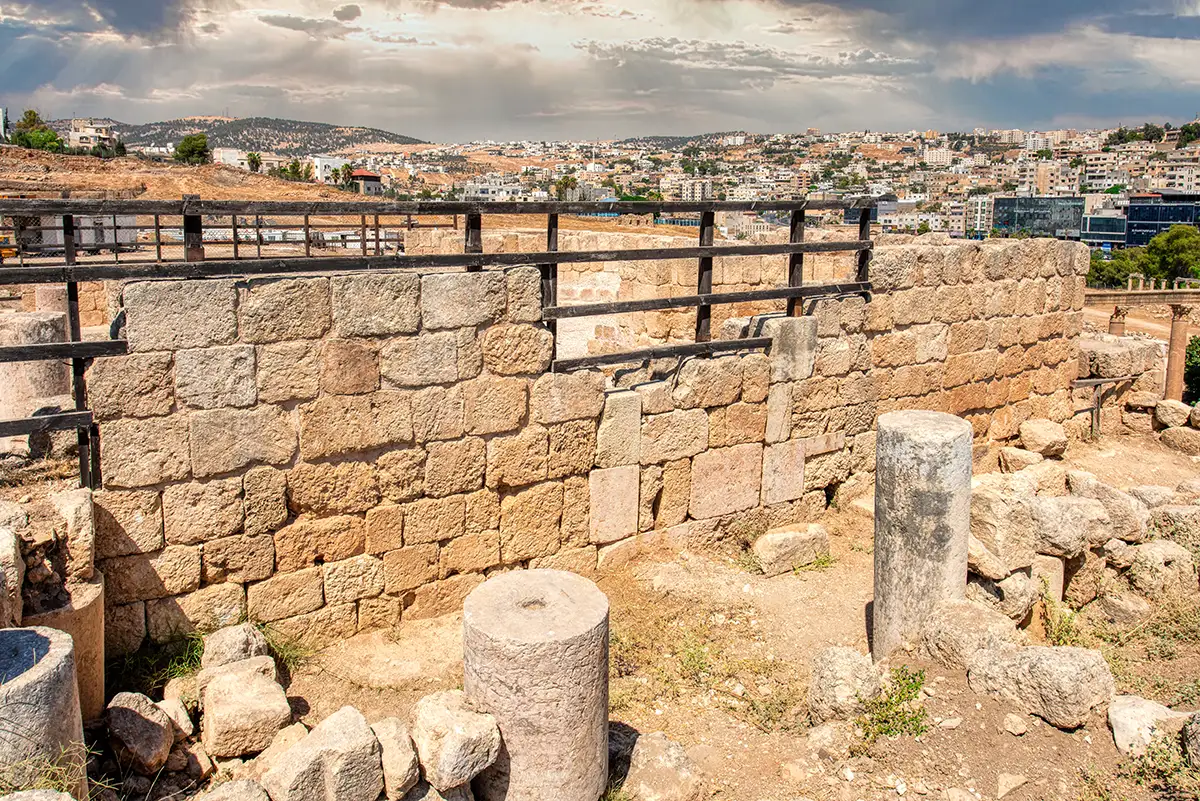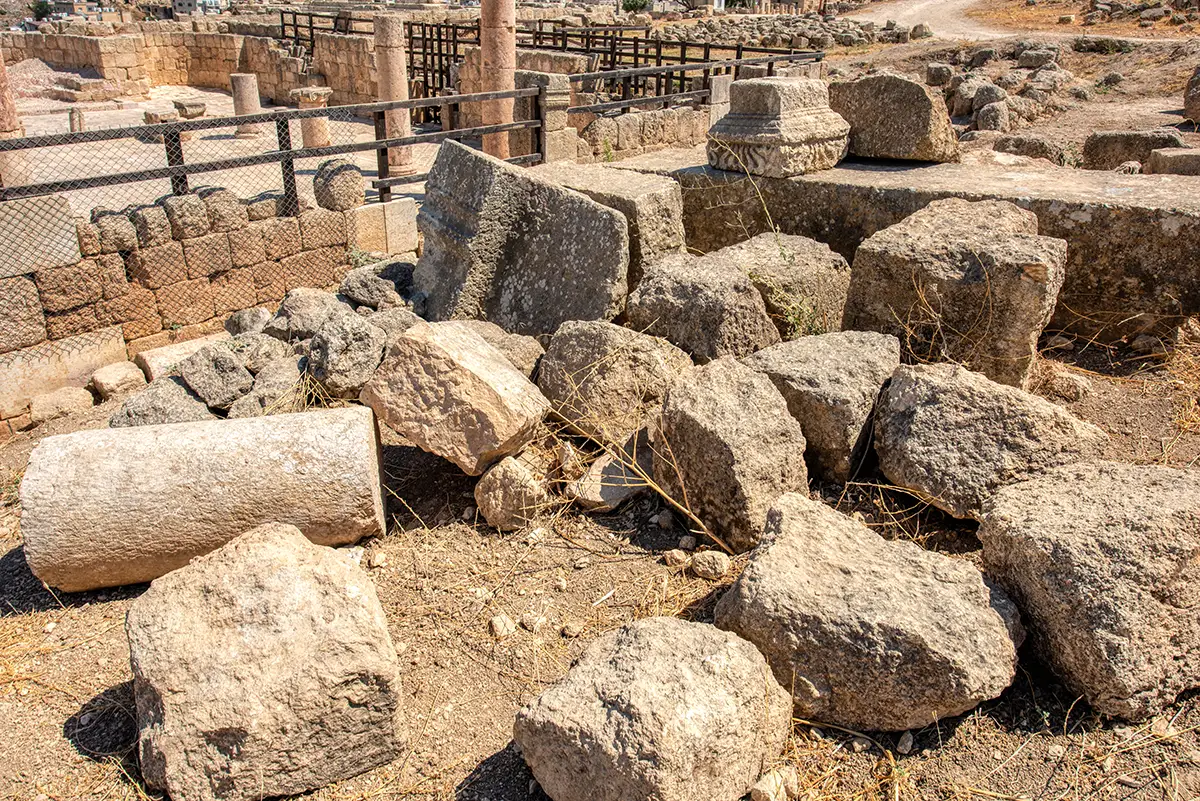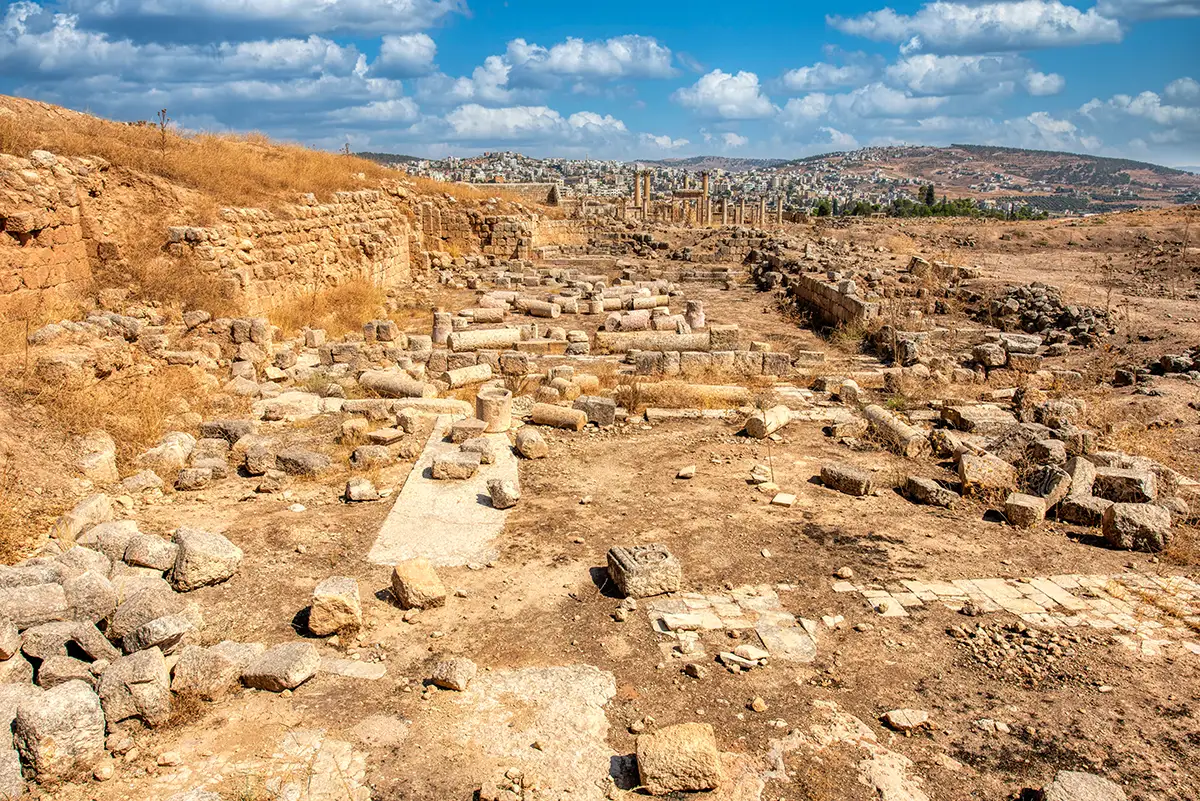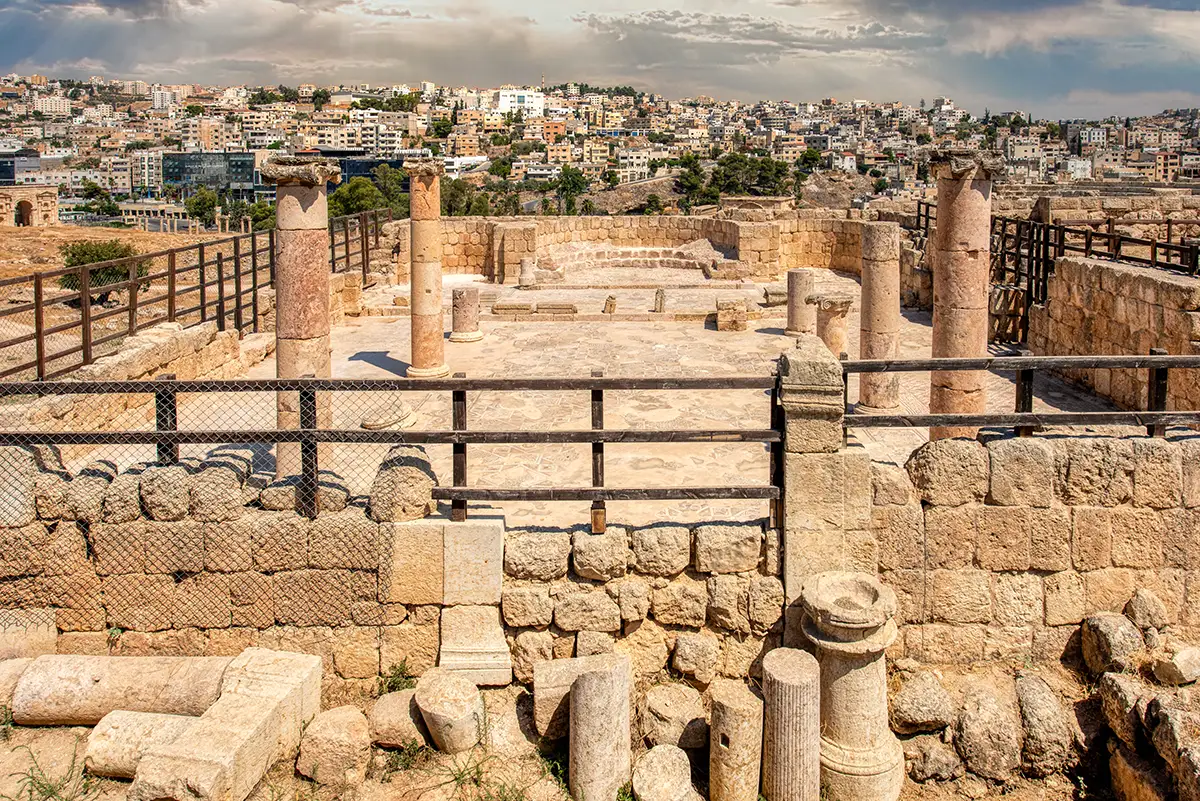

Beside the North Theatre, in the northern quarter of Jerash, stands a church that tells the story of a Christian community over two centuries. Built in AD 558/559 under Bishop Isaiah and paved with fine mosaics, the Church of Bishop Isaiah was still in use under the Umayyads and was being repaired when the earthquake of AD 749 destroyed it.
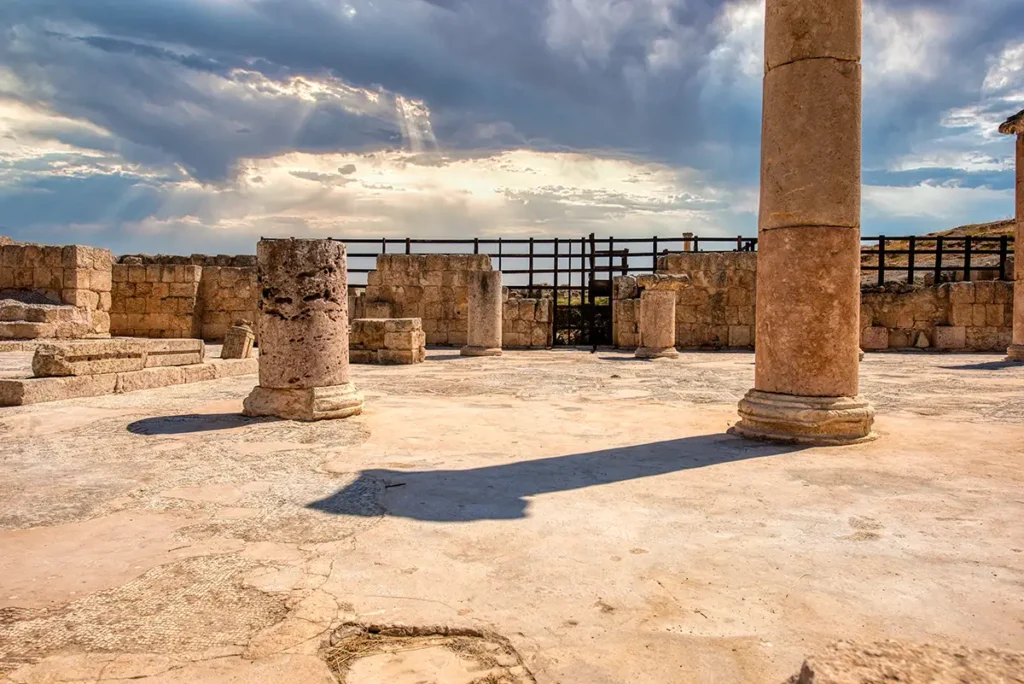
Where Is the Church of Bishop Isaiah?
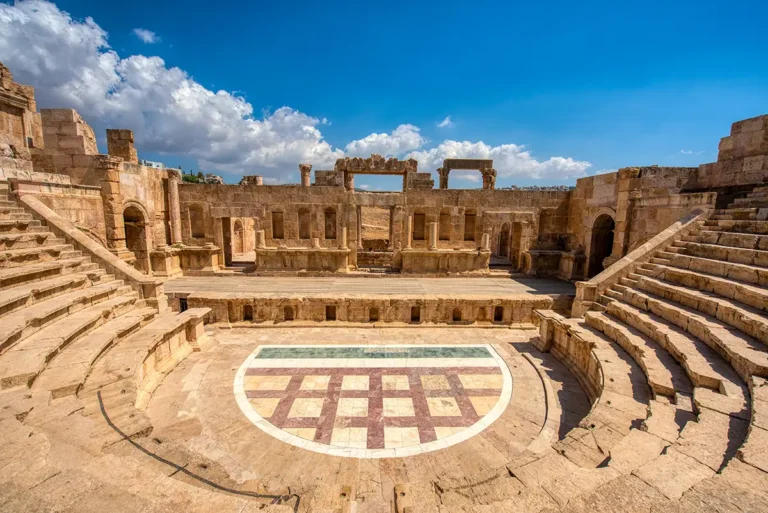
The church lies immediately beside the North Theatre, close to the North Decumanus and the North Tetrapylon, west of the Cardo Maximus.
It stood in a busy district where civic, theatrical and religious buildings were close neighbours — a good example of how Byzantine Gerasa fitted its churches into the Roman city.
Historical Context and Origin
The church was built in AD 558/559, the year 621 of the city’s era. Its mosaic inscription names Bishop Isaiah and the donors who paid for it — so its name refers to the bishop, not to the prophet Isaiah. It is one of more than a dozen churches known in Jerash. In the late 6th century local donors helped pay for mosaics across the nave, aisles and chancel. Later the west doors were blocked and people entered from a court on the south.
Under the Umayyads (AD 661–750) the church stayed in use — a sign of the Christian community’s survival. In the 8th century many figures in its mosaics were defaced, and in the late 740s its walls and roof were being repaired.
Architectural Design
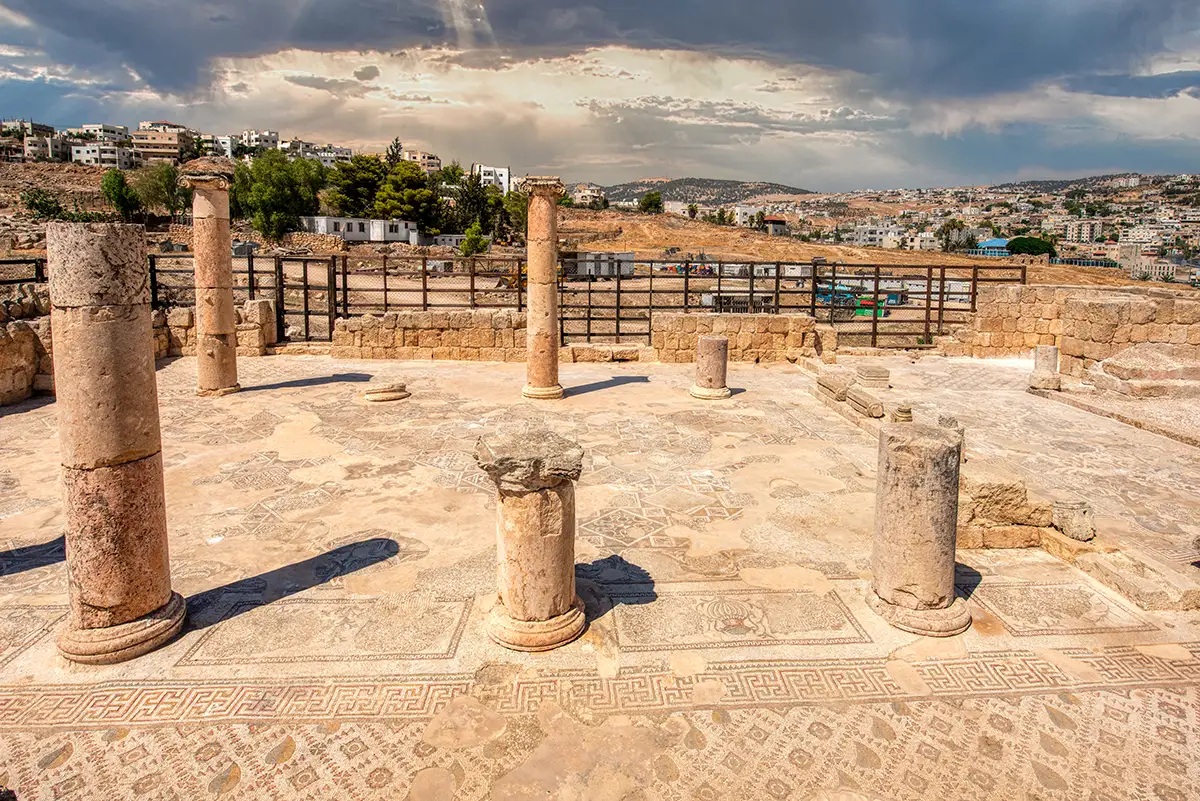
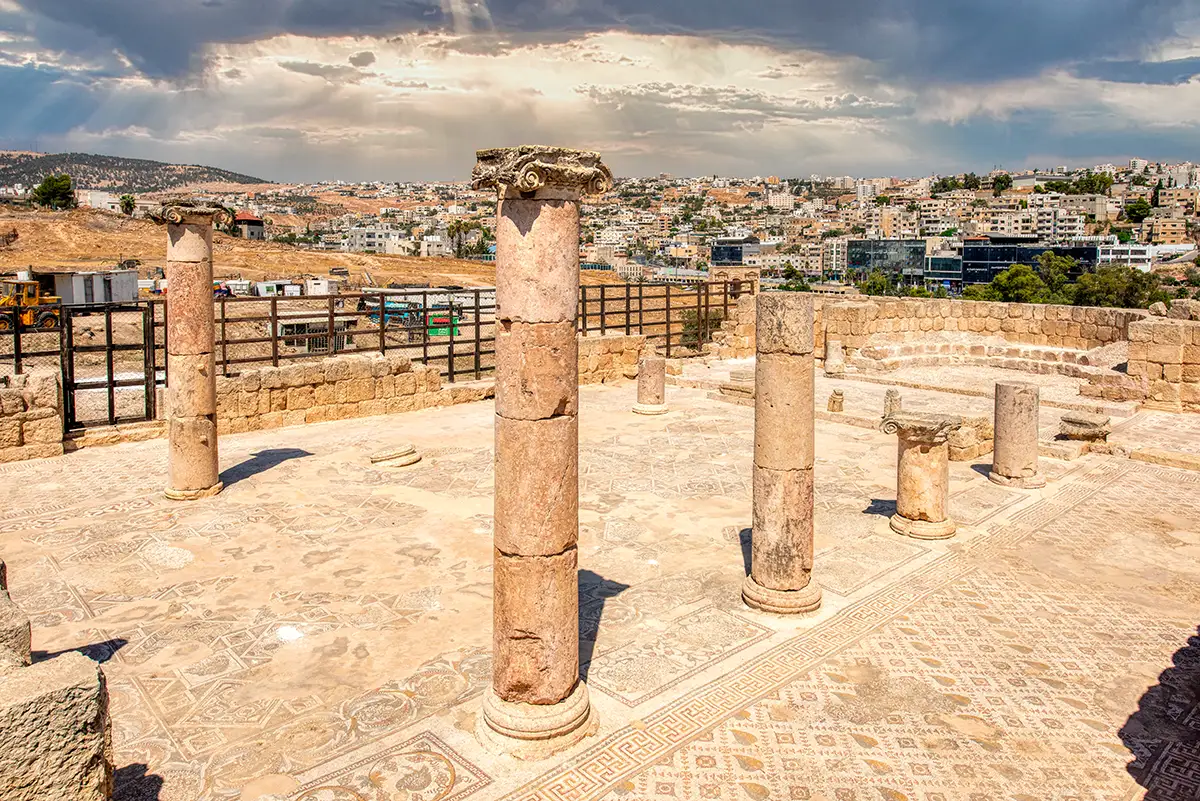
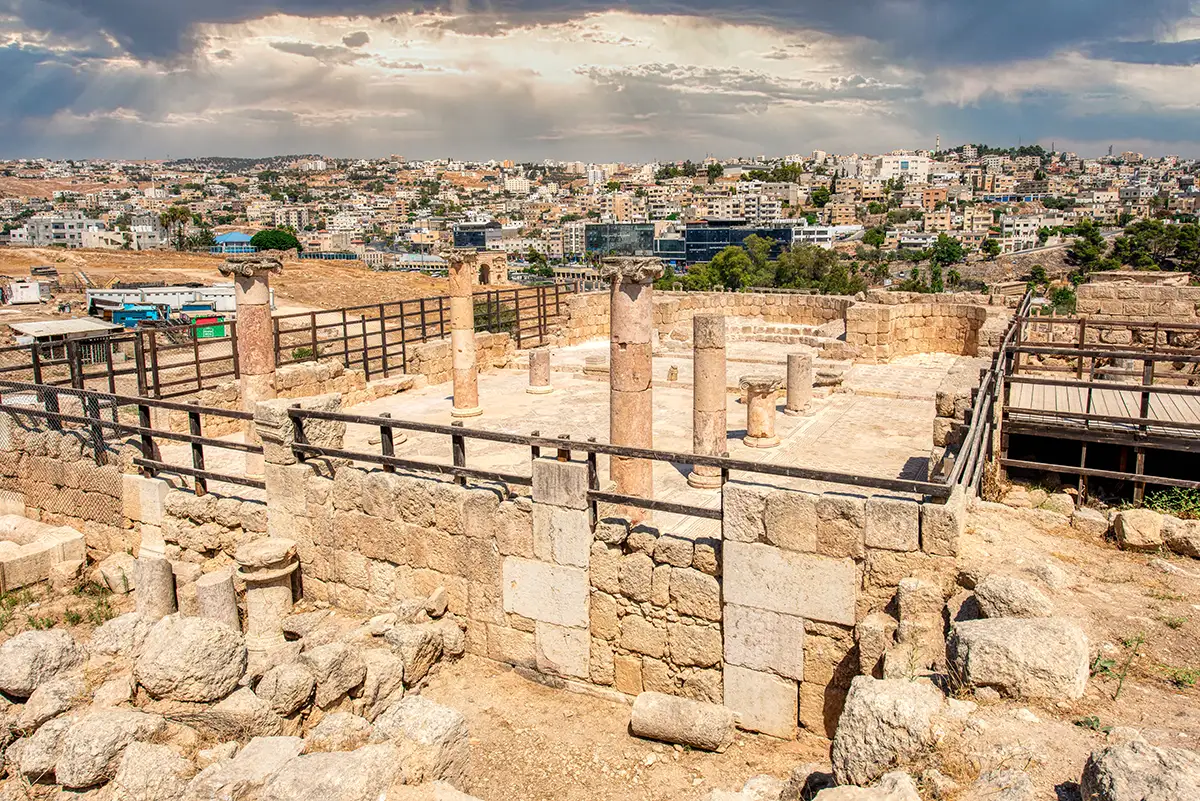
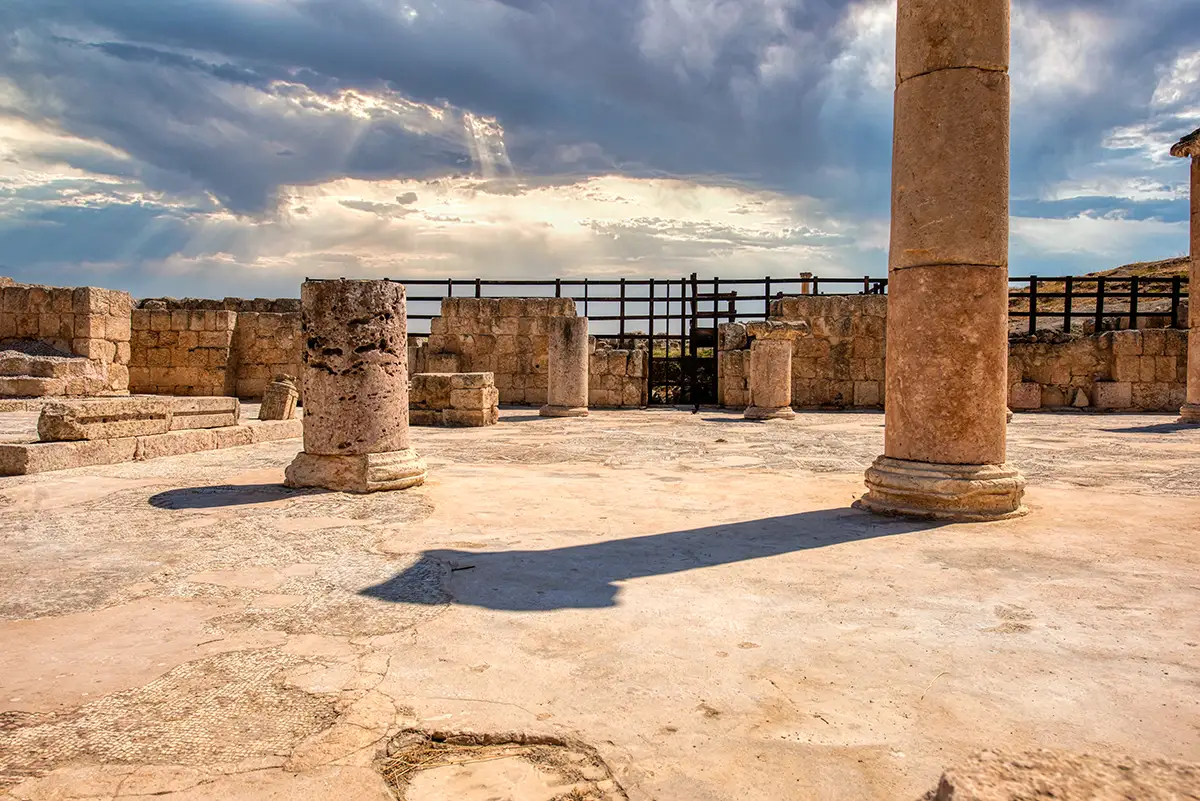
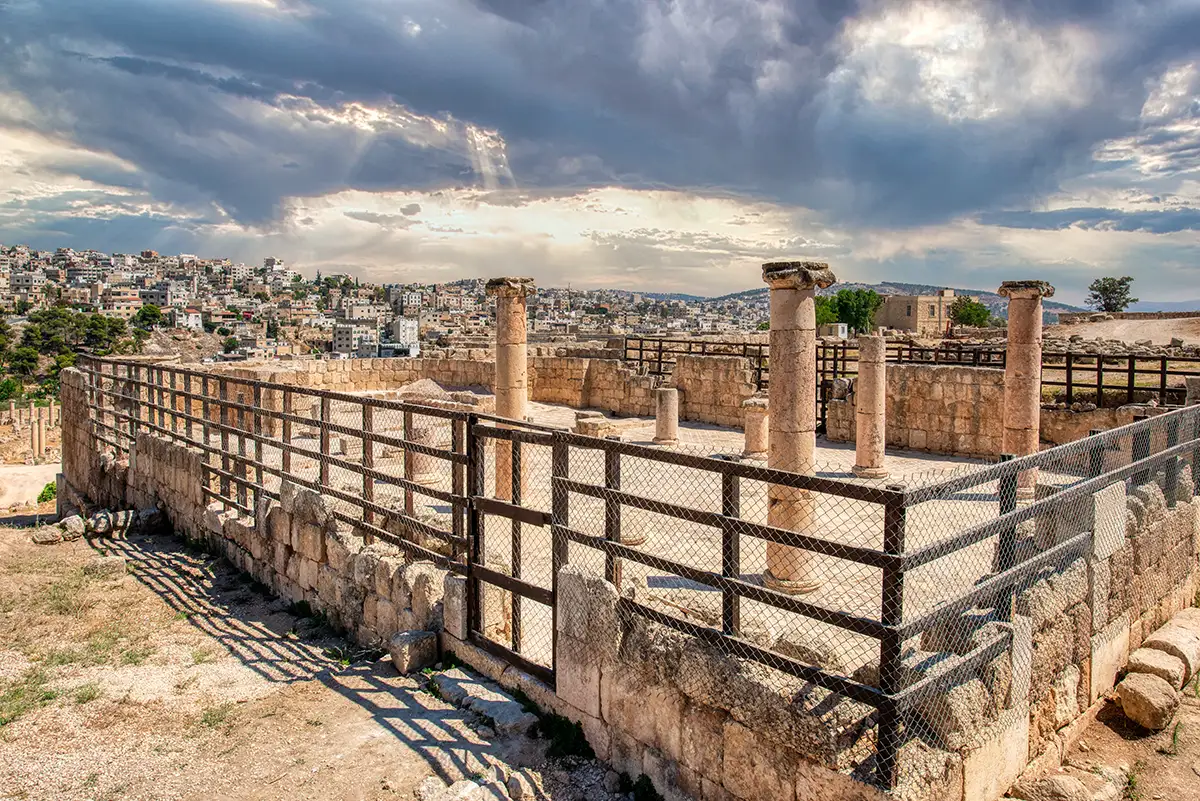
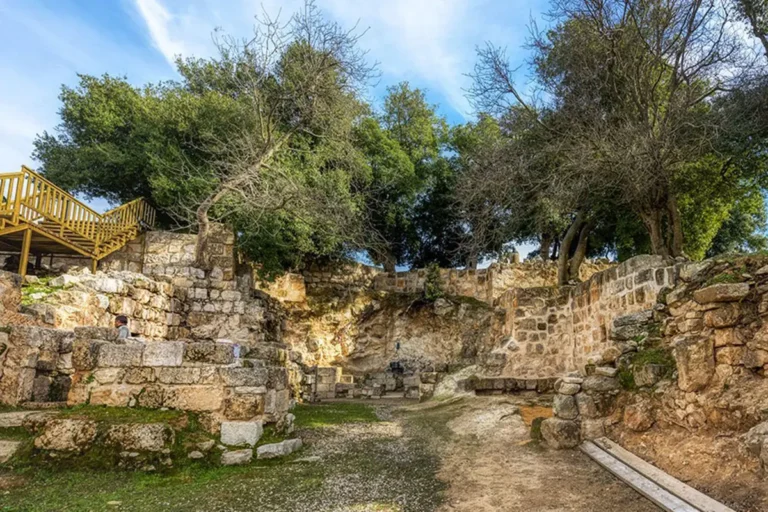
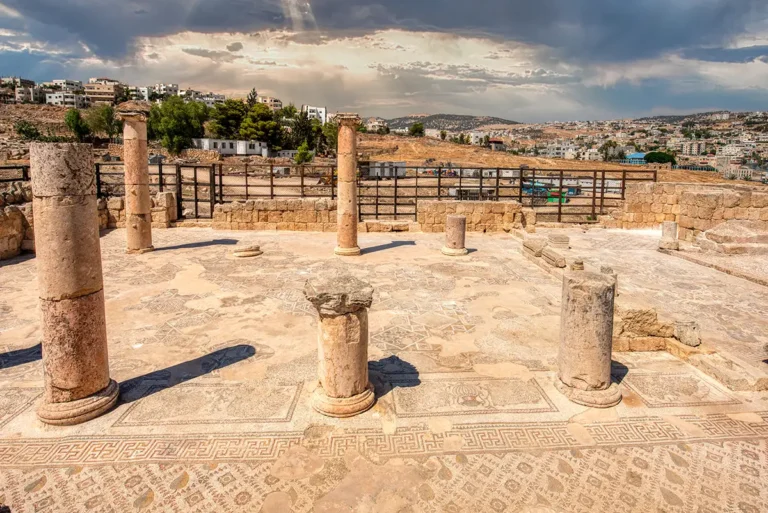
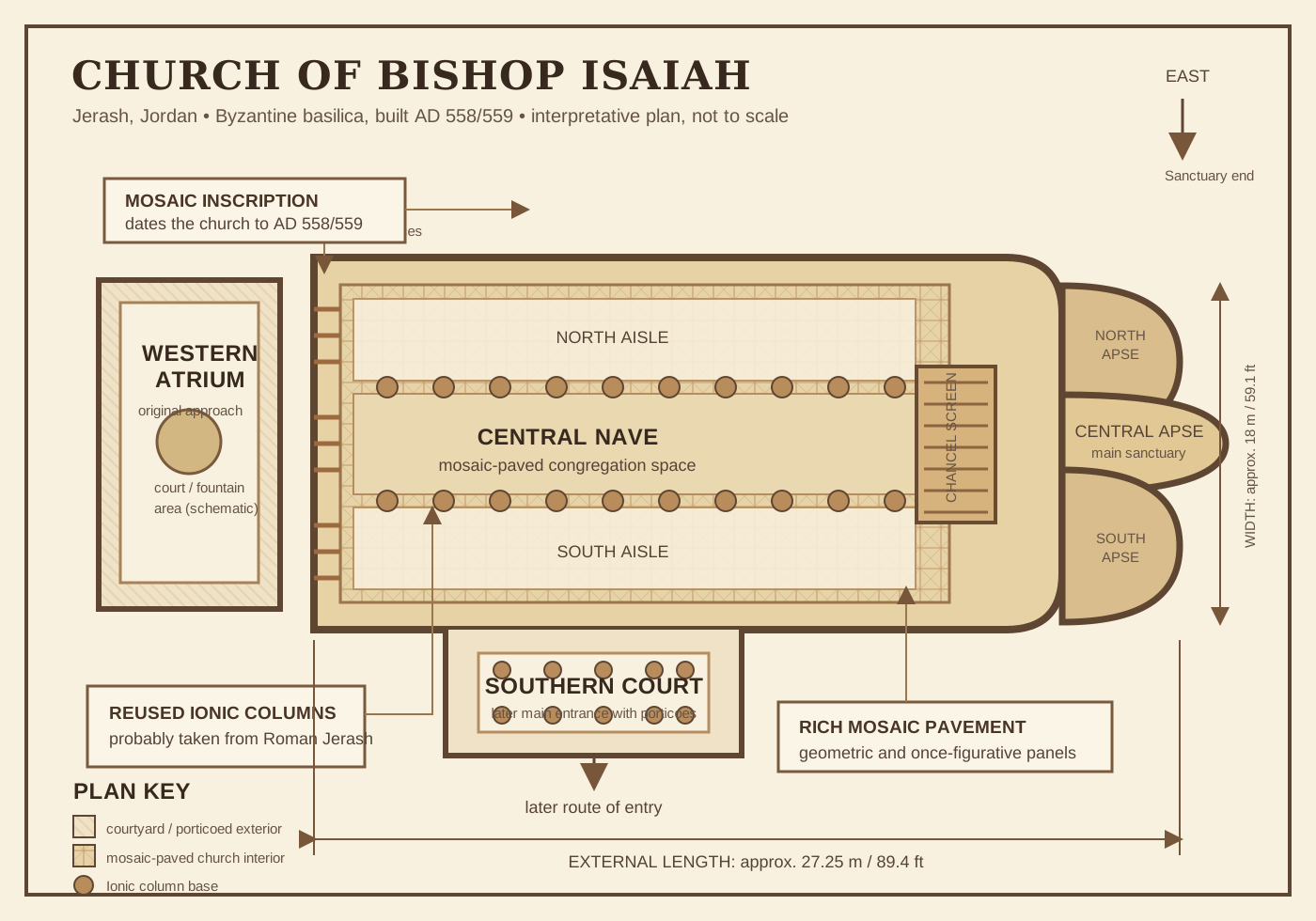
The church is a three-aisled basilica, about 27.3 metres long and 18 metres wide. Reused Ionic columns separated the nave from the aisles, and the sanctuary ended in three apses, with a chancel and the remains of a pulpit. Originally worshippers came in from the west through an atrium and three doorways; later the main entrance moved to a porticoed court on the south.
Three Apses
The sanctuary ends in three apses, a common arrangement in the churches of Byzantine Jordan.
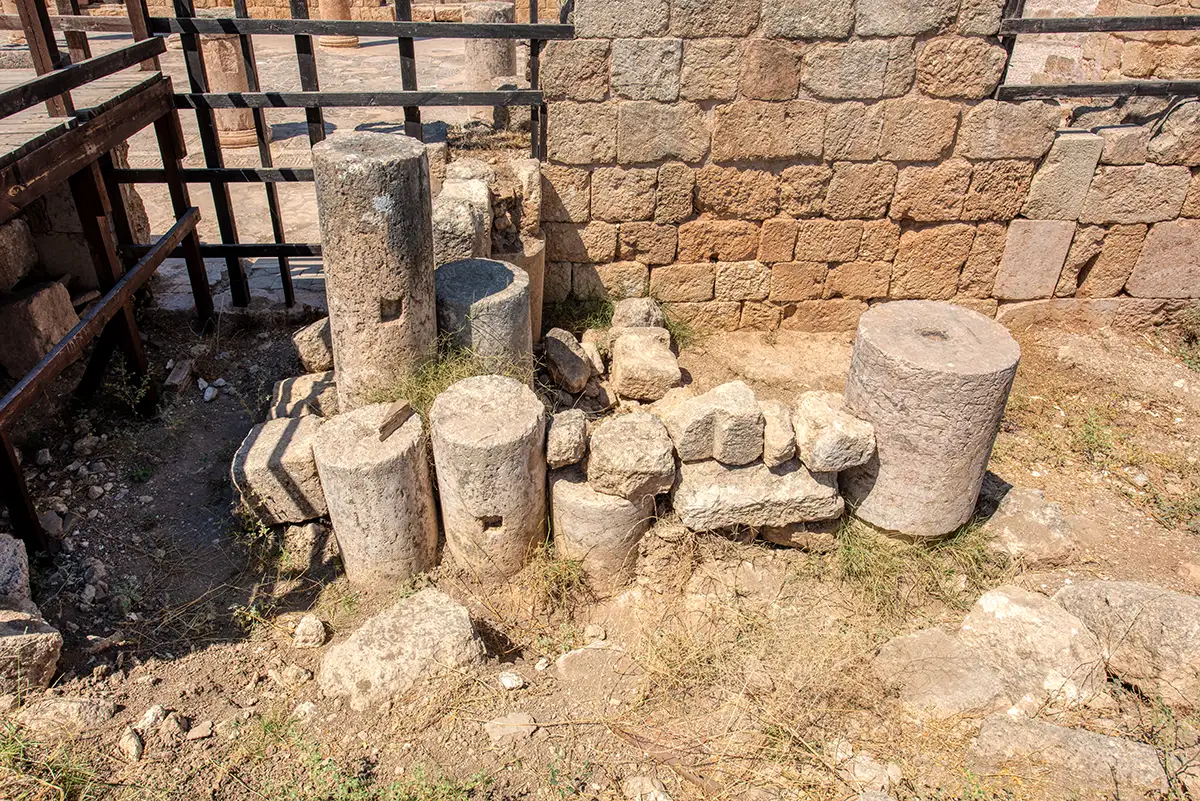
Reused Ionic Columns
Columns, probably taken from a Roman street nearby, divide the nave from the aisles.
The Mosaic Floor
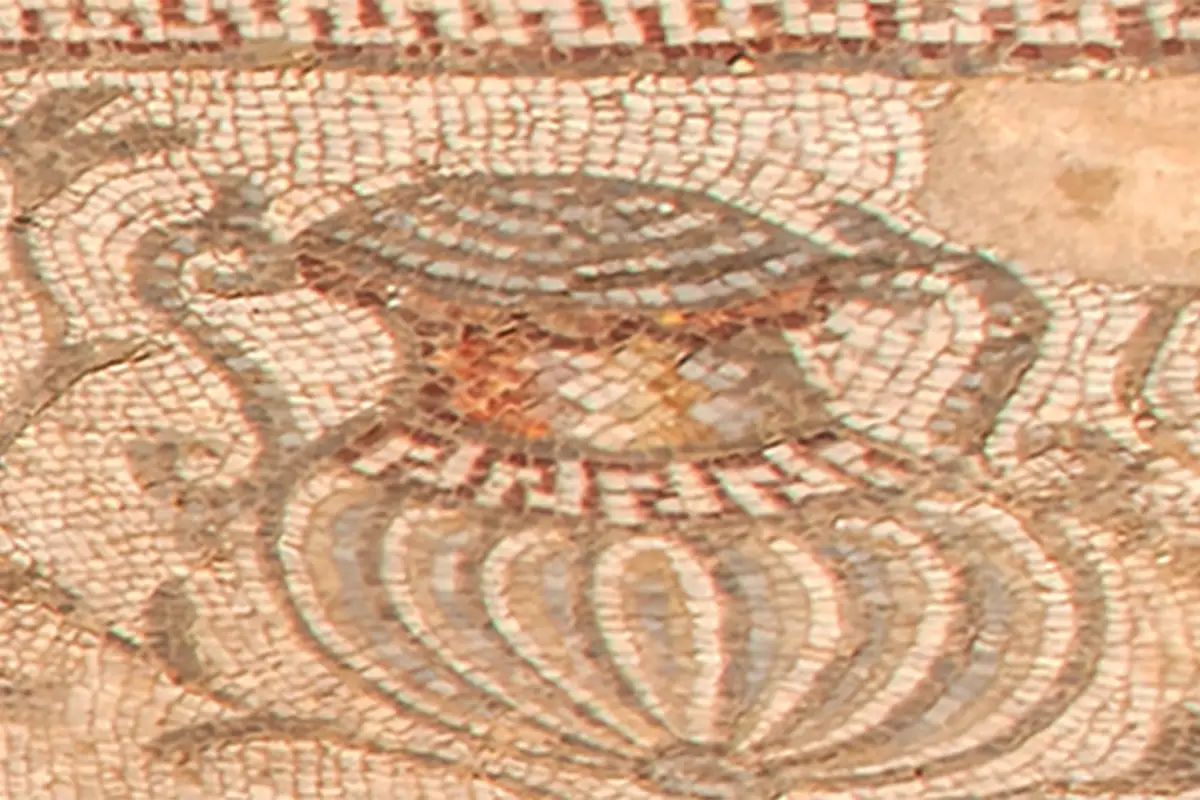
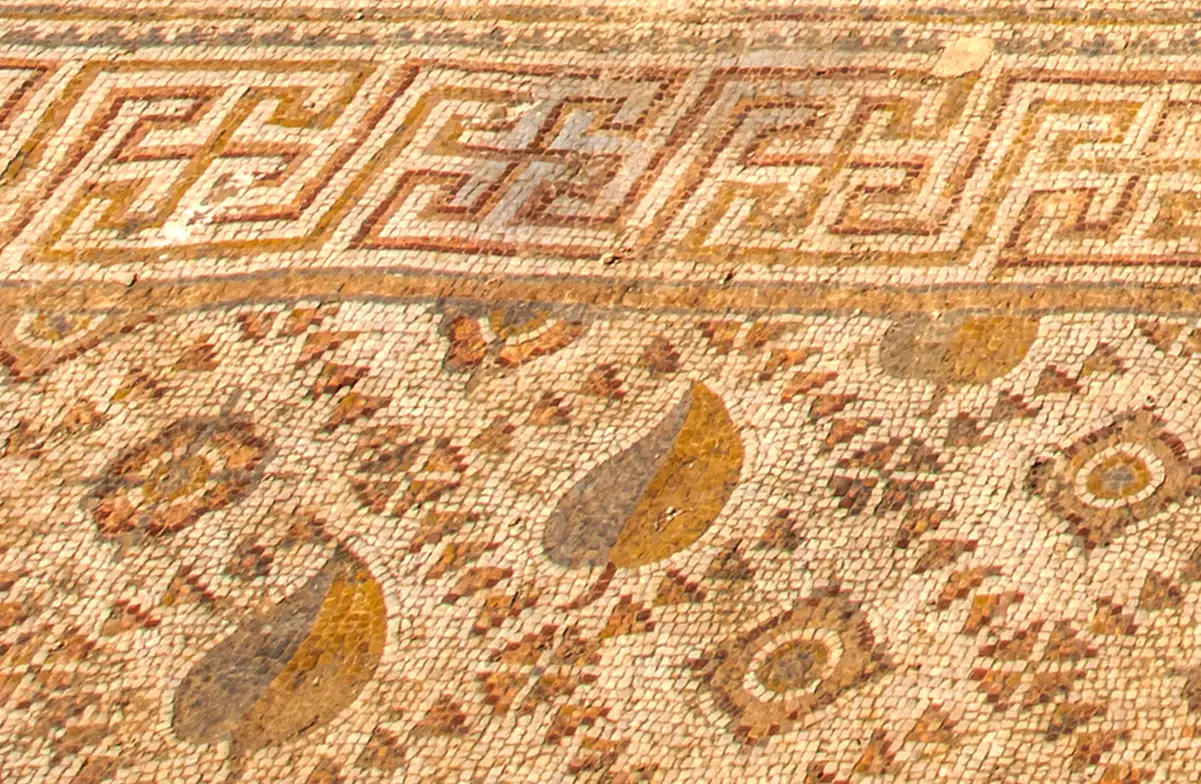
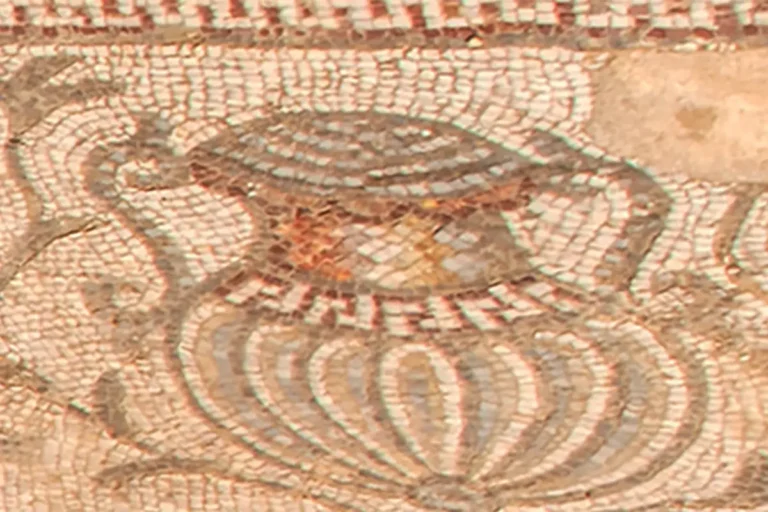
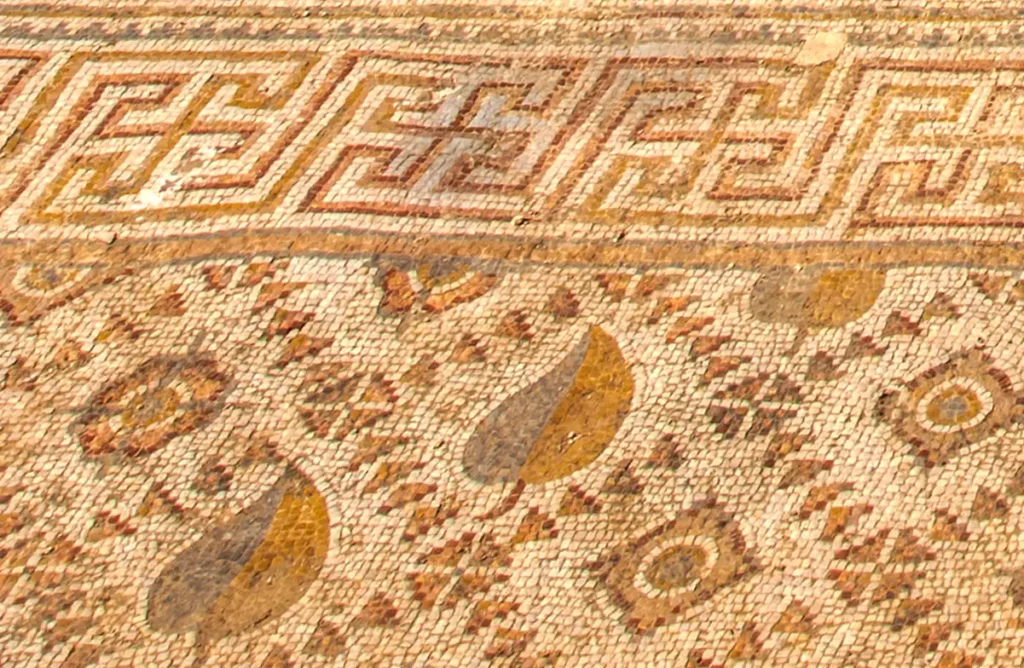
Geometric, floral, animal and human motifs cover the nave, aisles and chancel; a panel of squares and diamonds stands out.
Defaced Figures
In the 8th century many animal and human figures were deliberately altered, while the borders were left intact.
jerash-church-of-bishop-isaiah-schematic
Tap the drawing to open it full size.
Open drawingThe Founding Mosaic Inscription of the Church of Bishop Isaiah
The inscription names Metropolitan Thomas and Bishop Isaiah, and the donors Berrios and Eulampia, who paid for the church to be built “from the foundations”, paved with mosaic and decorated. The Greek is a normalised reading: published versions of the damaged mosaic differ in detail.
Ἐπὶ τοῦ ἁγιωτάτου καὶ μακαριωτάτου
Θωμᾶ τοῦ μητροπολίτου καὶ Ἠσαΐου
τοῦ ἐπισκόπου, ὁ εὐκτήριος οὗτος οἶκος
ἐκ θεμελίων ἐκτίσθη καὶ ἐψηφώθη
καὶ ἐκοσμήθη ἐκ τῶν προσφορῶν
τῶν μεγαλοπρεπεστάτων Βερρίου καὶ Εὐλαμπίας,
σωτηρία αὐτῶν καὶ τῶν τέκνων αὐτῶν,
ἔτους χκα΄, μηνὶ Δαισίῳ, ἰνδικτιῶνος ζ΄.
In the time of the most holy and blessed Thomas, the metropolitan, and Isaiah, the bishop, this house of prayer was built from the foundations, paved with mosaics and adorned through the offerings of the most illustrious Berrios and Eulampia—for the salvation of them and their children—in the year 621, in the month of Daisios, in the seventh indiction.
Destruction, Rediscovery, and Restoration
The earthquake of AD 749 destroyed the church, and it was abandoned. Archaeologists uncovered it in 1983, with its mosaics and inscriptions, and some work at the site is still under way.
Visiting the Church of Bishop Isaiah Today
Trace the three aisles to the apses, then look closely at the mosaic floor: compare the intact geometric borders with the figures that were altered in the 8th century. It is an easy stop on the way to or from the North Theatre.
Further reading: Christian presence: Byzantine churches in Jerash.