








Jordan’s ancient cities were built in a landscape of exceptional beauty—and persistent seismic danger. The Dead Sea Transform, the great fault system running through the Jordan Valley and south toward the Gulf of Aqaba, has repeatedly shaken the region. Three earthquakes in particular—those of 363, 551, and 749 AD—left lasting marks on cities, monuments, infrastructure, and the lives of the people who inhabited them.
These events did not simply topple columns. They interrupted trade, damaged water systems, destroyed homes and places of worship, displaced families, and altered the future of cities that had flourished since Nabataean, Roman, and Byzantine times.
The earthquake of 363 AD: Petra’s urban system breaks
The earthquake of 363 struck in May and was one of the most consequential disasters in the history of Roman and Byzantine Jordan. Petra, once the Nabataean capital and later a major Roman city, suffered especially serious damage.
Petra depended on carefully maintained water infrastructure: channels cut into rock, cisterns, pipes, dams, and flood-control works. When the earthquake damaged buildings and water networks, its effects extended far beyond collapsed masonry. Streets and commercial buildings along the Collonaded Street were badly affected, while the city’s ability to collect, direct, and store water was compromised. Petra Development and Tourism Region Authority
Excavations at Petra have documented earthquake destruction in residential and monumental areas. At ez-Zantur, archaeologists identified a substantial destruction level from the earthquake of 363. University of Basel, Petra ez-Zantur project The Great Temple area also preserves evidence of collapse associated with this event.
For the people of Petra, the aftermath meant more than ruins. Homes became unsafe, shops lost customers and stock, roads were blocked, and the water supply—essential in a desert city—required urgent repair. Petra continued to be inhabited, but the earthquake weakened an urban system already affected by changing trade patterns and political conditions. It was an important stage in the city’s long transformation from major metropolis to smaller regional settlement.
The earthquake of 551 AD: destruction, repair, and uncertainty
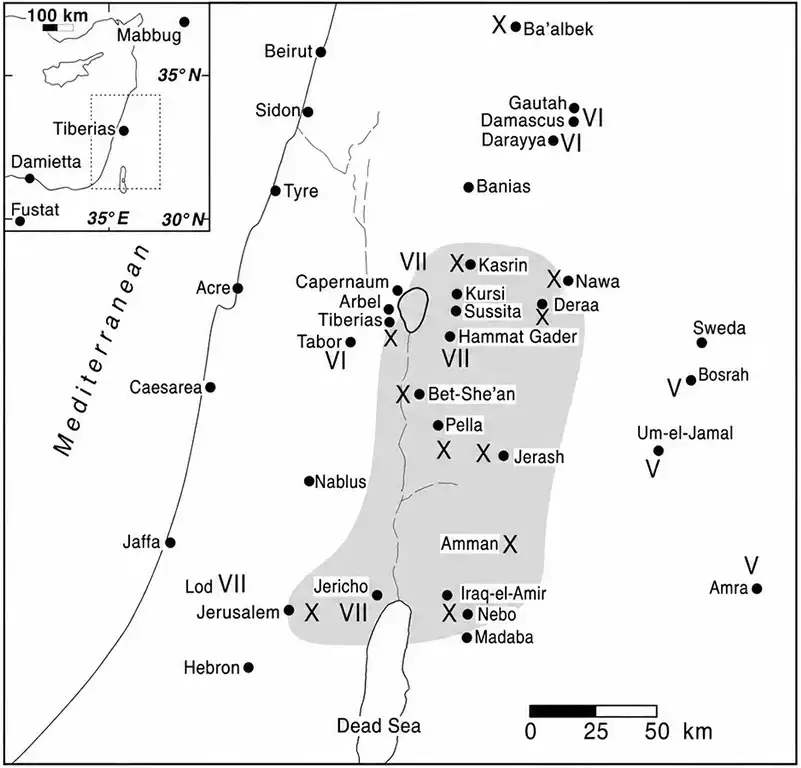
The earthquake of 551 is best known for its devastating impact along the eastern Mediterranean coast, especially in Lebanon and Syria. Historical sources describe destruction across a broad area that included Palestine and Arabia, and archaeological studies have proposed damage or rebuilding phases in Jordanian sites such as Petra, Jerash, Mount Nebo, and the northern Decapolis.
At Petra, some earlier interpretations attributed extensive sixth-century destruction to the earthquake of 551. However, modern archaeology advises caution. Evidence from the Petra Church and other excavations shows that the city continued to function after the mid-sixth century; it should not be portrayed as having been simply abandoned after 551. Discussion of the evidence and its reassessment
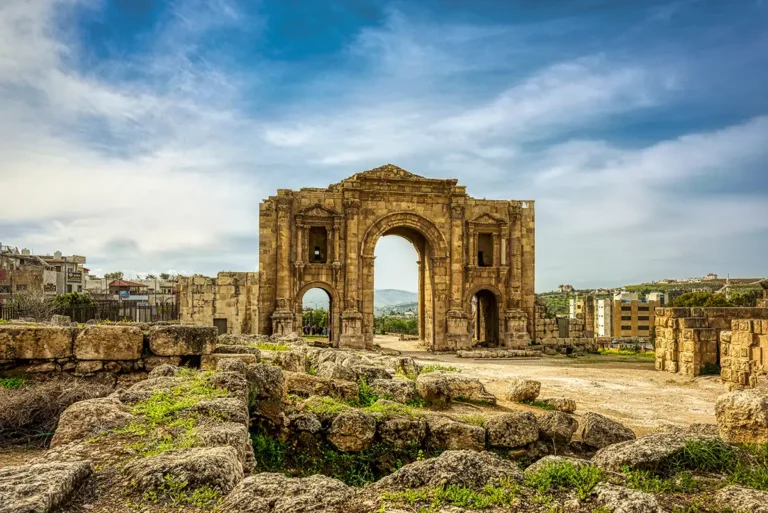
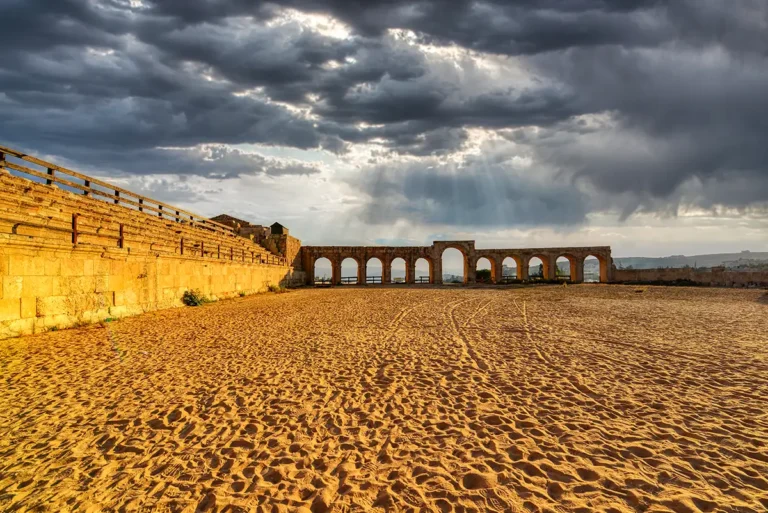
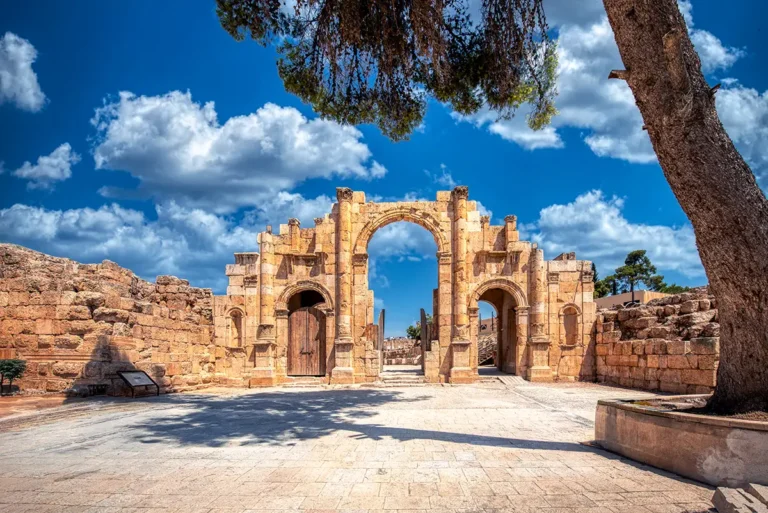
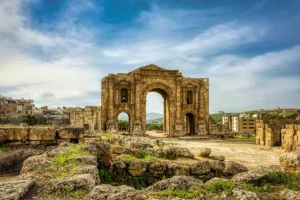
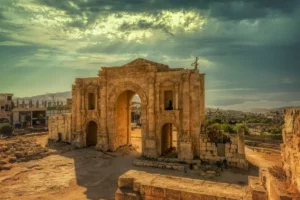
At Jerash, the possible effects of the 551 earthquake are part of a longer pattern of rebuilding and adaptation. The city’s churches, civic spaces, bridges, and waterworks had to be maintained over centuries of seismic activity. A damaged bridge or blocked street could redirect movement through the city; a weakened church or bath could require rebuilding in a new form. Archaeological attribution is not always certain, because later rebuilding, stone reuse, erosion, and subsequent earthquakes can obscure the traces of a particular event.
Still, the earthquake of 551 reminds us that ancient cities did not face isolated disasters. Repeated shocks placed a continual burden on urban communities. Repairs consumed wealth, skilled labour, and building materials. A city that could rebuild remained active; a city unable to restore its water, transport, and public spaces might begin to decline.
The earthquake of 749 AD: the great catastrophe of northern Jordan
The earthquake of 749—often called the Galilee earthquake or the “Earthquake of the Sabbatical Year”—was the most dramatic of the three for northern Jordan. It struck during the Umayyad period and devastated cities on both sides of the Jordan Valley. Archaeological and historical evidence connects it with destruction at Jerash, Pella, Gadara/Umm Qais, and many settlements across the Levant. Tsafrir and Foerster’s study of the 749 dating and destruction layers
Jerash: a living city devastated
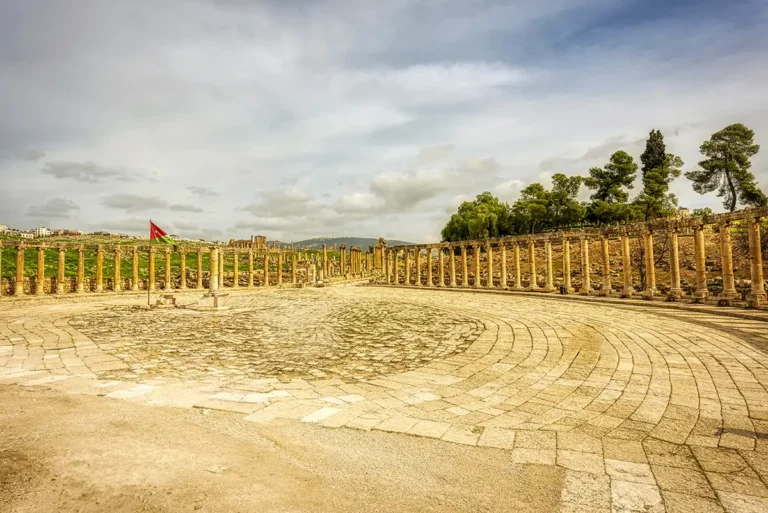
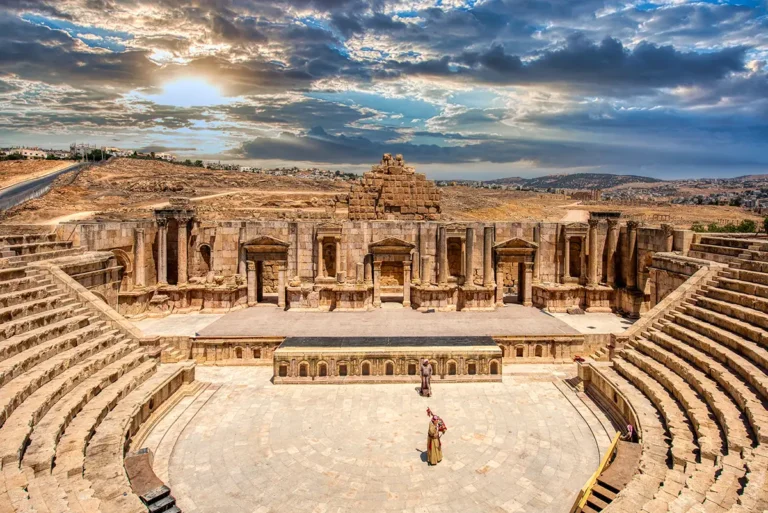
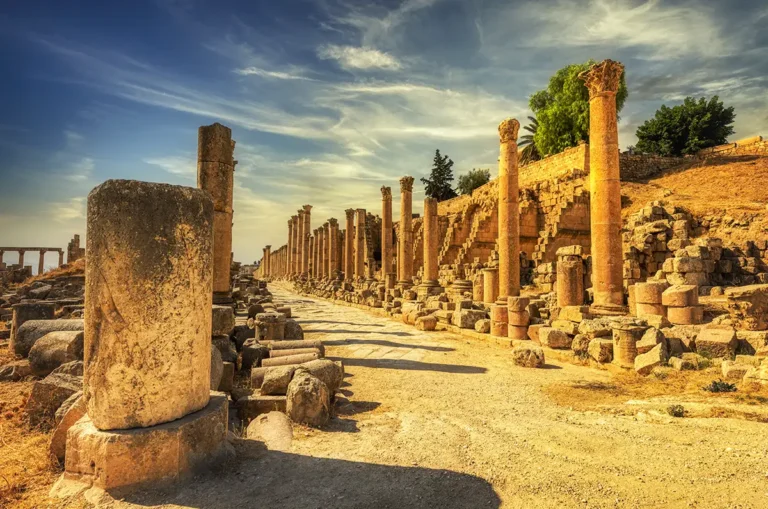
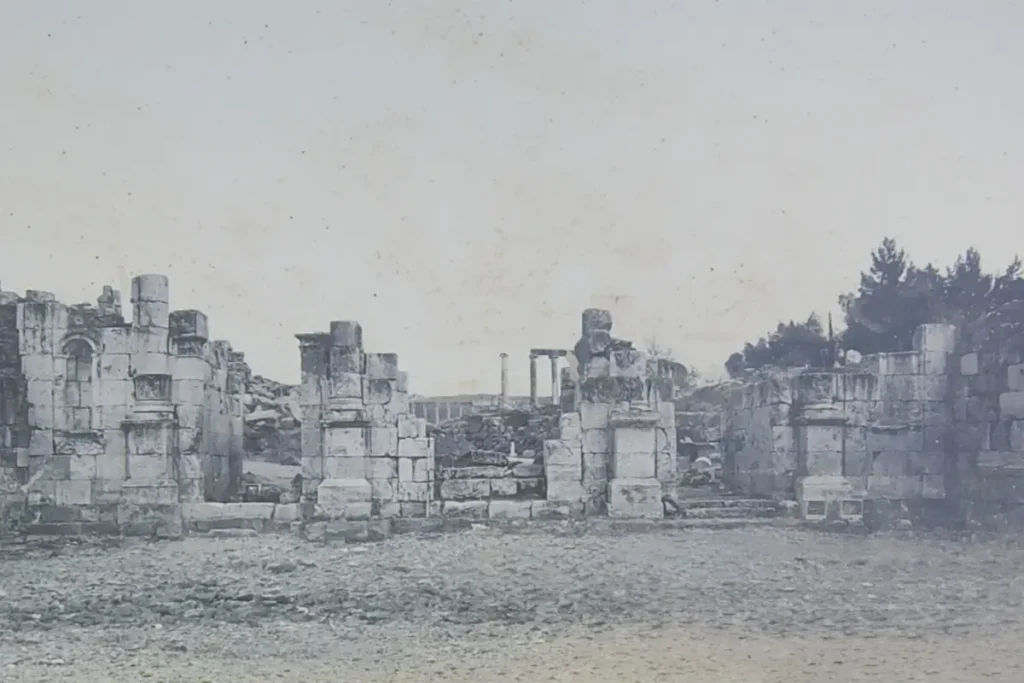
In 749, Jerash was not merely a Roman relic. It was an inhabited Early Islamic city, with houses, workshops, a mosque, and communities living among Roman colonnades, temples, churches, and streets.
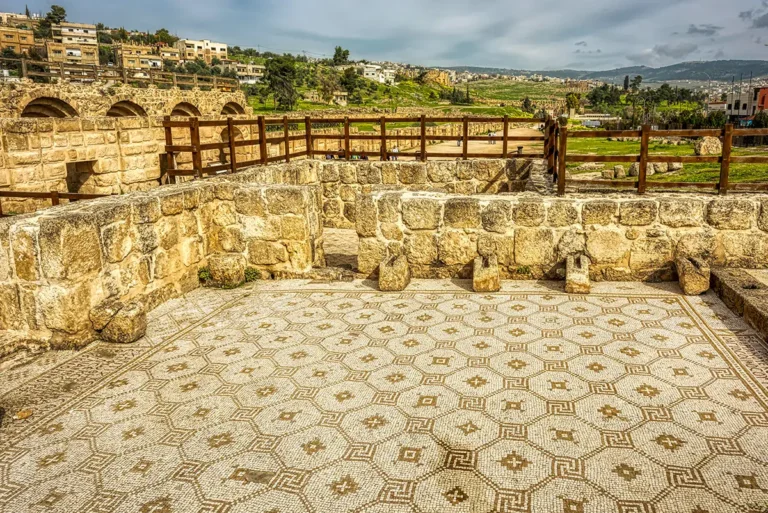
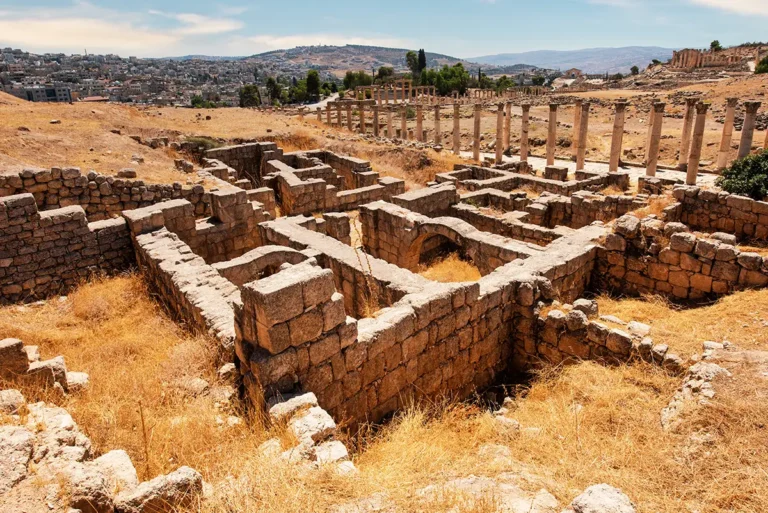
Excavations have revealed houses in the Northwest Quarter sealed beneath sudden collapse. Domestic possessions remained inside, providing an unusually immediate picture of interrupted lives. The earthquake caused severe damage in several parts of the city, although some southern districts were later restored and reoccupied. Research on earthquake destruction and later renewal at Jerash
The result was a profound urban contraction. Some areas were rebuilt on a smaller scale; others were abandoned or eventually converted to agricultural use. Jerash survived in reduced form, but its centuries-long role as a large, densely built city had been decisively altered.
Pella: destruction in the Jordan Valley
Pella, or Fihl in the Early Islamic period, lay near the active Jordan Valley fault zone and was among the places most severely affected by the 749 disaster. The city had a long history as a Decapolis centre, Byzantine town, and Umayyad settlement. Its homes, churches, workshops, and agricultural economy depended on the stability of buildings and local water resources.
The quake devastated built-up areas and left collapsed household deposits. For residents, the immediate consequences likely included deaths and injuries, homelessness, loss of stored food and tools, and the breakdown of ordinary work and trade. Rebuilding on such a scale was difficult, and Pella’s later history reflects a major reduction in its urban life.
The human consequences
The surviving ruins make it easy to focus on temples, churches, colonnades, and public buildings. Yet the greatest losses were human.
An earthquake could destroy homes while families slept, trap people beneath stone walls, separate relatives, and leave survivors without shelter. It could contaminate or interrupt water supplies, damage food stores, block roads, and make local markets inaccessible. Religious buildings were not only monuments but also places of gathering, charity, burial, and communal support; their collapse weakened the social fabric of a city at the very moment people needed it most.
The earthquakes of 363, 551, and 749 also accelerated longer changes. They did not alone “cause” the decline of Petra, Jerash, Pella, or other cities. Trade routes shifted, empires changed, populations moved, and economies evolved. But earthquakes could turn vulnerability into crisis by making reconstruction too expensive or by breaking the infrastructure on which urban life depended.
A legacy written in ruins
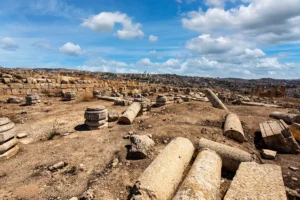
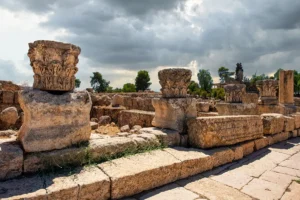
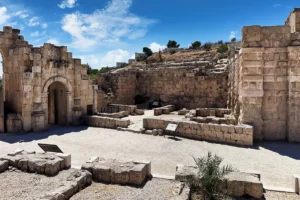
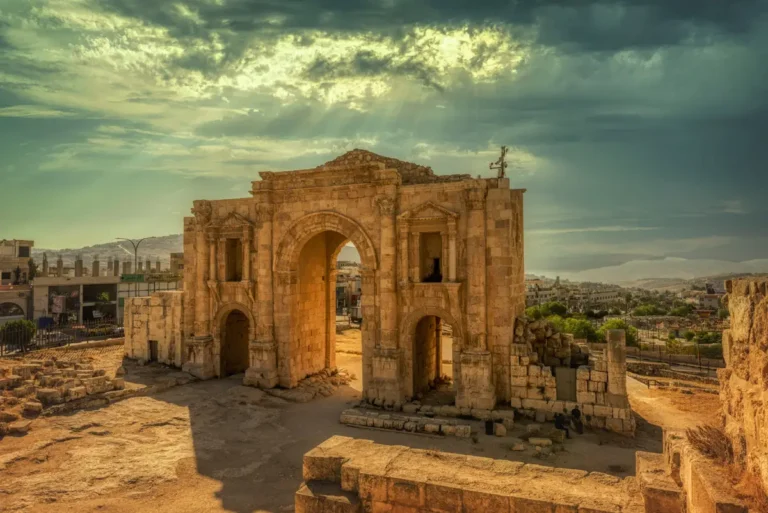
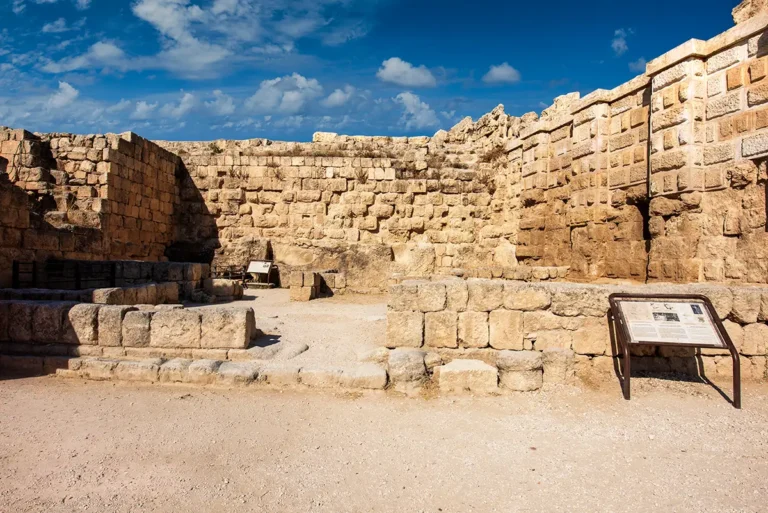
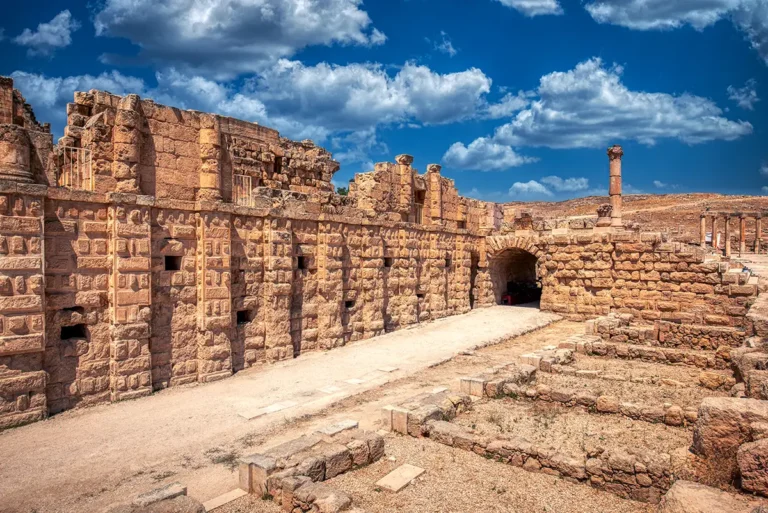
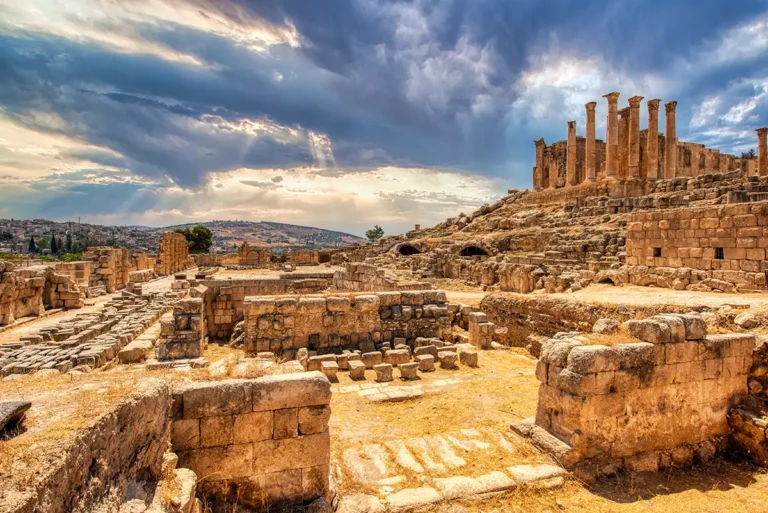
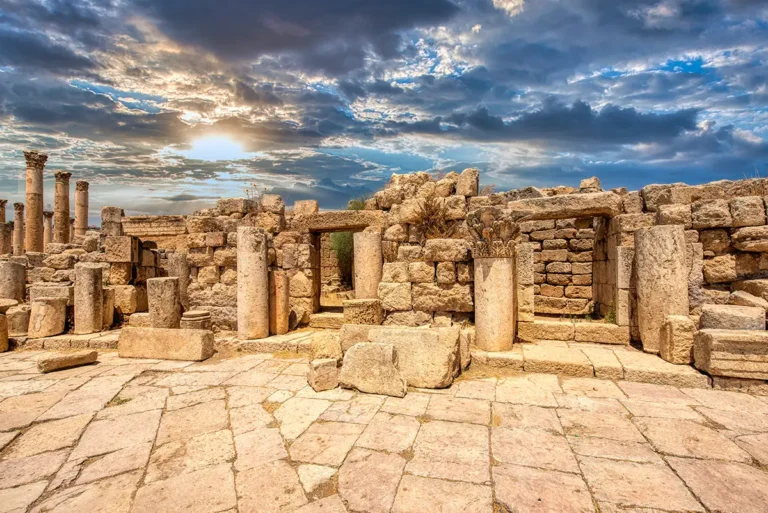
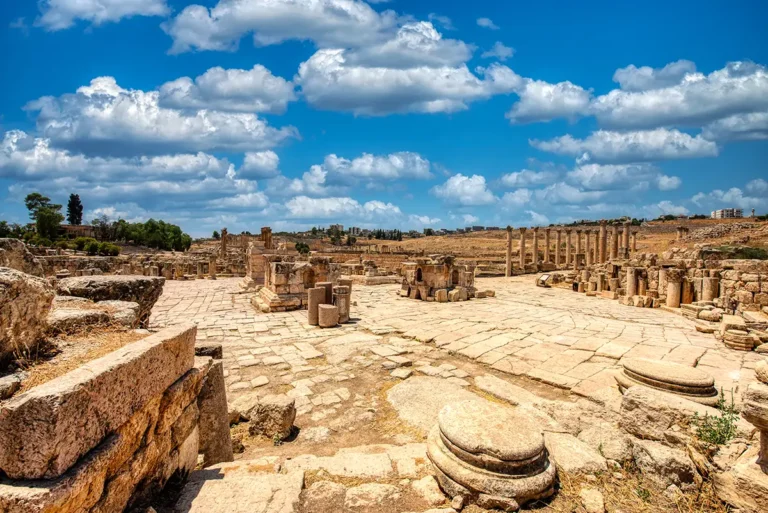
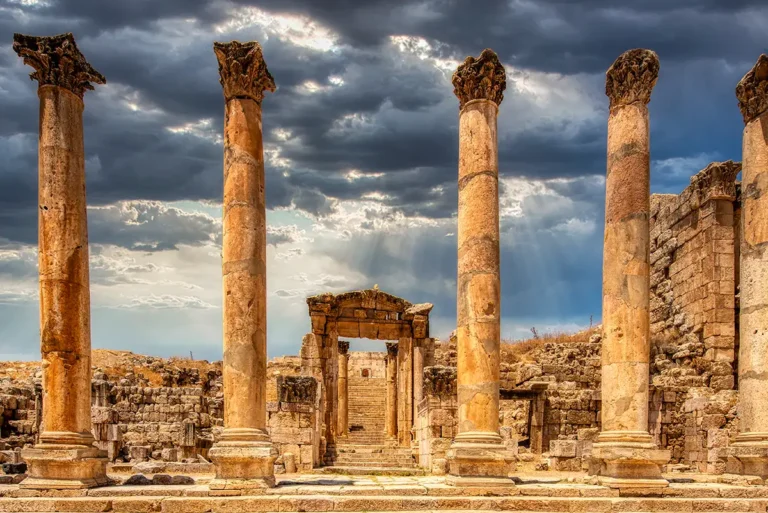
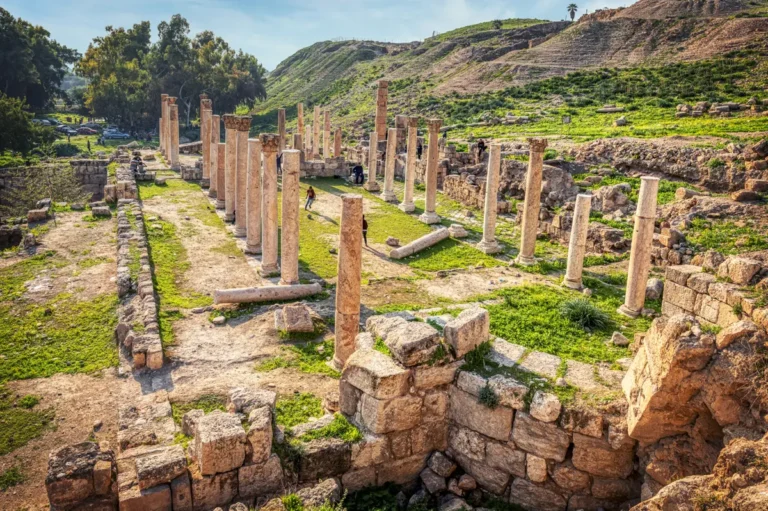
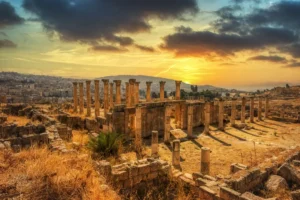
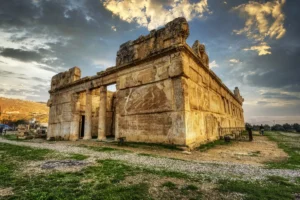
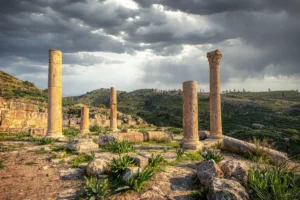
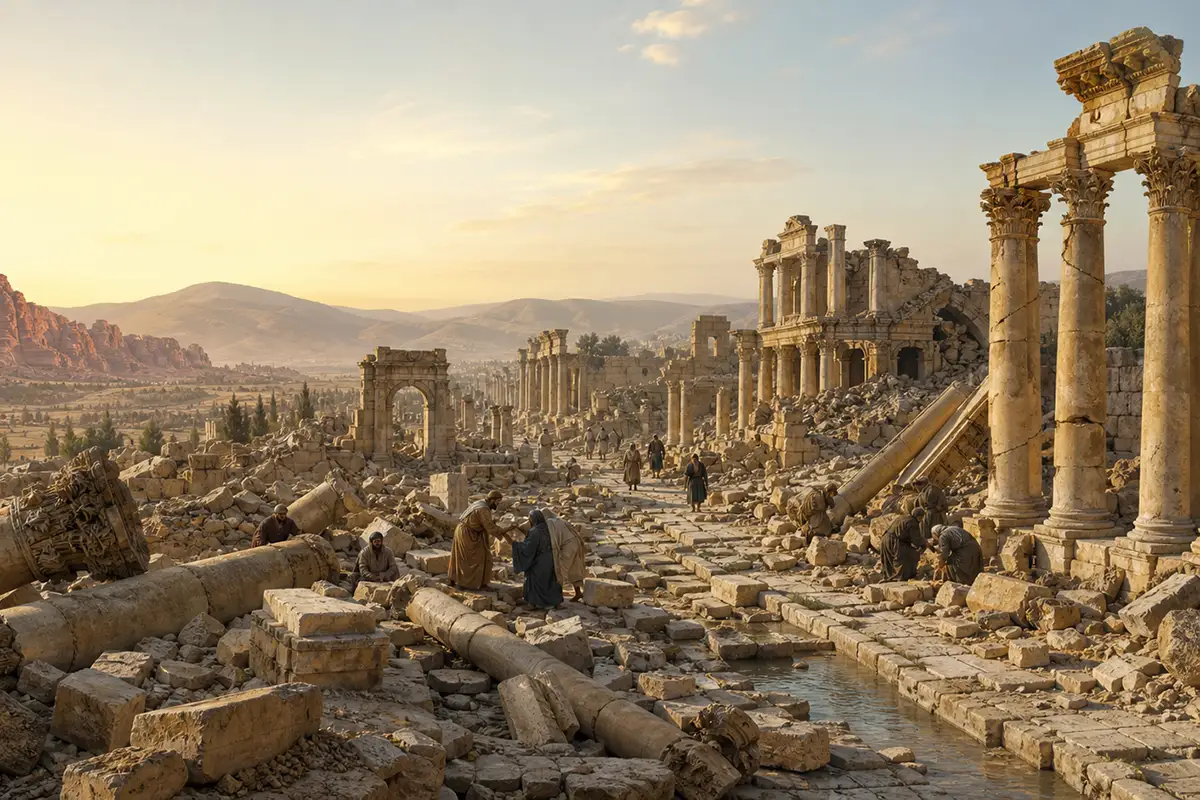
Jordan’s archaeological sites preserve the legacy of these disasters in fallen columns, collapsed arches, damaged streets, abandoned houses, and repaired monuments. Petra shows how the earthquake of 363 damaged a sophisticated desert city and its water-management system. The earthquake of 551 illustrates the cumulative pressure of repeated seismic events and the difficulty of assigning every ruined structure to a single catastrophe. The earthquake of 749 reveals the dramatic destruction and long-term reshaping of Jerash, Pella, and the northern Jordanian urban landscape.
These ruins are not simply evidence of collapse. They also record resilience: communities that repaired buildings, reused stone, restored water systems, and continued living amid the remains of earlier civilisations.
The earthquake of 749 AD: the great catastrophe of northern Jordan
The earthquake of 749—often called the Galilee earthquake or the “Earthquake of the Sabbatical Year”—was the most dramatic of the three for northern Jordan. It struck during the Umayyad period and devastated cities on both sides of the Jordan Valley. Archaeological and historical evidence connects it with destruction at Jerash, Pella, Gadara/Umm Qais, and many settlements across the Levant. Tsafrir and Foerster’s study of the 749 dating and destruction layers
Jerash: a living city devastated
In 749, Jerash was not merely a Roman relic. It was an inhabited Early Islamic city, with houses, workshops, a mosque, and communities living among Roman colonnades, temples, churches, and streets.
Excavations have revealed houses in the Northwest Quarter sealed beneath sudden collapse. Domestic possessions remained inside, providing an unusually immediate picture of interrupted lives. The earthquake caused severe damage in several parts of the city, although some southern districts were later restored and reoccupied. Research on earthquake destruction and later renewal at Jerash
The result was a profound urban contraction. Some areas were rebuilt on a smaller scale; others were abandoned or eventually converted to agricultural use. Jerash survived in reduced form, but its centuries-long role as a large, densely built city had been decisively altered.
Pella: destruction in the Jordan Valley
Pella, or Fihl in the Early Islamic period, lay near the active Jordan Valley fault zone and was among the places most severely affected by the 749 disaster. The city had a long history as a Decapolis centre, Byzantine town, and Umayyad settlement. Its homes, churches, workshops, and agricultural economy depended on the stability of buildings and local water resources.
The quake devastated built-up areas and left collapsed household deposits. For residents, the immediate consequences likely included deaths and injuries, homelessness, loss of stored food and tools, and the breakdown of ordinary work and trade. Rebuilding on such a scale was difficult, and Pella’s later history reflects a major reduction in its urban life.
The human consequences
The surviving ruins make it easy to focus on temples, churches, colonnades, and public buildings. Yet the greatest losses were human.
An earthquake could destroy homes while families slept, trap people beneath stone walls, separate relatives, and leave survivors without shelter. It could contaminate or interrupt water supplies, damage food stores, block roads, and make local markets inaccessible. Religious buildings were not only monuments but also places of gathering, charity, burial, and communal support; their collapse weakened the social fabric of a city at the very moment people needed it most.
The earthquakes of 363, 551, and 749 also accelerated longer changes. They did not alone “cause” the decline of Petra, Jerash, Pella, or other cities. Trade routes shifted, empires changed, populations moved, and economies evolved. But earthquakes could turn vulnerability into crisis by making reconstruction too expensive or by breaking the infrastructure on which urban life depended.
A legacy written in ruins
Jordan’s archaeological sites preserve the legacy of these disasters in fallen columns, collapsed arches, damaged streets, abandoned houses, and repaired monuments. Petra shows how the earthquake of 363 damaged a sophisticated desert city and its water-management system. The earthquake of 551 illustrates the cumulative pressure of repeated seismic events and the difficulty of assigning every ruined structure to a single catastrophe. The earthquake of 749 reveals the dramatic destruction and long-term reshaping of Jerash, Pella, and the northern Jordanian urban landscape.
These ruins are not simply evidence of collapse. They also record resilience: communities that repaired buildings, reused stone, restored water systems, and continued living amid the remains of earlier civilisations.