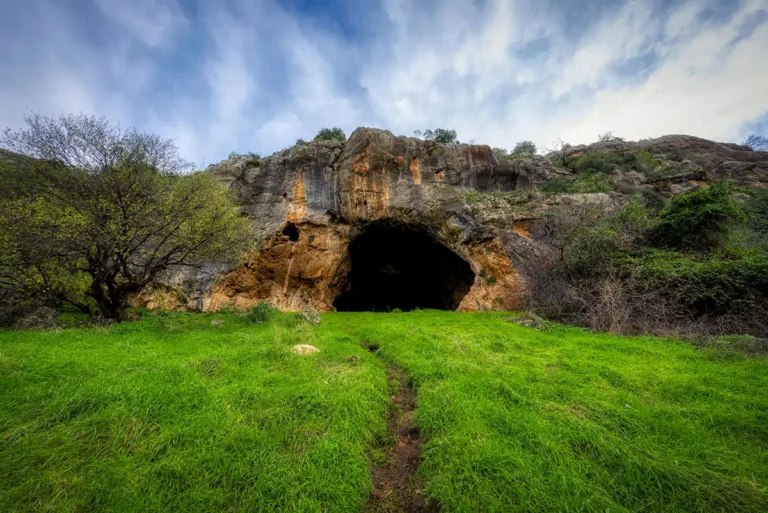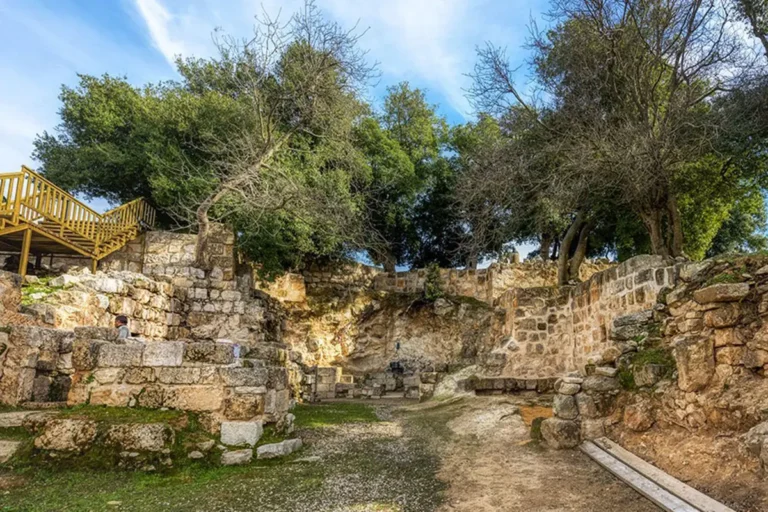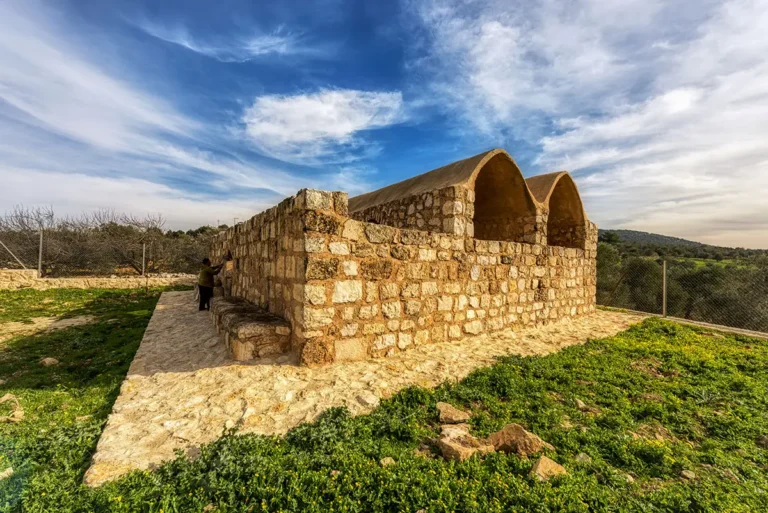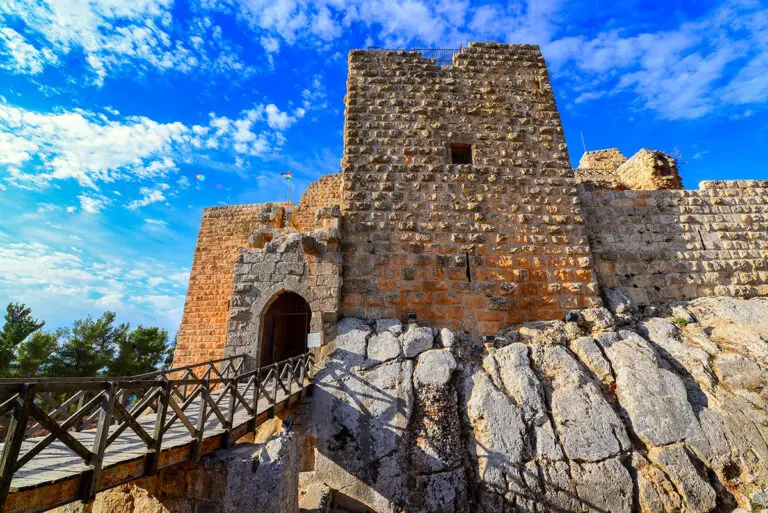















In the green hills of northern Jordan, Ajloun Forest Reserve protects one of the country’s last stands of Mediterranean woodland. Evergreen oaks, strawberry trees and wild pistachios cover its slopes, roe deer have returned after almost two centuries, and in 2025 UNESCO recognised the area as a biosphere reserve.
Where Is Ajloun Forest Reserve?
The reserve lies about 9 km north-west of Ajloun town, near the village of Umm al-Yanabi, at about 700–1,100 m above sea level. It covers about 13 km², while the UNESCO biosphere reserve around it covers about 2,953 ha. Ajloun Castle can be reached by a full-day trail.
History of the Reserve
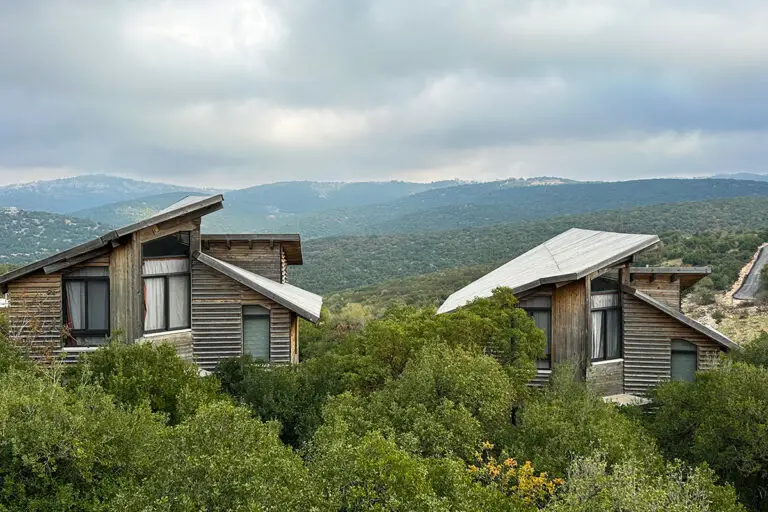
The Royal Society for the Conservation of Nature established the reserve in 1987 to protect the woodland from cutting and overgrazing. In 2004 it opened tented bungalows, later replaced by cabins, and in 2009 the foundation stone of the Royal Academy for Nature Conservation was laid here. In 2025 UNESCO designated the Ajloun Biosphere Reserve, managed by the RSCN.
Habitats and Wildlife
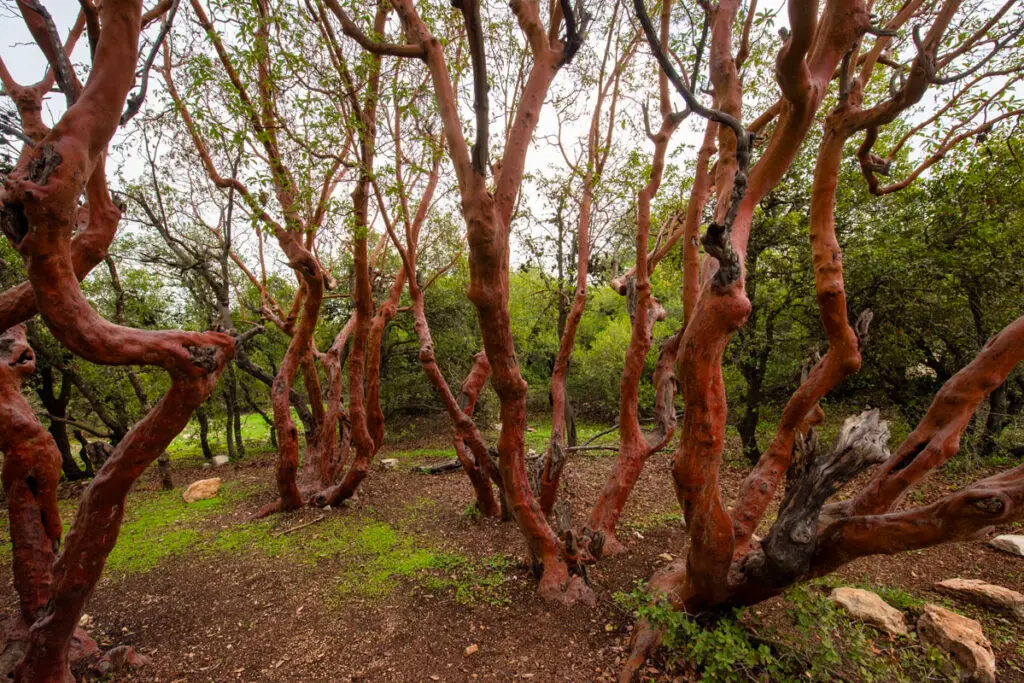
The forest is dominated by evergreen oak, with carob, wild pistachio and the red-barked strawberry tree. In spring, irises and orchids flower, including fifteen nationally endangered orchids. Wild boar, striped hyena, red fox, stone marten, Persian squirrel and porcupine live in the woods, and the reserve is an Important Bird Area.
Oak Woodland
Evergreen oak, carob, wild pistachio and strawberry tree.
Roe Deer
Reintroduced to Jordan’s forests in 2006.
Guided Trails
Six trails, from a short loop to a full day to Ajloun Castle.
Community Houses
Soap, biscuit and calligraphy workshops in local villages.
The Return of the Roe Deer
Roe deer disappeared from Jordan in about the early 19th century. In 1989 four animals were brought from the Turkish–Bulgarian border and bred at Zubia, in 2000 fourteen were moved to an enclosure at Ajloun, and on 19 January 2006 twenty-six were released into the forest.

Trails and Local Crafts
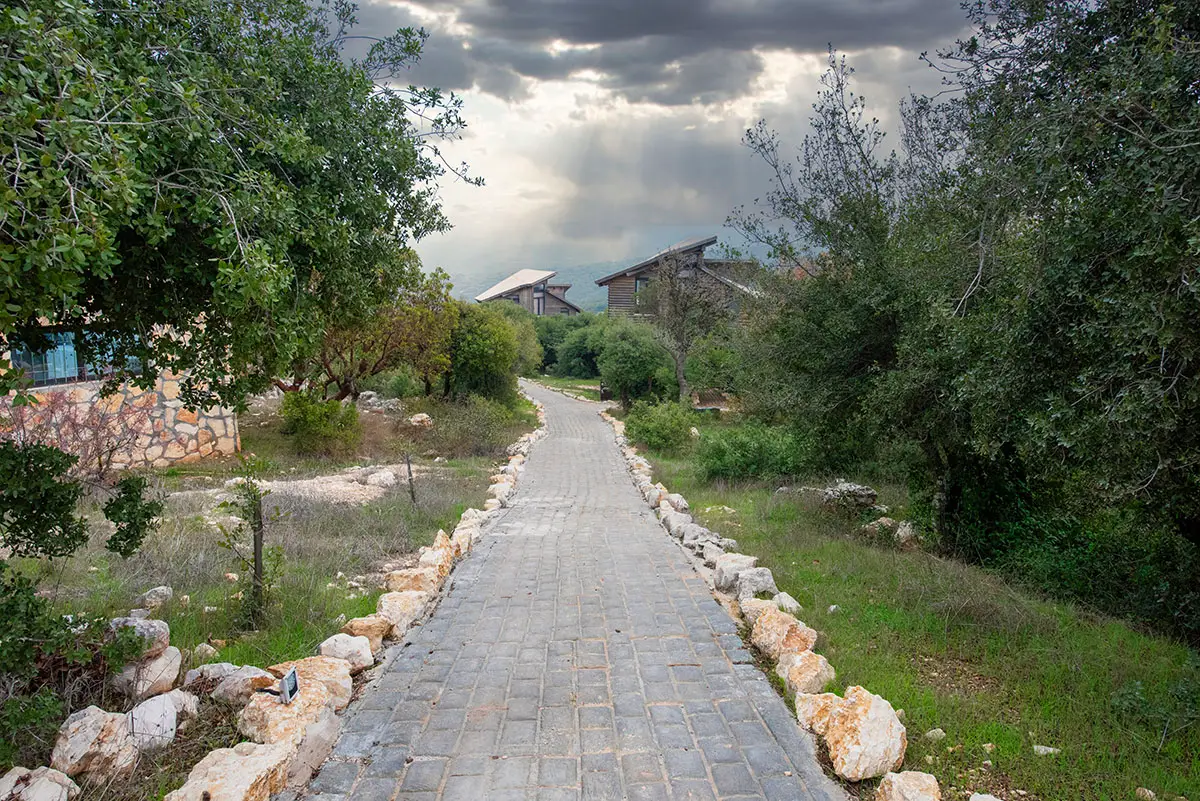
The RSCN runs six trails, from the short Roe Deer trail to the full-day walk to Ajloun Castle, through villages such as Orjan and Rasoun. In the villages around the reserve, women make olive-oil soap at the Soap House, and the Biscuit House and Calligraphy House offer workshops.
Visiting Ajloun Forest Reserve Today
Entrance is 8 JOD for foreign visitors and 6 JOD for residents (RSCN, 2025). The reserve is open daily from 8:00 to 16:00. The short Roe Deer trail can be walked without a guide; the longer trails are guided, and their prices include entrance. Cabins are open all year. See our Ajloun Forest travel guide for practical details.
Further reading: UNESCO — Ajloun Biosphere Reserve; Eid & Ananbeh, Re-introduction of roe deer at Ajloun (2009).