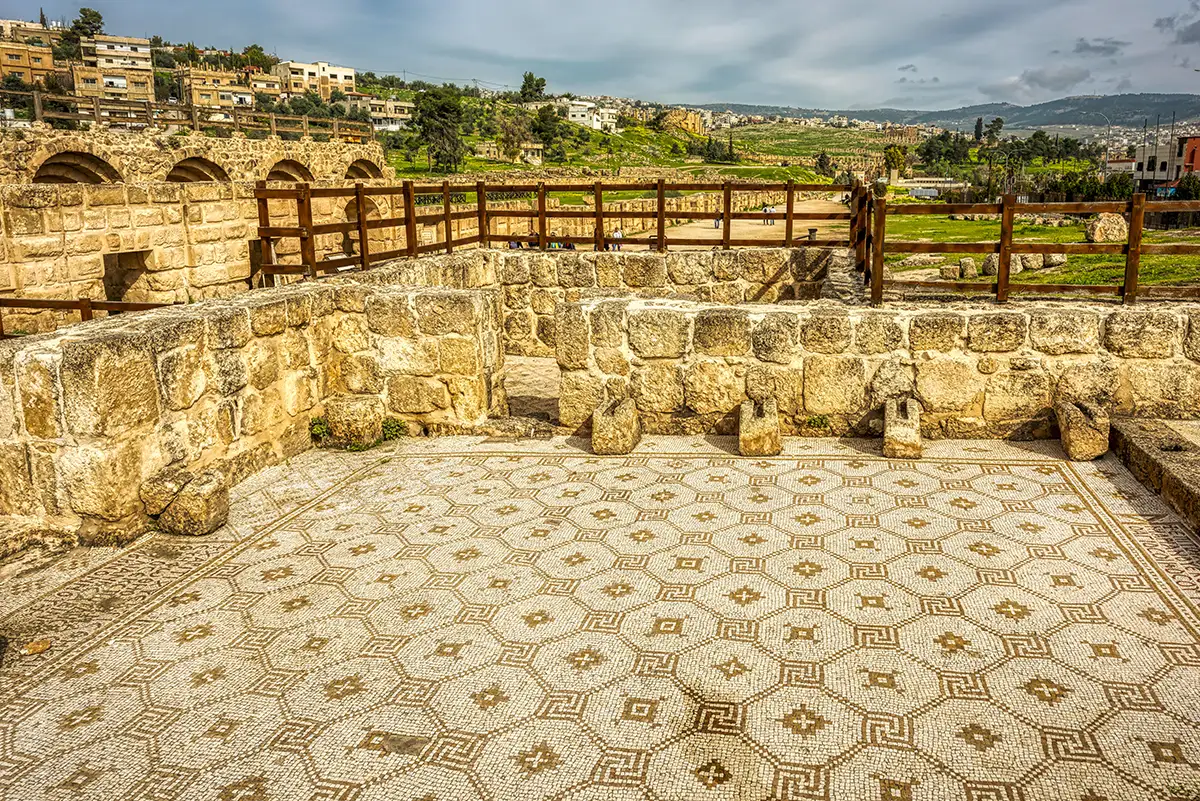
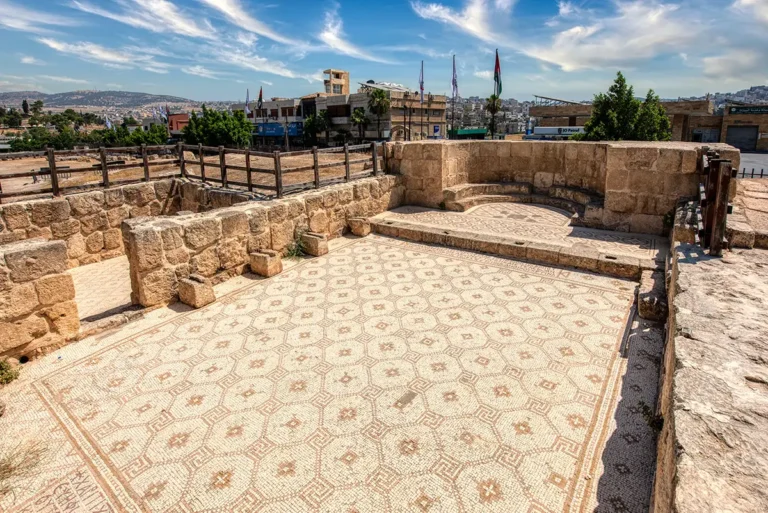
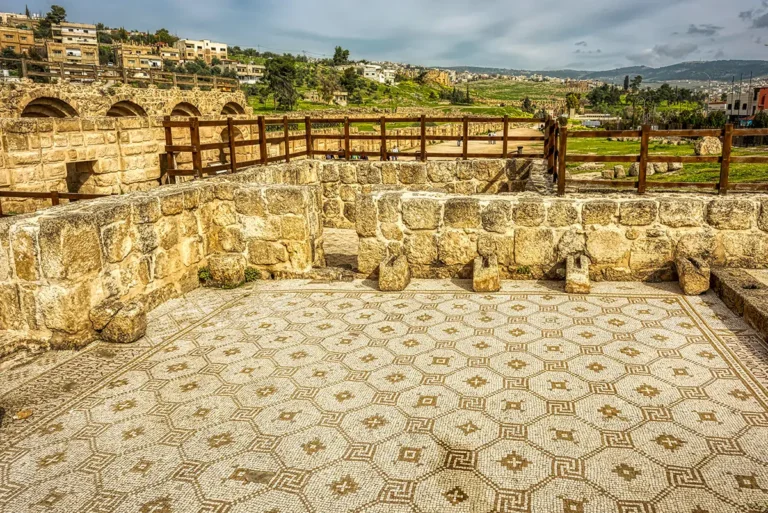
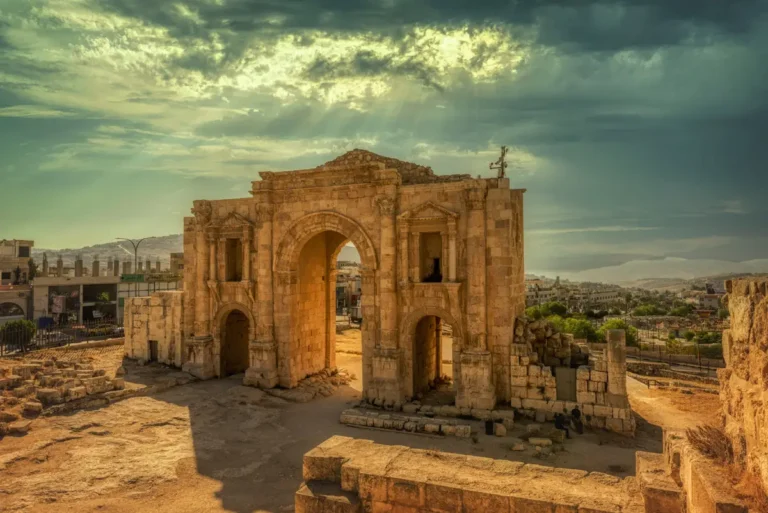

Just inside the entrance to ancient Gerasa, between Hadrian’s Arch and the Hippodrome, the Church of Marianos is easy to walk past. Yet this small Byzantine church, completed in AD 570, keeps a finely patterned mosaic floor and a dated foundation inscription — a reminder that Jerash was still a living Christian town long after the great Roman monuments around it had fallen out of use.
Where Is the Church of Marianos?
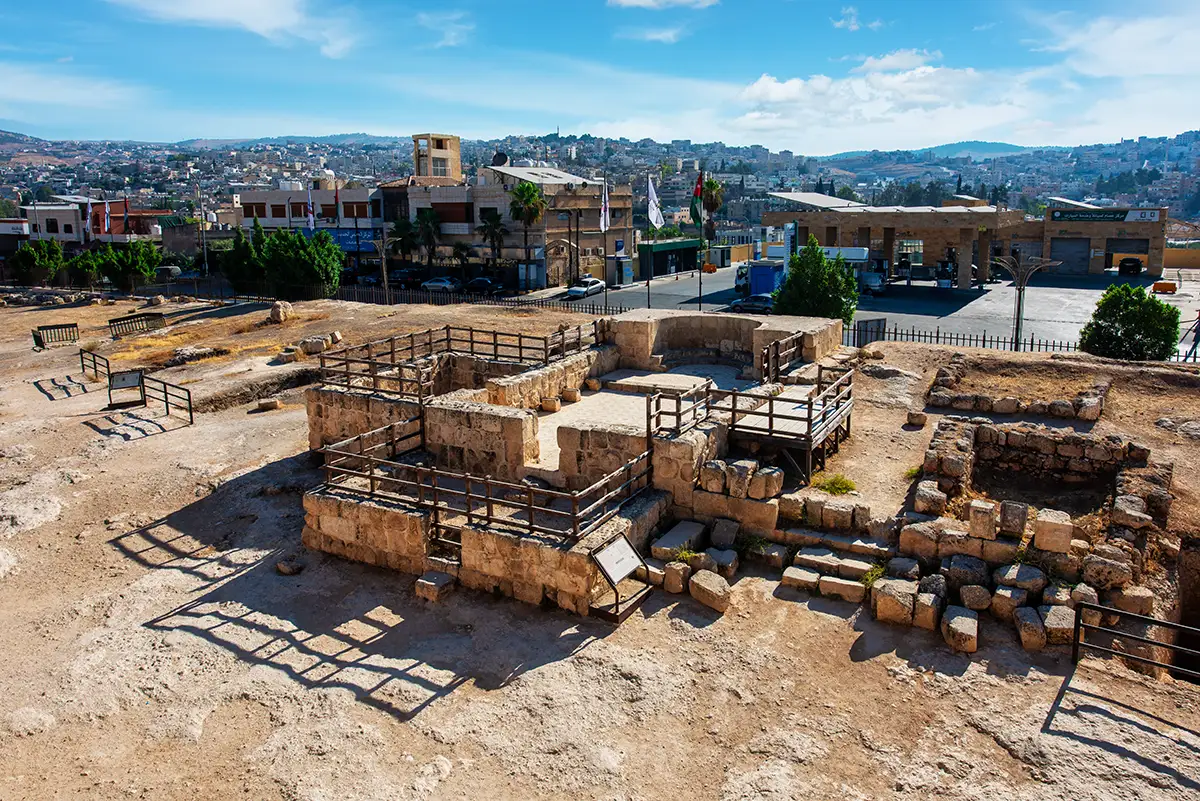
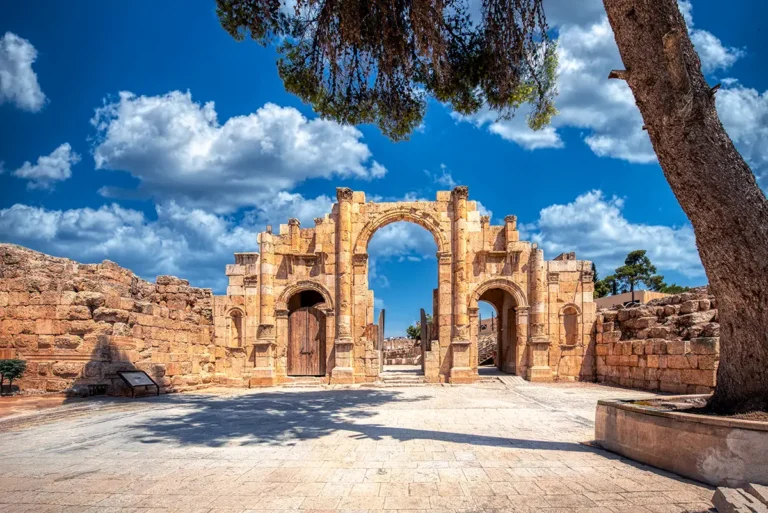
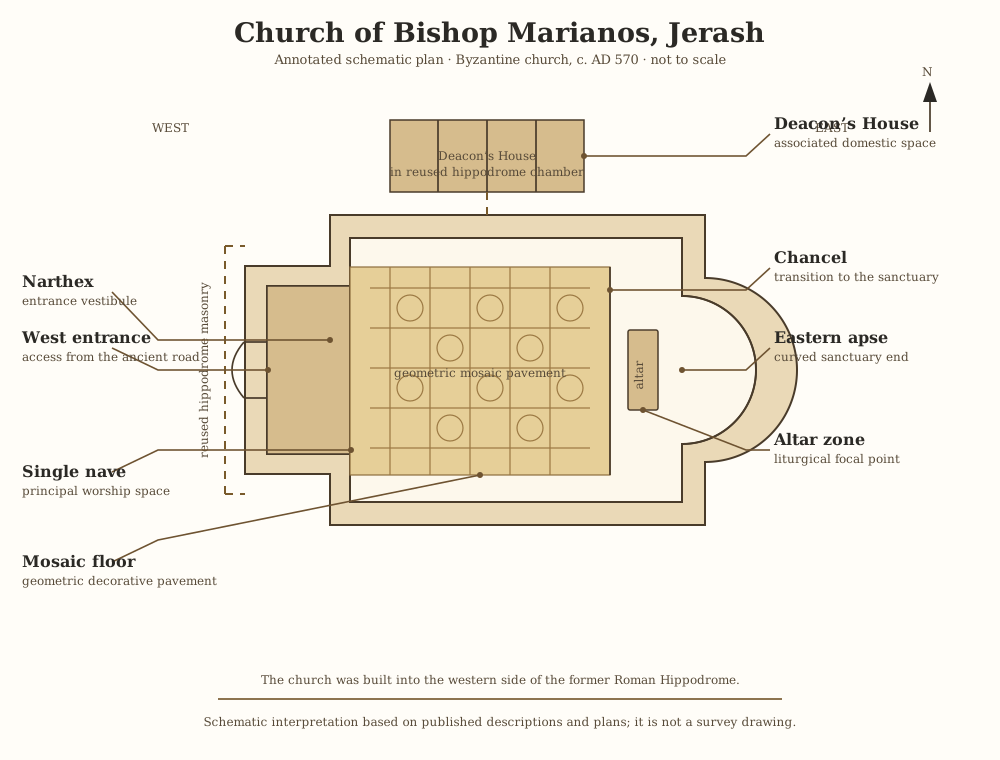
The church stands about 50 metres north of Hadrian’s Arch, beside the main path that leads past the Hippodrome to the South Gate. Its entrance faced the ancient road between Philadelphia (modern Amman) and Gerasa.
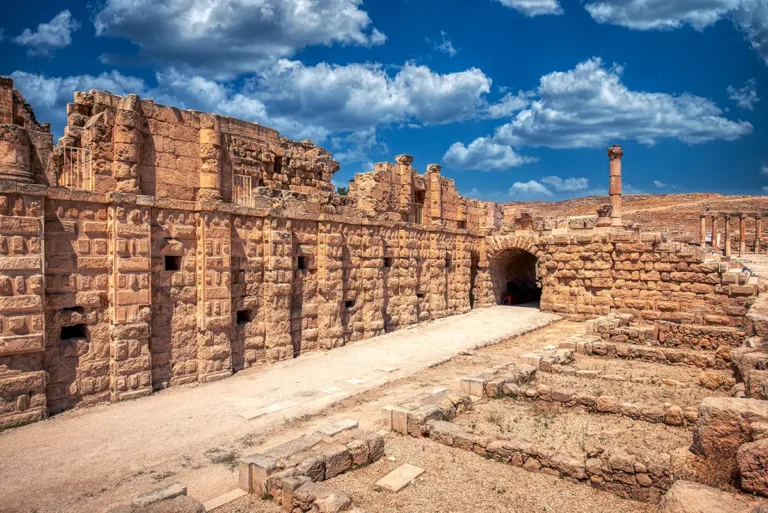
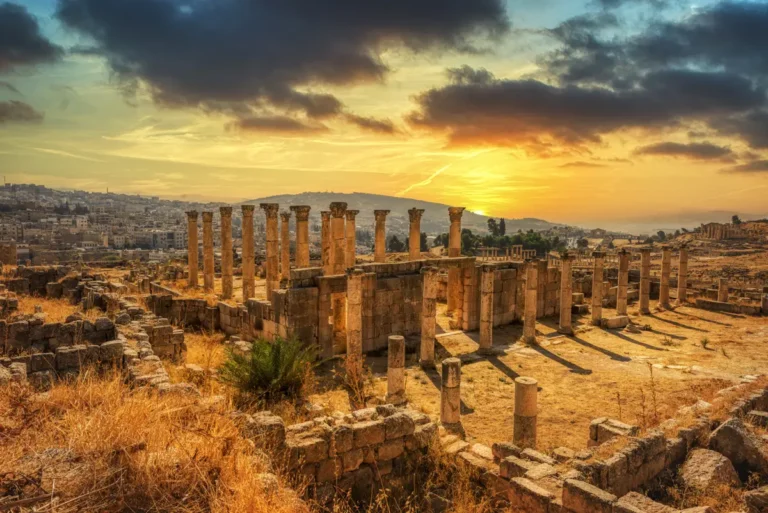
In the 2nd century this was the city’s entertainment district, where crowds gathered for races and public spectacles. Four centuries later it had become a neighbourhood with its own small church.
Historical Context and Origin
By the 6th century the Hippodrome was no longer used for races, and the area around it had been adapted for new purposes. Its chambers served as homes and workshops — among them the residence of a deacon — and a church was built for the people who lived and worked here.
According to its mosaic inscription, the church was built from its foundations and completed under Bishop Marianos in April AD 570. It belongs to the great age of church building in Byzantine Gerasa, when the city’s bishops raised new churches across the town.
Architectural Design
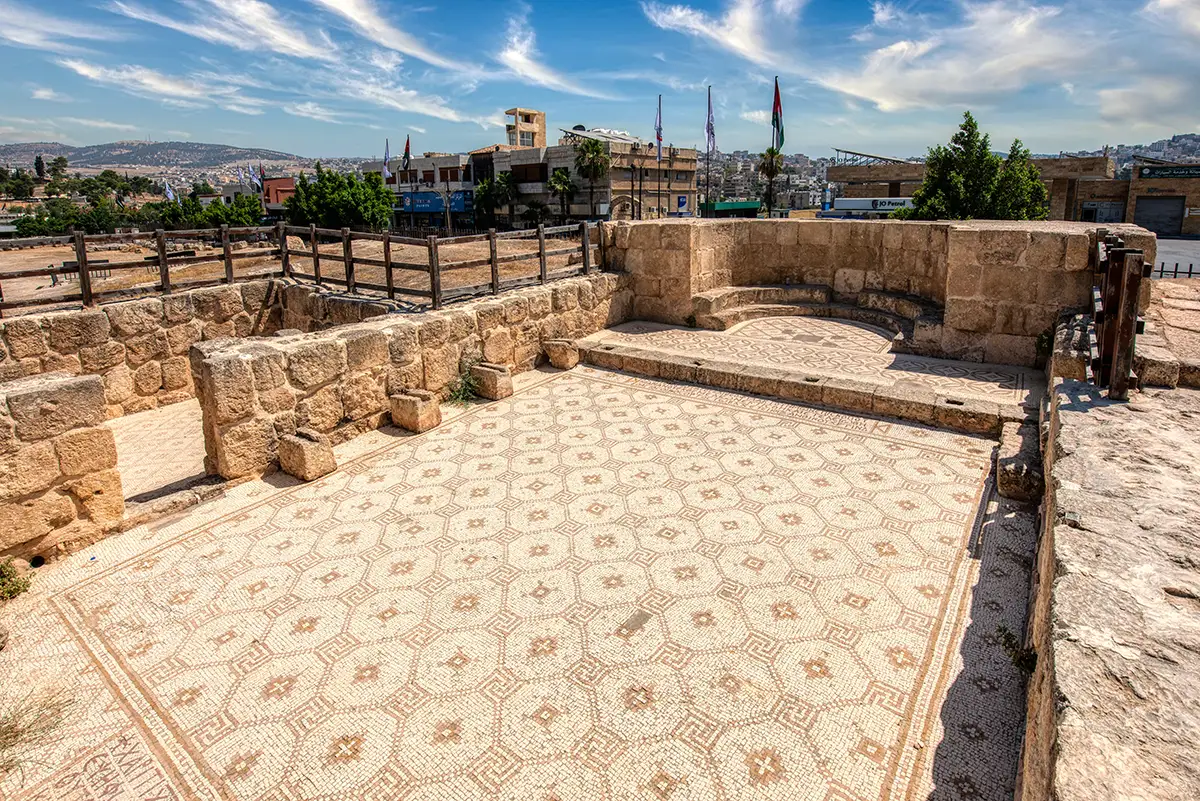
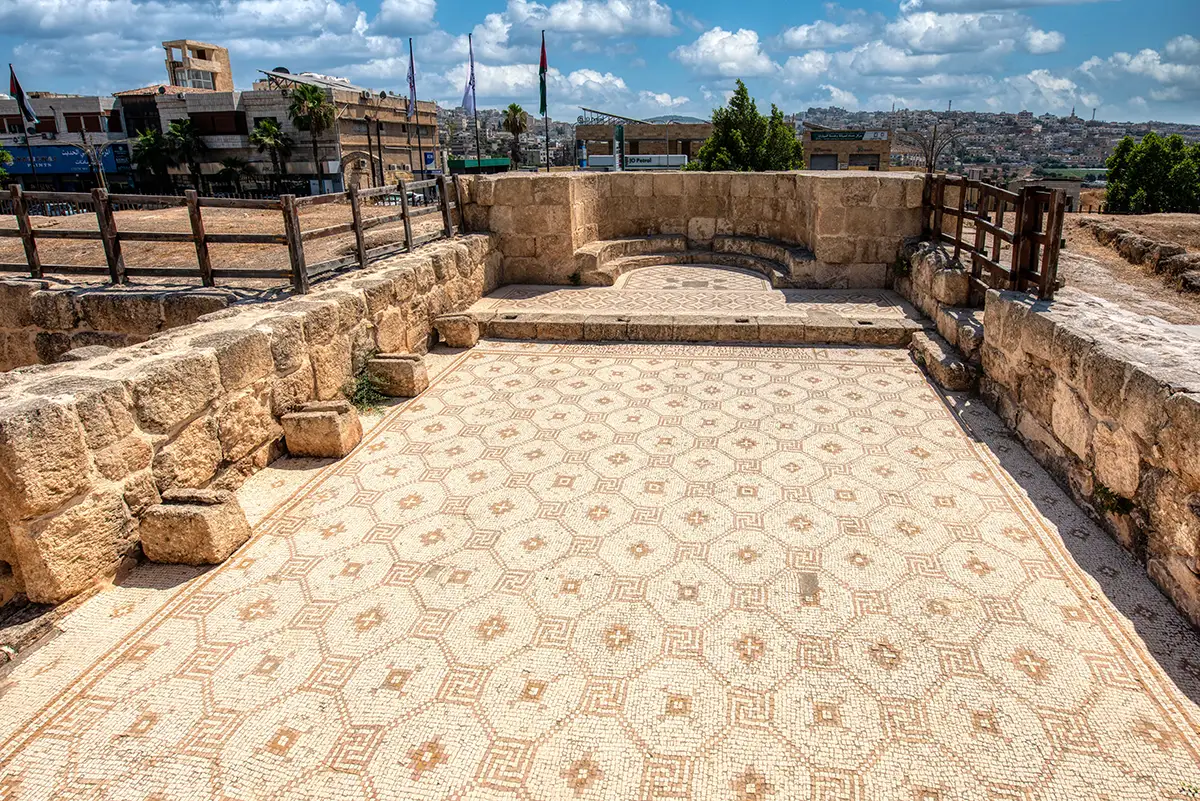
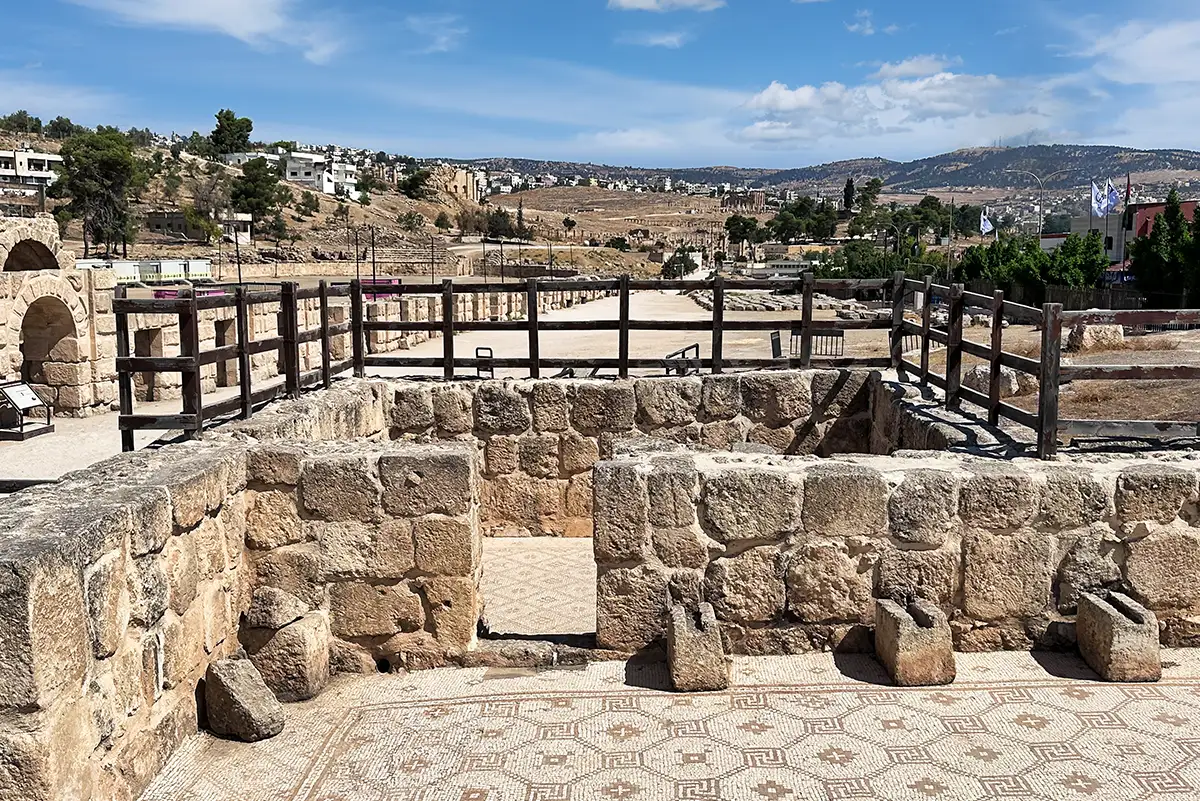
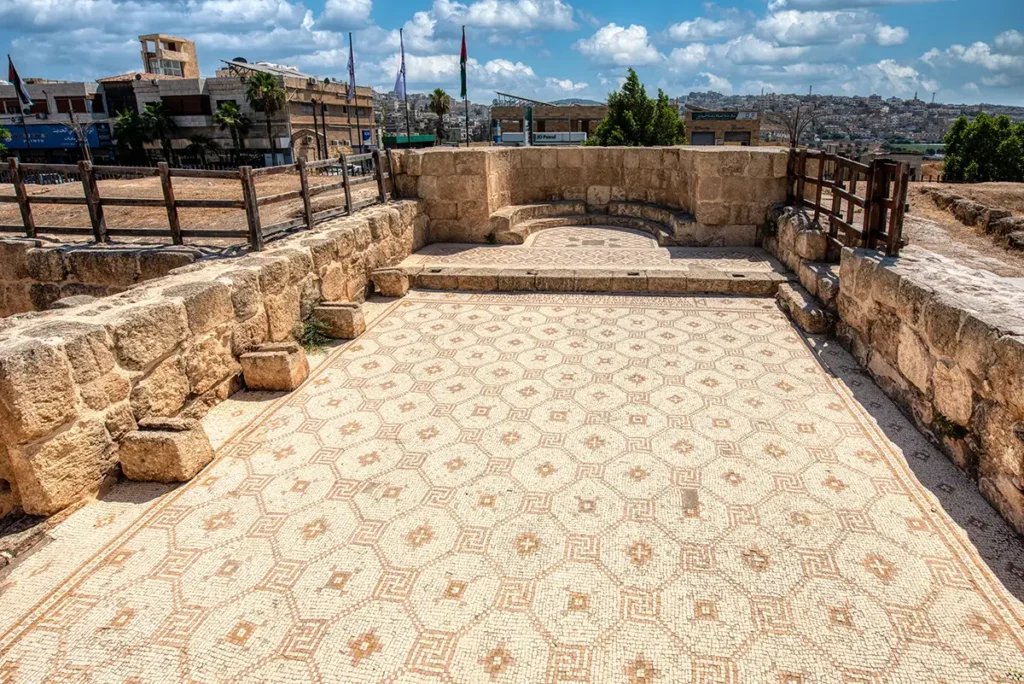
The church is a compact rectangle, about 13.5 metres long and 8.1 metres wide. Worshippers entered through a narrow porch, or narthex, into a single hall without columns, ending in a semicircular apse at the east, where a raised platform held the altar and the clergy.
The Mosaic Floor
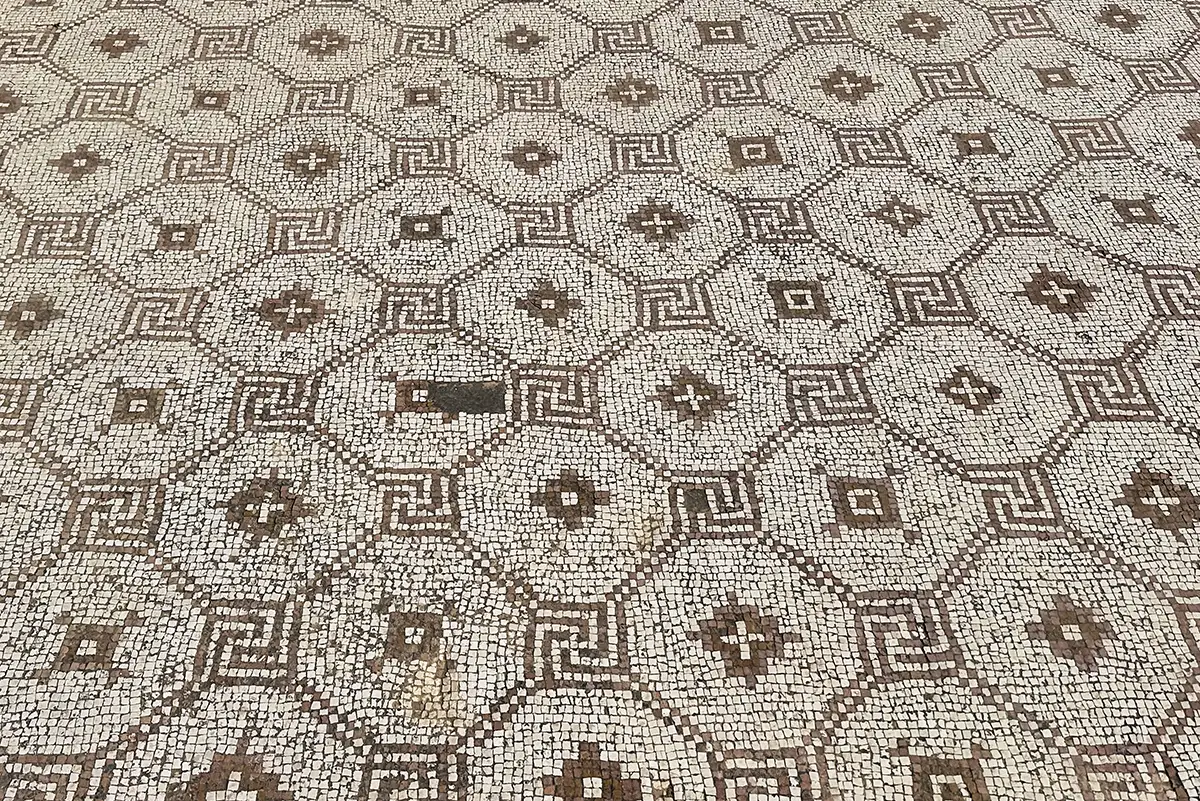
Interlocking circles, diamonds and framed panels cover the nave in a geometric carpet — the church’s main decoration.
The Single Nave
One open hall without columns gave the congregation a clear view to the altar.
The Apse
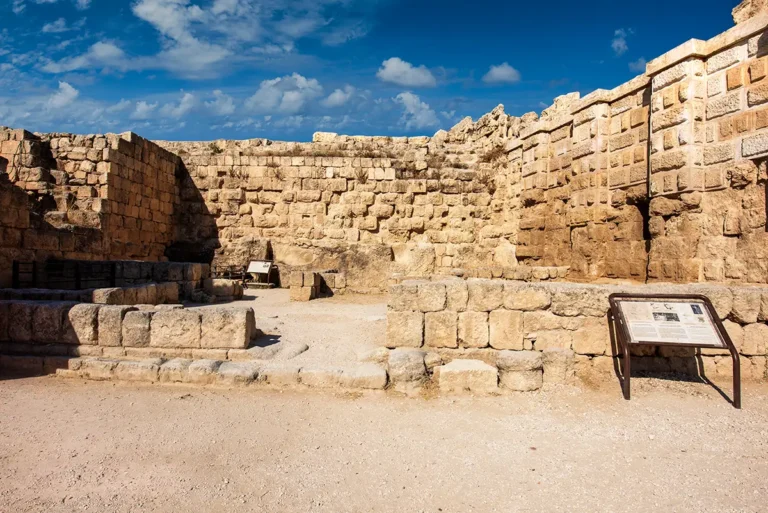
A semicircular apse at the east end held a raised platform for the clergy.
Reused Stone
The walls reuse blocks from older Roman buildings nearby, as was common in late antique Jerash.
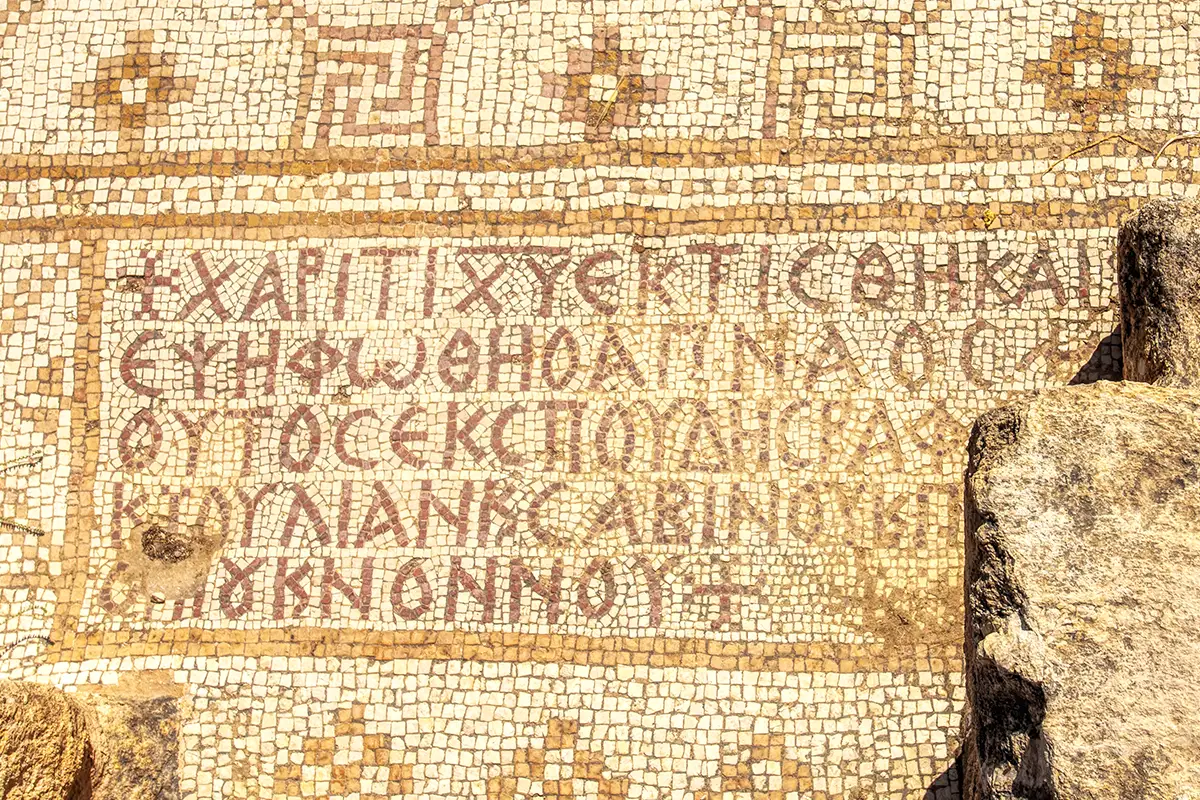
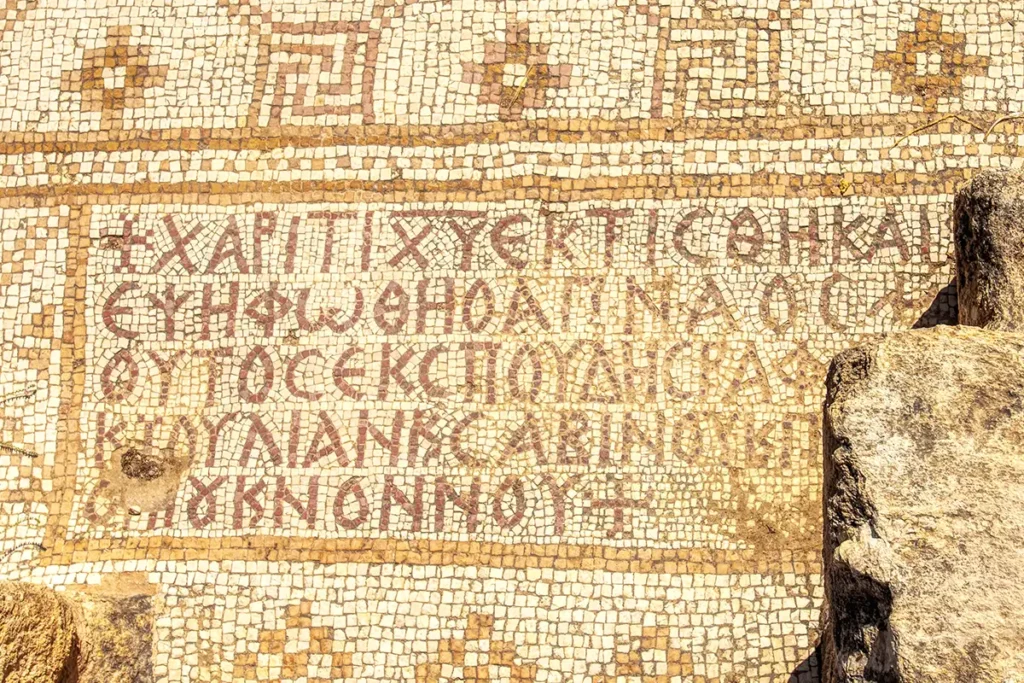
Foundation Inscription of the Church of Bishop Marianos
The mosaic inscription records the completion of the church under Bishop Marianos and gives its date. Inscriptions like this turned a church floor into a public record of its patrons, clergy and builders.
Ἐπὶ τοῦ ἁγιωτάτου καὶ θεοφύλακτου ἡμῶν ἐπισκόπου Μαριανοῦ, ἐκ θεμελίων ἐκτίσθη καὶ ἐτελειώθη ὁ ἅγιος οἶκος οὗτος, τῷ βλχʹ ἔτει, μηνὶ Ξανθικοῦ, χρόνων γʹ ἰνδικτιῶνος.
Under our most holy and God-protected Bishop Marianos, this holy house was built from the foundations and completed in the year 632, in the month of Xanthicus, in the third indiction.
Destruction, Rediscovery, and Restoration
In later centuries the church lost its roof and upper walls, but the apse and the mosaic floor survived beneath the debris. Excavation revealed its plan and the foundation inscription, and conservation work now protects the fragile mosaic from the weather.
Visiting the Church of Marianos Today
The church takes only a few minutes and is best seen on the way in, right after Hadrian’s Arch. Stand at the west end of the nave to take in the whole mosaic carpet, then find the foundation inscription in the floor.
Its low walls make a striking contrast with the Hippodrome across the path: the great Roman arena on one side, a small neighbourhood church on the other.