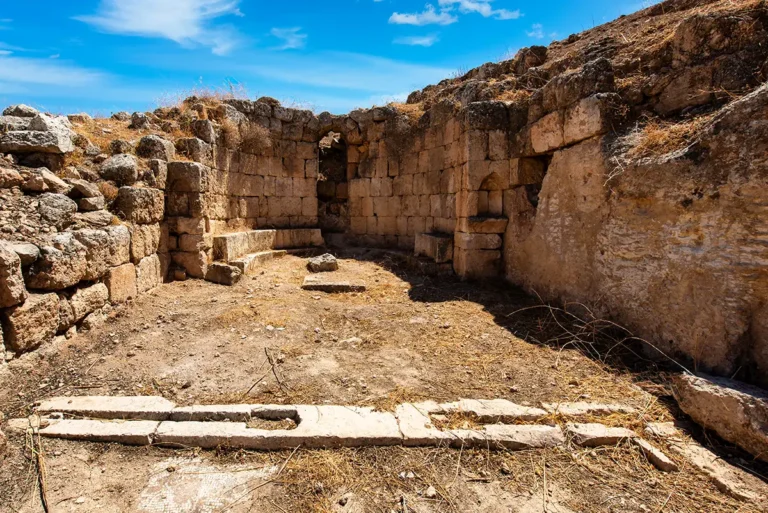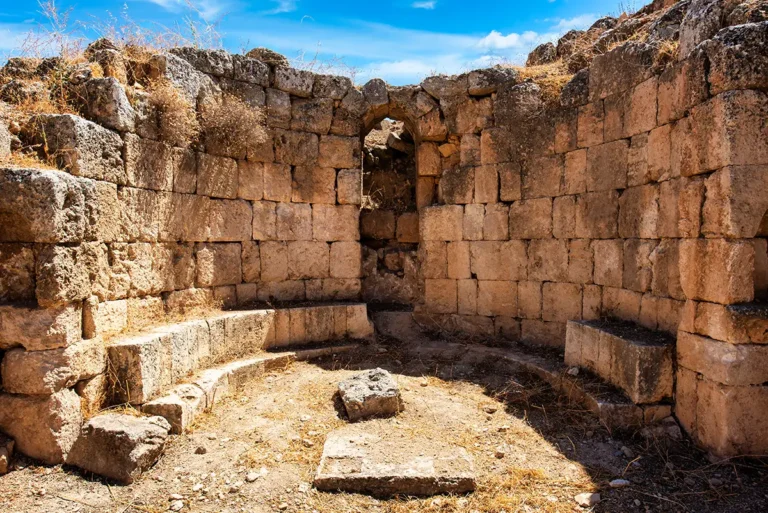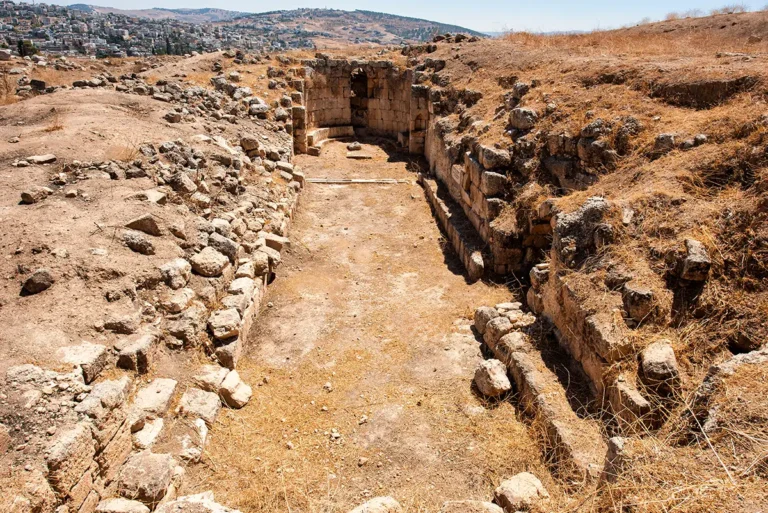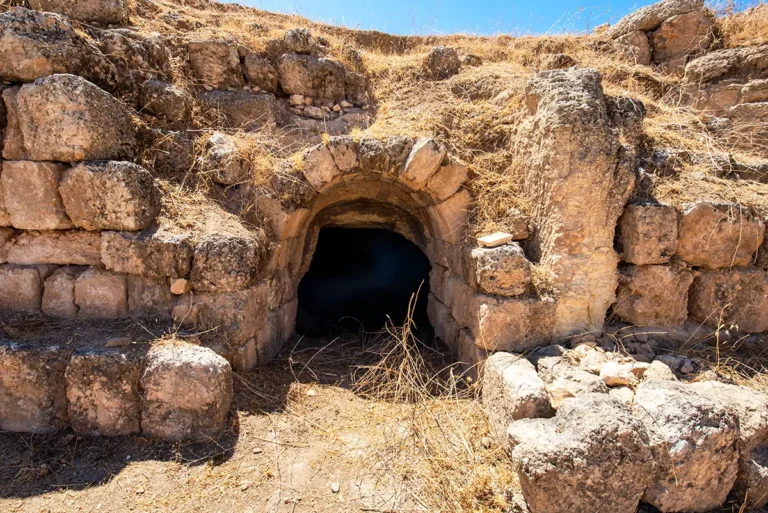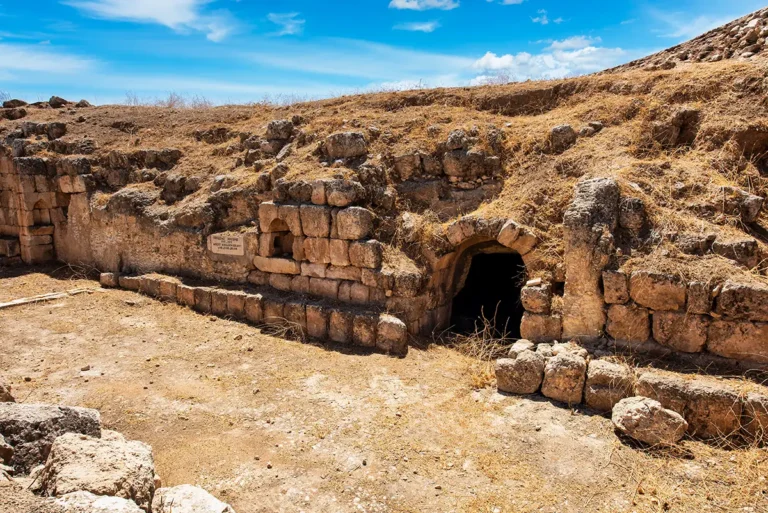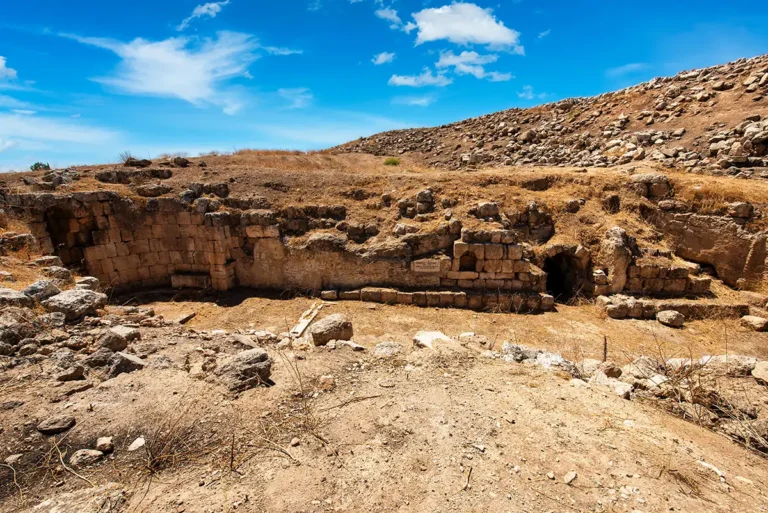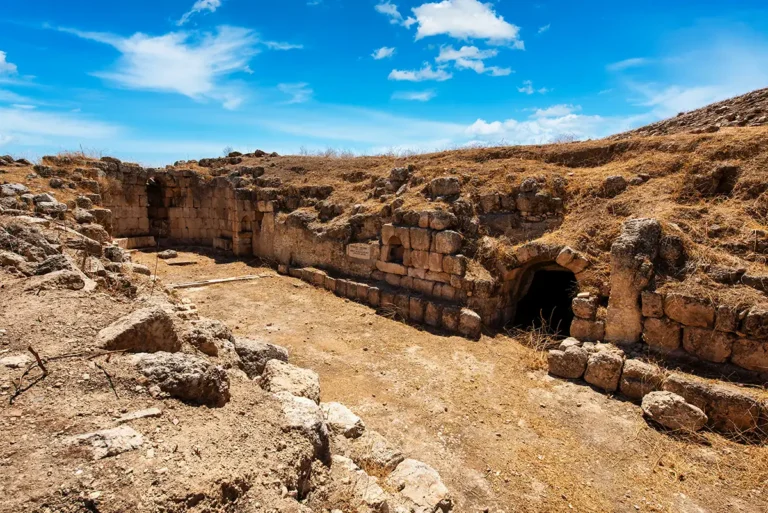



The Mortuary Church—also called the Funeral Chapel—is one of the quieter and more evocative Byzantine monuments in Jerash. It stands on the city’s south-western hill, close to the ancient city wall and about 15 metres south-south-west of the Church of Saints Peter and Paul. Unlike the grander basilicas of central Jerash, this was a small, single-hall chapel ending in an apse. Its defining feature is an arched opening on the south side that leads into a burial cave, linking Christian worship directly with burial and remembrance.
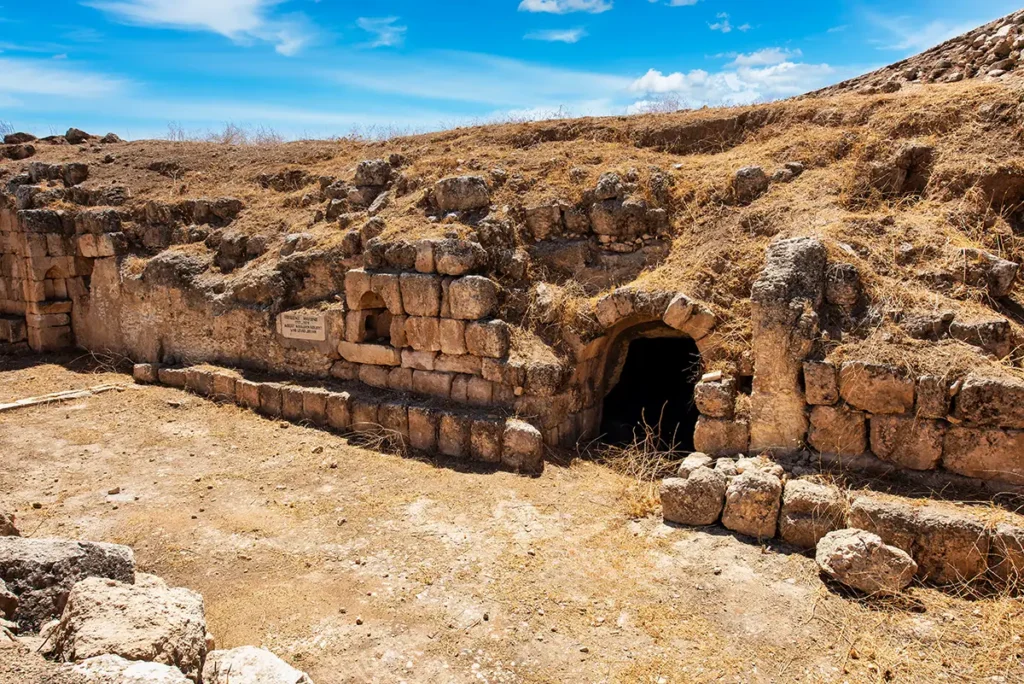
It is a modest ruin, but an important one. The chapel reveals the intimate, funerary side of Byzantine Jerash: a place where liturgy, commemoration and burial occupied the same sacred setting.
The Mortuary Church at a Glance
Location: Jerash Archaeological Park, Jordan (south-west quarter of Jerash, near the city wall)
Built date: Generally assigned to the late 6th century AD
Nearby monument: Church of Saints Peter and Paul
Plan: Single hall with an eastern apse
Defining feature: South-side opening into a burial cave
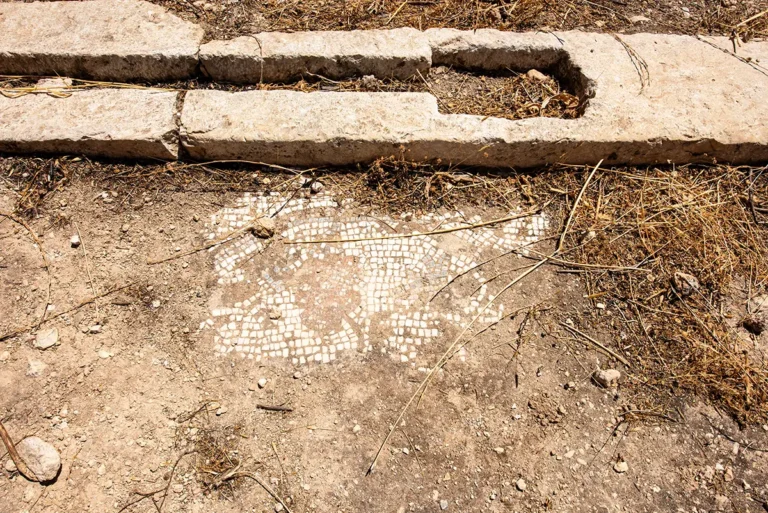
Decoration: Mosaic floor, now largely fragmentary
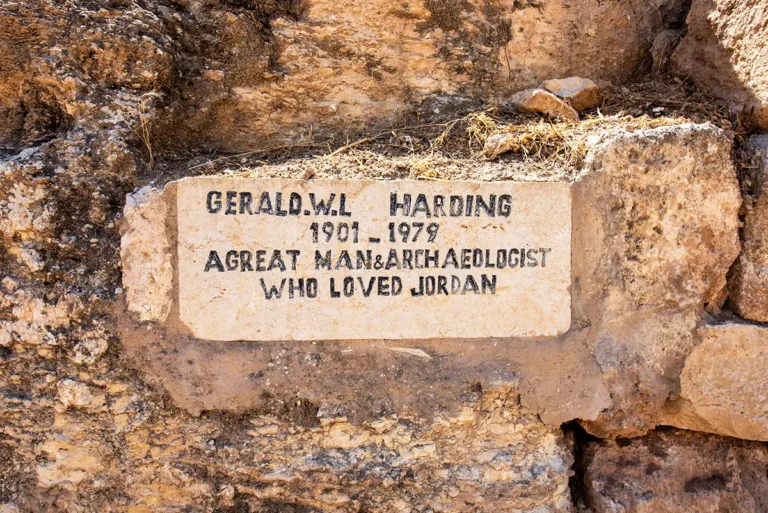
Modern memorial: Gerald Lankester Harding is commemorated here.
Where Is the Mortuary Church?
The chapel lies in the south-west quarter of Jerash Archaeological Park, on the elevated ground west of the Temple of Zeus and near the city wall. It is best visited together with the nearby Church of Saints Peter and Paul, though it is a distinct monument rather than an annex of that basilica.
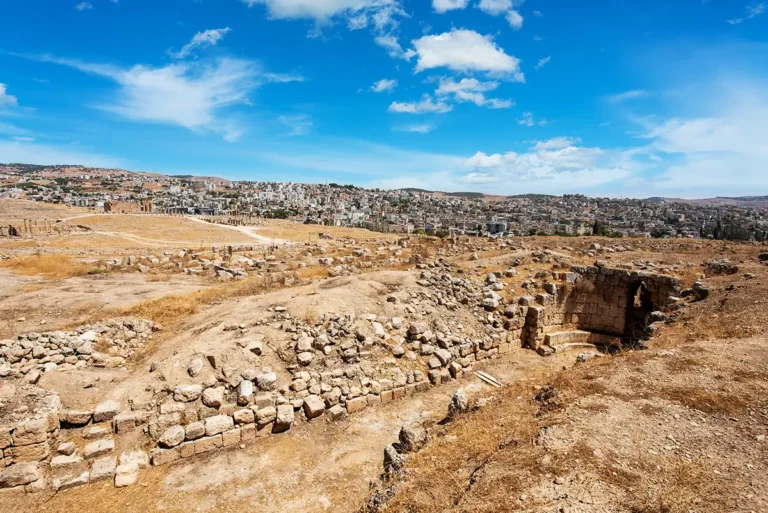
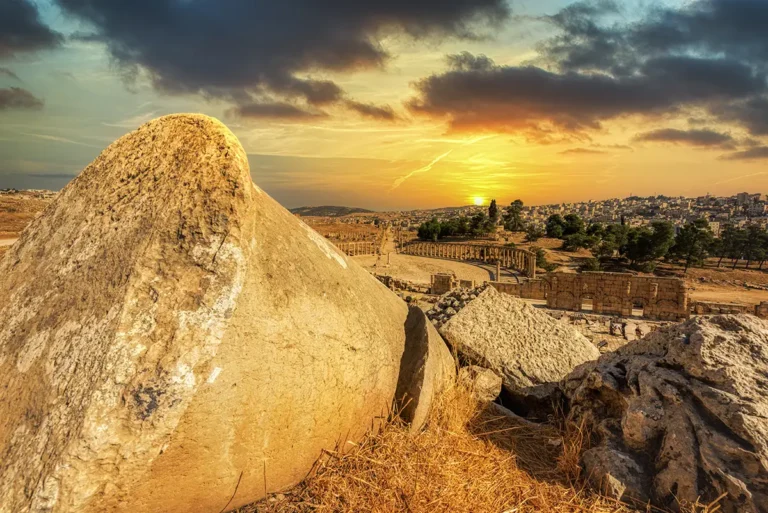
The location is significant. This part of ancient Gerasa was near a necropolis, or burial area, and the church’s connection with a rock-cut tomb explains why it is known as the Mortuary Church. The church is small and easy to overlook among the terraces and scattered stonework, but its elevated position provides wide views over the southern sector of the ancient city.
A Church Built for Burial and Remembrance
The precise original dedication of the chapel is unknown. Its modern name is archaeological: it describes the building’s relationship with the burial cave that opens from its south side.
The structure is generally dated to the late 6th century, a period when Christian Gerasa was filled with churches, chapels, monasteries and funerary monuments. The small chapel probably served a local community, family group or burial cult rather than the large urban congregation that used the neighbouring Church of Saints Peter and Paul.
Its form is simple but deliberate: a single worship space, an eastern apse for the sanctuary, and a direct architectural link to the cave. This made it possible to commemorate the dead in a setting shaped by Christian ritual.
Architecture of the Funeral Chapel
The Mortuary Church is a single-hall church—a rectangular nave without side aisles—terminating in an apse. This is a much more compact arrangement than the nearby three-aisled basilica of Saints Peter and Paul.
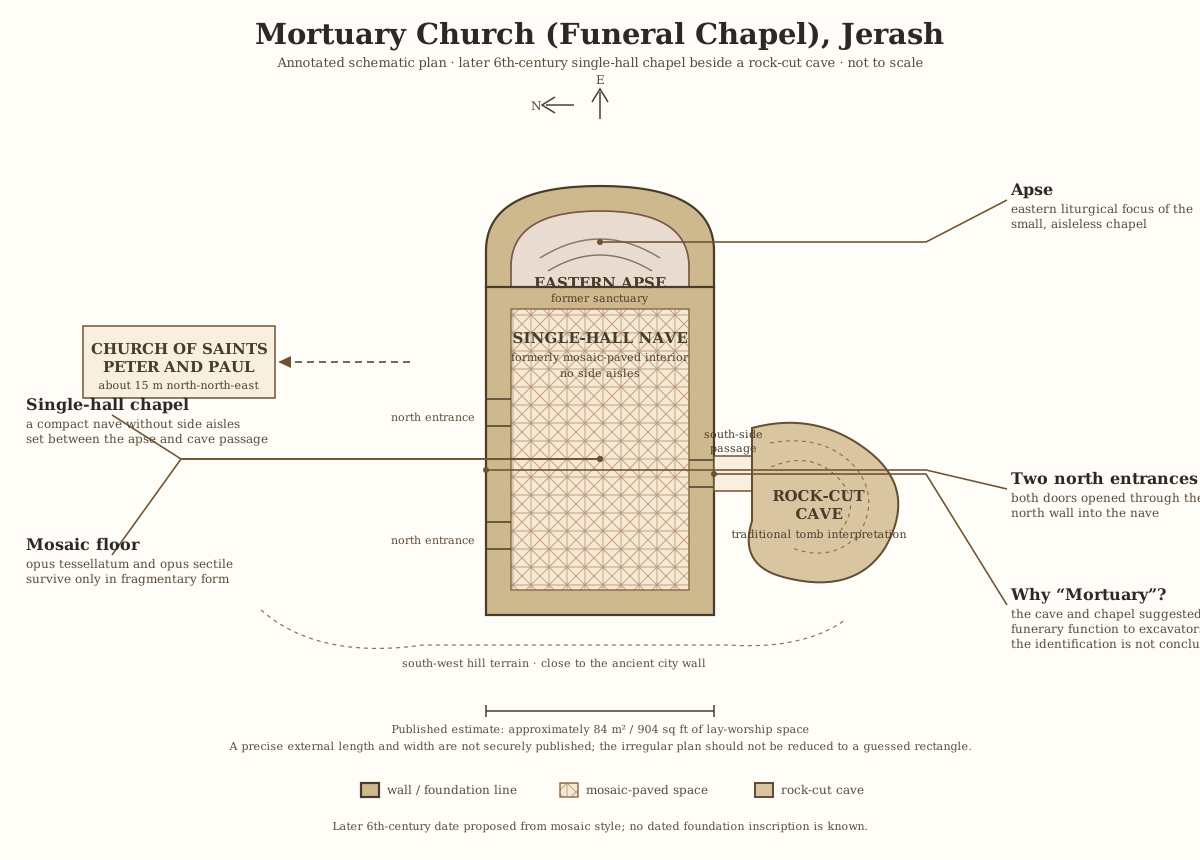
The surviving remains indicate:
A simple rectangular worship hall.
An eastern apse, where the altar and liturgical focus would have stood.
A south-side arch opening toward the burial cave.
Floors that were once decorated with mosaics.
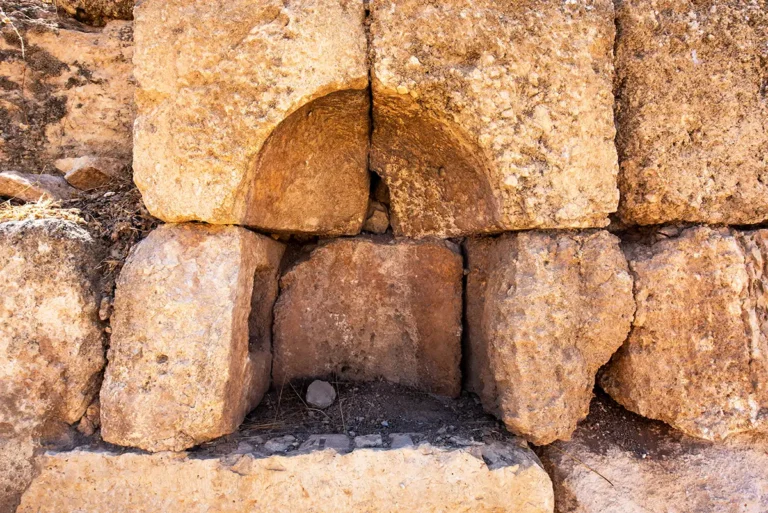
Low walls, scattered architectural fragments and stone foundations that still define the chapel’s outline.
The architecture does not aim for monumental scale. Instead, it creates a focused interior, placing worshippers close to the sanctuary and to the burial space beside it.
The Burial Cave
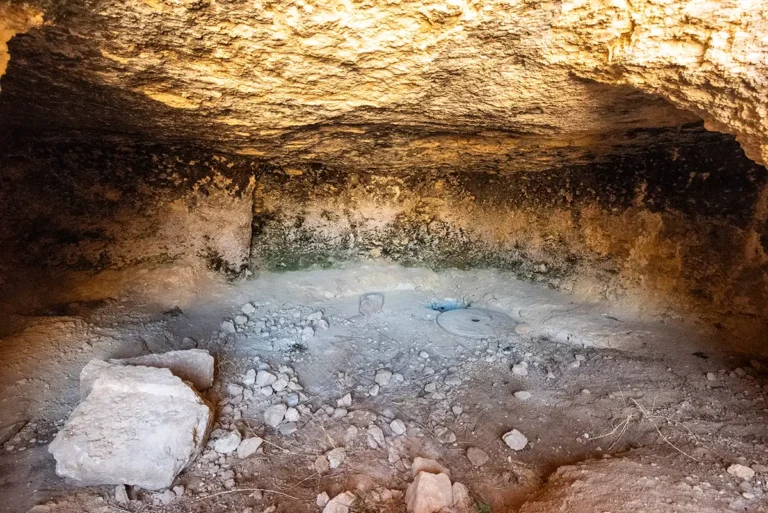
The burial cave is the feature that gives the chapel its modern name. An arch in the south wall led into a cave used for interment, making the church a funerary chapel in the fullest sense: the living could gather for prayer and commemoration beside the dead.
Burial churches were not unusual in Late Antiquity, but this direct connection between a modest chapel and a cave tomb is especially clear at Jerash.
It also helps visitors understand that Byzantine Jerash was not only a city of grand urban churches and elaborate mosaics; it was also a landscape of personal memory, family burial and local devotion.
Mosaics and Iconoclasm
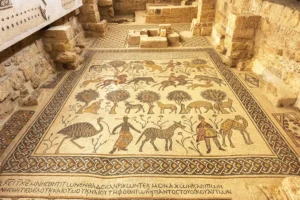
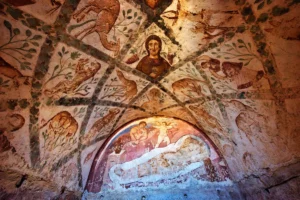
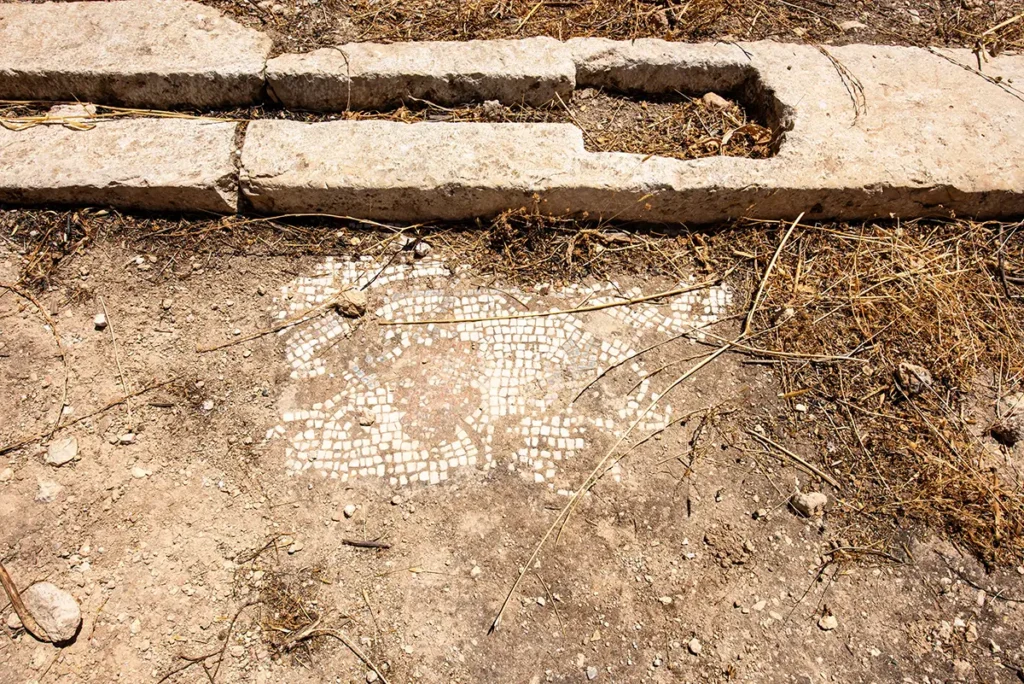
The chapel floor was once paved with mosaics. Much has been lost through time, damage and later disturbance, and surviving traces were also affected by iconoclasm—the removal or alteration of images for religious reasons.
Even in their fragmentary condition, the mosaics matter. They show that this small funerary chapel was not an improvised structure but a carefully furnished sacred building. Mosaic floors connected it visually with Jerash’s larger Byzantine churches, where geometric patterns, inscriptions, plants, animals and city personifications once decorated church interiors.
Gerald Lankester Harding Memorial
A memorial plaque on the chapel’s south wall commemorates Gerald Lankester Harding (1901–1979), a leading archaeologist and former Director of Jordan’s Department of Antiquities. His cremated remains were placed at the church, adding a modern layer of remembrance to a building already associated with burial and memory.
This is a moving detail: an ancient chapel built beside a burial cave became, many centuries later, the resting place of a scholar closely associated with Jordan’s archaeological heritage.
Archaeology and Preservation
The Mortuary Church and the Church of Saints Peter and Paul were excavated in the late 1920s and early 1930s by the Yale–British School expedition. The excavations documented a south-western quarter that had been reshaped repeatedly through Late Antiquity and the early Islamic period.
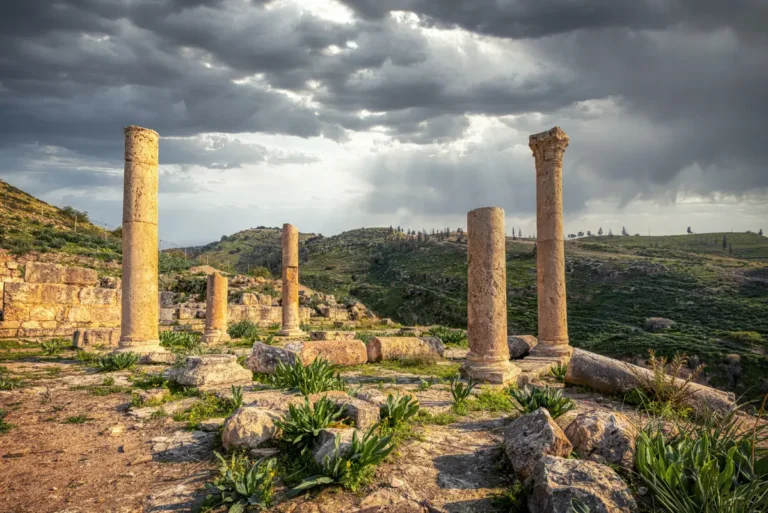
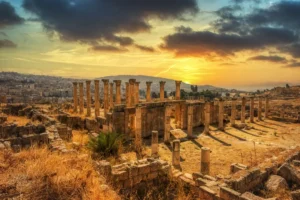
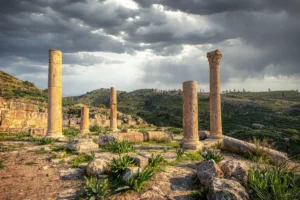
Today, the chapel survives primarily as foundations, low wall lines and scattered masonry. It rewards slow observation more than a quick photograph. Look for the relationship between the apse, the compact nave, the south opening and the terrain around the city wall; together, these elements tell the story of a church built around burial and commemoration.
What to Look For
When visiting the Mortuary Church, look for:
The eastern apse: the focal point of the former sanctuary.
The south-side arch: the connection between chapel and burial cave.
Mosaic remnants: often subtle, but evidence of a once-decorated interior.
The nearby city wall: a reminder of the chapel’s position at the edge of Byzantine Gerasa.
The Church of Saints Peter and Paul: visit both monuments together to compare the intimate funerary chapel with a larger urban basilica.
The landscape: the south-western hill offers a more secluded, reflective view of Jerash than the busy Cardo Maximus.
Visitor Tips
Visit in the morning or late afternoon, when the south-western hill is cooler and the low sunlight makes the stone foundations easier to read. Combine the chapel with Saints Peter and Paul, then continue toward the Temple of Zeus or the Oval Plaza.
There is little shade, and the remains are subtle. This is a place for visitors who enjoy reconstructing a building from its footprint and appreciating how architecture, landscape and memory once worked together.
Why the Mortuary Church Matters
The Mortuary Church is important precisely because it is not one of Jerash’s largest or best-preserved monuments. It shows a different scale of religious life: a small sacred building connected to burial, probably serving commemoration as much as congregational worship.
Together with the Church of Saints Peter and Paul, it demonstrates the variety of Christian architecture in Byzantine Jerash. One was a richly decorated basilica for a substantial congregation; the other was a compact chapel whose identity was inseparable from the tomb beside it.
Frequently Asked Questions
No. The two churches are neighbouring but separate buildings. The Mortuary Church is a smaller, single-hall funerary chapel, while Saints Peter and Paul is a larger three-aisled basilica.
The name comes from its direct connection to a burial cave. An arch in the south side of the chapel opened into the cave, which was used for interment.
Yes. Its floor was once mosaic-paved, although much of the decoration has been lost or damaged over time.
It is accessible within Jerash Archaeological Park but is easy to miss because only low ruins survive. It is best visited alongside the Church of Saints Peter and Paul.
Gerald Lankester Harding (1901–1979) was a prominent archaeologist and former Director of Jordan’s Department of Antiquities. He had a deep connection with Jordan’s heritage and requested that his ashes be placed at the Mortuary Church. A memorial plaque beside the south-side cave honours him as “a great man and archaeologist who loved Jordan.”
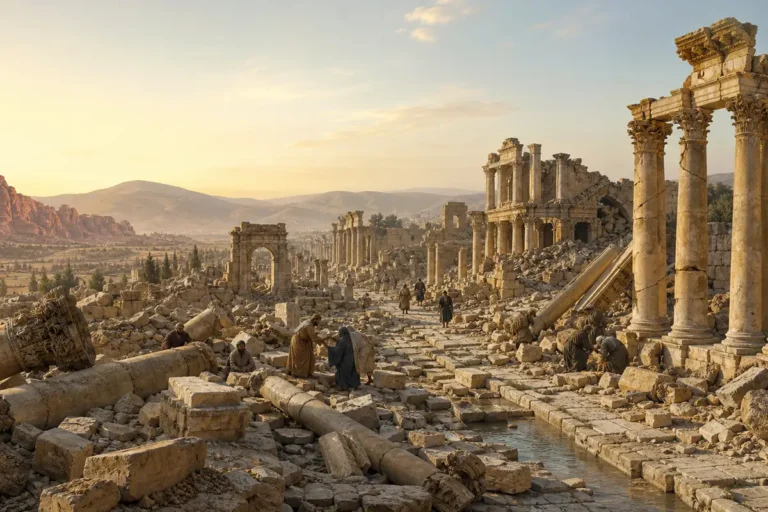
The chapel belongs to a part of the city heavily affected by later abandonment and earthquakes, but its exact final sequence is not fully certain. It is best to regard AD 749 as a likely major destructive event rather than a securely documented final date for the chapel itself.
Key Moments in History
Later 6th century AD: The Mortuary Church was built in the south-west quarter of Byzantine Jerash, close to the city wall and the Church of Saints Peter and Paul.
Byzantine period: The small, single-hall chapel was furnished with an apse and mosaic floor. A south-side passage connected it with a rock-cut cave, traditionally interpreted as a burial space.
Key Moments in History
Later 6th century AD: The Mortuary Church was built in the south-west quarter of Byzantine Jerash, close to the city wall and the Church of Saints Peter and Paul.
Byzantine period: The small, single-hall chapel was furnished with an apse and mosaic floor. A south-side passage connected it with a rock-cut cave, traditionally interpreted as a burial space.
7th–8th centuries AD: The mosaics were damaged by time and iconoclastic alteration. The chapel’s later use and final abandonment remain uncertain.
Modern excavations: The Yale–British School expedition excavated the chapel in the late 1920s and early 1930s, documenting its unusual connection with the cave.
1979: The archaeologist Gerald Lankester Harding, former Director of Jordan’s Department of Antiquities, was commemorated at the church; his ashes were placed there in accordance with his wishes.