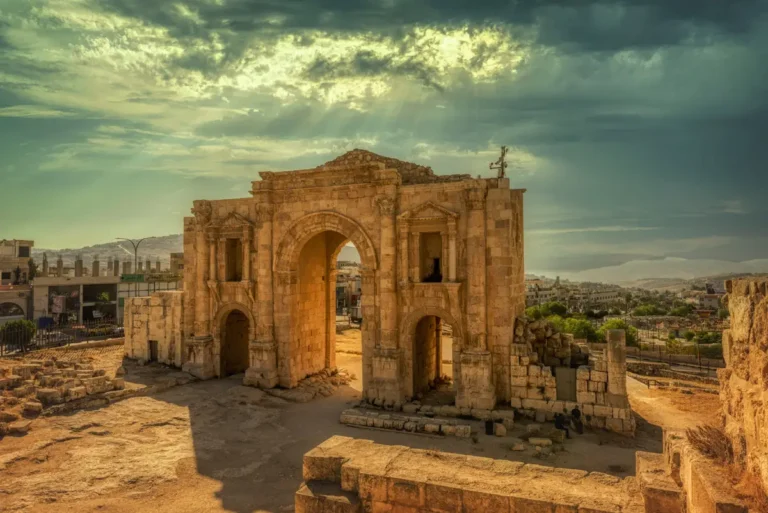
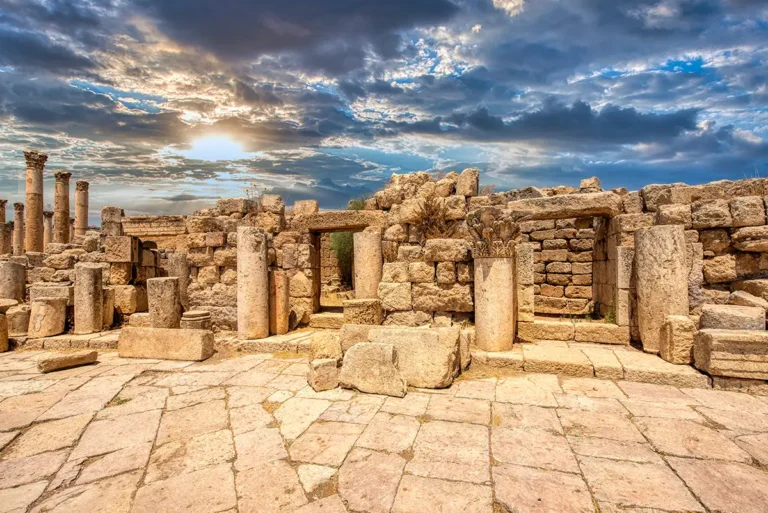
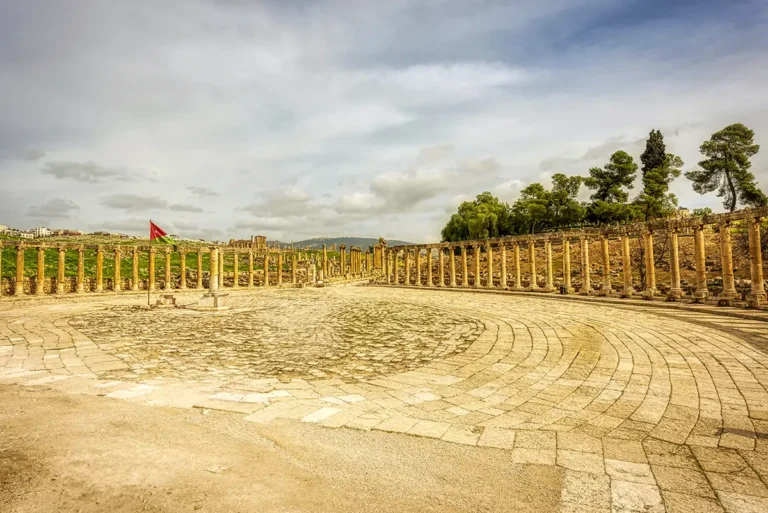
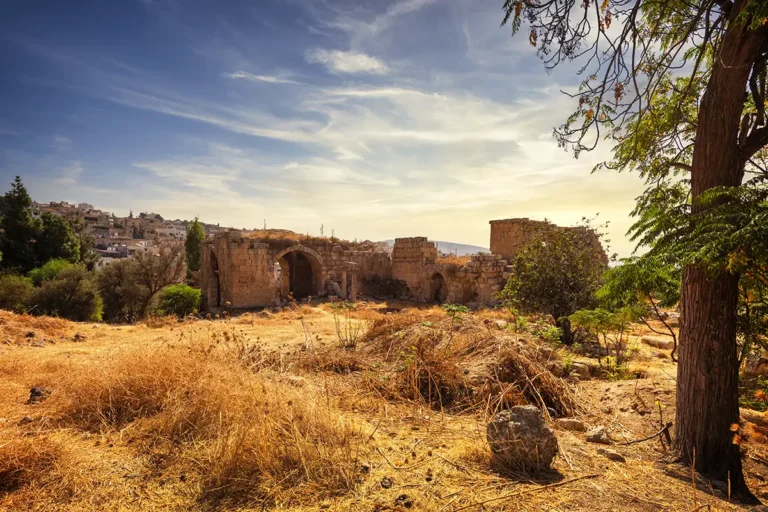
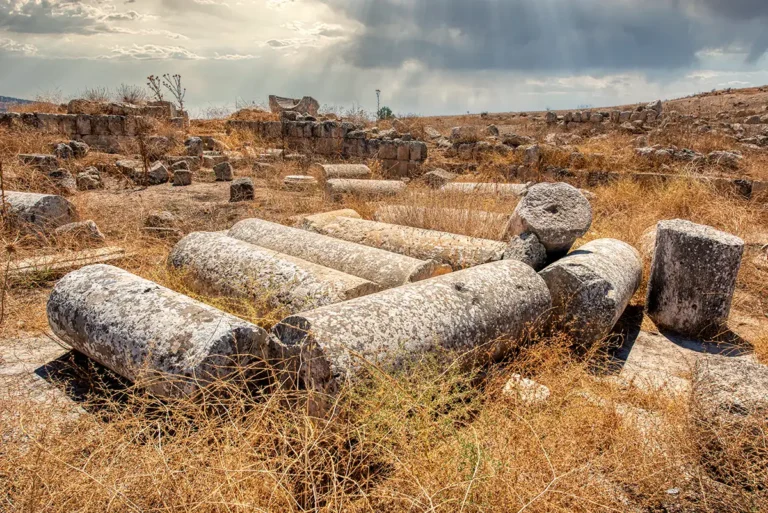
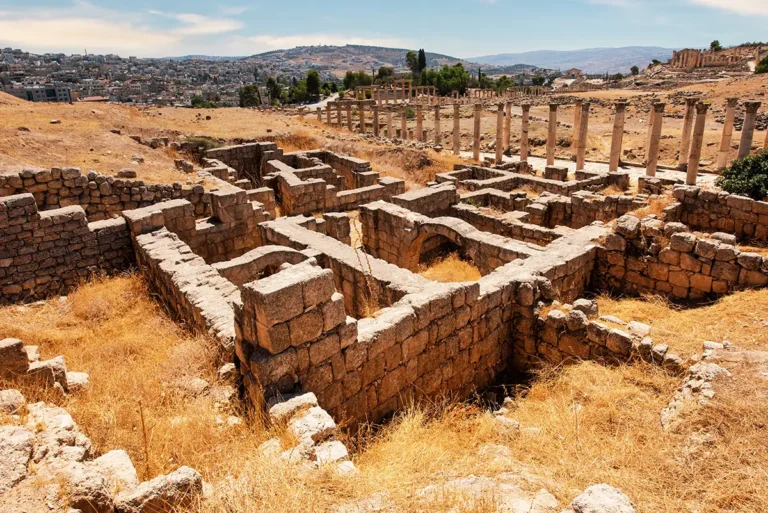
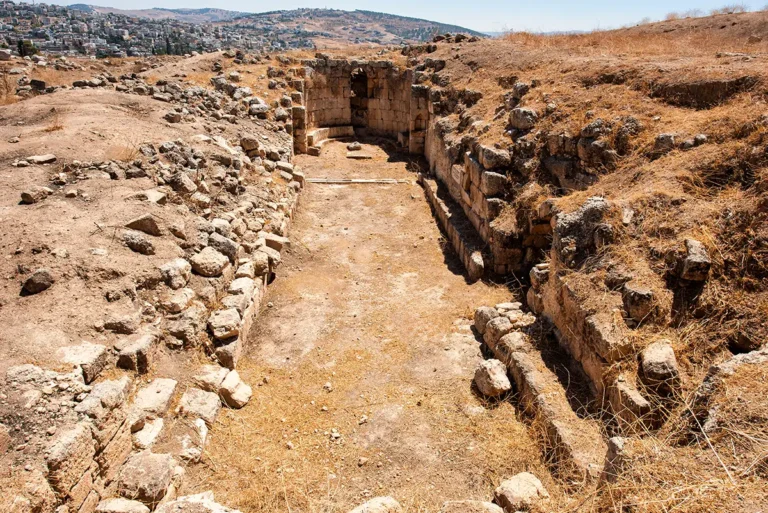
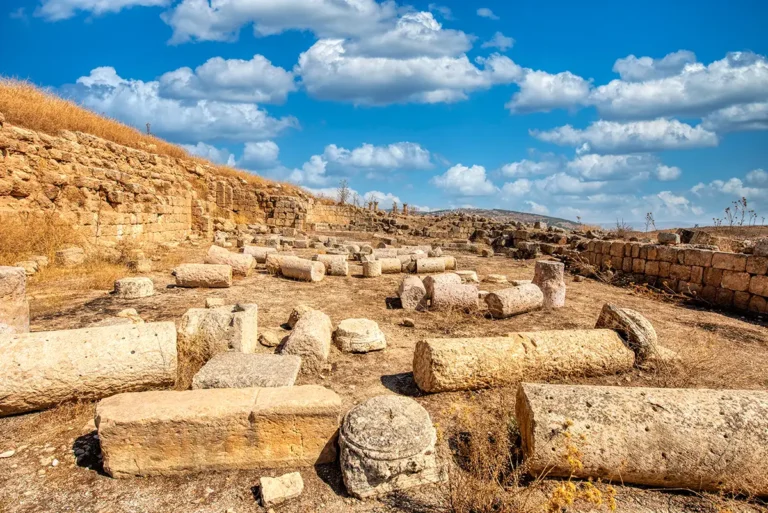
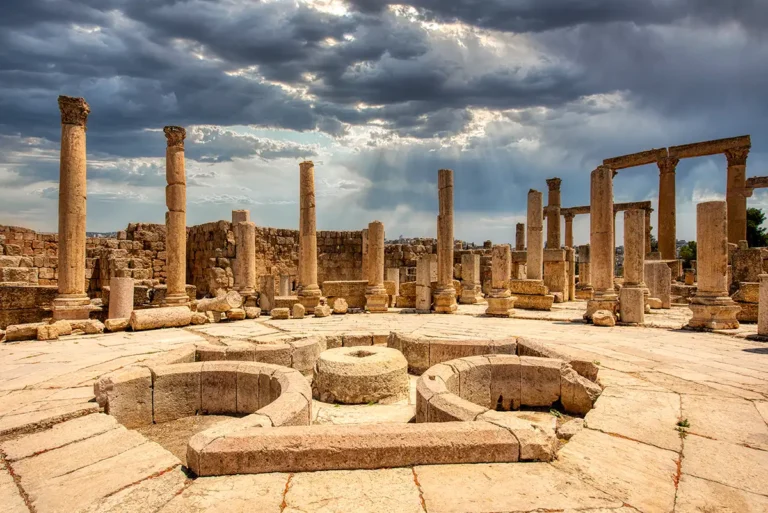
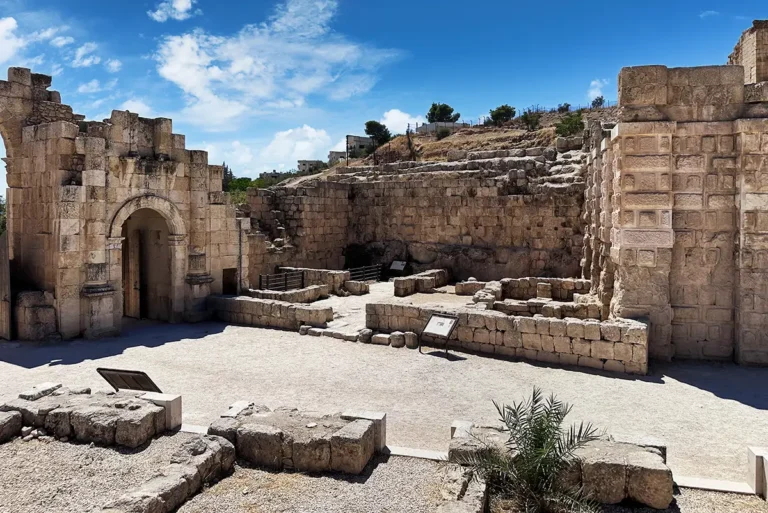
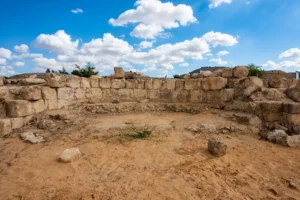
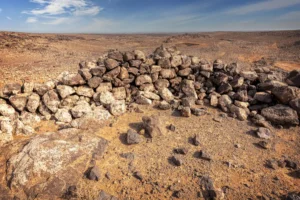
This 360-degree panorama looks across the Shops of the South Cardo, a commercial district where everyday life unfolded beside Jerash’s monumental architecture. In the foreground, low limestone walls, paved thresholds and scattered blocks preserve the outlines of former shop rooms. Beyond them, the tall columns of the Cardo Maximus rise above the archaeological landscape, marking the route that carried merchants, pilgrims and visitors through ancient Gerasa.
Looking around, the broad open ground and layered masonry reveal how the Roman streetscape was repeatedly altered during Byzantine and early Islamic periods. The surviving remains are understated, but their position near the Macellum and South Tetrapylon shows why this was such valuable commercial real estate. Under a wide Jordanian sky, the panorama brings together trade, movement, public architecture and centuries of urban change.
Trace the thresholds to see where the small rooms opened towards the street, then compare their low walls with the much taller colonnade beyond. The contrast gives the shops a human scale within a district otherwise dominated by public monuments. Follow the surviving partitions across the foreground to distinguish separate rooms and gaps between them. Turning back towards the Cardo places these modest remains in relation to the route beside them.