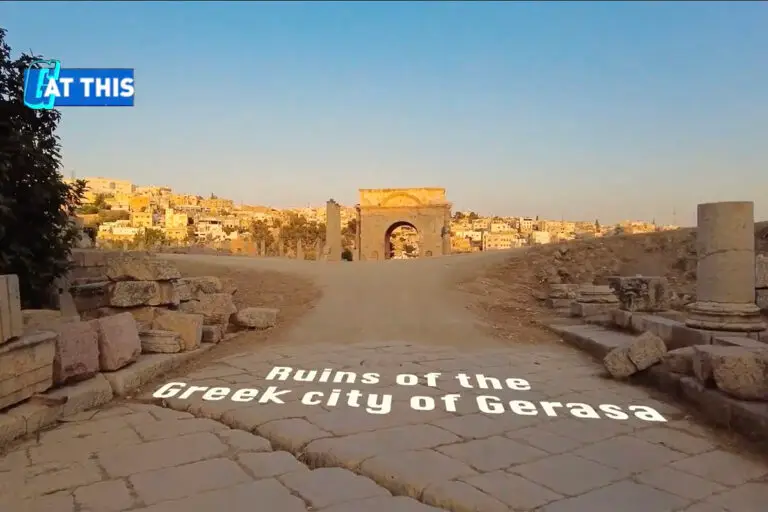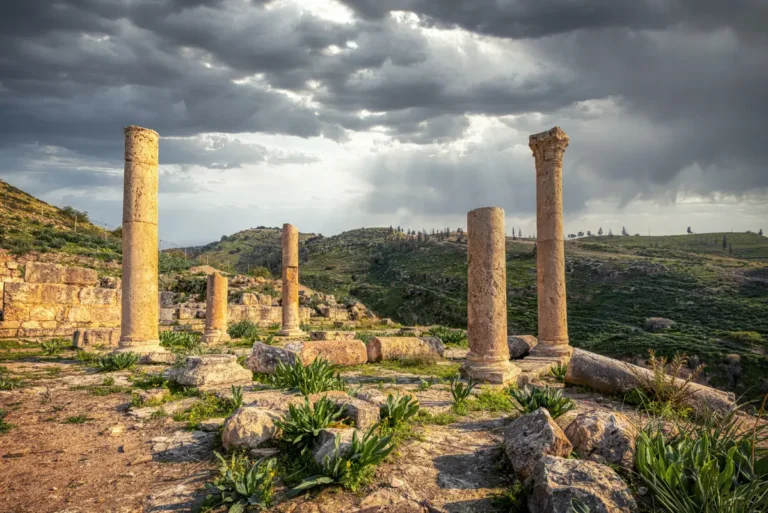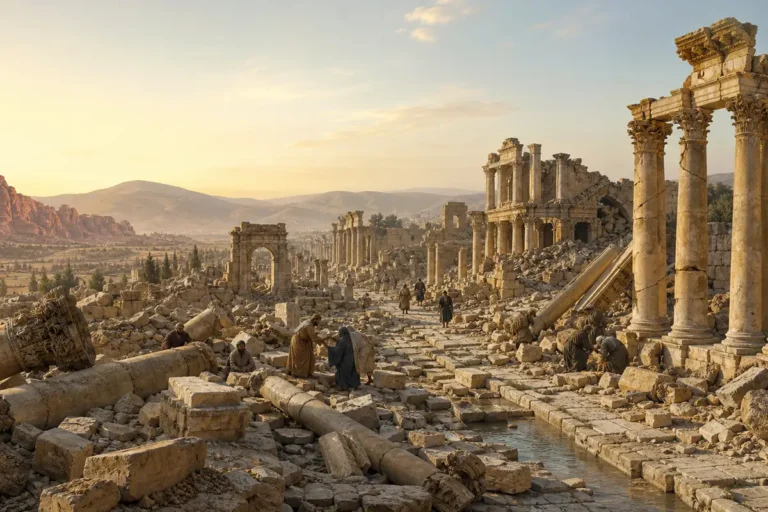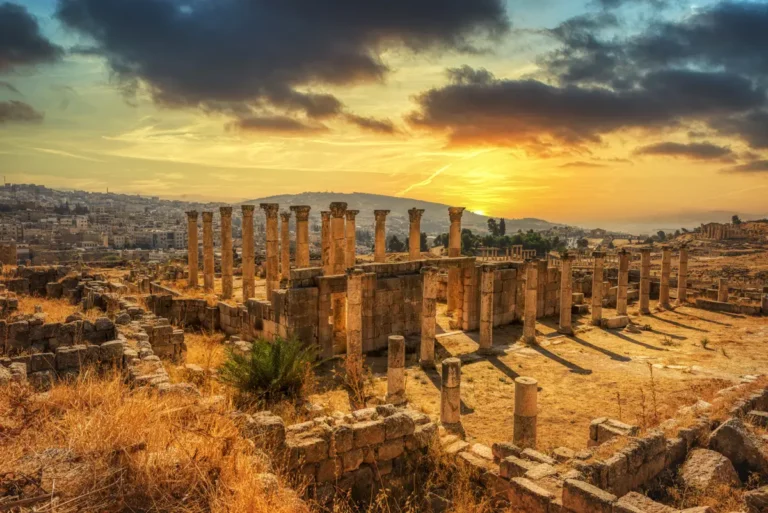


The Shops of the South Cardo reveal the everyday commercial life behind the grand monuments of ancient Jerash. Along the city’s principal north–south street, merchants, craftspeople and customers once moved between the Oval Plaza, the South Tetrapylon, the Macellum and the city’s major sanctuaries. Although the surviving remains are modest, this was one of Gerasa’s busiest and longest-lived commercial districts.
Established in the Roman period and repeatedly reshaped through the Byzantine, Umayyad and Abbasid eras, the shops tell a particularly vivid story of how an ancient city changed while remaining economically active.
The Shops of the South Cardo at a Glance
Location: Jerash Archaeological Park, Jordan (along the southern section of the Cardo Maximus, between the Oval Plaza and South Tetrapylon)
Built date: 2nd century AD to about AD 800
Original function: Retail workshops and shops serving the city’s busiest street
Key Roman survival: Eight shop façades flanking the entrance to the Macellum
Later phases: Byzantine, Umayyad and Abbasid additions and extensions
Notable finds: Mosaic flooring, shop ceramics and a marble Arabic debt inscription
Why it matters: A rare record of Jerash’s long-running urban commerce and changing street life.
First Impressions
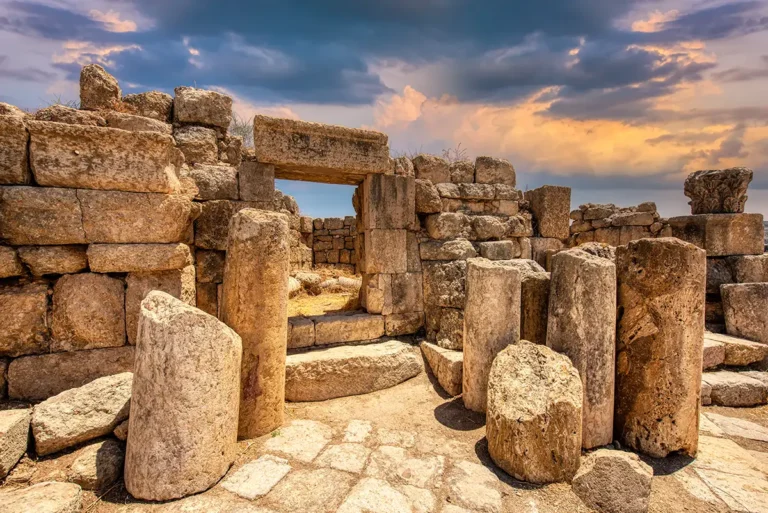
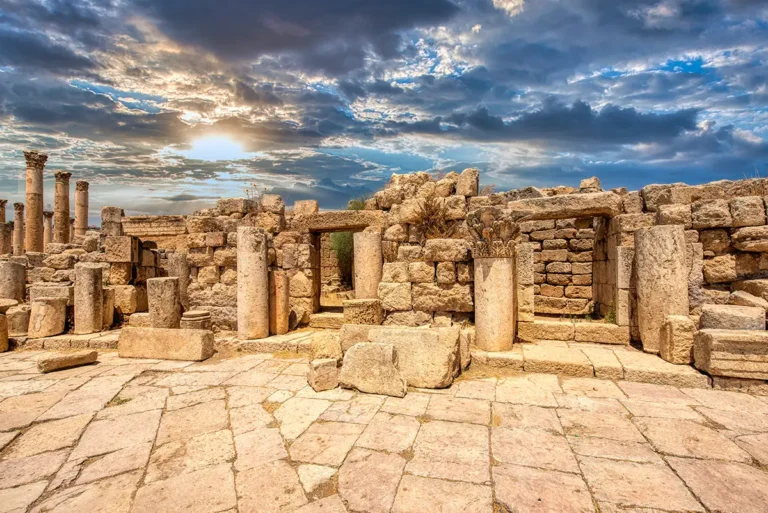
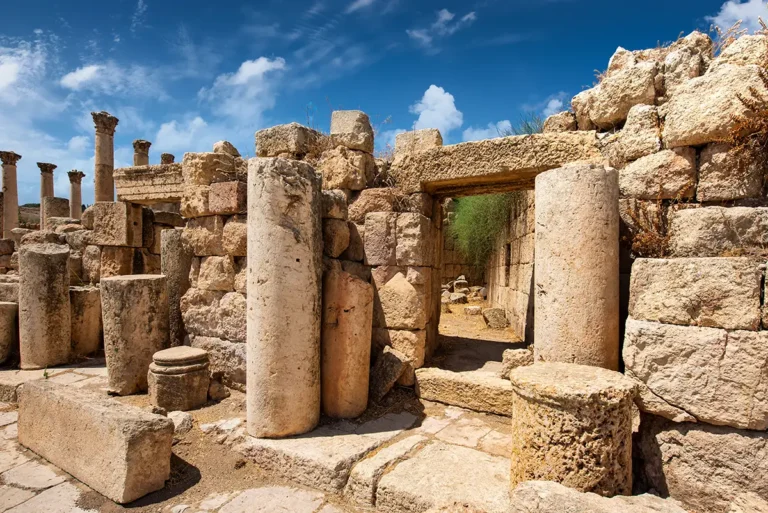
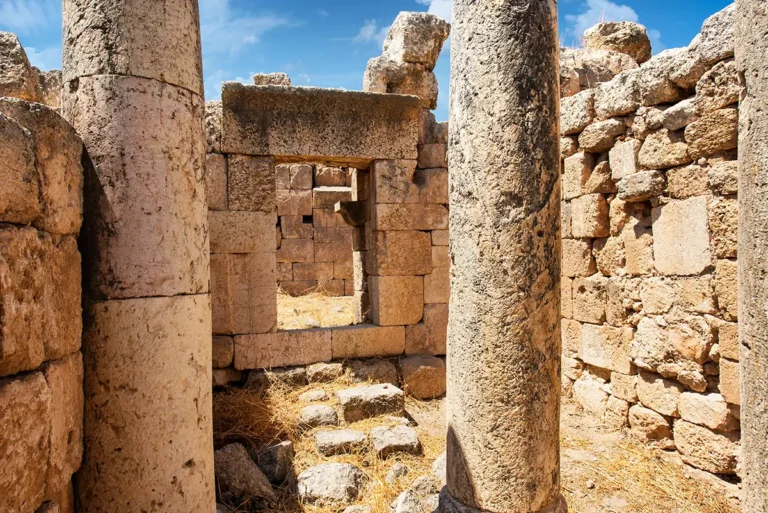
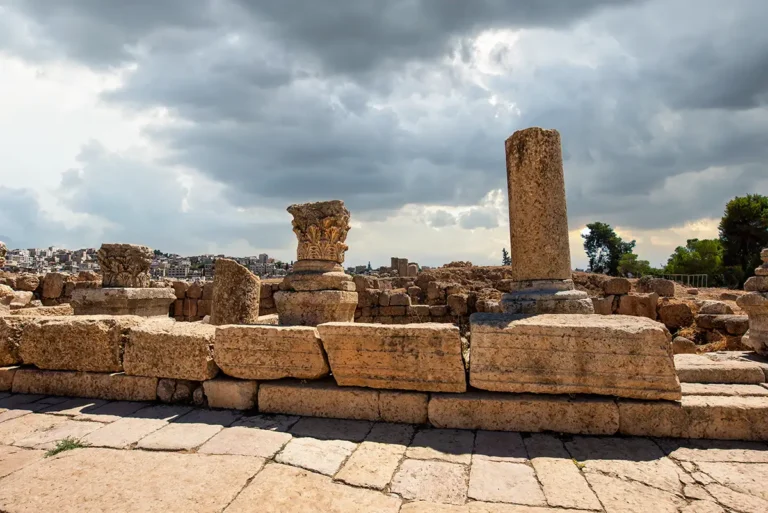
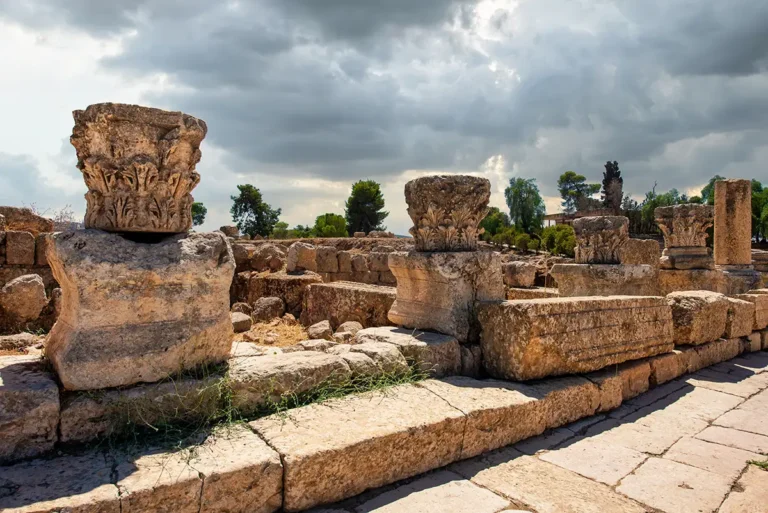
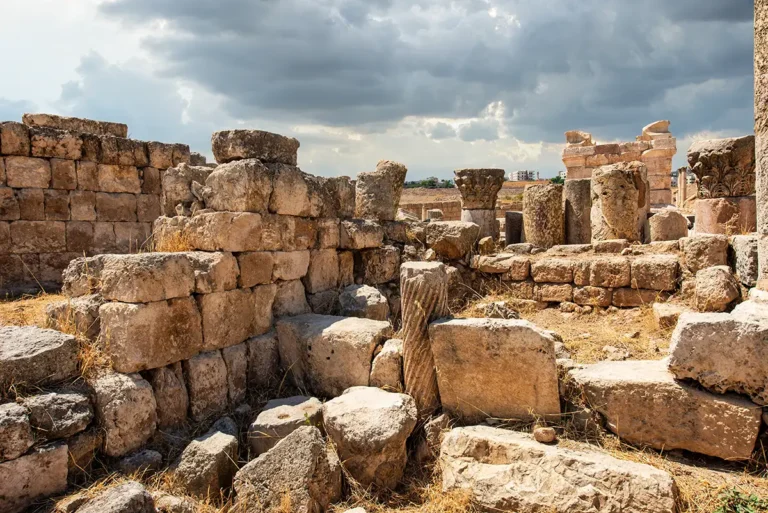
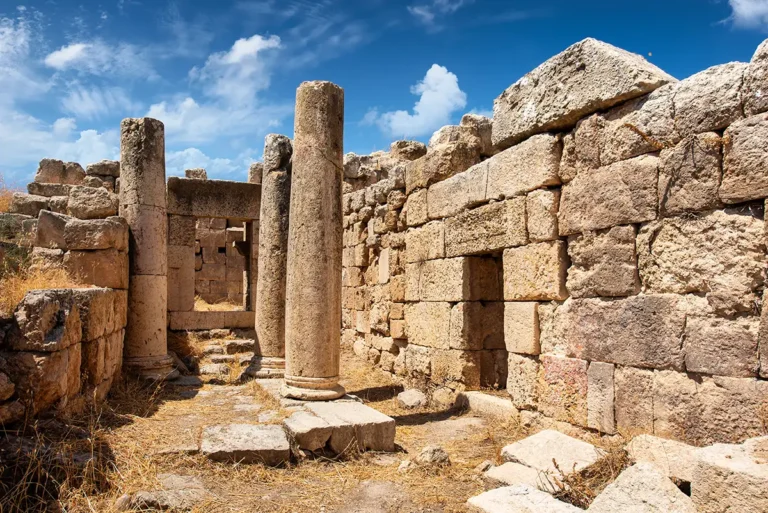
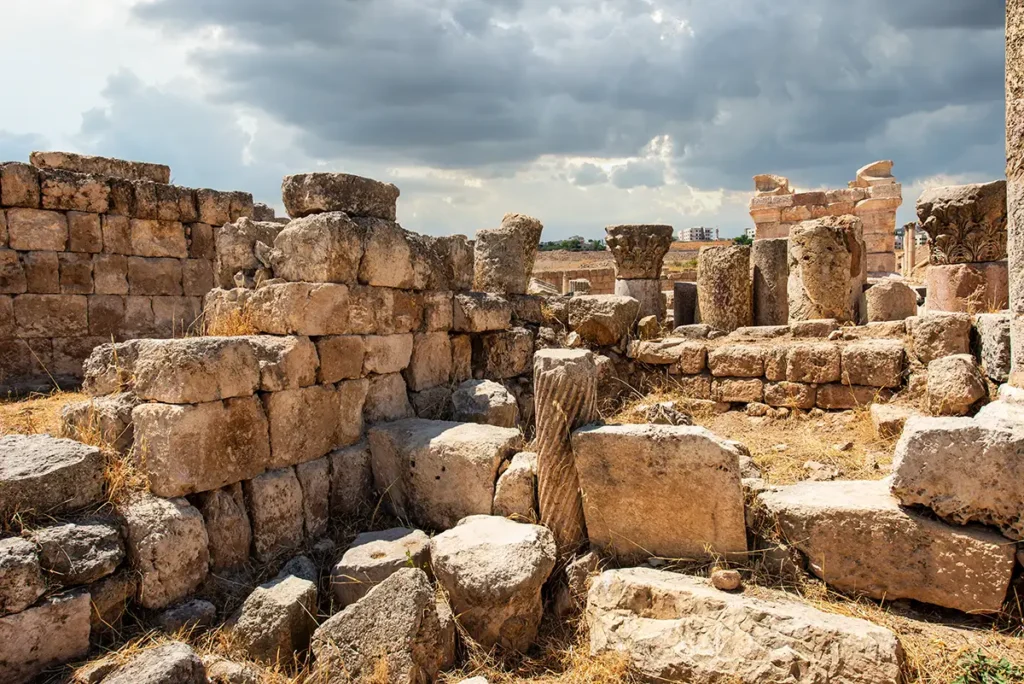
At first, the South Cardo shops may look like a scattered sequence of low walls, thresholds and reused stones beside the collonaded street. Look more carefully, however, and the remains become a record of commercial pressure over many centuries. The Cardo was not simply a ceremonial avenue: it was an active urban corridor where people walked, traded, met and passed through the city.
The surviving shop units, especially near the Macellum and South Tetrapylon, make it easier to imagine the noise and variety of an ancient marketplace—goods displayed near doorways, artisans at work, customers negotiating prices and carts or pedestrians moving along the street.
Where Are the Shops of the South Cardo?
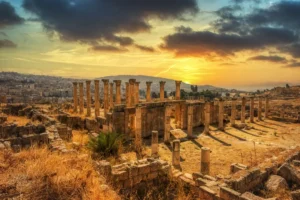
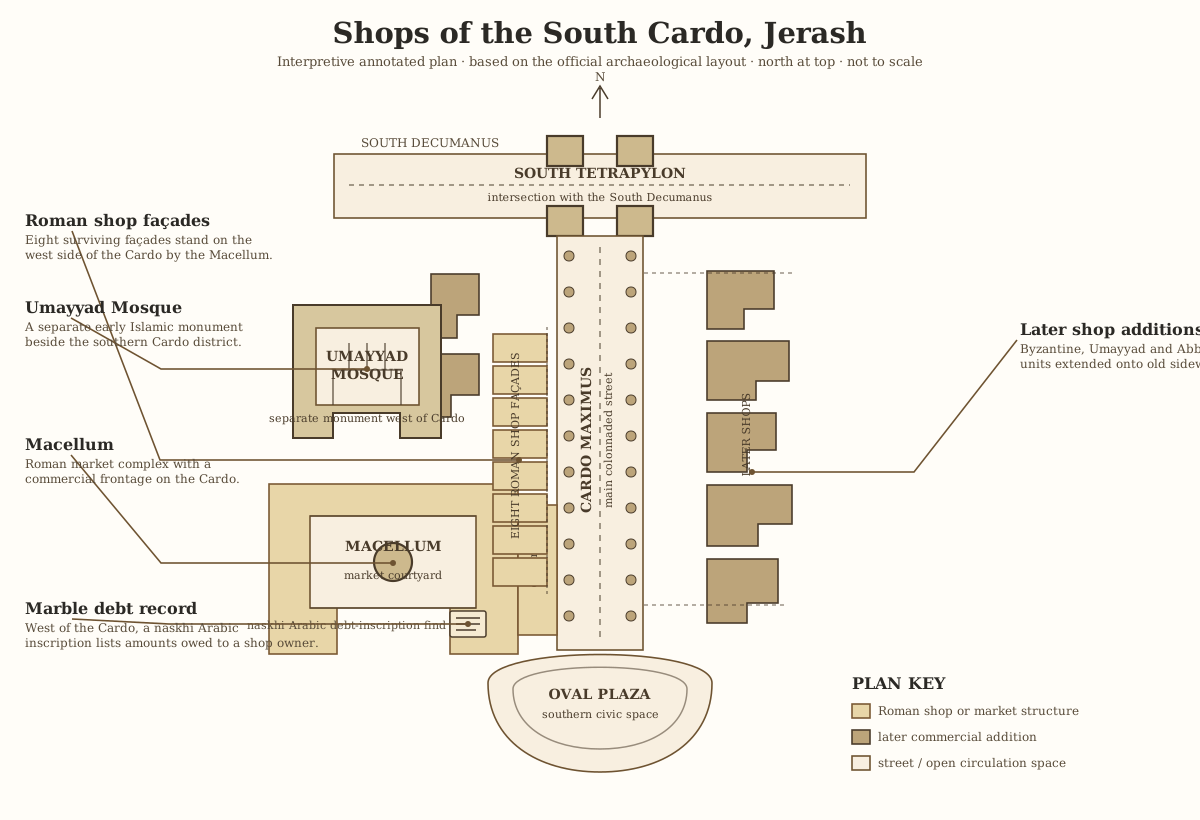
The shops occupy the southern stretch of the Cardo Maximus, Jerash’s main collonaded street. This area lies between the Oval Plaza and the South Tetrapylon, close to the Macellum, or market building.
Their position was ideal. They stood on one of the principal routes through Gerasa, near the entrances to important public buildings and on the route linking the city centre with the southern approaches. Visitors walking between the Oval Plaza and the South Tetrapylon can still identify parts of the commercial frontage beside the Cardo.
The Cardo: Gerasa’s Commercial Backbone
The Cardo Maximus was the backbone of Roman Gerasa. Citizens, pilgrims, officials, traders and visitors passed along it daily, making its porticoes and pavements an obvious place for commerce.
From the 2nd century AD, shops lined key sections of the street. Their occupants likely included merchants, craftspeople and service providers, sometimes grouped by the goods they sold or the work they carried out. The proximity of the Macellum, public buildings and major sanctuaries ensured a constant flow of potential customers.
These were not isolated retail units. Together, they formed part of an urban economy that connected food supply, craft production, exchange, religious travel and ordinary household needs.
Roman Shop Fronts and the Macellum
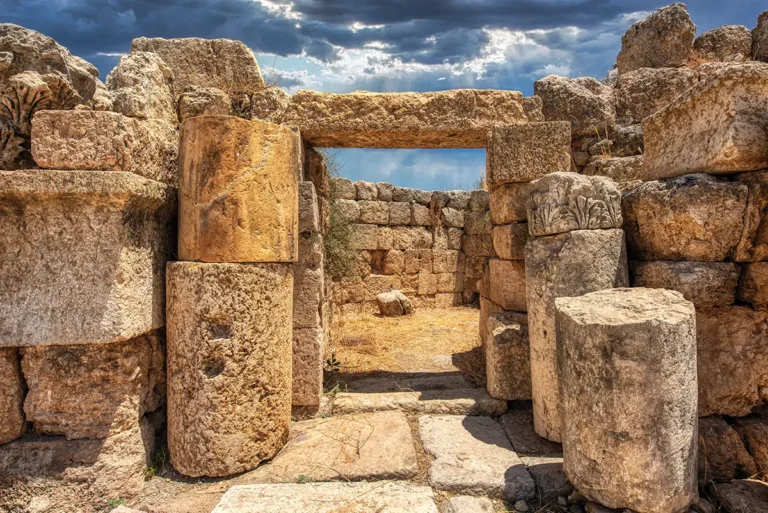
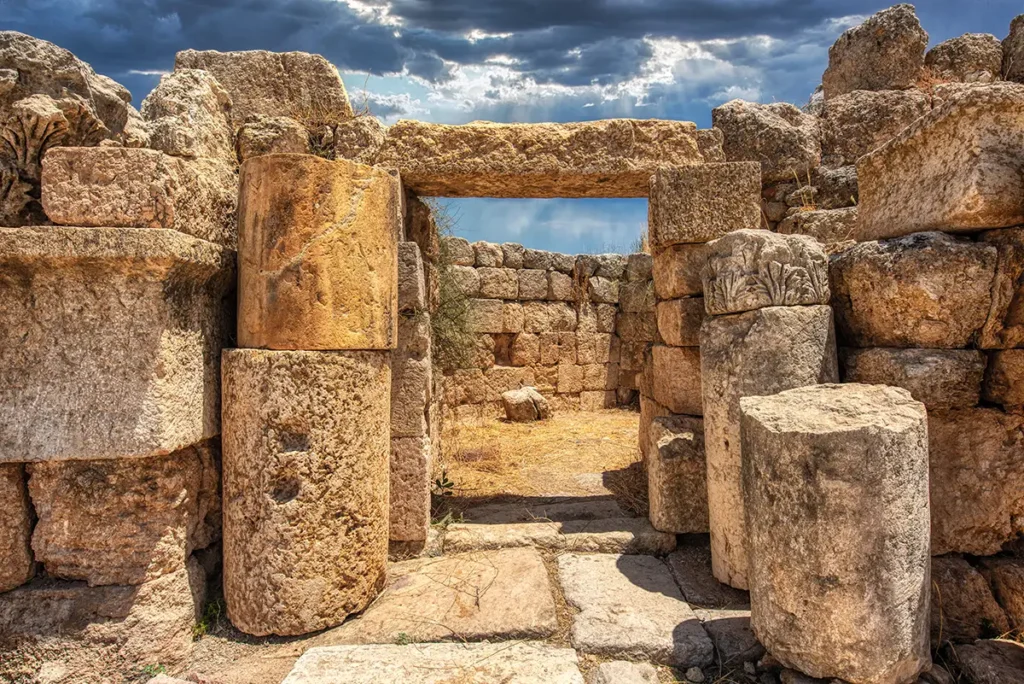
The clearest Roman remains are the façades of the eight shops flanking the entrance to the Macellum. These formal frontages are important because they preserve the earlier architectural character of the commercial street.
The Macellum was one of Jerash’s principal market spaces, and its approach would have been a highly visible and profitable position. Shopkeepers here benefited from customers visiting the market as well as people moving between the Oval Plaza and the South Tetrapylon.
Elsewhere along the southern Cardo, later rebuilding has obscured much of the Roman layout. The surviving façades near the Macellum therefore offer a valuable glimpse of the street before later shops and extensions altered its sidewalks and porticoes.
A Street That Kept Changing
The South Cardo did not remain fixed in its Roman form. From the Byzantine period onward—and particularly from the 7th century—new shops, additions and extensions appeared along the street.
Some of these later structures were built directly onto the original sidewalk, in front of earlier Roman façades. Over time, commercial activity encroached so far that parts of the old pedestrian circulation were effectively taken over by shop buildings. This was probably driven by merchants themselves, despite the preferences of the municipal authorities.
Rather than seeing these changes as decline alone, they should be understood as evidence of a living city.
The street was continually adapted to new needs, new forms of trade and new political circumstances under Byzantine, Umayyad and Abbasid rule.
Byzantine, Umayyad and Abbasid Commerce
The later shops demonstrate that commerce continued long after Roman rule. Byzantine and early Islamic occupants reused existing walls, reshaped rooms and extended commercial spaces into areas that had once been open pavement.
By the Umayyad and Abbasid periods, the Cardo had become more densely occupied. The formal Roman street, with its spacious colonnades and carefully planned frontage, was gradually transformed into a more tightly packed commercial environment.
This pattern is visible elsewhere in Late Antique cities, but Jerash preserves it especially clearly: monumental Roman urban planning remained visible while everyday trade increasingly adapted the street to practical local needs.
What Did the Shops Sell?
The exact merchandise of every shop is unknown, but the archaeological evidence suggests a varied commercial district. Merchants, artists and craftspeople likely worked side by side, with some units perhaps grouped by particular trades.
Ceramics recovered from the area show that pottery was among the goods used, made or sold here. One remarkable vessel is decorated with rings and animal heads in relief, demonstrating the technical skill and imagination of local potters. Its extravagant design suggests that Jerash’s customers could appreciate distinctive, even playful, objects.
The South Cardo was likely a place to buy practical household goods, food-related products, craft items and specialised services. It was also a place where business relationships developed over time.
The Arabic Debt Inscription
One of the most revealing finds from the shops is a marble slab inscribed in naskhi Arabic script. The text appears to list amounts owed to a shop owner by individual customers, making it similar to a commercial ledger or record of credit.
The inscription is probably Abbasid in date. It offers a rare, personal glimpse of economic life in early Islamic Jerash: purchases could be made on credit, debts were tracked, and merchants maintained records of what customers owed.
This simple marble document brings the street’s commerce to life more directly than architecture alone. Behind the walls and thresholds were real people—shopkeepers, customers and neighbours—taking part in everyday transactions.
What to Look For Today
When visiting the Shops of the South Cardo, look for:
The surviving Roman façades of the eight Macellum shops.
Low walls and room divisions showing later commercial additions.
Changes in the relationship between shop buildings and the original street pavement.
The nearby Macellum entrance and the route toward the South Tetrapylon.
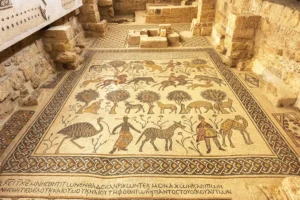
Mosaic remains associated with the Byzantine period.
Evidence of reused and altered architecture, reflecting the long life of the district.
The site is best appreciated slowly. Instead of looking for a fully preserved market street, trace how the walls, thresholds and street edge changed from the Roman period into the early Islamic centuries.
Visiting Tips
Visit while walking between the Oval Plaza, Macellum and South Tetrapylon.
Combine the stop with the nearby Umayyad Mosque, Shops of the South Cardo and Macellum.
Look beyond standing columns: the low walls beside the street often preserve the most important evidence of later urban life.
Morning or late afternoon light makes the masonry and room outlines easier to read.
Allow time to compare the formal Roman Cardo with the more irregular later shop additions.
Why the Shops Matter
Jerash is celebrated for its temples, theatres, gates and collonaded avenues, but the Shops of the South Cardo provide a more intimate view of the city. They show where trade happened, where people borrowed money, where crafts were practised and where daily life pressed against formal monumental architecture.
The district also challenges the idea that Jerash simply ended with the Roman period. Its evolving shopfronts show a city that continued to adapt through Byzantine and Islamic rule, retaining its commercial energy for centuries.
Frequently Asked Questions
The earliest shops date to the 2nd century AD, during the Roman development of Gerasa. They were extensively altered from the Byzantine period onward and remained in use until about AD 800.
The most recognisable Roman façades belong to the eight shops flanking the entrance to the Macellum, between the Oval Plaza and the South Tetrapylon.
From the Byzantine period onward, commercial structures gradually expanded onto the original pedestrian areas. This reflects the practical pressure for more business space and the changing use of the Roman street.
The naskhi Arabic inscription appears to list sums owed by individual customers to a merchant. It was probably a shop ledger or record of credit, likely dating to the Abbasid period.
The area was used by a variety of merchants, artists and craftspeople. Some businesses may have been grouped according to trade, making the South Cardo a diverse commercial district.
No. The Macellum was a dedicated market building, while the Shops of the South Cardo were individual commercial units lining the street and its approaches. The two areas were closely connected.
Key Moments in History
2nd century AD — Roman commercial street develops: Shops are established along the southern Cardo Maximus, Gerasa’s main collonaded street. Eight formal shop façades flank the entrance to the Macellum.
2nd–3rd centuries AD — A busy marketplace district: Merchants, craftspeople and customers use the shops beside major civic and religious routes, close to the Macellum, South Tetrapylon and Oval Plaza.
Key Moments in History
2nd century AD — Roman commercial street develops: Shops are established along the southern Cardo Maximus, Gerasa’s main collonaded street. Eight formal shop façades flank the entrance to the Macellum.
2nd–3rd centuries AD — A busy marketplace district: Merchants, craftspeople and customers use the shops beside major civic and religious routes, close to the Macellum, South Tetrapylon and Oval Plaza.
Byzantine period — Street life changes: New commercial units begin to alter the original Roman frontage, with some structures extending into the old porticoes and sidewalks.
7th century onward — Umayyad rebuilding: Shopkeepers expand and adapt the commercial spaces as Jerash continues to function under early Islamic rule.
Abbasid period — Credit and record-keeping: A marble slab inscribed in naskhi Arabic records debts owed to a merchant, offering a rare insight into everyday commercial transactions.
Around AD 800 — End of the recorded sequence: Archaeological evidence indicates that the South Cardo shops remained active into the Abbasid period, after nearly six centuries of changing use.