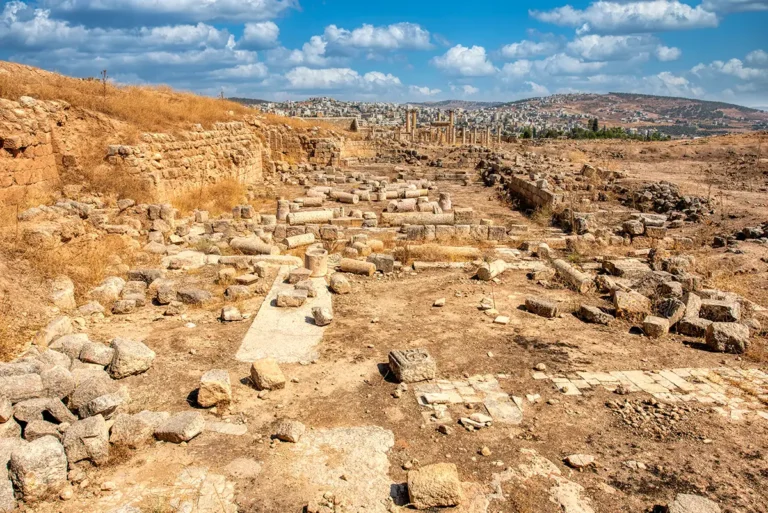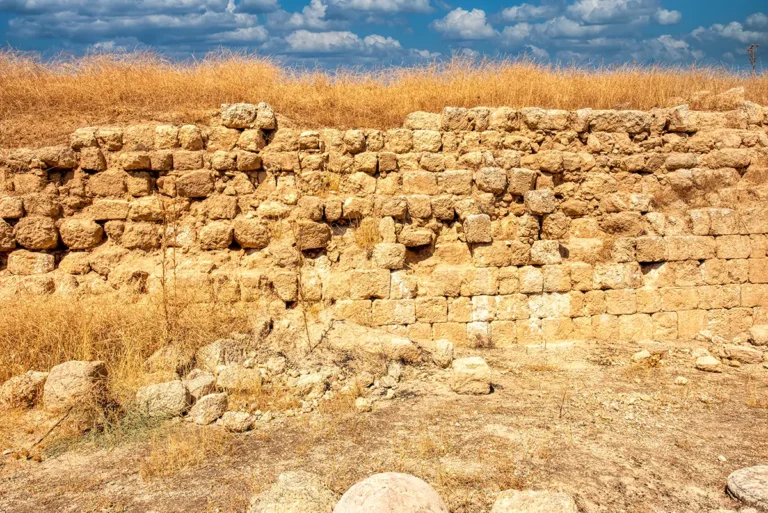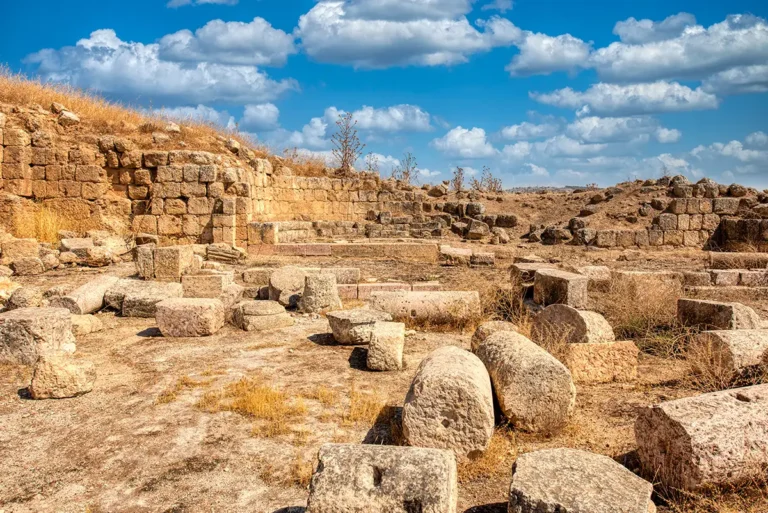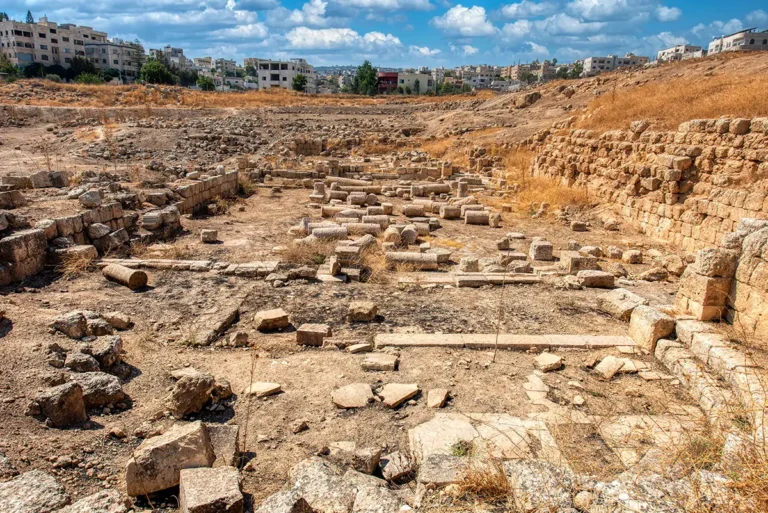

The Church of Bishop Genesius is one of Jerash’s most important late Byzantine monuments, even though it is far less famous than the Cathedral, Church of St. Theodore or the Three Churches Complex. Its importance lies in its date: a mosaic inscription records work in AD 611, making it the latest securely dated church foundation known in ancient Gerasa.
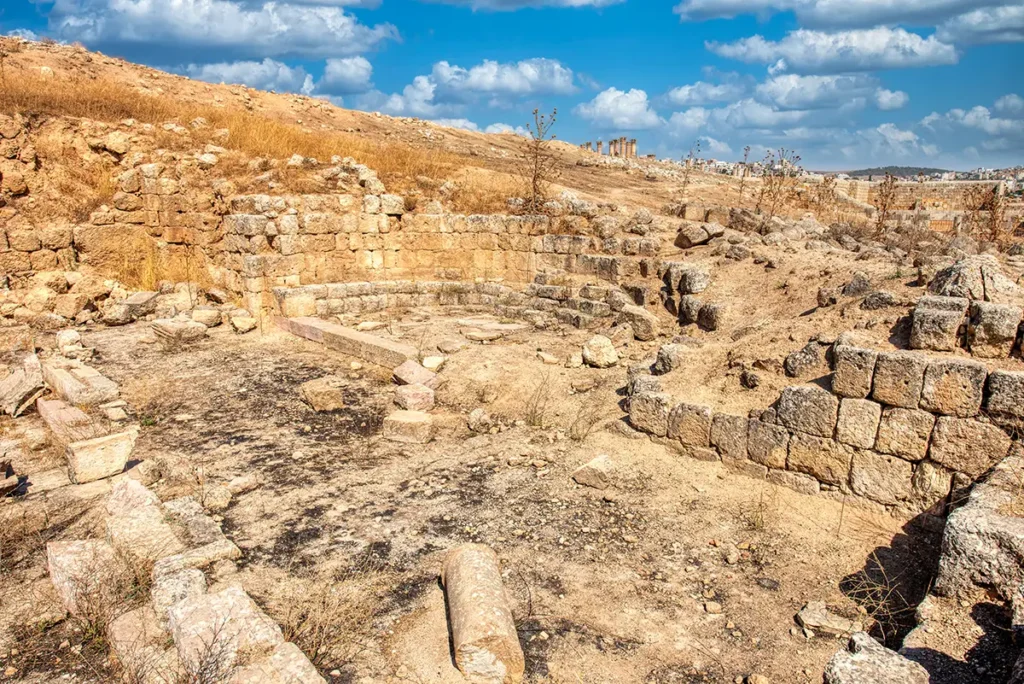
Standing west of the Three Churches Complex, this basilica belongs to the final great phase of Christian building in Jerash. It preserves evidence of a city still investing in churches, mosaics and liturgical architecture only a few years before the Persian invasion of the region and more than a century before the earthquake of AD 749 transformed the city.
The name can be misleading. The church is called “of Bishop Genesius” because the bishop is named in its inscription; there is no evidence that the church was dedicated to a saint called Genesius.
The Church of Bishop Genesius at a Glance
Location: Jerash Archaeological Park, Jordan (about 50 metres west of the Three Churches Complex)
Built date: 611 AD, according to a mosaic inscription
- Type: Three-aisled basilica with one external eastern apse
Named after: Bishop Genesius, named in the mosaic inscription
Key features: Mosaic nave and aisles, single apse, southwest mosaic-floored annex
Special significance: Latest securely dated church foundation known at Jerash
- Dimensions: Total Length (with Western Narthex): Approximately 26.5 meters (87 feet), Total Width (with the Southwest Adjoining Room): Approximately 18 meters (59 feet)
- Nearby monuments: Three Churches Complex, Temple of Artemis, Church of St. Theodore
- Current Status: Open to the public; duration of use remains uncertain; the church was never completely excavated.
First Impressions
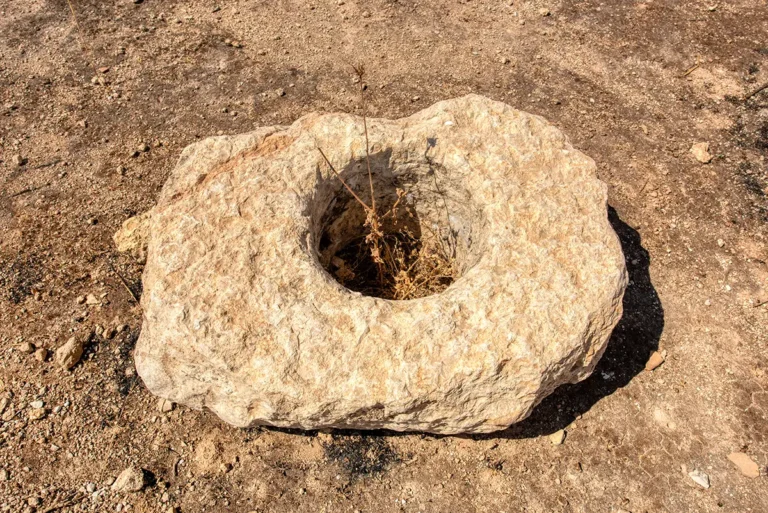
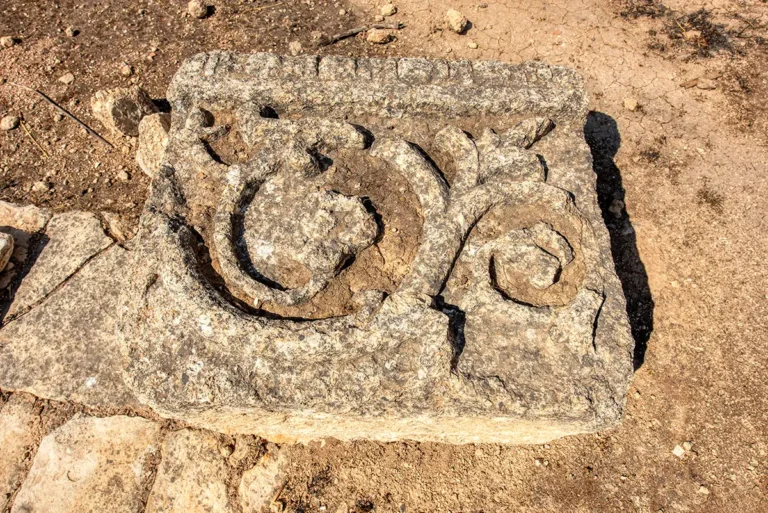
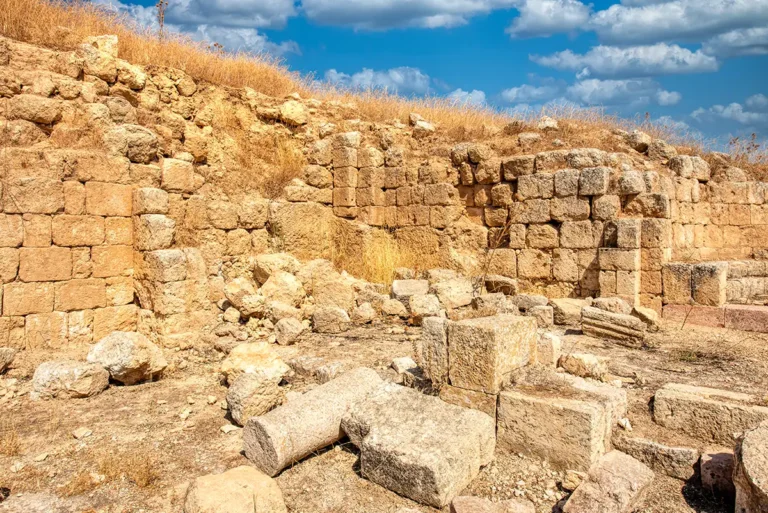
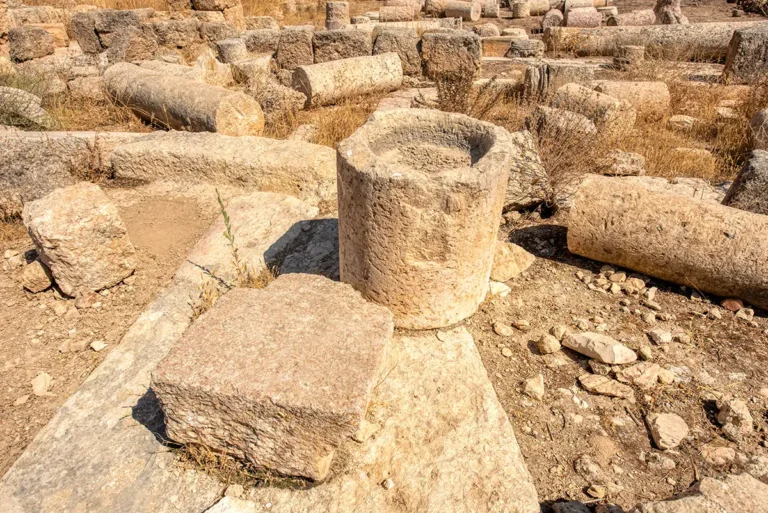
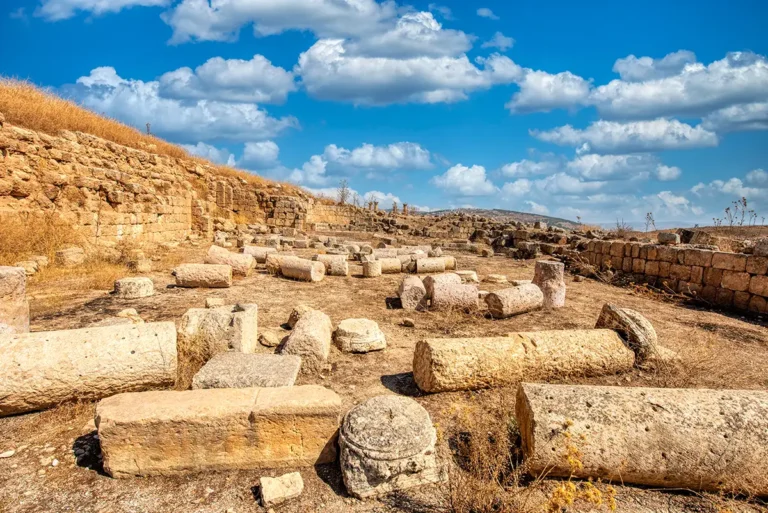
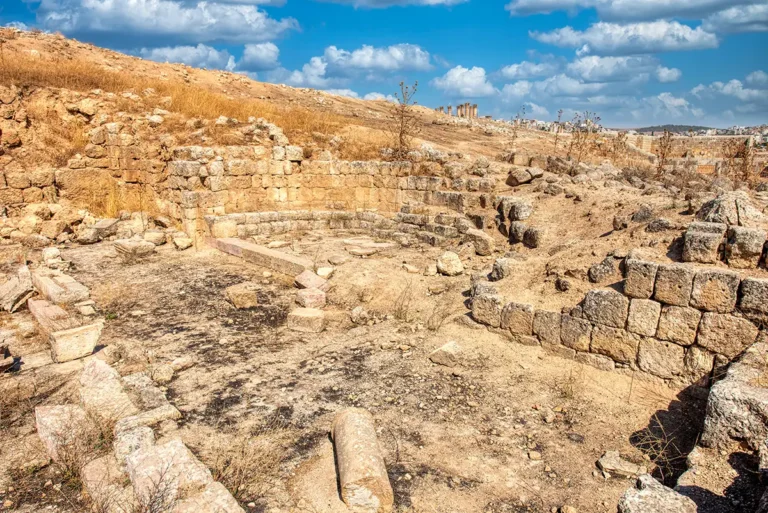
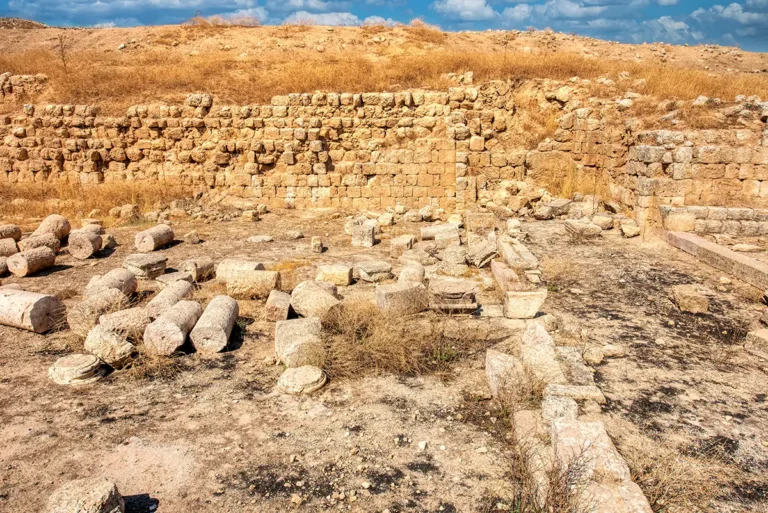
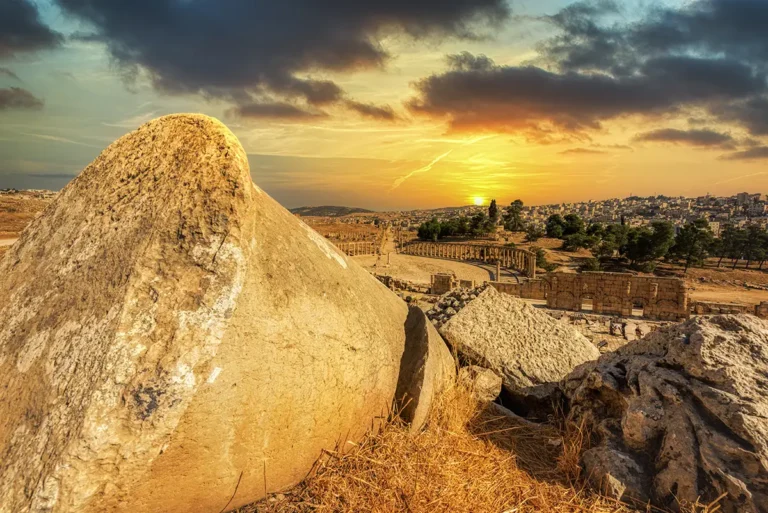
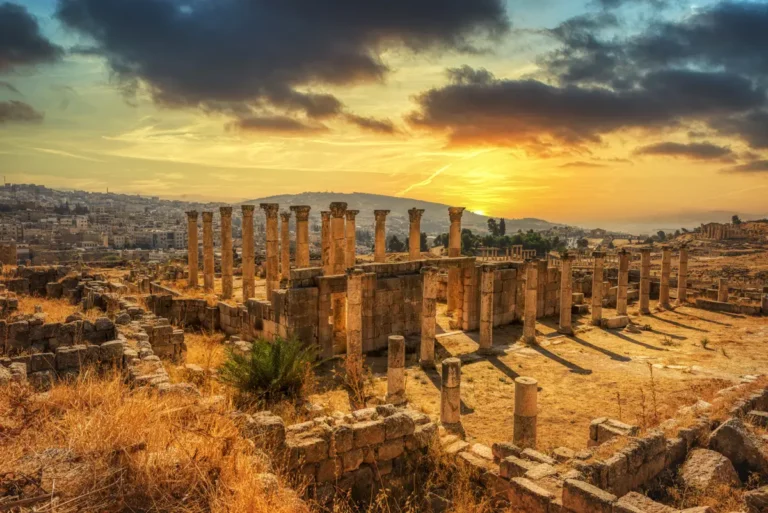
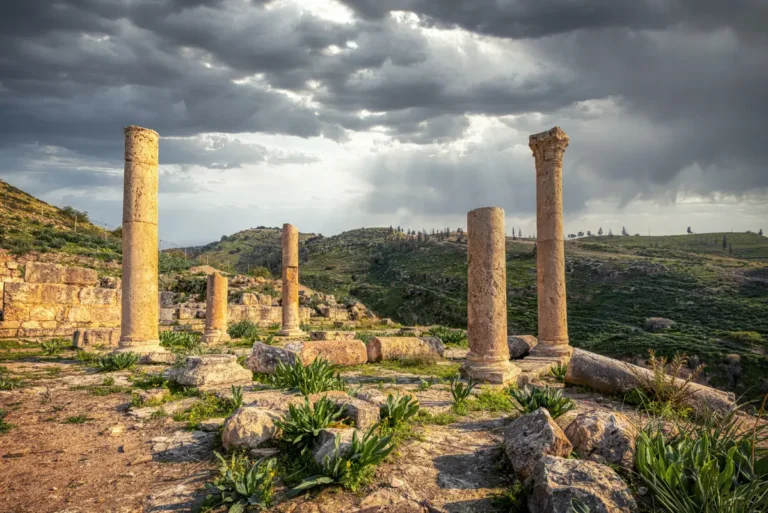
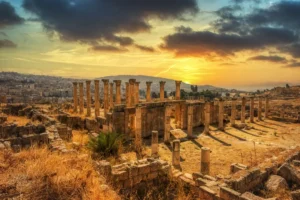
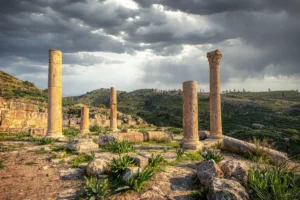
The Church of Bishop Genesius does not announce itself with towering columns or a dramatic façade. Its appeal is quieter: a low, carefully organised church plan in an area dense with other Byzantine monuments. The setting rewards visitors who slow down after exploring the better-known Three Churches Complex.
The church’s layout becomes clearer when viewed from above or traced along its surviving walls. A central nave once led toward the eastern apse, while side aisles extended along either side. Mosaic pavements once unified the interior, giving the building colour and rhythm despite its modest scale.
What makes the site especially compelling is its late date. This was not an early experiment in Christian Jerash. It was a church made when the city already possessed a mature Christian urban landscape, with established bishops, skilled mosaic workshops and a network of churches serving different neighbourhoods.
Where Is the Church of Bishop Genesius?
The church stands in the western Byzantine quarter of Jerash, approximately 50 metres west of the Three Churches Complex of St. George, St. John the Baptist, and SS. Cosmas and Damianus. It lies within a remarkable concentration of late antique religious buildings, close to the Church of Sts. Peter and Paul and other ecclesiastical remains.
This location matters because it places the church within a lived Christian district rather than beside the city’s monumental Roman core. By the early seventh century, Jerash was not simply reusing individual Roman buildings as churches; it had developed whole neighbourhoods shaped by Christian worship, clergy and pilgrimage.
Built Under Bishop Genesius
A mosaic inscription dates the church to AD 611, during the episcopate of Bishop Genesius. This is why the monument bears his name today. The inscription supplies a rare fixed point in the chronology of Byzantine Jerash and makes the church the latest securely dated ecclesiastical foundation in the city.
The date is particularly striking. Jerash had already been Christian for centuries, and many of its most celebrated churches were built in the fifth and sixth centuries. The Church of Bishop Genesius shows that construction and artistic investment continued into the early seventh century, at a time when political and economic conditions across the eastern Mediterranean were becoming increasingly unstable.
A Late Byzantine Basilica
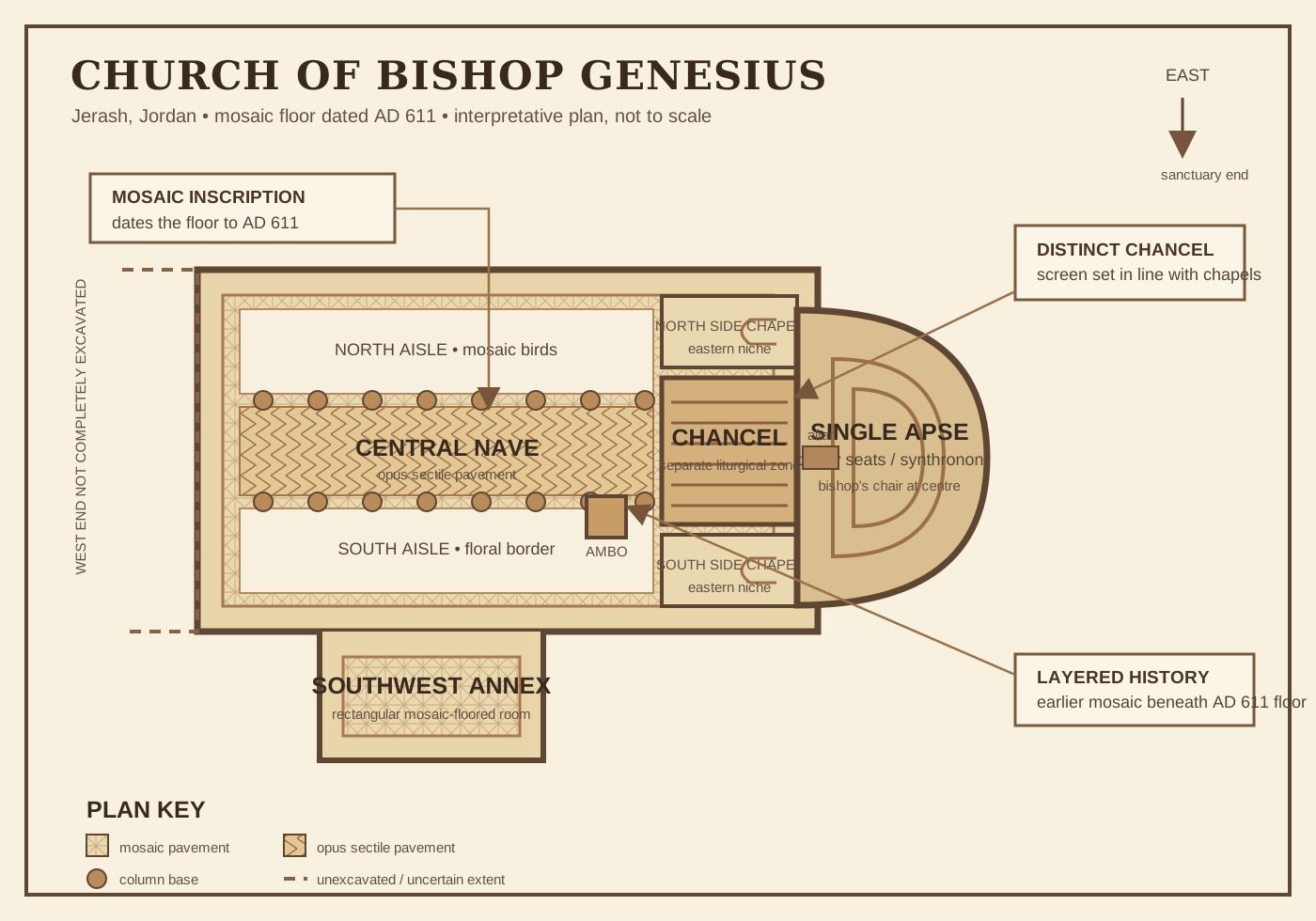
The church was a basilica with a central nave and two side aisles, ending in a single external eastern apse. This was a familiar and practical plan for congregational worship: the nave accommodated the congregation, the aisles helped movement through the building, and the apse contained the principal sanctuary.
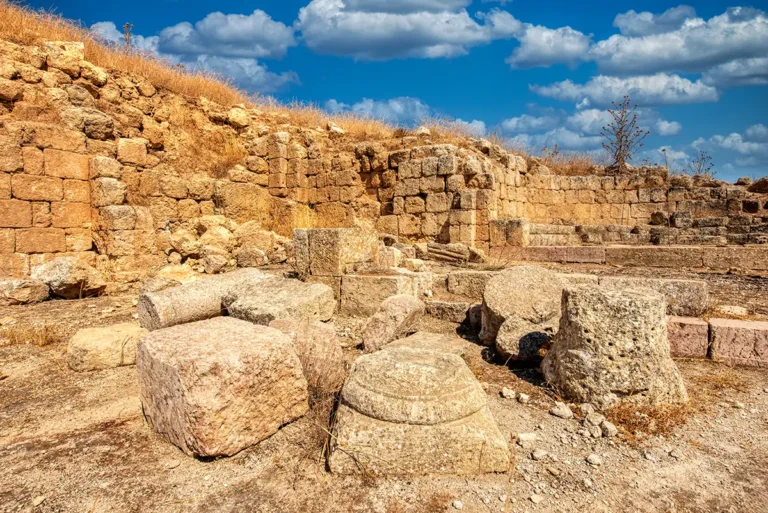
The nave and side aisles were separated by colonnades. Although little of the superstructure remains, the plan would once have created a clear ceremonial axis toward the altar and apse. The building was less architecturally elaborate than some of Jerash’s larger churches, but its internal arrangement was carefully conceived for liturgy and communal gathering.
A rectangular annex on the southwest side also had a mosaic floor. Its precise function is uncertain. It may have served as a service room, meeting space, storage area or a small auxiliary chapel; without complete excavation, it is safer not to assign it a definite role.
The Mosaic Floors
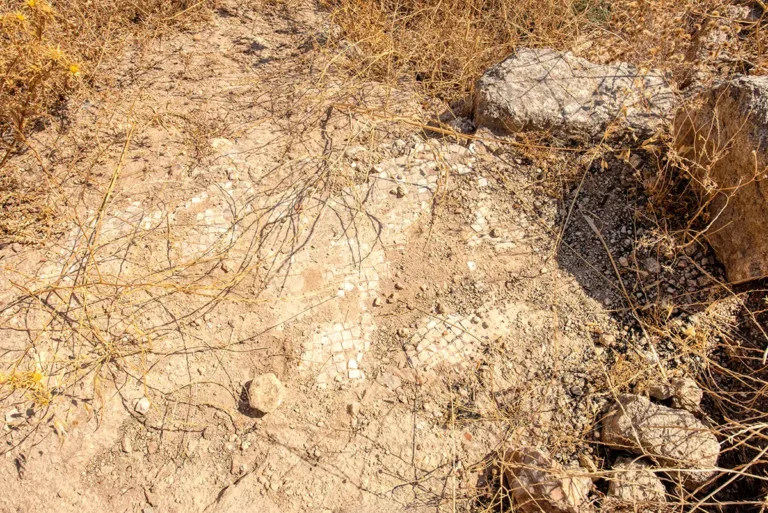
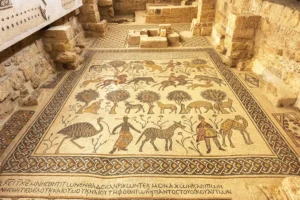
Mosaic was central to the identity of the Church of Bishop Genesius. Both the nave and aisles were paved, with the central nave using opus sectile—a pavement made from shaped pieces of stone or marble—while the side aisles carried geometric mosaics. Birds were depicted in the northern aisle, while a floral border decorated the southern aisle.
The church also preserves evidence of two phases of flooring. Beneath the mosaic associated with the AD 611 church was an earlier pavement, probably dating to the late fifth or early sixth century.
This suggests that the site had an earlier building history before Bishop Genesius’s project, or that the new church substantially rebuilt and repaved an existing sacred space.
That layered floor is one of the monument’s most valuable archaeological clues. It shows that the site was not created in isolation in AD 611: it formed part of a long-established Christian quarter whose buildings were repaired, replaced and embellished over time.
The Church and the Three Churches Complex
Although the Church of Bishop Genesius is close to the Three Churches Complex, it was not one of its three linked basilicas. St. George, St. John the Baptist, and SS. Cosmas and Damianus were designed around a shared courtyard and functioned as a distinctive architectural group. Bishop Genesius’s Church was separate, with its own plan and identity.
Still, its proximity to this group is meaningful. Together, the buildings demonstrate the density of Christian institutions in sixth- and early seventh-century Jerash. In a relatively small area, visitors can see several generations of church architecture, each with its own mosaics, dedication inscriptions and liturgical arrangement.
Bishop Genesius and Christian Jerash
Bishops were influential figures in Byzantine cities. They oversaw religious life, represented their communities and could attract the financial support needed to build and decorate churches. Bishop Genesius is remembered because his name was set into a mosaic floor, a permanent public record of his episcopate.
His church was created in the final phase of Jerash’s urban prosperity. The city’s population still had access to trained artisans and mosaic workshops, and its Christian community could still sponsor substantial construction. In this context, the church is evidence not of decline, but of continued religious confidence and local organisation.
A City at the End of an Era
The year AD 611 sits at a dramatic moment in Near Eastern history. Within a few years, the Sasanian Persian invasion would disrupt Byzantine Syria and Palestine. Later came the Muslim conquest in the seventh century, followed by the great earthquake of AD 749.
The exact length of the church’s use after AD 611 is not known. It was not fully excavated, and the archaeological record does not yet provide a complete sequence of repairs, abandonment or destruction. This uncertainty is part of the site’s story: the church remains an important but still incomplete chapter in the archaeology of Jerash.
The Mosaic Inscription of the Church of Bishop Genesius
The mosaic inscription records that the church’s pavement was completed during the episcopate of Bishop Genesius, in AD 611 (sometimes given as AD 610/611 or AD 611–614 in modern discussion). It is the latest securely dated church inscription known from ancient Gerasa.
The Mosaic Inscription of the Church of Bishop Genesius
The mosaic inscription records that the church’s pavement was completed during the episcopate of Bishop Genesius, in AD 611 (sometimes given as AD 610/611 or AD 611–614 in modern discussion). It is the latest securely dated church inscription known from ancient Gerasa.
A historical description adds one intriguing detail: the date formula used the name of a month in Latin form, an unusual feature in a Greek mosaic inscription at Jerash. This may reflect the persistence of Roman administrative habits within an otherwise Greek-speaking Byzantine Christian setting.
Meaning and Importance
The inscription is the reason the building is known as the Church of Bishop Genesius. It does not establish a dedication to a saint named Genesius; rather, it identifies the bishop active when the mosaic floor was made.
Its importance is chronological. The AD 611 date demonstrates that Jerash still possessed active bishops, patrons, mosaic workers and church-building capacity in the early seventh century, shortly before the Persian invasion of the region.
What to Look for During Your Visit
The eastern apse: Identify the focal point of the sanctuary at the end of the basilica.
The nave and aisles: Trace the basilical layout and the route a congregation would have taken toward the altar.
Mosaic remains: Look for surviving decorative fields, particularly geometric, floral and bird motifs.
The southwest annex: Notice the separate rectangular, mosaic-floored room attached to the church.
The wider church quarter: Compare the site with the nearby Three Churches Complex and Church of Sts. Peter and Paul.
The low archaeological landscape: The modest ruins help reveal how densely occupied this part of Byzantine Jerash once was.
Practical Visiting Tips
Visit the Church of Bishop Genesius together with the Three Churches Complex, the Church of Sts. Peter and Paul, and the nearby western Byzantine quarter. The route is less crowded than the Cardo Maximus and gives a much better sense of the scale of Christian Jerash.
Wear sturdy shoes, as paths may be uneven and the remains are low to the ground. Take time to look at the plan rather than expecting a complete standing building; its significance is in the mosaics, inscription, location and chronology.
Why the Church of Bishop Genesius Matters
The Church of Bishop Genesius matters because it is a precise historical marker. Its inscription anchors the late Byzantine history of Jerash in AD 611 and demonstrates that the city was still capable of building and decorating churches at the beginning of the seventh century.
It also captures the layered character of Gerasa. Under its later mosaics lay earlier pavement; around it stood other churches; and within its walls, local worshippers participated in a Christian urban culture that had grown out of the Roman city.
For visitors who have already seen Jerash’s temples and theatres, this church offers a different perspective: not the imperial spectacle of Roman Gerasa, but the resilient, highly organised Christian city that continued to develop centuries later.
Frequently Asked Questions
A mosaic inscription dates the church to AD 611, during the episcopate of Bishop Genesius. It is the latest securely dated church foundation known in ancient Jerash.
There is no evidence that it was dedicated to a saint called Genesius. The church takes its modern name from Bishop Genesius, whose name appeared in the mosaic inscription.
The church stands in Jerash’s western Byzantine quarter, about 50 metres west of the Three Churches Complex of St. George, St. John the Baptist, and SS. Cosmas and Damianus.
It was a three-aisled basilica with a central nave, two side aisles and one external eastern apse. A separate rectangular mosaic-floored room stood on its southwest side.
Its AD 611 inscription provides the latest secure date for the construction of a church in Gerasa. It proves that Christian building, mosaic production and urban religious life continued into the early seventh century.
The nave was paved with opus sectile, made from shaped stone pieces, while the side aisles had geometric mosaic decoration. The northern aisle included bird imagery, and the southern aisle had a floral border.
Evidence of an earlier mosaic pavement beneath the AD 611 floor suggests that the site had an earlier late fifth- or early sixth-century phase. The exact nature of that earlier building is still uncertain.
Its full external dimensions cannot be stated with confidence because the western end was never completely excavated. Published archaeological descriptions therefore do not provide a dependable overall length-and-width measurement.
Its later history is uncertain. Unlike several other churches in Jerash, the available archaeological evidence does not establish how long it remained active or precisely when it was abandoned.
No. It stands close to the Three Churches Complex but was a separate church with its own basilical plan, mosaic programme and episcopal inscription.
Key Moments in History
Late 5th to early 6th century: An earlier mosaic pavement was laid at the site, indicating a pre-existing building phase before the later church.
AD 610/611: The Church of Bishop Genesius was built or substantially renewed. A mosaic inscription dates the project to the episcopate of Bishop Genesius.
Key Moments in History
Late 5th to early 6th century: An earlier mosaic pavement was laid at the site, indicating a pre-existing building phase before the later church.
AD 610/611: The Church of Bishop Genesius was built or substantially renewed. A mosaic inscription dates the project to the episcopate of Bishop Genesius.
Early 7th century: The basilica received its mosaic programme: opus sectile in the central nave, geometric designs in the aisles, bird imagery in the north aisle and a floral border in the south.
AD 611: The church became the latest securely dated ecclesiastical foundation known in ancient Gerasa, reflecting continued Christian prosperity and skilled craftsmanship in the city.
Early 7th century: A rectangular, mosaic-floored room on the church’s southwest side formed part of the complex, though its exact purpose remains unknown.
AD 614 onward: Regional conflict following the Persian invasion brought major uncertainty to the Byzantine Near East. The later use of the church is not securely documented.
AD 635: Jerash came under Muslim rule. Christian communities continued in the city, but there is no clear evidence for the Church of Bishop Genesius’s specific condition or use in this period.
AD 749: The great earthquake devastated Jerash. Whether the church was still active at that point is unknown.
Modern archaeology: Partial excavation revealed the basilical plan, layered mosaic floors and the inscription that preserves Bishop Genesius’s name and the church’s AD 611 date.