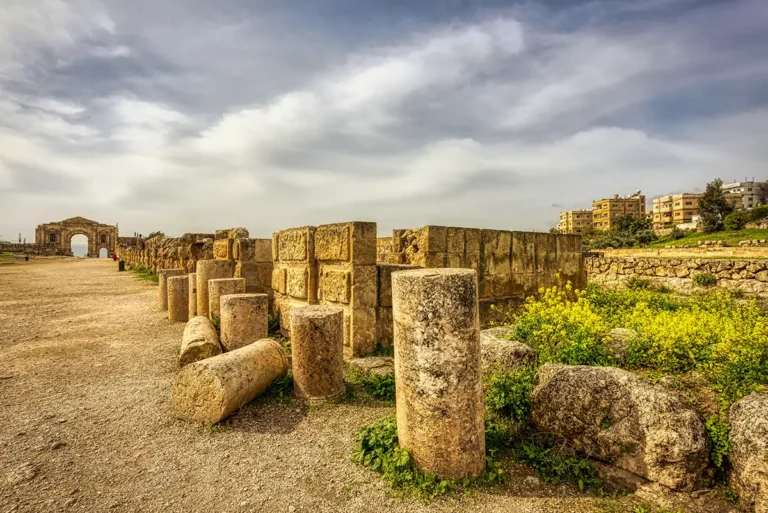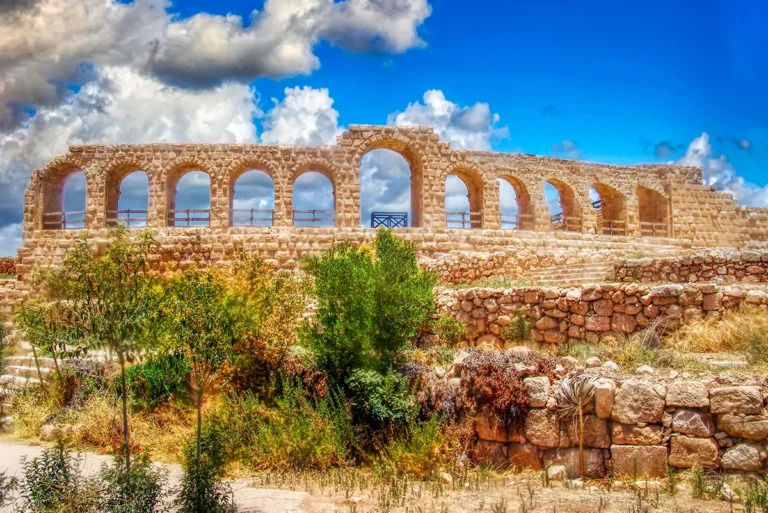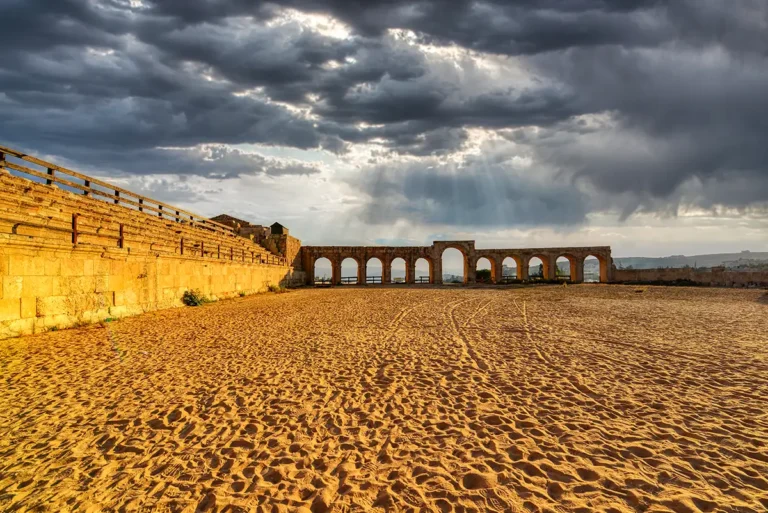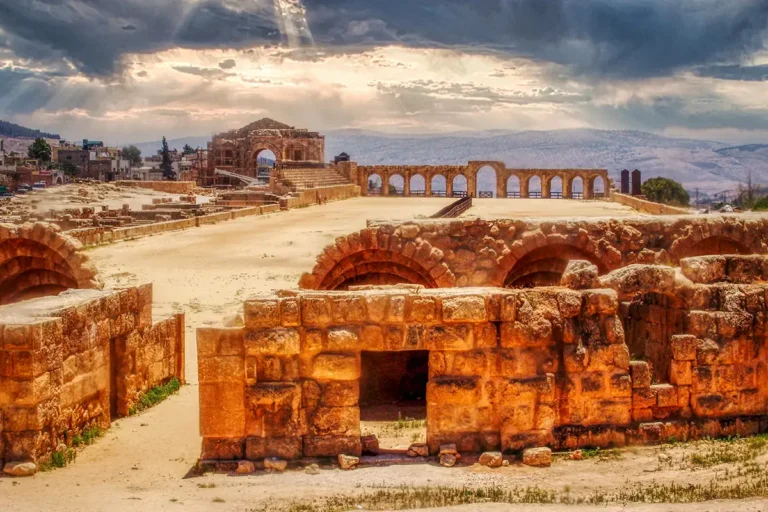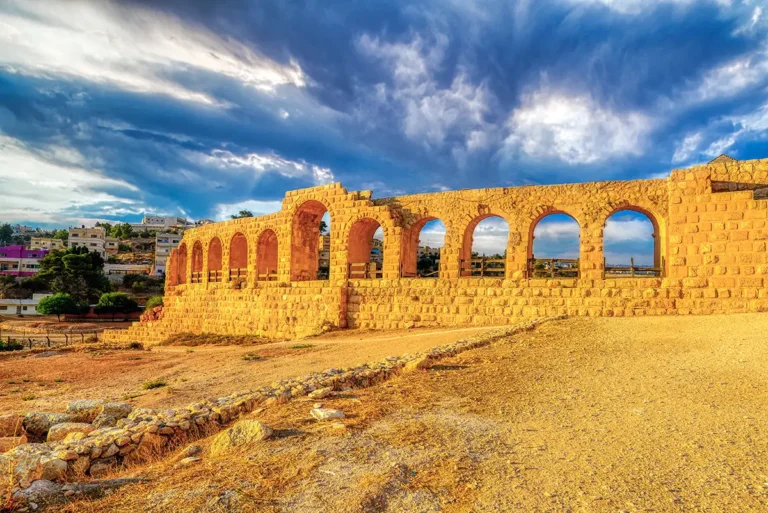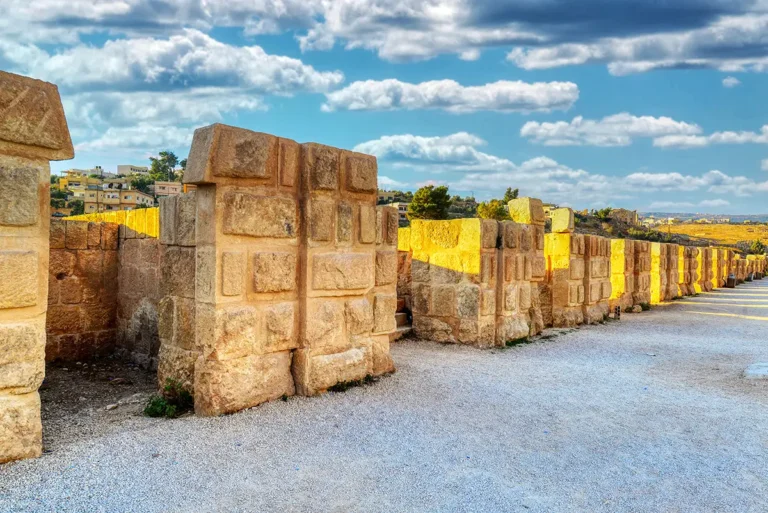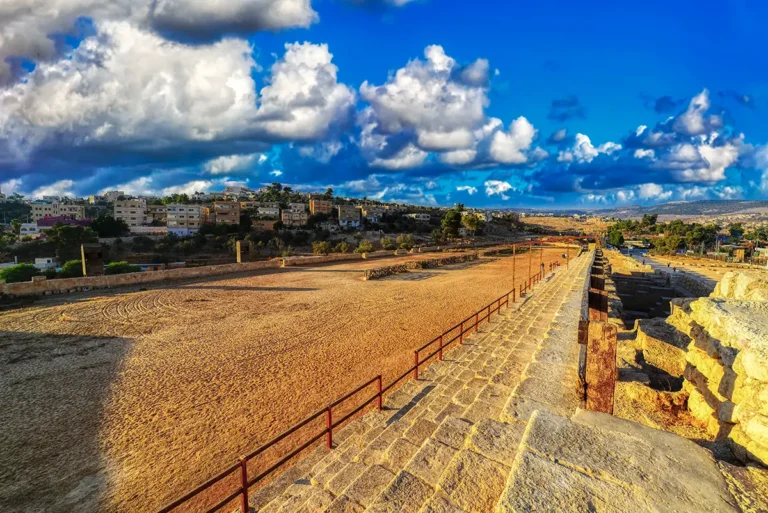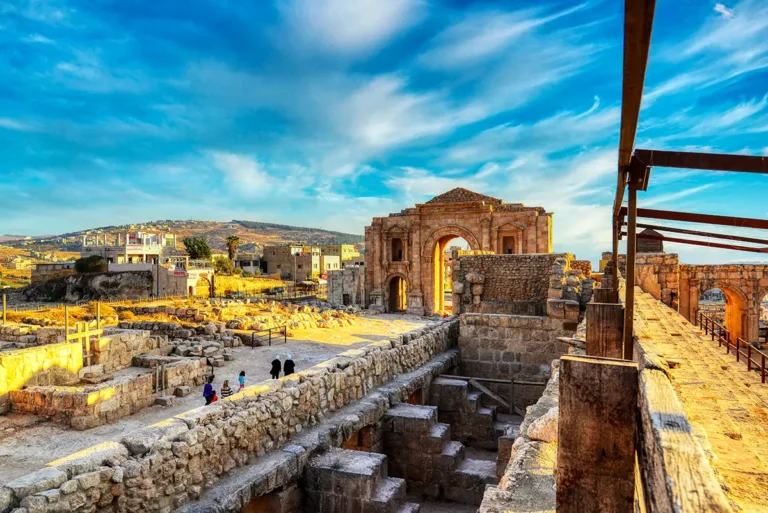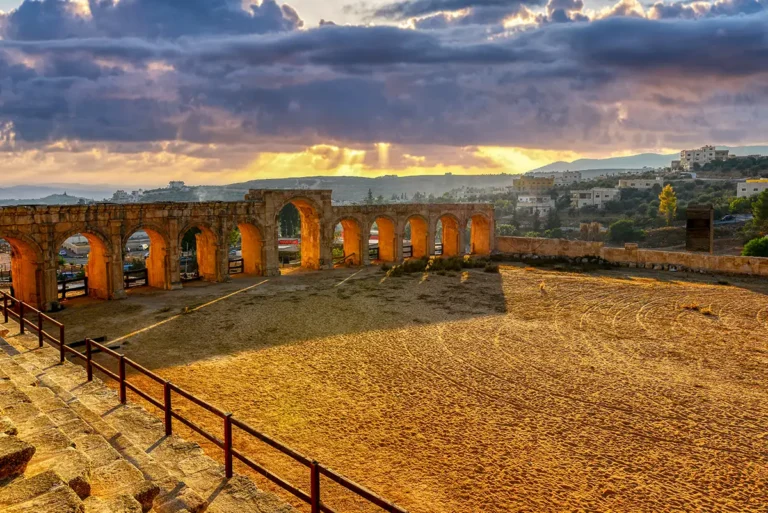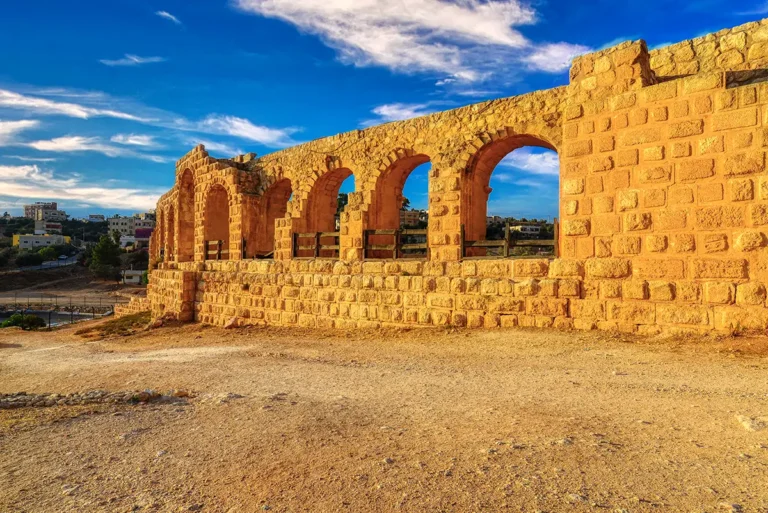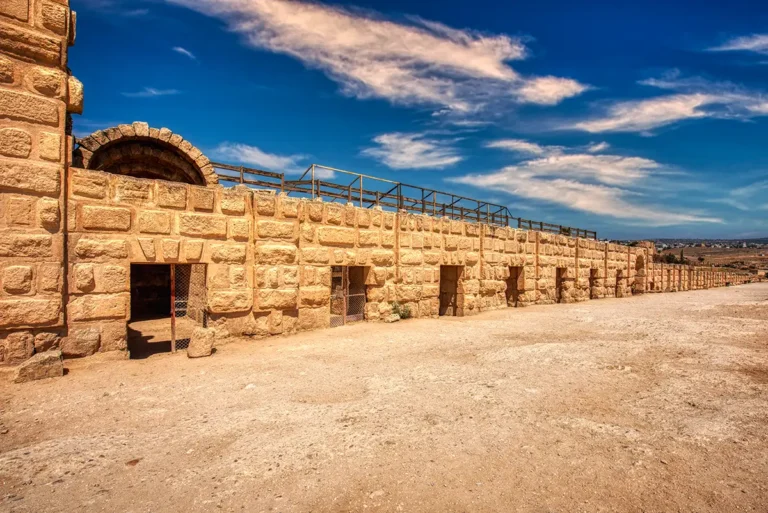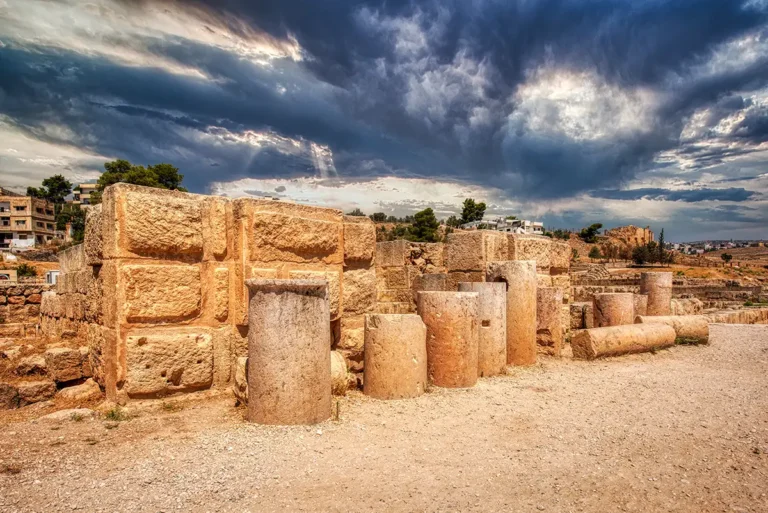

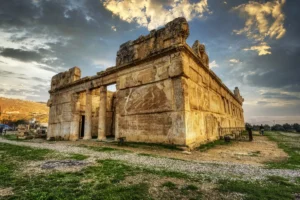
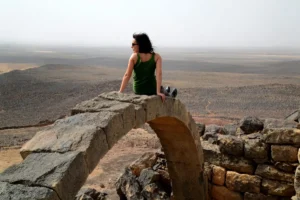

Standing as a massive, elongated stadium just beyond the ancient city walls, the Hippodrome of Jerash is one of the largest and best-preserved Roman arenas in the Middle East. Originally built to host roaring chariot races and athletic competitions, this monumental structure has been meticulously revived, offering modern travellers a vivid window into the public spectacles of the ancient world.
The Hippodrome at a Glance
Location: Jerash Archaeological Park, Jordan (after Hadrian’s Arch)
Built date: Early 2nd to 3rd century AD
Purpose: Chariot races, athletic contests, and public mass entertainment
Capacity: Originally accommodated up to 15,000 spectators
- Architectural Style: Classic U-shaped Roman circus (or stadium)
- Key Feature: Intact starting gates (carceres) and a preserved curved arena floor
- Dimensions: About 265 metres (870 feet) long and 50 metres (165 feet) wide
- Nearby monuments: Hadrian’s Arch, Church of Marianos, Ticket Office and Parking
- Current Status: Restored, hosting live historical reenactments
- Best way to experience it: Walk onto the ancient dirt trackway and climb the stone spectator stands (cavea).
Historical Context and Origin
The Jerash Hippodrome was constructed during the city’s economic golden age in the 2nd century AD. As the Roman city of Gerasa grew in wealth and status, its citizens demanded the same grand-scale entertainment found in Rome.
While its construction began around the same era as the nearby Hadrian’s Arch, the Hippodrome was an ongoing, massive municipal project. Designed primarily for ludi circenses (circus games), it brought the thrilling, high-stakes sport of chariot racing to the Roman East.
The Hippodrome was intentionally placed outside the city’s South Gate to accommodate its enormous footprint. Over the centuries, its function shifted; by the late 4th century, parts of the arena were converted into a polo field by the Persians, and later, the structure served as a defensive quarry during the Byzantine and Umayyad periods.
First Impressions
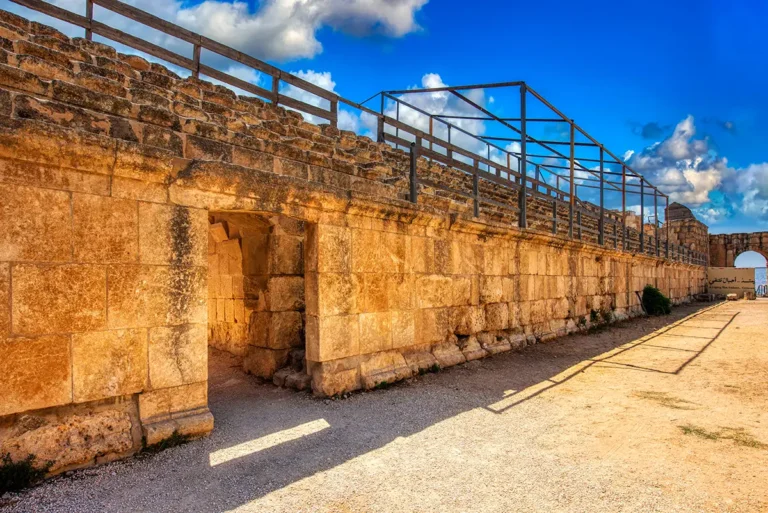
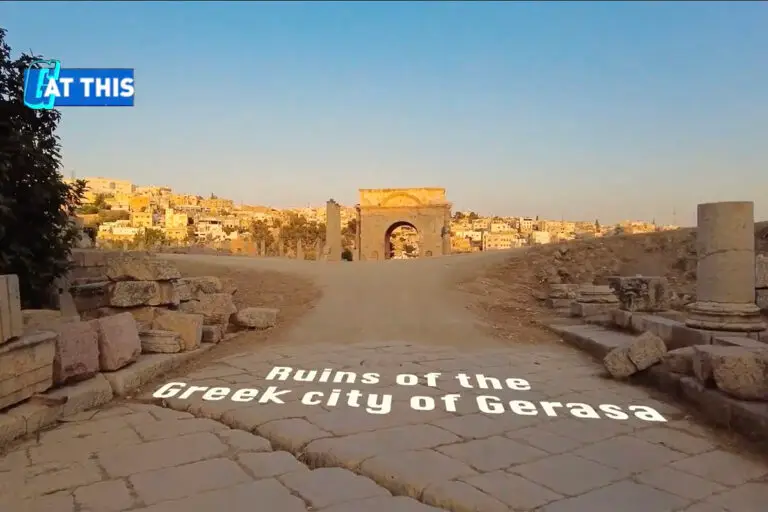
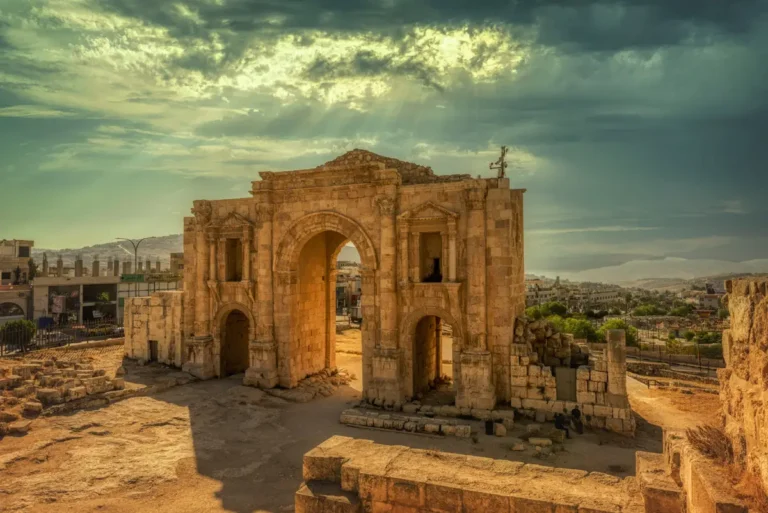
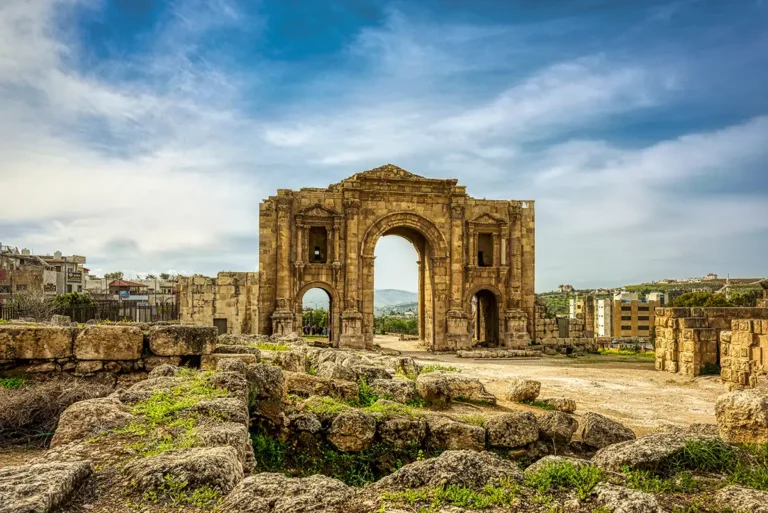
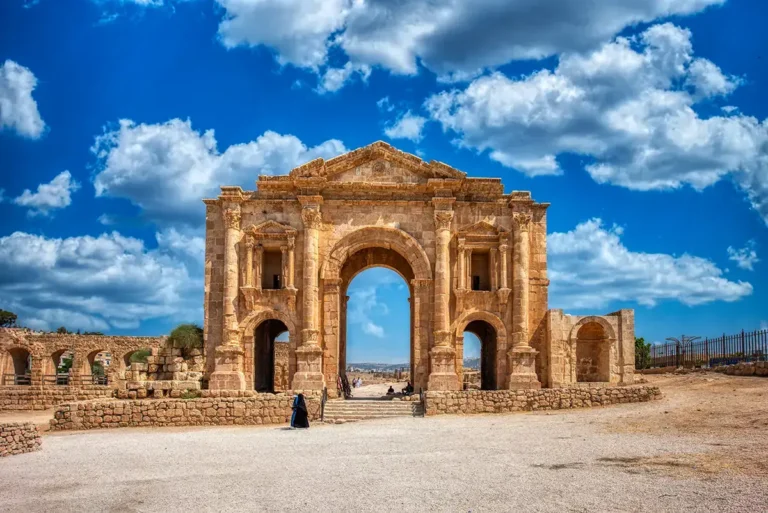
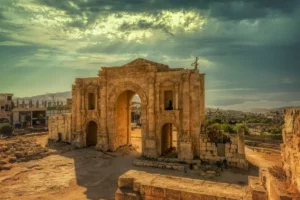
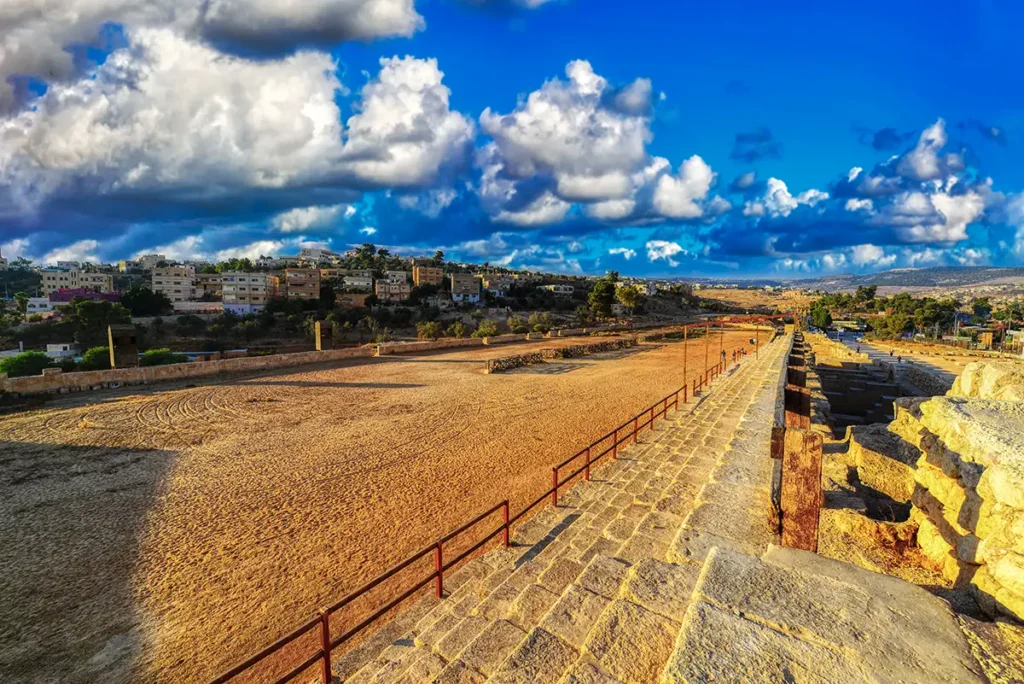
Stepping through the towering Arch of Hadrian, the Hippodrome immediately shifts your sense of scale, feeling less like a static ruin and more like a sleeping giant dropped into the rolling hills of modern Jerash. The sheer length of the arena hits you first, revealing a massive, open dirt track stretching out like an ancient highway under the intense Jordanian sun. The sun-bleached yellow limestone walls form a striking, weathered frame against the backdrop of modern white stone houses perched along the distant ridge line.
Walking onto the trackway, the bustling noise of the nearby town quickly fades, replaced by the crunch of dry sand and gravel beneath your shoes. Standing in the centre of the vast arena makes you feel incredibly small, making it easy to visualise the deafening roar of 15,000 spectral spectators who once filled the empty tiers. Running your hands over the stones reveals deep grooves, ancient mason marks, and centuries of wind erosion that bring the history of the structure to life.
The overall vibe of the space is raw, exposed, and remarkably intact. Unlike many global heritage sites that are heavily roped off, here you are permitted to stand exactly where chariot wheels kicked up dust eighteen centuries ago. It leaves a lasting impression of monumental Roman engineering built to survive the rise and fall of empires, serving as a powerful introduction to the rest of the ancient city.
Architectural Design and Features
The Hippodrome is a classic example of Roman sports engineering, built with a U-shaped design optimised for speed, visibility, and crowd control.
Dimensions and Capacity
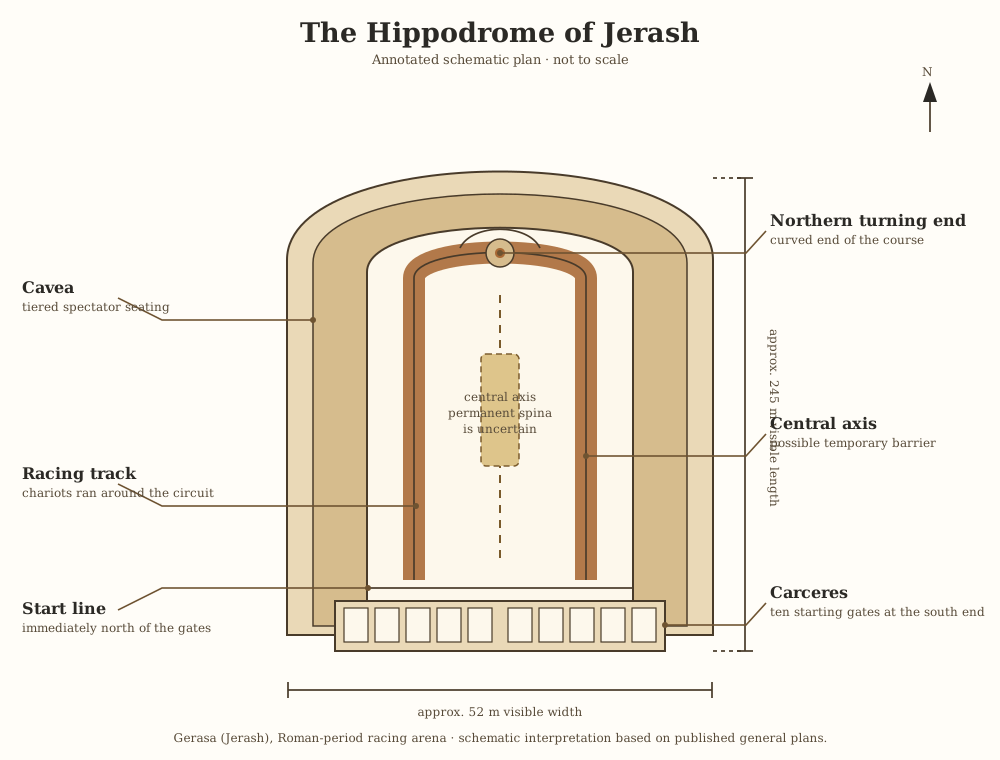
Measuring about 244 to 265 metres long (800 to 869 feet) and 52 to 76 metres wide (170 to 249 feet), the stadium was smaller than Rome’s Circus Maximus but exceptionally grand for a provincial city.
Its stone benches, known as the cavea, were built over vaulted chambers and rose up to ten tiers high, comfortably seating 15,000 cheering spectators.
Unique Architectural Details
The arena floor retains several distinct features that defined ancient racing mechanics:
The Carceres (Starting Gates): At the flat northern end of the stadium, travellers can still see the remains of the ten arched starting gates. These held the horses and chariots in place before a spring-loaded mechanism released them simultaneously.
The Spina: A low central barrier ran down the middle of the track. Charioteers had to complete seven gruelling, dangerous laps around this island, navigating tight, high-speed turns at either end.
The Sphendone: The semicircular curved southern end of the stadium features reinforced masonry designed to withstand the immense pressure of the cheering crowds packed tightly into the turns.
The Carceres Inscribed Altars
The carceres—the ten arched starting gates that launched horses and chariots onto the track—were originally topped by a grand architectural superstructure. Resting prominently atop this framework were four matching stone altars made of local, hard-dressed Jerash limestone.
The Carceres Inscribed Altars
The carceres—the ten arched starting gates that launched horses and chariots onto the track—were originally topped by a grand architectural superstructure. Resting prominently atop this framework were four matching stone altars made of local, hard-dressed Jerash limestone.
Constructed in a traditional Roman imperial style, each altar featured a moulded base, a central stone die (body) reserved for the inscription, and a decorative capstone (focus) where liquid offerings or small sacrifices could be made before the start of the races. Because they were positioned directly above the starting gates, they were completely visible to the 15,000 spectators packed into the grandstands.
The Inscriptions and Language
The text carved into the stone bodies of the altars is written in ancient Greek, which was the dominant administrative and elite language of the Roman East (the Decapolis).
The letters are cleanly incised, uniform, and monumental in style. Based on the precise wording and references to the ruling imperial family, epigraphists have securely dated the carving of these altars to the Severan Period, specifically between 209 and 212 AD.
Translation and Dedications
The primary, best-preserved altar features a multi-layered dedication intended to secure divine favour for the games and demonstrate political loyalty to Rome. The inscription officially dedicates the arena and its events to a triad of powers:
The Good Fortune (Tyche): The personification of luck and fortune. In a sport as notoriously dangerous and unpredictable as chariot racing—where spectacular crashes (naufragia) were common—appealing to Tyche was an essential pre-race ritual for charioteers and organisers alike.
The Ruling Roman Emperors: Specifically mentioning Emperor Septimius Severus and his sons, Caracalla and Geta. Including the imperial family was a calculated political move by the elite citizens of Gerasa to showcase their absolute loyalty to the empire, ensuring continued imperial funding and favour for their city.
Zeus Uranios: The supreme deity of the heavens. In the Roman East, Zeus was frequently syncretised with local Semitic sky gods. Dedicating the altars to him elevated the chariot races from mere secular entertainment to a grand, sanctified religious festival.
For more information: Inscriptions on altars from the hippodrome of Gerasa
Destruction, Rediscovery, and Restoration
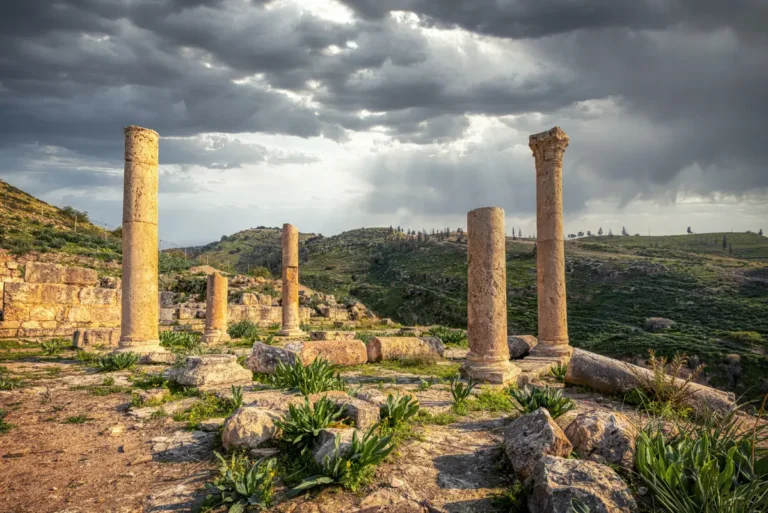
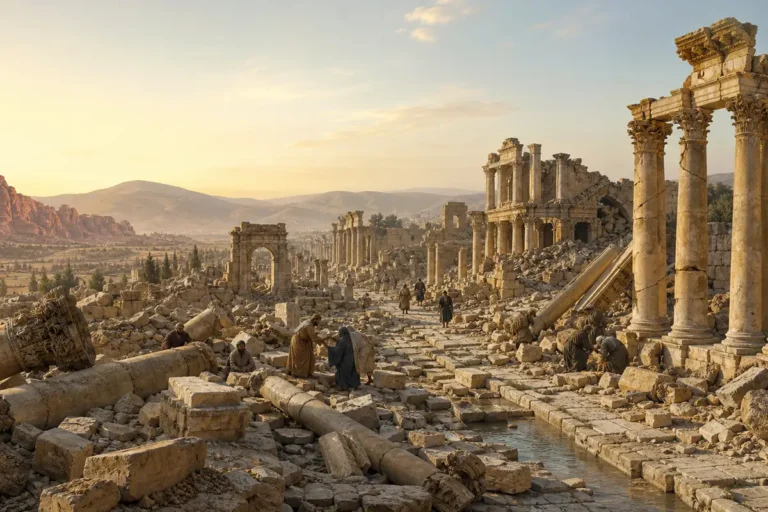
Like much of ancient Gerasa, the Hippodrome suffered catastrophic damage during the historic 749 AD Galilee earthquake. The massive stone tiers collapsed inward, burying the track under thousands of tons of heavy limestone blocks.
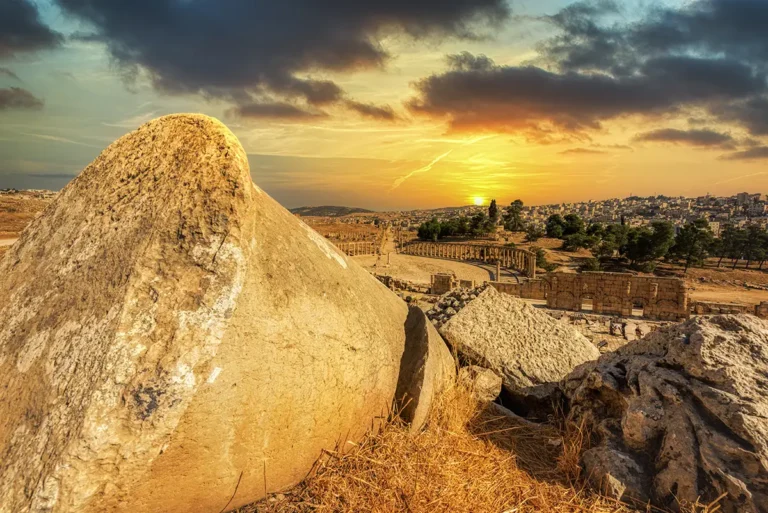
For centuries, the arena lay half-buried, looking like a natural depression in the valley. Modern archaeological excavations in the mid-20th century cleared away the debris, revealing the astonishingly intact foundations of the track and seating vaults.
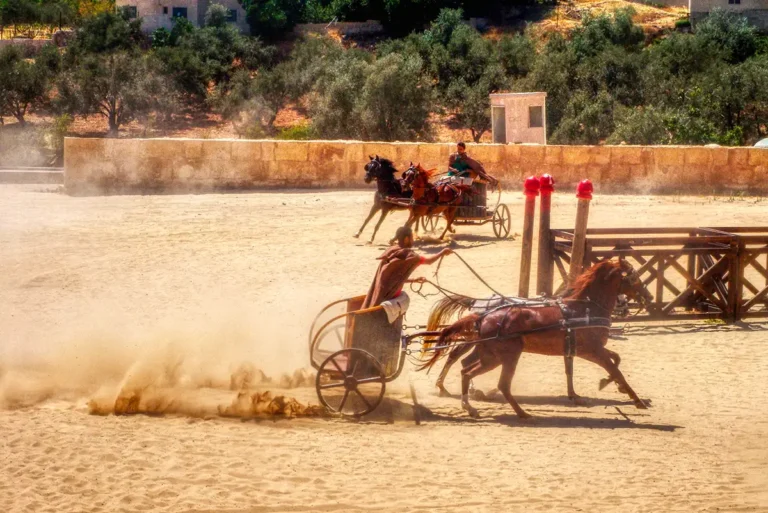
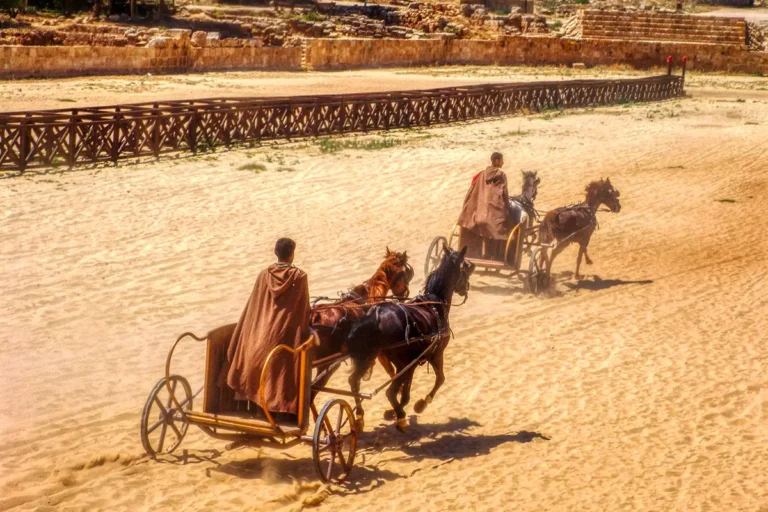
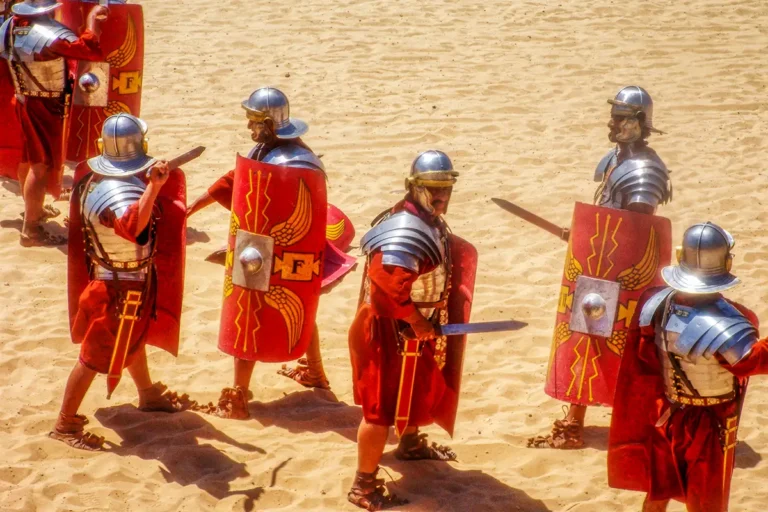
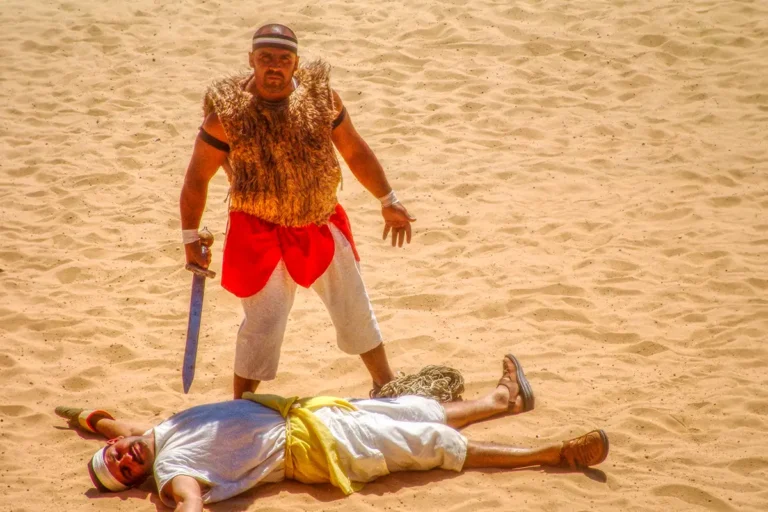
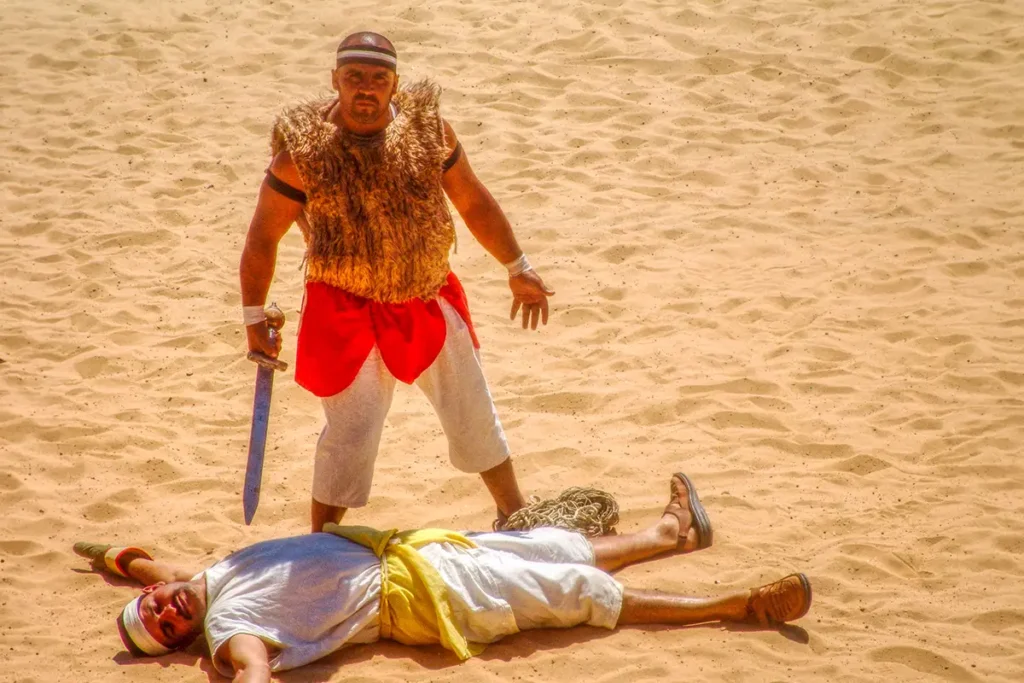
Through extensive, ongoing reconstruction efforts by the Jordanian Department of Antiquities, the stadium’s western walls, starting gates, and seating sections were carefully rebuilt using original materials. This extensive restoration made it possible to bring the arena back to life, famously hosting the Roman Army and Chariot Experience (RACE), where actors in full Roman armour re-created authentic tactical drills and races on the original track.
Visiting the Hippodrome Today
For travellers exploring Jerash, the Hippodrome provides an immersive, spatial experience immediately after passing through Hadrian’s Arch.
- Location: Situated directly to your left as you walk past the ticket office and Hadrian’s Arch, right before reaching the South Gate.
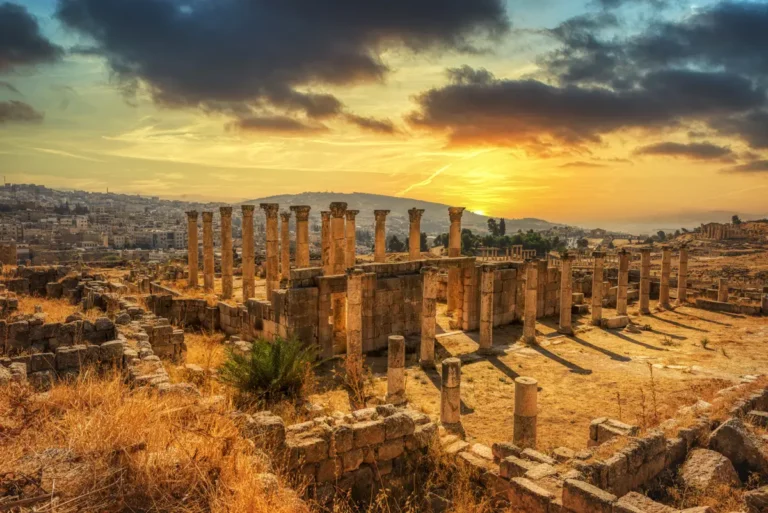
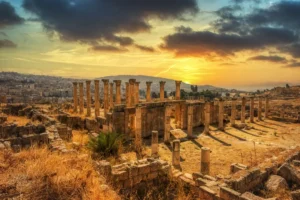
- Photographic Vantage: Climb to the top row of the reconstructed western benches. From this high vantage point, you can capture the entire length of the racing oval with the towering pillars of Jerash in the background.
- The Experience: Walk out onto the dirt track and stand inside the carceres. Looking down the long straightaway allows you to truly appreciate the speed and danger ancient charioteers faced.
Key Takeaway
The Jerash Hippodrome stands as a premier testament to the scale and sophistication of Roman mass entertainment in the ancient Near East. Moving beyond its primary identity as a mere sports stadium, the arena functioned as a vital civic hub where social hierarchies were reinforced, imperial loyalty was demonstrated, and the cultural fabric of Roman Gerasa was vividly expressed. Its monumental architecture, specifically designed to accommodate 15,000 roaring spectators outside the city walls, highlights the immense wealth and engineering prowess of this provincial desert outpost during its second-century golden age.
Frequently Asked Questions
The Hippodrome was an arena for public spectacles, especially chariot races, athletic displays and other large civic entertainments.
It was constructed between the mid-second and early third centuries AD, during the Roman period when Gerasa was expanding with major public buildings.
The arena measures approximately 246 metres long and 52 metres wide—about 807 by 171 feet. It could have accommodated thousands of spectators.
It is called the spina. In Roman circuses and hippodromes, this central dividing barrier guided the chariots as they raced around it.
Yes. The building’s elongated plan, starting gates, spectator seating and central spina all identify it as a venue designed for chariot racing and public events.
They began at the carceres, the starting gates at one end of the Hippodrome. Chariots would have lined up there before charging into the arena.
A theatre was designed for plays, music, speeches and performances viewed from a semicircular auditorium. The Hippodrome was a long racing arena intended for movement, speed and spectacle.
Key Moments in History
The Roman Era (2nd Century – Early 4th Century AD)
- 129–130 AD: Emperor Hadrian visits Gerasa (Jerash). Plans are set to build the hippodrome on top of former quarries.
- Mid-2nd Century AD: Construction begins on the 15,000-seat stadium.
- 212 AD: Construction finishes, securing its place as the smallest known hippodrome in the Roman Empire.
- Late 2nd – 3rd Century AD: The stadium hosts high-stakes chariot races, athletic games, and gladiatorial events.
Key Moments in History
The Roman Era (2nd Century – Early 4th Century AD)
- 129–130 AD: Emperor Hadrian visits Gerasa (Jerash). Plans are set to build the hippodrome on top of former quarries.
- Mid-2nd Century AD: Construction begins on the 15,000-seat stadium.
- 212 AD: Construction finishes, securing its place as the smallest known hippodrome in the Roman Empire.
- Late 2nd – 3rd Century AD: The stadium hosts high-stakes chariot races, athletic games, and gladiatorial events.
The Industrial & Byzantine Shift (Late 4th Century – 6th Century AD)
- Late 4th Century AD: Structural foundations begin failing. Official chariot racing is permanently abandoned.
- 4th–5th Century AD: The northern curve transforms into an amphitheatre for gladiator fights. The southern half is squatted by local potters.
- 6th Century AD: The arena becomes a massive industrial ceramic production hub for the Decapolis cities. Artisans build kilns inside the structural arches.
- 570 AD: Christian craftsmen construct the adjacent Church of Marianos directly next to the site.
Conquest, Collapse, and Modern Era (7th Century – Present)
- 614 AD: The Sasanian Persians invade Jordan. They repurpose the open racing track for equestrian polo matches.
- 629 AD: Byzantine forces briefly reclaim the city and use the abandoned arena stones as a quarry to repair the city walls.
- 749 AD: The catastrophic Galilee earthquake strikes. The stadium collapses and is buried under debris for centuries.
- Modern Era: Major archaeological excavations unearth and reconstruct the site. It is now celebrated as the most completely preserved Roman circus in the world.