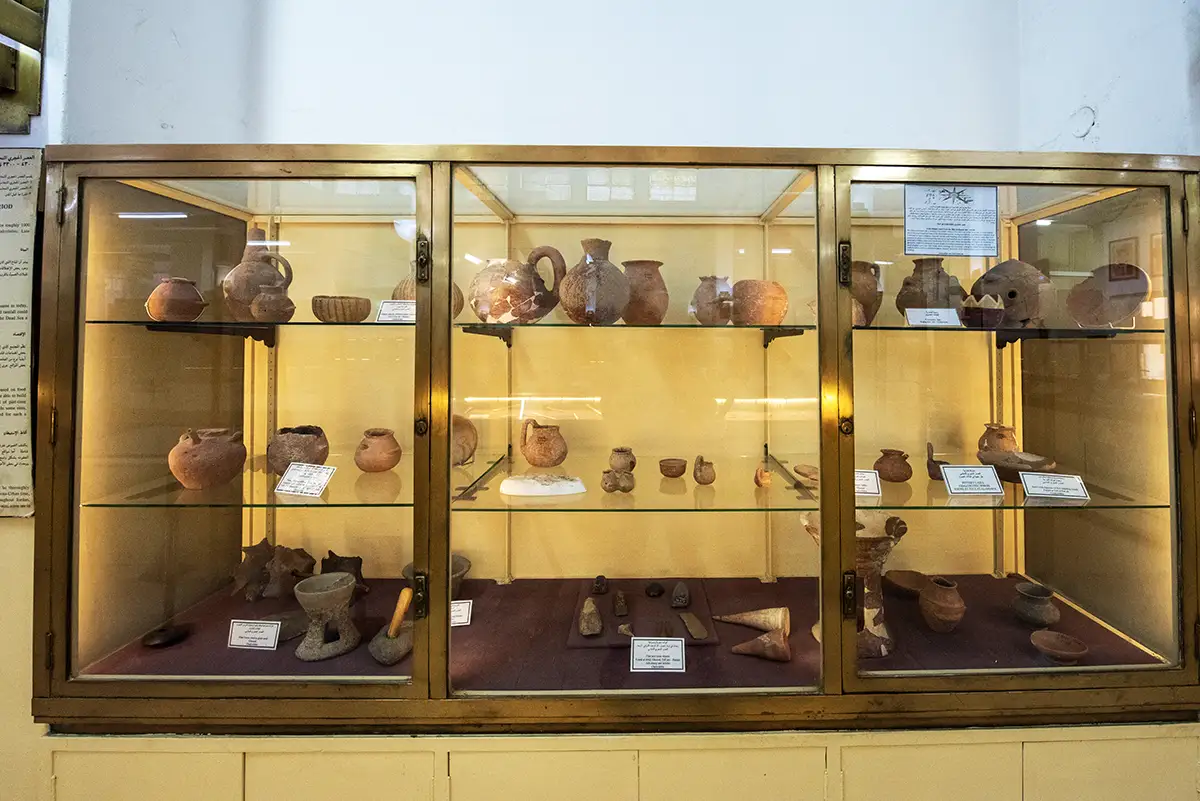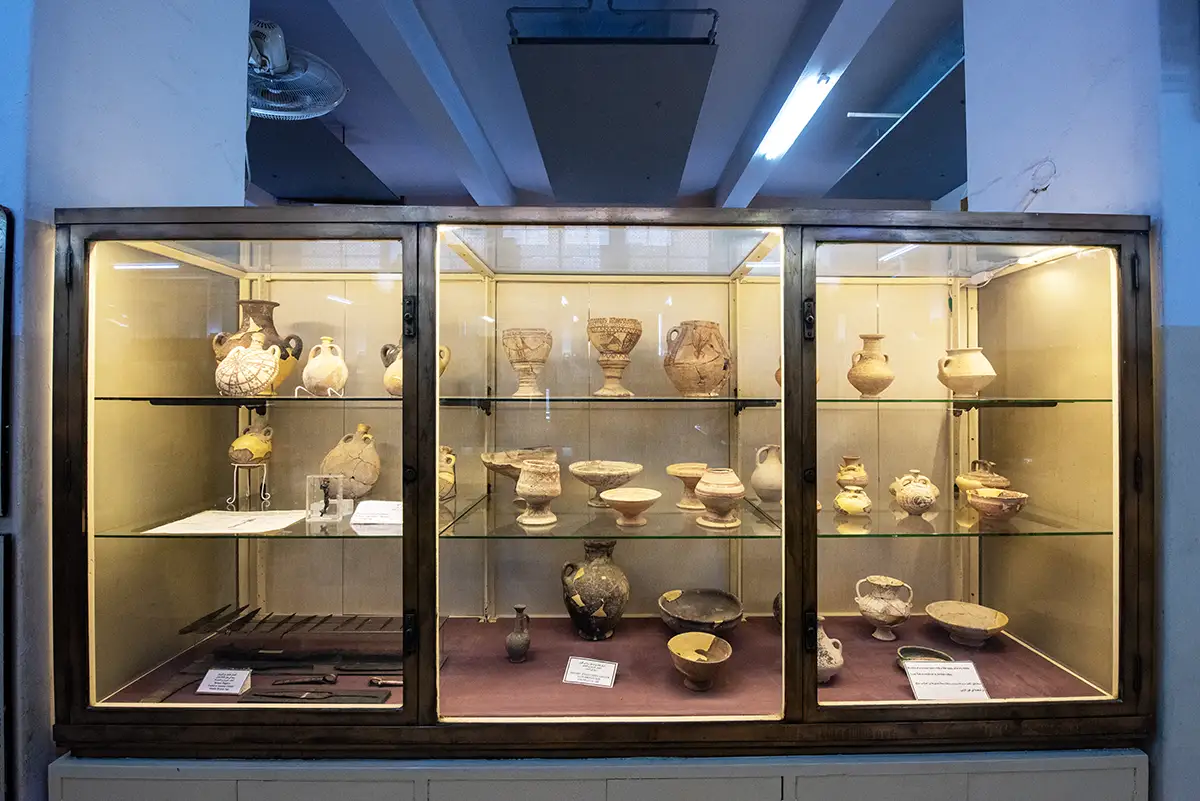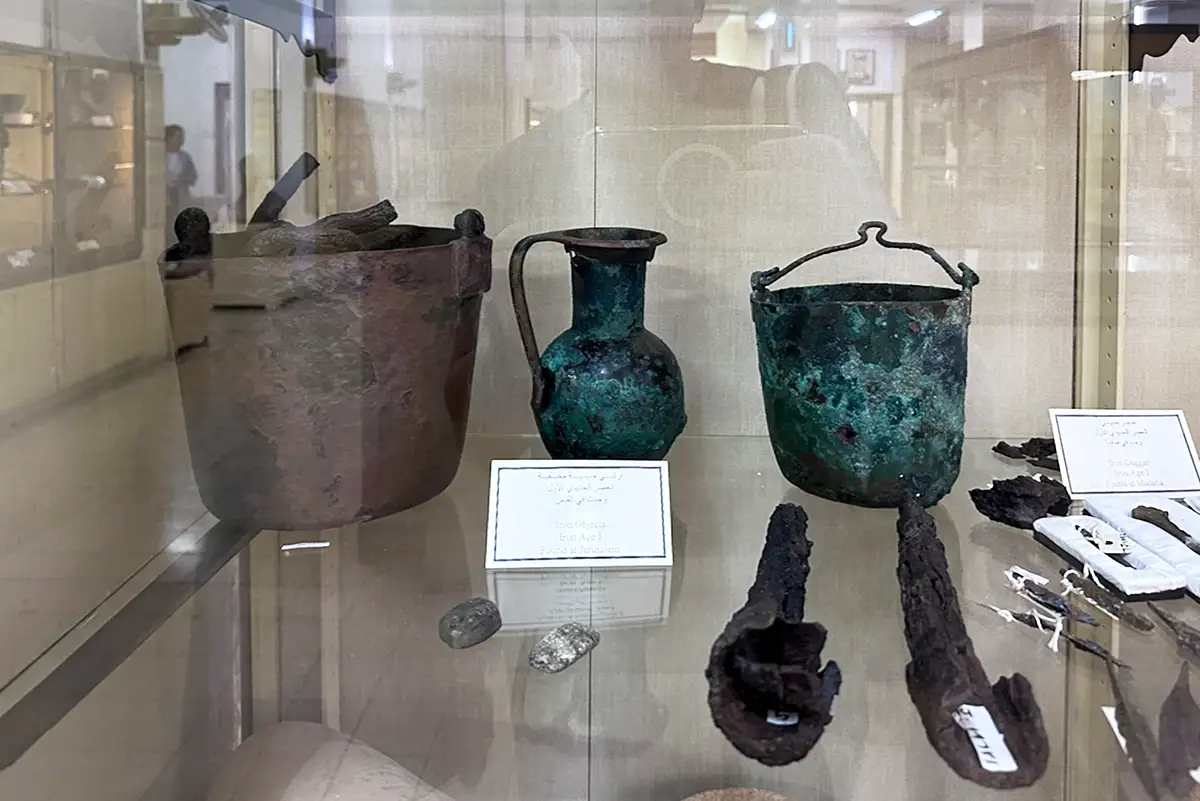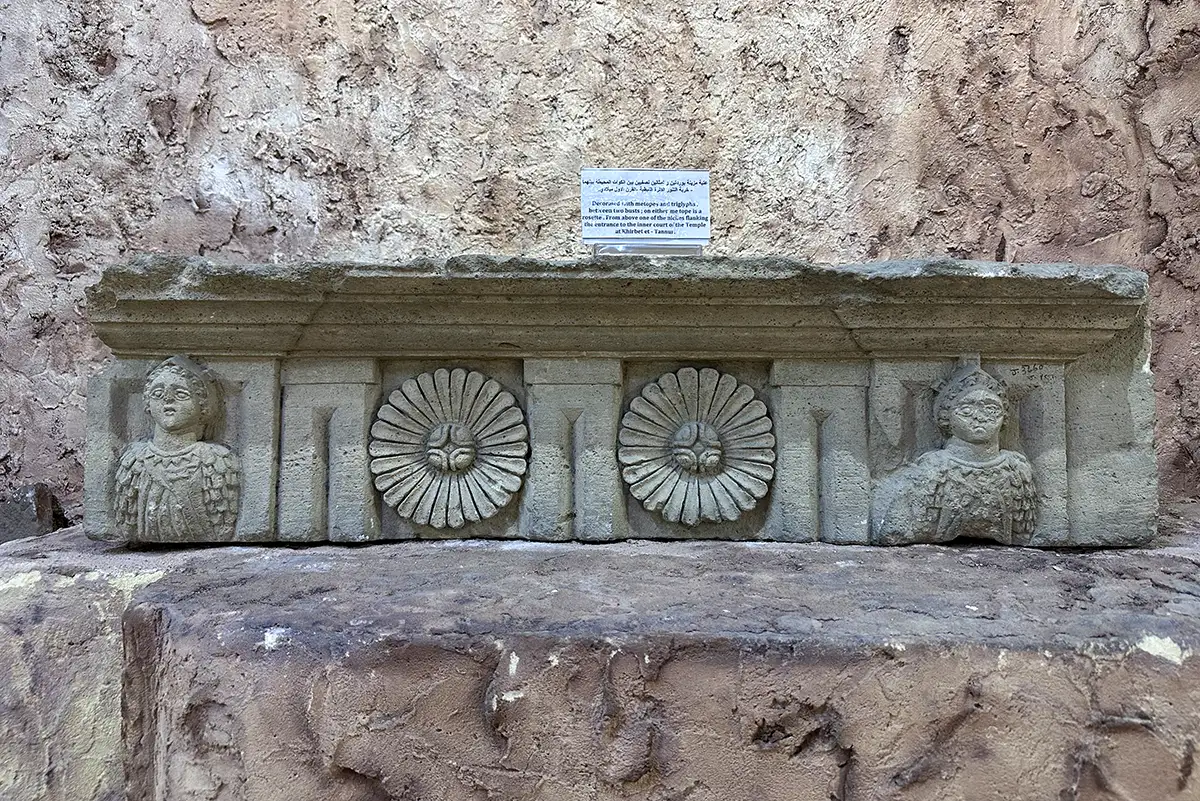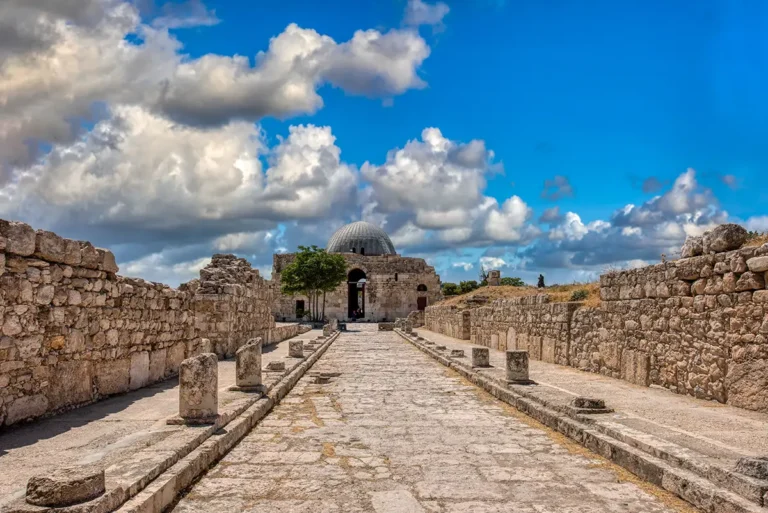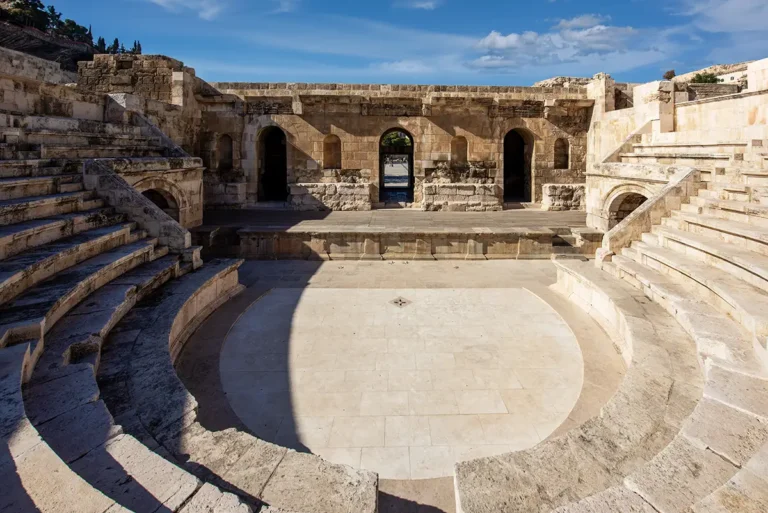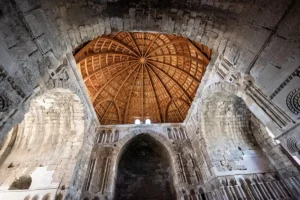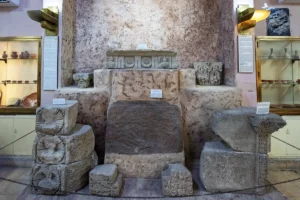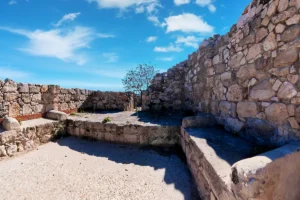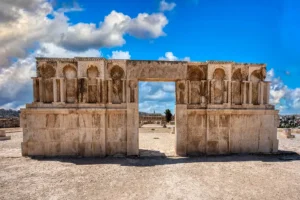












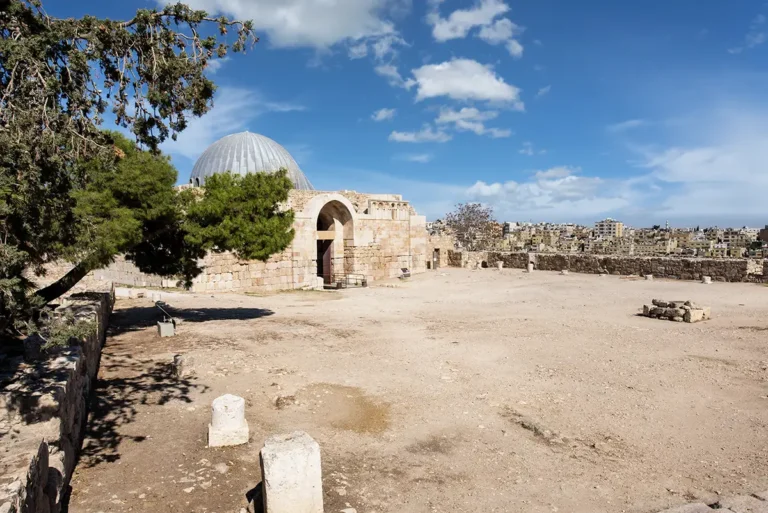
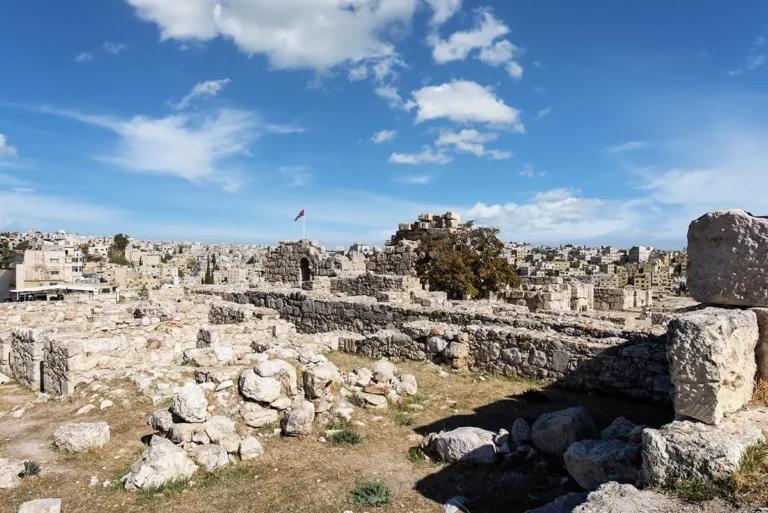

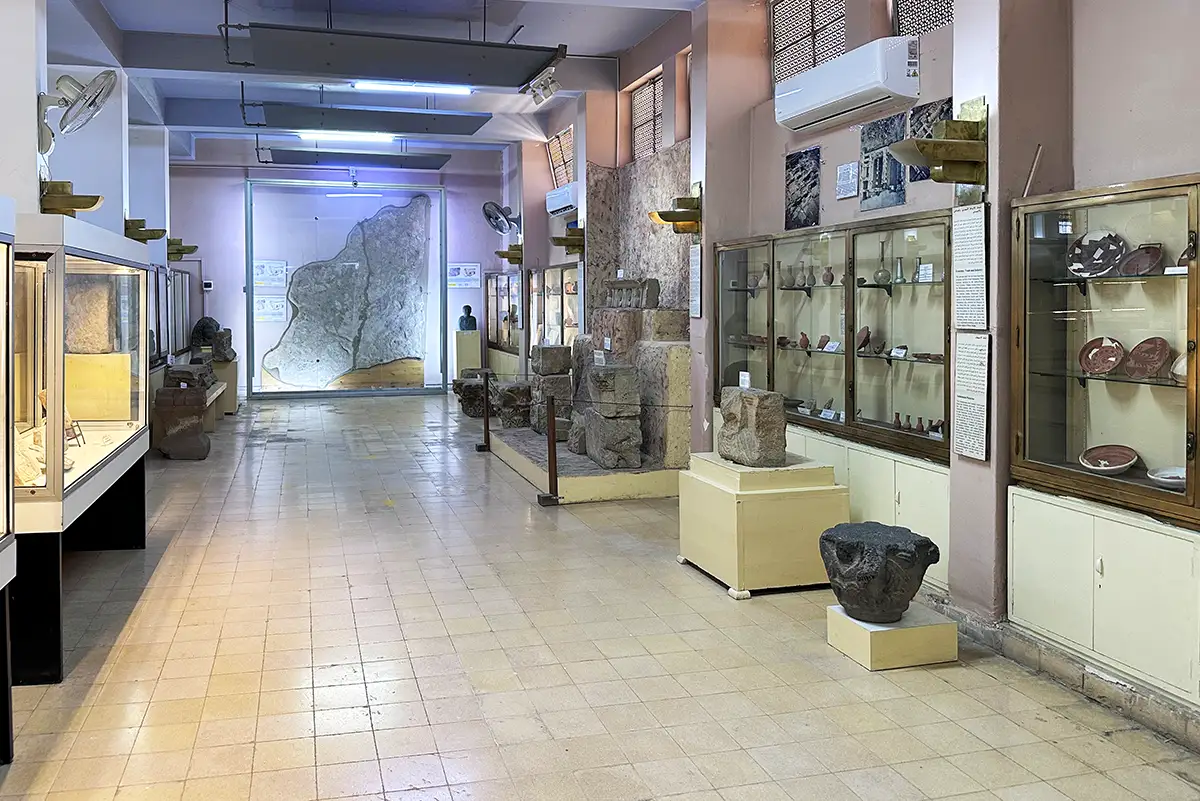
The Jordan Archaeological Museum stands on the Amman Citadel, with its sculpture garden spread around the building. Opened in 1951, it displays finds from excavations across Jordan, from pottery and clay coffins to mosaics, carved architectural stone and large sculpture.
Where Is the Archaeological Museum?
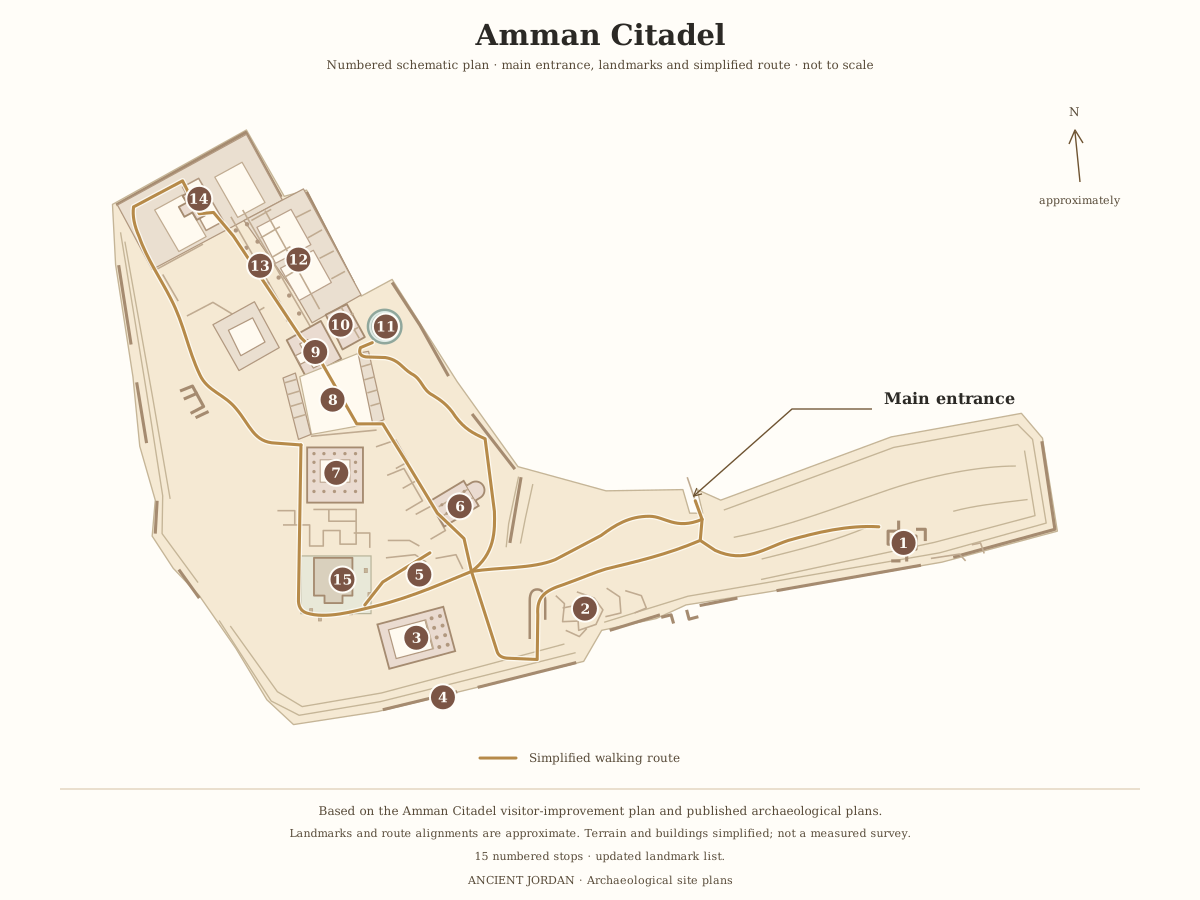
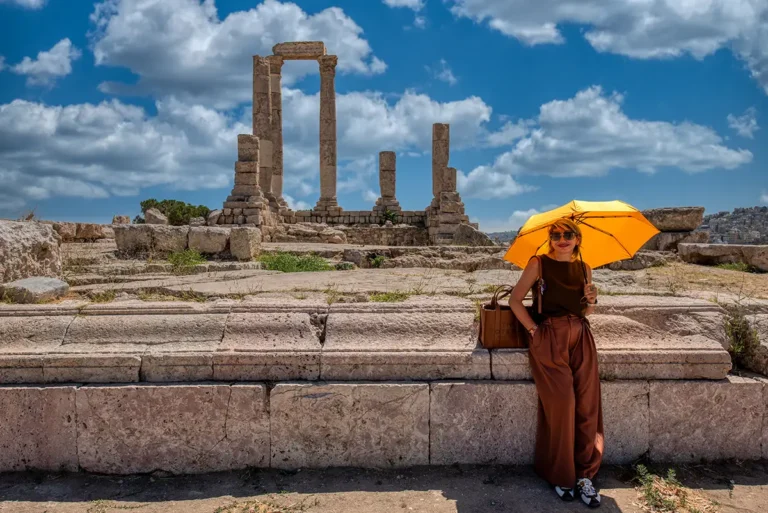
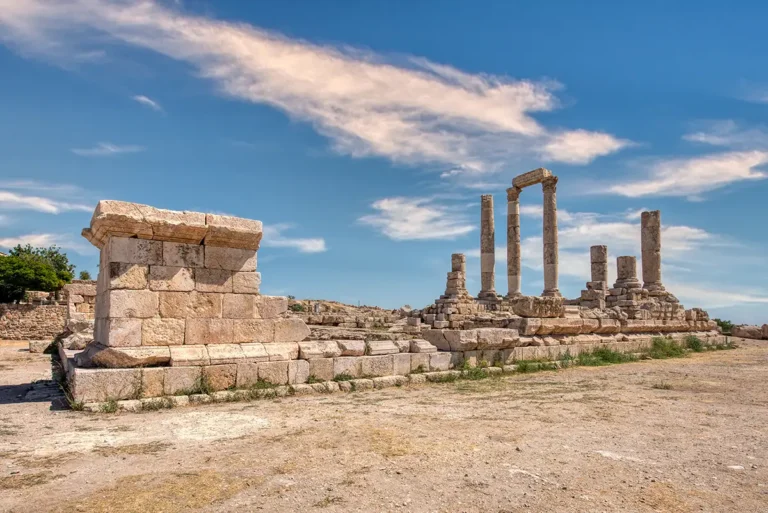
The museum lies in the southern part of the Citadel, about 240 m south of the Umayyad Palace. It is the fifteenth and last stop on our Amman Citadel route. The surviving columns of the Temple of Hercules rise close to the open-air sculpture display.
Historical Context and Origin
Before the museum was built, archaeologists cleared the site in 1949. They uncovered an Umayyad courtyard house and parts of neighbouring buildings, so the museum stands over the remains of the palace-period settlement.
The Jordan Archaeological Museum opened in 1951 on the Citadel and presented archaeological finds from across the country. In the following decades discoveries from Jordan’s excavations enriched its displays and stores, bringing together objects from prehistoric to Islamic periods.
In 2014 the separate Jordan Museum opened in Ras Al-Ain, giving the major national collections a larger setting. The Citadel museum kept its own collection and role. In 2017 the Department of Antiquities and the German Protestant Institute of Archaeology launched DOJAM, using the Citadel museum as a pilot for improved object documentation and collections management.
Architectural Design
The museum is a rectangular main block with a central southern projection. According to a published museum record, the upper level holds three exhibition halls and offices, and the lower level holds storage. The plan on this page shows the building outline only; the interior layout has not been verified.
Display Galleries
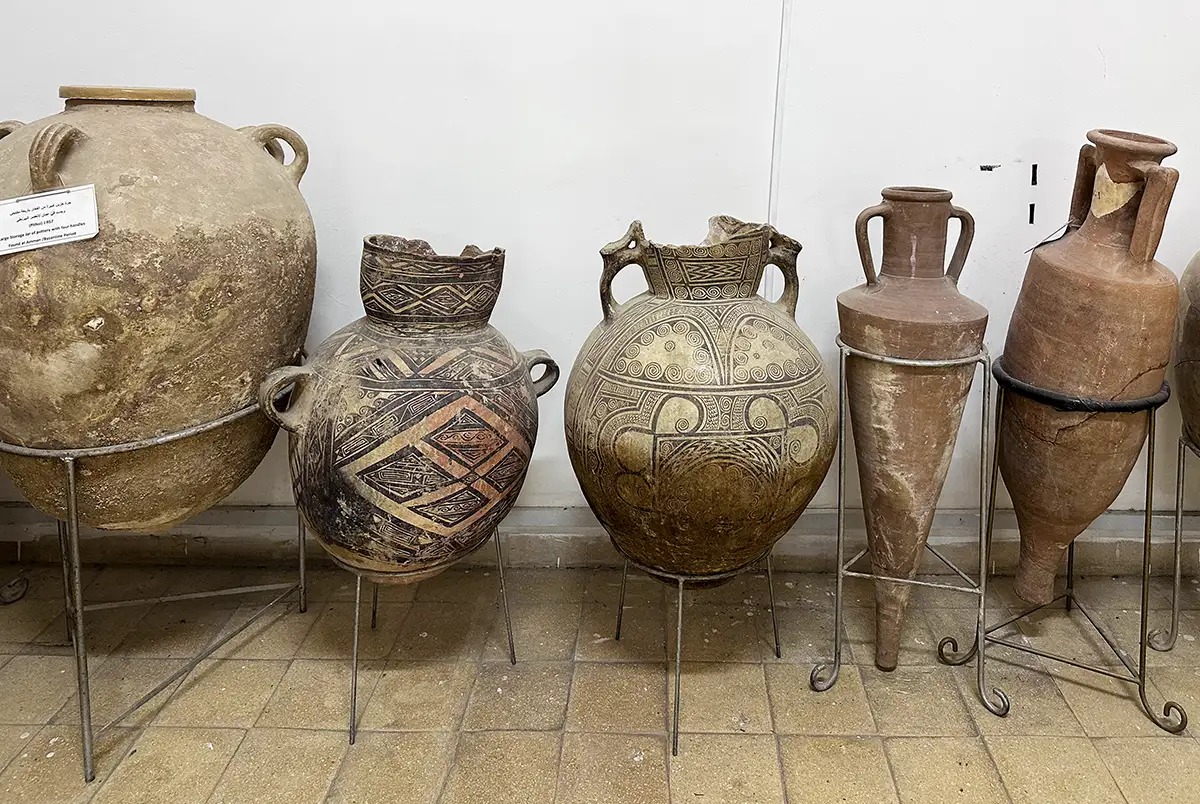
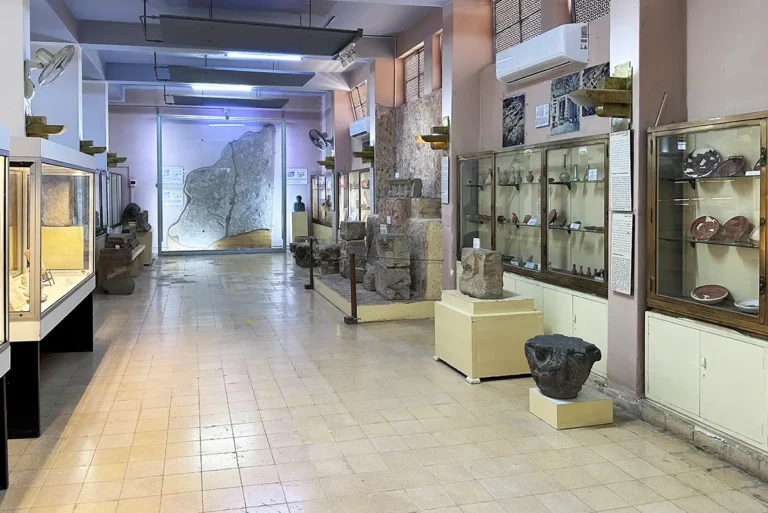
Pottery, metal vessels, stone sculpture and a large mosaic panel.
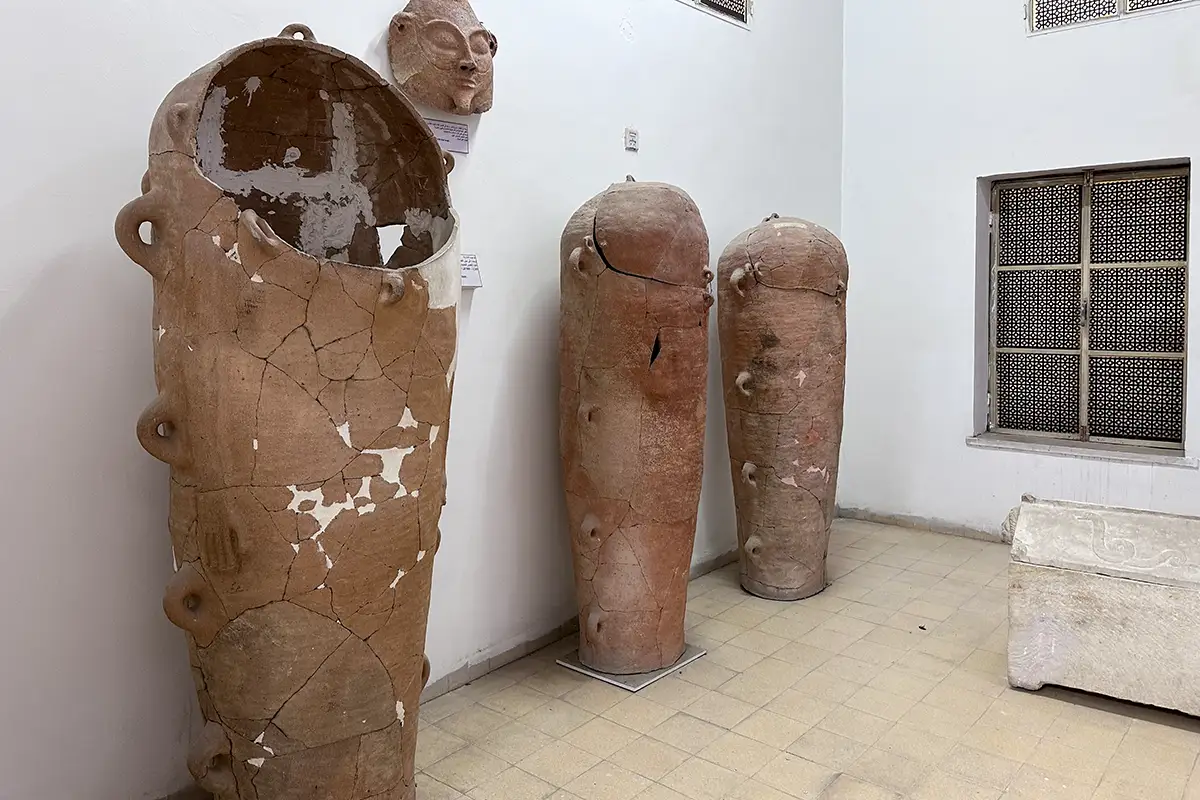
Anthropoid Coffins
Clay coffins with modelled human faces, one of them open.
Carved Architecture
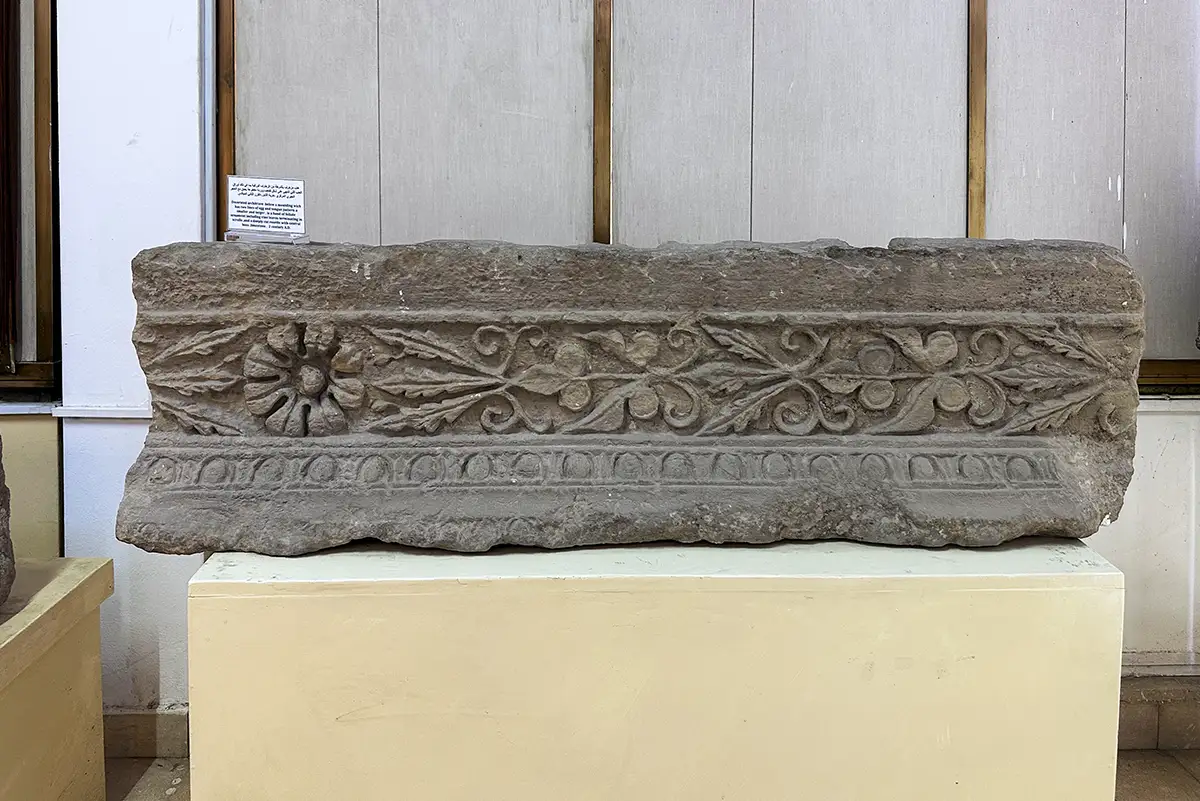
Floral panels, capitals and moulded fragments from ancient buildings.
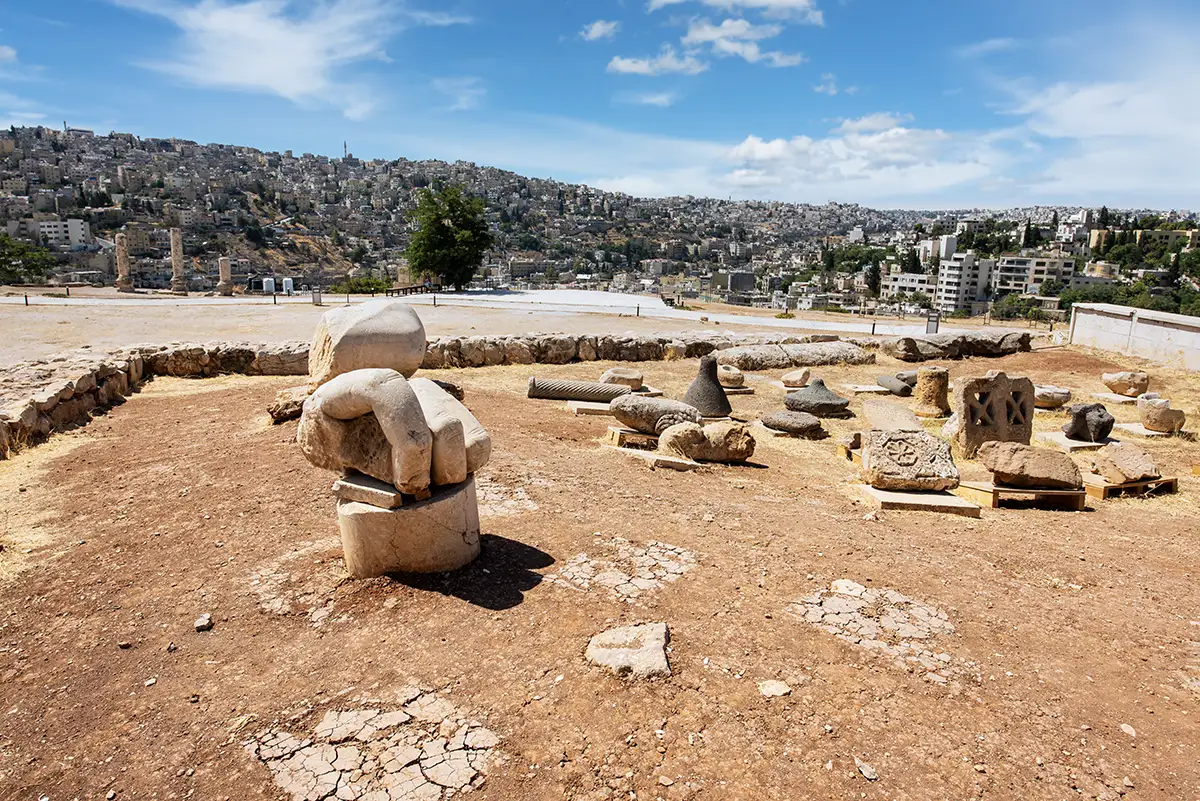
Sculpture Garden
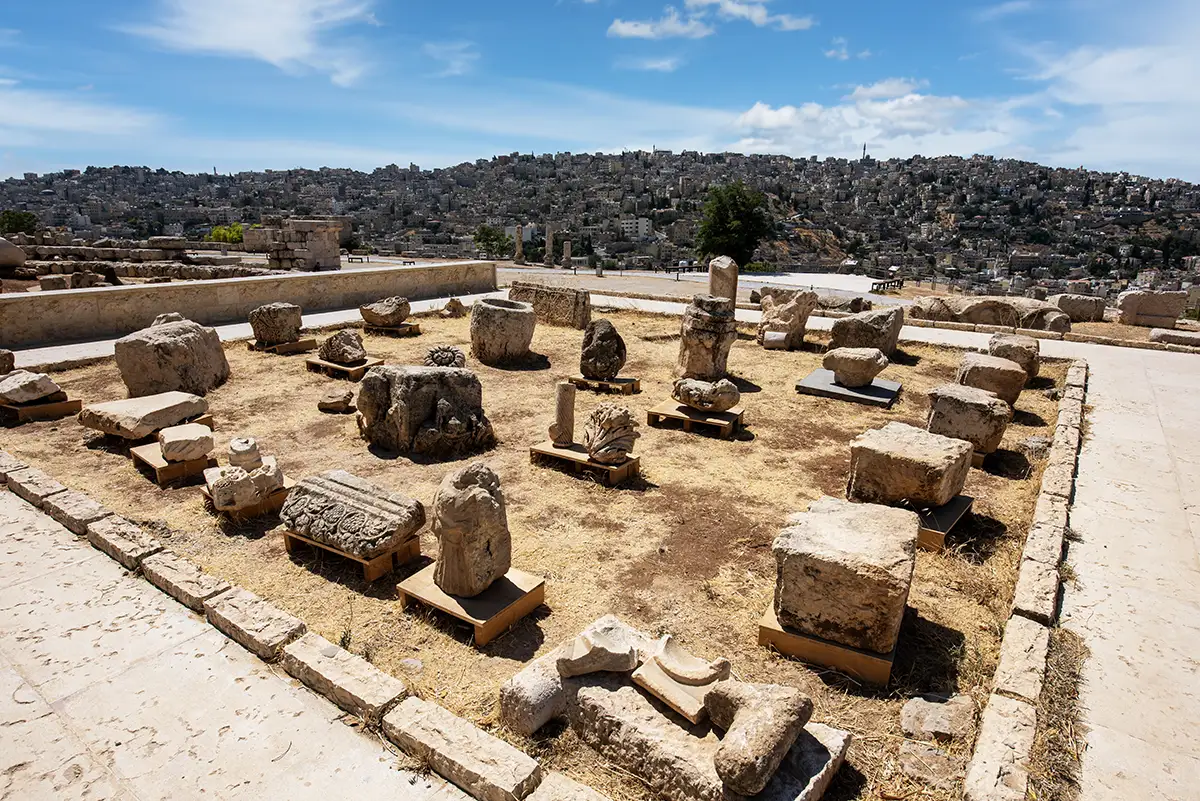
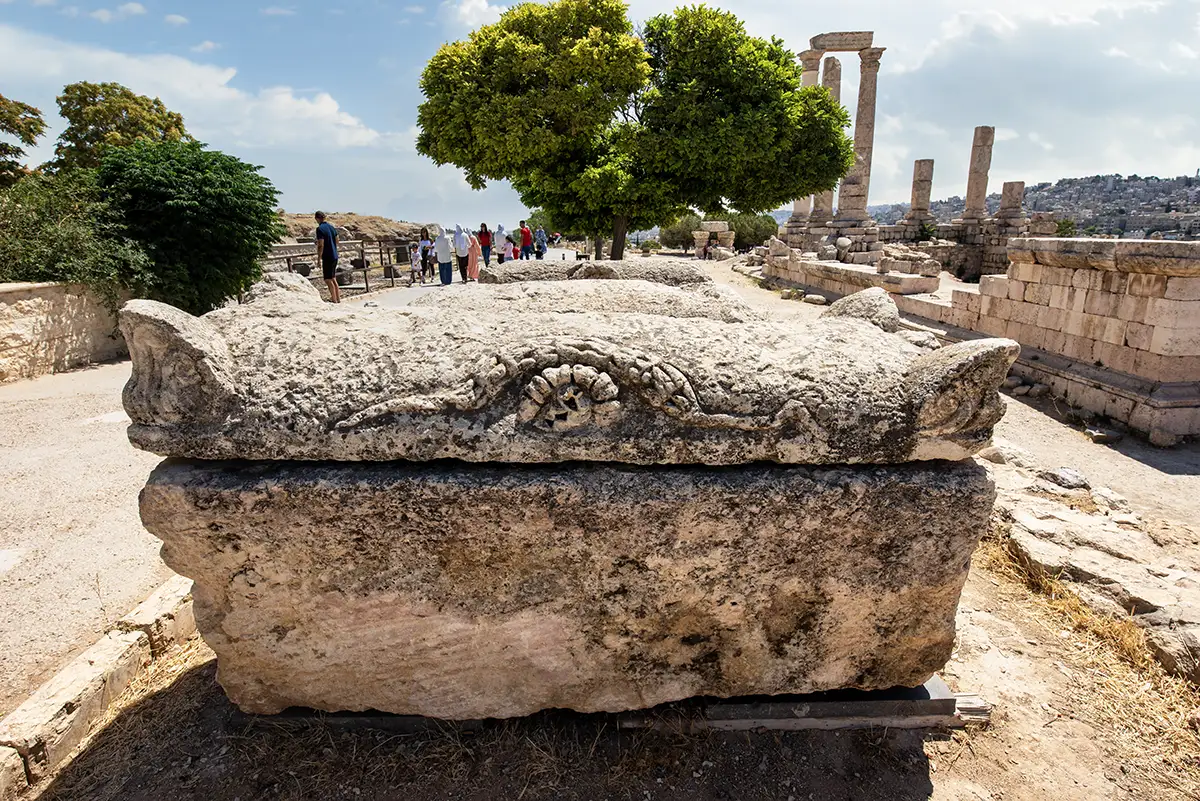
Open-air display with a colossal marble hand and a stone sarcophagus.
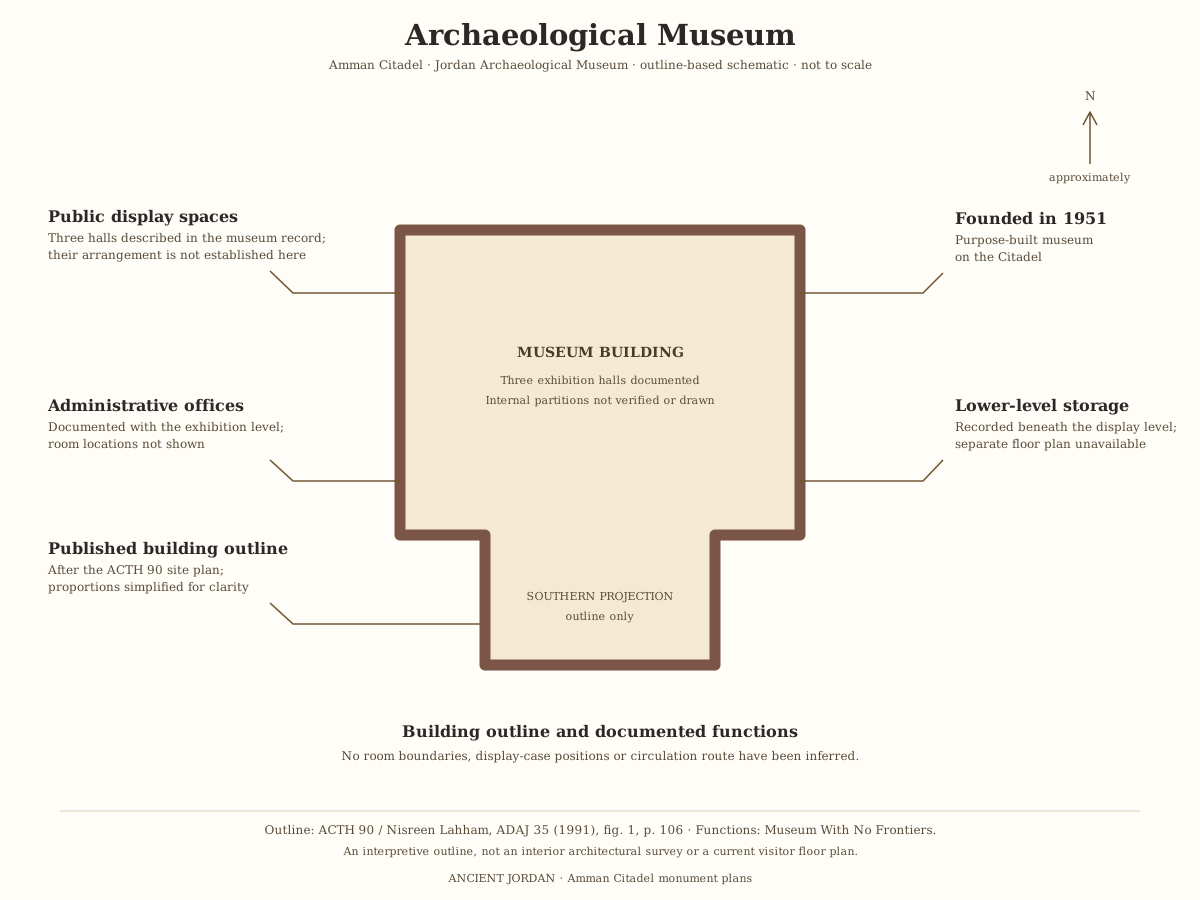
Archaeological Museum, Amman Citadel
Outline-based schematic of the museum building, after the 1990 site plan published in 1991
Open drawingWhat to See in the Museum and Sculpture Gardens
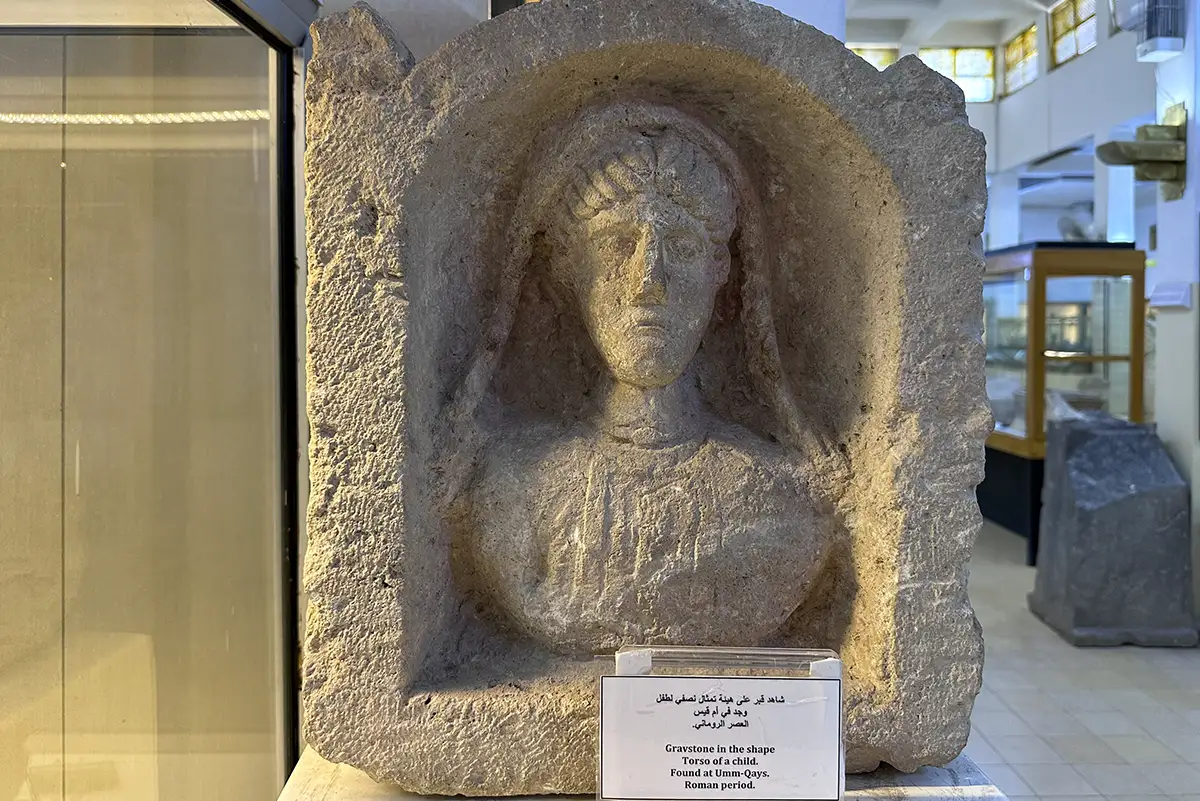
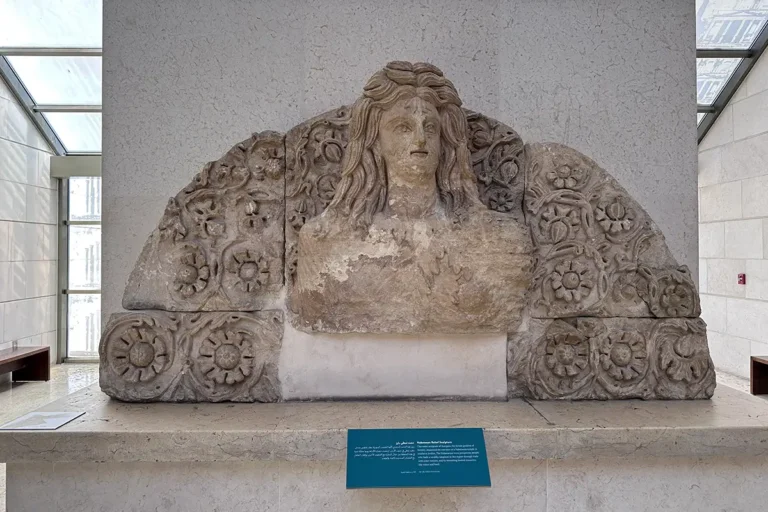
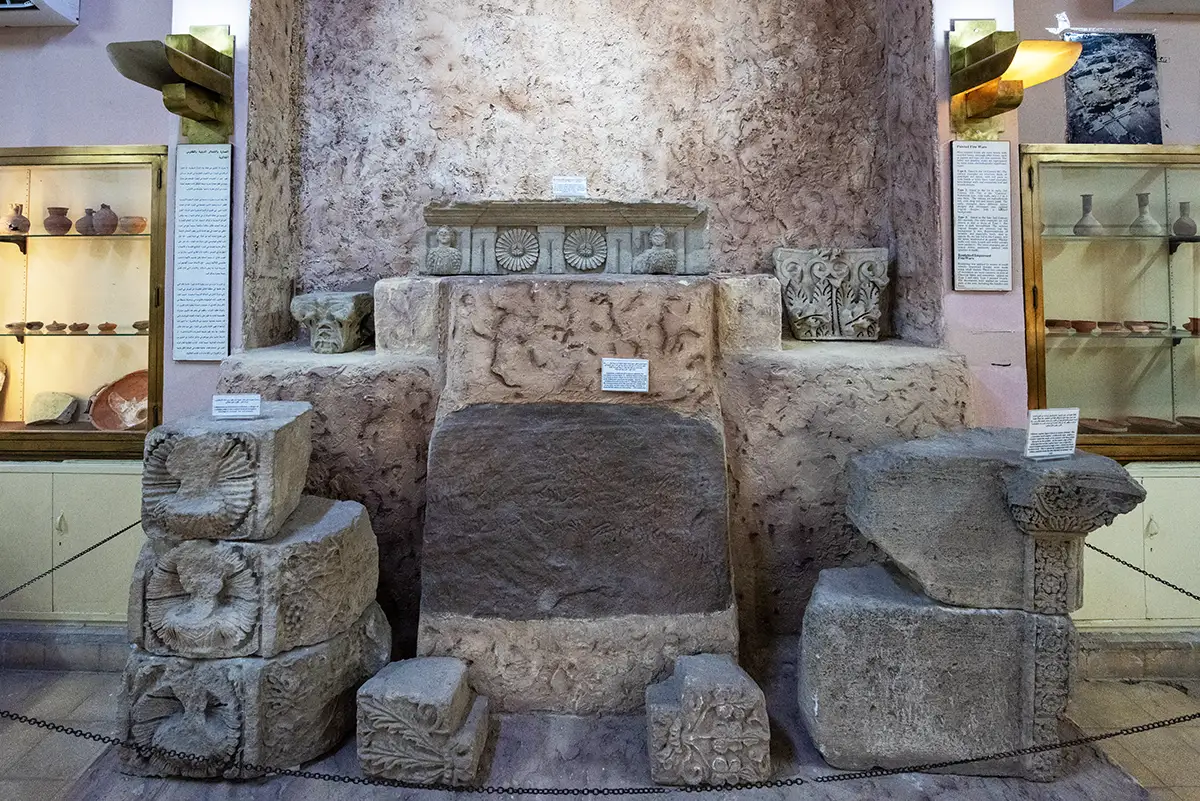
The indoor galleries show pottery in many shapes, painted jugs and bowls, metal vessels with green corrosion, and anthropoid clay coffins with modelled human faces. Carved stone panels with floral rosettes, a Roman-period relief of a child from Umm Qais and a large mosaic panel represent the sculpture and decoration of later periods.
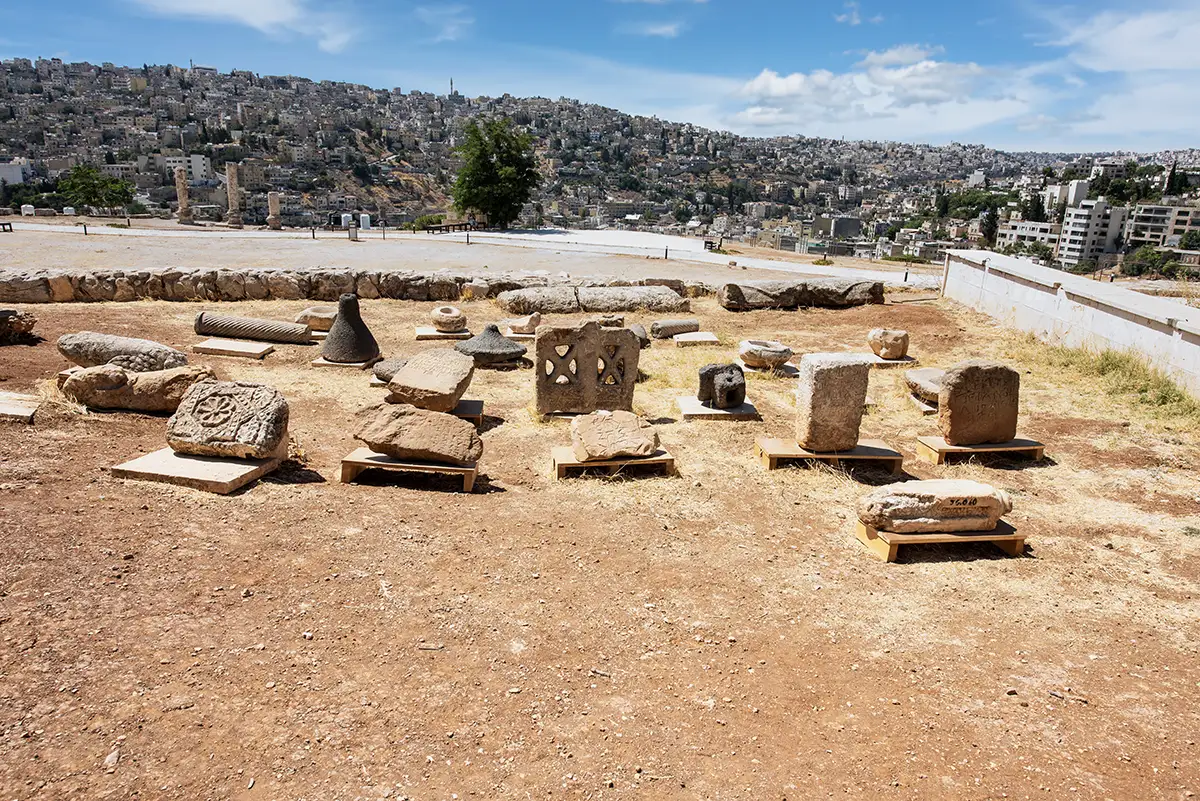
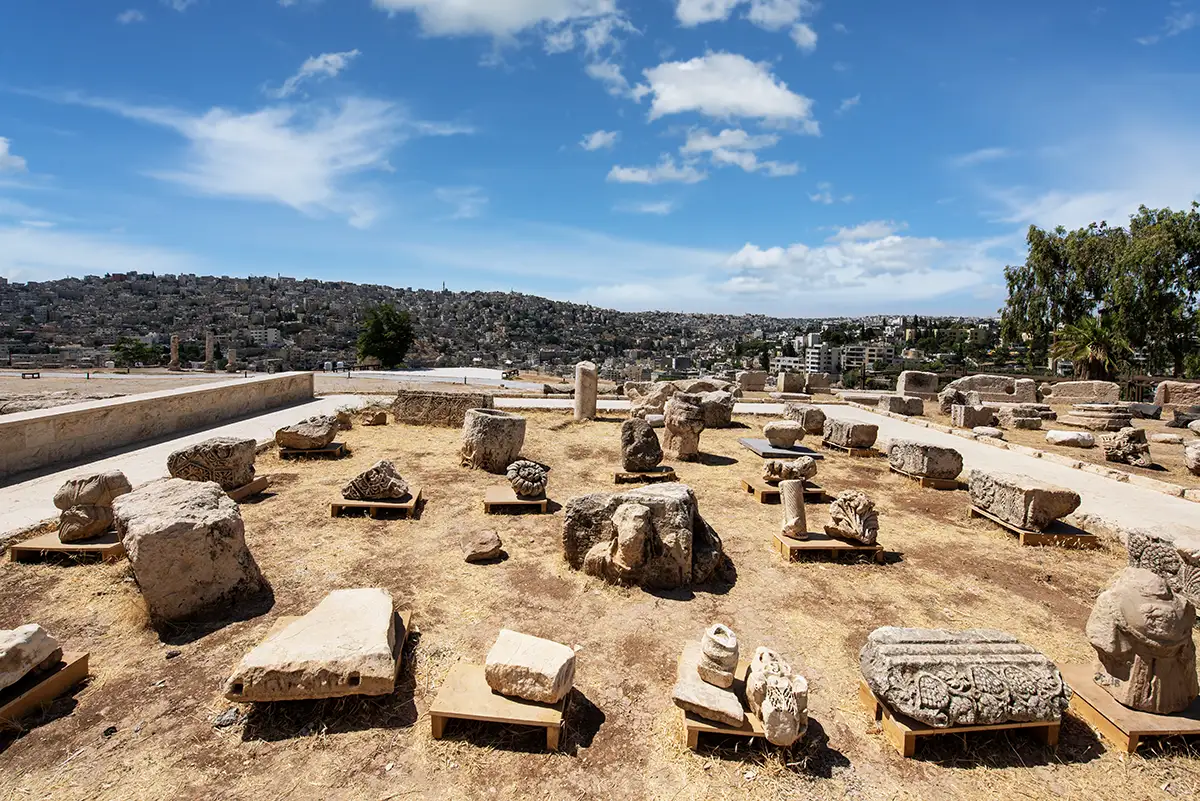
Outside, carved stones and architectural fragments stand against the skyline of Amman. Look for column capitals, decorated panels, the fragments of a colossal marble hand and a weathered stone sarcophagus with a decorated lid.
Visiting the Archaeological Museum Today
Entry to the museum is included in the Amman Citadel ticket (3 JOD for visitors, 0.25 JOD for residents), which the Jordan Pass also covers. The Citadel is open from 8:00 to 16:00 from November to March, to 17:30 in April and May, and to 18:30 from June to September; in Ramadan it is open from 9:00 to 17:00. The museum keeps the same hours as the Citadel.
Allow about 20 minutes for the galleries and the sculpture garden. The outdoor display can be visited at any time, and it makes a good final stop with views over Amman.
Further reading: Jordan Archaeological Museum, Museum With No Frontiers (amulets.museumwnf.org); ACTH 90 site plan by Nisreen Lahham, ADAJ 35 (1991), pp. 105–134.