












The Bronze Age Cave is the oldest part of the Amman Citadel, according to the official information board. It is a rock-cut tomb chamber that was used for burials about four thousand years ago, long before the Ammonites, the Romans or the temple on the hill above it.

Where Is the Bronze Age Cave?
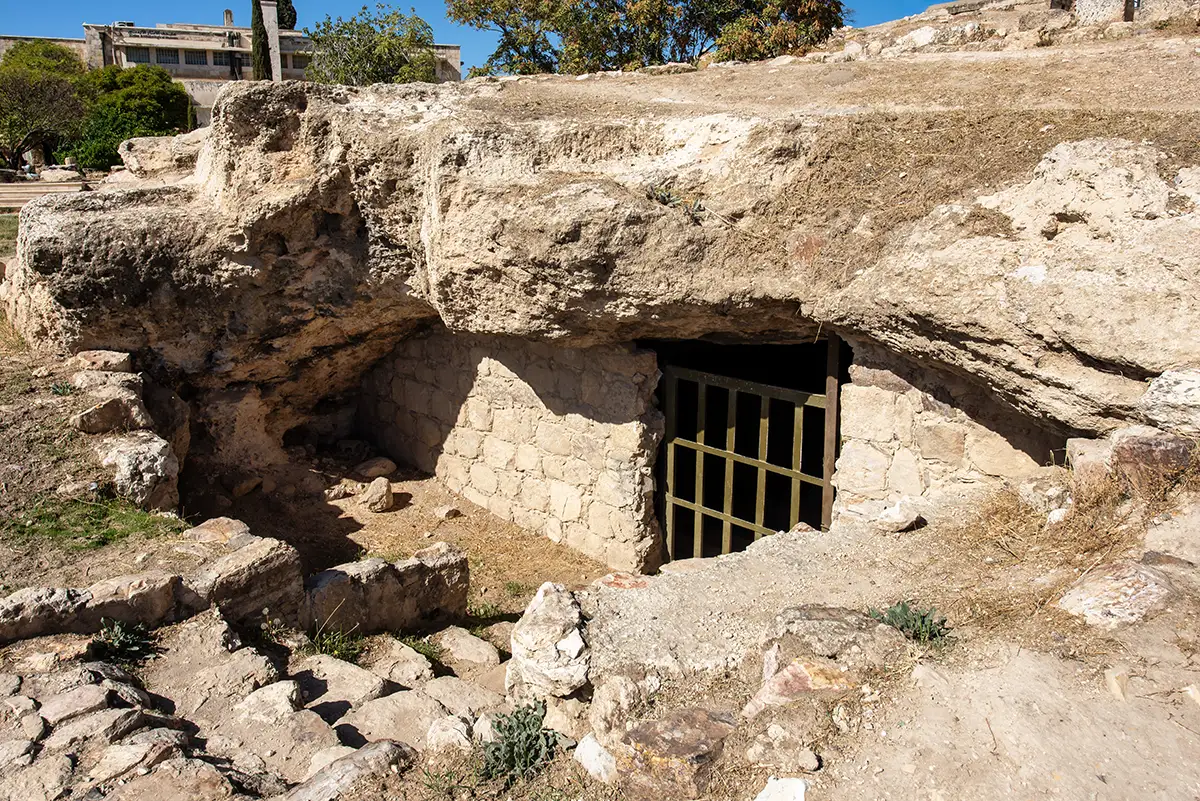
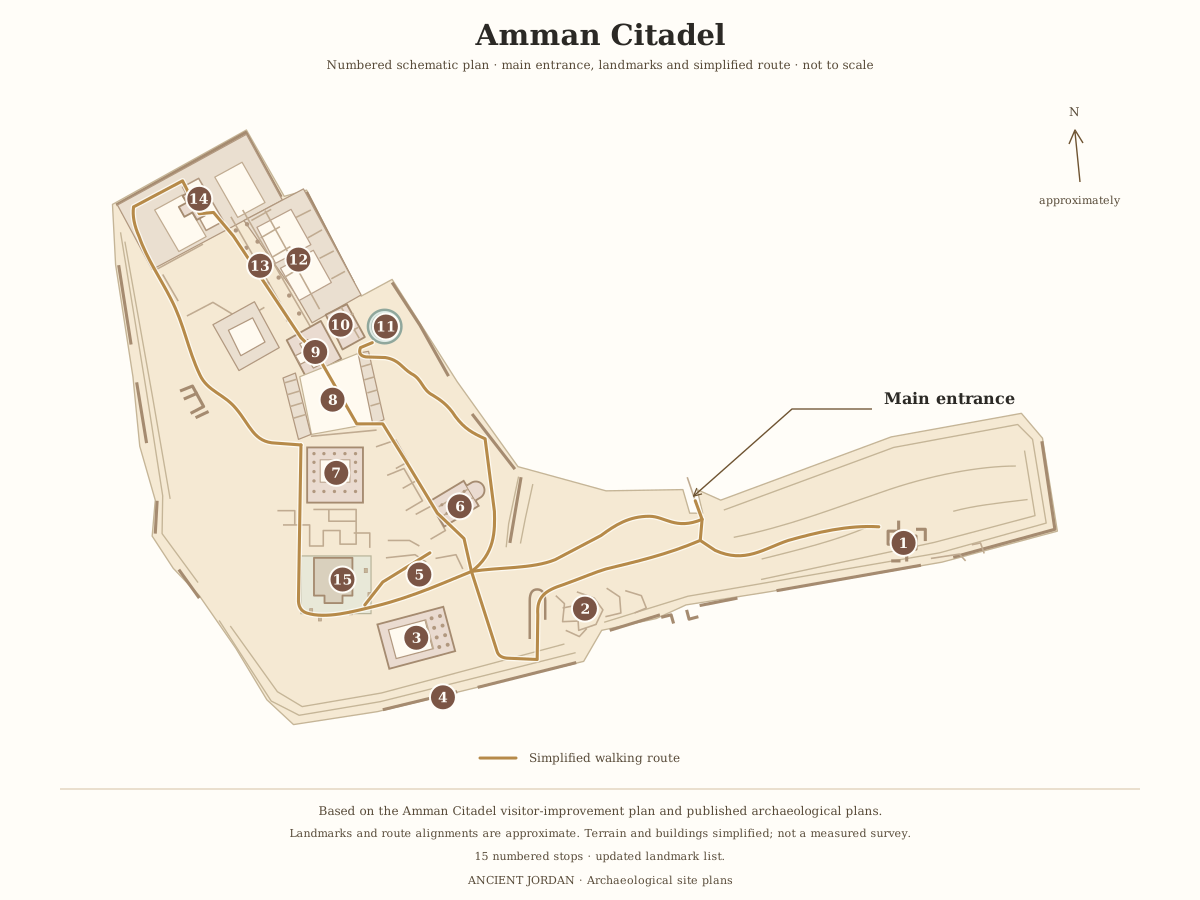
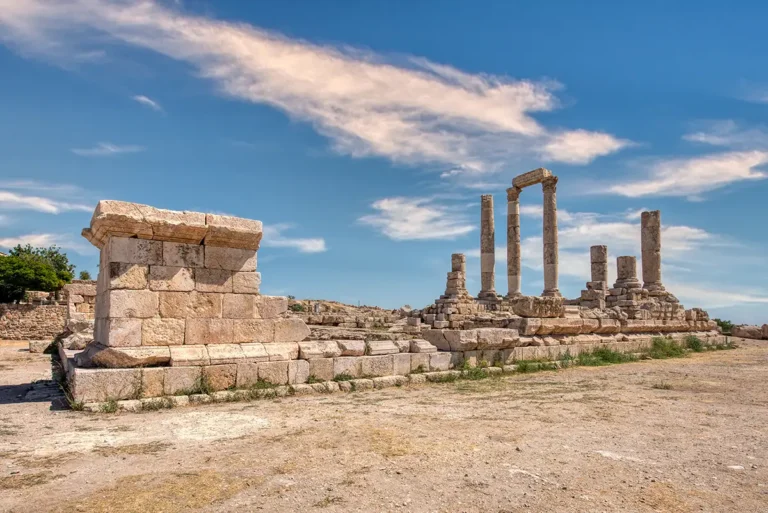
The cave lies in the middle of the Amman Citadel, about 25 m north of the Temple of Hercules and 75 m north of the Ayyubid Watch Tower. It is the fifth stop on our Amman Citadel route. The entrance is cut into a low rock face, with a stone-built front and an iron grille across it.
Historical Context and Origin
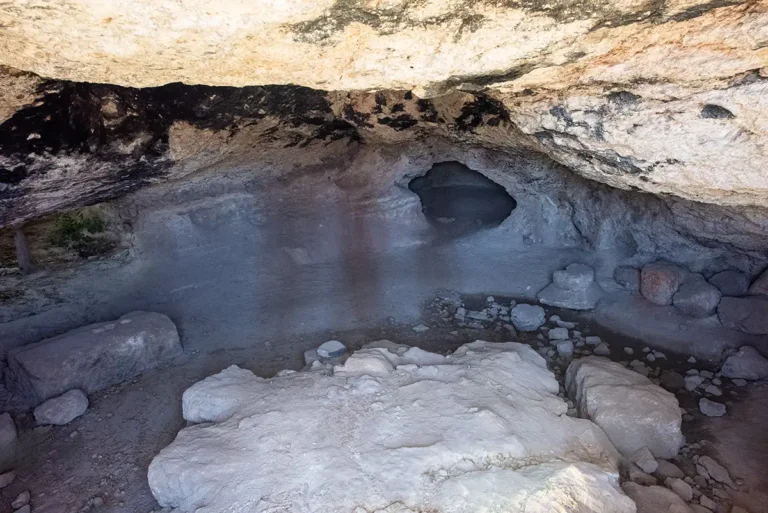
According to the information board, the cave holds a series of rock-cut tombs. Inside you see cavities in the limestone, which were modified for communal burial during the Middle Bronze Age. In a communal burial a group of people was buried together in one chamber. Archaeologists have also published a separate Middle Bronze Age tomb on the Citadel, found near the Roman temple.
The board adds that such features were often reused for different purposes in different periods, or by different civilizations. One published description says that in the Umayyad period stonecutters cleared the cave and reused it to quarry stone for new buildings.
Architectural Design
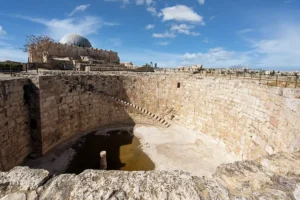
The cave is not a built structure. It was cut into the limestone of the hill, and the walls and ceiling are bare rock. Photographs show an irregular chamber with a raised mass of rock in the middle and cavities and openings along the far wall. How far these openings continue is not known, and no measured plan has been published, so the drawing shown here is a simple schematic.

Rock-Cut Tombs
A series of tombs cut into the limestone of the hill, with bare rock walls and ceiling.
Communal Burial
The board says the limestone cavities were modified for communal burial in the Middle Bronze Age.
Raised Rock Mass
A raised mass of rock stands inside the chamber; its purpose is not known.
Reused Over Time
The board notes that such caves were often reused for other purposes by later civilizations.

Bronze Age Cave, Amman Citadel
Interpretive schematic of the Bronze Age Cave, based on photographs, not a survey
Open drawingVisiting the Bronze Age Cave Today
The cave is part of the Amman Citadel visit and is covered by the Citadel ticket (3 JOD for visitors, 0.25 JOD for residents) and by the Jordan Pass. The Citadel is open from 8:00 to 16:00 from November to March, to 17:30 in April and May, and to 18:30 from June to September; in Ramadan it is open from 9:00 to 17:00.
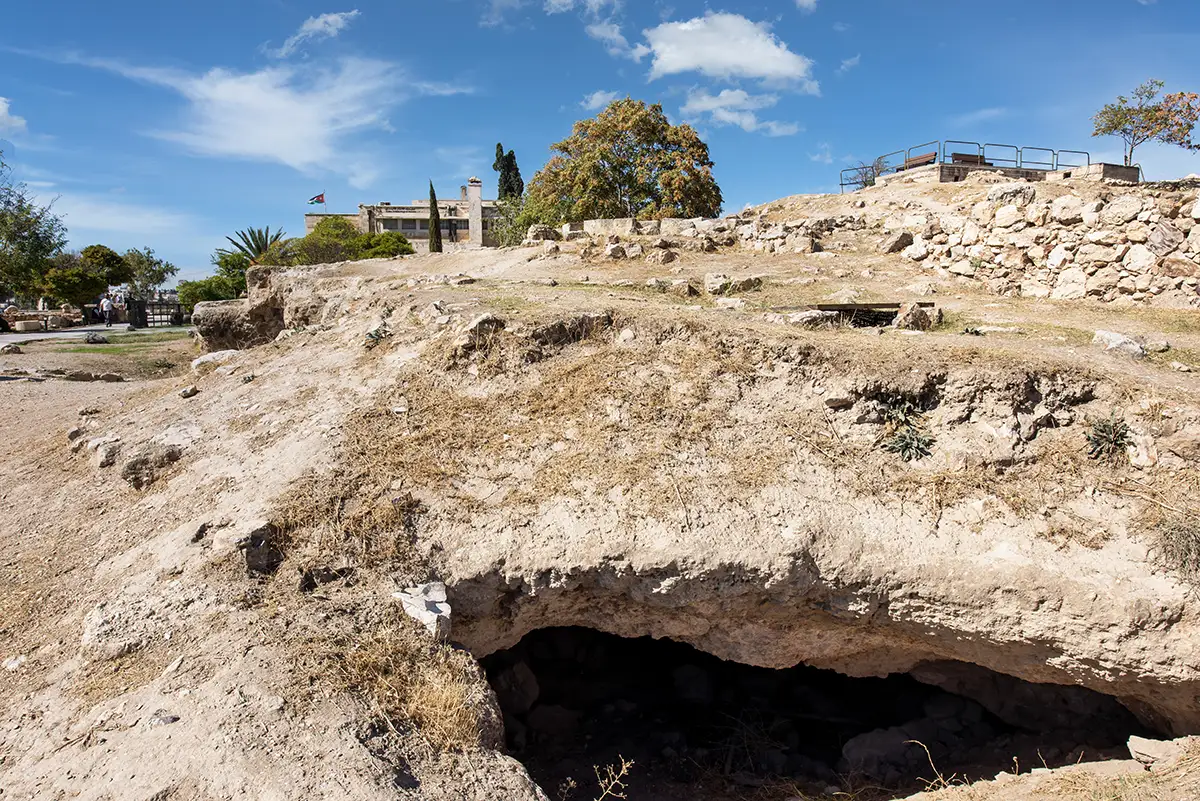
In 2026 the cave is closed to visitors: the entrance is shut by an iron grille and visitors are not allowed inside, so you see it from outside. An information board in English and Arabic stands by the entrance, and another opening in the rock can be seen nearby. About 10 minutes is enough.
Further reading: Ministry of Tourism and Antiquities information board at the site; Haupt and Binder, Bronze Age Cave, Amman Citadel; Mohammad Najjar, “A New Middle Bronze Age Tomb at the Citadel of Amman”, Annual of the Department of Antiquities of Jordan 35 (1991).