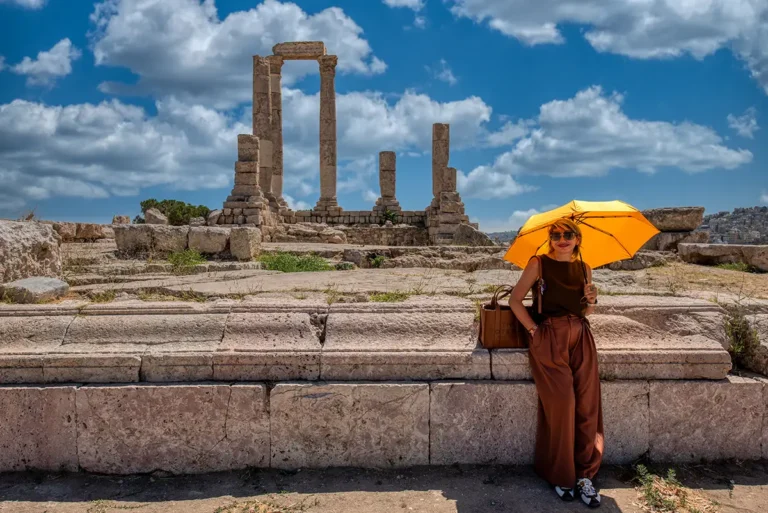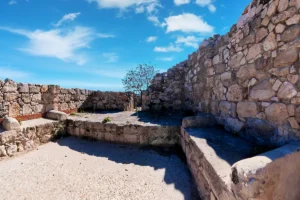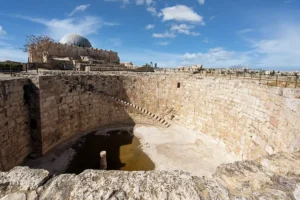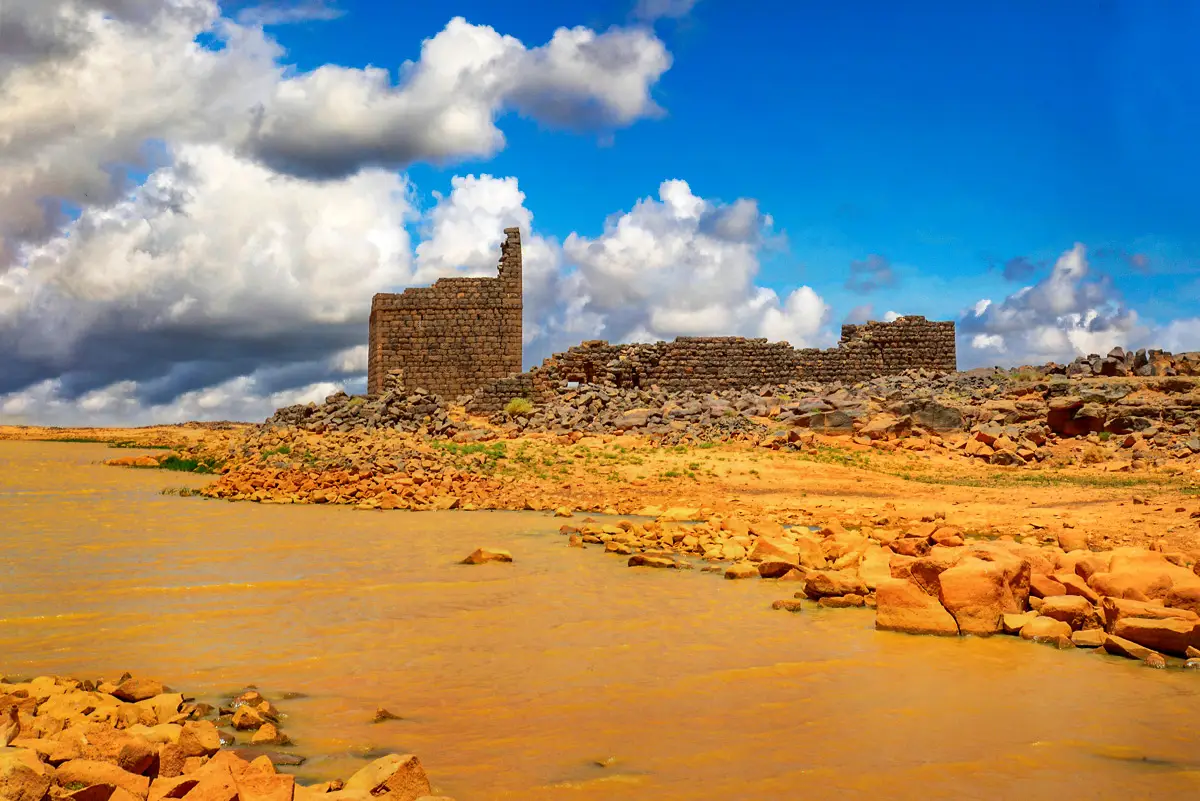



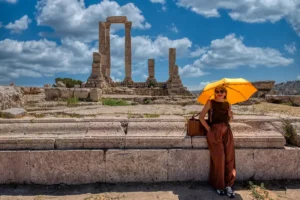









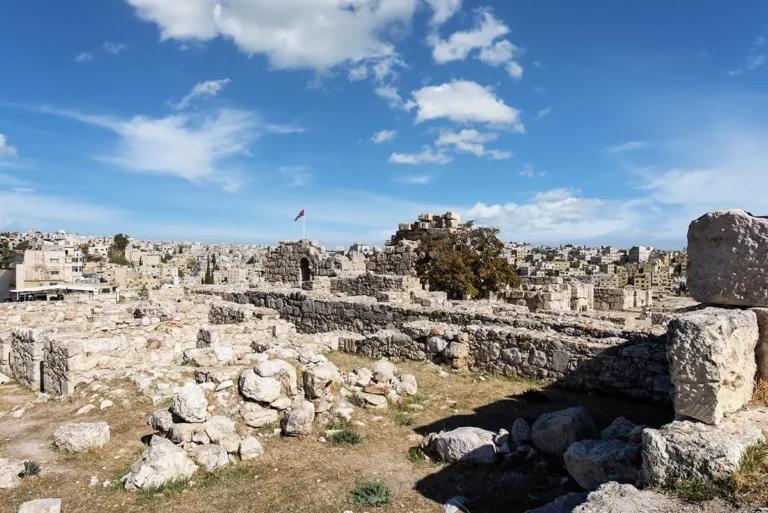

On Jabal al-Qal’a, an L-shaped hill above downtown Amman, people have lived and built since the Bronze Age. The Citadel was the acropolis of Amman, with an Iron Age palace, a Roman temple, a Byzantine church and, in the early 8th century, the palace complex of the Umayyad governors.

Where Is the Amman Citadel?
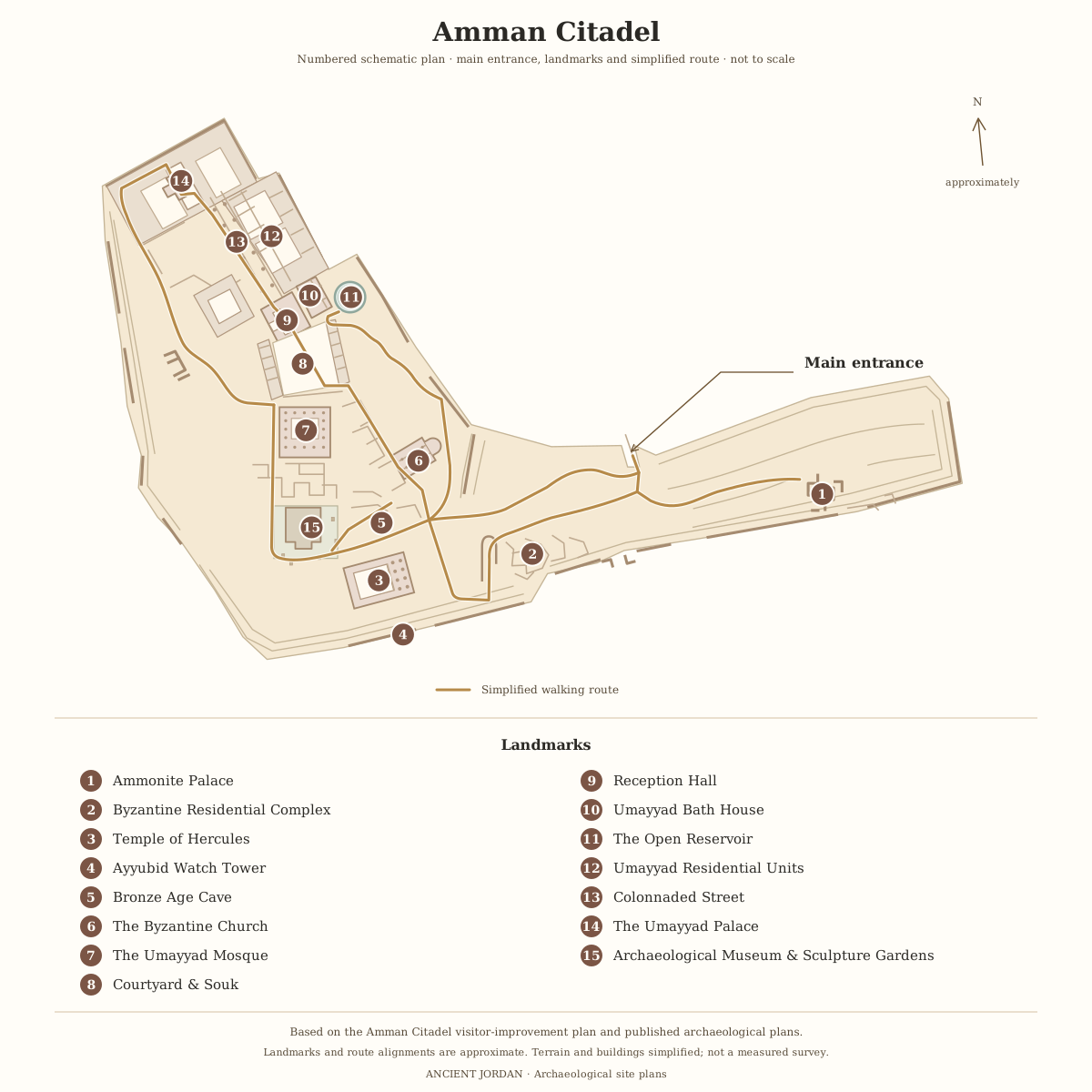
The Citadel lies in the middle of Amman and overlooks the downtown below. The entrance is on Museum Street, near King Ali Bin Al-Hussein Street, and there is a car park. From the entrance our route runs through 15 stops, starting with the Ammonite Palace on the lower terrace and ending at the Archaeological Museum.
Historical Context and Origin
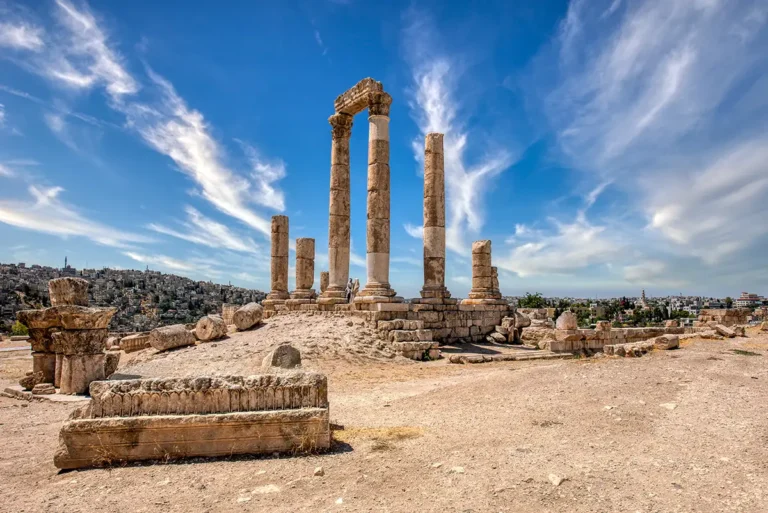
The oldest remains are rock-cut tombs of the Middle Bronze Age. In the Iron Age the hill carried the building known as the Ammonite Palace, first built in the 10th century BC, when Amman was the Ammonite city of Rabbath-Ammon. In the Roman period the Temple of Hercules was dedicated in AD 166, and a gate was built in the southern wall. In the Byzantine period a church and houses were built, among them the Byzantine Church of the 5th century, using stone from the temple.
Under the Umayyads the Citadel became the seat of the governor, and in the early 8th century they built a palace complex on the hilltop. A major earthquake in AD 748–749 devastated it, and the ruins were later reused. In the late 12th or early 13th century the Ayyubids built a small watch tower on the southern edge, reusing Roman stone.
Architectural Design
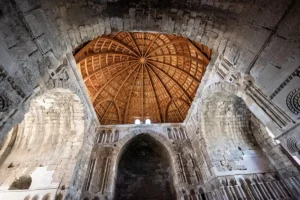
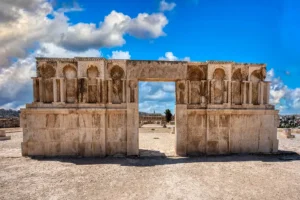
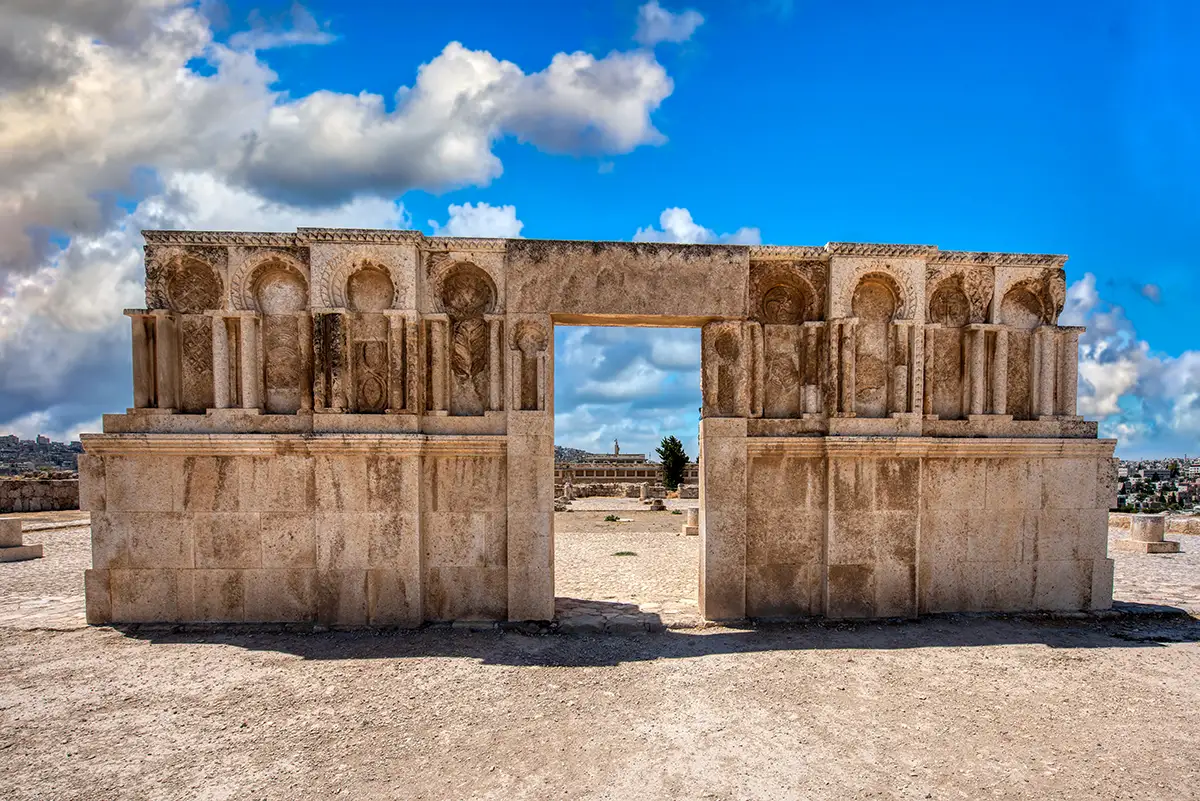
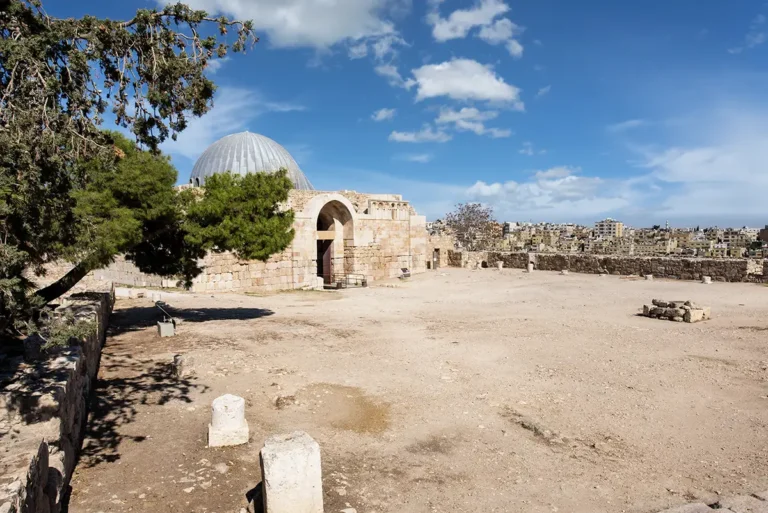
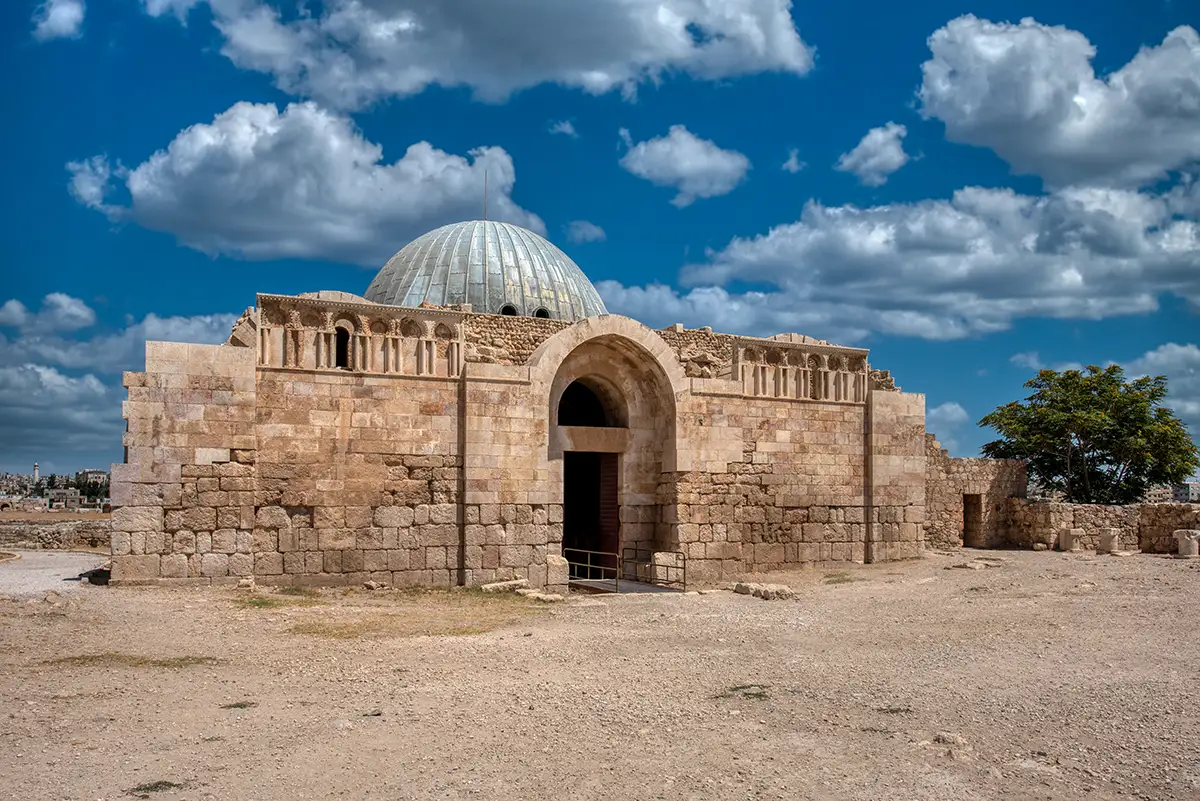
The visible remains belong to several periods that overlap on one hilltop. The Roman temple stands in a large precinct, with a few giant columns still erect. The Byzantine church is a basilica with standing columns and a mosaic nave. The Umayyad complex is the largest group: the Umayyad Mosque, the Courtyard & Souk with its rows of shops, the domed Reception Hall, the Umayyad Bath House, the Open Reservoir, nine courtyard houses and the Colonnaded Street that leads to the Umayyad Palace with its iwan and throne chamber.
Temple of Hercules
A 2nd-century Roman temple with giant restored columns.
Byzantine Church
A 5th-century basilica with standing columns and a mosaic nave.
Umayyad Palace Complex
A mosque, a souk, a reception hall, a bath house, a reservoir and a palace.
Archaeological Museum
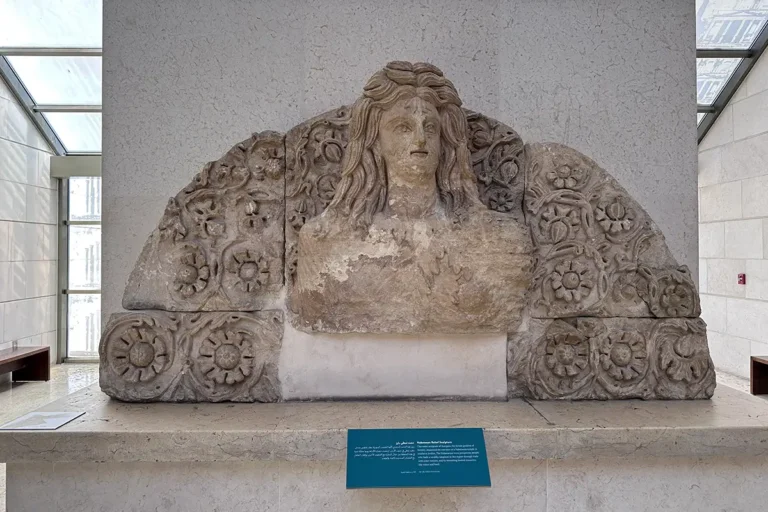
Finds from across Jordan, with a sculpture garden.
Amman Citadel
Numbered schematic plan of the Amman Citadel with the main entrance, a simplified walking route, fifteen stops and a list of landmarks
Open drawingThe Monuments of the Amman Citadel
Fifteen monuments on the Citadel have their own profile, each with a plan, photographs and a 360° view. They are listed below in the order of our walking route.
Amman Citadel, monument by monument

Ammonite Palace
Stop 1 · Iron AgeRead profile →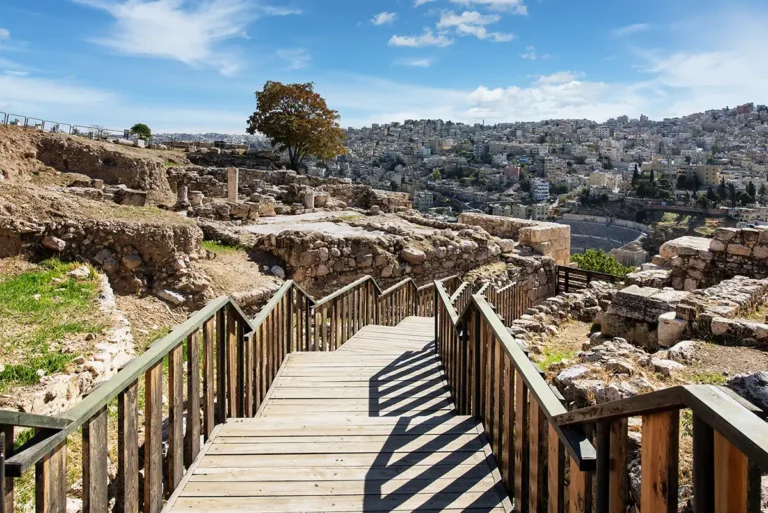
Byzantine Residential Complex
Stop 2 · Byzantine Period · Roman Period · Umayyad PeriodRead profile →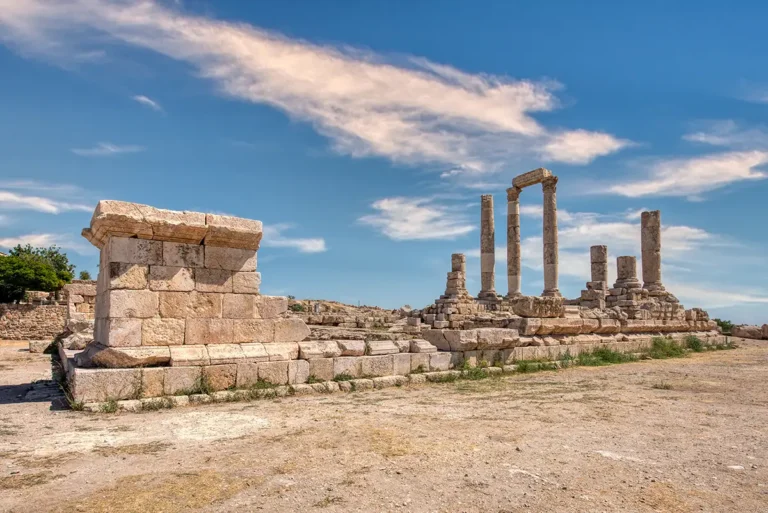
Temple of Hercules
Stop 3 · Roman PeriodRead profile →
Ayyubid Watch Tower
Stop 4 · Crusader and Ayyubid PeriodRead profile →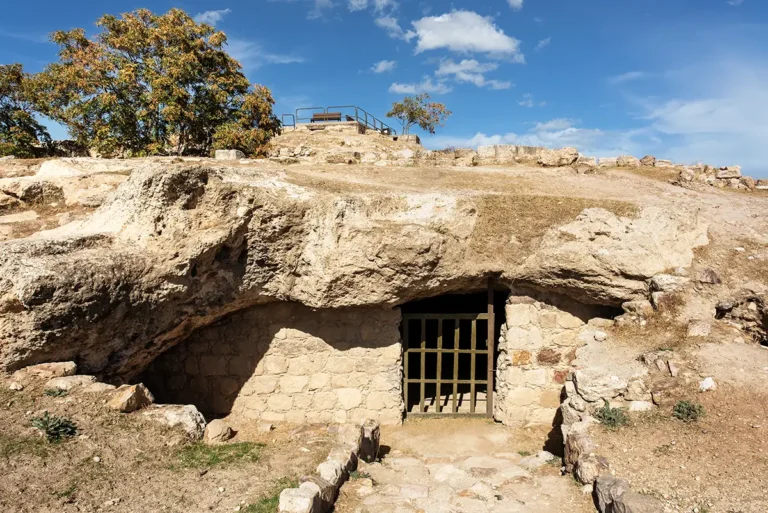
Bronze Age Cave
Stop 5 · Bronze Age · Umayyad PeriodRead profile →
The Byzantine Church
Stop 6 · Byzantine Period · Umayyad PeriodRead profile →The Umayyad Palace Complex
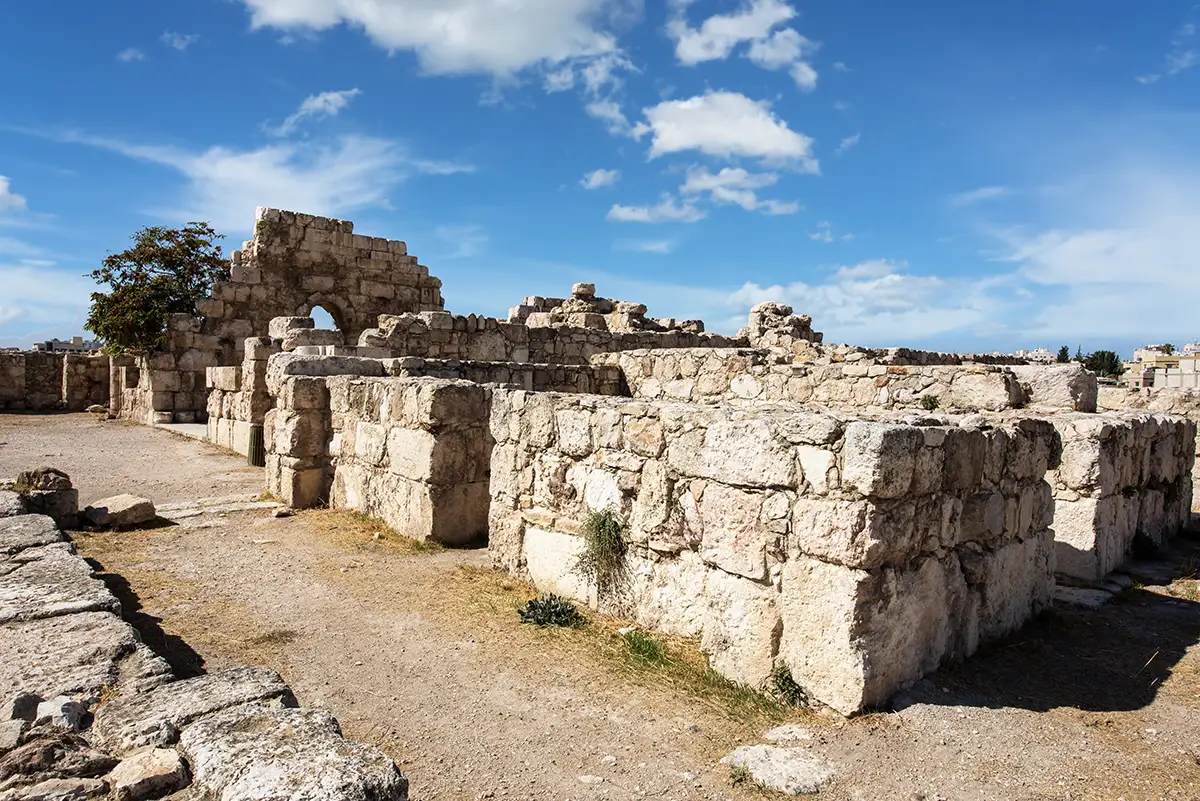
Most of the standing ruins date from the Umayyad period. The complex ran from the market square in the south, through the Reception Hall and along a colonnaded street, to the governor’s palace in the north, with the mosque, a bath house and a large reservoir around it. According to the official information board, the palace was the residence of the governor, and its entry was restricted and private. Read more in the Umayyad Palace profile.
Destruction, Rediscovery, and Restoration
The earthquake of AD 748–749 ended the Umayyad palace in its original form. Italian, British, French, Spanish and Jordanian archaeologists have worked on the hill since the 1920s. A Spanish mission uncovered the porticoed courtyard house known as Building F in the 1990s, and the American Center of Research restored the columns of the Temple of Hercules in 1993 and the Ayyubid tower in 1996. The Jordan Archaeological Museum opened on the Citadel in 1951. A conservation and visitor improvement project in 2007–2010 set out the site’s present layout and entrance.
Visiting the Amman Citadel Today
Admission is 3 JOD for visitors and 0.25 JOD for residents, the ticket includes the Archaeological Museum, and the Citadel is included in the Jordan Pass. It is open from 8:00 to 16:00 from November to March, to 17:30 in April and May, and to 18:30 from June to September; in Ramadan it is open from 9:00 to 17:00. The Ayyubid Watch Tower, the Bronze Age Cave and the Umayyad Bath House are closed to visitors at present and are seen from outside. Allow two to three hours. See our Amman Citadel travel guide for practical details.
Further reading: Department of Antiquities — Jabal Al-Qal’a (Amman Citadel); Almagro and Olávarri, A New Umayyad Palace at the Citadel of Amman (1982); Almagro, Jiménez and Navarro, Excavation of Building F of the Umayyad Palace of Amman (2000).