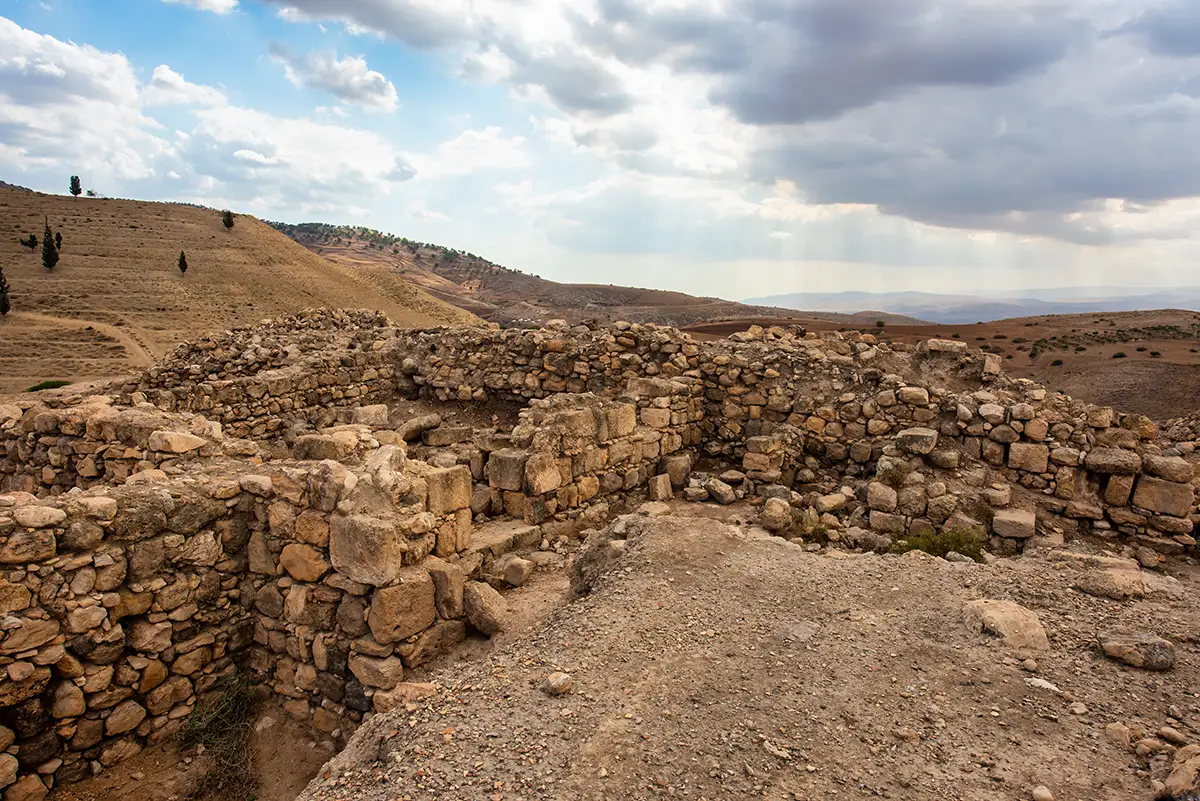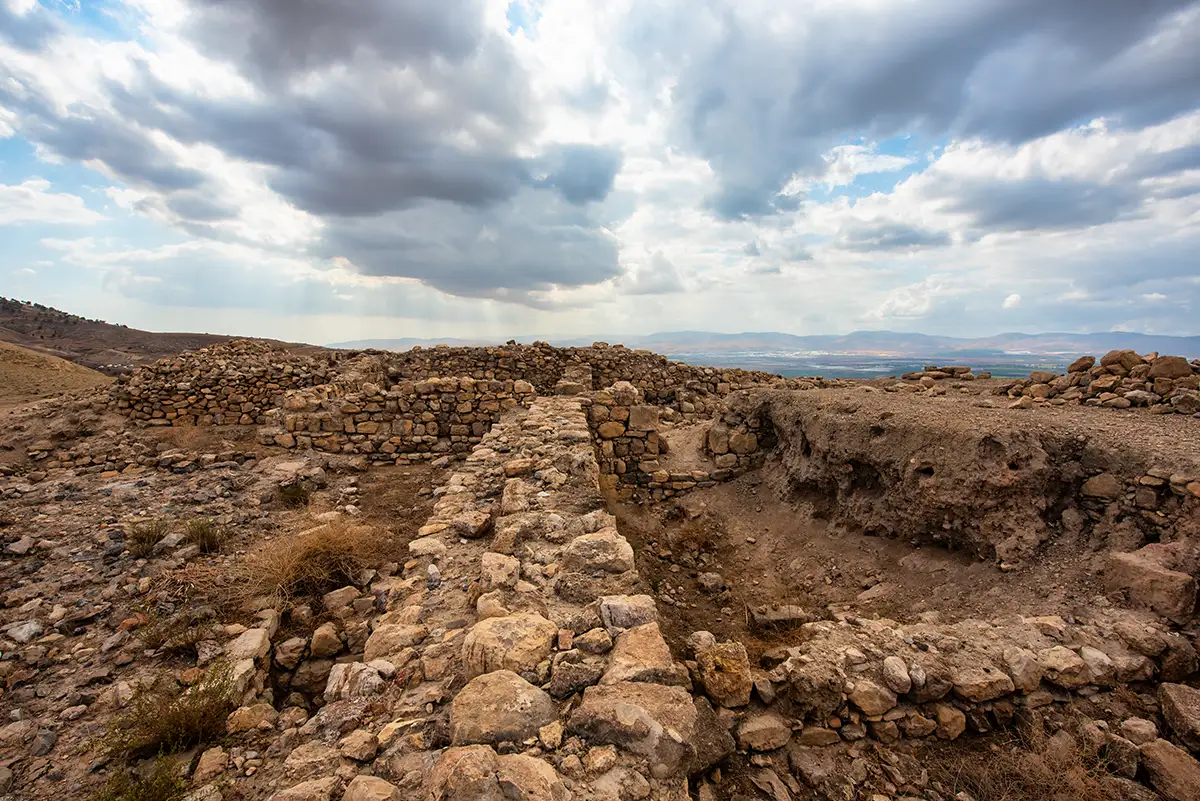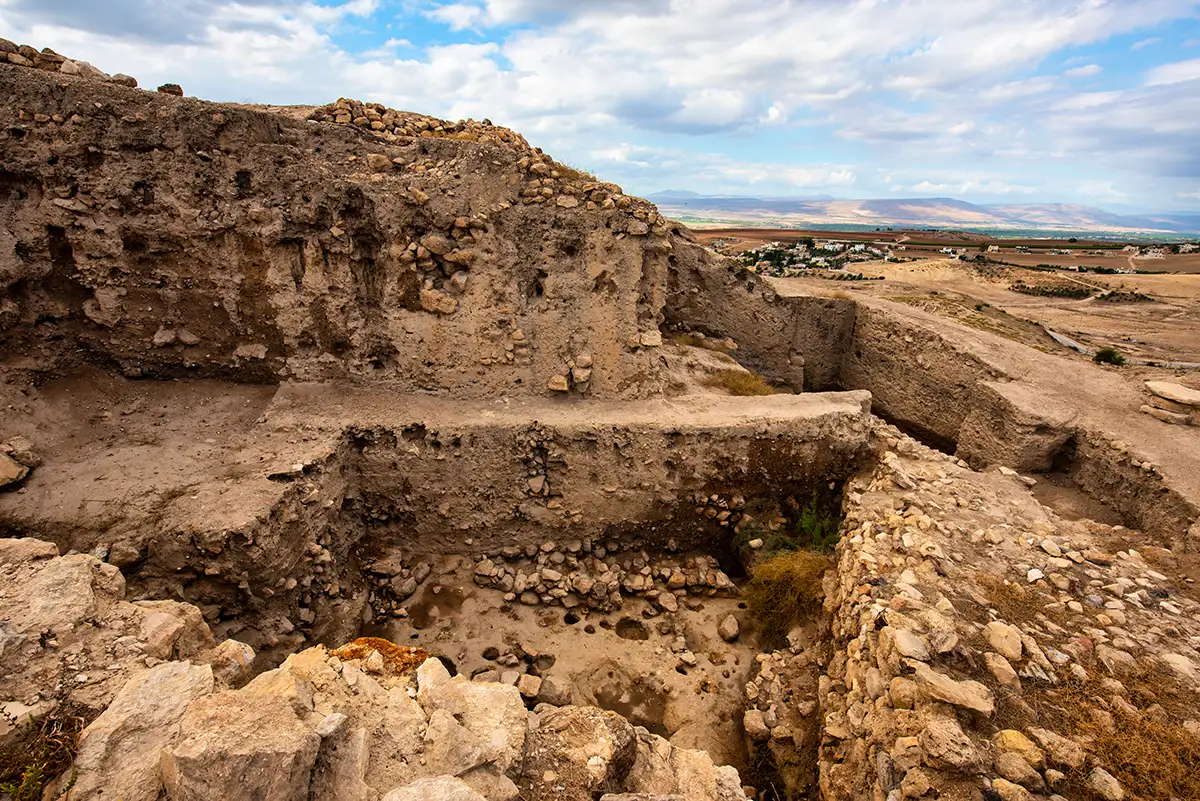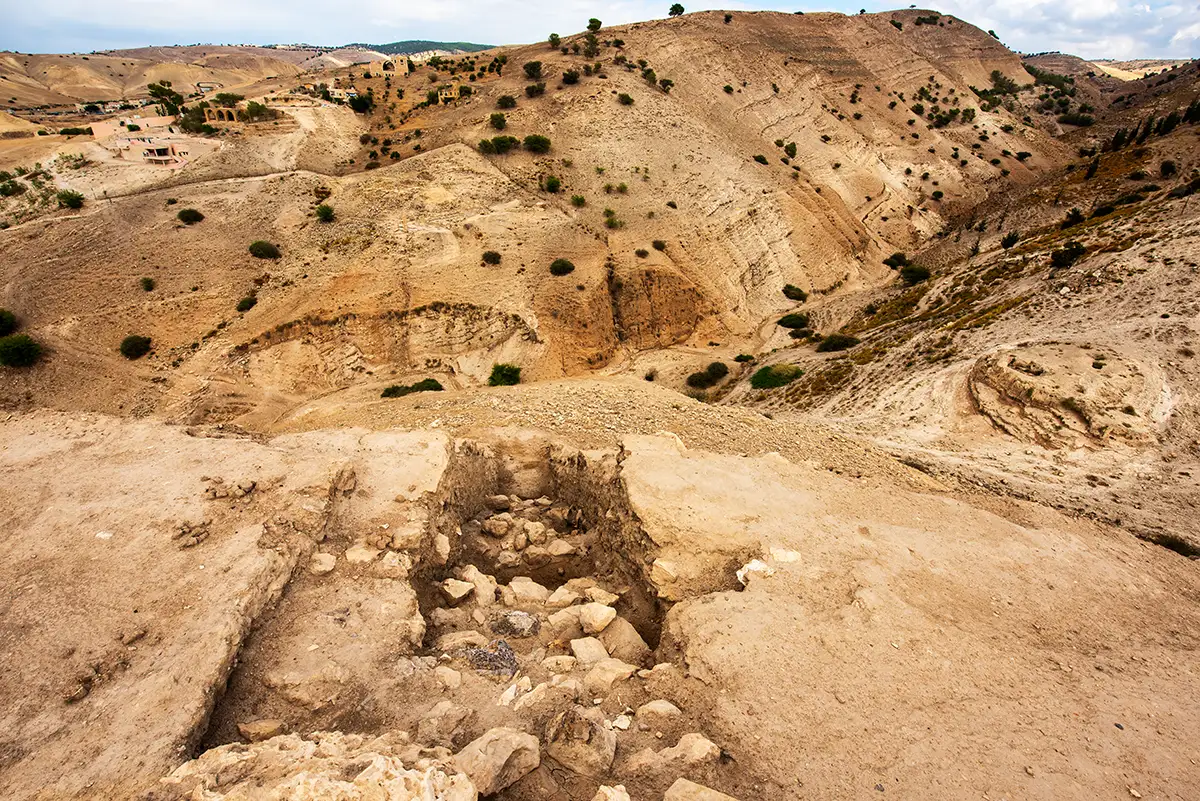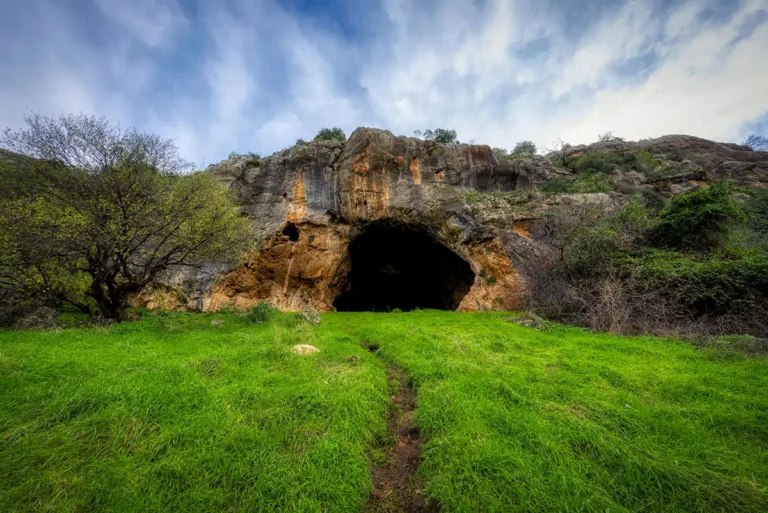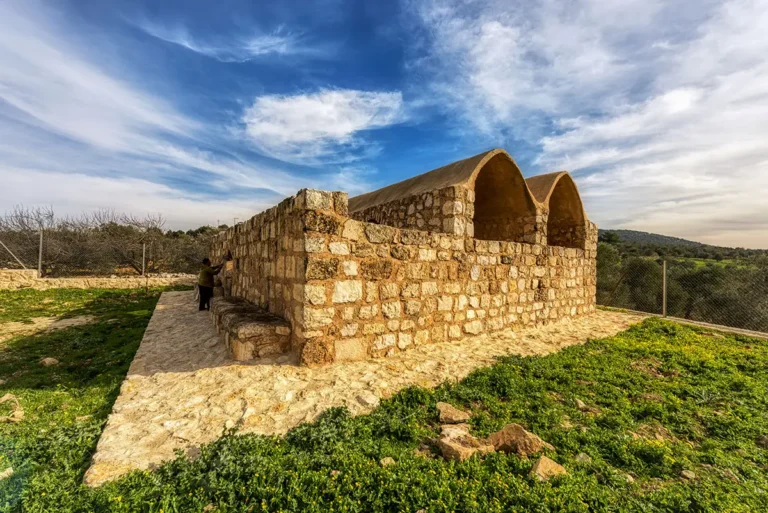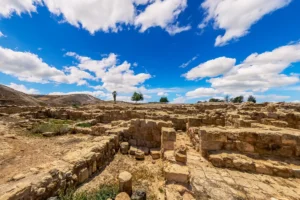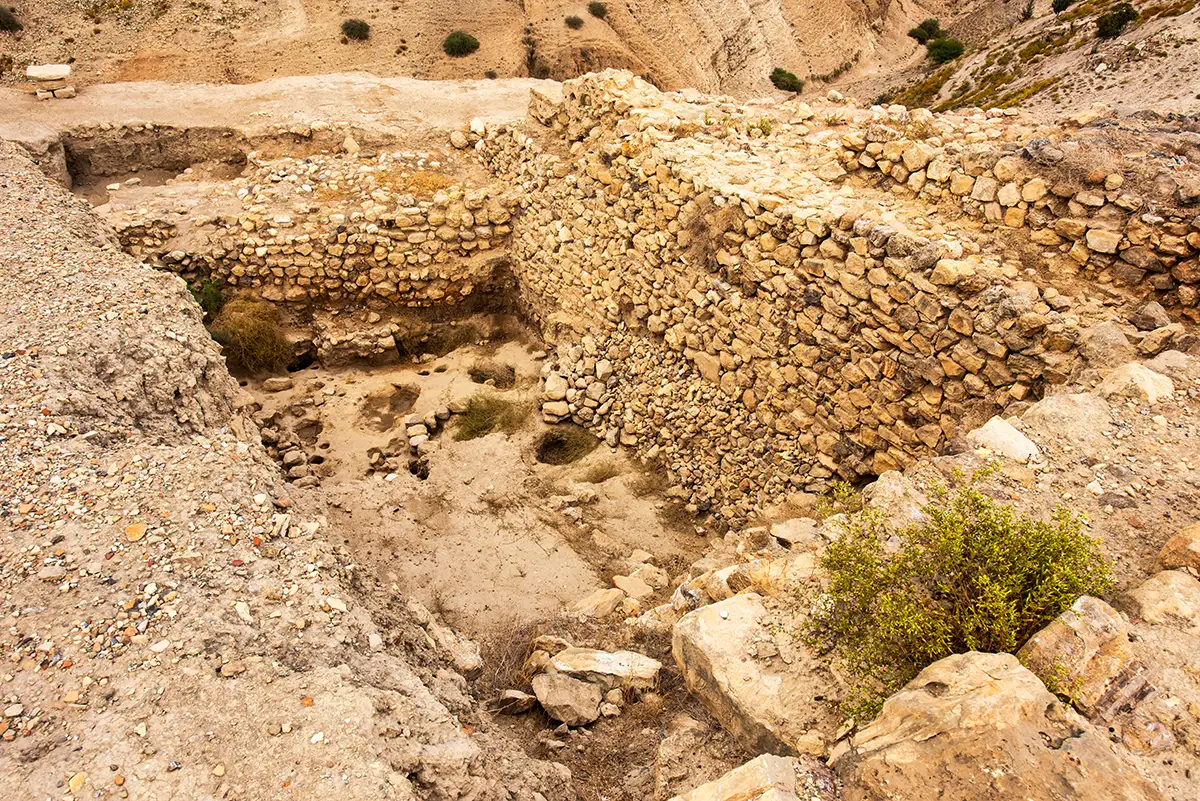
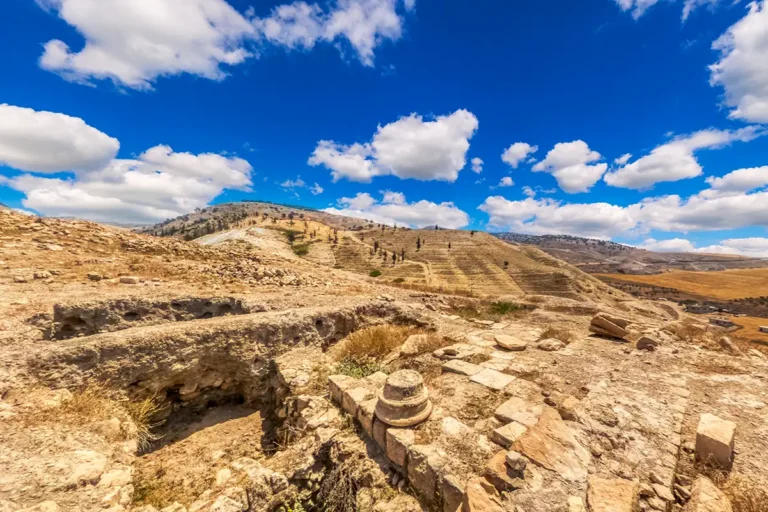
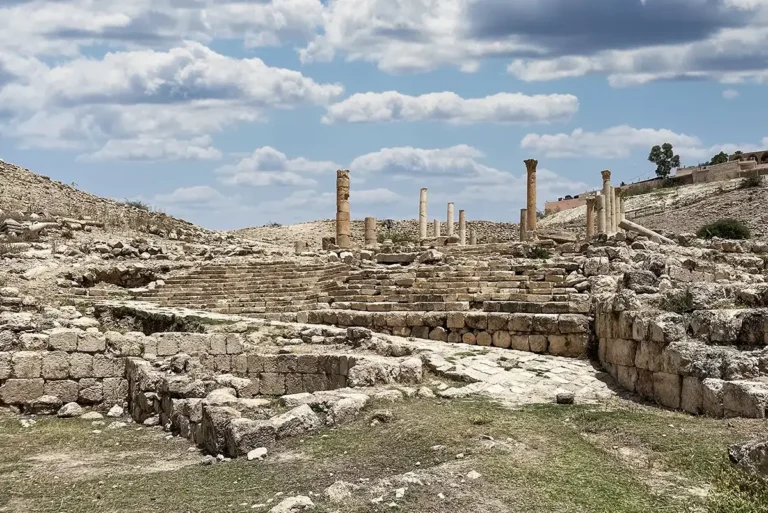
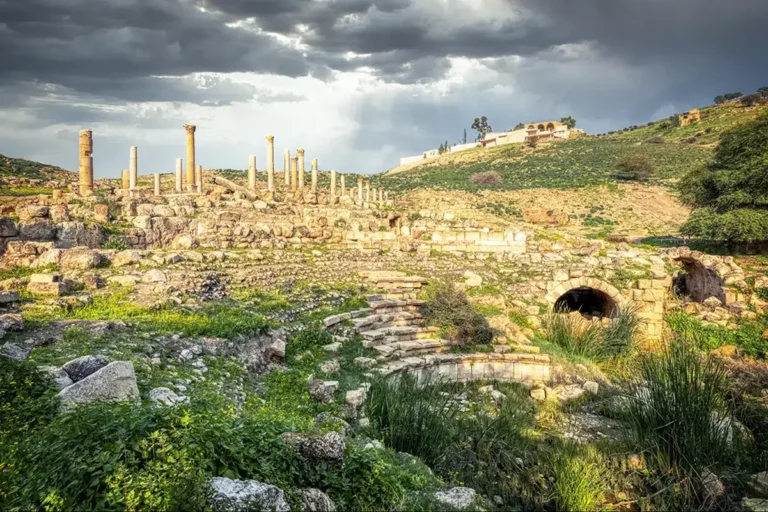
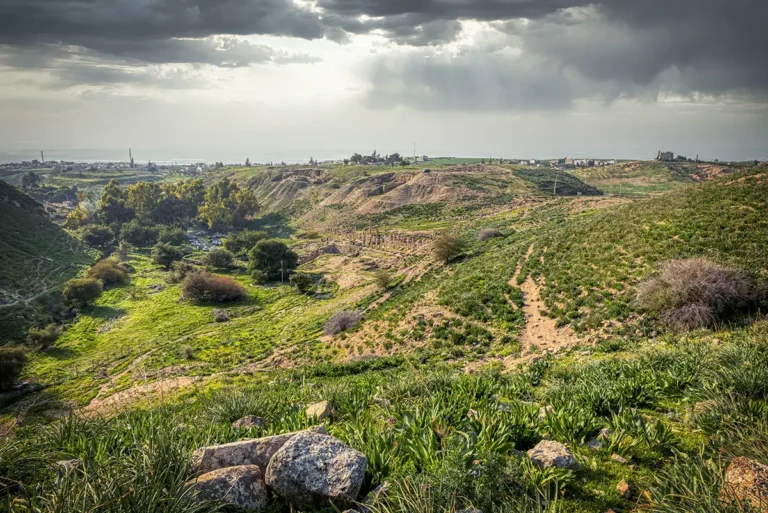

Rising south of Pella’s main mound, Tell al-Husn brings the city’s landscape and long history into focus. Its summit preserves traces of Bronze Age defences, Roman buildings and a Byzantine fortress. Read the overlapping remains alongside the valleys below, and the hill becomes more than a viewpoint: it is a record of repeated settlement.

Where Is Tell al-Husn?
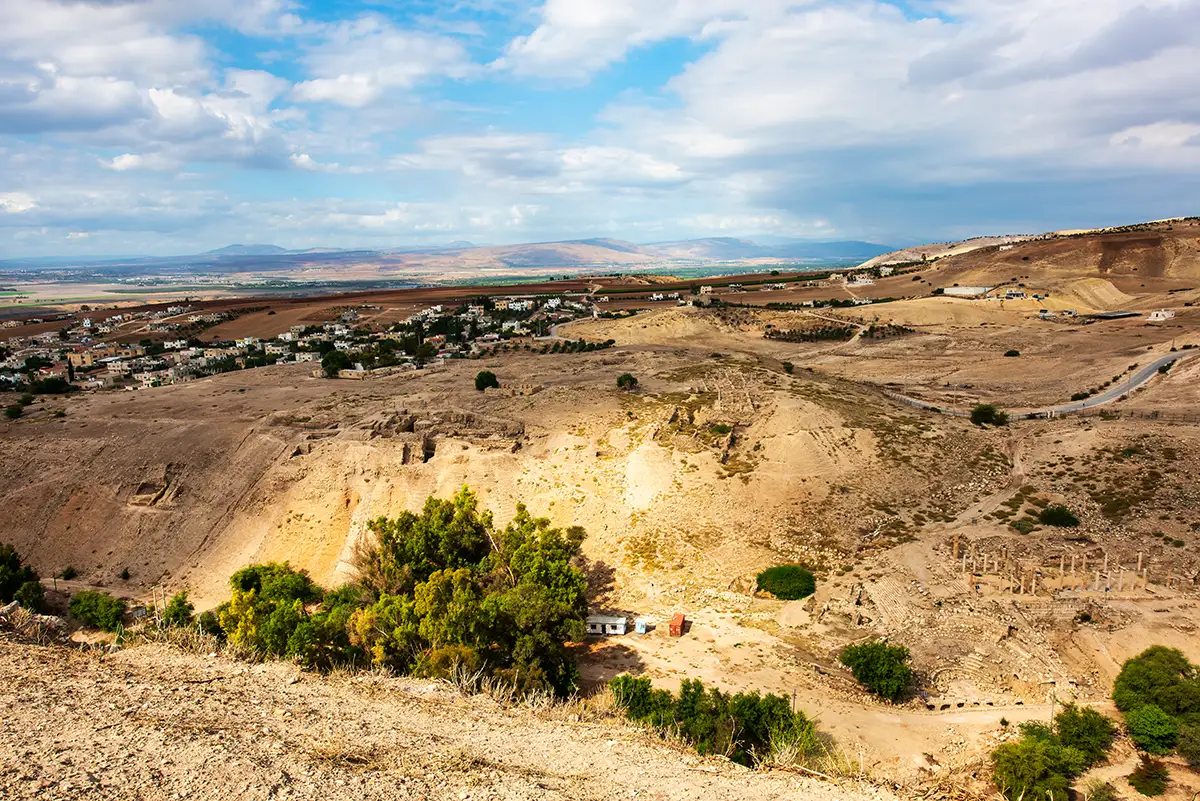
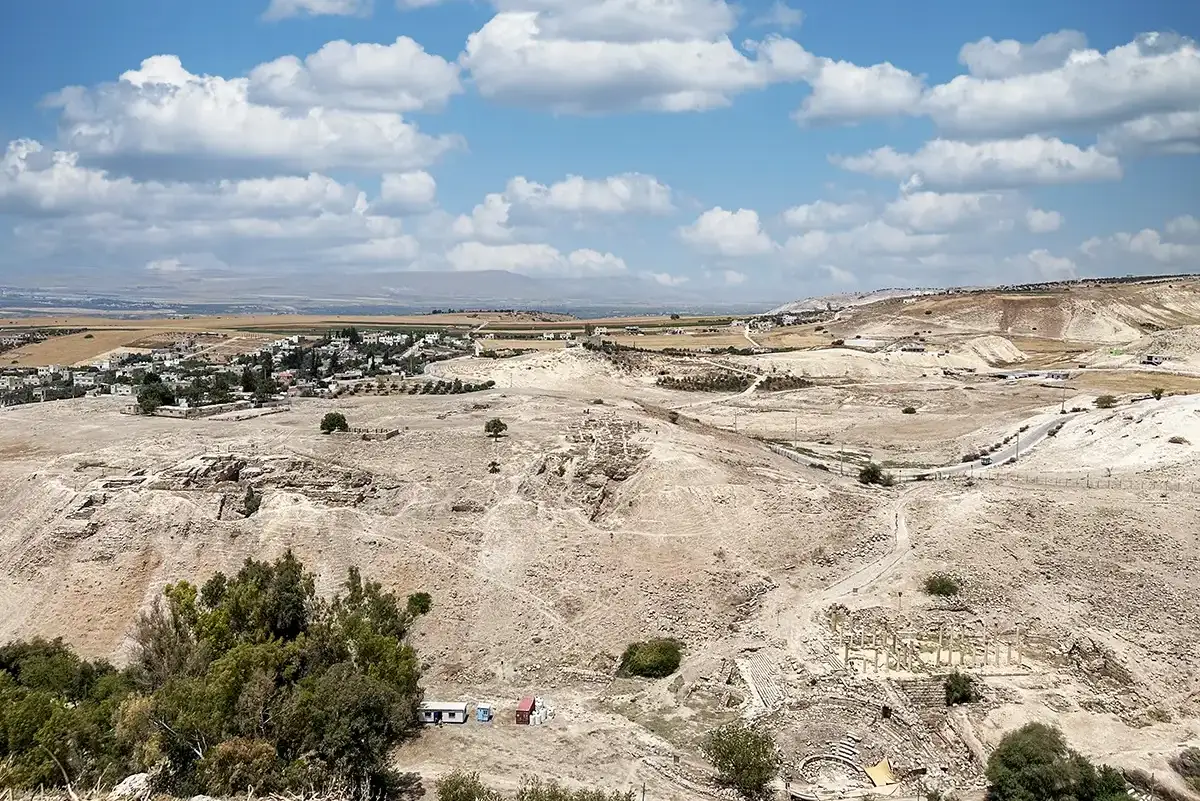
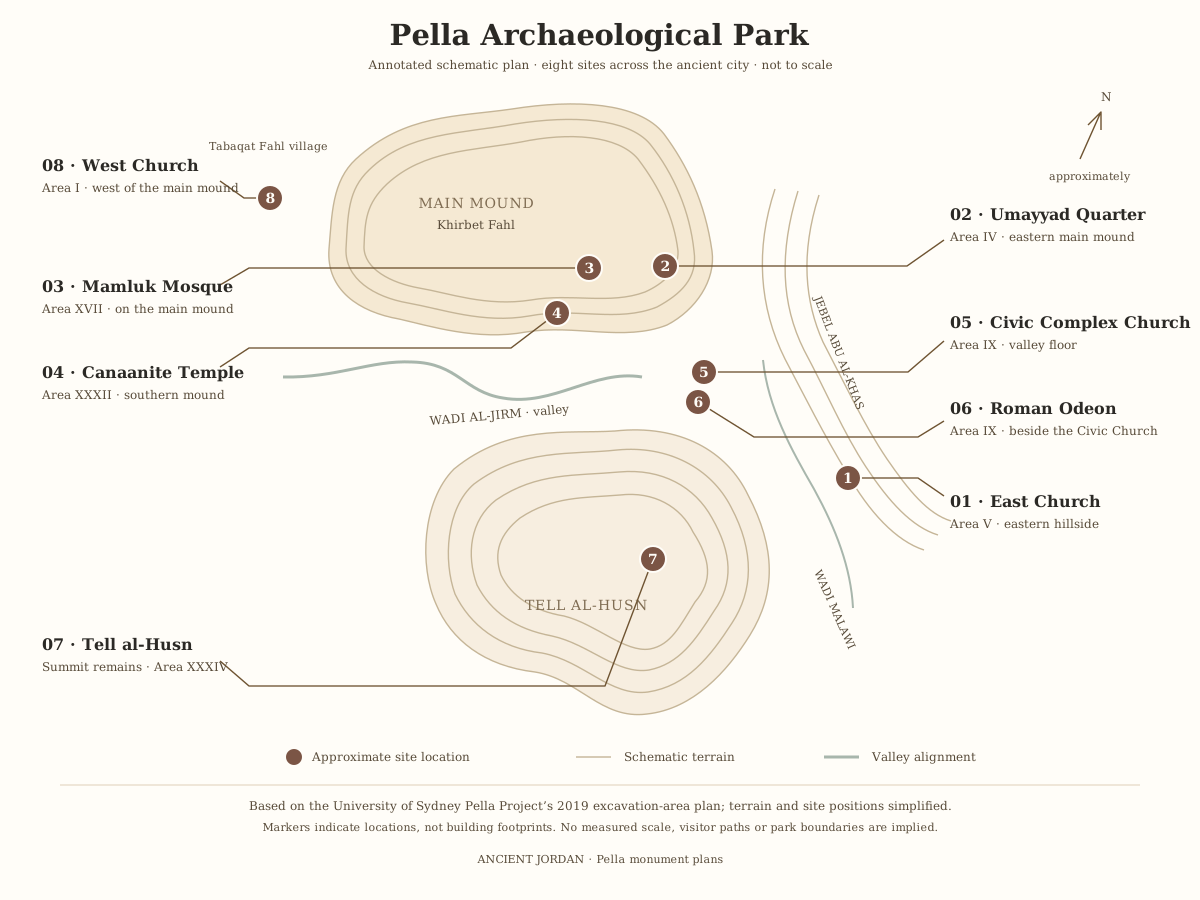
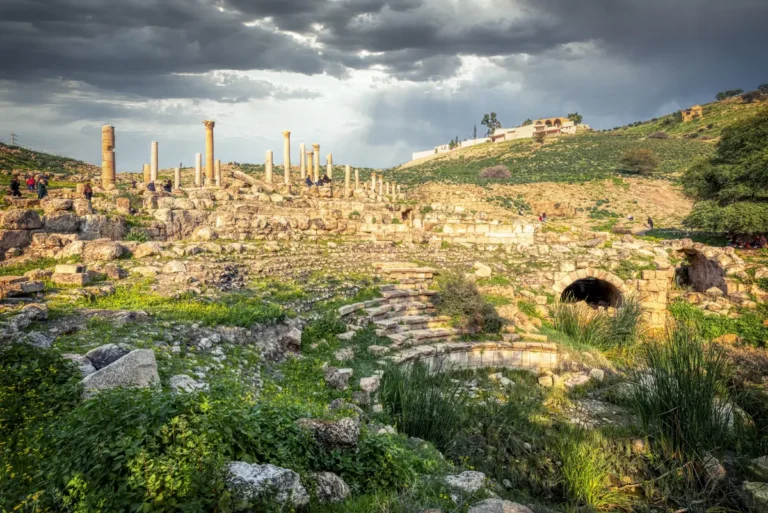
Tell al-Husn is the prominent natural hill south of Pella’s main archaeological mound, separated from it by Wadi al-Jirm. Its name means “Mound of the Fortress,” probably recalling the Byzantine complex on its summit.
The hill forms a distinct part of ancient Pella, with archaeological remains extending across its summit and slopes.
Historical Context
Occupation on the eastern summit reaches back to the Late Chalcolithic period, around 4200 BCE. Successive Bronze Age communities constructed buildings, terraces and fortifications here, repeatedly adapting the hilltop.
Later occupation included Hellenistic and Roman buildings, followed by the substantial Byzantine fortress. The remains therefore represent several settlements separated by rebuilding and destruction, rather than one continuously functioning defensive installation.
Architectural Design and Features
The Bronze Age Terraces
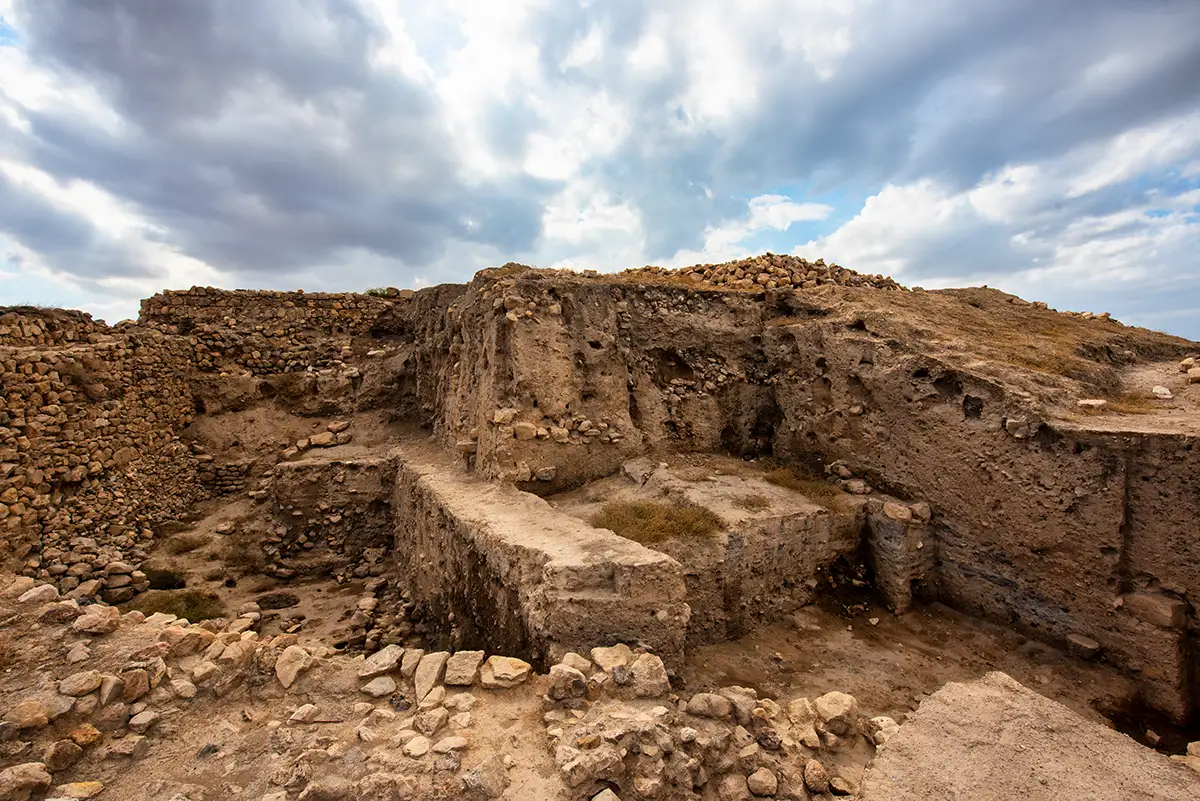
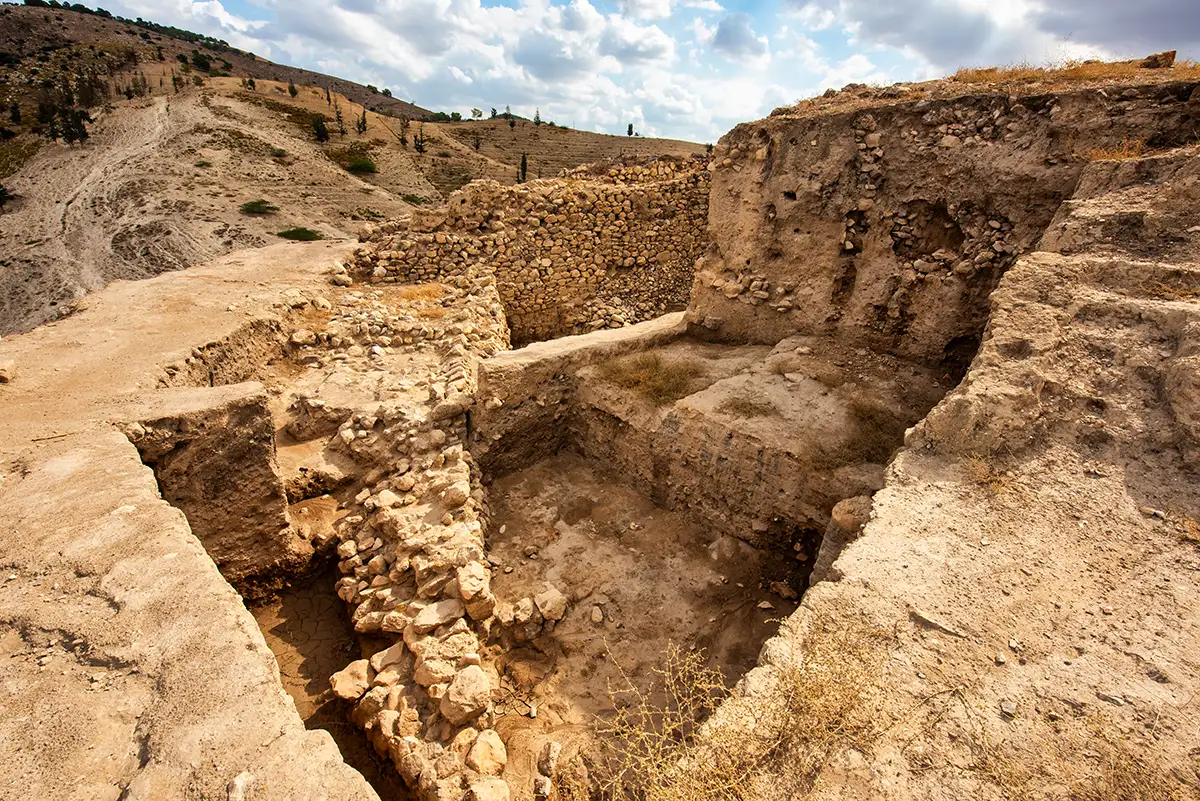
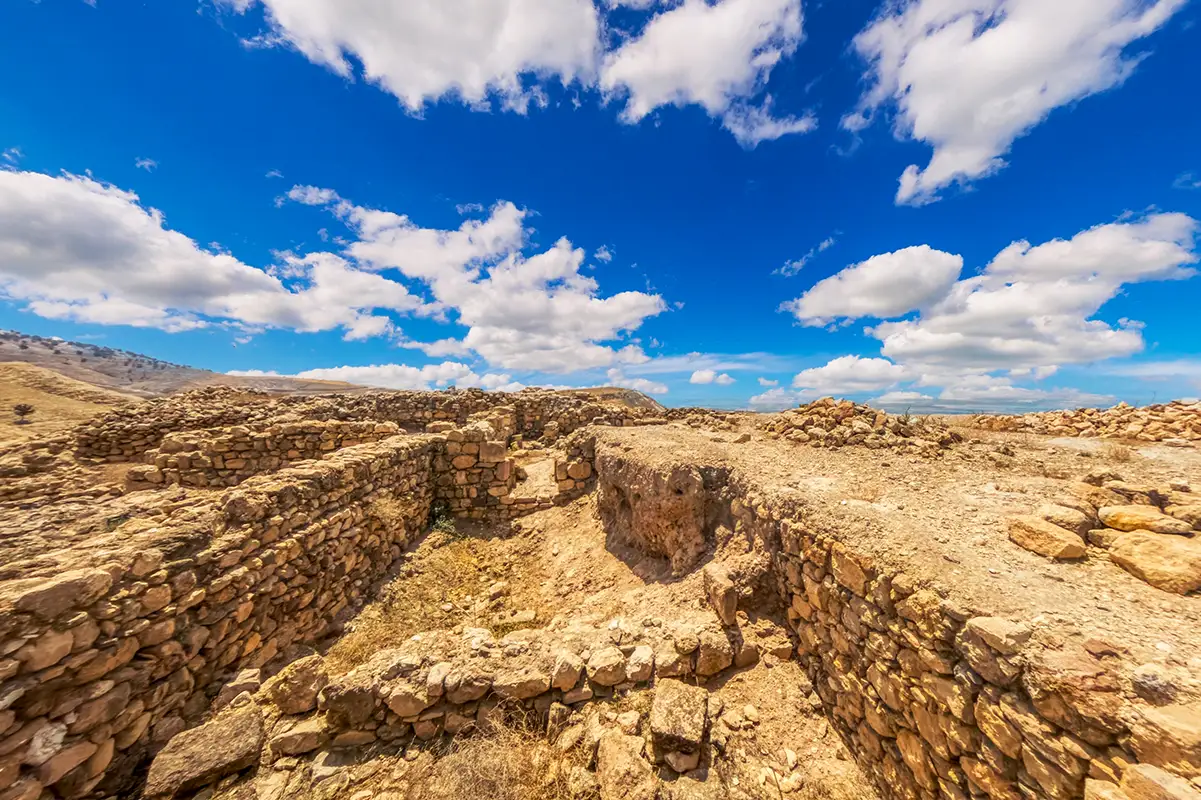
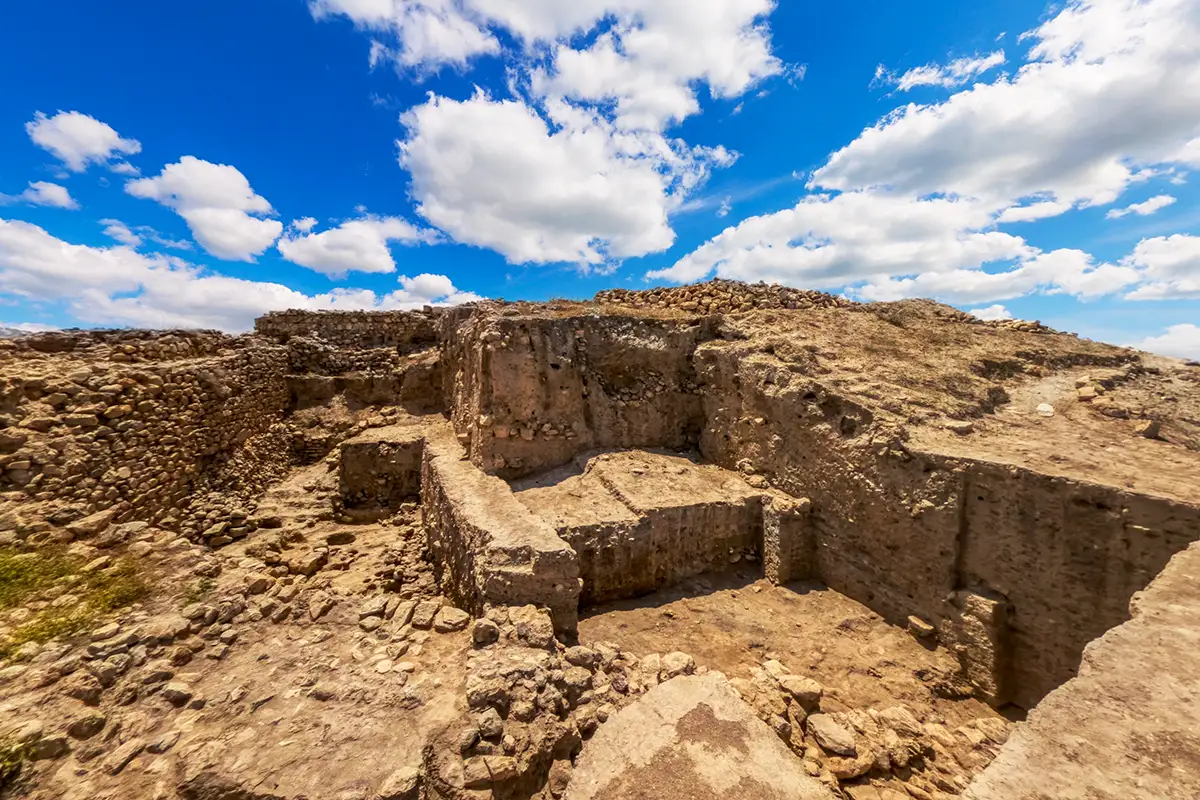
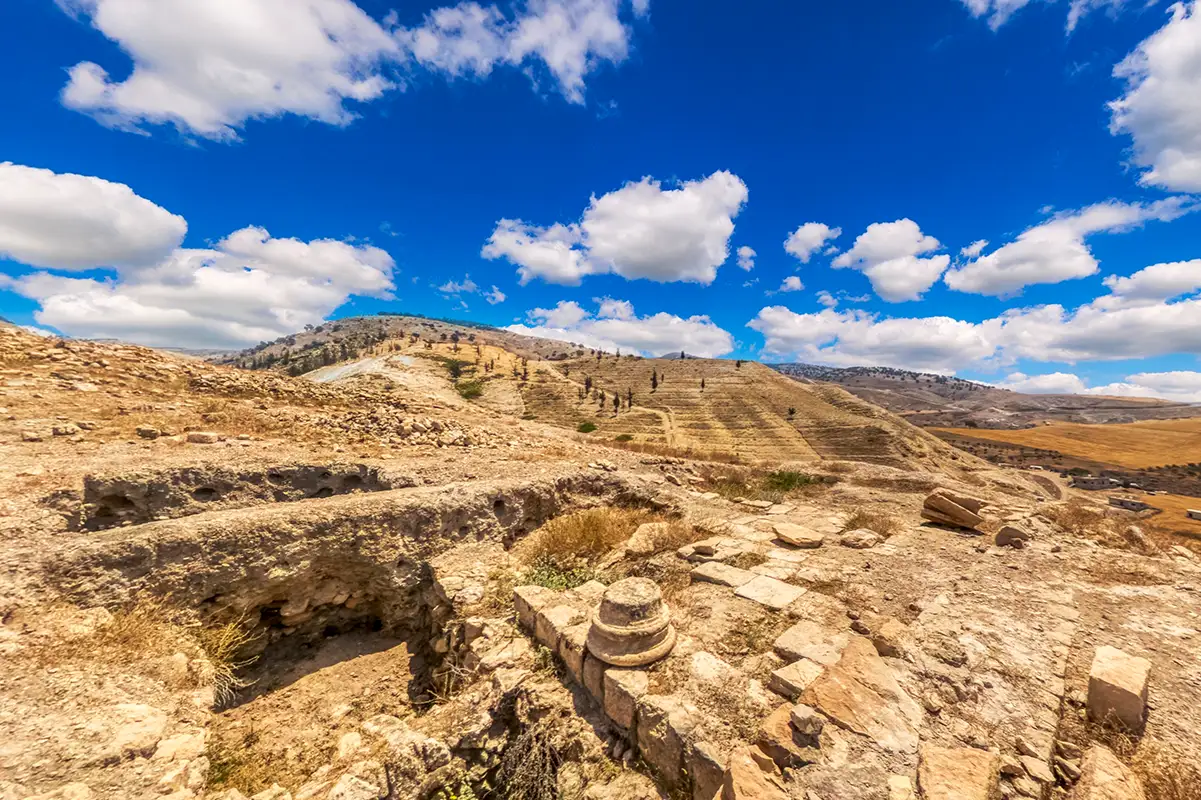
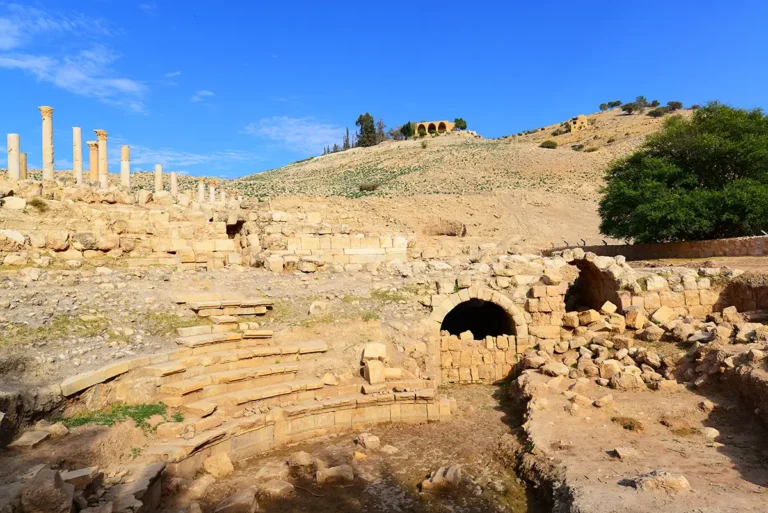
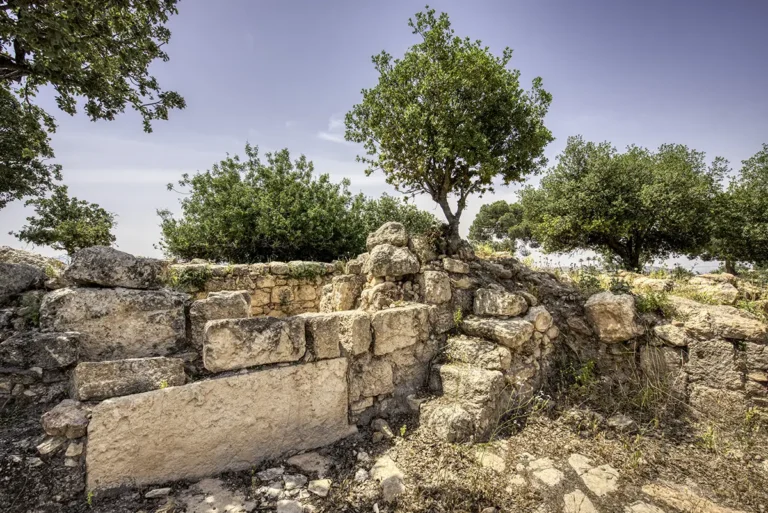
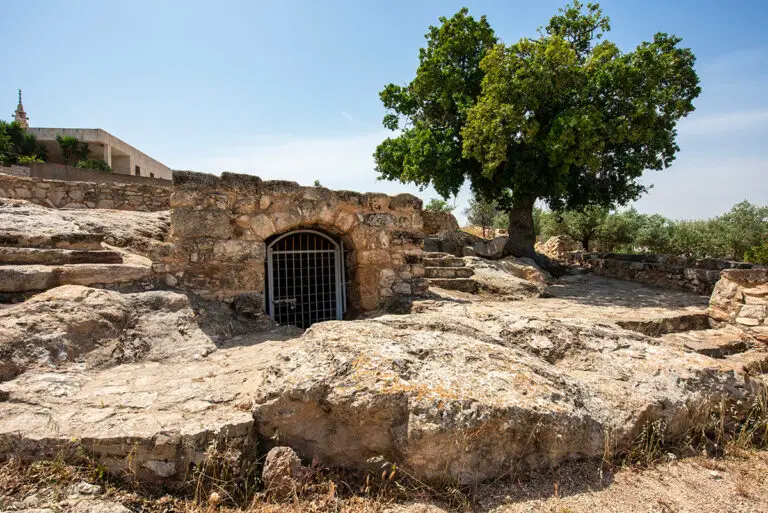
On the eastern summit, substantial stone terraces created level surfaces for buildings and defences. The Early Bronze Age II complex, dated approximately 3000–2800 BCE, included paved gateways, narrow secondary entrances and storage facilities.
These constructions explain how builders transformed the natural slope into usable ground.

The Earlier Fortifications
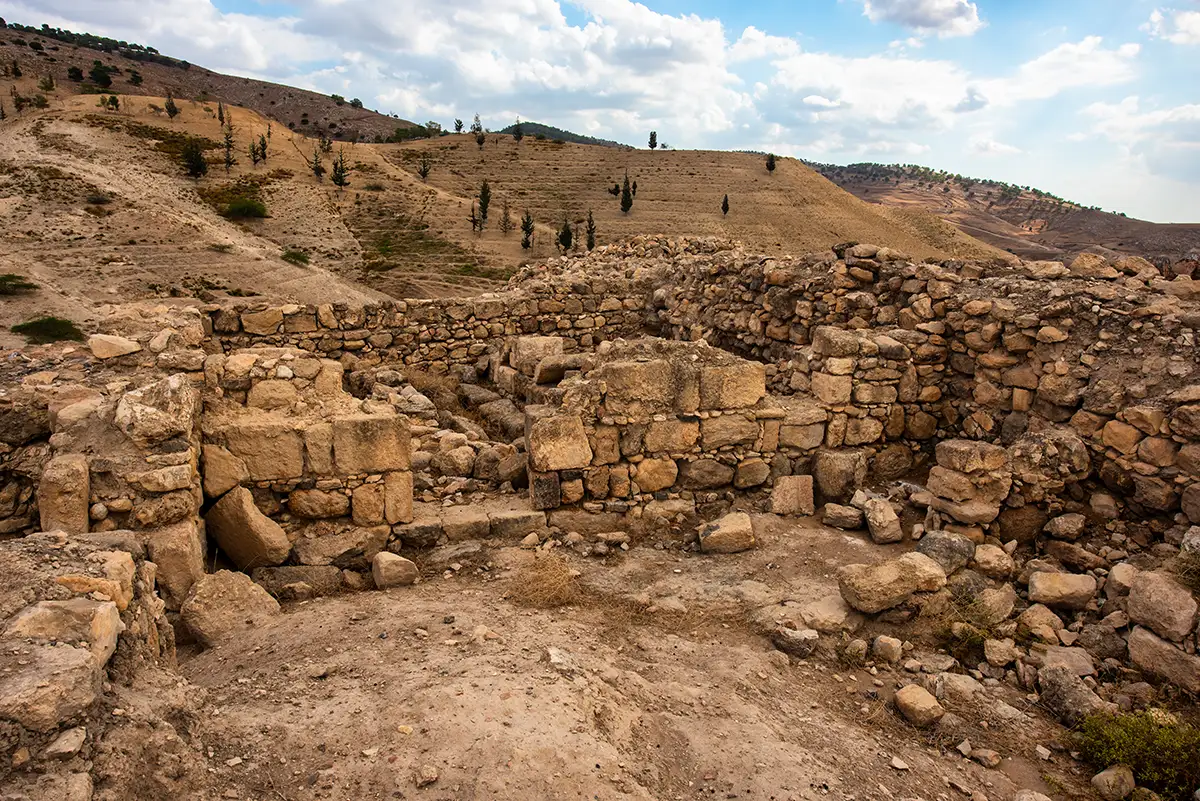
Excavations also identified a thick mud-brick circuit wall and a smaller Middle Bronze Age fortress built against earlier defences. These belong to different phases from the Byzantine complex above them. Their overlapping positions demonstrate the repeated attraction of this elevated location.
The Roman Courtyard Complex
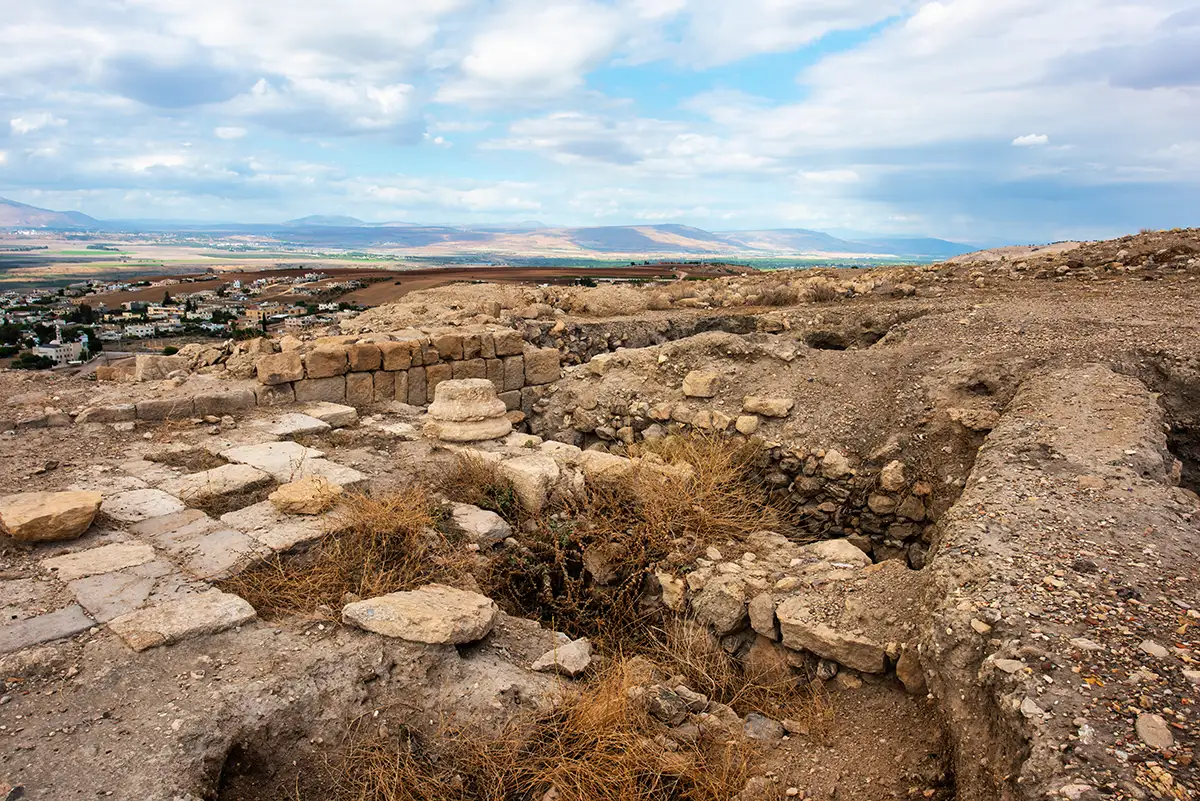
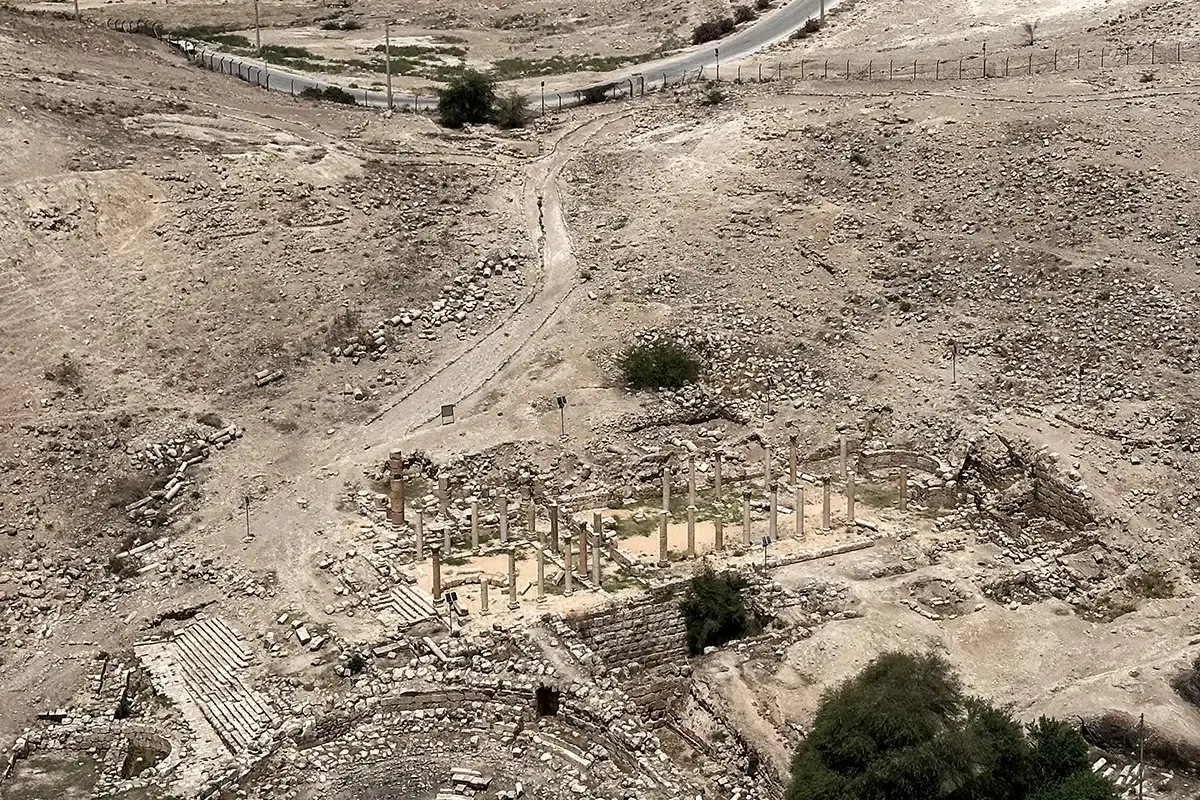
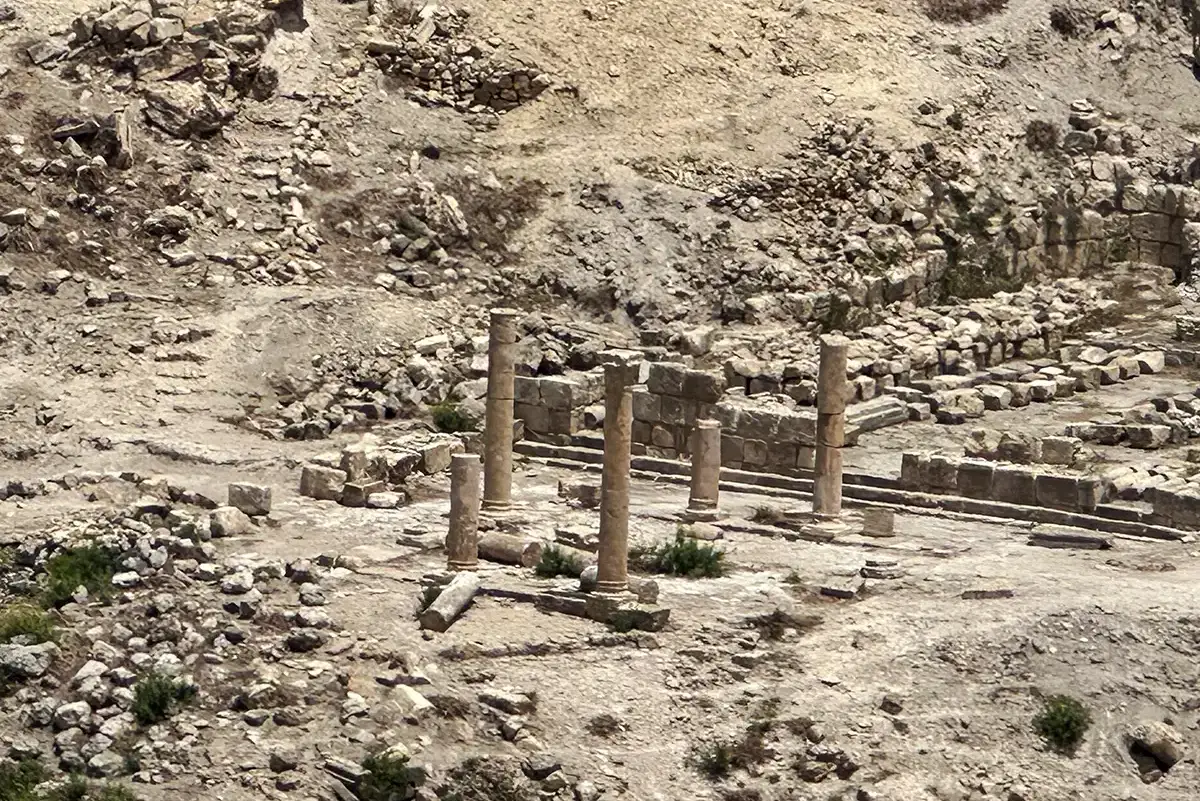
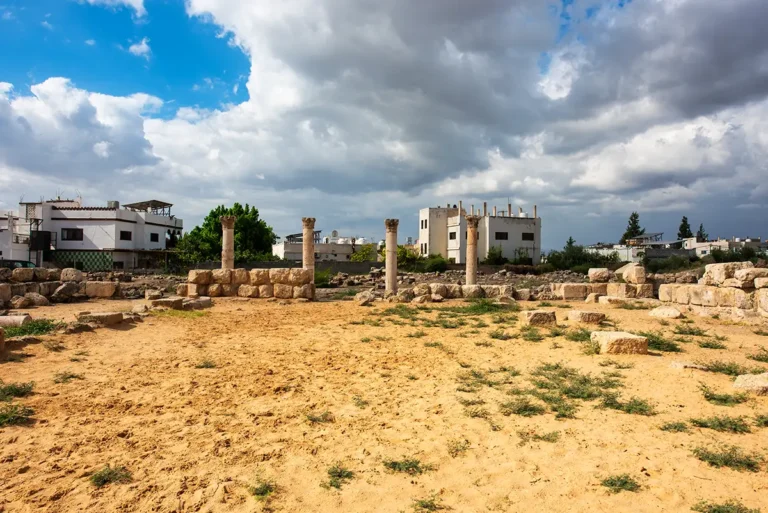
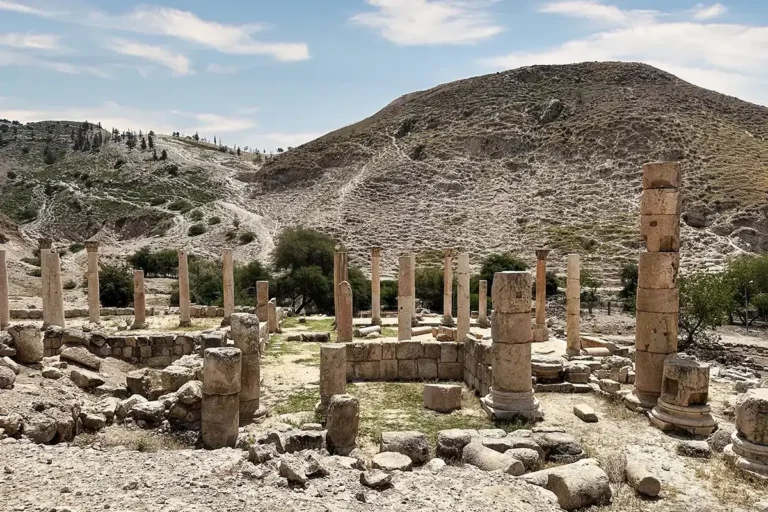
On the western summit, excavators uncovered a paved Roman courtyard complex with a small colonnaded street along its northern side. Carefully dressed masonry and architectural fragments indicate substantial construction around the late first century CE.
The precise function of the complex remains uncertain. Its discovery adds an important civilian or public architectural element to a hill often described chiefly through its fortifications.

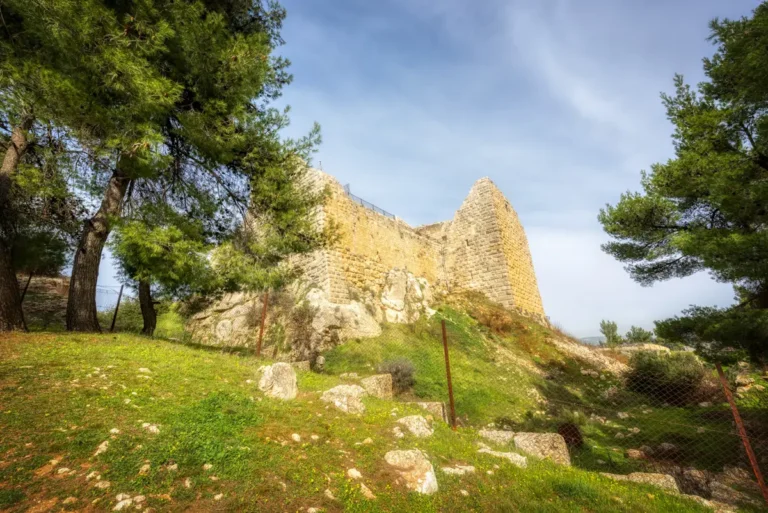
The Byzantine Fortress
The later fortress occupied the eastern summit. Stone lower walls supported mud-brick upper construction, parts of which collapsed into the building.
A military function has been proposed, including the possibility of a cavalry outpost, but specific room uses should be treated cautiously. The surviving complex is best understood alongside the earlier structures beneath it, rather than as an isolated monument.

Bronze Age Terraces
Stone terraces of about 3000–2800 BCE levelled the slope and carried paved gateways, narrow entrances and storage rooms.
Earlier Fortifications
A thick mud-brick circuit wall and a smaller Middle Bronze Age fortress were built against earlier defences.
Roman Courtyard Complex
On the western summit, a paved courtyard with a small colonnaded street dates to the late 1st century CE.
Byzantine Fortress
Stone lower walls carried mud-brick upper walls; the fortress sits on the earlier terraces of the eastern summit.
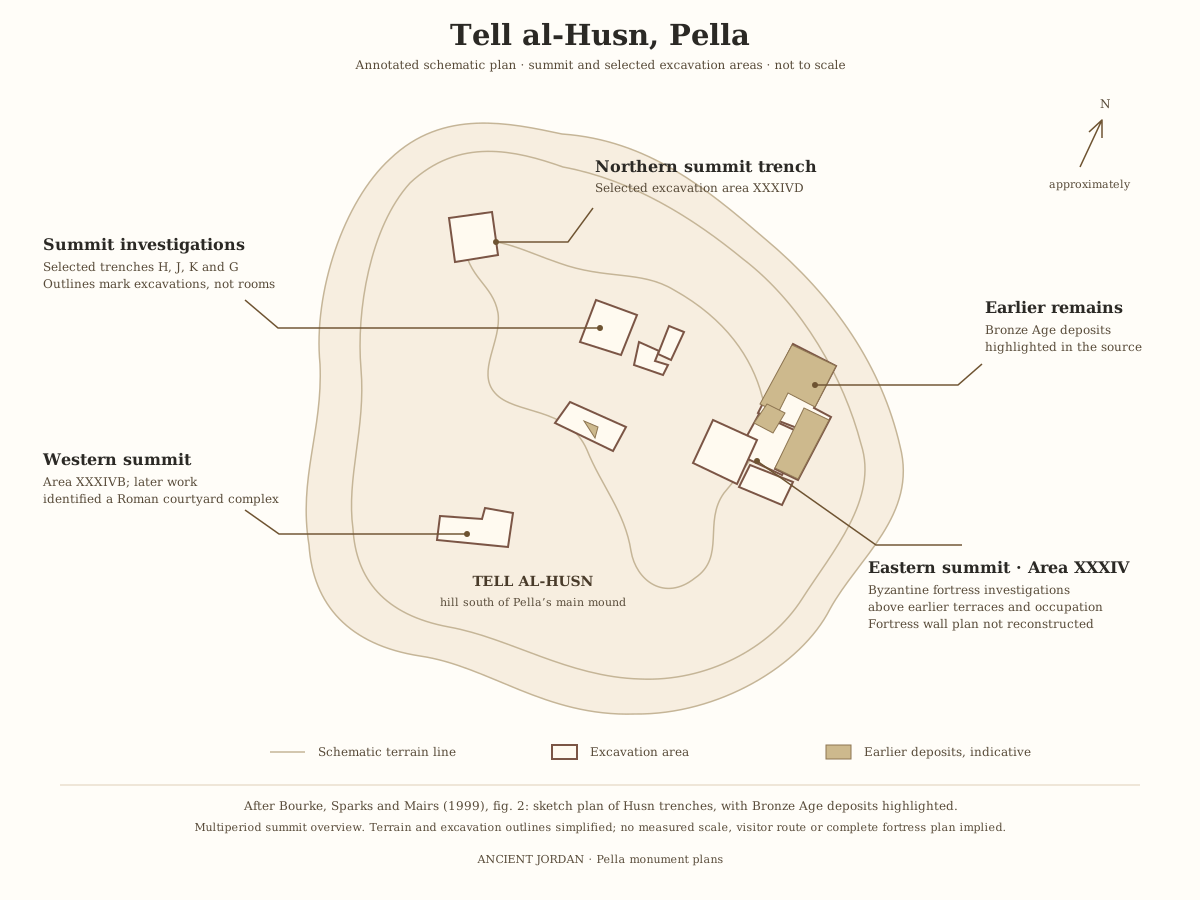
Tell al-Husn, Pella: schematic plan
Schematic plan of Tell al-Husn at Pella, Jordan, showing the Byzantine fortress, earlier terraces and Roman courtyard complex
Open drawingDestruction and Excavation
University of Sydney excavations began investigating the summit fortress in 1988. By 1993, work had exposed its major structures and established that it rested above substantial earlier terraces.
Investigations in 1994–1995 then explored the Bronze Age remains. Renewed work from 2009 examined still earlier occupation beneath the terrace system, revealing a much longer history than the fortress alone suggested.
The different layers preserve separate episodes of destruction. They should not all be assigned to a single earthquake or historical event.
Visiting Tell al-Husn
Begin by understanding the hill’s relationship with the main mound and the Civic Complex in the valley below. Then use a labelled plan to distinguish the eastern summit investigations from the Roman remains farther west.
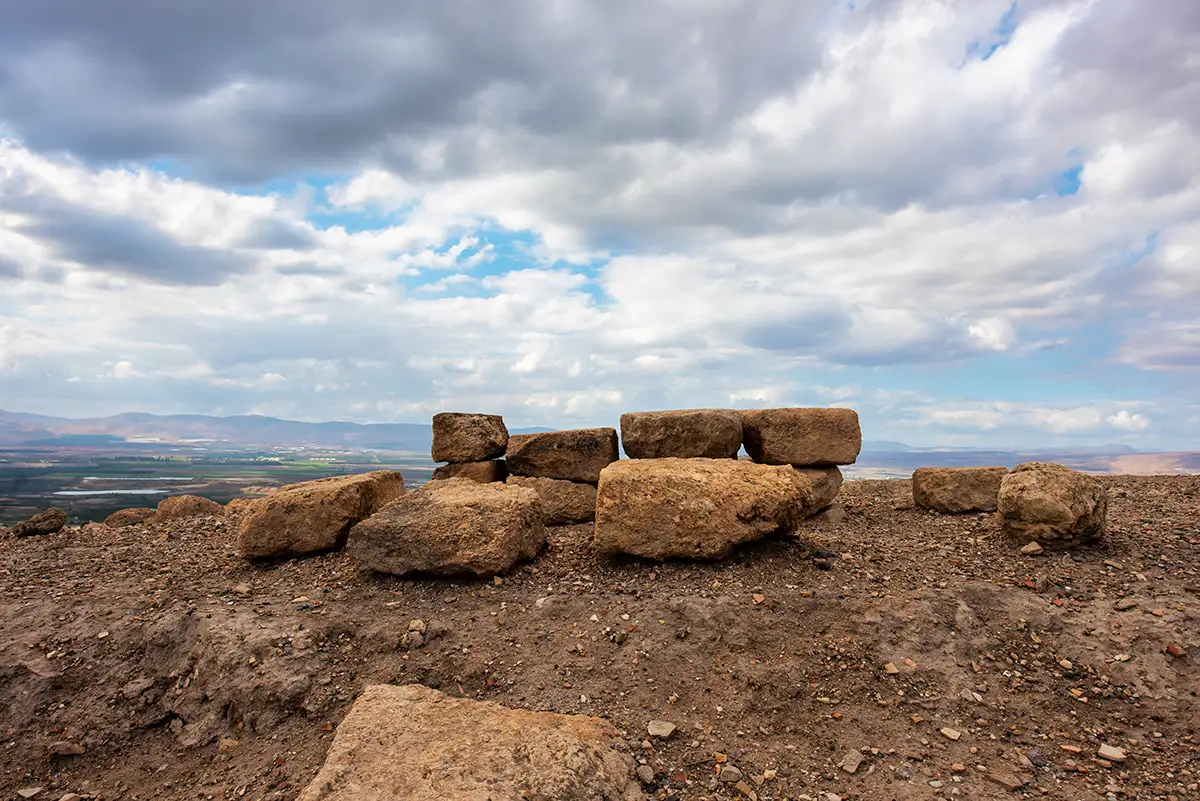
The archaeological detail is easier to appreciate when each feature is placed in its own period. Read the terraces, walls and building foundations as successive uses of the same hill, with the wider landscape providing the connection between them.
The hill is part of the Pella archaeological park and is covered by the Pella ticket (2 JOD for visitors, 0.25 JOD for residents) and by the Jordan Pass. See our Pella travel guide for hours and the rest of the site.
Further reading: Ben Churcher, Pella in Jordan: A Brief History of the Site; Stephen Bourke, New Light on Classical and Late Antique Pella (ACOR Newsletter 26.1, 2014); University of Sydney — Pella Excavations 1967–2023.