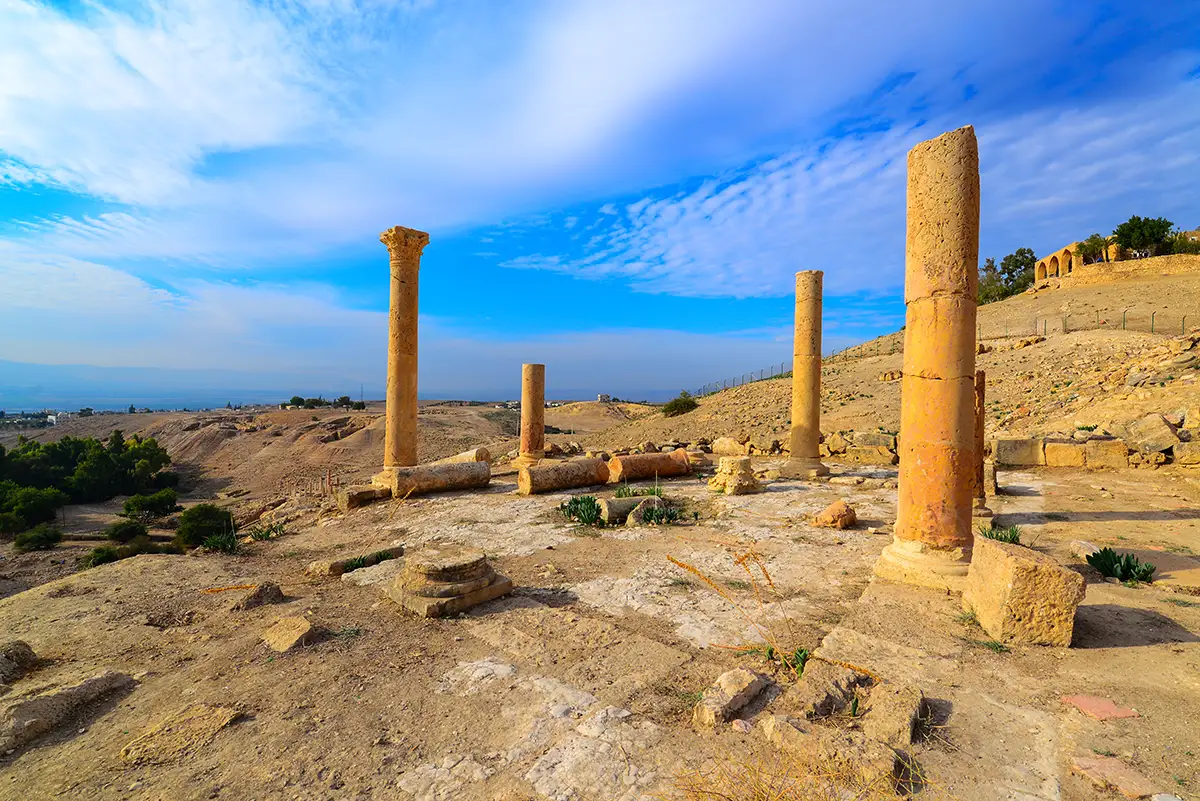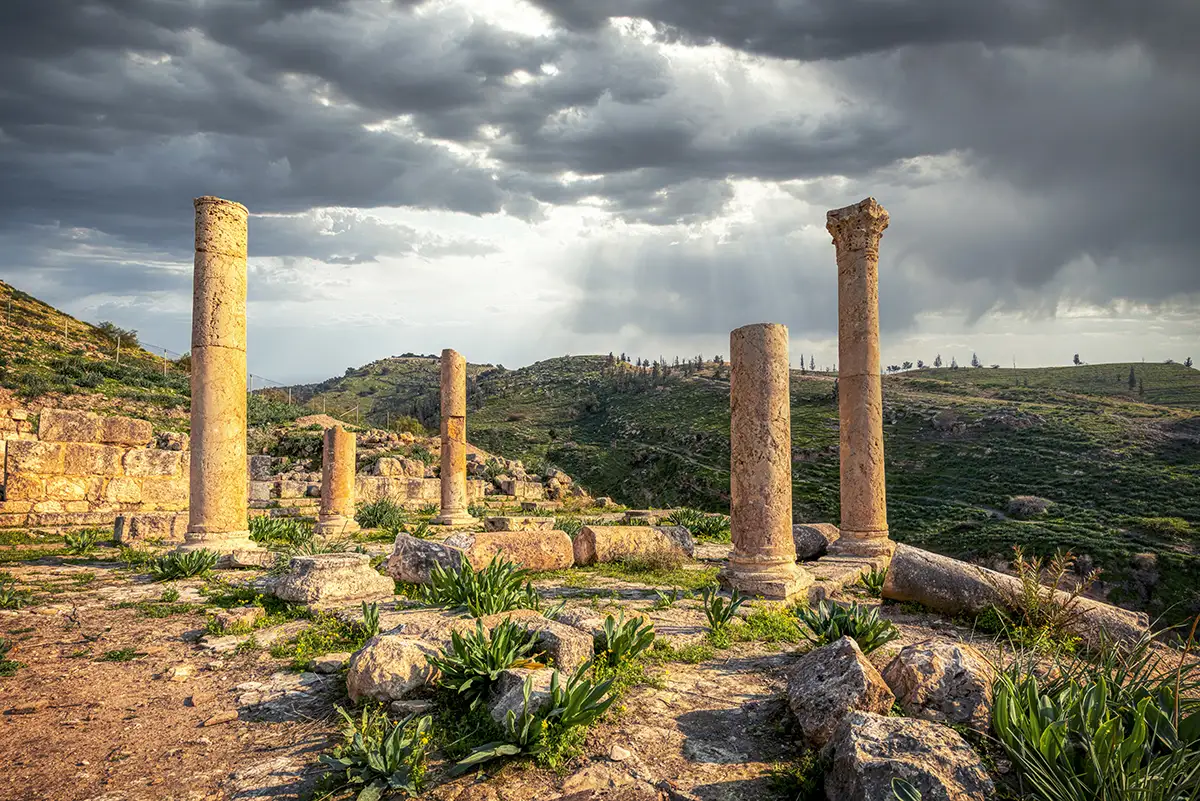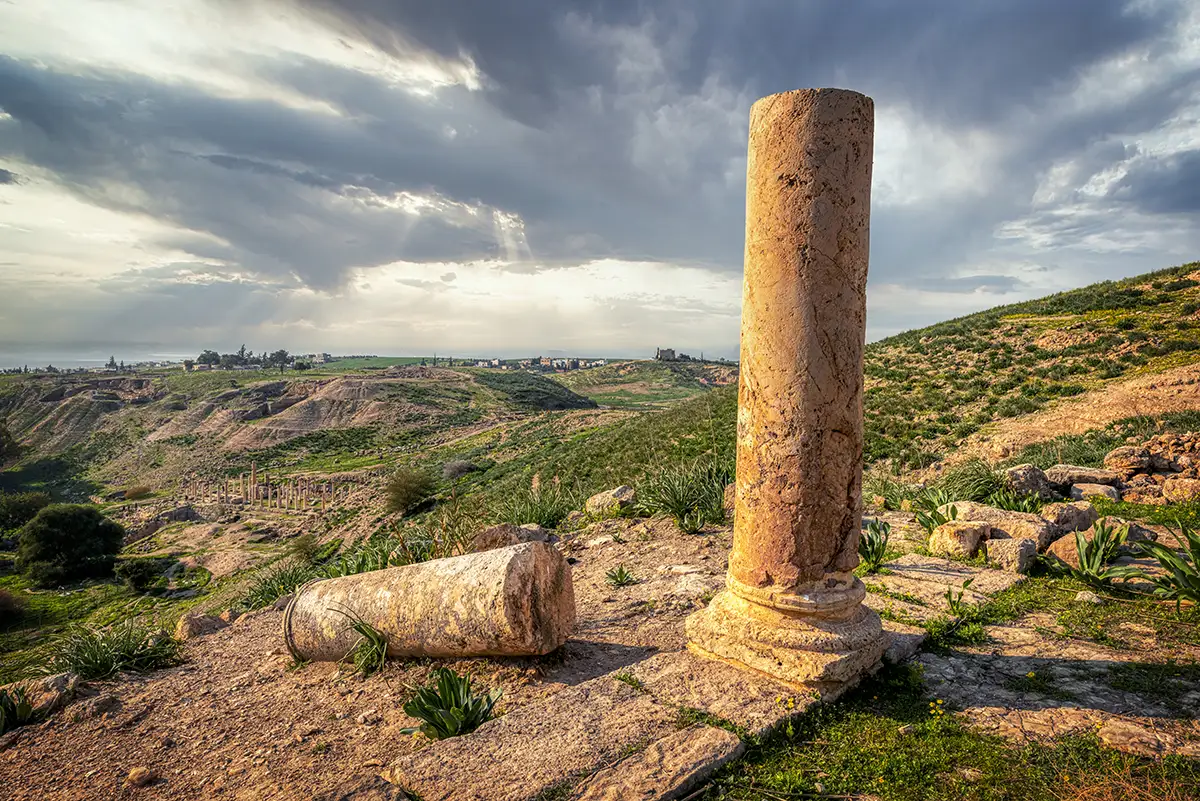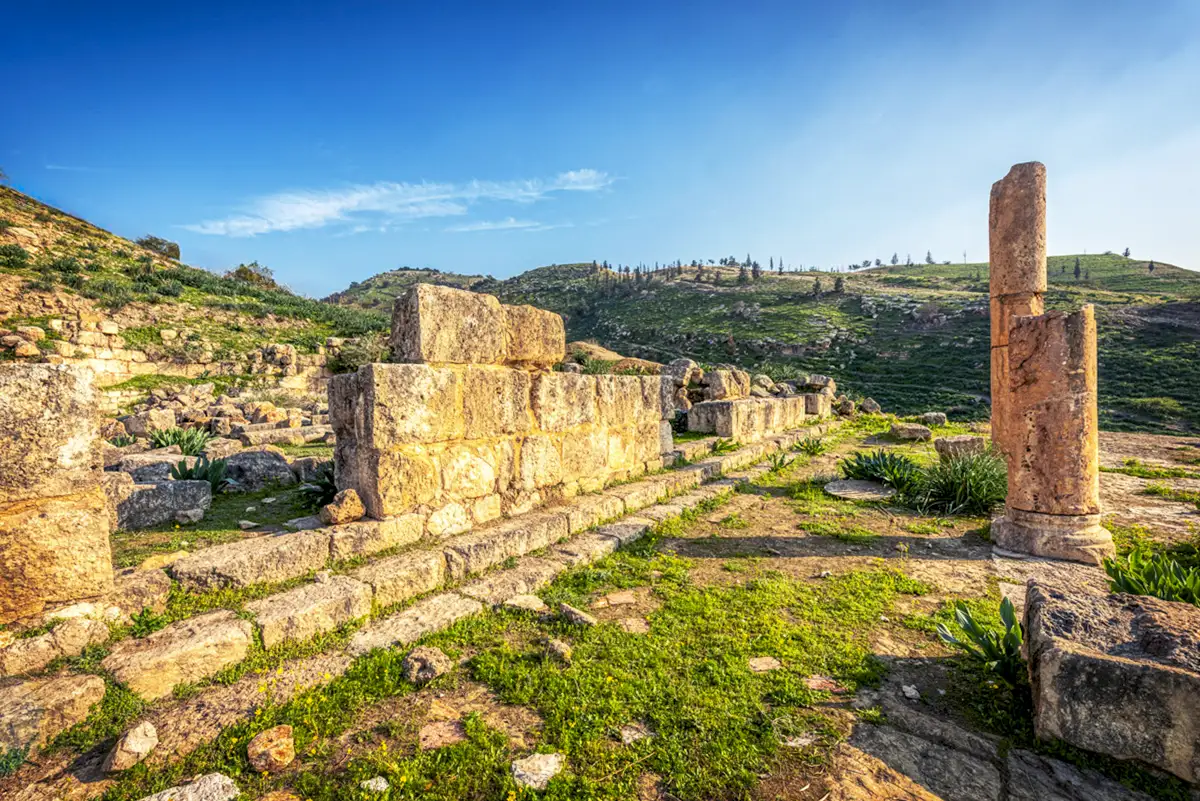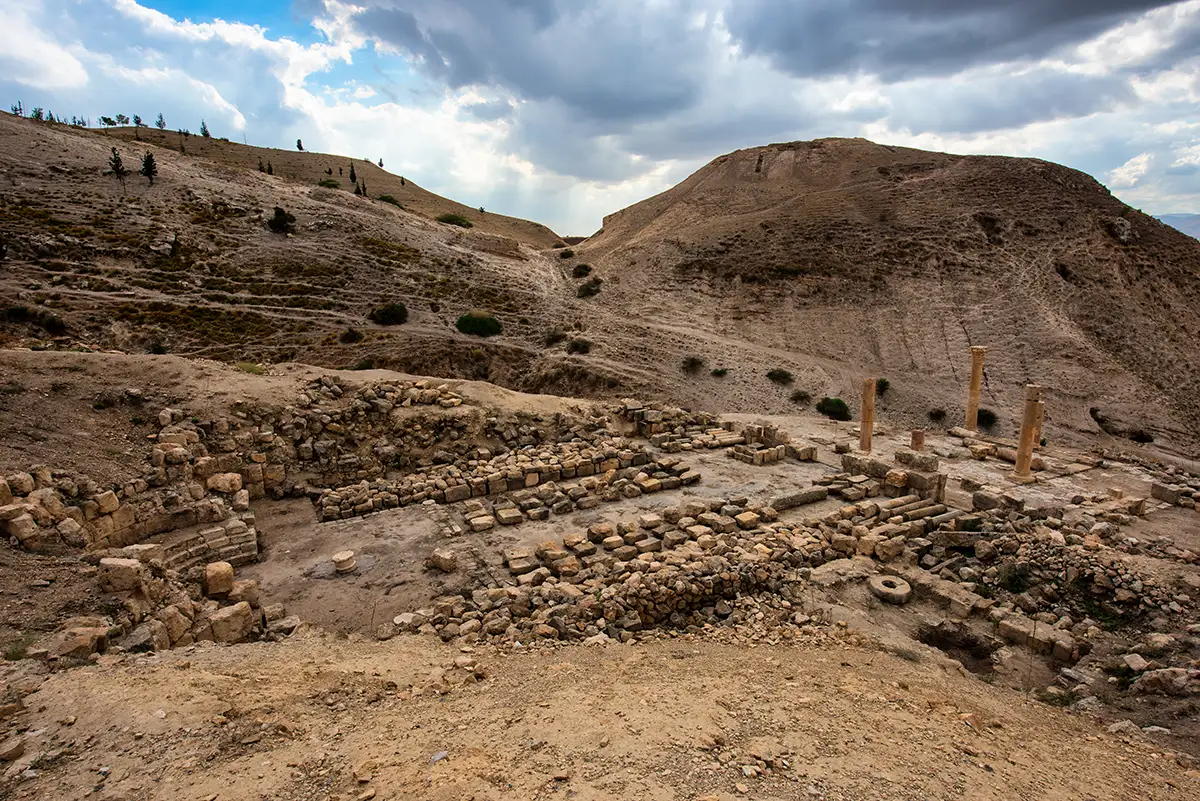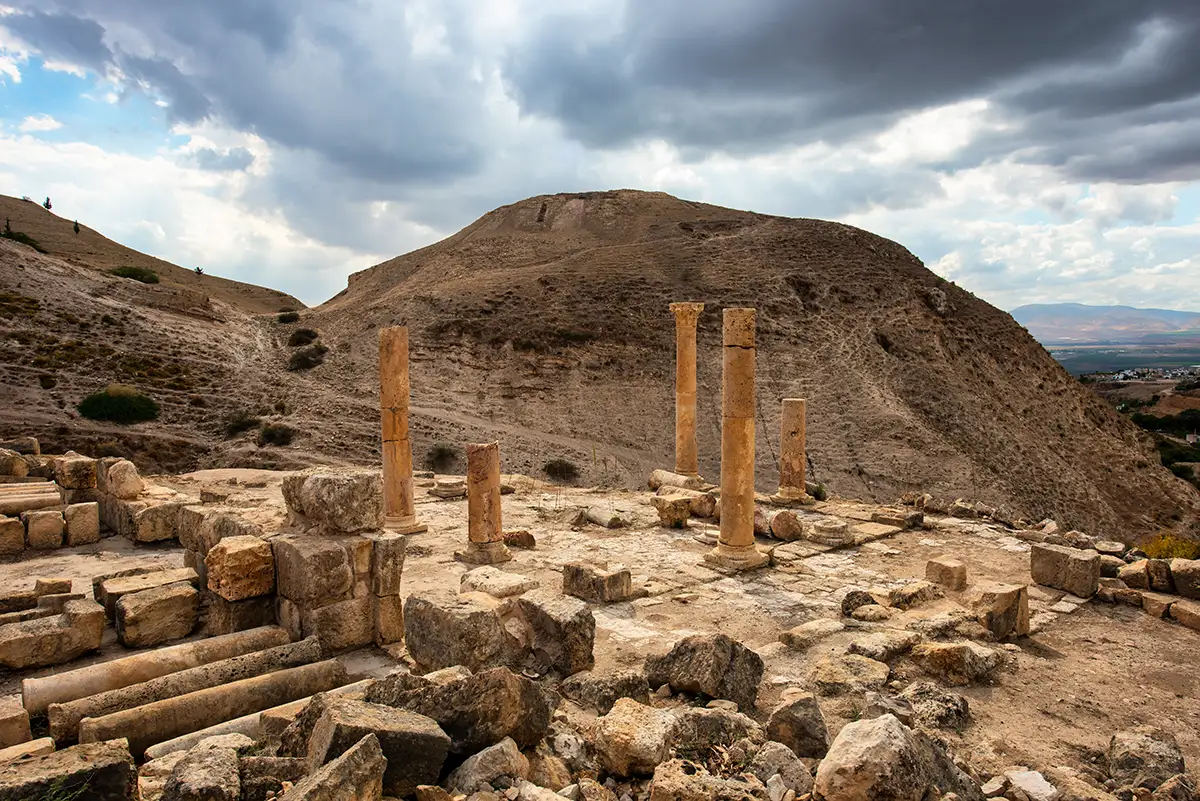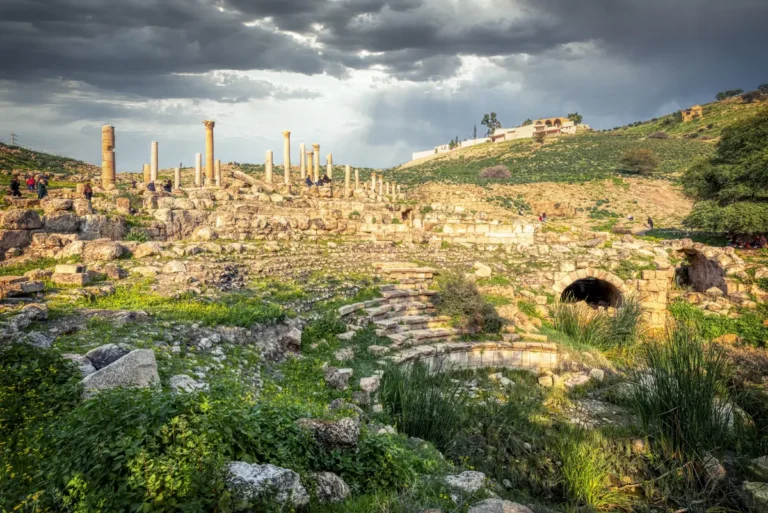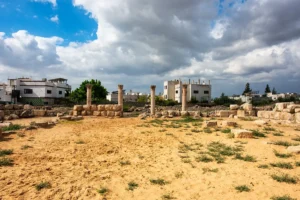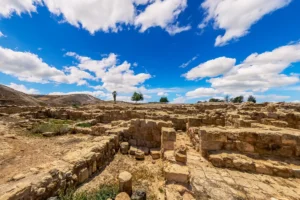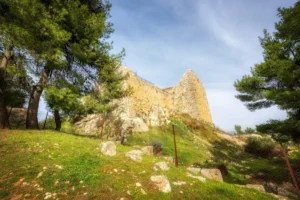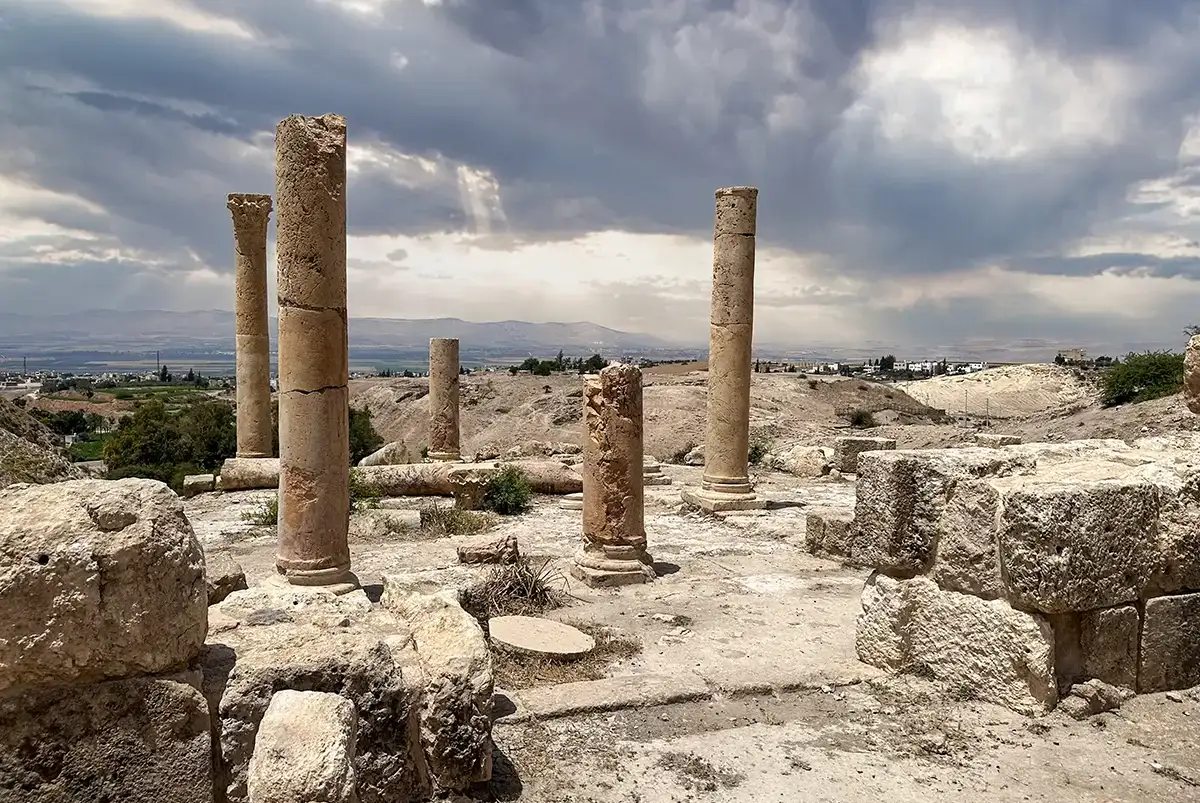
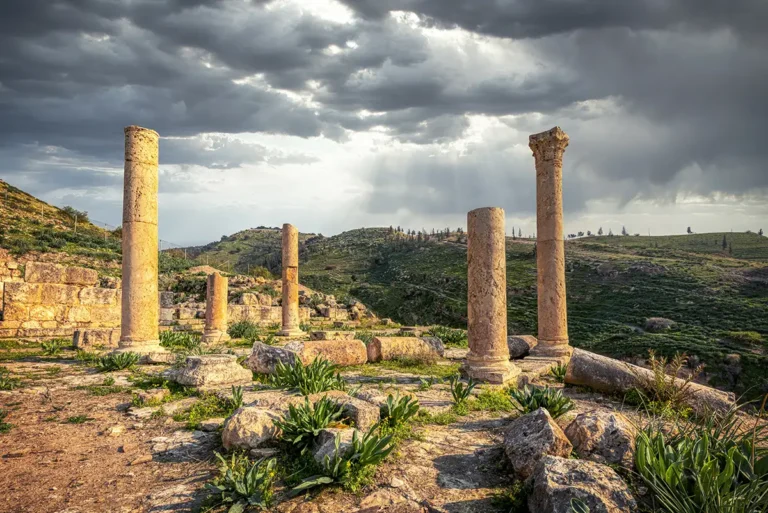
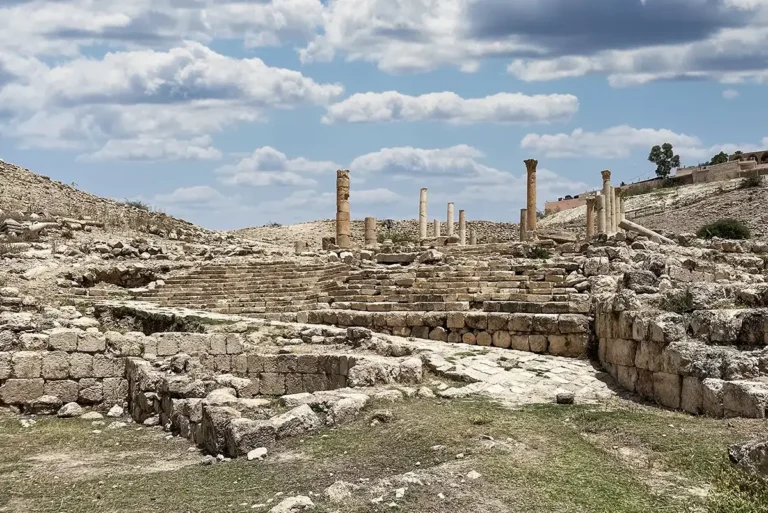
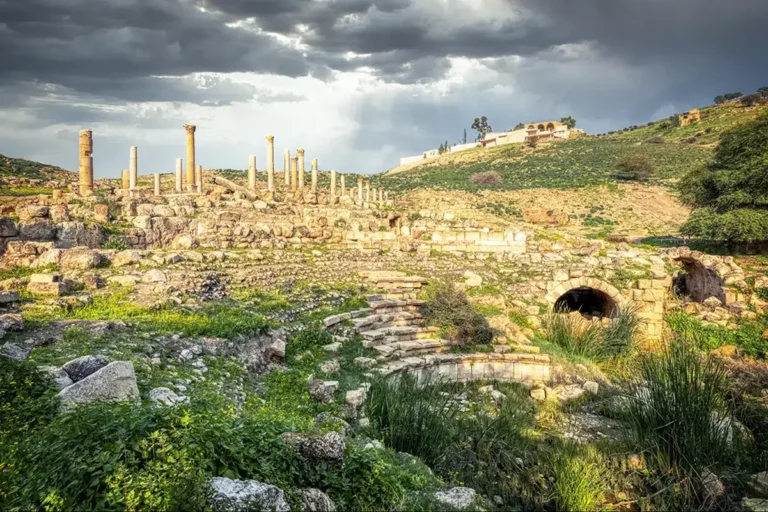

The East Church is one of the three large triapsidal churches of Byzantine Pella. It stands on the slope above the city, and its plan is unusually well recorded: a western atrium with a hexagonal pool, a nave divided from two aisles by seven columns on each side, and a raised chancel with a sealed reliquary.
Where Is the East Church?
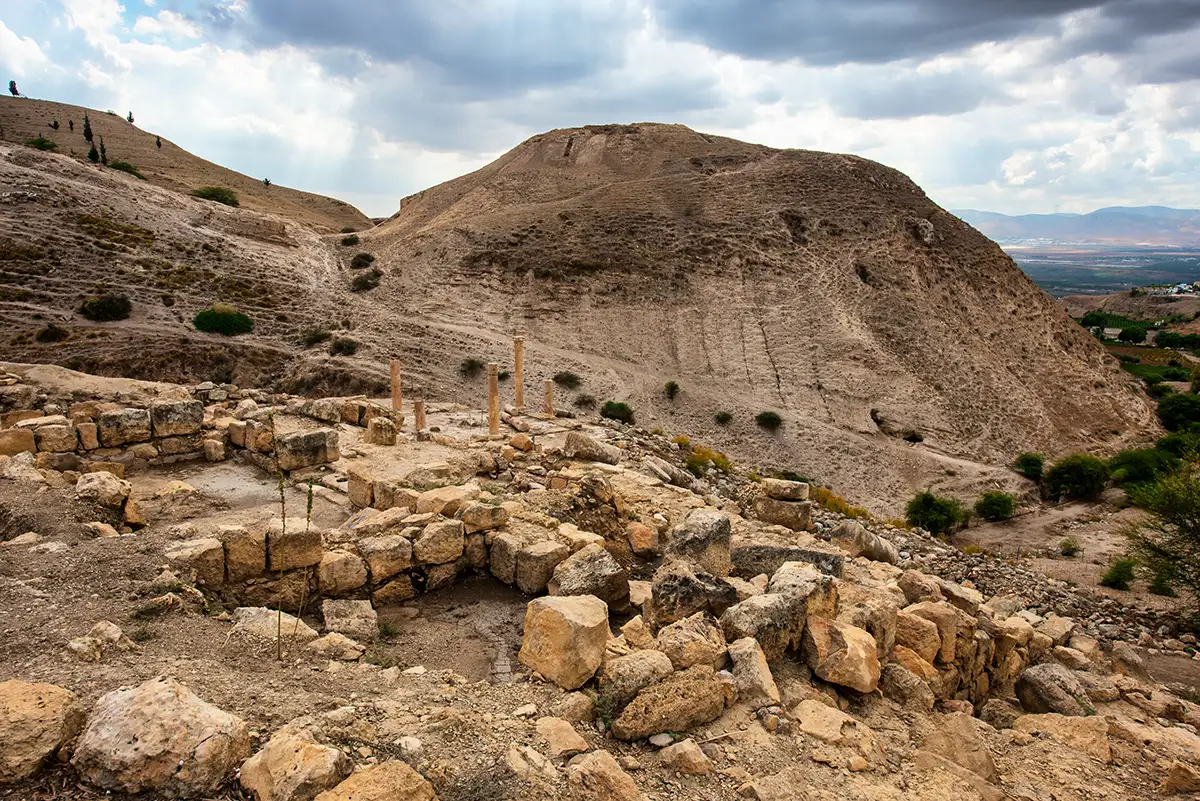
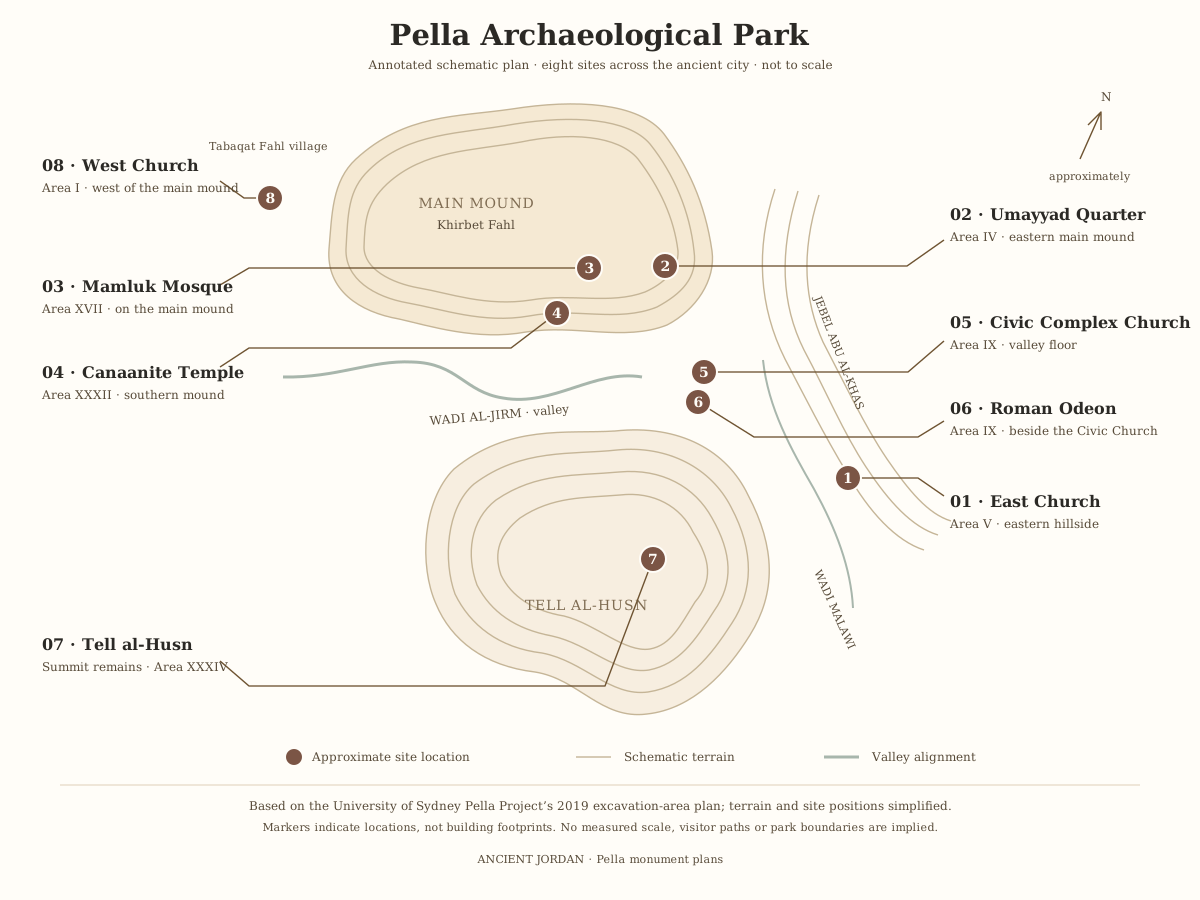
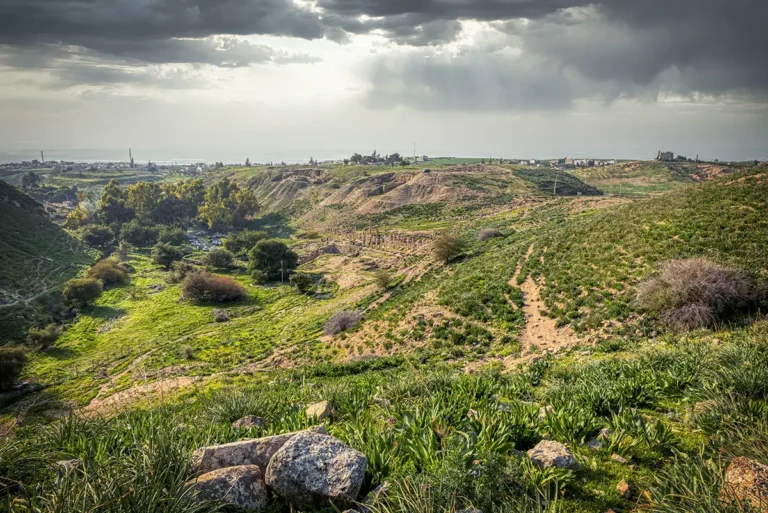
The East Church stands on the lower slope east of the valley, above the civic centre of ancient Pella and near the modern village of Tabaqat Fahl. Excavators call it Area V. It is a short walk uphill from the valley and a separate building from the Civic Complex Church below and the West Church outside the park.
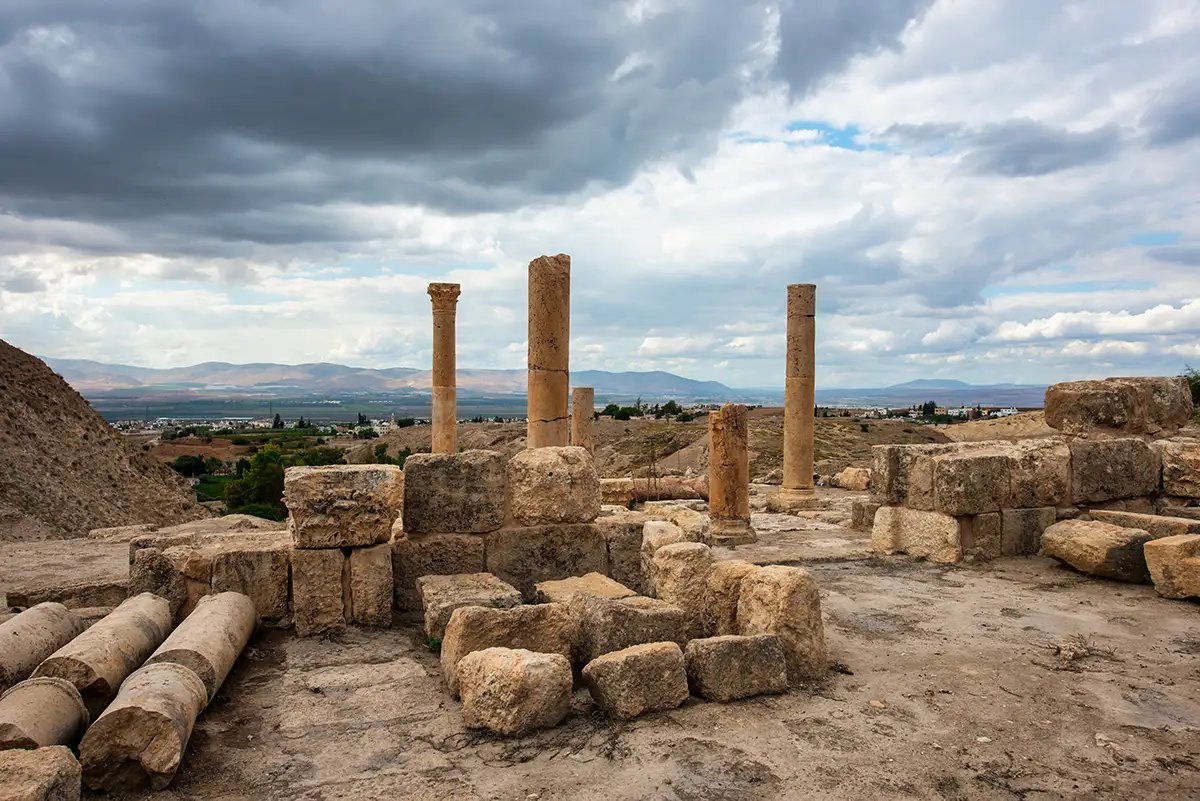
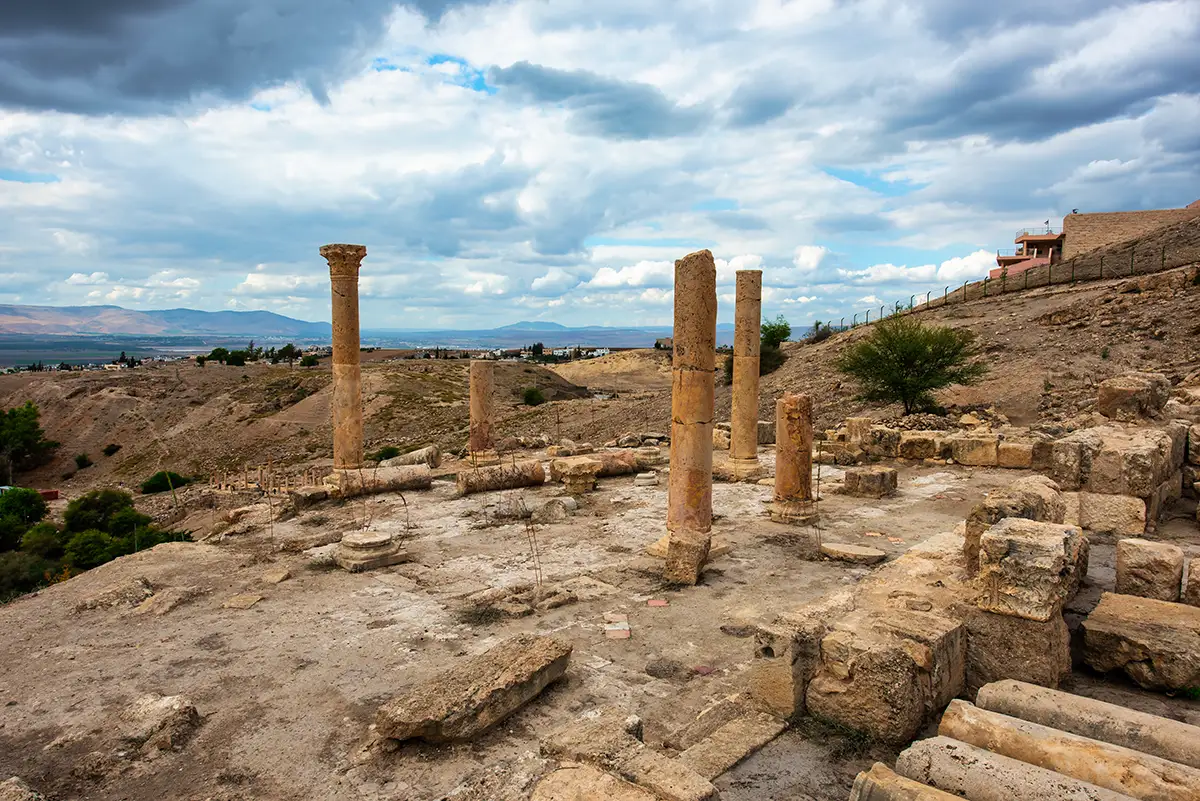
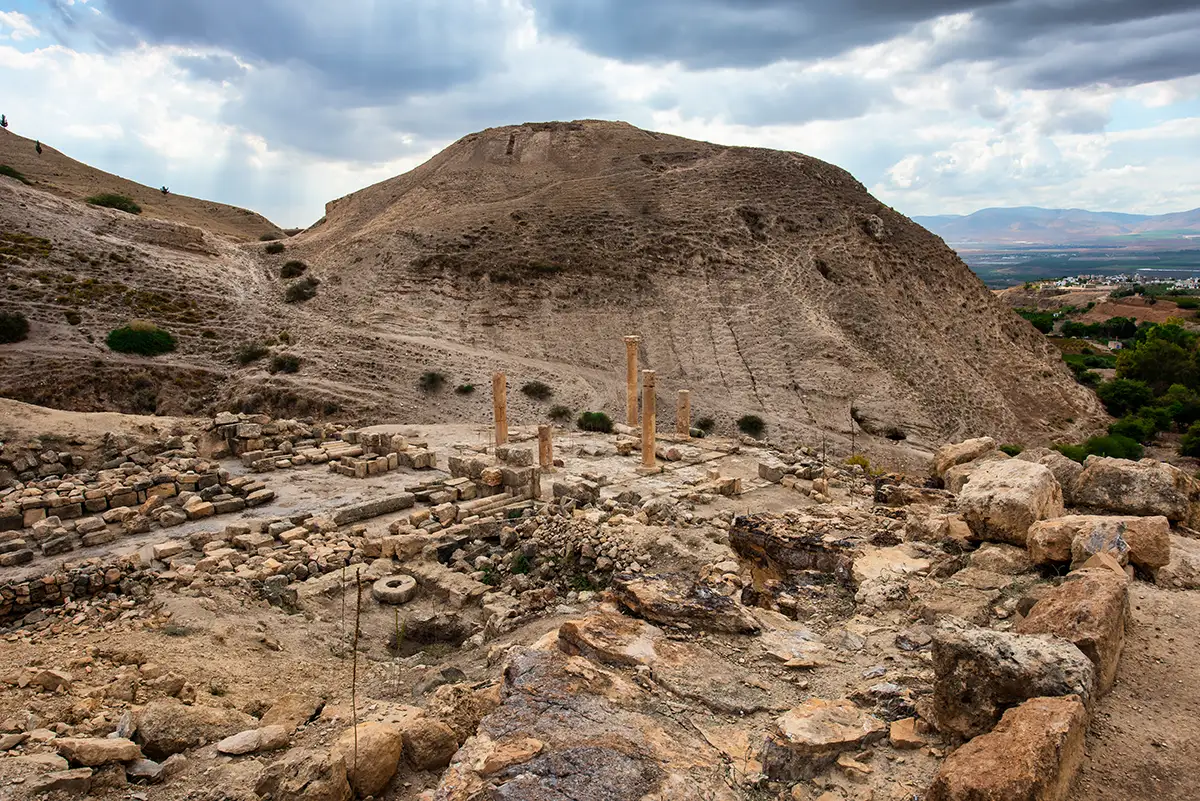
From the church you look across the valley to the main mound in the north and the hill of Tell al-Husn in the south, which makes it one of the best places to read the layout of the whole city.
Historical Context and Origin
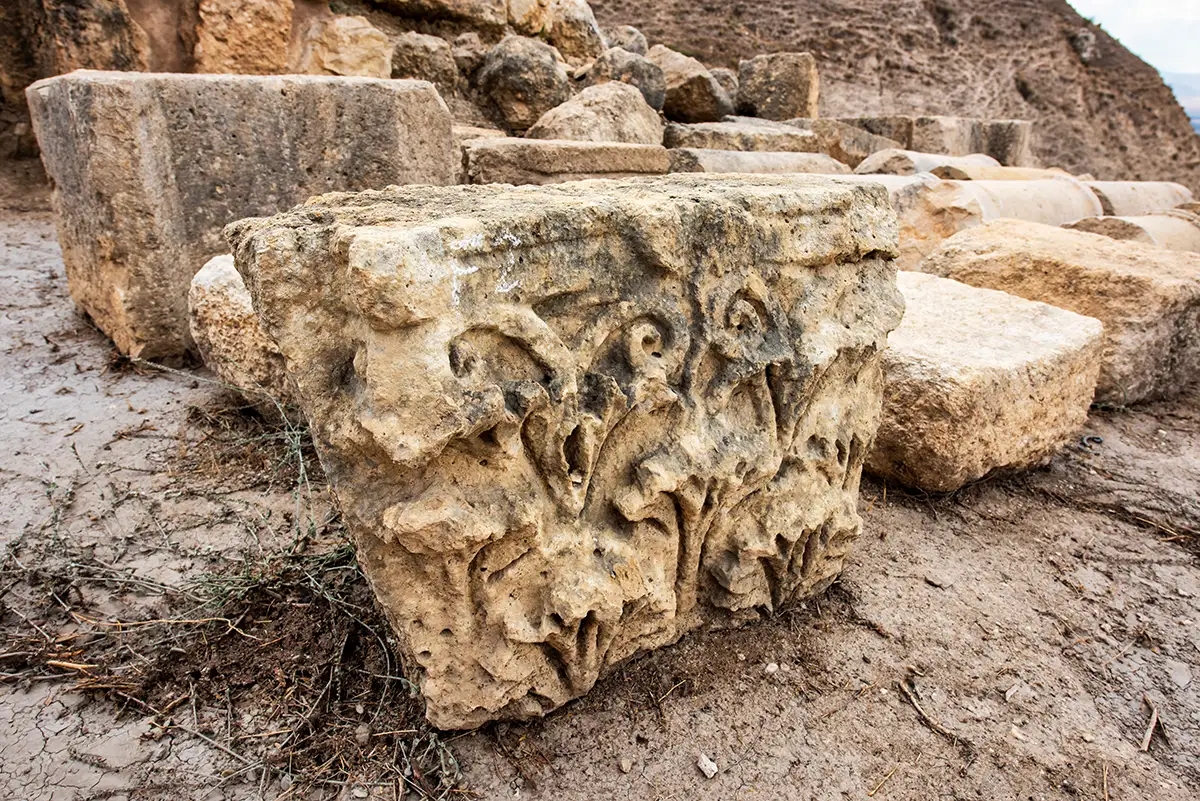
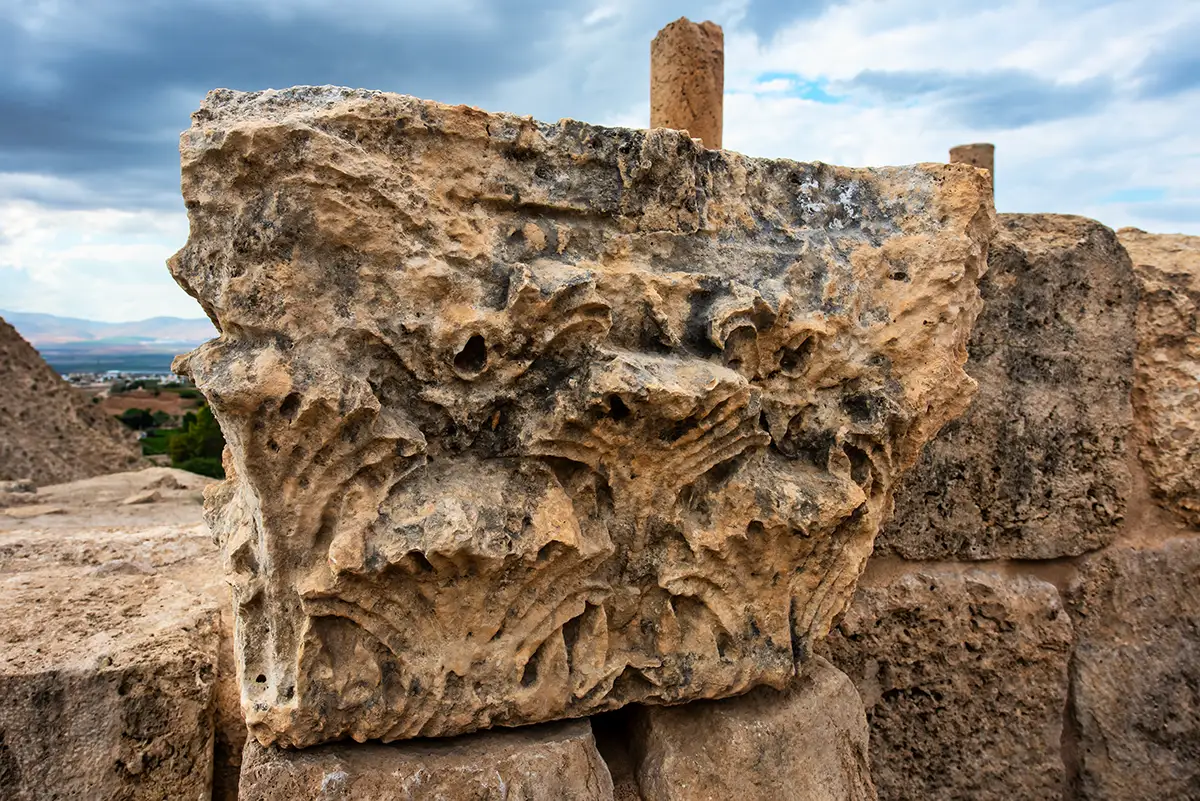
Pella was a bishopric of Palaestina Secunda by AD 451, and by late antiquity churches had become prominent buildings in the city. The East Church’s construction date remains debated. Its excavators placed it at the end of the 5th or the beginning of the 6th century, based on the style of its capitals, while a later architectural study proposed around the middle of the 6th century.
Pella also holds a place in Christian tradition. The 4th-century historian Eusebius wrote that Christians left Jerusalem for Pella before its destruction in AD 70, but archaeology has not confirmed their presence, and the church was built centuries later.
Architectural Design
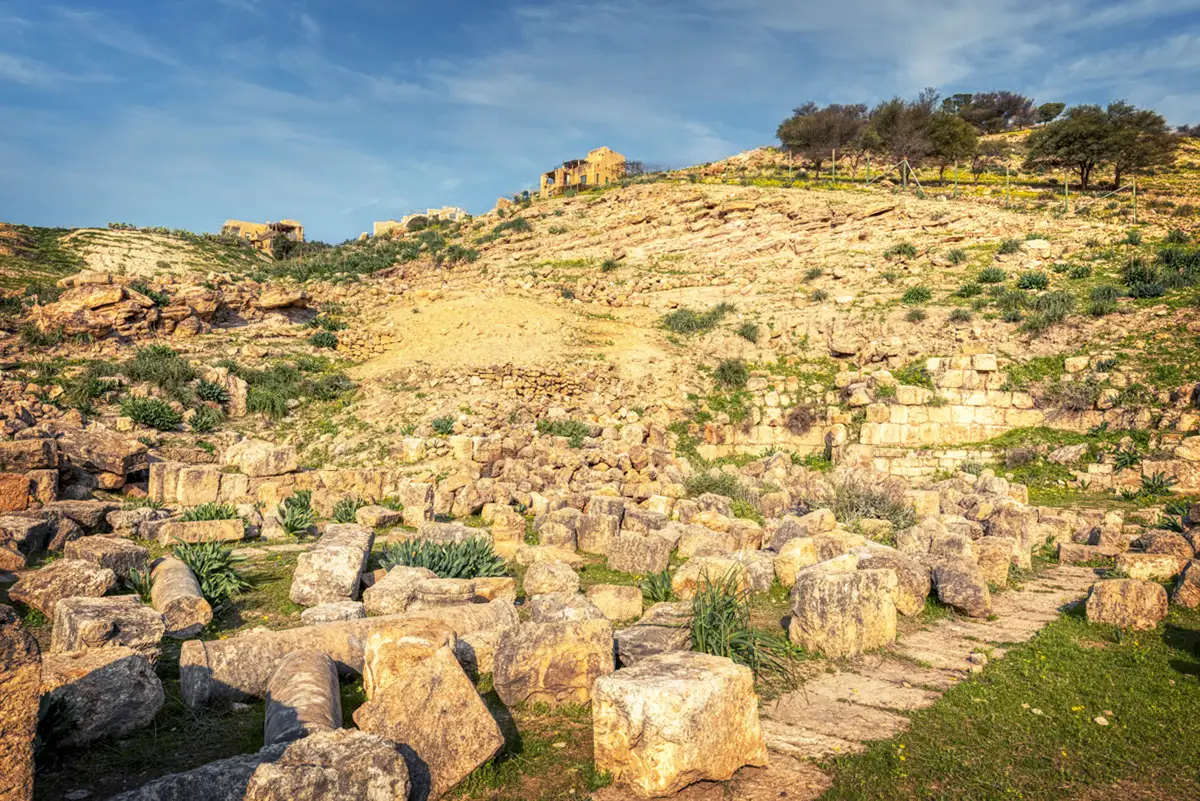
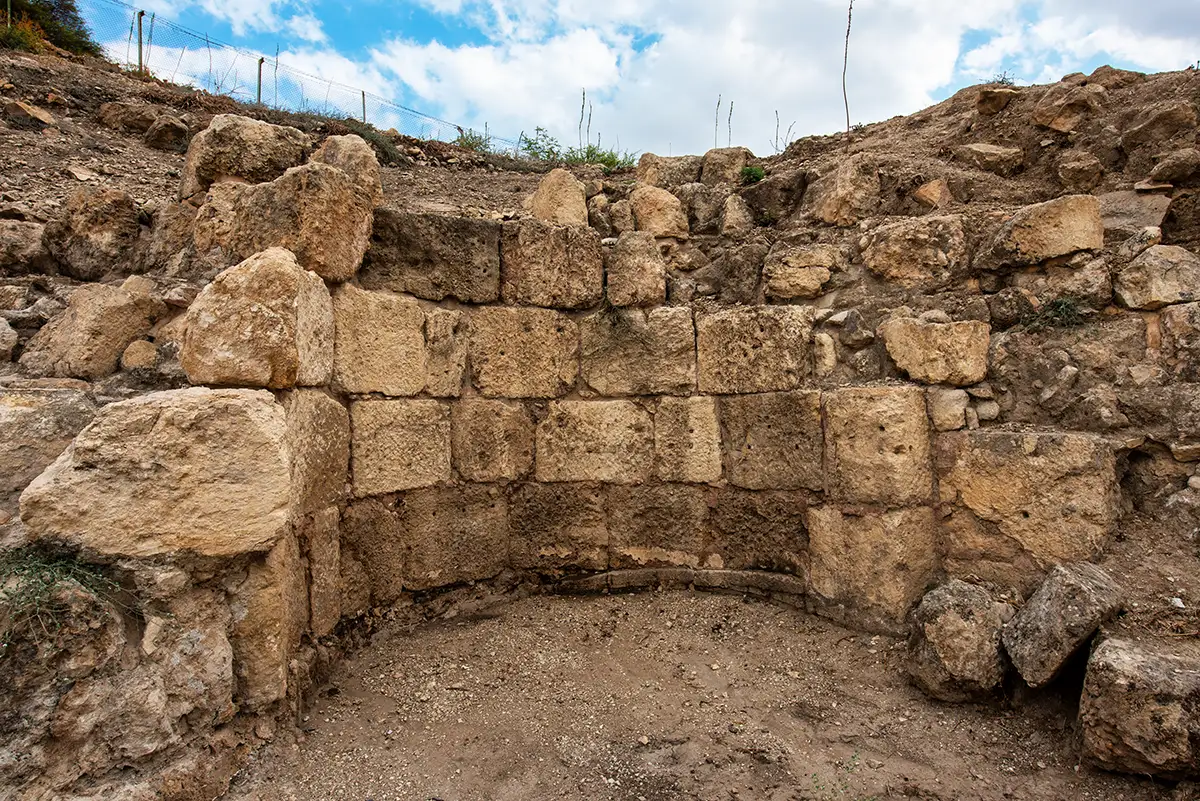
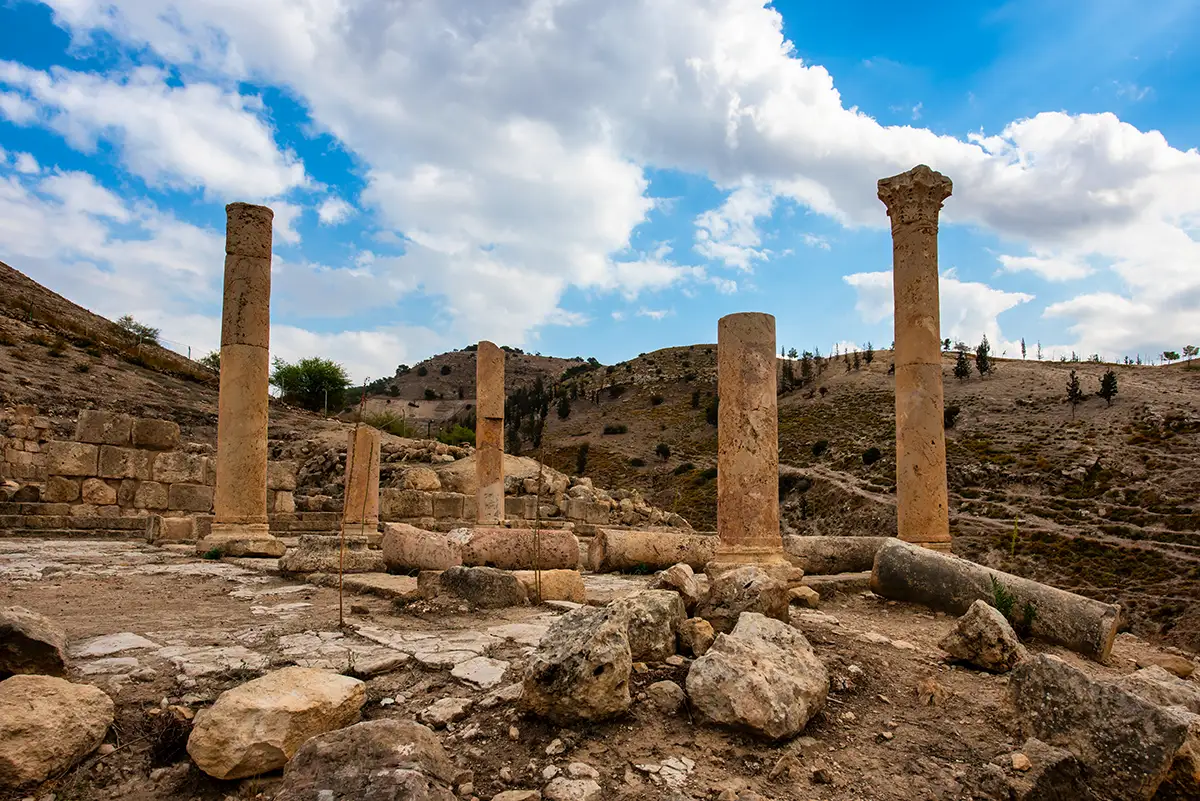
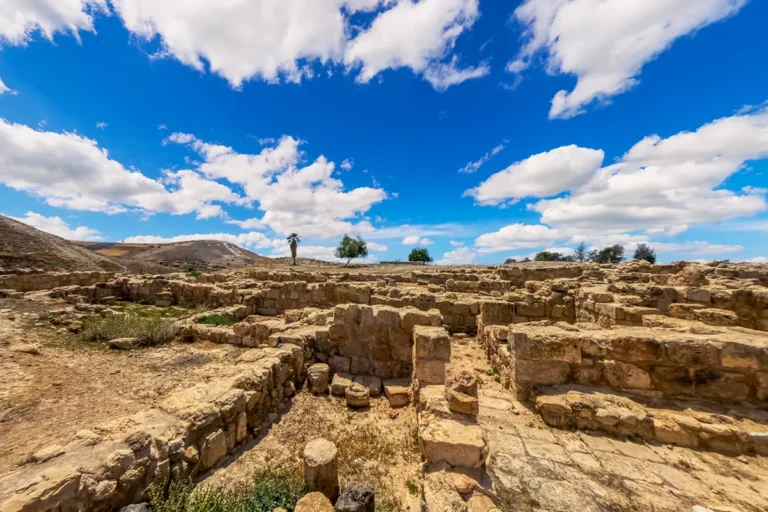
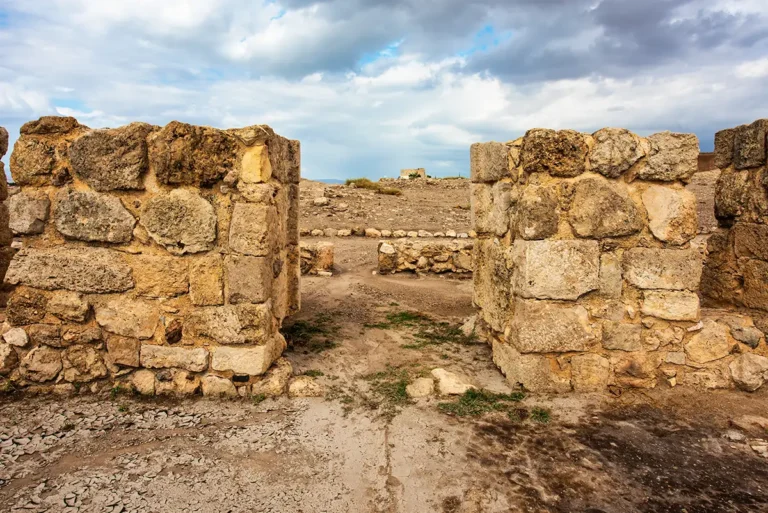
The church is a basilica 28.2 m (92.6 ft) long, not counting the atrium, and about 15.6 m (51.2 ft) wide inside, narrowing slightly towards the east. Two colonnades of seven columns, about 2.6 m apart, separate the central nave from the aisles. The east end has three apses: the central one projects beyond the outer wall, the south apse lies within it, and the north apse was not excavated and is inferred from the plan.
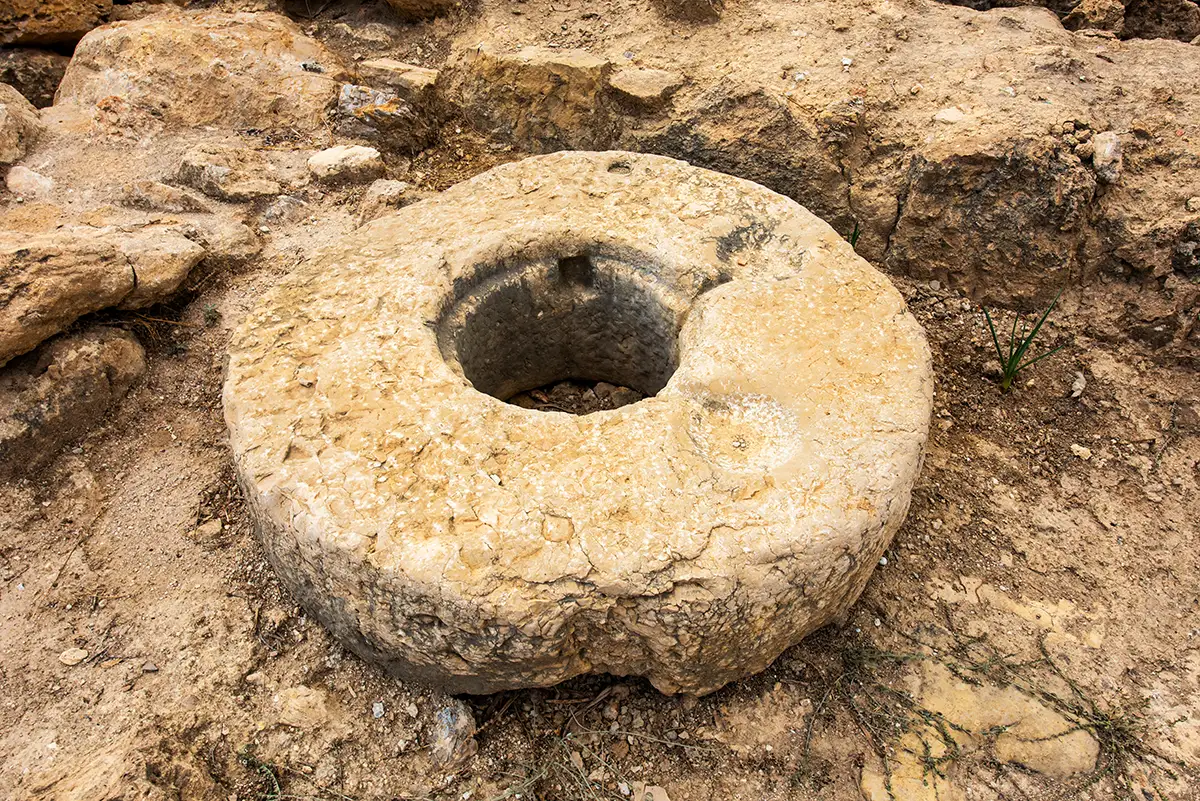
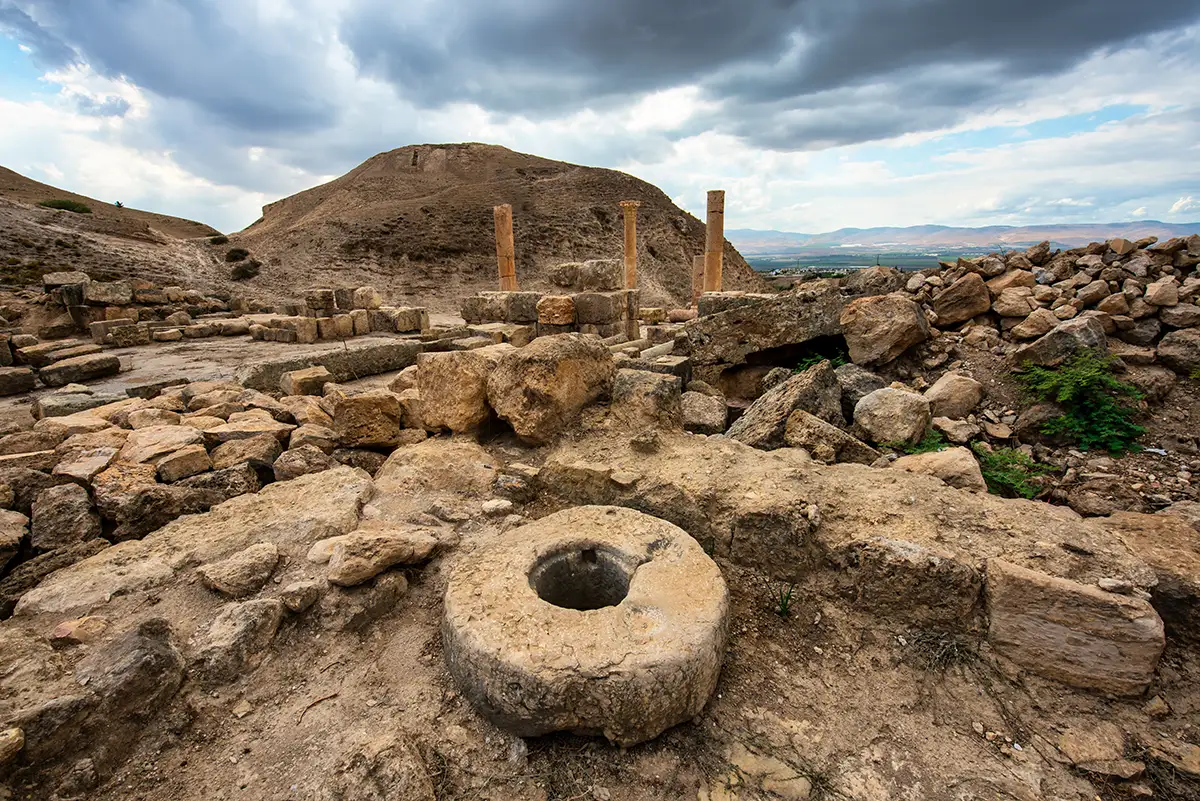
In front of the church lay an atrium with a hexagonal pool at its centre. Its purpose is uncertain: it may have been used for baptism or for washing before entering the church, so it is best described simply as a pool.
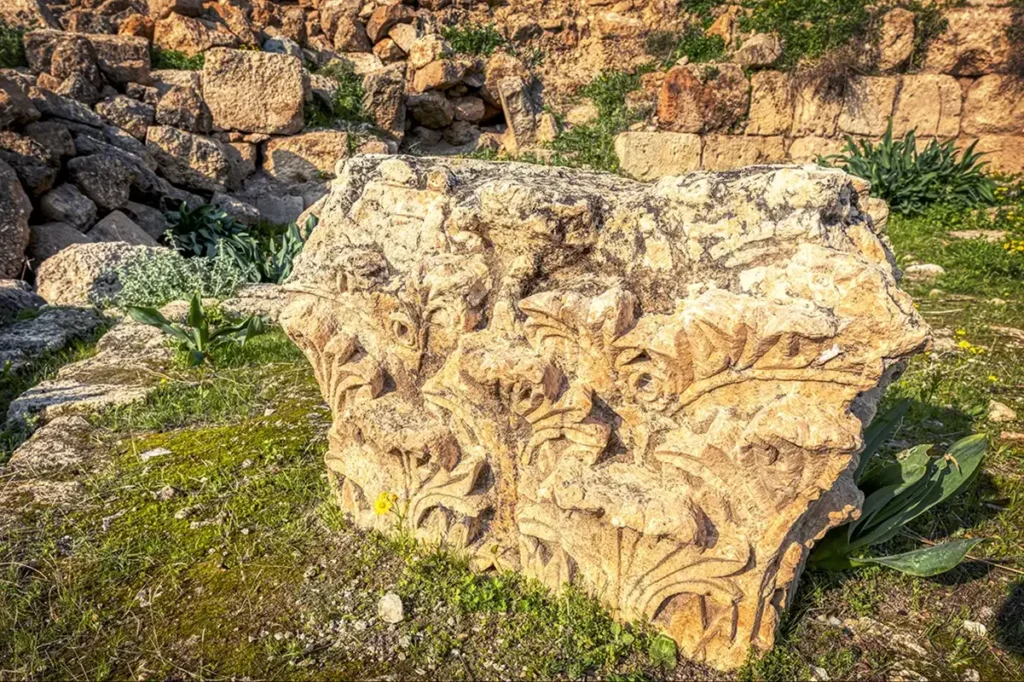
Hexagonal Pool
A hexagonal pool at the centre of the atrium; it may have been used for baptism or for washing, and its purpose is not settled.
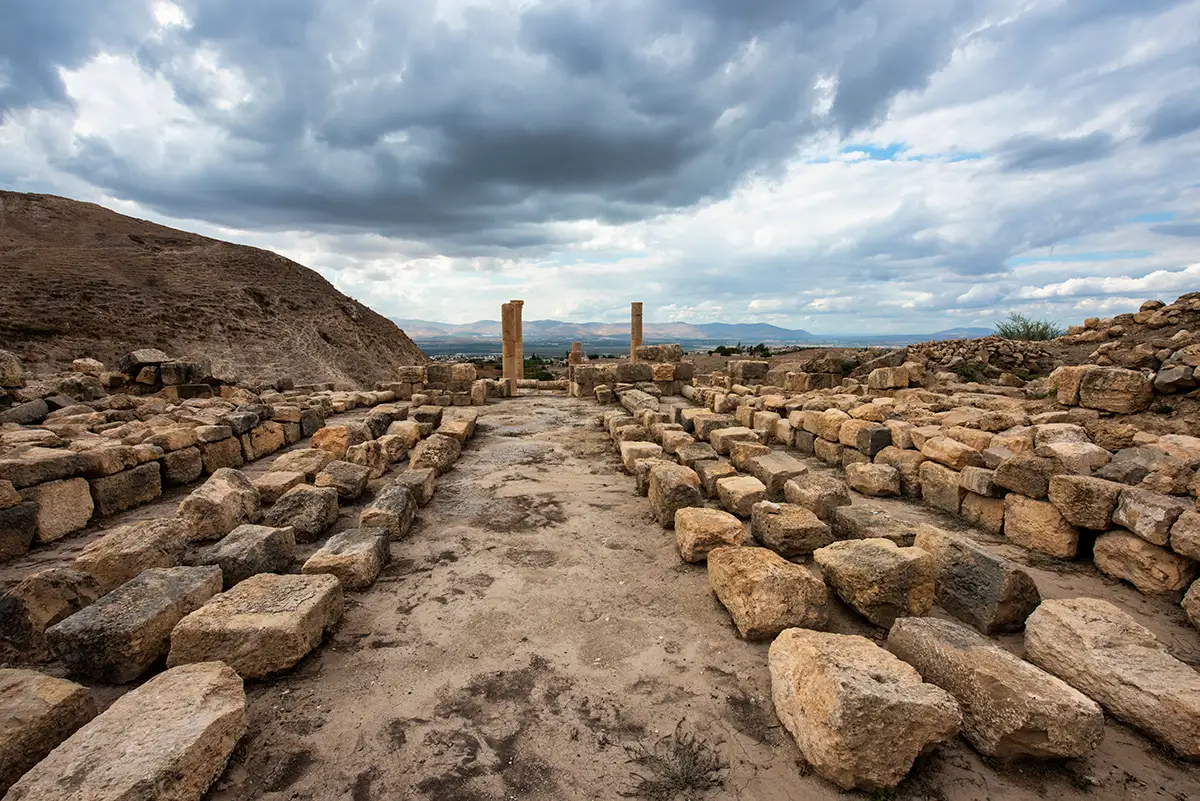
Two Colonnades
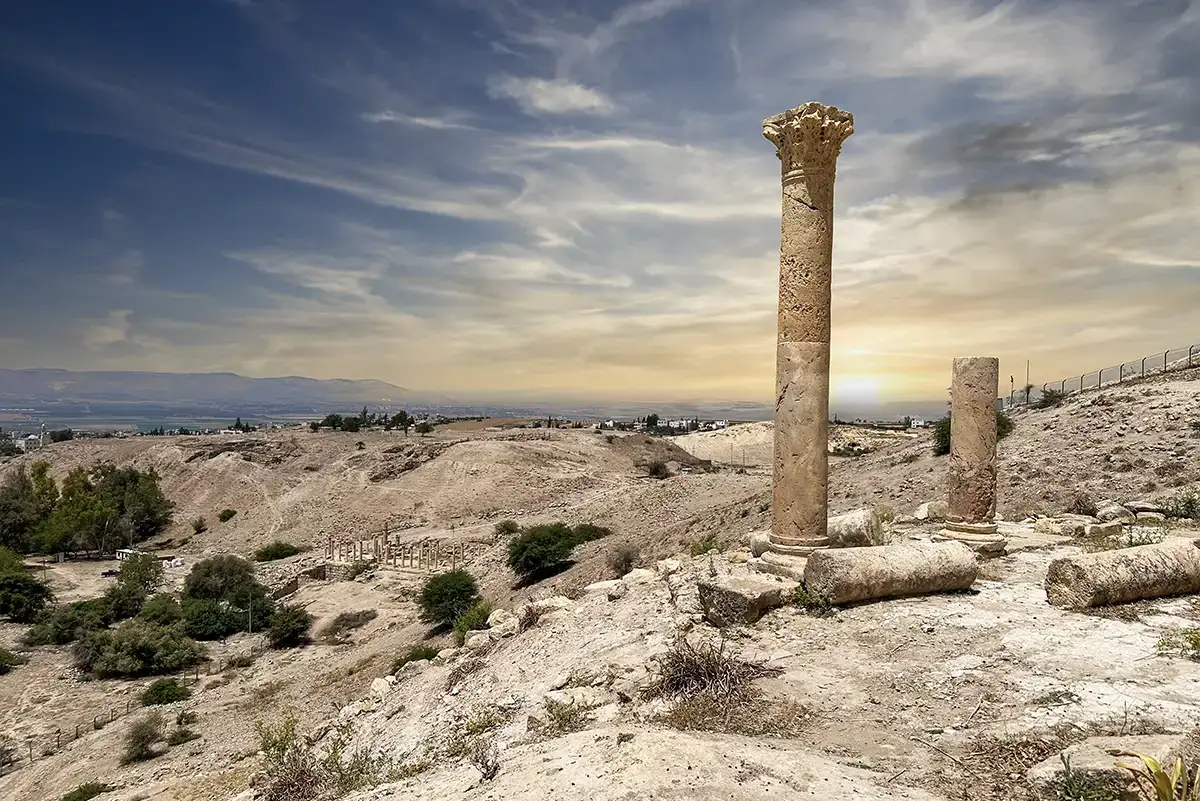
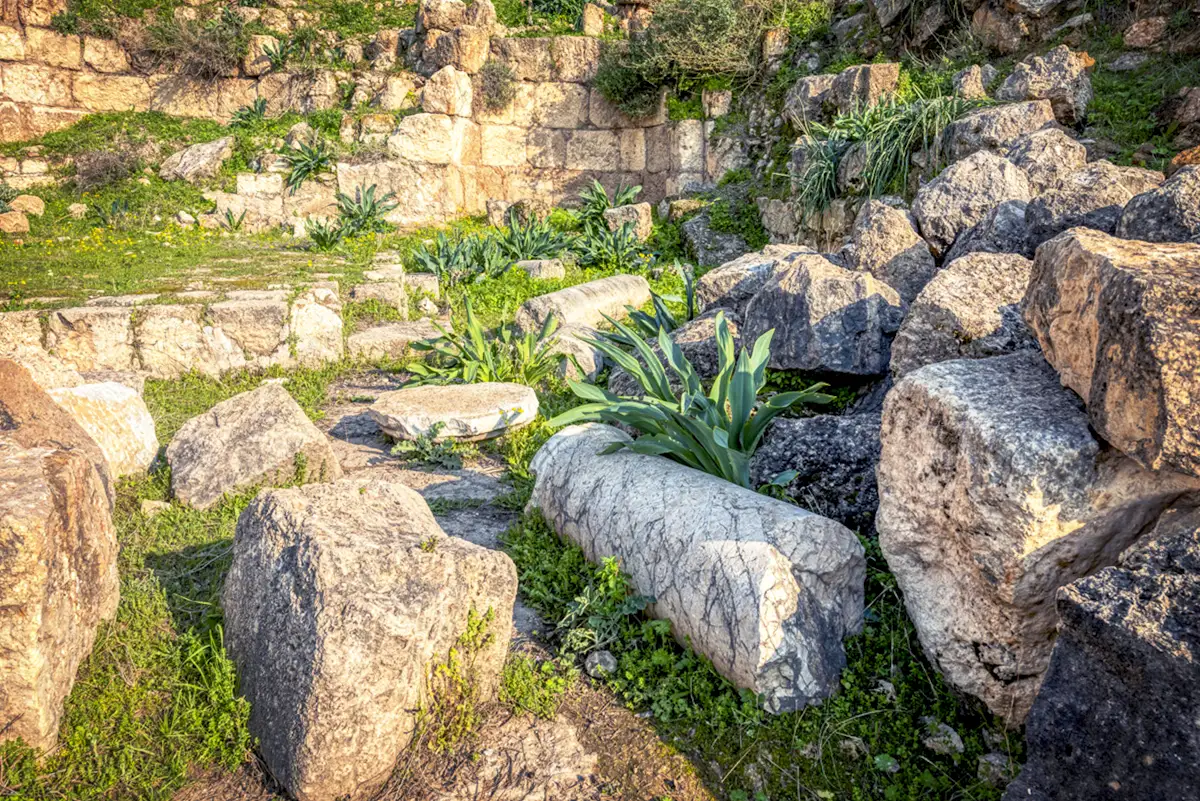
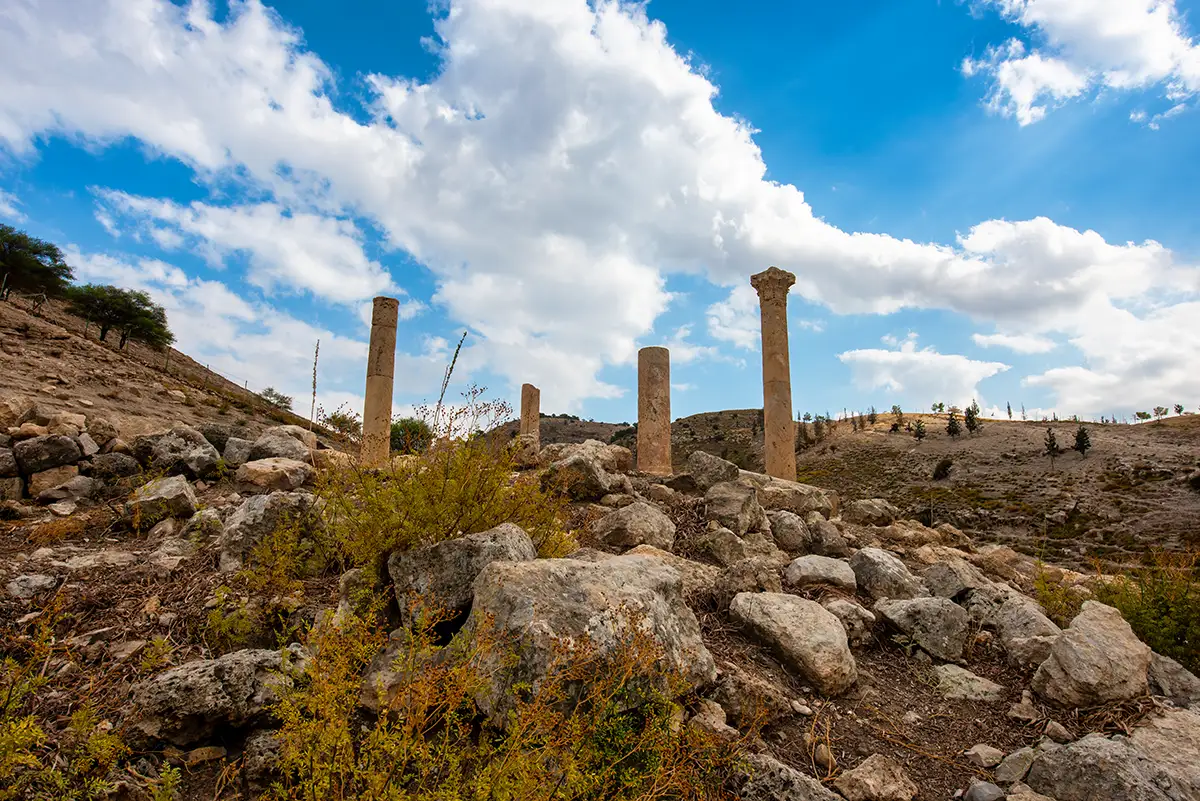
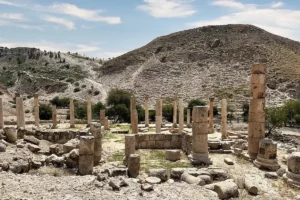
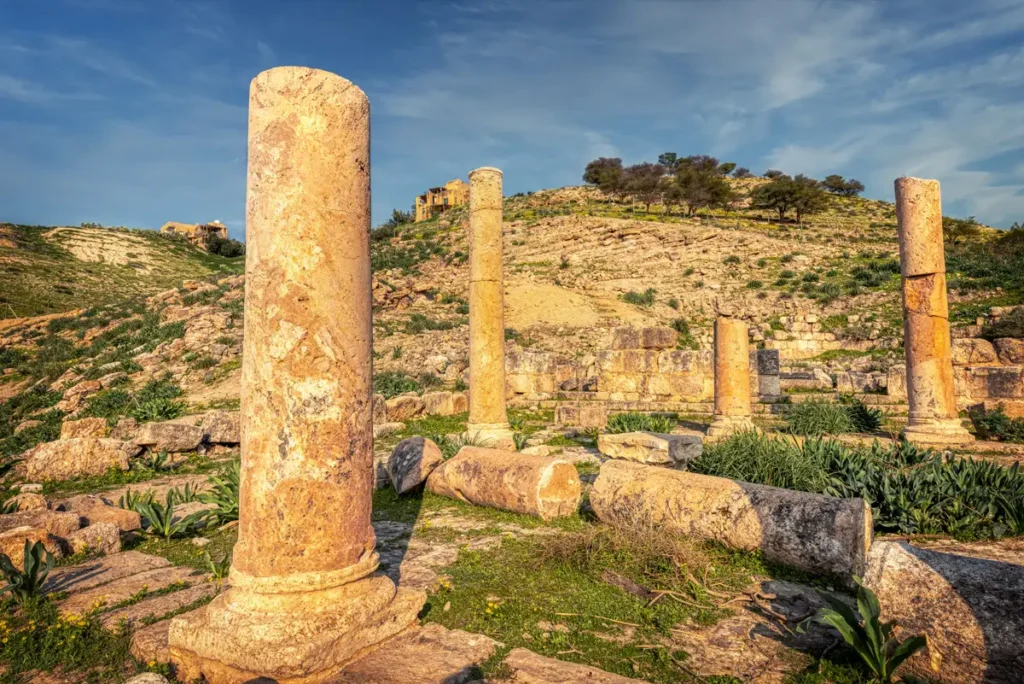
Seven columns on each side of the nave, about 2.6 m apart, divided it from the aisles; several columns stand today.
Chancel and Reliquary
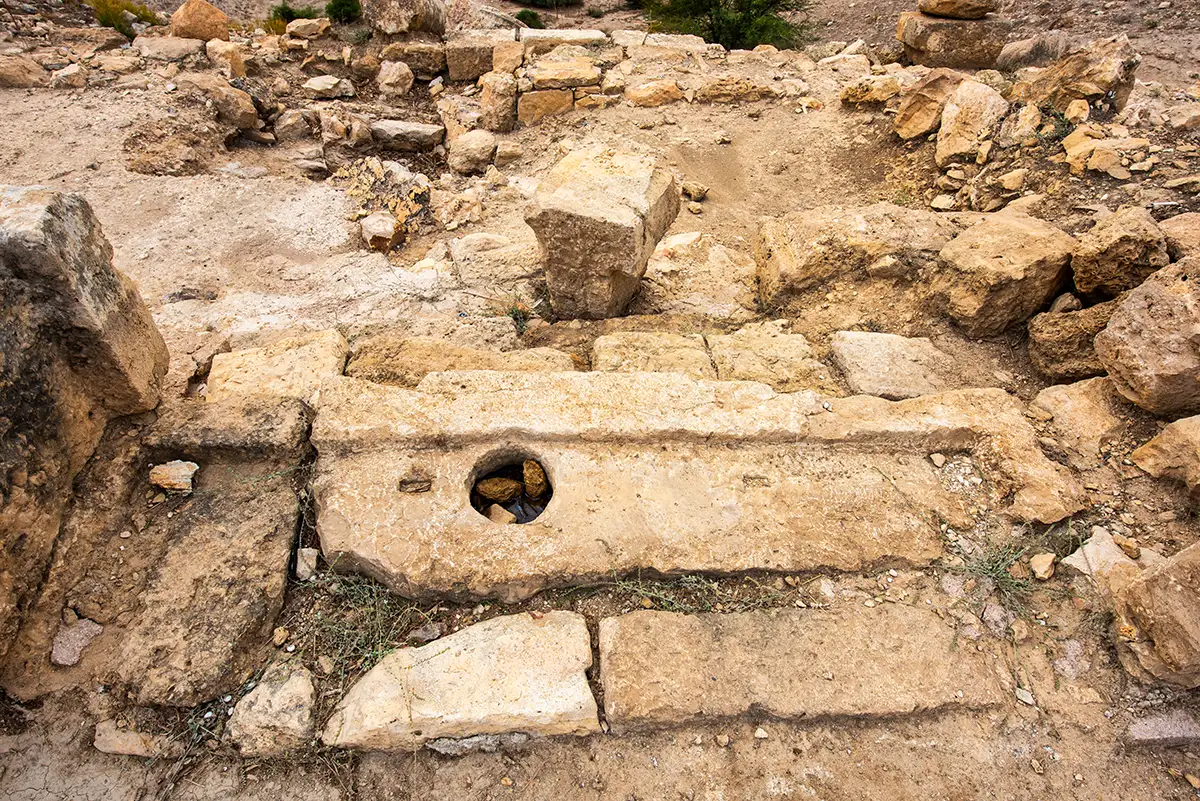
A raised chancel with a screen on colonnettes. The top of a reliquary container was left in its centre when the church was robbed.
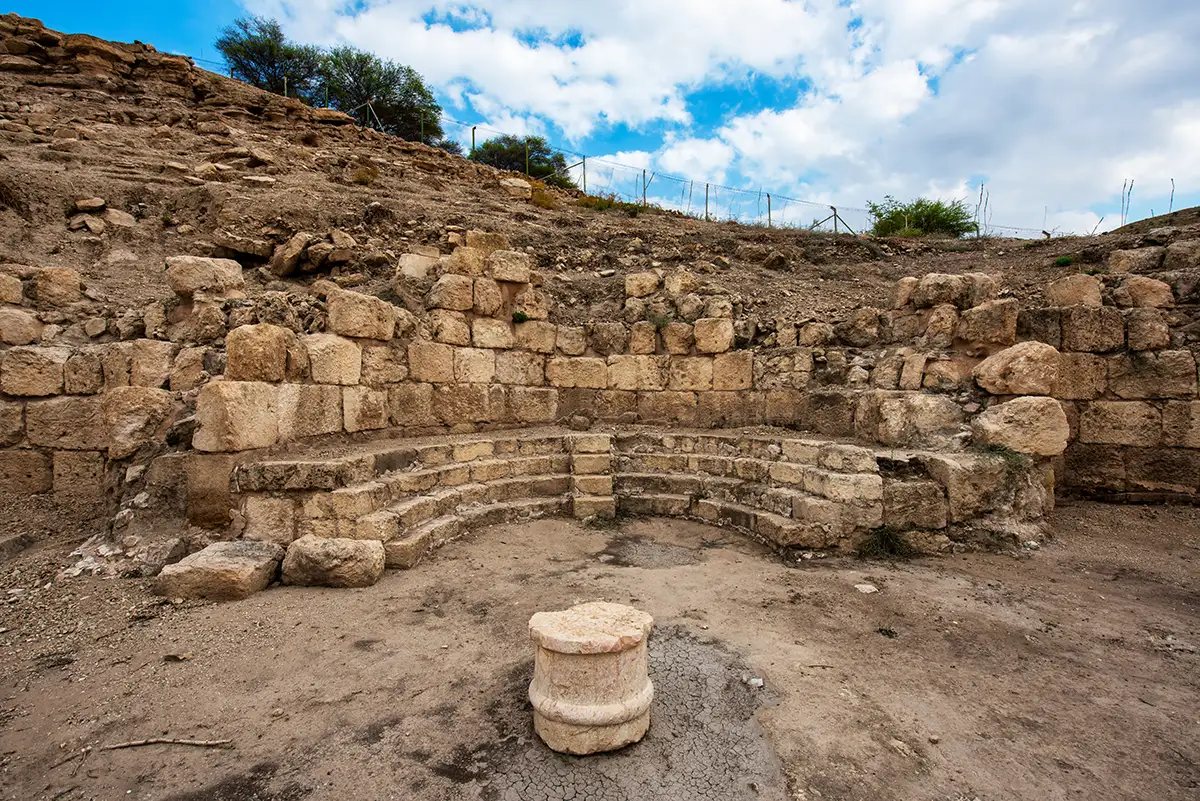
Central Apse
The central apse projects beyond the outer wall, and the stepped seating of the clergy still follows its curve.
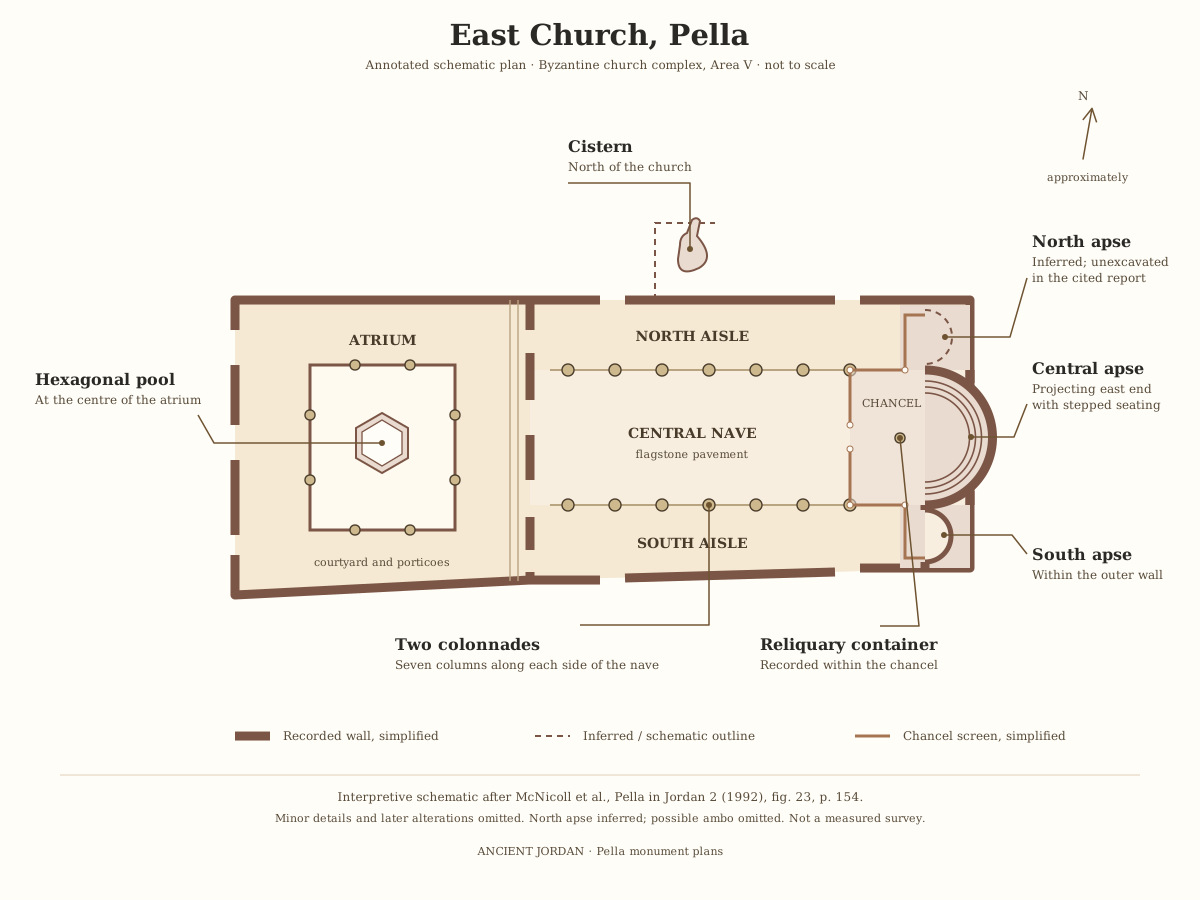
East Church, Pella: schematic plan
Schematic plan of the East Church complex at Pella, after McNicoll et al. (1992)
Open drawingDestruction, Rediscovery, and Restoration
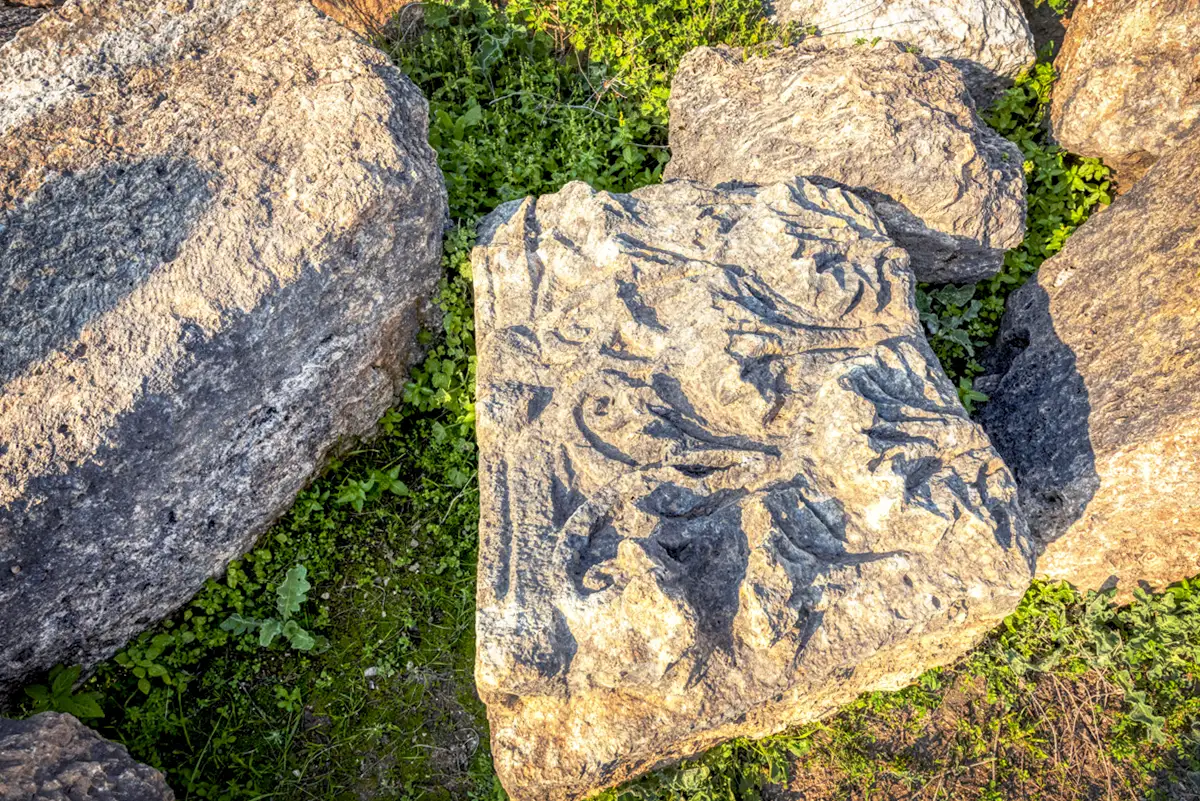
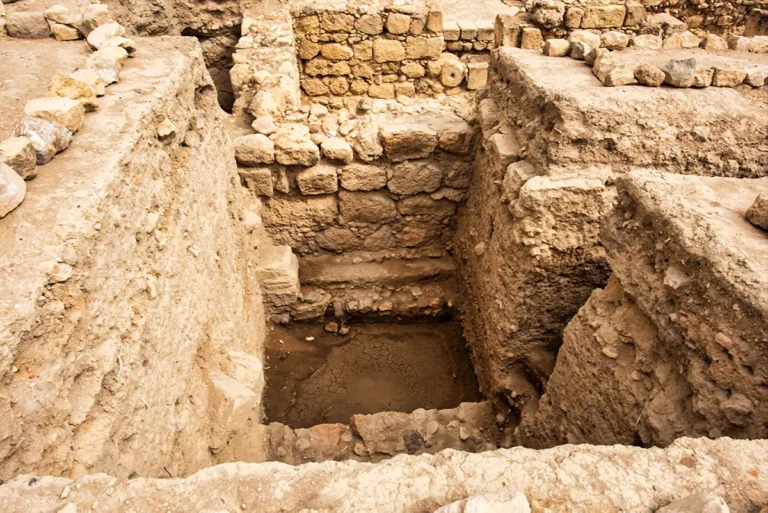
Around the beginning of the 7th century the church partly collapsed and was stripped of fittings and wall veneer. Later it was repaired on a reduced scale and used until the earthquake of AD 749, generally dated to that year, although older publications give slightly different dates. A sealed reliquary container left in the chancel, with rough paving around it, suggests that worship continued in the damaged building.
The University of Sydney and the College of Wooster excavated the church in the Pella seasons from 1979, and the main report, by Robert H. Smith and Anthony McNicoll, covers the 1982–83 seasons. Work in 2011 on a building just to the north showed that it was about as old as the church rather than a Roman temple, as had been suggested. No comprehensive modern reconstruction has been carried out: the church is an excavated ruin, and several columns stand today.
Visiting the East Church Today
The East Church is inside the Pella archaeological park and is covered by the Pella ticket (2 JOD for visitors, 0.25 JOD for residents) and by the Jordan Pass. The park is open daily from 8:00 to 17:00. Wear shoes with a good grip, since the way up is a slope with uneven ground, and bring water and a hat. Do not assume there is a step-free route to the church.
Look first at the standing columns, then trace the nave and aisles to the three apses at the east end and the raised chancel. Leave pottery and stones where they lie and do not climb the ancient walls. About 20 minutes is enough for the church. See our Pella travel guide for tickets, hours and the rest of the site.
Further reading: Northeast Insulae Project — Pella East Church; University of Sydney — Pella Excavations 1967–2023; Biblical Archaeology Society — Excavating Ancient Pella; Smith and McNicoll, “The 1982 and 1983 Seasons at Pella of the Decapolis”, BASOR Supplement 24 (1986).