Qal’at Qatrana
A restored 16th-century Hajj fort and great reservoir beside the Desert Highway
BuiltMid-16th c. AD
ReservoirAbout 70 m square
Location90 km S of Amman
AccessVisitor centre
Introduction
One of the great water stops of the desert for pilgrims travelling from Damascus to Mecca.
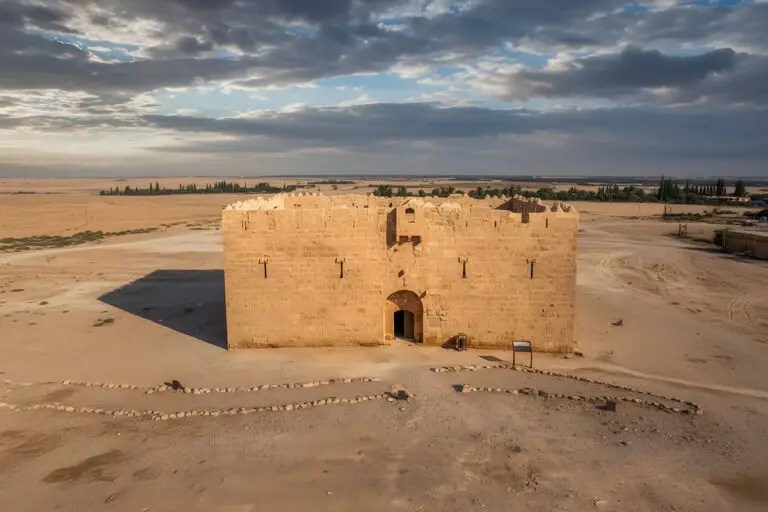
For pilgrims travelling from Damascus to Mecca, Qatrana was one of the great water stops of the desert. Sultan Suleiman the Magnificent built a fort here in the mid-16th century beside a huge reservoir, and today the restored fort is the most accessible of Jordan’s Hajj forts, right beside the Desert Highway.
A new visitor centre with a ticket office and information stands welcomes visitors, and entry is currently free. Explore the two floors of the fort, look out over the great reservoir and walk to the Hejaz Railway station nearby. It is an easy stop on the way to Karak, Petra or Aqaba.
Best timeAll year · mornings
Time needed30 min
TicketFree
From Amman90 km · 1 hr
Combine withQasr Bshir · 25 min
Google rating4.9 · Reviews
Highlights · A Hajj fort
A fort, a reservoir and a railway
Five things to look for at Qatrana
Qatrana is compact and restored. These are the places that make the visit.
 01 / 05
01 · Defence
The fort
The fort
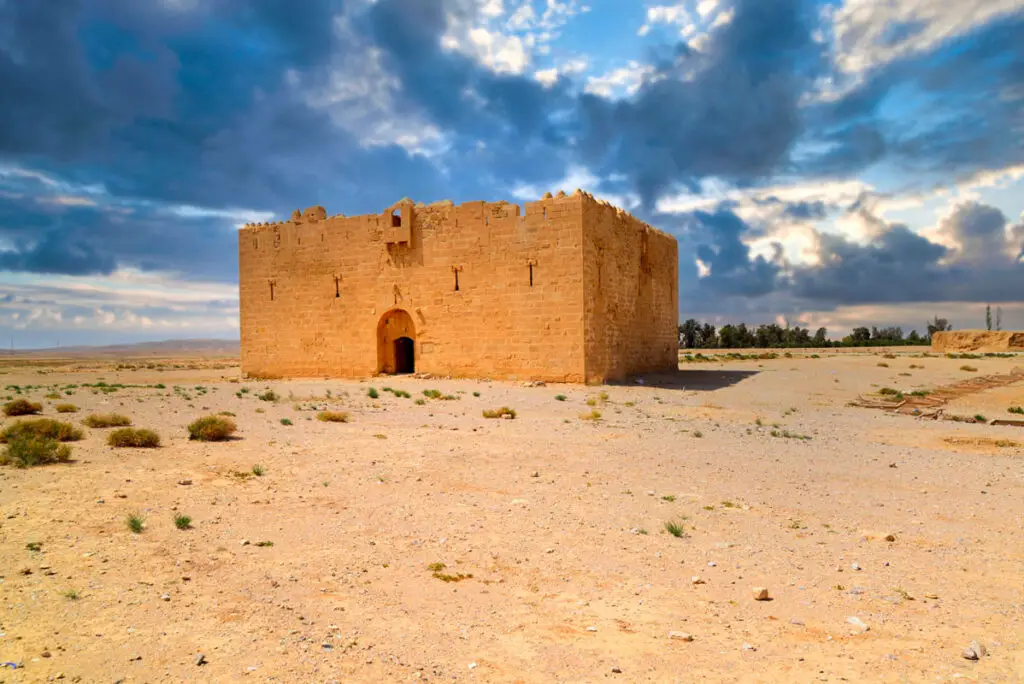
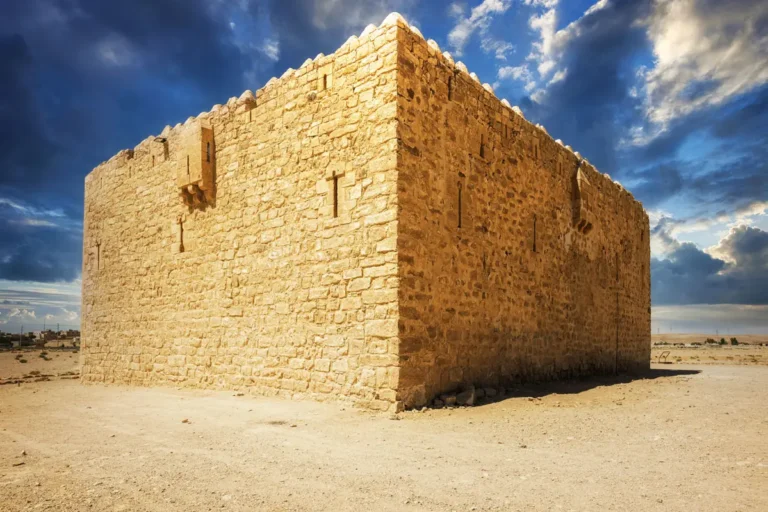
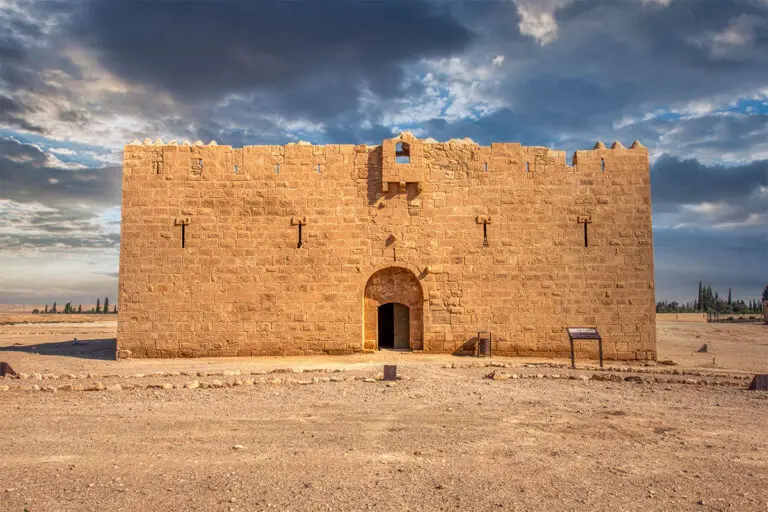
A compact two-storey fort of limestone and basalt, about 22 × 17 m and 10 m high.
Look closely
The gate in the middle of the south wall.
1 of 5
Part by part
What to see
Four parts of the visit: the fort, the inside, the great reservoir and the railway station. Pick one to see what to look for.
1 / 401 · Limestone and basalt
Walk round the fort
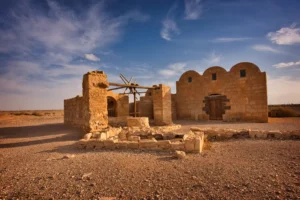
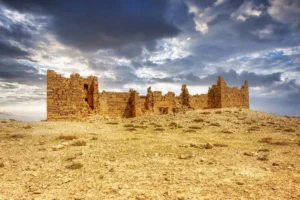
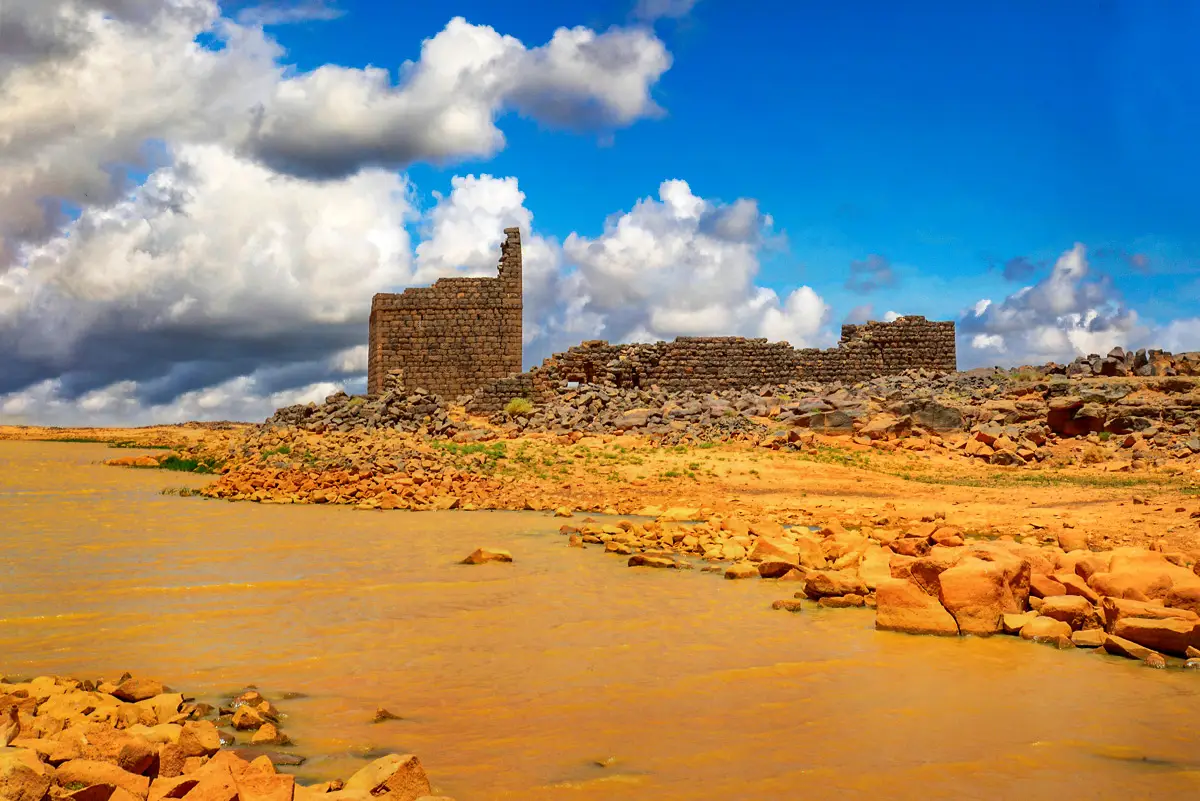
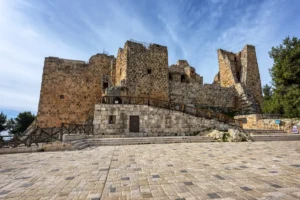
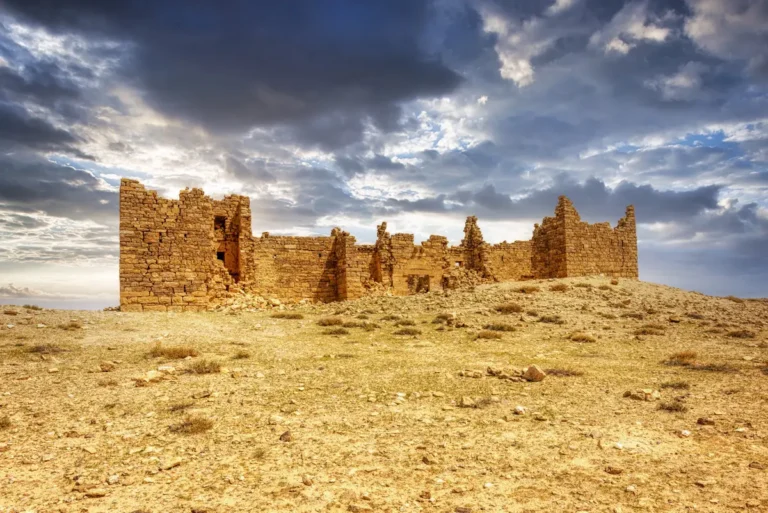
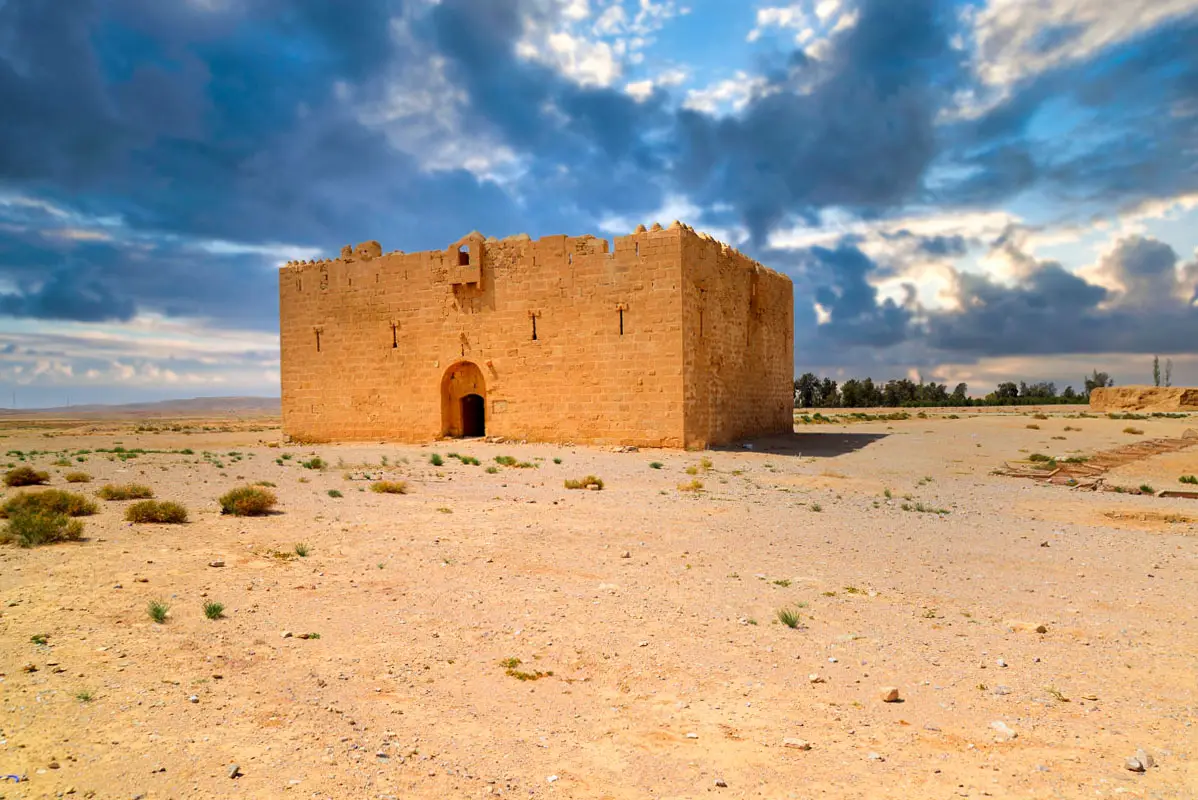
The fort is a compact rectangle of about 22 × 17 m and about 10 m high, built of limestone and basalt and plastered inside and out. Its gate is in the middle of the south wall.
Crenellations crown all four walls, the walls are pierced by arrow slits, and stone box machicolations, added in the 18th century, project over the gate and walls.
About 22 × 17 m10 m highRestored
Look for
- The gate in the south wall
- The box machicolations
- Arrow slits in the walls
Dig deeperOlder than the fort
Qatrana was a station on the Syrian Hajj road long before the fort: a writer of 1520 describes a khan here, already partly ruined. Sources give both 1531 and 1559 for the construction of the present fort.
 1 / 5
02 · Two floors
Explore inside
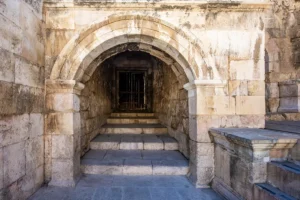
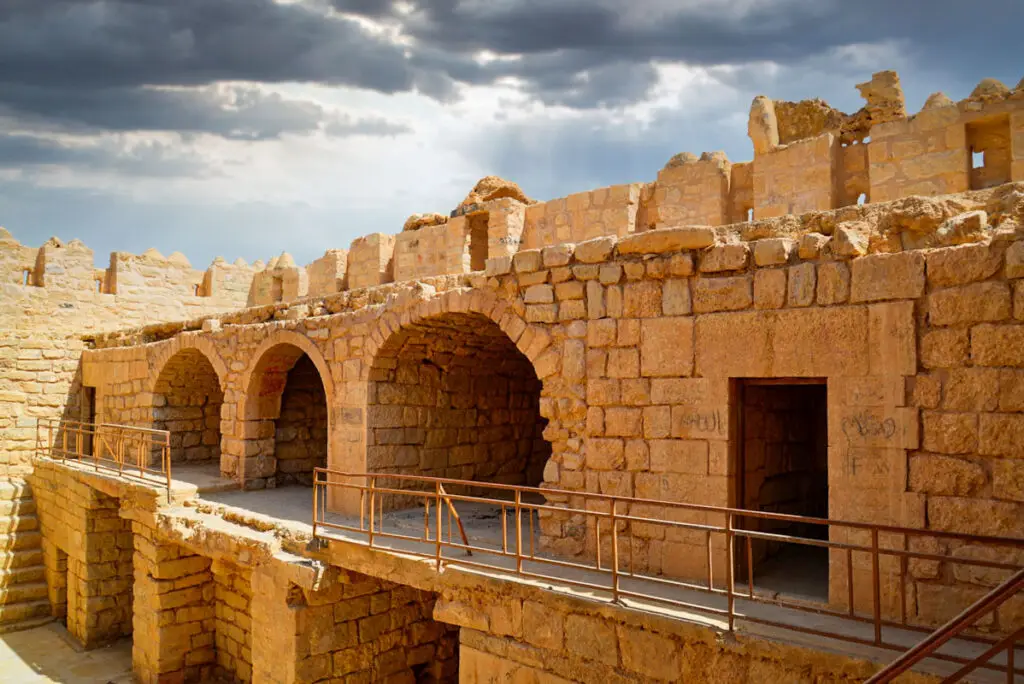
The gate leads through a vaulted vestibule into a narrow courtyard. Eight rooms surround the courtyard on the ground floor and seven on the first floor, with a stair to the roof.
A well in the courtyard drew on the same supply as the reservoir outside.
15 roomsCourtyard wellStair to the roof
Look for
- The vaulted vestibule
- The well in the courtyard
- The view from the roof
Dig deeperA raid on the caravan
The Hajj caravans were still vulnerable: in 1757 a Bedouin raid on the returning caravan struck at Qatrana and other stations, and thousands of pilgrims died.
 1 / 5
03 · Water for the pilgrims
See the great reservoir
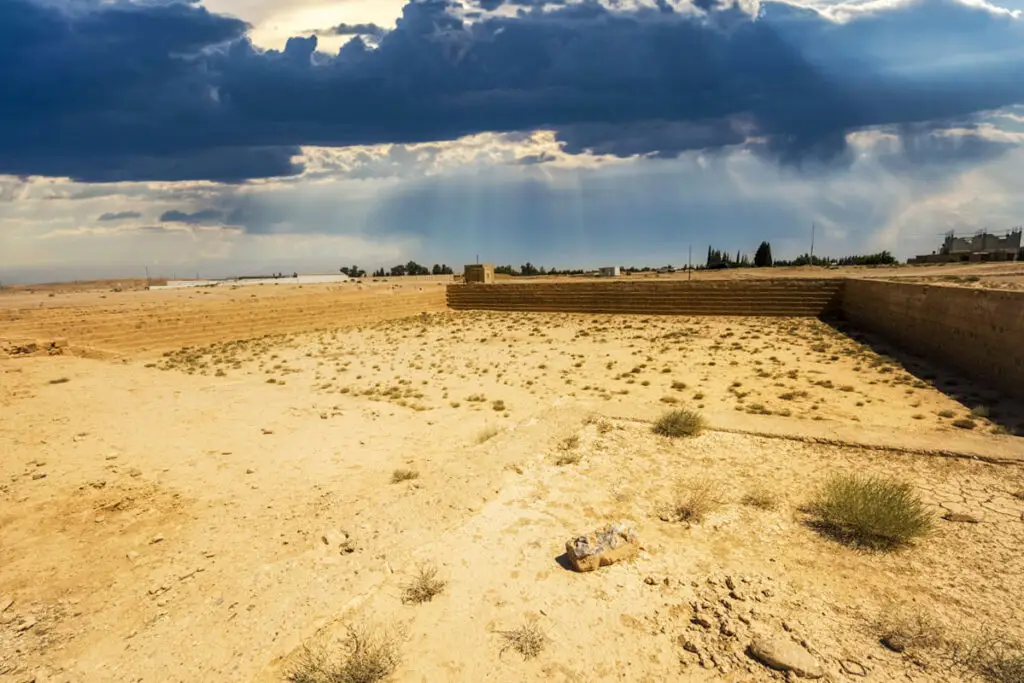
Beside the fort lies a reservoir about 70 m square and over 5 m deep. It was fed by two conduits from an earth dam across the wadis, with a settling basin to clear the water.
The water system may be older than the fort.
About 70 m squareOver 5 m deepTwo conduits
Look for
- The conduit openings in the wall
- The settling basin
- The fort seen from the reservoir
 1 / 7
04 · The Hejaz Railway
Visit the station
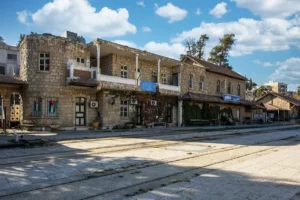
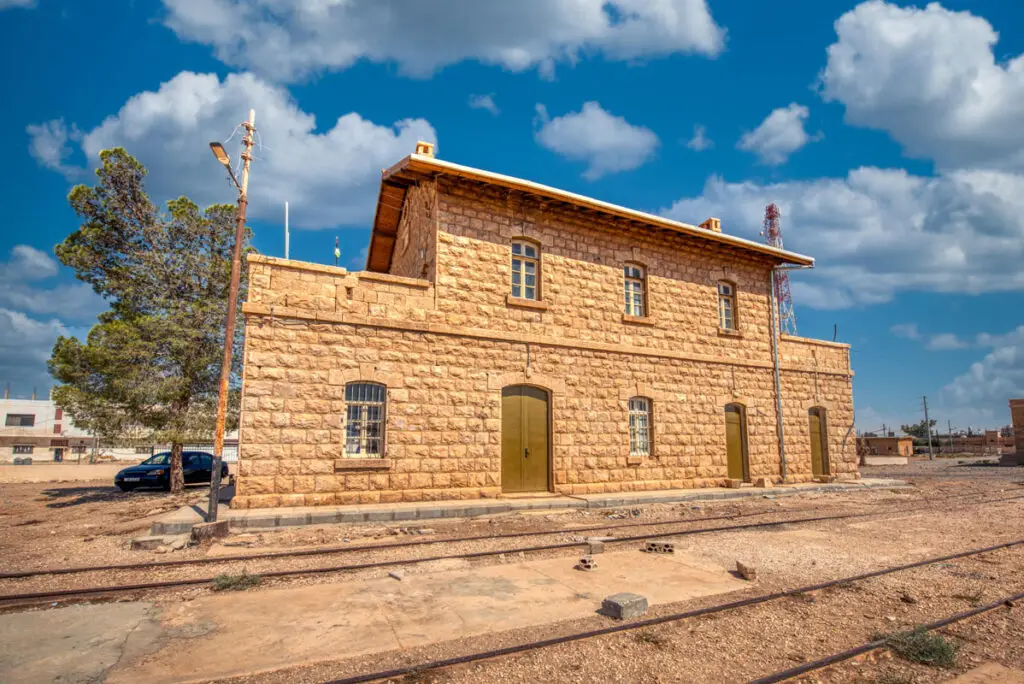
In the early 20th century the Hejaz Railway was built past Qatrana, and its station still stands nearby.
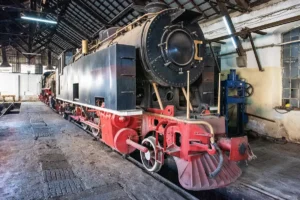
Old wagons, wheels and rails lie beside the station building, a reminder of the railway that replaced the caravans.
Hejaz RailwayOld wagonsStation building
Look for
- The stone station building
- The old wagons and tank car
- The maker’s plate on a wagon
History & significance
A water stop on the Hajj road
Qatrana watered the Syrian Hajj caravan for centuries. Sultan Suleiman built the fort, the 18th century added machicolations, and the Hejaz Railway passed it in the 20th century.
- AD 1520A writer describes a partly ruined khan
- Mid-16th c. ADSultan Suleiman builds the fort (1531 or 1559)
- 18th c. ADBox machicolations are added
- AD 1757A Bedouin raid on the returning caravan
- Early 20th c. ADThe Hejaz Railway passes Qatrana
- AD 2025A project to develop the site with a visitor centre
 ProfileQal’at Qatrana: the full storyThe history, the architecture and the great reservoir of Qatrana.Read the profile →
Plan your visit
Everything you need to know before you go
The fort stands in the town of Qatrana, about 90 km south of Amman on the Desert Highway and a few kilometres north of the turn-off to Karak. A visitor centre with a ticket office and information stands has opened; its opening hours are unconfirmed, so check locally before relying on its facilities.
Good to know: the fort is restored and easy to reach. Stairs inside are steep, and the roof has low parapets.
Opening hoursVisitor centreOpening hours unconfirmed: check locally
Entry ticketFreeEntry is currently free for everyone
Time to visit30 minAbout 30 minutes, more with the station
From Amman90 kmAbout 1 hour by the Desert Highway
LocationQatrana31.2373° N, 36.0334° EGet directions
Opening hours and prices checked October 2026. Spotted a change? Let us know
On site
What you’ll find at Qal’at Qatrana
- Visitor centre
- Ticket office
- Toilets
- Free parking
Not on site: museum, guide available, food & drinks, market / shop, hotels · Access: no 4x4 needed
When to go
Good all year; in summer come in the morning, as there is little shade.
J
F
M
A
M
J
J
A
S
O
N
D
BestGood, cooler or warmVery hot
Tip: stop on the way south to Karak, Petra or Aqaba: the fort is right beside the Desert Highway.
Before you go
Shops and petrol stations are in Qatrana town.
- WaterLittle shade around the fort
- Sun hat and sunscreenEspecially from May to September
- Comfortable shoesSteep stairs inside
Common questions
Quick answers before you set off.
Is there an entrance fee?
Entry is currently free for everyone. A new visitor centre with a ticket office and information stands has opened.
How long do I need?
About 30 minutes for the fort and the reservoir, a little more if you walk to the railway station.
Is Qatrana on the way to Petra?
Yes. It is right beside the Desert Highway, about 90 km south of Amman, an easy stop on the way to Karak, Petra or Aqaba.
Can I visit Qatrana on a tour?
Yes. Qal’at Qatrana is a stop on our expedition to Qasr Bshir, El-Lejjun, Umm ar-Rasas and Karak.
Combine with
Qatrana combines with the Roman forts and Karak Castle. Drive times are from Qatrana.
1 Qasr BshirRoman fort18 km · ~25 min drive · Our tour2Karak CastleCrusader castle40 km · ~40 min drive · Our tour3Qal’at Dab’aHajj fort40 km · ~30 min drive4Qasr Abu El-KharaqIron Age tower24 km · ~55 min drive5Qasr El-AlIron Age fort25 km · ~1 hr 5 min drive6Qal’at Al-HasaHajj fort55 km · ~40 min drive
 Qasr BshirRoman fort18 km · ~25 min drive · Our tour2
 Karak CastleCrusader castle40 km · ~40 min drive · Our tour3
 Qal’at Dab’aHajj fort40 km · ~30 min drive4
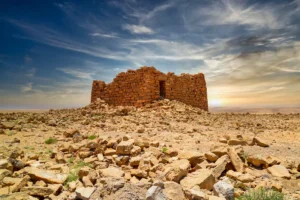 Qasr Abu El-KharaqIron Age tower24 km · ~55 min drive5
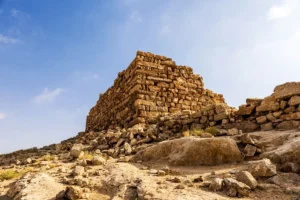 Qasr El-AlIron Age fort25 km · ~1 hr 5 min drive6
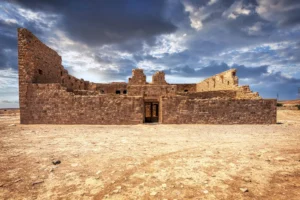 Qal’at Al-HasaHajj fort55 km · ~40 min drive
Tour 1 Desert forts & Karak · Tour 2 Desert Highway to Petra. Compare the tours
Private tours
2 private day tours that include Qal’at Qatrana
Both tours are just for you: your own vehicle and driver, hotel pickup in Amman, entry tickets included, and one fixed price for up to three travellers.
Private: only your group
Your own vehicle & driver
Hotel pick-up in Amman
Entry tickets included
 from$250per group (1–3) · 178 JOD
Tour 1 · Full day · Private
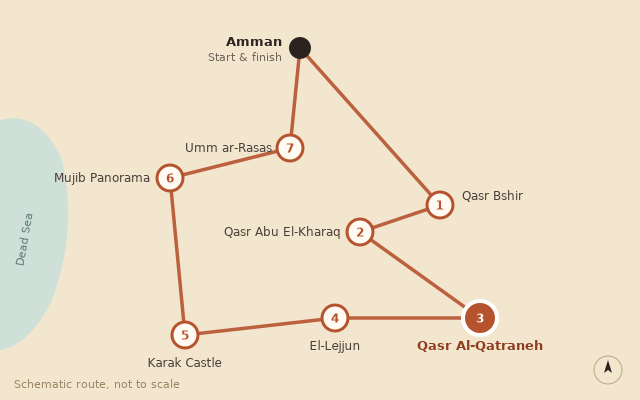
Expedition to Qasr Bshir, Lejjun, Umm Ar-Rasas, Karak
Set high at around 800 meters above sea level, deep within a vast and rugged basalt plain, Qasr Bshir (Castra Praetorium Mobene) remains one of Jordan’s most remote and best-preserved Roman frontier forts. Its isolated location makes it difficult to reach for the average traveller—but that’s exactly what makes this journey so rewarding.
Roman fortsOttoman fortCrusader castle7 stops4x4
Duration8–9 hr
Pick-up8 or 9 AM
Group1–3, private
Included
- Private luxury transfer
- Entrance fees
- Bottled water, soft drinks, snacks
- Coffee/tea (on request)
- WiFi, Phone charger
Not included
- Professional on-site (local) guide
- Personal expenses
- Lunch
 from$195per group (1–3) · 138 JOD
Tour 2 · Half day · Private
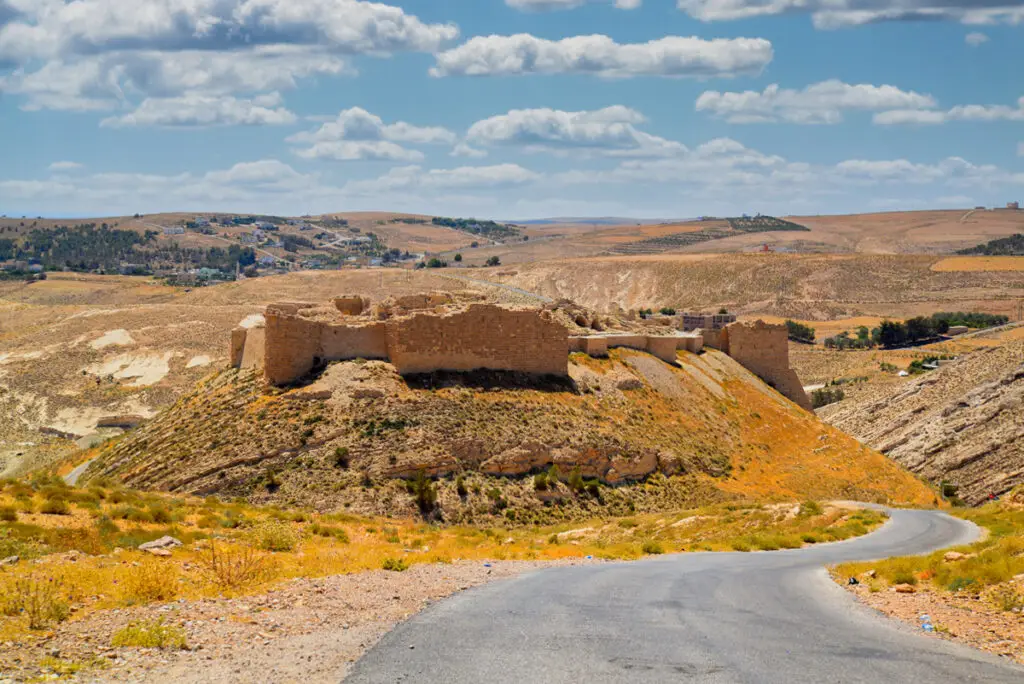
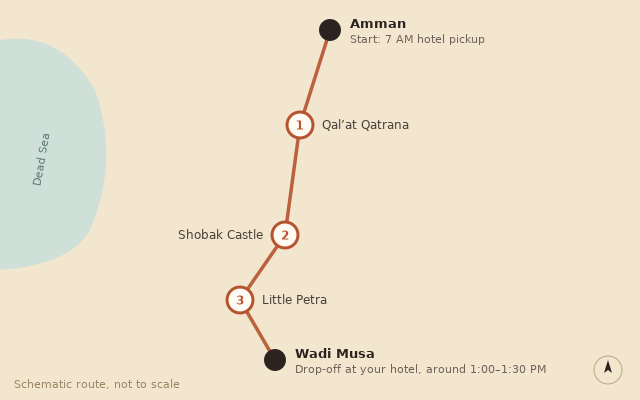
Amman to Petra Private Transfer with Shobak Castle & Little Petra
Travel from Amman to Petra along the Desert Highway and see some of southern Jordan’s heritage on the way. Compared with our full-day Best of King’s Highway from Amman to Petra tour, this is a much shorter, half-day transfer with just a few carefully chosen stops, so you reach Wadi Musa around lunchtime with the afternoon still ahead of you.
Ottoman fortCrusader castleNabataean sites3 stopsHalf day4x4
Duration5–6 hr
Pick-up7 AM
Group1–3, private
Included
- Private luxury transfer
- Entrance fees
- Bottled water, soft drinks, snacks
- Coffee/tea (on request)
- WiFi, Phone charger
Not included
- Professional on-site (local) guide
- Personal expenses
- Lunch
Which tour is right for you?
| Desert forts & Karak | Desert Highway to Petra | |
|---|---|---|
| Price per group (1–3) | $250 (178 JOD) | $195 (138 JOD) |
| Duration | 8–9 hr | 5–6 hr |
| Route | A loop from Amman through the desert forts and back to Amman | A one-way transfer from Amman to Petra along the Desert Highway |
| Stops | 7 stops: Qasr Bshir, Qasr Abu El-Kharaq, El-Lejjun, Karak, Umm ar-Rasas and more | 3 stops: Qal’at Qatrana, Shobak Castle, Little Petra |
| Departure | 8 AM or 9 AM, back in Amman in the evening | 7 AM, arriving in Wadi Musa around 1:00–1:30 PM |
| Qal’at Qatrana | ✓ 3rd stop | ✓ 1st stop, 15–20 minutes |
| Best for | Forts off the beaten track | Travelling to Petra, with a morning of sightseeing on the way |
CancellationFull refund if you cancel at least 24 hours before the start. No refunds or changes within 24 hours.
Pick-upFrom your hotel lobby or home in Amman, 5 minutes before your chosen start time.
BringComfortable shoes, sun hat, sunblock and sunglasses. Tours run in English.
Explore this site
More from Qal’at Qatrana
Panoramas, walk-throughs, photos and stories about this site.
ProfileQal’at Qatrana: history & architecture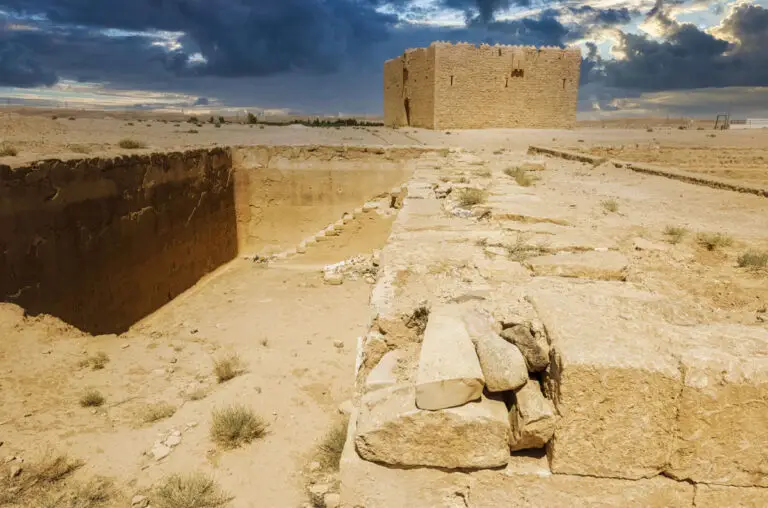 Photo albumQal’at Qatrana: A Hajj Fort and Reservoir in Photos
 3D3D walk-throughQalat Qatrana – 3D Virtual Walk-through
 360°360° panoramaQal’at Qatrana Interior: 360° Panorama
Nearby