















The Ancient Islamic City of Ayla, located in Aqaba, Jordan, was established in the mid-7th century AD under the rule of Caliph Uthman ibn Affan. As one of the first Islamic cities built outside the Arabian Peninsula, Ayla played a key role as a trade hub and naval outpost, linking the Red Sea, Levant, and Arabian Peninsula. The city thrived due to its strategic location, facilitating commerce, pilgrimage routes, and cultural exchange.
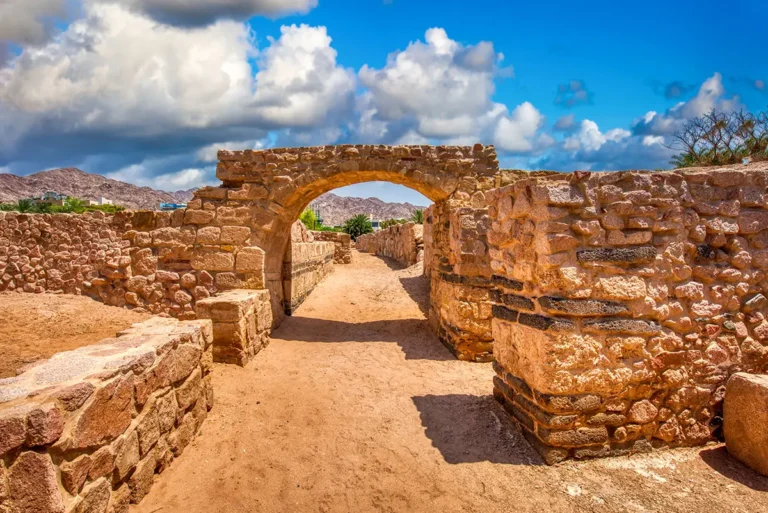
Ayla was designed in a rectangular layout, enclosed by fortified walls with four gates. Within its boundaries stood a central mosque, administrative buildings, and residential quarters. Archaeological excavations have uncovered inscriptions, pottery, and coins, providing insight into the city’s economic and social life. Despite being damaged by earthquakes and invasions, Ayla remains a significant historical and archaeological site, offering a glimpse into early Islamic urban planning and trade networks.
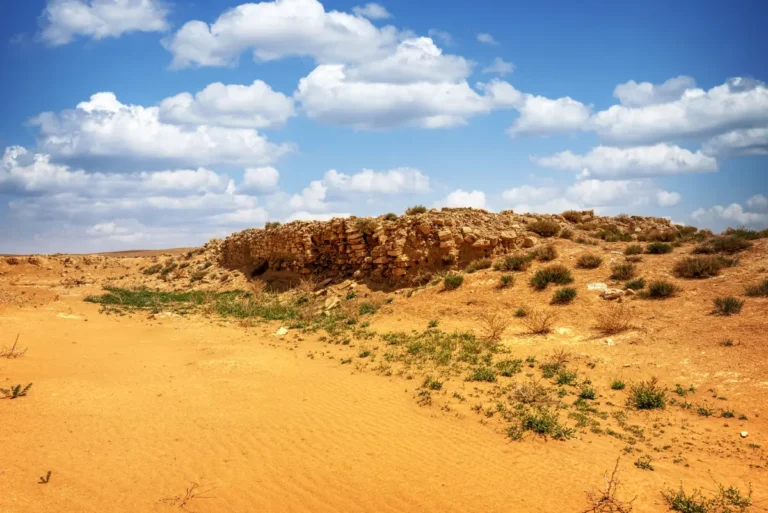
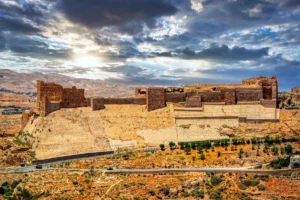
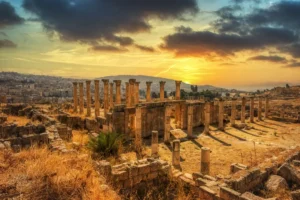
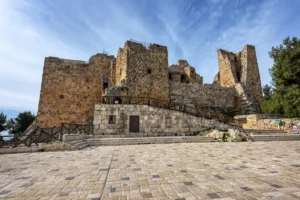
Follow the surviving boundary lines to distinguish the former enclosure from the spaces within it. The panorama encourages comparison of the lower foundations with the surrounding ground. Look closely at the masonry junctions before turning towards the wider setting. These details provide a way to read the city’s footprint without reconstructing every missing building. The view is especially useful for understanding how individual archaeological remains relate spatially within the former urban area.