













Qal’at ‘Unaiza
A basalt Hajj fort of the later 16th century below the black hill of Jabal Unaiza
BuiltLater 16th c. AD
WallsBasalt
Location36 km N of Ma’an
AccessFree · by the highway
Introduction
Excavation showed how its soldiers lived, down to the porcelain cups they drank from.
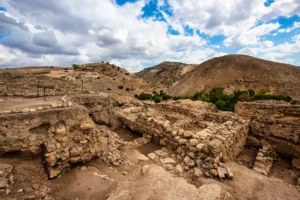
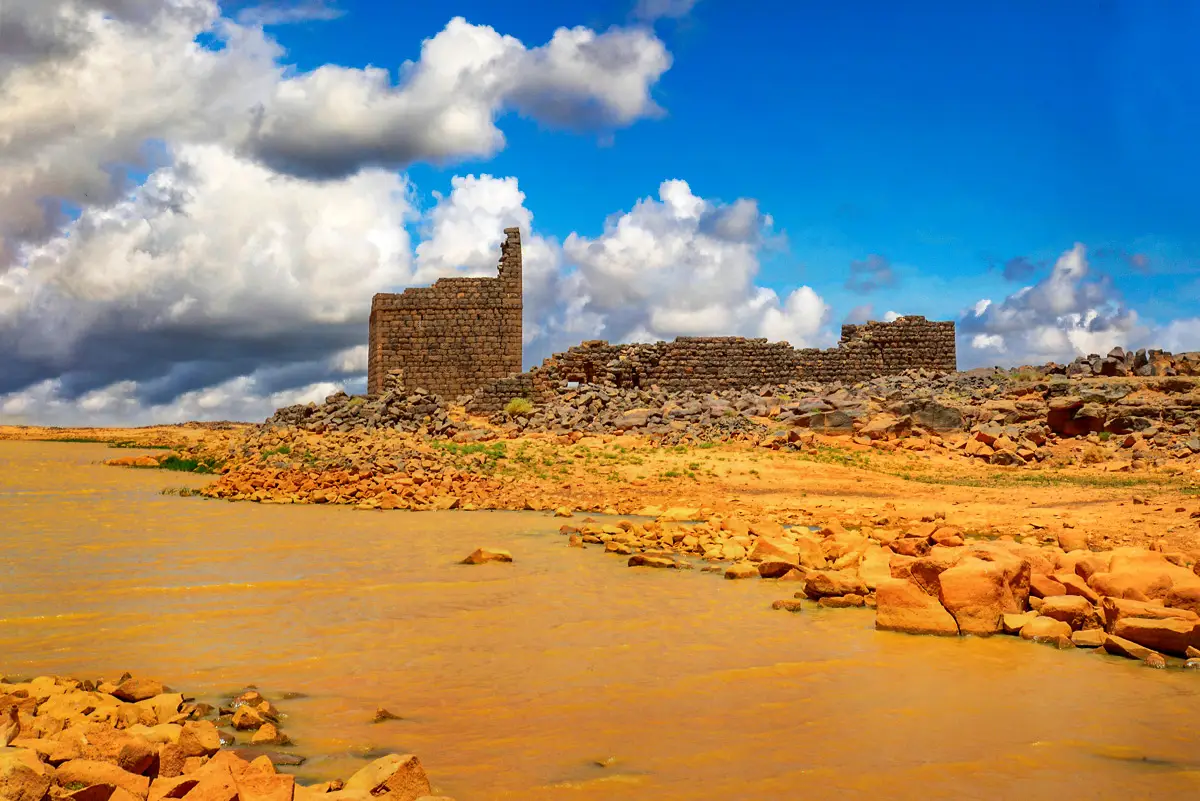
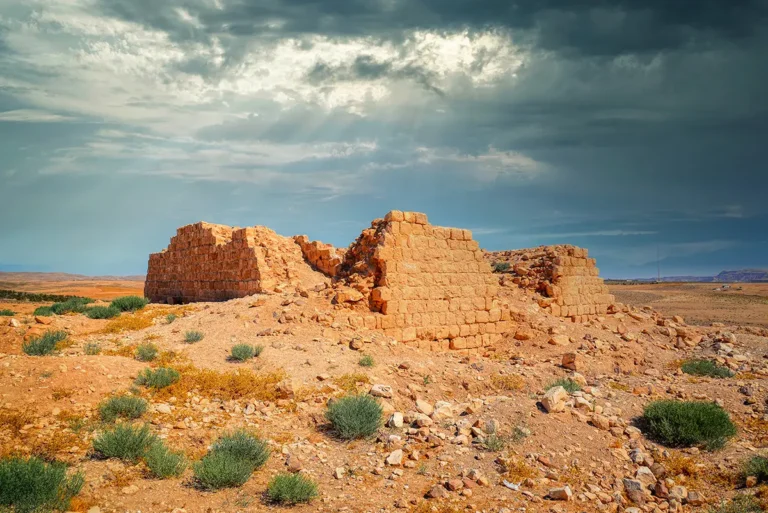
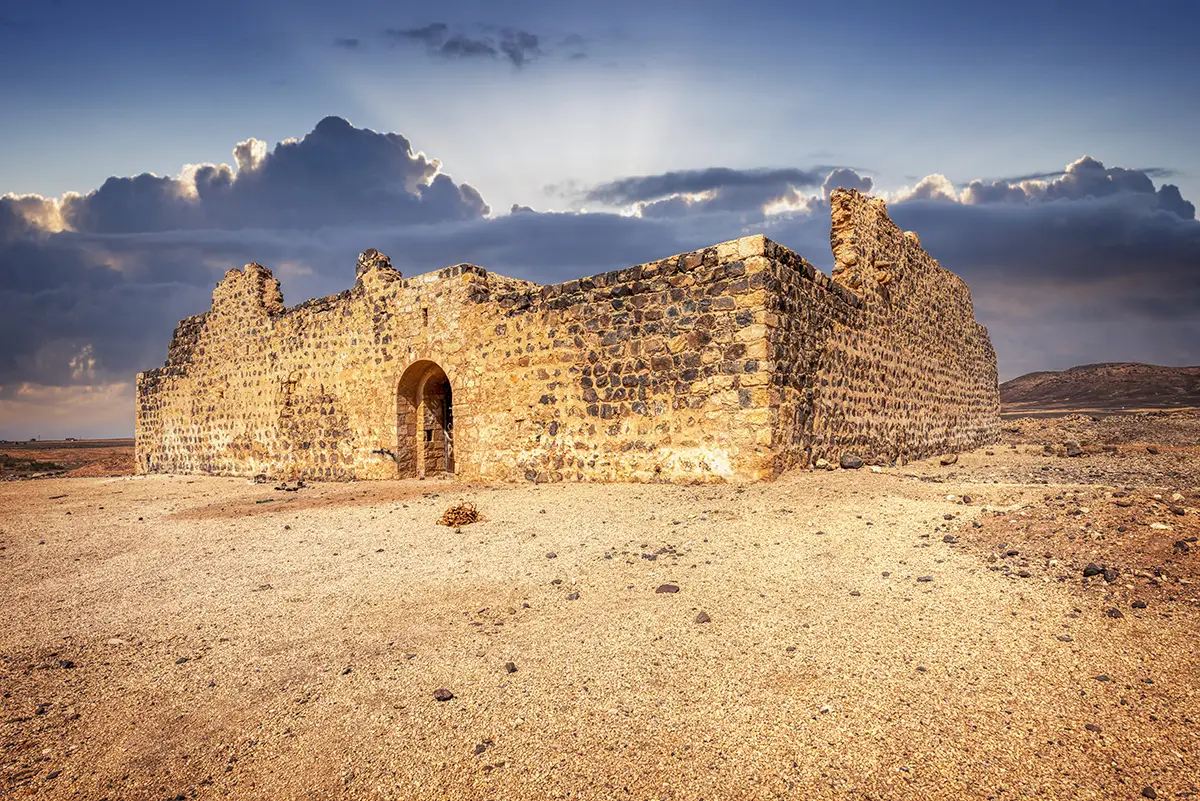
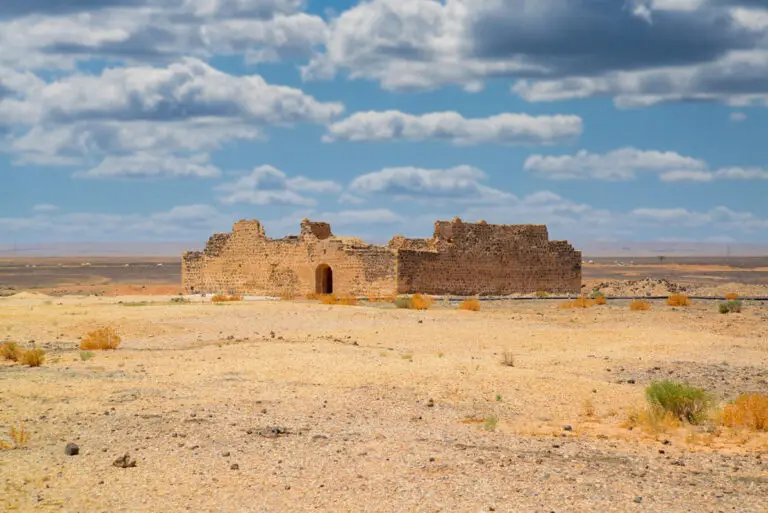
Below the black volcanic hill of Jabal Unaiza, a square fort of dark basalt stands beside the Desert Highway, about 36 km north of Ma’an. It was built in the later 16th century, probably in the 1570s, to protect the pilgrim road between Ma’an and al-Hasa, and it was garrisoned for centuries.
In 2002 the archaeologist Andrew Petersen excavated the fort and found Chinese porcelain, tobacco pipes, coins and glass bangles left by its garrison. Walk round the basalt walls, explore the vaulted rooms of the courtyard and see the Hejaz Railway station nearby.
Best timeOct–Apr
Time needed30 min
TicketFree
From Amman180 km · 2 hr
Combine withShobak Castle · 50 min
Google rating4.1 · Reviews
Highlights · A basalt fort
Basalt walls and a garrison’s courtyard
Five things to look for at Qal’at Unaiza
Unaiza is a ruin beside the highway. These are the places that make the visit.
 01 / 05
01 · Defence
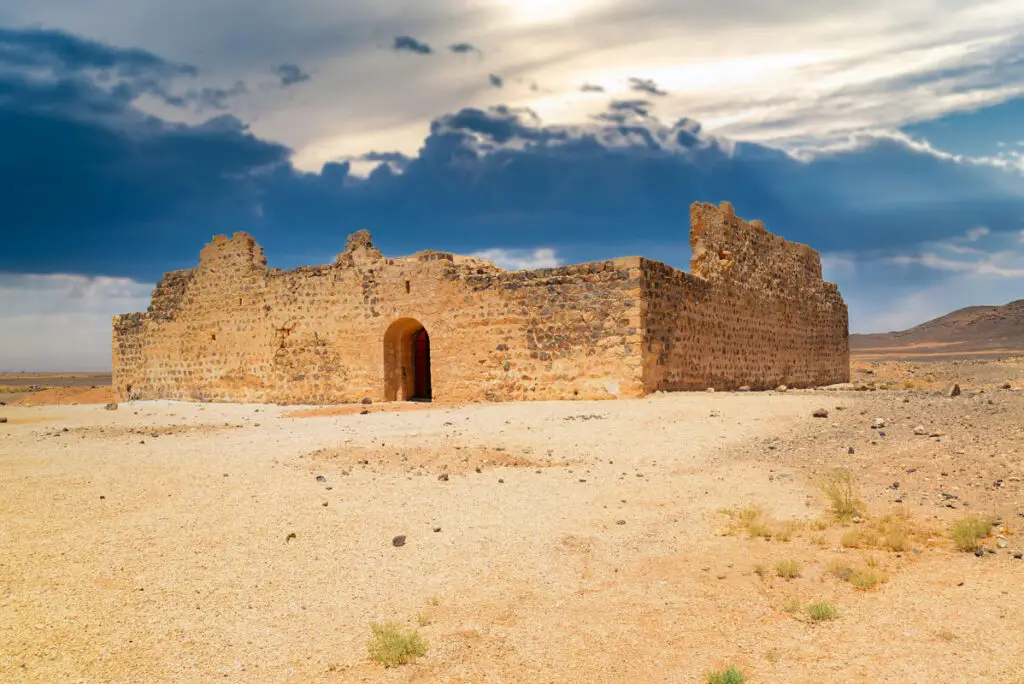
The basalt walls
The fort
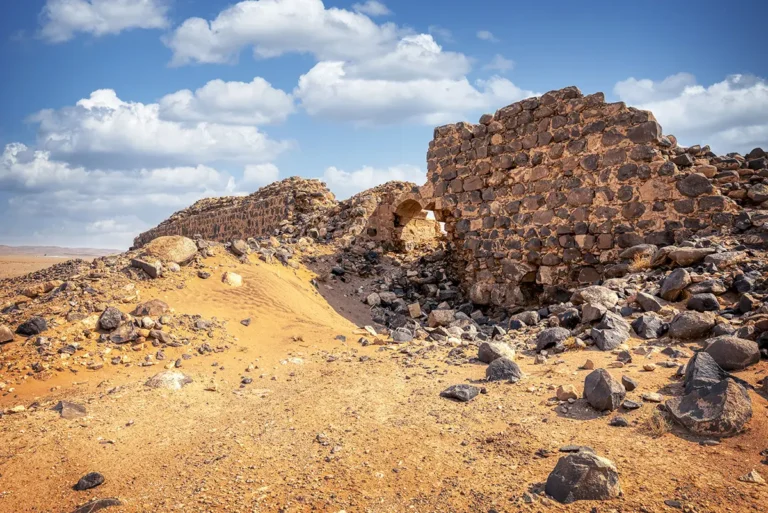
The walls are of dark basalt with limestone quoins at the corners.
Look closely
The pale limestone corners.
1 of 5
Part by part
What to see
Four parts of the visit: the fort, the courtyard and rooms, the cistern and the railway station. Pick one to see what to look for.
1 / 701 · Below Jabal Unaiza
Walk round the fort
The fort is square, with walls of basalt and limestone quoins at the corners. The entrance lies on the east side, where traces of plaster decoration survived in 1986, and a small machicolation projects from the south wall.
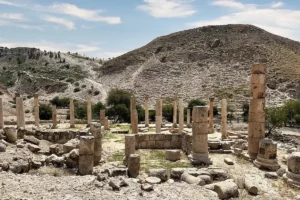
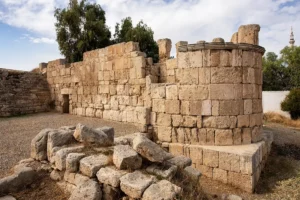
Next to the fort stand the remains of an earlier building.
BasaltLimestone cornersEast entrance
Look for
- The limestone quoins at the corners
- The machicolation on the south wall
- Jabal Unaiza to the west
 1 / 8
02 · Inside the fort
Explore the courtyard
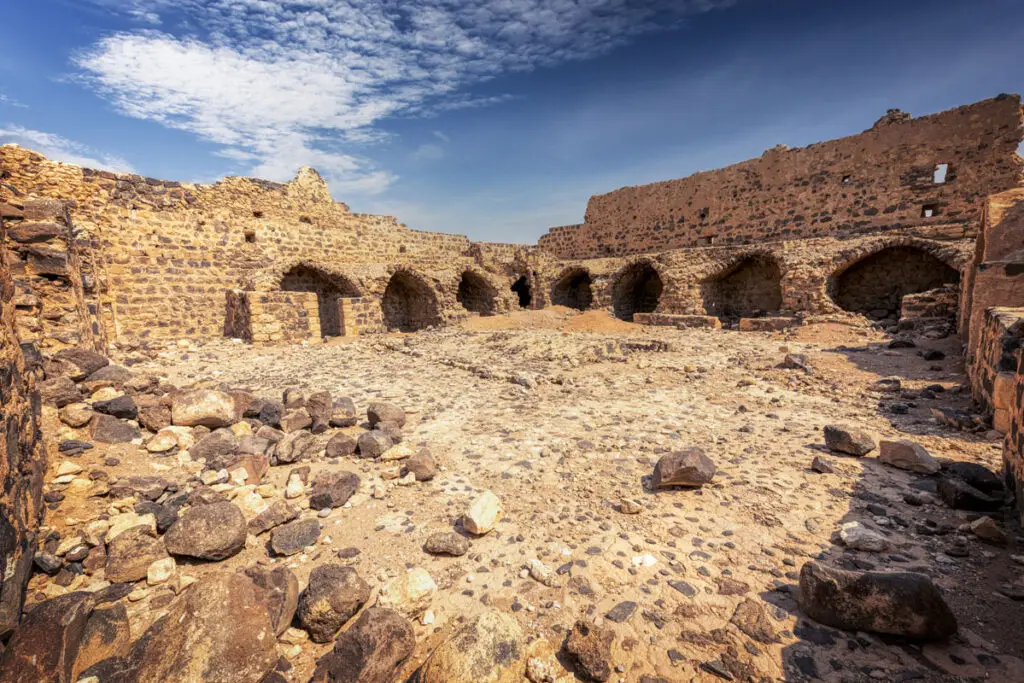
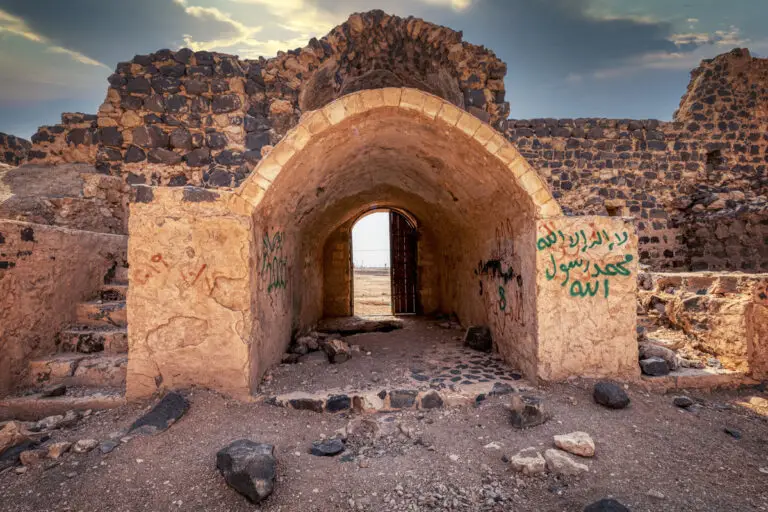
Inside, rooms on two floors surround a cobbled courtyard. Many of the vaulted ground-floor rooms still stand, though the upper floor is ruined.
Walk carefully: the floors are uneven and some vaults are broken.
Two floorsVaulted roomsCobbled courtyard
Look for
- The rows of vaulted rooms
- Stairs to the upper floor
- The cobbles of the courtyard
Dig deeperPorcelain in the desert
In May and June 2002 Andrew Petersen dug six trenches at Unaiza. The finds included Chinese porcelain, among them Imari and powder-blue cups with gilding, Batavian ware, tobacco pipes, glass bangles and beads, coins, pieces of military equipment and a gaming piece. They show a garrison of the 18th and 19th centuries connected to world trade.
 1 / 4
03 · Water for the garrison
Find the cistern
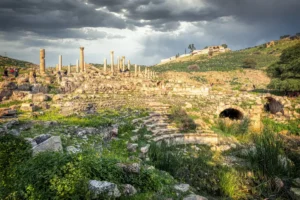
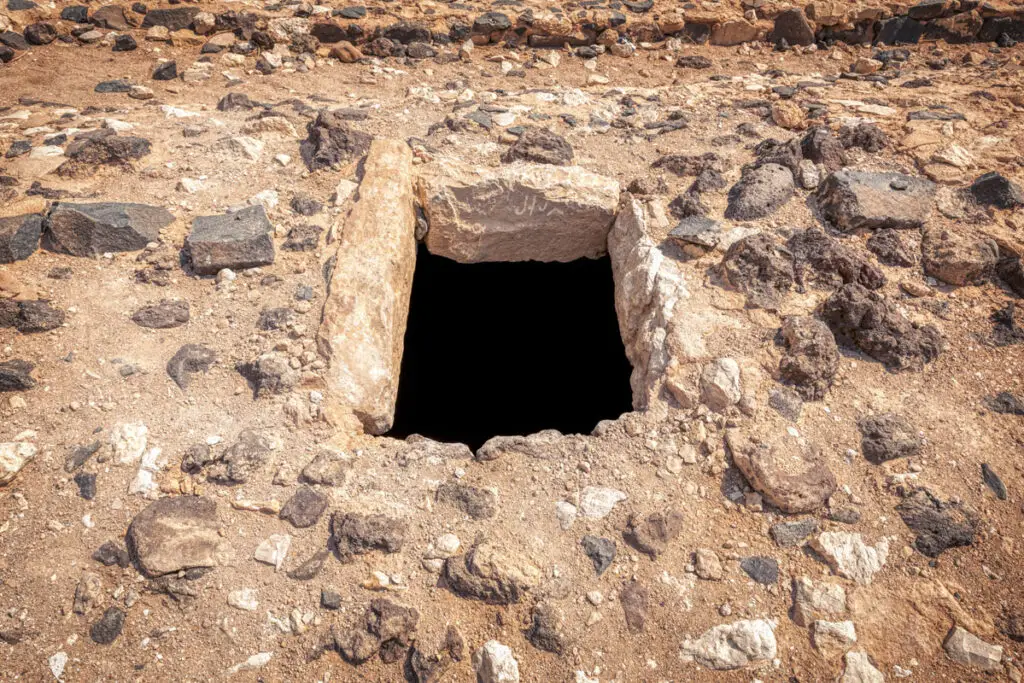
A vaulted cistern lies beneath the cobbled courtyard. Its openings are still visible in the courtyard floor.
Take care near the openings: they are unfenced.
Under the courtyardUnfenced openings
Look for
- The openings in the courtyard floor
- The vaults around the courtyard
 1 / 5
04 · The Hejaz Railway
See the station
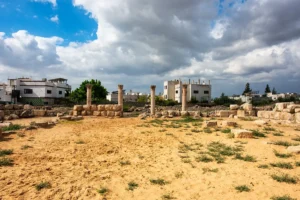
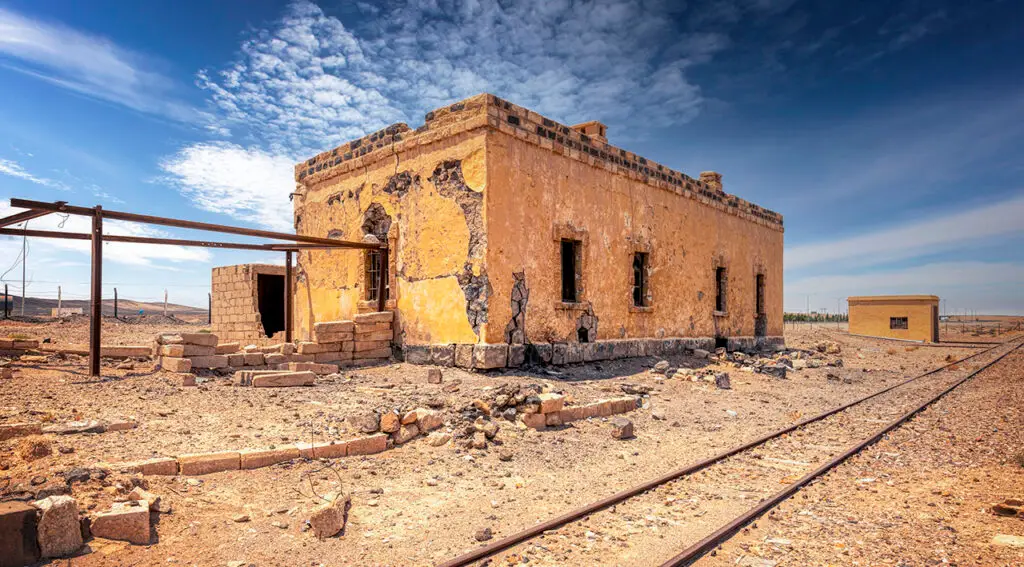
In the early 20th century the Hejaz Railway built a station near the fort, and it still stands, with its water reservoir and a small stone building.
The railway ended the long journeys of the camel caravans and the life of the Hajj forts along the road.
Hejaz RailwayStill standing
Look for
- The station building
- The station’s water reservoir
- The fort and Jabal Unaiza from the station
History & significance
A garrison on the Hajj road
Unaiza was a station on the Syrian Hajj road between Ma’an and al-Hasa. Its fort was built in the later 16th century and garrisoned into the 19th century.
- Later 16th c. ADThe fort is built, probably in the 1570s
- 18th–19th c. ADA garrison lives here, connected to world trade
- Early 20th c. ADThe Hejaz Railway builds a station nearby
- AD 1986Andrew Petersen records the fort
- AD 2002Petersen excavates six trenches
 ProfileQal’at ‘Unaiza: the full storyThe history, the excavation and the finds of Qal’at Unaiza.Read the profile →
Plan your visit
Everything you need to know before you go
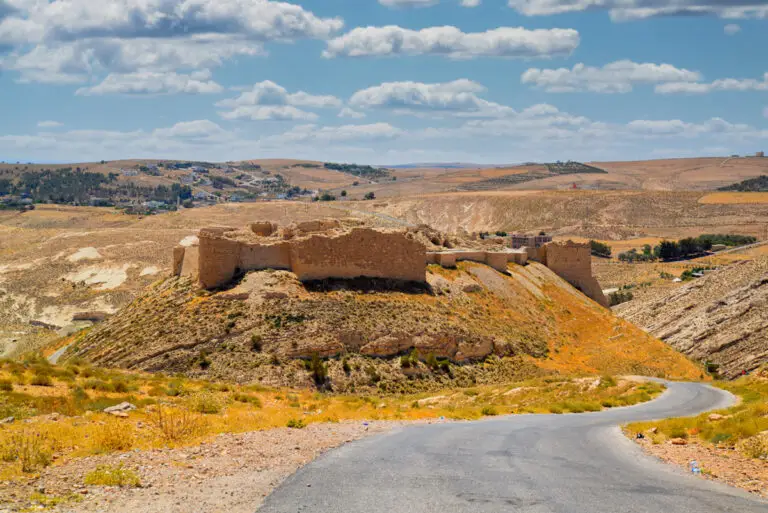
The fort stands beside the Desert Highway about 36 km north of Ma’an and about 180 km south of Amman. No 4x4 is needed. Jabal Unaiza, the black hill that gives it its name, rises to the west.
Good to know: the site is open, with no fence, guard or facilities. Floors are uneven and the cistern openings are unfenced.
Opening hoursOpen accessUnstaffed site · visit in daylight
Entry ticketFreeNo ticket office
Time to visit30 minAbout 30 minutes, more with the station
From Amman180 kmAbout 2 hours by the Desert Highway
LocationDesert Highway30.4881° N, 35.7961° EGet directions
Opening hours and prices checked October 2026. Spotted a change? Let us know
On site
What you’ll find at Qal’at ‘Unaiza
- Viewpoint
Not on site: visitor centre, ticket office, toilets, designated parking, museum, guide, food & drinks, market / shop, hotels
Access: no 4x4 needed
When to go
October to April is best. Summer days are very hot, with no shade.
J
F
M
A
M
J
J
A
S
O
N
D
BestGood, cooler or warmVery hot
Tip: stop on the way to Petra or Ma’an: the fort is right beside the Desert Highway.
Before you go
There are no services at the site.
- WaterNo shade and no services
- Sun hat and sunscreenEspecially from May to September
- Good shoesRubble and uneven floors
- The map pinSigns are few or missing
Common questions
Quick answers before you set off.
Is there an entrance fee?
No. The fort is free and open, with no guard or facilities.
Do I need a 4x4?
No. The fort stands right beside the Desert Highway.
How long do I need?
About 30 minutes for the fort, a little more if you visit the railway station.
What was found in the excavation?
Chinese porcelain, tobacco pipes, glass bangles and beads, coins, military equipment and a gaming piece, left by the garrison of the 18th and 19th centuries.
Combine with
Unaiza lies on the way to Petra and Shobak. Drive times are from Qal’at Unaiza.
Explore this site
More from Qal’at ‘Unaiza
Panoramas, walk-throughs, photos and stories about this site.
ProfileQal’at ‘Unaiza: history & architecture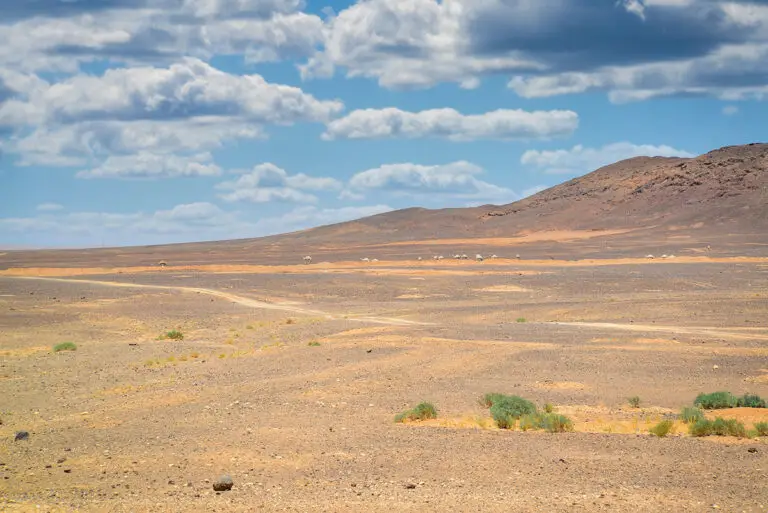 Photo albumQal’at Unaiza: A Basalt Hajj Fort in Photos
 360°360° panoramaInside Ottoman Castle – Qal’at ‘Unaiza 360° Panorama
Nearby
Also in the south
From guide to visit
Explore the Hajj forts with a private guide
Tell us when you’d like to go, and we’ll plan a private day along the old pilgrim road, with door-to-door transport.