

North of Petra, a short canyon of pale sandstone hides a Nabataean suburb in miniature. Siq al-Barid, “the cold canyon”, is lined with dining halls, houses, stairs and cisterns, and one of its rooms still has the only figurative Nabataean wall painting preserved in place.
Where Is Little Petra?
Little Petra lies in the al-Bayda area, about 9 km by road north of Wadi Musa and only about 5 km in a straight line from the centre of Petra. The Neolithic village of Al Beidha is about 20 minutes away on foot. The canyon is part of the Petra World Heritage property, which UNESCO describes as including the caravan staging posts on the northern approach to the city.
Historical Context and Origin
Little Petra was carved at the height of the Nabataean kingdom, in the late 1st century BC and the 1st century AD. Radiocarbon dating of the plaster in the Painted House gave a date between 40 BC and AD 25. The Bayda area was an agricultural and wine-producing suburb of Petra, with vineyards, presses and elite dining halls; a free-standing banqueting hall excavated nearby in 2005 dates from the second half of the 1st century BC. Caravans approaching Petra from the north may also have stopped here, though this remains a hypothesis.
Architectural Design
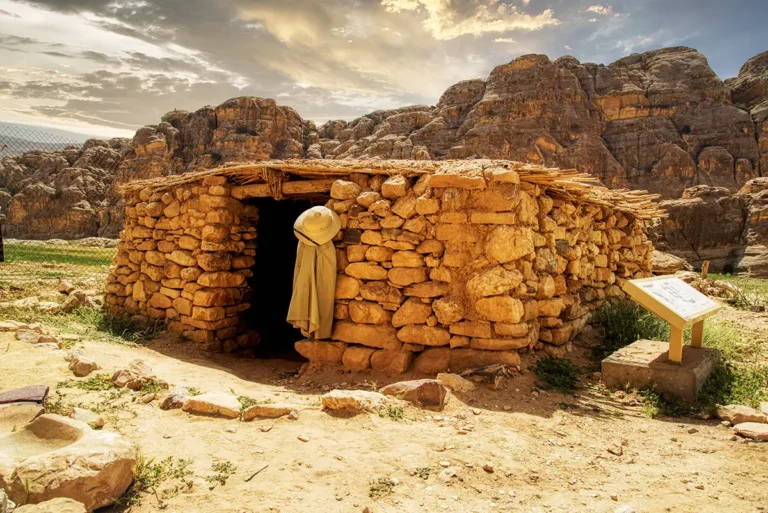
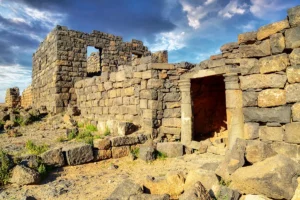
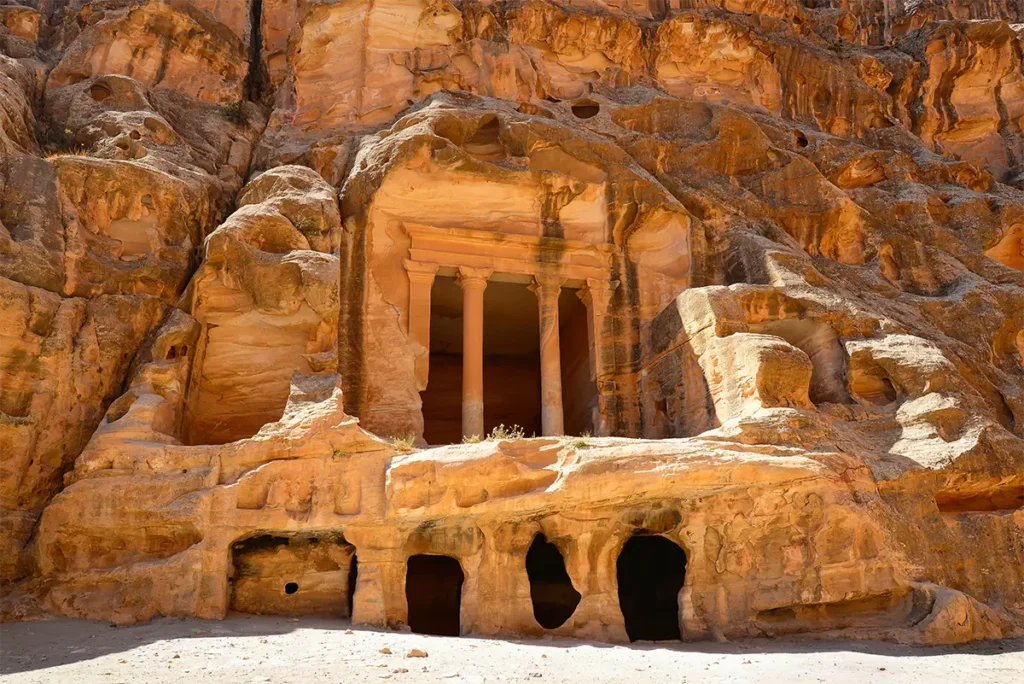
The siq, a few hundred metres long, opens into three small open areas linked by narrow passages. In the first, a columned façade, probably a temple, rises above a rock-cut house. The second is lined with four large triclinia, dining halls with benches on three sides, where Nabataean families and guilds held feasts. Rock-cut stairs climb to upper rooms, and cisterns cut into the walls collected the rain. At the far end, steps lead through a narrow gap to a viewpoint over the surrounding hills. Just outside the entrance, on the right, a carved façade catalogued as Br. 846 has a frieze of triglyphs and metopes above its door and an unfinished interior.
The Painted House
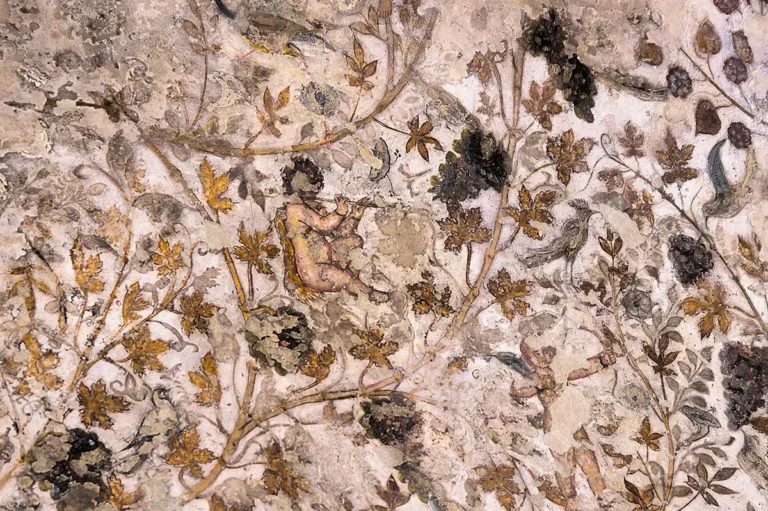
A dining room whose ceiling is painted with vines, birds and winged cupids.
Banqueting Halls
Four large rock-cut triclinia in the second open area.
Temple Façade
A columned façade, probably a temple, in the first open area.
Water Cisterns
Rock-cut cisterns stored the winter rain.
The Painted House
Up a stair on the south side, about 300 m into the canyon, a biclinium, a dining room with two benches, has a painted ceiling in its inner alcove. Vine scrolls with grapes and flowers are inhabited by winged cupids, birds identified as a demoiselle crane and a Palestine sunbird, insects, and a pipe-playing figure like Pan. The imagery is usually linked to Dionysus, god of wine. Gold leaf highlights some of the leaves.

Destruction, Rediscovery, and Restoration
After the Nabataean period the canyon was used for centuries by local Bedouin, today the Ammarin tribe, and the paintings were blackened by campfire soot and scratched with graffiti. Nelson Glueck published them in 1956. Between 2006 and 2010, the Petra National Trust and conservators from the Courtauld Institute of Art, with the Department of Antiquities, cleaned and conserved the ceiling, revealing details no one had seen for centuries.
Visiting Little Petra Today
Entry is free and no ticket is needed. The Painted House is behind a locked gate with no guard, but all the details of the ceiling can be seen through it. Allow about an hour, and add about 20 minutes each way to walk to Al Beidha. A trail leads from Little Petra to the Monastery in Petra; it takes about two hours, a guide is recommended, and a valid Petra ticket is required. See our Little Petra travel guide for practical details.
Further reading: UNESCO — Petra; Bikai, Kanellopoulos & Saunders, “Beidha in Jordan: A Dionysian Hall in a Nabataean Landscape” (AJA 2008); Rickerby, Conserving a Unique Nabataean Wall Painting in Petra (2021).