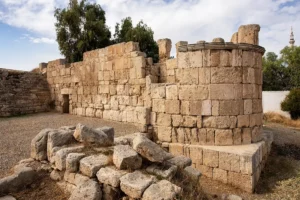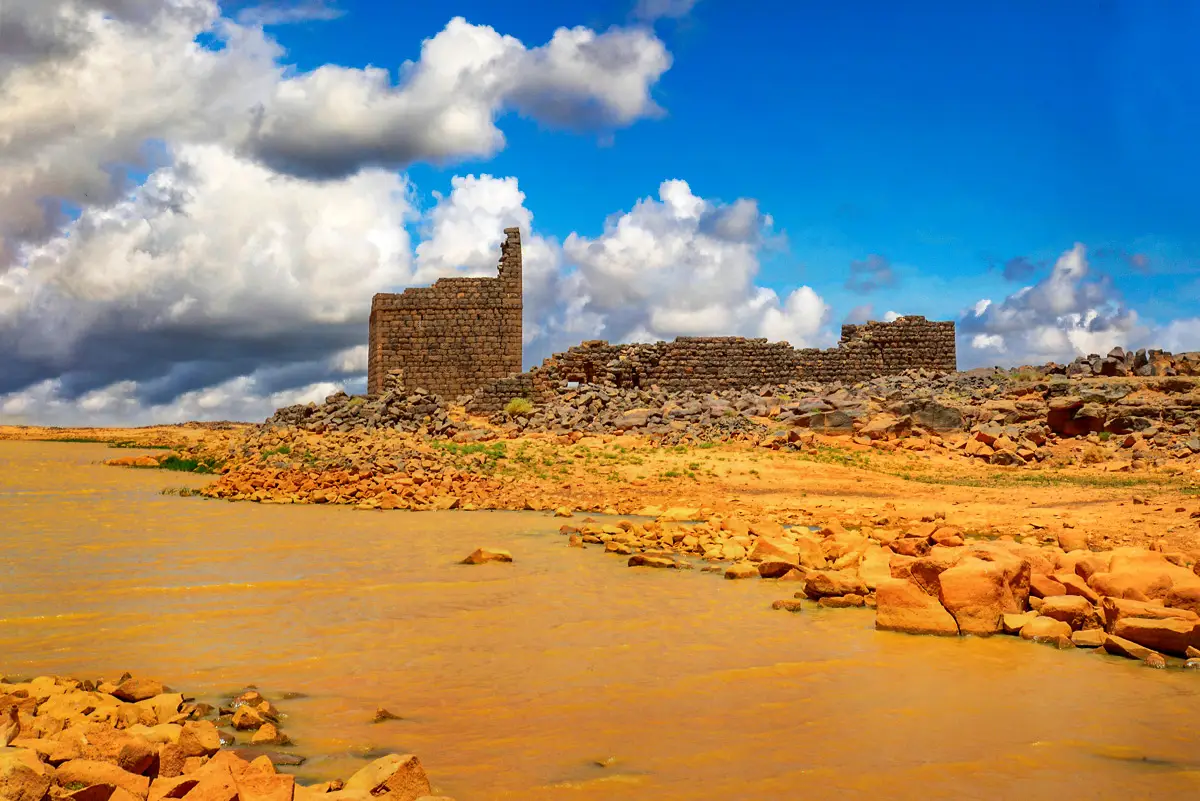













On a hill in the old heart of Tafila, a square stone fort looks west over the valleys that fall towards the Dead Sea. The upper part of the building is Ottoman; the castle itself is attributed to the Ayyubid and Mamluk periods, and the remains beneath it may belong to a castle of the Crusaders, who held Tafila in the 12th century.
Where Is Al-Tafilah Castle?
The castle stands on the north-western hill of Tafila, in the historic centre of the town, next to the al-Nashash Mosque, built in 1900, and the old stone houses that once clustered around it. From its walls the view opens west over deep valleys. The Tafila archaeological museum, opened around 2022, is a separate building beside the castle.
Historical Context and Origin
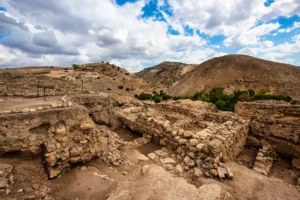
In the 12th century Tafila belonged to the Crusader Lordship of Transjordan, centred on Karak and Shobak, and historians list a castle here among the lordship’s strongholds. In 1156 a Muslim force raided “from Egypt to Shawbak and Tafila”, and a text of 1177 names a Martin, lord of Tafila. The historian Denys Pringle observed that the remains beneath the present fort appear to belong to a Crusader castle. It carries no inscription, so its dates are uncertain: the Department of Antiquities attributes the castle to the Ayyubid and Mamluk periods, built on the ruins of an Iron Age (Edomite) fort or watchtower, with the upper part added under the Ottomans. In 1596 an Ottoman tax register recorded Tafila as a village of 33 households.
Architectural Design
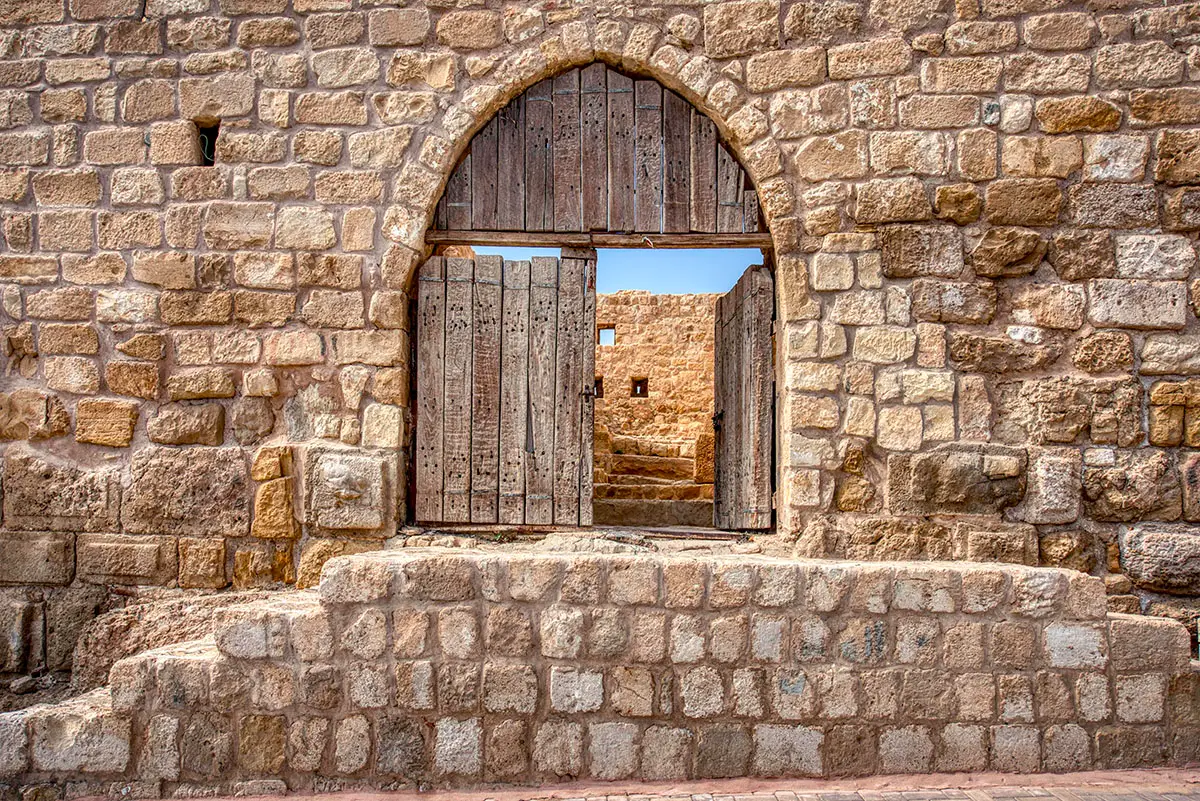
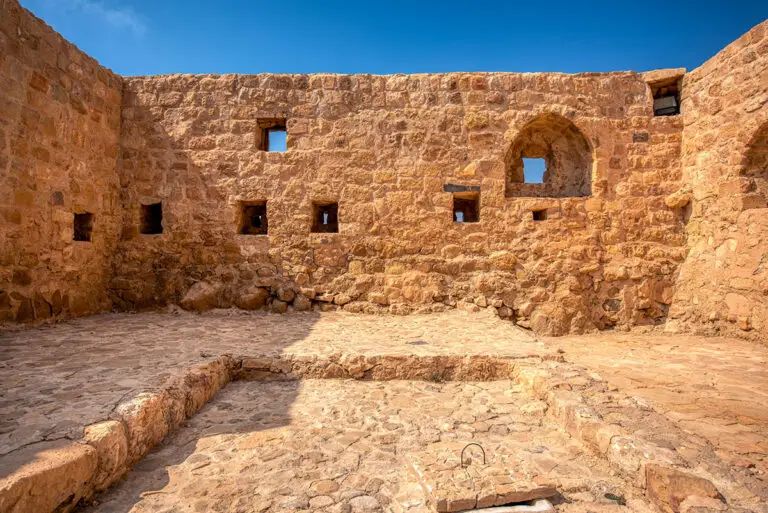
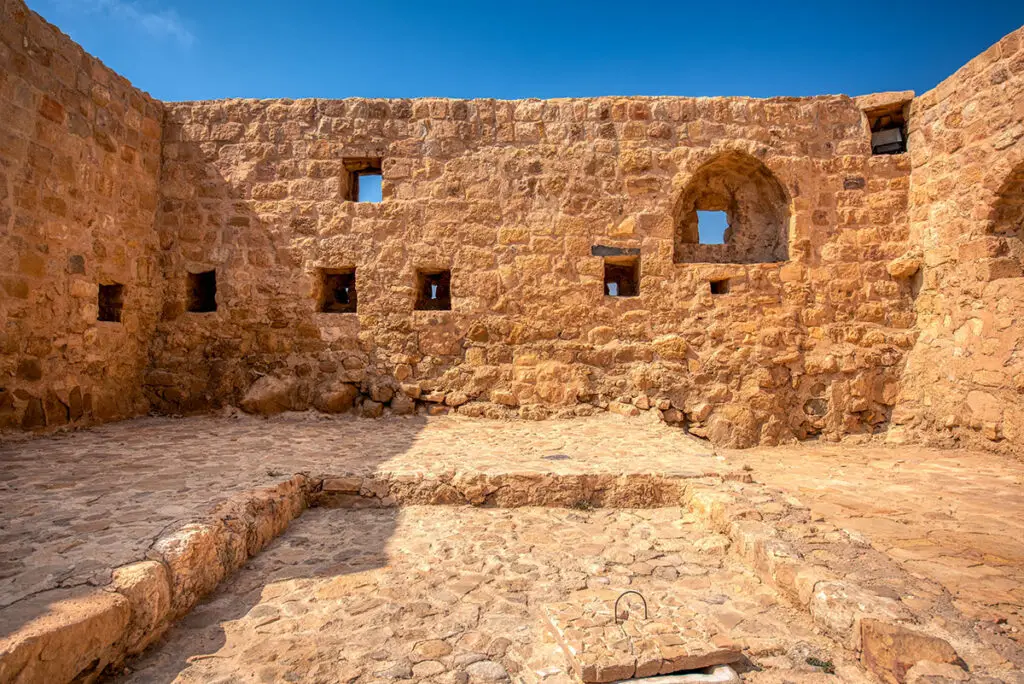
The fort is roughly square, about 19.5 × 21 m. The gate faces east, and stairs lead up to a paved courtyard of about 9 × 14 m with a well. The walls rise some 8 m and are pierced by splayed loopholes, with a walkway on the inner side for the defenders.
Square Fort
A compact fort of about 19.5 × 21 m, with walls some 8 m high.
Courtyard and Well
An east gate and stairs lead up to a paved courtyard with a well.
Loopholes
Splayed loopholes and an inner wall-walk for the defenders.
Crusader Past
Tafila was one of the castles of the Crusader Lordship of Transjordan.
Tafila in the Arab Revolt
In January 1918 Tafila became a prize of the Arab Revolt. On 15 January the Ottoman garrison of about 150 men surrendered without a fight, and the next day Emir Zeid, son of Sharif Hussein, arrived in the town. The Battle of Tafila, fought on 25 January, took place north of the town at Hadd al-Daqiq, above Wadi al-Hasa — not at the castle — and ended in an Arab victory.
Destruction, Rediscovery, and Restoration
Parts of the fort are said to have collapsed in the earthquake of 1927. The Department of Antiquities restored the main gate and walls, and from 2016 a Ministry of Tourism and Antiquities project restored the castle together with its access road, the al-Nashash Mosque and the nearby houses, using new stone where needed. No excavation of the older layers beneath the fort has been published.
Visiting Al-Tafilah Castle Today
The castle is open and free to visit, a short walk through the old centre of Tafila. Climb to the walls for the view west, then visit the museum next door — see our article Exploring the Past at Al-Tafilah Museum. Our 360° panorama shows the courtyard and walls.
Further reading: ACOR archive — Tafila castle (Rami Khouri collection); Sinibaldi, Levant 54 (2022), on Crusader Transjordan; Department of Antiquities of Jordan — archaeological sites of Tafila (Arabic).