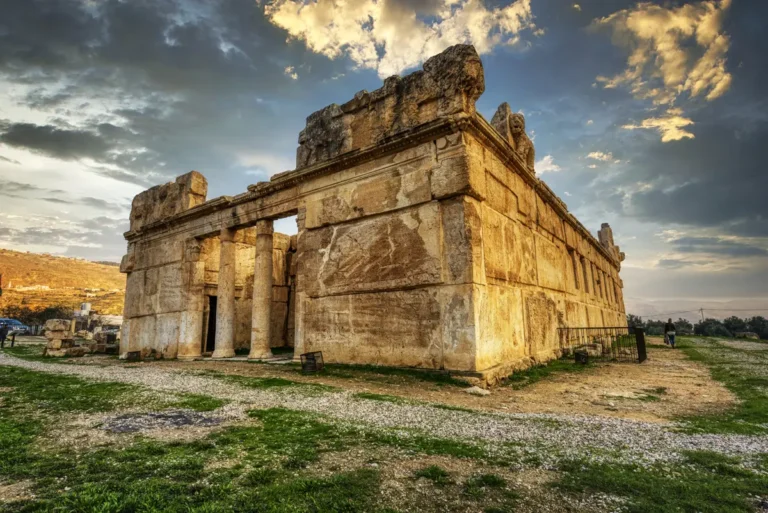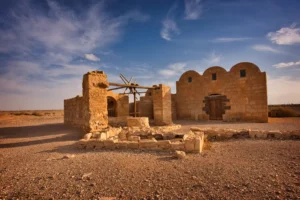

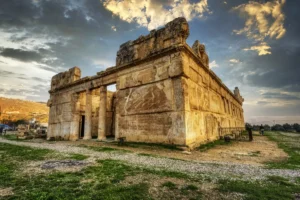

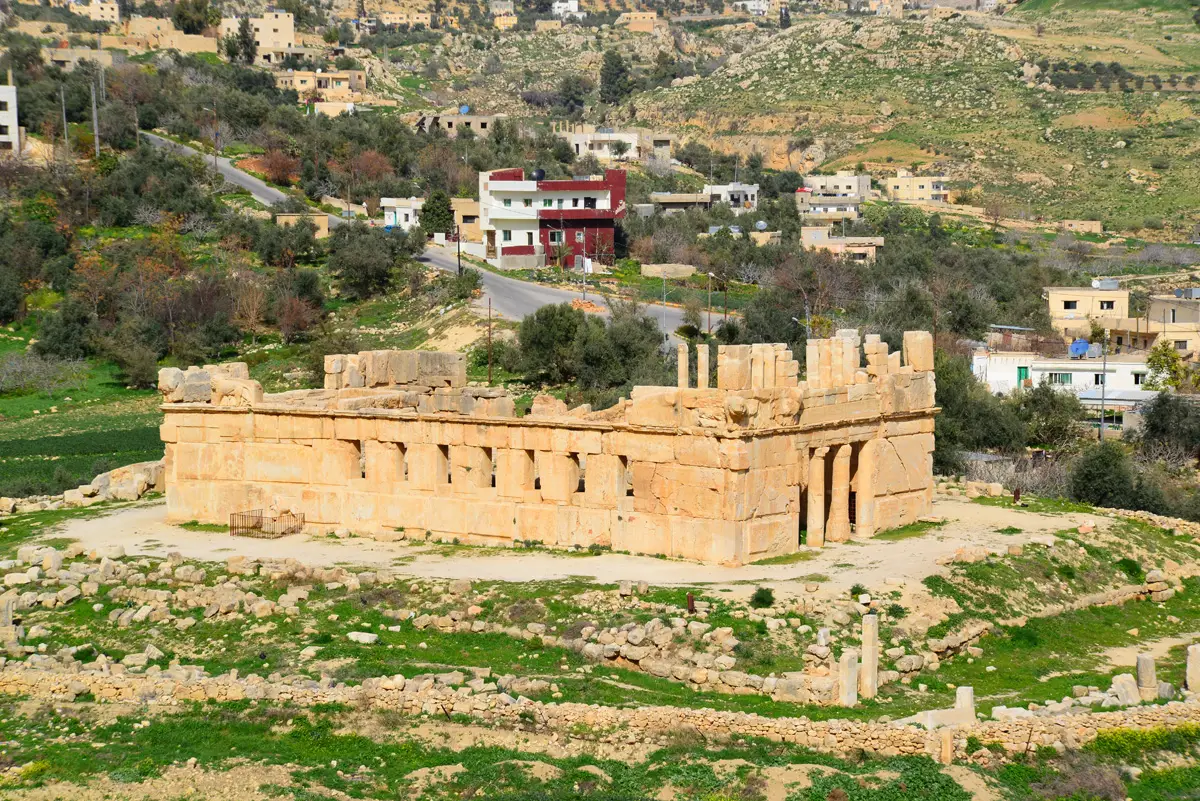

In a quiet green valley west of Amman stands one of the most remarkable Hellenistic buildings in the Middle East. Qasr al-Abd, “the castle of the servant”, was built of giant limestone blocks by Hyrcanus of the Tobiad family in the early 2nd century BC, and lions, eagles and big cats still prowl its walls.
Where Is Qasr Al-Abd?
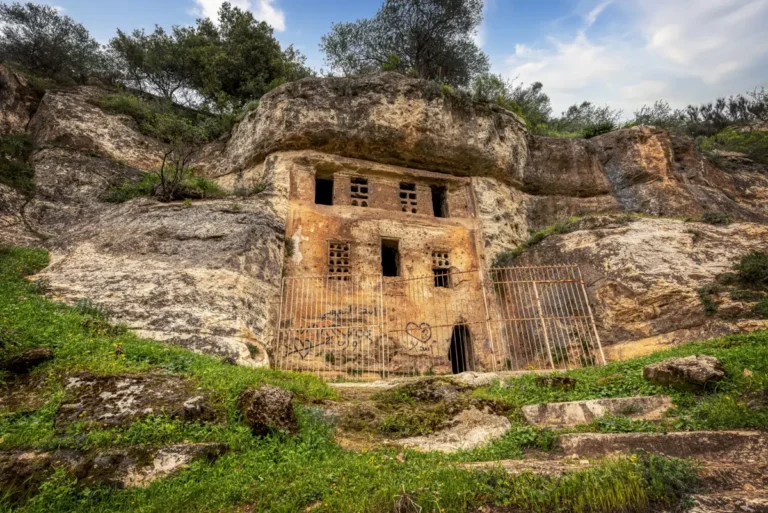
The building stands in the valley of Wadi as-Sir, about 500 m south of the village of Iraq al-Amir and about 17 km west of Amman. In the cliffs north of the village lie the caves of Iraq al-Amir, “the caves of the prince”, and the village is also home to a women’s handicraft cooperative.
Historical Context and Origin
The Tobiads were a Jewish aristocratic family with their power base in the region of Ammon. According to the historian Josephus, Hyrcanus, the youngest son of the tax-farmer Joseph son of Tobias, quarrelled with his brothers and settled beyond the Jordan. There he built a “strong castle” of white stone, carved with huge animals and surrounded by water, and called the place Tyros. He ruled the area for seven years under the Seleucid king Seleucus IV (187–175 BC), and died around 175 BC or a few years later, when his estate was seized by Antiochus IV.
Architectural Design
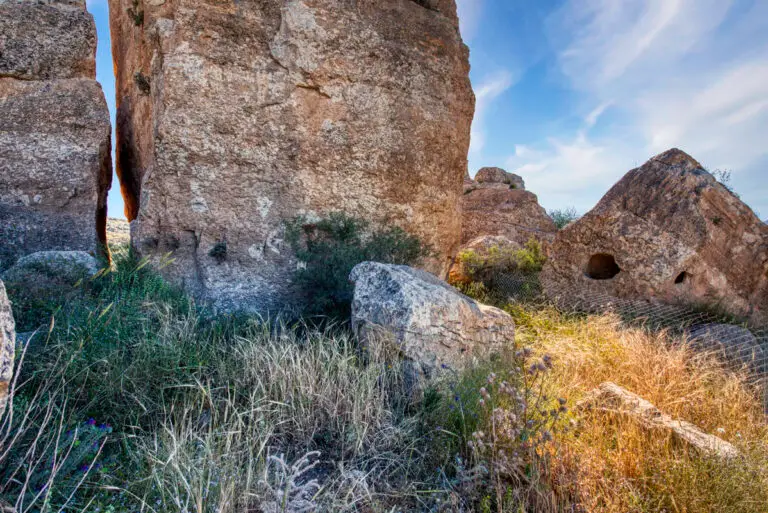
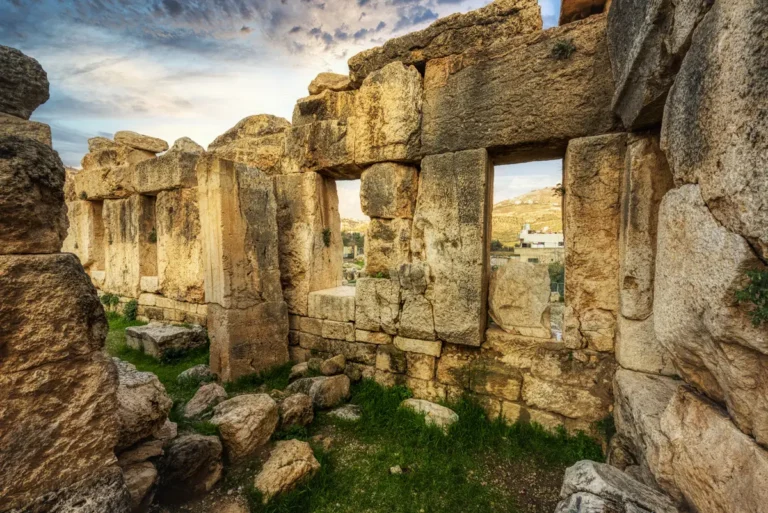
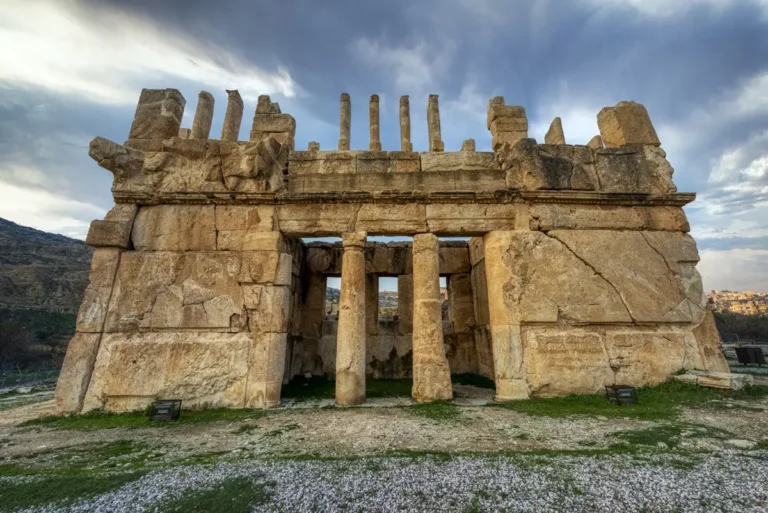
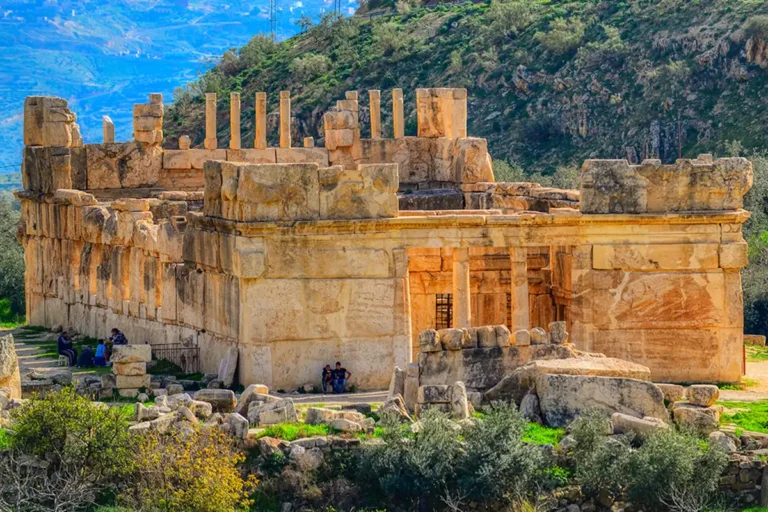
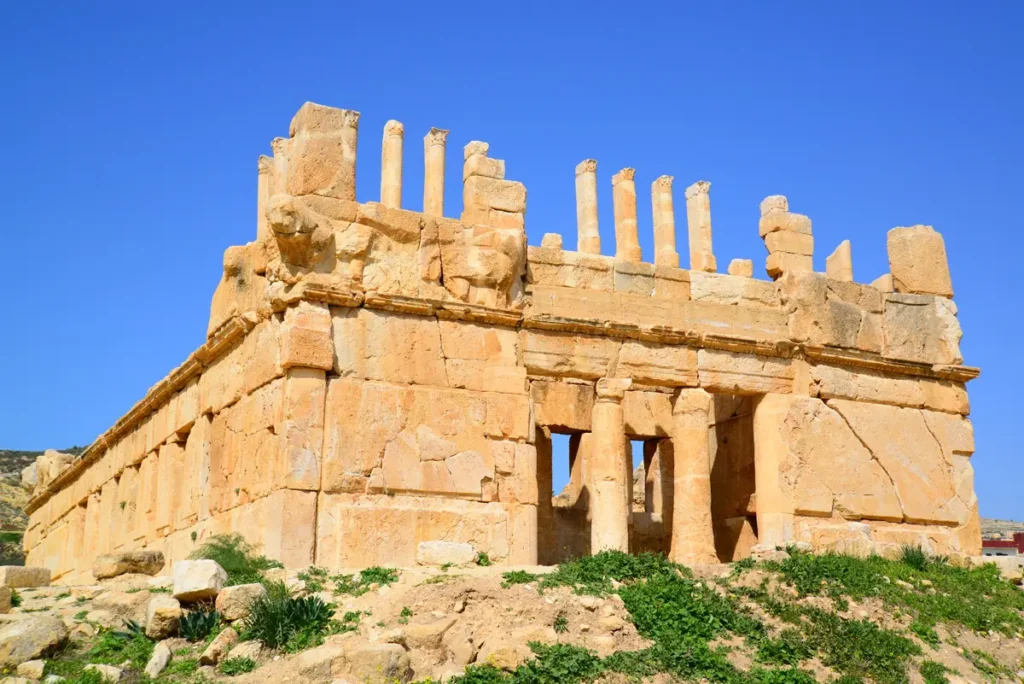
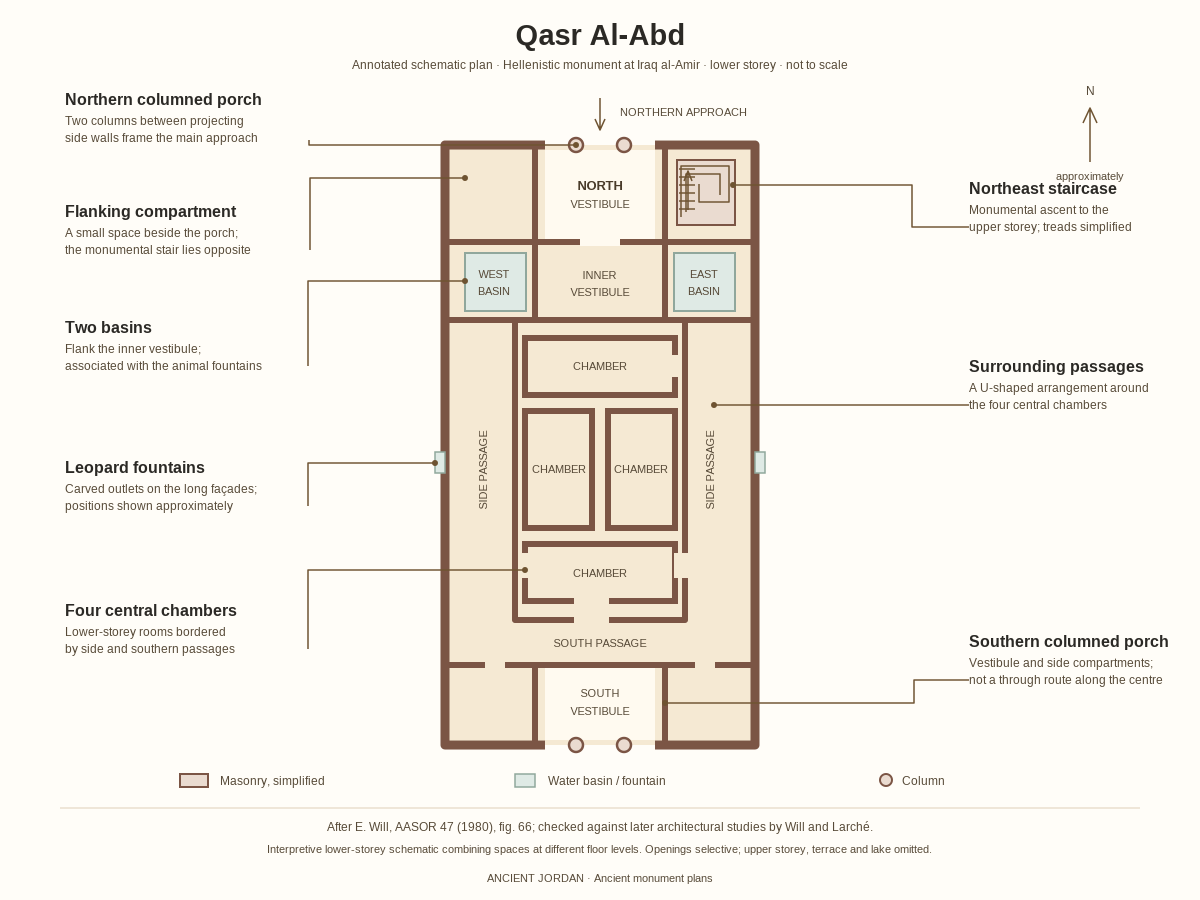
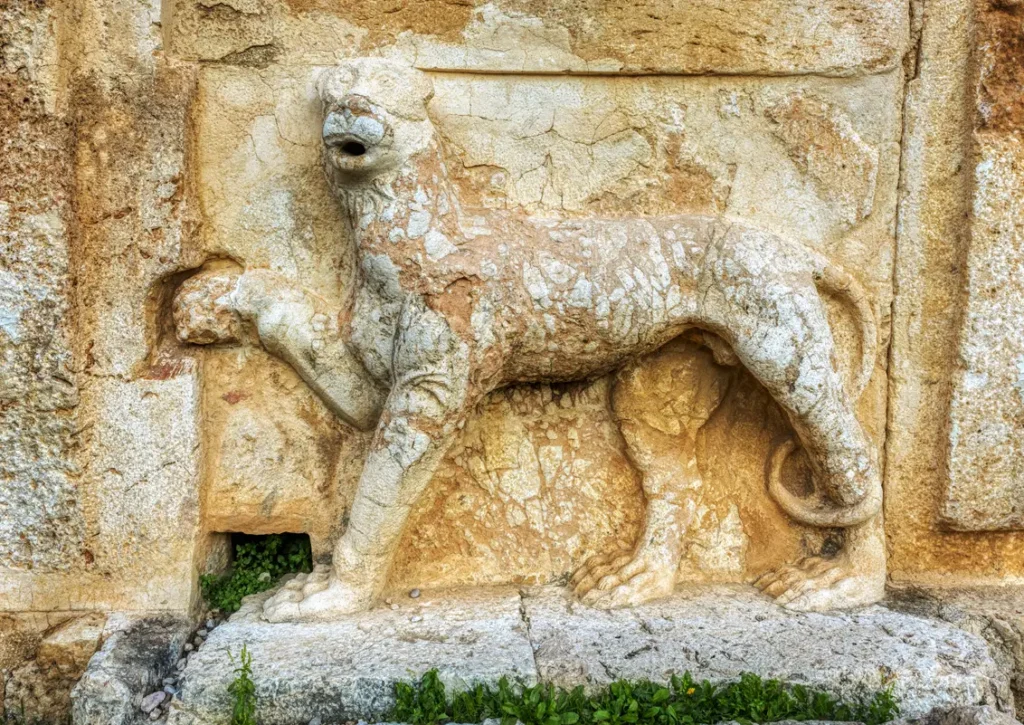
The building measures about 37 × 18.5 m and stood two storeys high, on a platform in an artificial lake held by a dam. Its blocks are among the largest used in the region, up to about 7 × 3 m, but thin, which made the walls vulnerable to earthquakes. Columned porches opened on the north and south. A frieze of lions and lionesses, one with a cub, ran along the upper storey with eagles at the corners, and two big-cat fountains decorated the east and west walls. Unfinished carving shows the building was never completed.
Giant Blocks
Limestone blocks up to about 7 × 3 m.
Lion Frieze
Striding lions and lionesses along the upper storey.
Feline Fountains
Two big-cat fountains on the east and west walls.
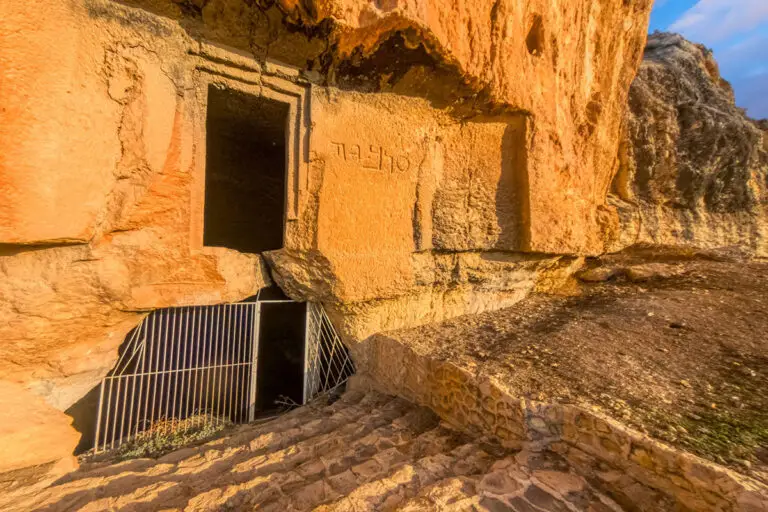
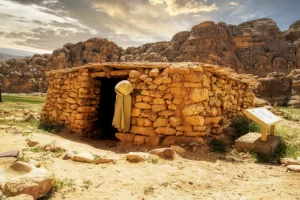
Tobiah Caves
Rock-cut caves with the name Tobiah carved in Aramaic.
The Tobiah inscription
The Tobiah inscription consists of a single personal name, carved near the entrances of two rock-cut halls at Iraq al-Amir (Caves 11 and 13). It belongs to the caves above the village, not to the walls of Qasr Al-Abd. ACOR photographic archive
טוביה
Tobiah.
The letters are the Aramaic-script forms, shown here in modern Hebrew letters. Transliteration: ṭwbyh. Vocalised reading: Ṭōbiyyāh, Tobiah or Tobyah. That is the complete text: there is no accompanying sentence, title, genealogy or date. Posen Library, “Tobyah Inscription”
Meaning of the name: Tobiah is a Hebrew personal name incorporating Yah, a shortened form of the divine name Yahweh. It is commonly explained as “Yahweh is good”, with “Yahweh is my good” another scholarly rendering. This explains the name’s meaning; it is not an additional sentence carved on the rock. Hebrew lexical entry
Connection with the Tobiads: the repeated name supports the association of Iraq al-Amir with the Tobiad family, whose estate is traditionally connected with Hyrcanus and nearby Qasr Al-Abd. The inscription alone does not identify which family member bore the name. Posen Library
Dating: the lettering has received different palaeographic dates. The Posen Library gives a broad fifth–third century BC range, so it should not automatically be assigned to the palace’s early second-century BC construction date.
Biblical identification: the text does not establish that its bearer was Tobiah the Ammonite mentioned in Nehemiah. A name without a title, father’s name or date cannot securely identify that individual.
Palace, Temple or Tomb?
The purpose of the building is still debated. Josephus describes a fortress, early scholars saw a temple, the French excavators a palace or country house, and some recent scholars a family mausoleum. “Palace” is the most common label.
Destruction, Rediscovery, and Restoration
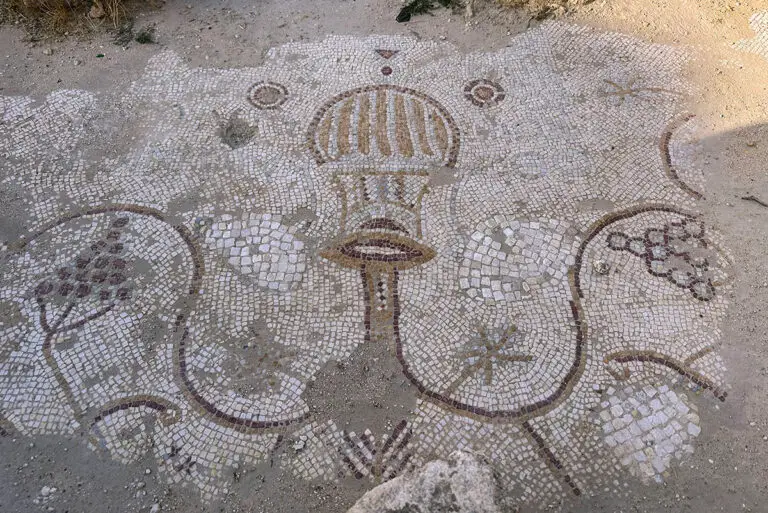
The building was reused in the Byzantine period, and coins show a destruction layer of the 4th century, often linked to the earthquake of 363, with occupation continuing to the late 5th century. When the great walls finally fell is not known. The travellers Irby and Mangles described the ruins in 1817–18, Howard Crosby Butler surveyed them in 1904 and Paul Lapp excavated in 1961–62. From 1976 the French Institute, led by Ernest Will and the architect François Larché, studied every block and rebuilt much of the building by 1986.
Visiting Qasr Al-Abd Today
The interior of the palace is open. Admission is 1 JOD for foreign visitors and free for residents, and the site is included in the Jordan Pass. Allow 20–30 minutes for the palace. The caves are free to enter, with no guard, and take about 40 minutes to explore. See our Qasr Al-Abd travel guide for practical details.
Further reading: Biblical Archaeology Society — Was Qasr al-Abd modelled on the Mausoleum?; Creighton University — Iraq al-Amir virtual tour.