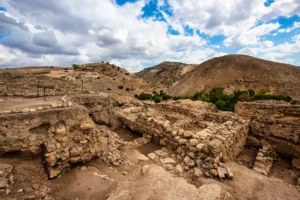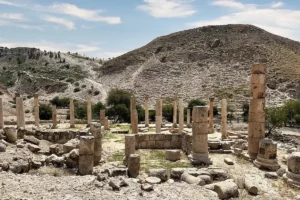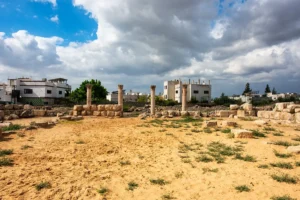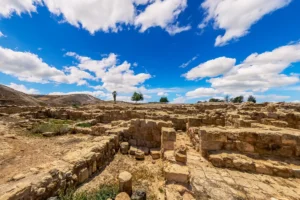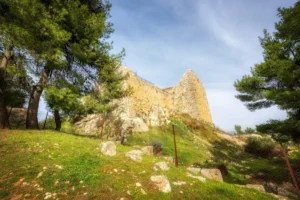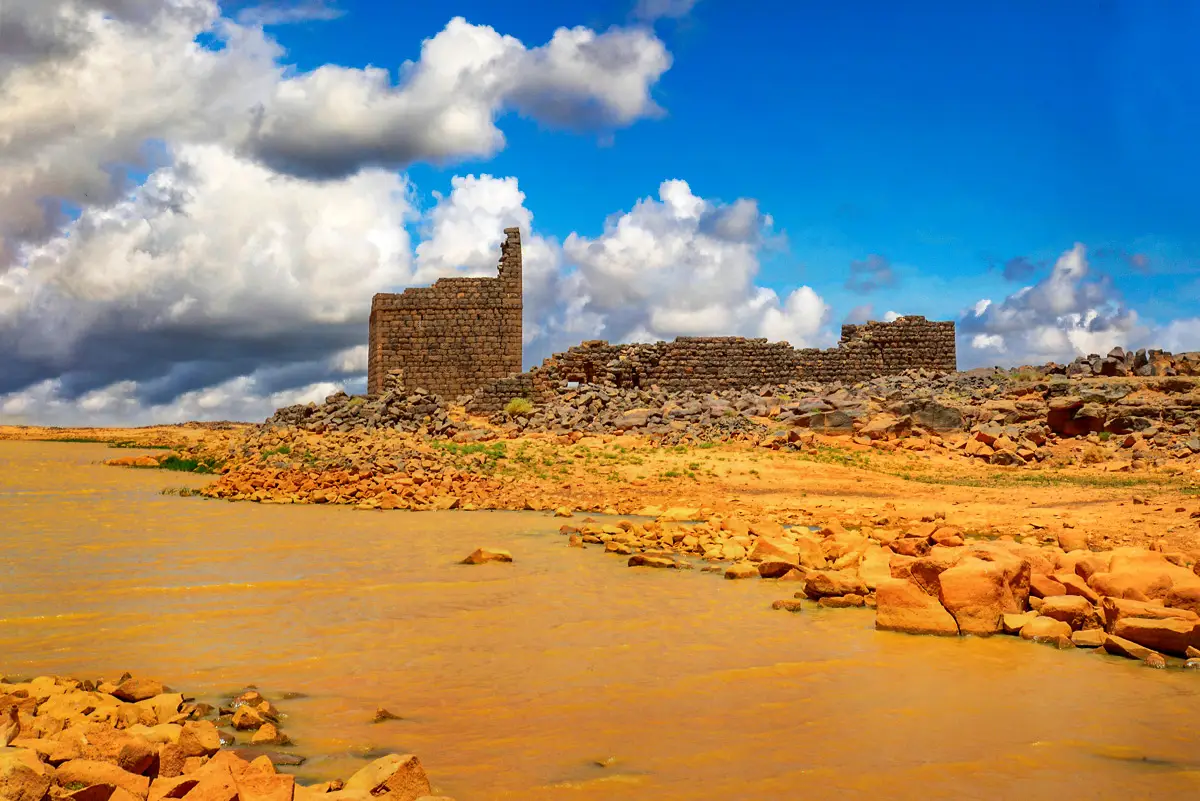












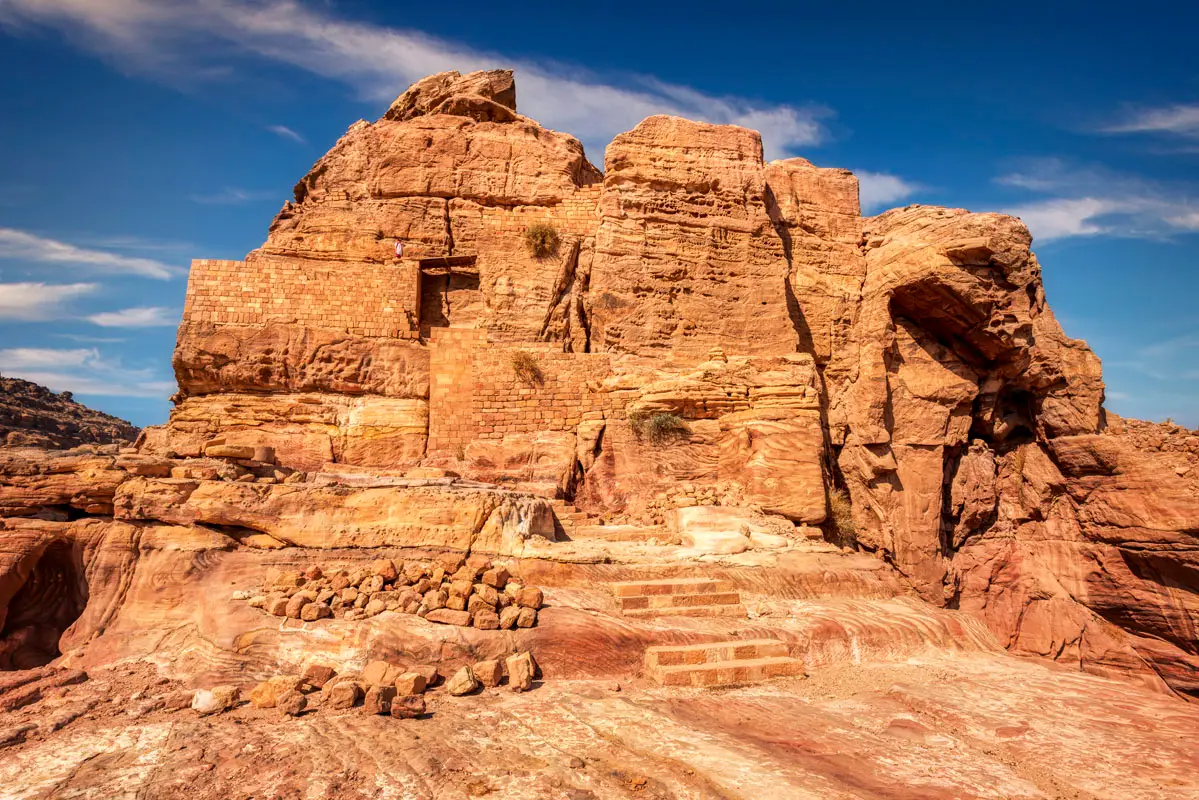


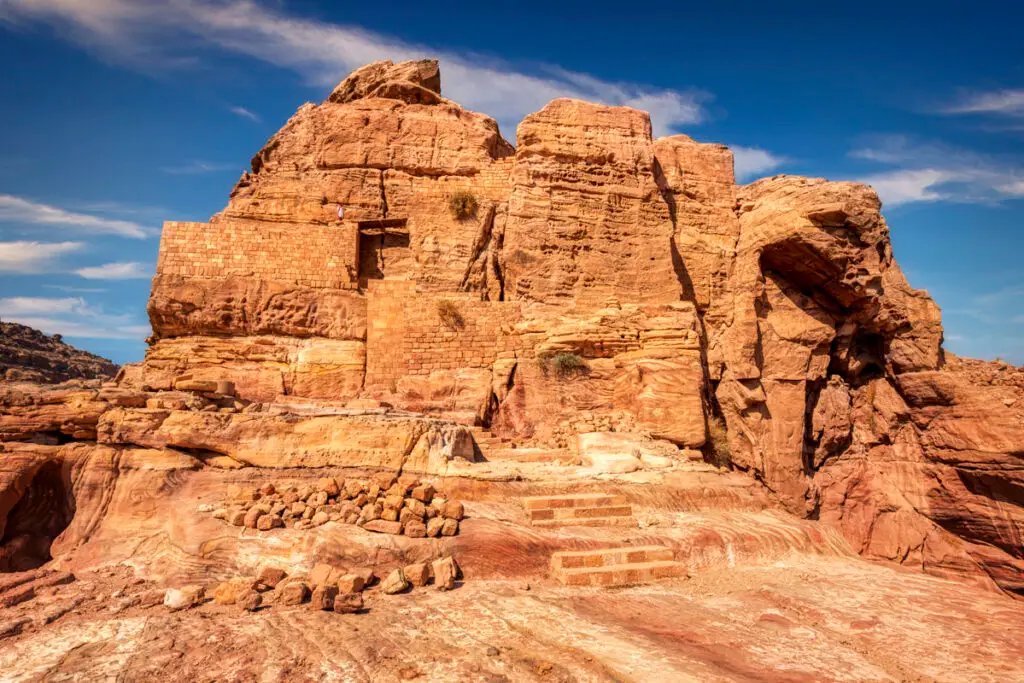
Above Qasr al-Bint, at the western end of Petra’s city centre, rises the rocky hill of Jabal al-Habis. On its summit stand the ruins of a small Crusader fort, built in the early 12th century to watch over the Petra valley, while around its base the Nabataeans cut tombs, shrines and stairways a thousand years earlier.
Where Is Al-Habis?
The hill stands in the heart of Petra, just west of Qasr al-Bint and above the old Petra cave museum. A path of steps climbs from beyond Qasr al-Bint, past the Convent Group of tombs, to a plank bridge and the summit. It lies on the way to the start of the trail to the Monastery.
Historical Context and Origin
After the First Crusade, King Baldwin I of Jerusalem pushed south of the Dead Sea to control the routes between Syria, Egypt and Arabia. Under his rule, in about 1107–1116, the Crusaders built a pair of forts in the Petra valley, which they called Li Vaux Moïse, the Valley of Moses: al-Wu’ayra guarded the outer approach, and al-Habis the inside of the valley. From 1142 the area belonged to the Lordship of Oultrejordain, centred on Karak. After about 75 years, Petra’s castles passed to Saladin in 1188–89, together with Shobak.
Architectural Design
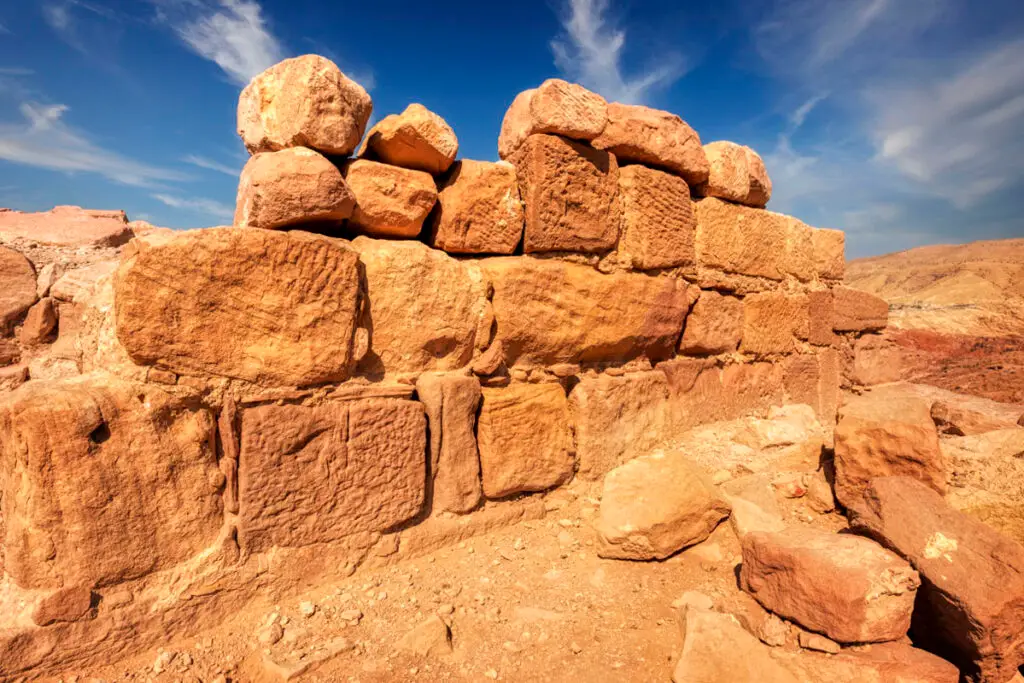
The Florence team found that the fort was built in at least two phases. First, only the upper keep was built, on the remains of a Byzantine tower. Later, a large cistern allowed the fort to expand down the terraces, with three rings of walls below the tower. The ruins include the main tower with its own wall, a rectangular northern tower with arrow slits, a small vaulted bridge carrying the stairs, and the low walls of a residential quarter on the west.
The Keep
The upper tower of the fort, built over a Byzantine tower.
Rings of Walls
Three lines of walls step down the terraces of the hill.
Summit Views
Views over Qasr al-Bint, the city centre and the Royal Tombs.
Nabataean Monuments
The Unfinished Tomb and the Columbarium at the foot of the hill.
Nabataean Monuments Around the Hill
The hill was sacred long before the Crusaders. Nabataean shrines and cult places stand on its slopes, and the Convent Group of tombs lines the path. At the foot of the hill, the Unfinished Tomb shows how façades were cut from the top down, and the Columbarium is covered in small niches whose purpose is still debated.
Destruction, Rediscovery, and Restoration
The Mamluk sultan Baybars visited the site in 1276. Philip C. Hammond published a survey of the fort in 1970, and the University of Florence’s “Medieval Petra” mission recorded and analysed its standing walls between 1996 and 2008. The fort has not been restored.
Visiting Al-Habis Today
The climb takes 10–15 minutes; allow about 40 minutes to explore the summit and come down past the Unfinished Tomb and the Columbarium. See our Al-Habis travel guide for directions.
Further reading: University of Florence — Medieval Petra virtual tour, al-Habis; Vannini et al., ADAJ 55 (2011).