
Qasr Ain Es-Sil
A basalt farmhouse with its own bath, on the edge of Azraq
BuiltUmayyad (661–750)
SizeAbout 18 × 18 m
LocationAzraq North
From Qasr AzraqAbout 2 km
Introduction
Not a palace or a fort, but a family farm with a bath of its own.
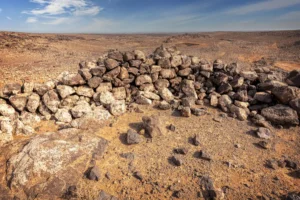
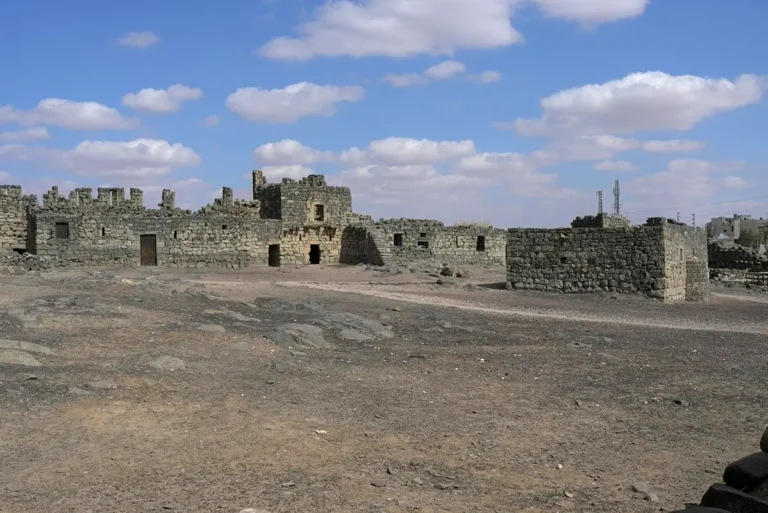
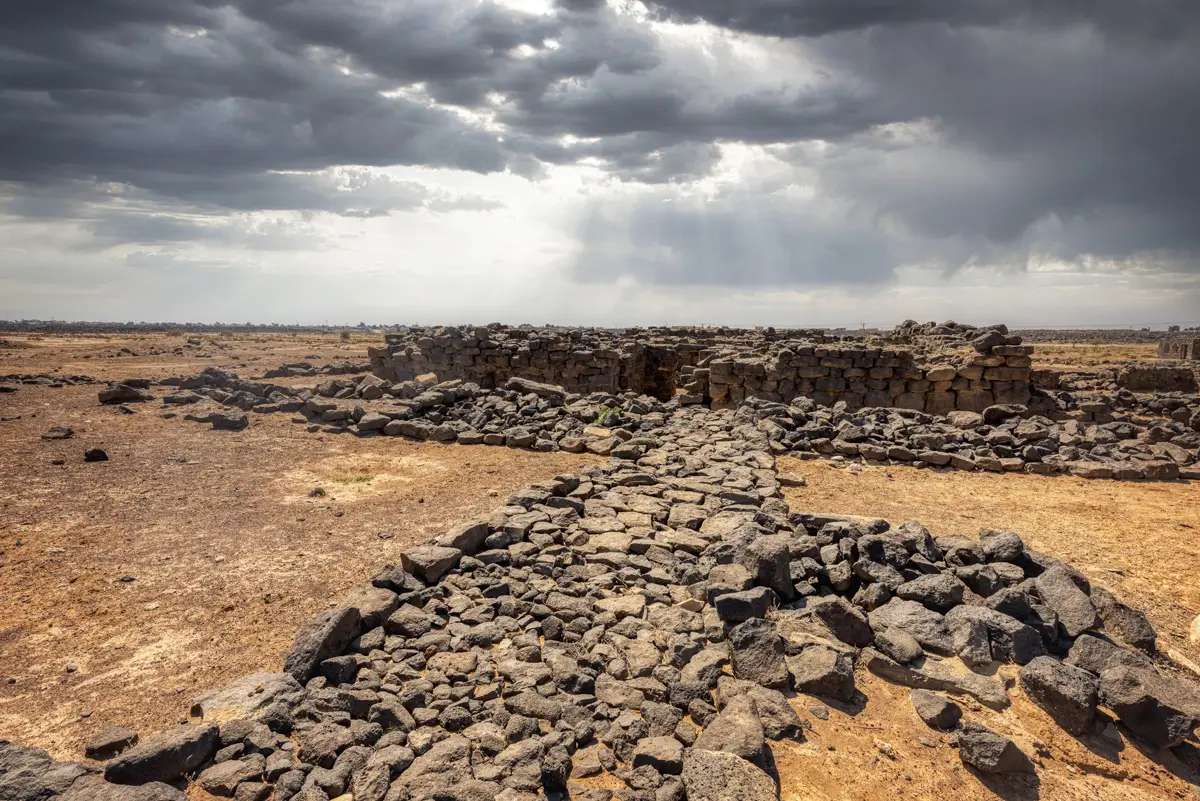
Qasr Ain Es-Sil is a small Umayyad farmhouse in Azraq North, about 1.75 km north-east of Qasr Azraq. It was never a palace: it was the homestead of a small farming estate, built of black basalt around a courtyard, with a bath against its west wall and olive presses in two of its rooms.
The Department of Antiquities excavated and cleared the site in 1984. It takes only a few minutes to reach from Qasr Azraq, and it shows a side of Umayyad life that the grand desert castles don’t: everyday work on the land.
Best timeMar–Apr · Oct–Nov
Time needed15–20 min
TicketFree
From Amman105 km1 hr 50 min
Combine withQasr Azraq · 5 min
Google rating3.7 · Reviews
Highlights · A working farm
Farm, presses and a bath
Basalt rooms, olive presses and a small bath
Ain Es-Sil is small enough to see in a quarter of an hour. Look for the details of daily life: the presses, the rooms around the yard and the little bath.
 01 / 05
01 · Construction
Basalt walls
Walls
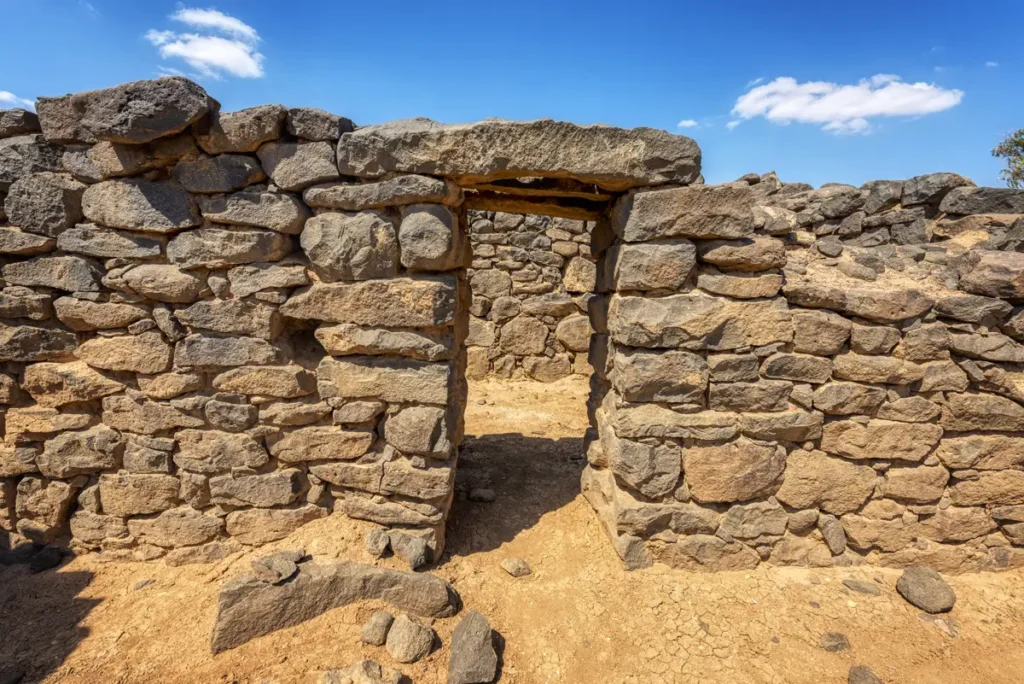
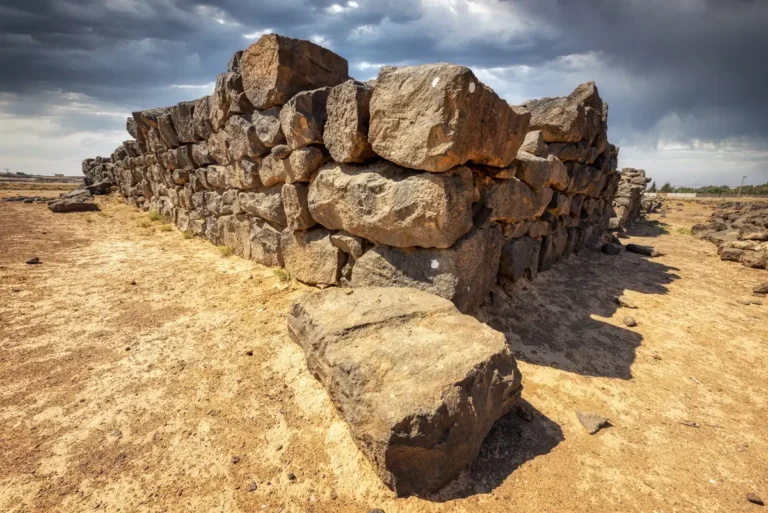
The walls are 1.4 m thick: two faces of roughly squared basalt blocks with a rubble core, set straight on the bedrock.
Look closely
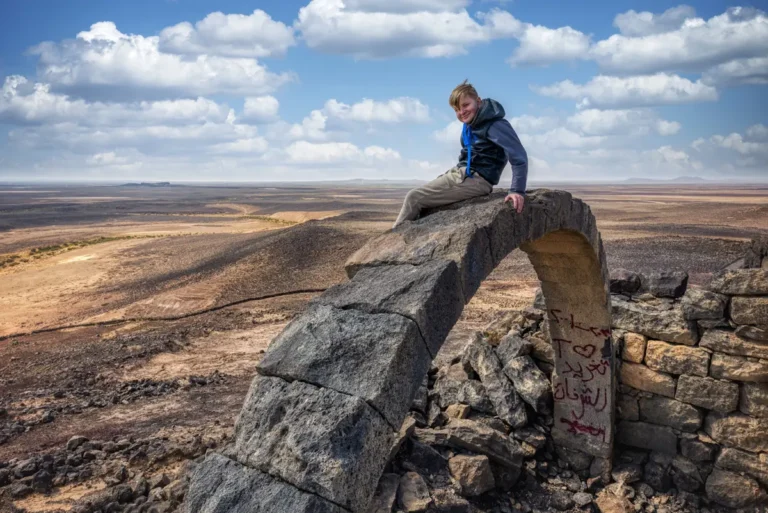
The stone lintel over the doorway.
1 of 5
Room by room
What to see
Five short stops: the outer walls, the courtyard and rooms, the olive presses, the bath and the view over the plain. Pick a stop to see what to look for.
1 / 301 · Outside
Start at the walls
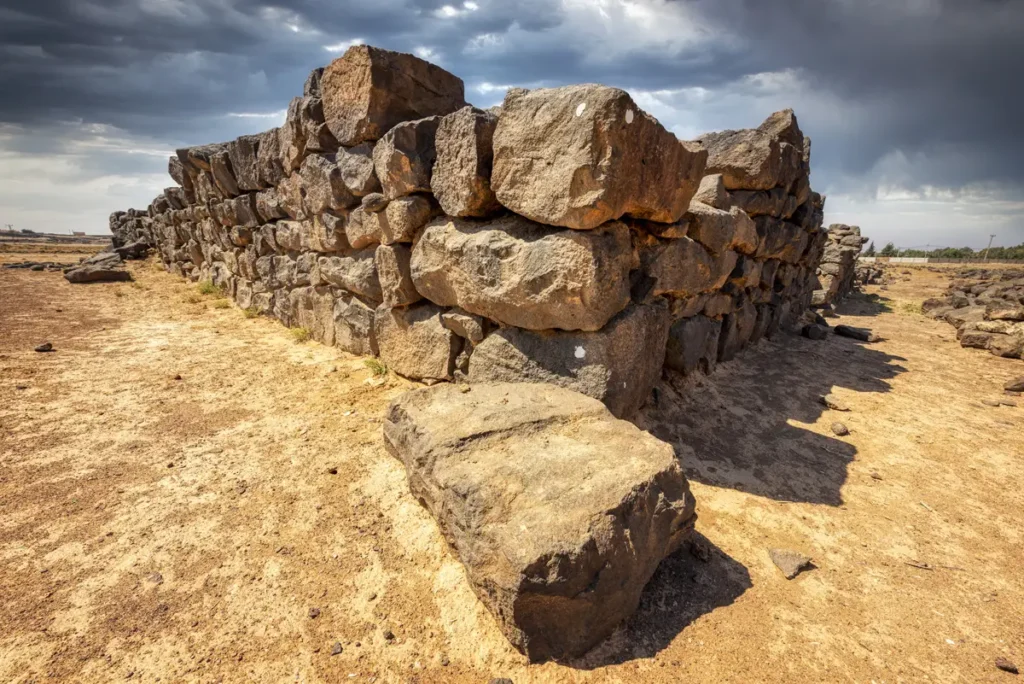
The main building is almost square, about 17.7 × 17.8 m. Its walls are 1.4 m thick, made of two faces of roughly squared basalt blocks with a core of rubble, and they sit directly on the bedrock without foundations.
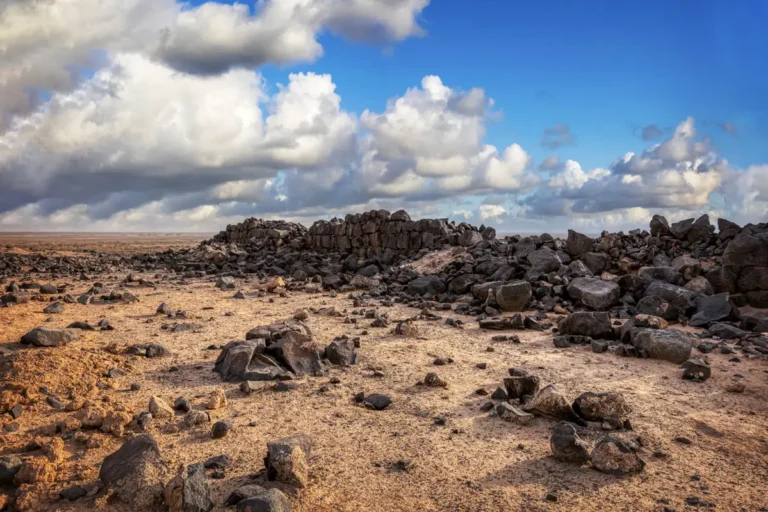
Basalt was the obvious material here: the Azraq area sits on the edge of the black basalt desert.
17.7 × 17.8 mBasalt1.4 m wallsNo foundations
Look for
- The two faces of each wall
- The stone lintels over the doorways
- Bedrock under the walls
 1 / 5
02 · The courtyard
Step into the courtyard
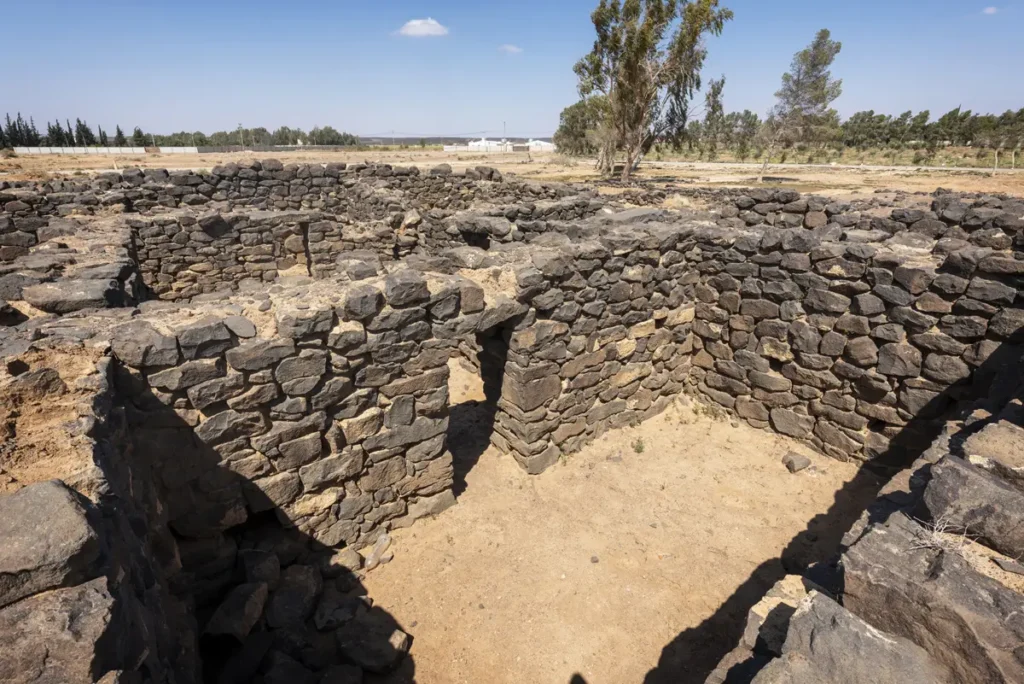
Inside, seven rooms are built against the outer walls around a central courtyard. Ghazi Bisheh, who described the site for the Department of Antiquities, saw it as the homestead of a small estate adapted for a family.
Some summaries of the site say four rooms; the excavators counted seven.
Seven roomsCentral courtyardFamily homestead
Look for
- Doorways from the courtyard into the rooms
- Rooms of different sizes
Dig deeperRediscovered in 1984
The Department of Antiquities excavated and cleared Ain Es-Sil in 1984, and the work showed that it was first built in the Umayyad period. French archaeologist Rémy Elter later studied the complex with the Department and published it in 2013.
No inscription has been found, so the building cannot be dated more closely than the Umayyad period (661–750).
 1 / 1
03 · Olive oil
Find the olive presses
Two olive presses were found in two of the rooms. They show that the estate grew olives and pressed its own oil, using water from the Azraq springs.
Look for carved stones set in the ground.
Two pressesOlive oilFarm estate
Look for
- Carved stones set in the ground
- The rooms where the presses stood
 1 / 3
04 · West side
Look at the bath
A small bath abuts the west wall of the house. It has an entrance room and then cold, warm and hot rooms laid out in a row from north to south, the same sequence as in the grander baths of Qasr Amra and Hammam As-Sarah.
The hot room would have been heated from below.
Entrance roomCold, warm, hotHeated floor
Look for
- The row of small rooms
- The sunken floors of the heated rooms
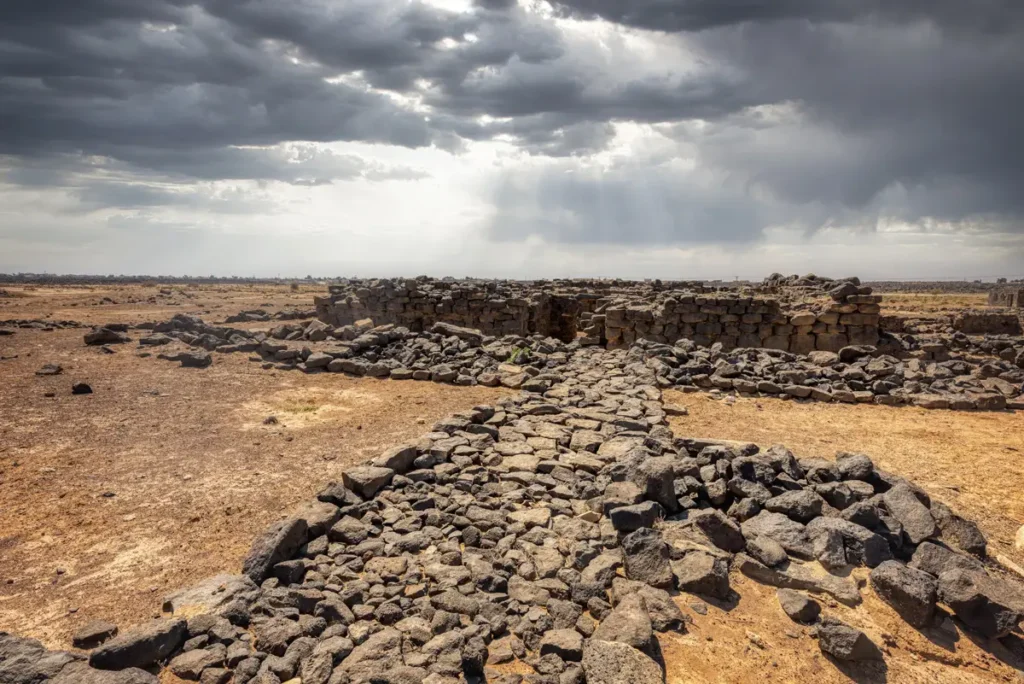 1 / 3
05 · Setting
Look out over the plain
Ain means spring in Arabic. The farm stood on the northern edge of the Azraq oasis, whose springs watered fields here until they were pumped dry in the late 20th century.
Today the farm sits among the houses and walls of Azraq North.
Azraq oasisBasalt plainAzraq North
Look for
- The flat basalt plain
- Qasr Azraq to the south-west
History & significance
A farm on the edge of the oasis
Ain Es-Sil was built in the Umayyad period as the homestead of a small farming estate, with olive presses and a bath. It was excavated in 1984.
- 661–750Built in the Umayyad period
- 1984Excavated by the Department of Antiquities
- 2013Published by Elter and al-Jbour
 ProfileQasr Ain Es-Sil: the full storyHistory, architecture, the bath and the timeline. About 2 min read.Read the profile →
Plan your visit
Everything you need to know before you go
Qasr Ain Es-Sil is in Azraq North, a short drive from Qasr Azraq. The road is paved, and it makes an easy extra stop on a visit to Azraq.
Good to know: the site is unstaffed, with no facilities or shade. It is easy to combine with Qasr Azraq, a few minutes away.
Opening hoursOpen accessUnstaffed site · visit in daylight
Entry ticketFreeNo ticket office
Time to visit15–20 minA short stop from Qasr Azraq
From Amman105 kmAbout 1 hr 50 east via Highway 40 and Azraq
LocationAzraq North31.8941° N, 36.8458° EGet directions
Opening hours and prices checked October 2026. Spotted a change? Let us know
Facilities by location
Near the entrance
No designated parking
Access: No 4x4 needed.
When to go
Spring and autumn are best. Summer in Azraq is very hot.
J
F
M
A
M
J
J
A
S
O
N
D
BestGood, cooler or warmVery hot
Tip: visit it straight after Qasr Azraq: both are built of the same black basalt, and seeing them together shows how differently it was used.
Before you go
Services are limited out in the desert.
- Water and snacksShops and restaurants in Azraq
- Sun hat and sunscreenVery little shade outside
- Comfortable shoesUneven, stony ground
- Cash in Jordanian dinarsFor small purchases
- Toilet paperBring your own, just in case
Common questions
Quick answers before you set off.
Is there an entrance fee?
No. The site is open and unstaffed.
How far is it from Qasr Azraq?
About 1.75 km north-east, a few minutes by car on paved roads.
Was it a desert castle?
Not in the sense of a palace. It was a family farmhouse with a bath and olive presses, built in the Umayyad period.
Was there a Roman building here first?
No evidence for one has been found. The excavation showed that it was first built in the Umayyad period.
Can I visit it on a tour?
Yes. It is an optional stop on our Black Desert, Azraq Oasis & Desert Castles tour, on request.
What should I wear?
Comfortable, closed shoes for uneven ground, and light clothing that covers your shoulders and knees, which is respectful in rural Jordan and protects you from the sun.
Combine with
Ain Es-Sil is in Azraq, the hub of the Eastern Desert. Drive times are from Qasr Ain Es-Sil.
1 Qasr AzraqRoman and Ayyubid fort3 km · ~5 min drive · Tour 12Azraq Wetland ReserveNature reserve8 km · ~12 min drive · Tour 13
 Qasr UsaykhimRoman hilltop fort19 km · ~30 min drive · Tour 14Qasr AmraUNESCO World Heritage33 km · ~35 min drive · Tour 1
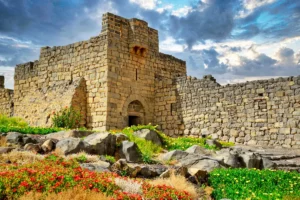 Qasr AzraqRoman and Ayyubid fort3 km · ~5 min drive · Tour 12
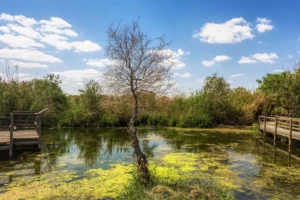 Azraq Wetland ReserveNature reserve8 km · ~12 min drive · Tour 13
 Qasr UsaykhimRoman hilltop fort19 km · ~30 min drive · Tour 14
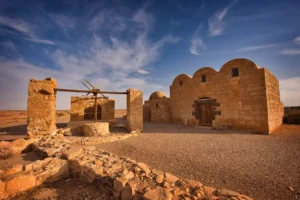 Qasr AmraUNESCO World Heritage33 km · ~35 min drive · Tour 1
Tour 1 Black Desert, Azraq Oasis & Desert Castles. Compare the tours
Private tours
Add Ain Es-Sil to a private day tour
Ain Es-Sil is an optional stop on this tour, on request: it is only minutes from Qasr Azraq. The tour is just for you: your own vehicle and driver, hotel pickup in Amman, entry tickets included, and one fixed price for up to three travellers.
Private: only your group
Your own vehicle & driver
Hotel pick-up in Amman
Entry tickets included
from$170per group (1–3) · 120 JOD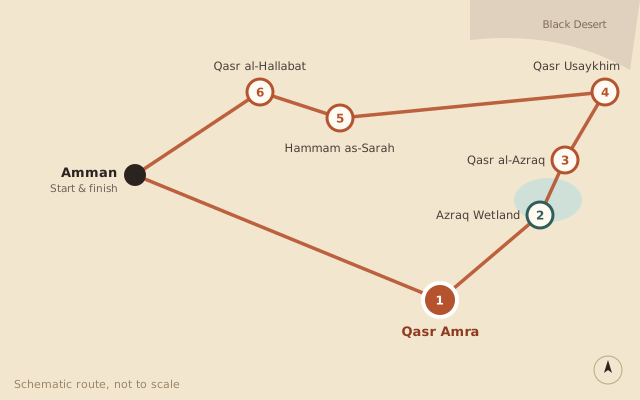
Tour 1 · Full day · Private
Black Desert, Azraq Oasis & Desert Castles Full-Day Tour
Journey deep into Jordan’s eastern desert on this private full-day adventure that combines remarkable history with unique desert landscapes. Scattered across the region are the mysterious Umayyad Desert Castles—impressive complexes dating back to the 8th century that once served as palaces, caravan stations, and administrative centres during the early Islamic period.
HistoryArchitectureNatureCultureArt5 Desert Castles
Duration7–8 hr
Pick-up8 or 9 AM
Group1–3, private
Included
- Private luxury transfer
- Entrance fees
- Bottled water, soft drinks, snacks
- Coffee/tea (on request)
- WiFi, Phone charger
Not included
- Professional on-site (local) guide
- Personal expenses
- Lunch
CancellationFull refund if you cancel at least 24 hours before the start. No refunds or changes within 24 hours.
Pick-upFrom your hotel lobby or home in Amman, 5 minutes before your chosen start time.
BringComfortable shoes, sun hat, sunblock and sunglasses. Tours run in English.
Explore this site
More from Qasr Ain Es-Sil
Panoramas, walk-throughs, photos and stories about this site.
ProfileQasr Ain Es-Sil: history & architecture Photo albumQasr Ain Es-Sil: An Umayyad Farmhouse in Photos
 360°360° panoramaQasr Ain Es-Sil: 360° Panorama
Nearby