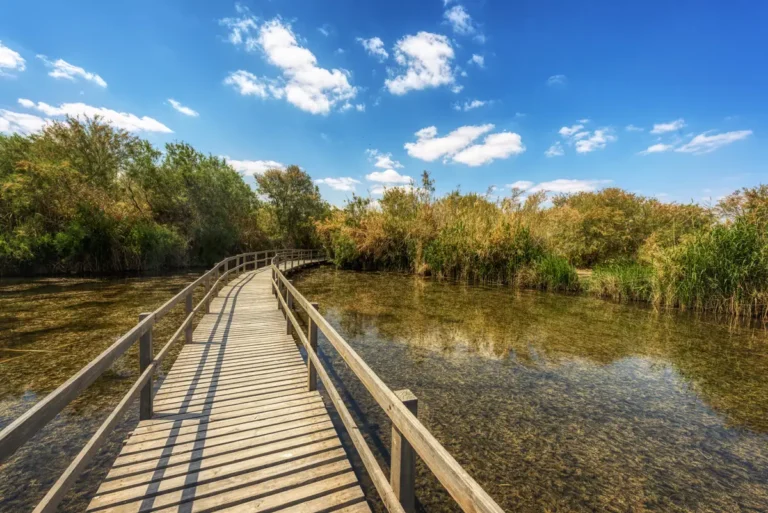


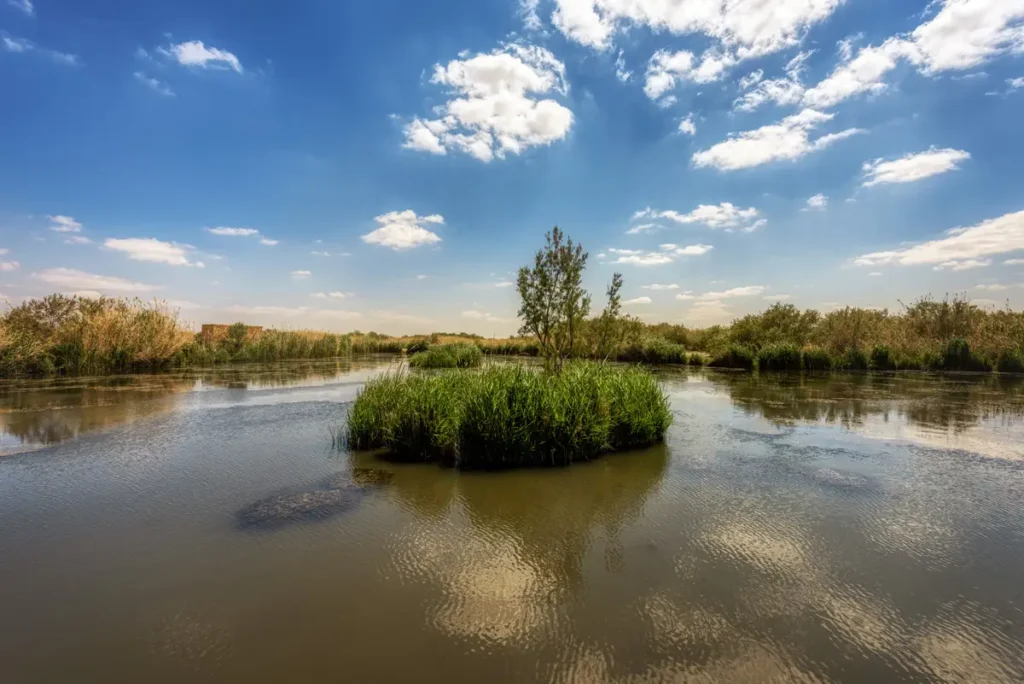
For thousands of years the springs of Azraq fed the only permanent wetland in Jordan’s eastern desert. Pumping drained it almost completely in the 1980s and 1990s, and the Azraq Wetland Reserve protects and restores what remains: pools, reeds and mudflats where migrating birds still stop on their long journeys.
Where Is the Azraq Wetland Reserve?
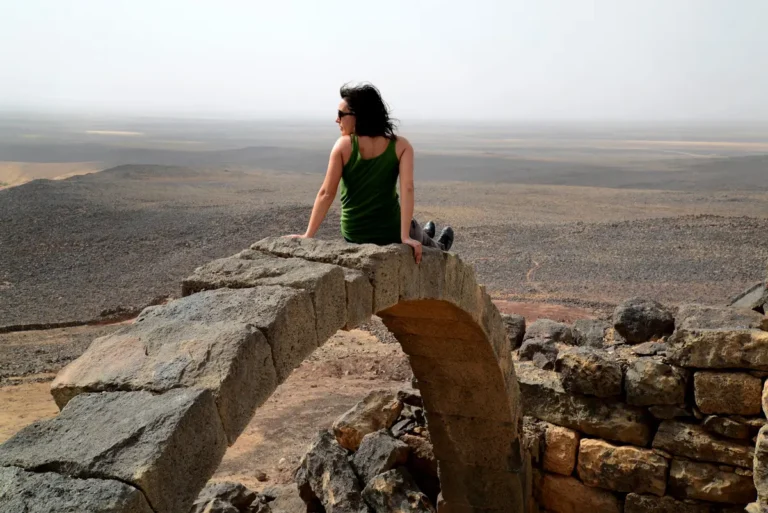
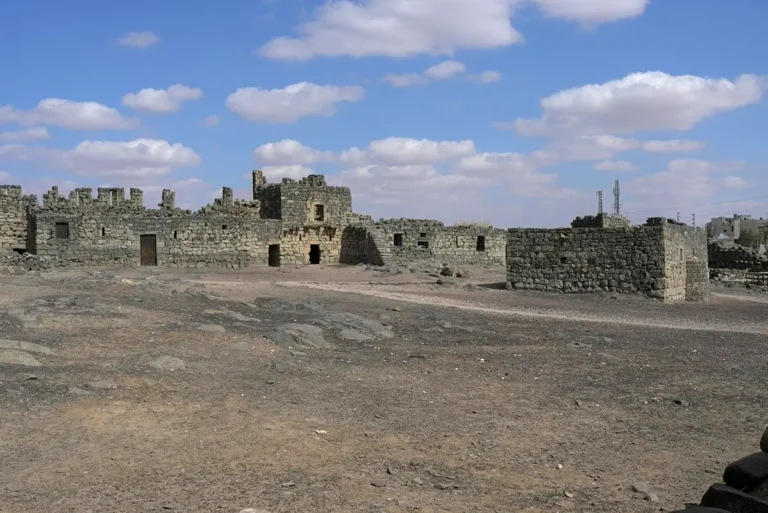
The reserve lies on the eastern edge of Azraq South, about 100–115 km east of Amman, and is signposted from the main road. Qasr Azraq is about 5–7 km to the north, and the desert castles of Amra and Kharana lie along the road from Amman.
History of the Oasis
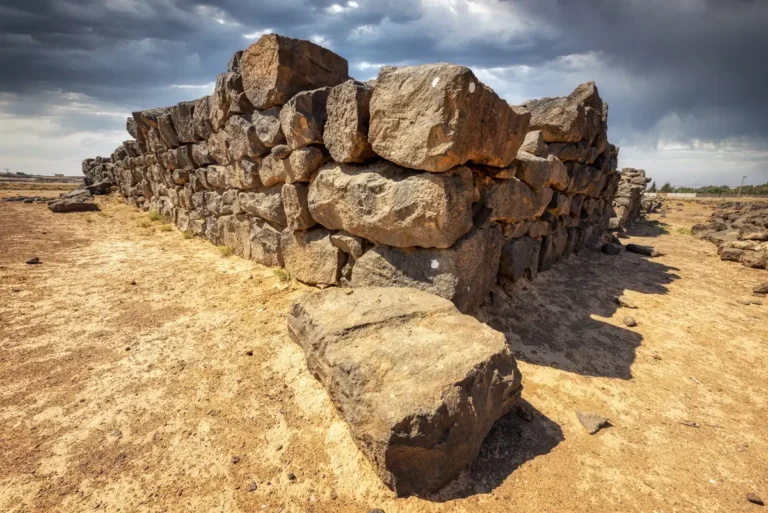
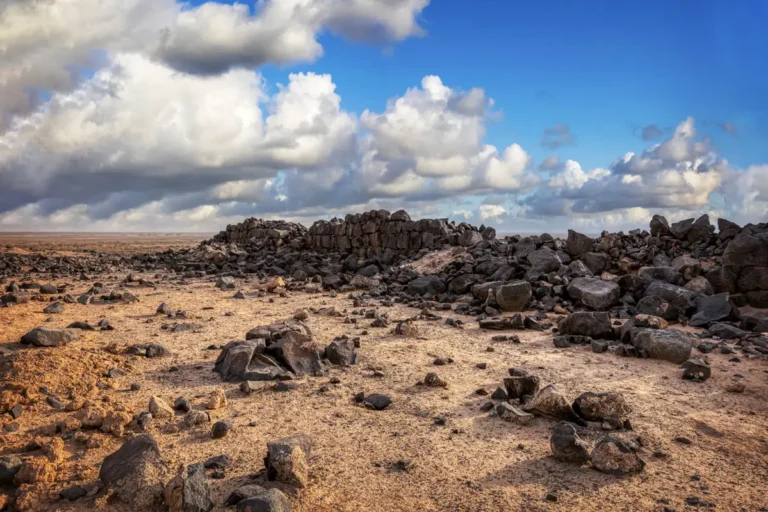
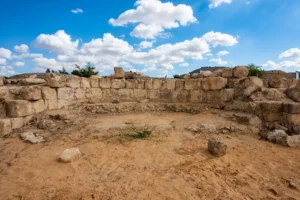
People have used the Azraq basin for hundreds of thousands of years: at Shishan, stone tools lie with the bones of ancient elephants and rhinoceros up to 250,000 years old. Inside the reserve, a long basalt wall at ʿAyn Sawda was excavated in 2013–16 and dated to the Umayyad period, with Abbasid rebuilding. In 1977 the Azraq Oasis became one of the first wetlands listed under the Ramsar Convention, and the RSCN founded the reserve in 1978. In 1967 more than 340,000 waterfowl were counted here.
Habitats and Wildlife
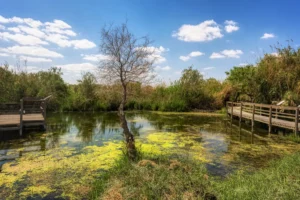
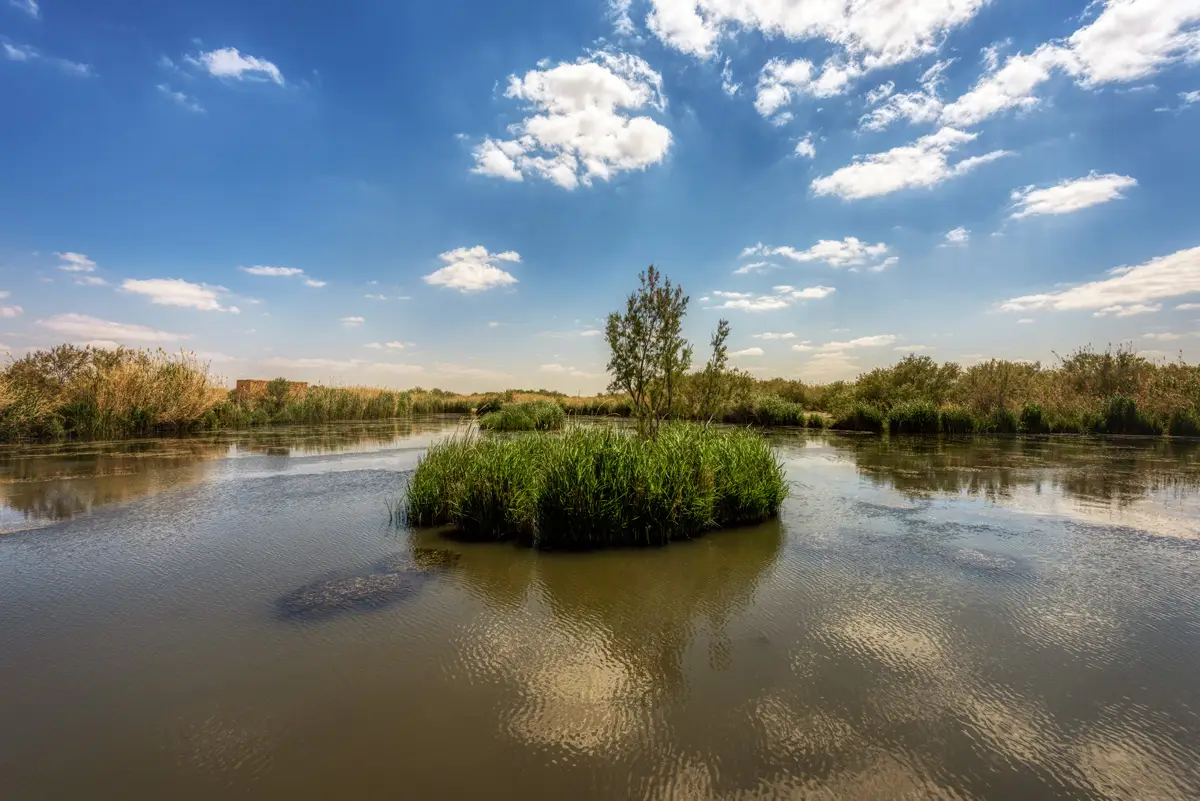
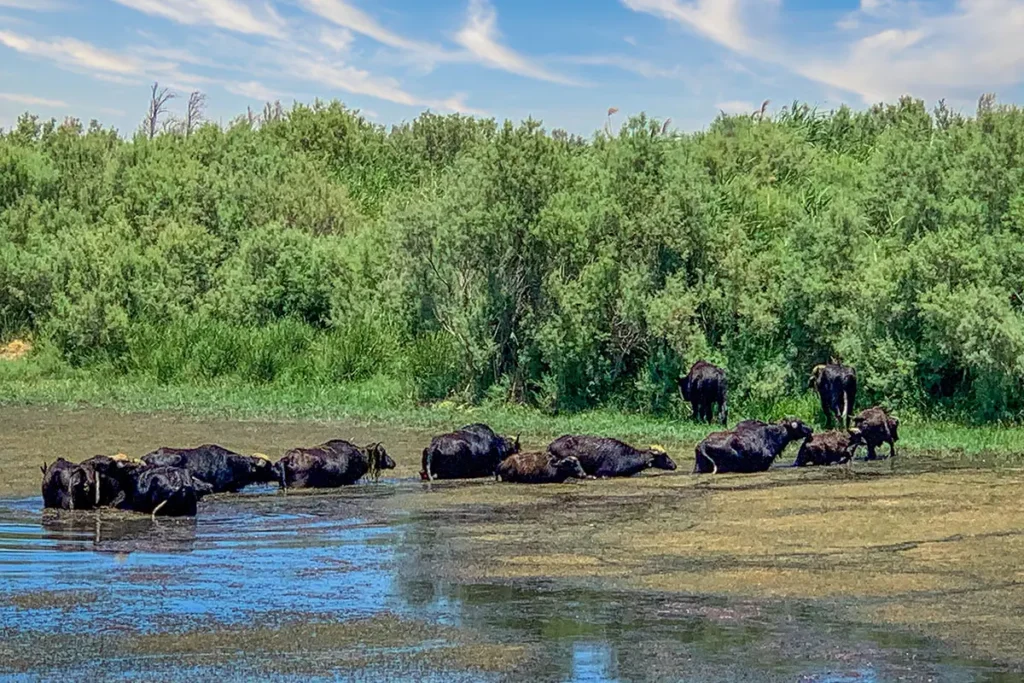
The reserve combines reed and sedge marsh, open pools, dry marsh and a huge seasonal mudflat, the Qa’ al-Azraq. The RSCN has recorded about 329 bird species, about two-thirds of Jordan’s list, along with more than 216 plants and 15 dragonflies. The Azraq killifish, a small fish found nowhere else, is Jordan’s only endemic vertebrate. Water buffalo, brought by Chechen settlers and later reintroduced as a managed herd, graze the reeds.
Marsh Trail
A 1.5 km boardwalk through reeds and pools, with bird hides.
Migrating Birds
About 329 bird species recorded on the Africa–Eurasia flyway.
Azraq Killifish
Jordan’s only endemic vertebrate, saved by captive breeding.
Water Buffalo
A managed herd keeps the reed beds open.
Drying and Restoration
From 1963 water was pumped from Azraq to Irbid, and from 1980 to Amman; private wells added more. The springs stopped flowing by 1992, waterfowl numbers collapsed and the killifish almost disappeared. From 1994 the RSCN, with international support, pumped water back into the pools and built boardwalks and hides. About 10% of the former wetland has been restored, a new pool was added in 2016–17, and in 2020 about 650 killifish bred in captivity were returned to restored pools. The reserve joined the IUCN Green List in 2018.
Visiting the Azraq Wetland Reserve Today
Entry is 8 JOD for foreign visitors and 6 JOD for residents, including the self-guided Marsh Trail. Guided trails, a lodge and local cultural experiences can be booked with the RSCN. Allow about an hour, longer for birdwatching. See our Azraq Wetland Reserve travel guide for practical details.
Further reading: RSCN — Azraq Wetland Reserve; Ramsar — Azraq Oasis (site 135); World Wetlands Day — Restoration of the Azraq Wetland.