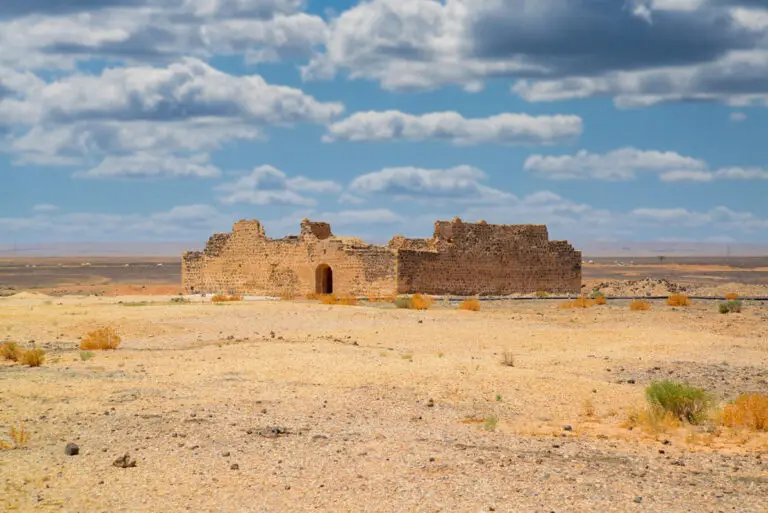

In the old Hijaz quarter of Ma’an stands a square stone fort built in the reign of Sultan Süleyman the Magnificent. For centuries it guarded the pilgrims of the Hajj; later it served as a government building and a prison, and today it houses the Ma’an Heritage Museum.
Where Is Qal’at Ma’an?
The fort stands in the Hijaz quarter on the south-eastern side of Ma’an, beside the wadi. It was built south of the old settlement, near the camping grounds of the Hajj caravans; after the Hejaz Railway reached Ma’an in 1904 the town grew up around it.
Historical Context and Origin
Ma’an was a major halt on the Darb al-Hajj, the pilgrimage road from Damascus to Mecca and Medina. To protect the caravans, the Ottomans built a chain of forts along the route. The fort at Ma’an was probably built between 1559 and 1563, under Süleyman the Magnificent; a foundation inscription over the entrance records his patronage. The fort had a reservoir and a small aqueduct to supply water.
Architectural Design
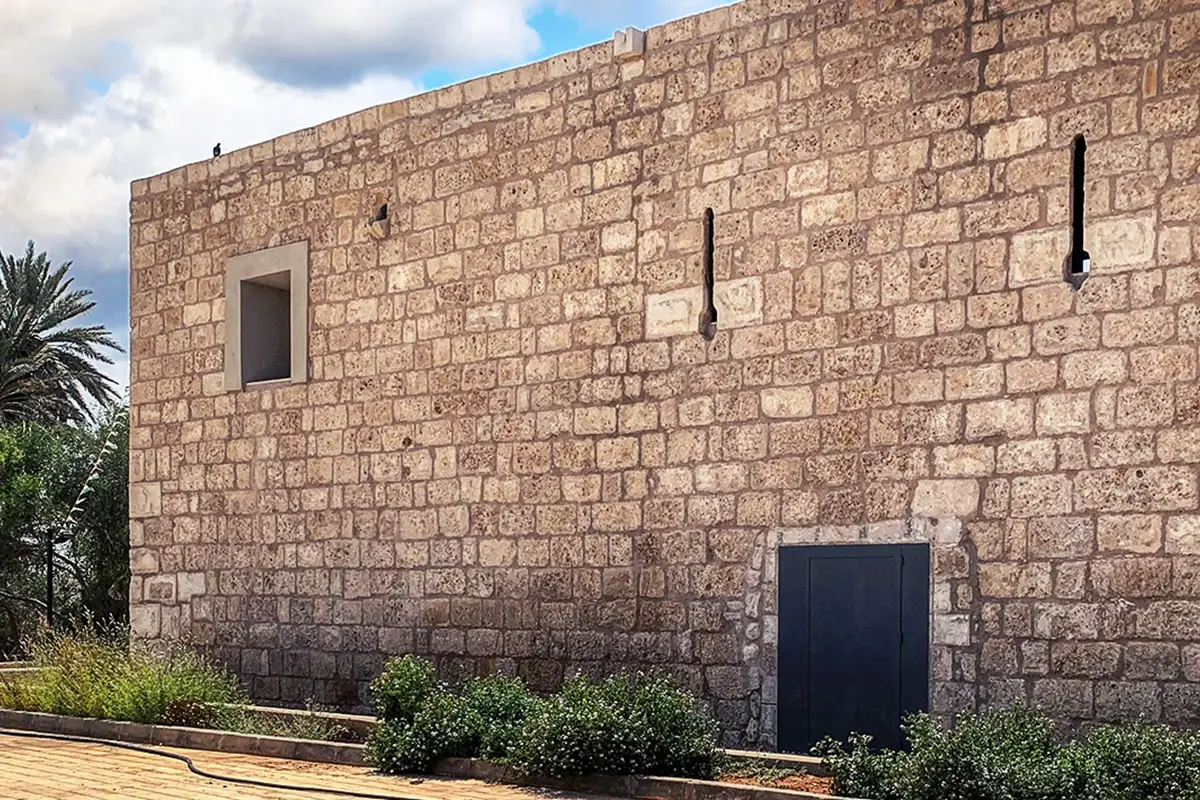
The fort is roughly square, about 24 m on each side, built of limestone with walls up to about 9 m high pierced by gun loops. The gate, on the south side, has carved stonework — a feature that sets it apart from the plainer forts of the 18th century — and leads through a covered passage into a courtyard. Six rooms open onto the courtyard, with two more at the entrance; upstairs are eight rooms, one of them a small mosque with a mihrab. A pool and water channels served the garrison.
Süleyman’s Fort
Built 1559–1563 to protect the pilgrim caravans to Mecca.
Inscribed Gate
A foundation inscription and carved stonework mark the entrance.
Two Storeys
Rooms around a courtyard, with a small mosque and mihrab upstairs.
Heritage Museum
Restored in 2018–2019 and opened as the Ma’an Heritage Museum.
From Prison to Museum
By the mid-19th century the fort was in poor repair. In the 20th century it became a government building and was used as a prison until 1983, and later as the regional office of the Department of Antiquities. In 2018–2019 the Ministry of Tourism and Antiquities restored it under archaeological supervision, and in 2021 it opened as a heritage museum. When Emir Abdullah arrived in Ma’an in November 1920, he set up his headquarters not in the fort but in the Hejaz Railway station, now the Founder King’s Palace museum.
Destruction, Rediscovery, and Restoration
Earlier repairs had not always been carried out with care. The restoration of 2018–2019, carried out by a private contractor under archaeological supervision, prepared the building for its new life as a museum.
Visiting Qal’at Ma’an Today
The Ma’an Heritage Museum in the fort is open daily from 8:30 to 15:30, and admission is free. Combine it with the Founder King’s Palace at the railway station. Allow about 30 minutes.
Further reading: Visit Jordan — Ma’an Heritage Museum; Arabica — Ma’an Castle.