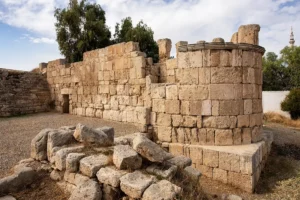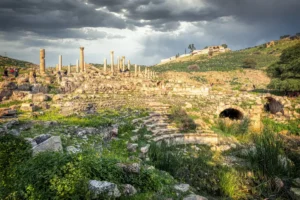













The Roman Nymphaeum is a monumental public fountain in the heart of downtown Amman, built in the 2nd century AD when the city was Roman Philadelphia. Its half-octagonal façade had three great apses lined with niches for statues, and it stood above vaulted foundations beside a stream. Conserved between 2014 and 2018, it is now an open-air archaeological park.
Where Is the Roman Nymphaeum?
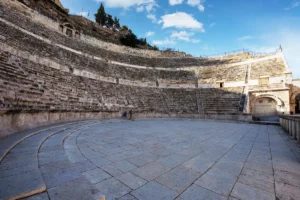
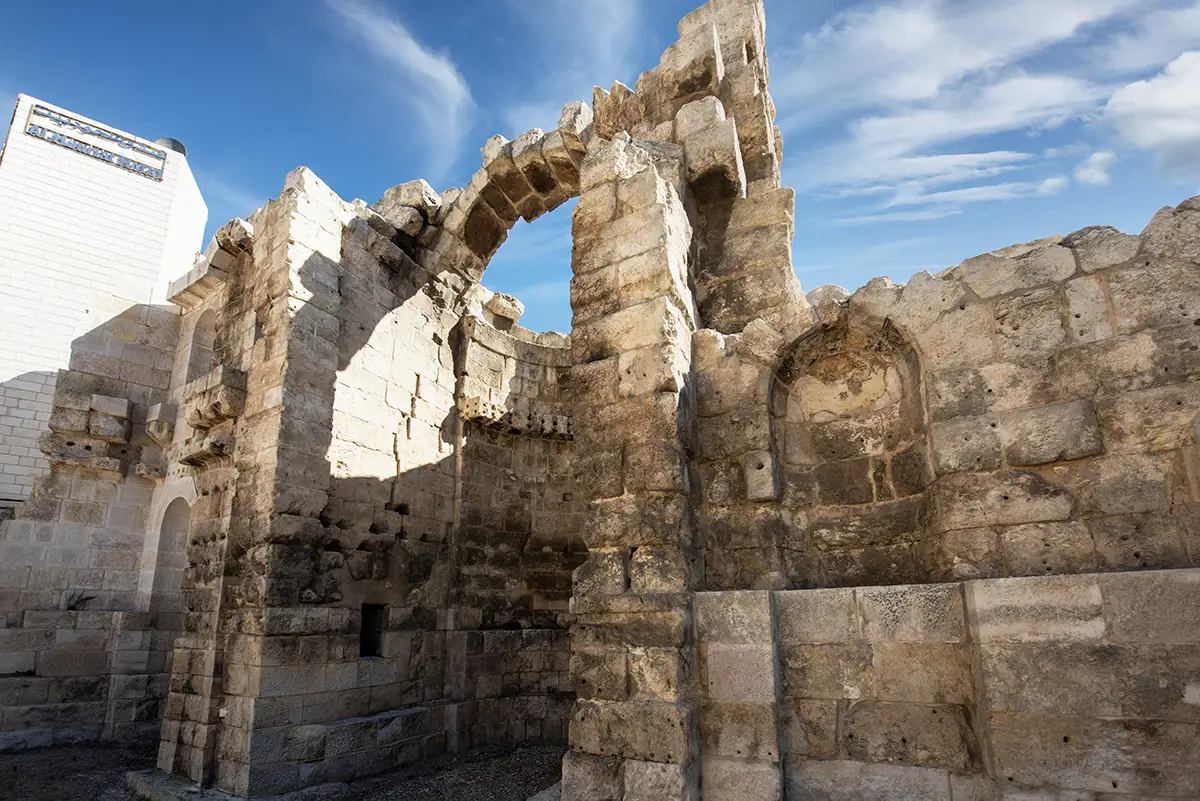
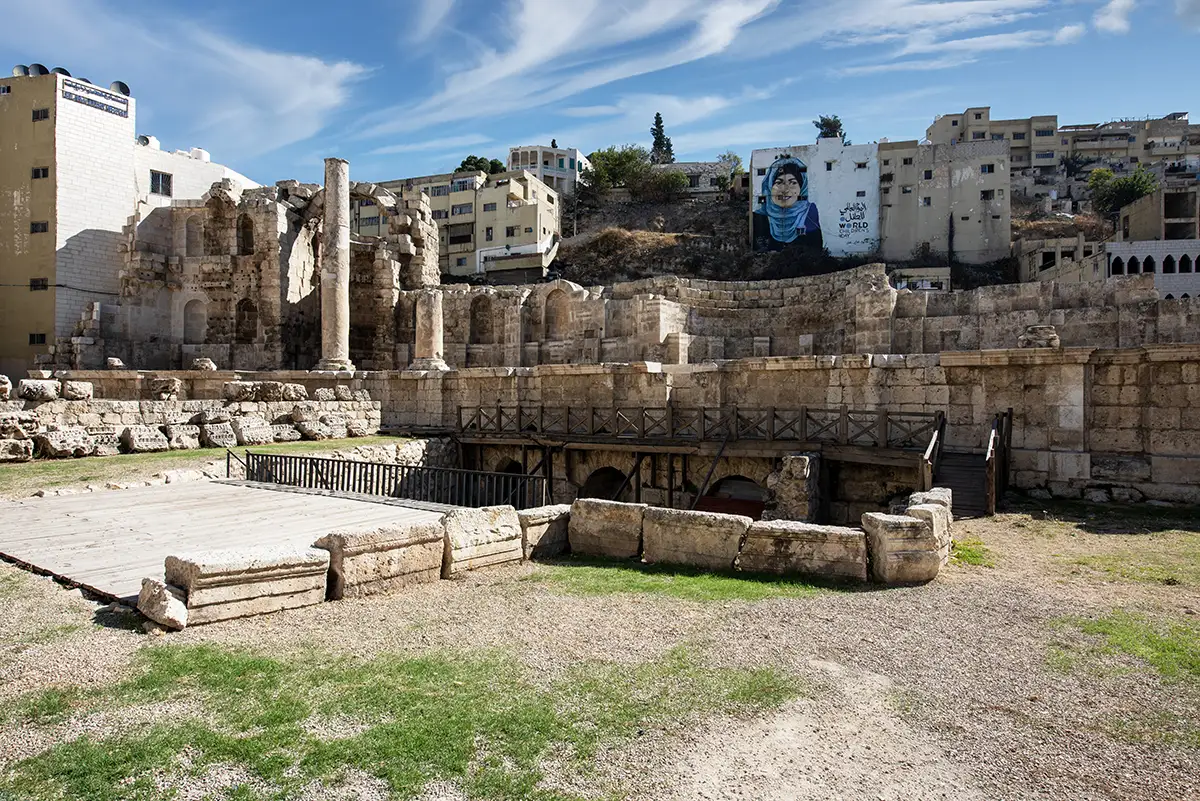
The Nymphaeum stands in downtown Amman, southwest of the ancient Roman forum, close to the Odeon and the Roman Theatre. The park lies beside a busy fruit and vegetable market.
Historical Context and Origin
A nymphaeum was a fountain dedicated to the nymphs, the water spirits of Greek and Roman belief. Such buildings supplied water, offered shade and a place to meet, and showed off the wealth of a city. The Department of Antiquities information boards date Amman’s Nymphaeum to around the 2nd century AD and describe it as probably the largest public building of its kind in the region; other Jordanian nymphaea stood at Petra, Jerash, Umm Qais and Pella. Excavators have noted that no inscription securely dates its construction.
The boards give the monument two main roles: a place where citizens met and collected their daily water, and a place of leisure and recreation, particularly for young people. Excavation shows that the structure stayed in use into the late Byzantine and early Islamic periods.
Architectural Design
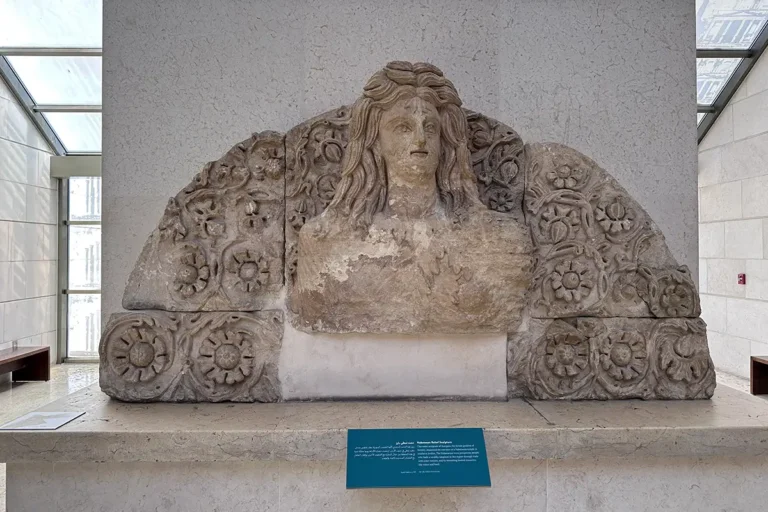
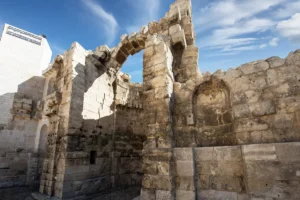
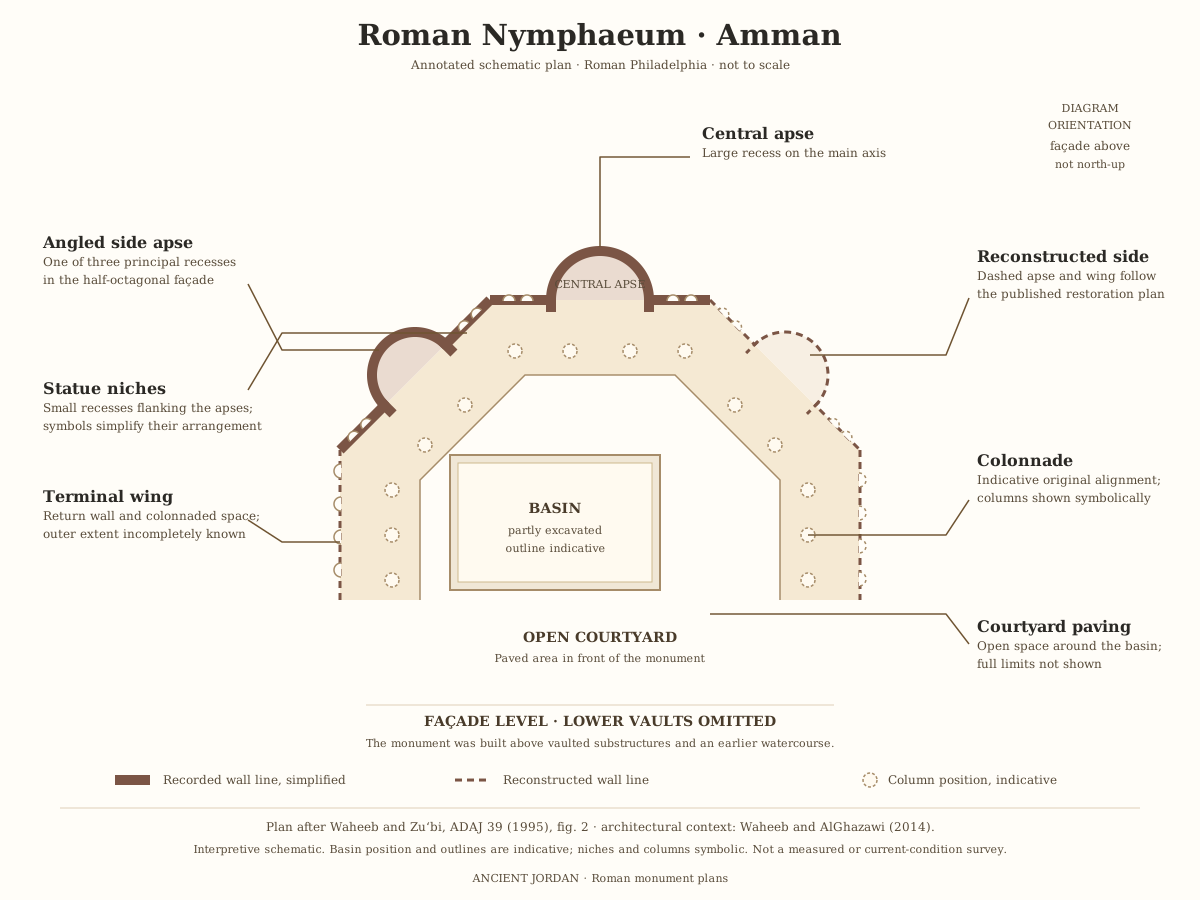
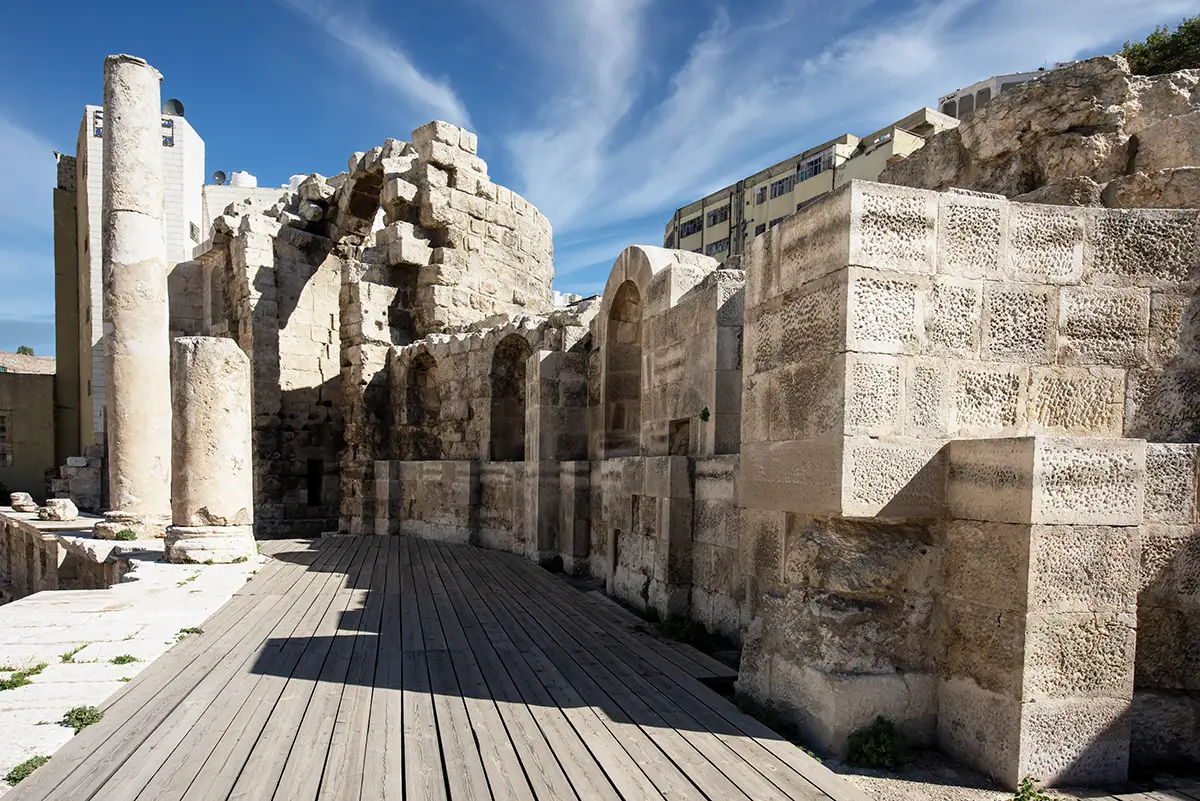
The building stood directly on the edge of a stream, with its ground floor built above an earlier watercourse. Its lower part was a foundation of barrel vaults, which the boards suggest may also have held pools, steam baths and massage rooms. The upper level was a half-octagonal, symmetrical façade of three large apses (exedras) decorated with two rows of small niches, probably for marble statues. Holes sunk into the stone show that the interior walls and niches were once dressed in marble. The structure was built largely of limestone blocks.
In front lay a large pool, reported to have covered about 600 square metres and to have been about 3 m deep, continually refilled with water.
Three Great Apses
A half-octagonal façade of three large apses (exedras).
Statue Niches
Two rows of small niches probably held marble statues.
Vaulted Foundations
Barrel vaults carried the building above an old watercourse.
Water Basin
A large pool in front of the façade, said to cover about 600 square metres.
Roman Nymphaeum, Amman
Schematic plan of the Roman Nymphaeum in Amman, after Waheeb and Zu‘bi (1995); interpretive, not a measured survey
Open drawingAltar dedicated to the Nymphs and Muses
Letters in square brackets are restored by the editor. “Me” is the altar itself, speaking in the first person. Capitolinus is the dedicator; the text does not name him as the building’s architect, patron or founder.
Νύμφαις
καὶ Μούσαις
Καπιτωλῖ[νός]
μ’ ἀνέ[θηκεν].
Capitolinus dedicated me to the Nymphs and Muses.
The inscription has no explicit date and is assigned broadly to the Roman Imperial period. It was recorded in the orchestra of the Roman Theatre, not securely in its original position at the Nymphaeum, so it should be read as a dedication from Roman Philadelphia, not as the Nymphaeum’s foundation inscription. The excavation report discusses it but acknowledges that no inscription securely dates the construction of the Nymphaeum, and the text cannot show when the monument was built or that it was originally dedicated to these deities.
Corpus reference: IGLS XXI 2, no. 12.
A Dedication to the Nymphs and Muses
A Greek altar inscription from Roman Philadelphia, dedicated to the Nymphs and Muses, was recorded in the orchestra of the Roman Theatre. It was not found securely in its original position, so it cannot be tied to the Nymphaeum or used to date it. It is a dedication from the city, not the monument’s foundation inscription.
Excavation, Rediscovery, and Restoration
Travellers recorded the ruins in the 19th and early 20th centuries, and the Princeton expedition under Howard Crosby Butler documented them in 1904–05. By the 20th century houses and shops had grown up over the forum in front of the building and against its rear wall. Excavations in the 1990s, led by Mohammad Waheeb, uncovered the basin and courtyard paving and revealed a complex construction history; a preliminary report by Waheeb and Zuhair Zu‘bi appeared in 1995.
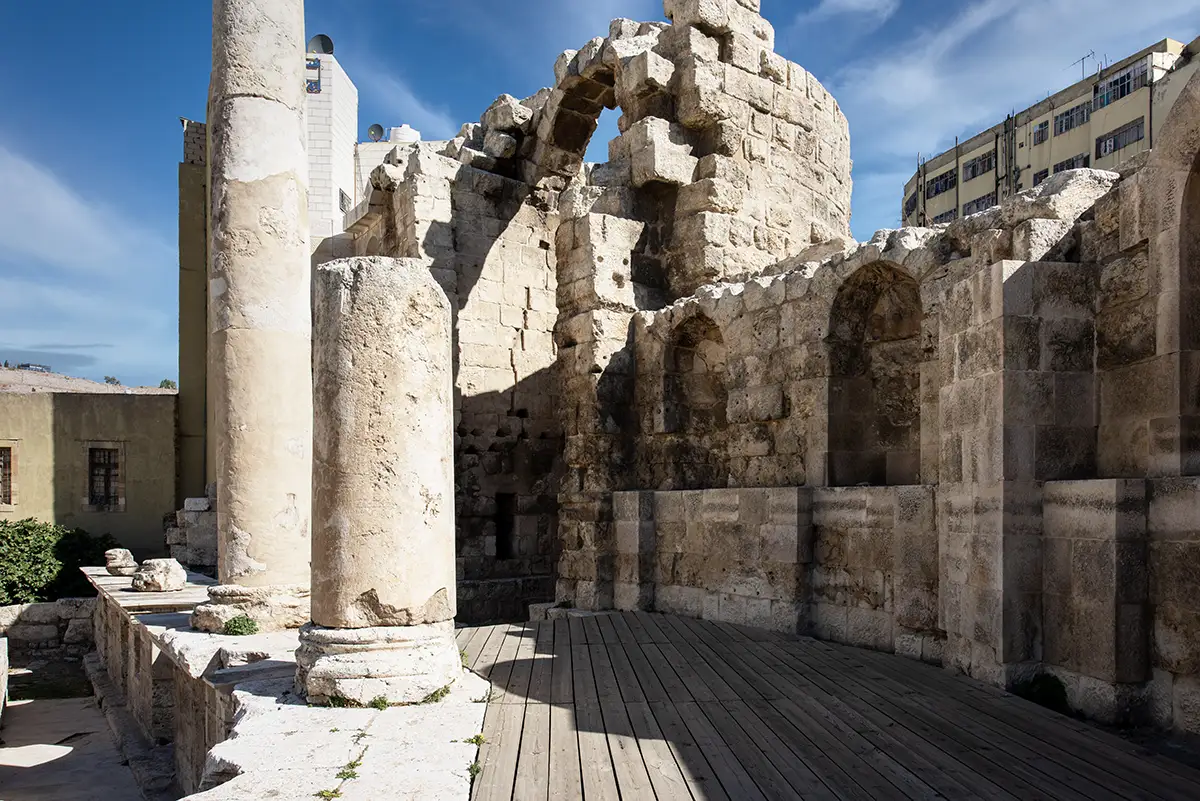
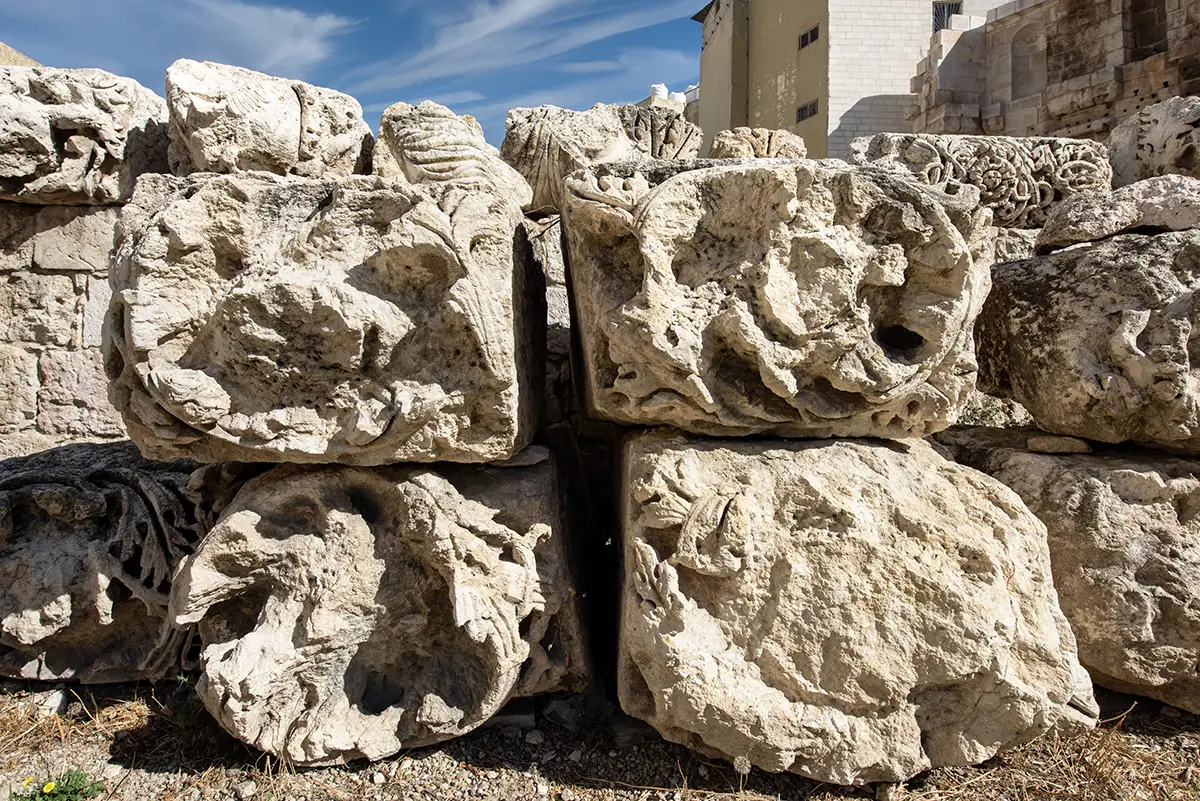
By then the ruin was in poor condition and was regarded by many as an eyesore in the city centre. A conservation and rehabilitation project ran from August 2014 to March 2018, supported by the US Embassy’s Ambassadors Fund for Cultural Preservation, with the Hamdi Mango Center for Scientific Research at the University of Jordan, the Department of Antiquities and the Greater Amman Municipality. It included 3D laser scanning, cleaning and consolidation of the stone, the cataloguing and display of scattered fragments, and the reconstruction of some missing elements. The rehabilitated site opened to the public in 2018 as an outdoor museum and a space for cultural events.
Visiting the Roman Nymphaeum Today
Entry is free for both visitors and residents. The site is open during the daytime; if the gate is closed, push it to enter. Wooden walkways lead through the site and past the surviving apses and columns, with information boards in English and Arabic. Allow about 20 minutes. The Roman Theatre and the Odeon are a short walk away.
Further reading: Waheeb and Zu‘bi, Recent Excavations at the ‘Amman Nymphaeum, ADAJ 39 (1995); Waheeb and AlGhazawi, Roman Nymphaeum in Philadelphia, Mediterranean Archaeology and Archaeometry 14.1 (2014); Amman Nymphaeum conservation project; The Jordan Times, park opening; IGLS XXI 2, 12 (PHI Greek Inscriptions).