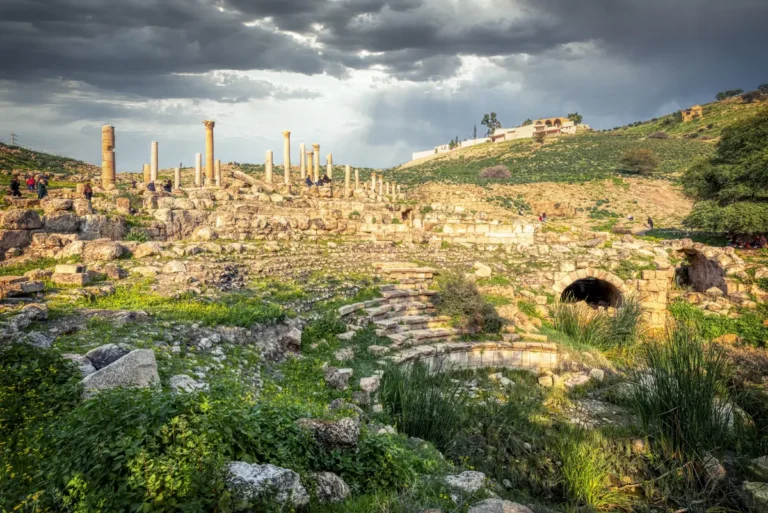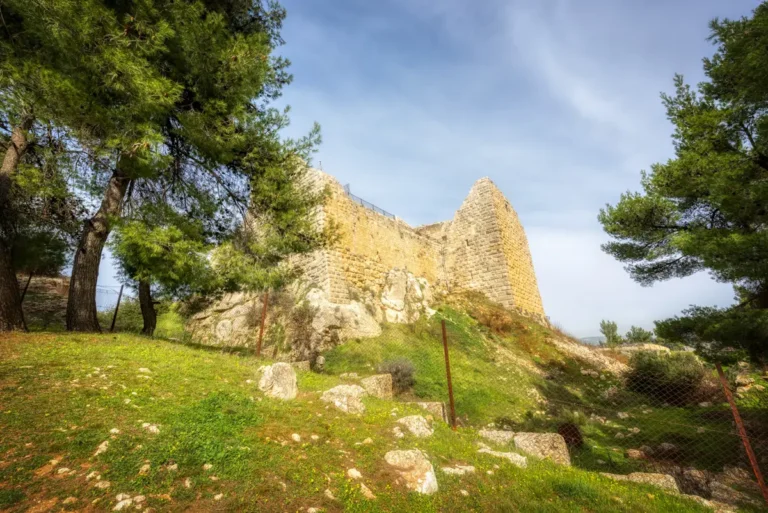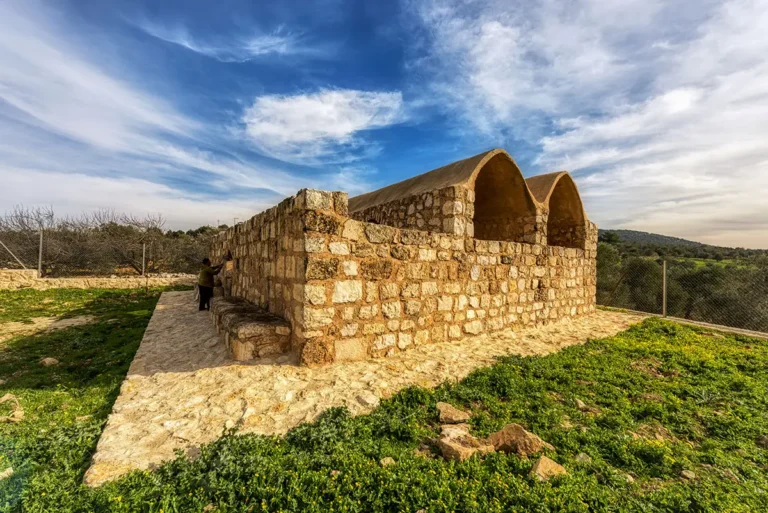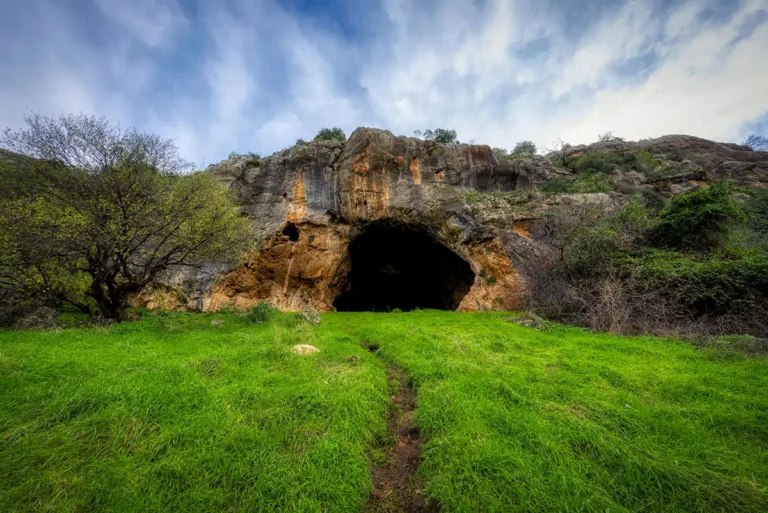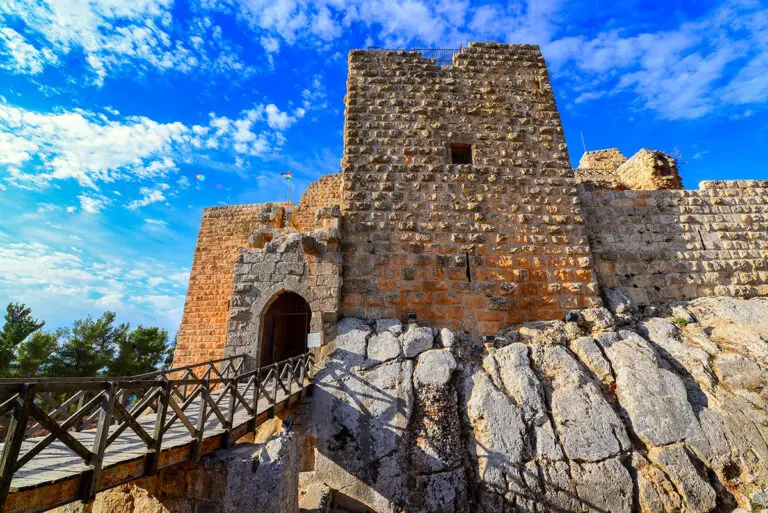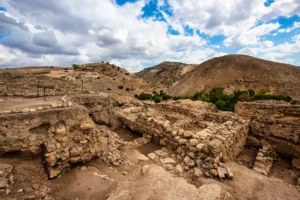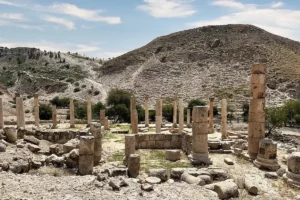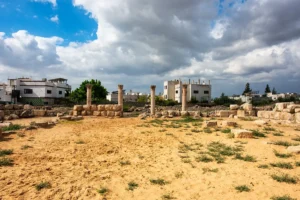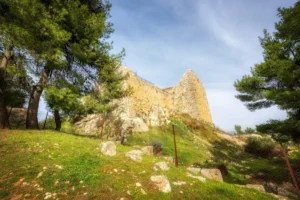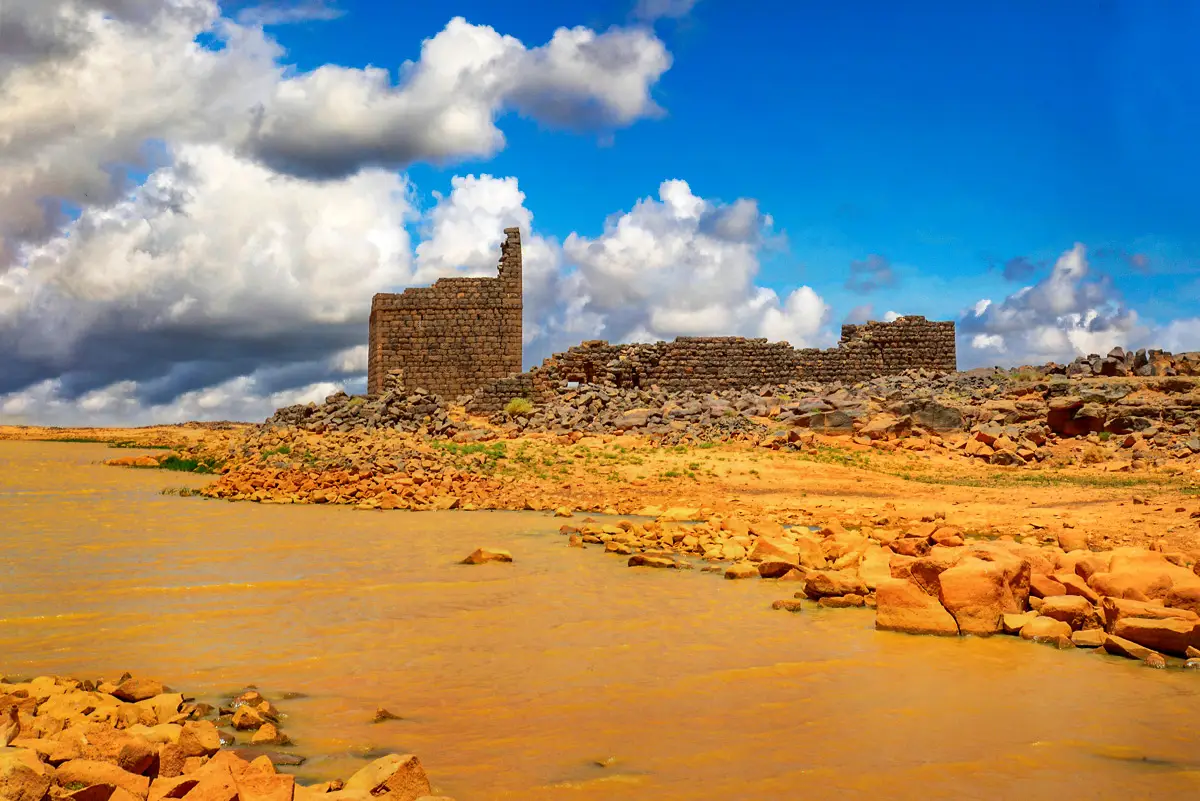












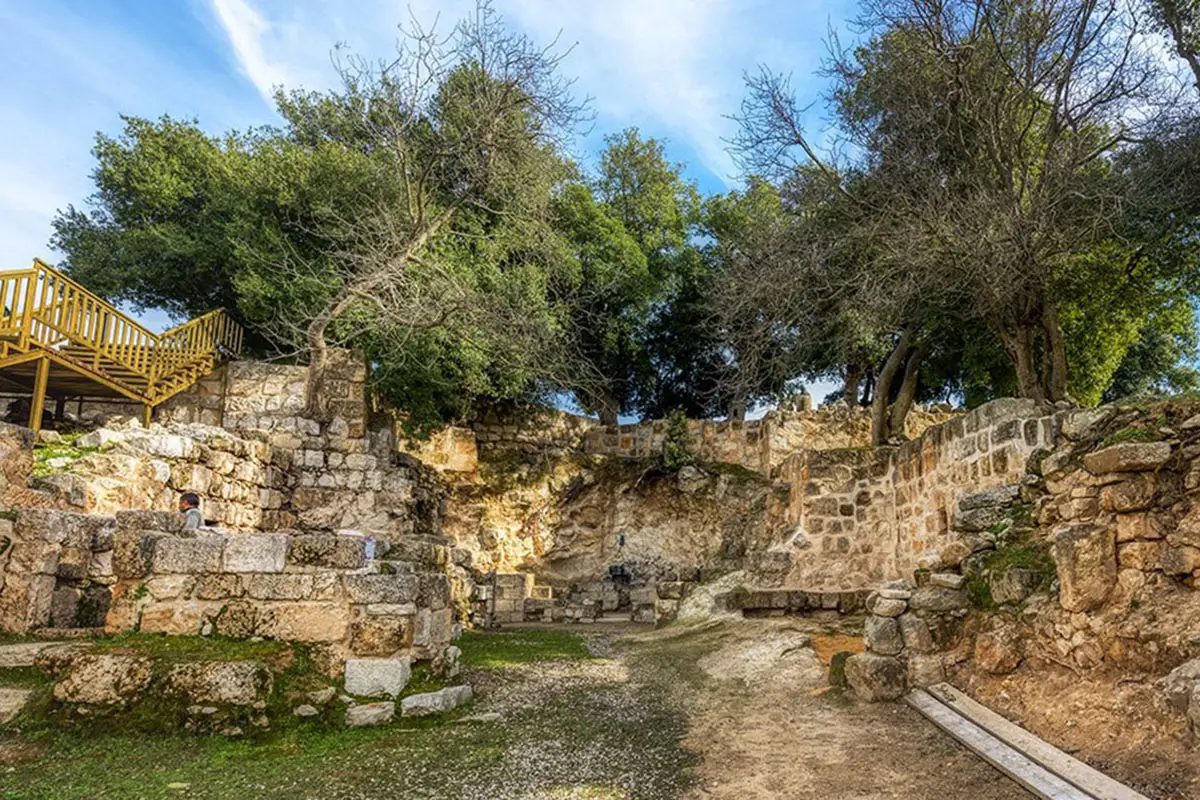
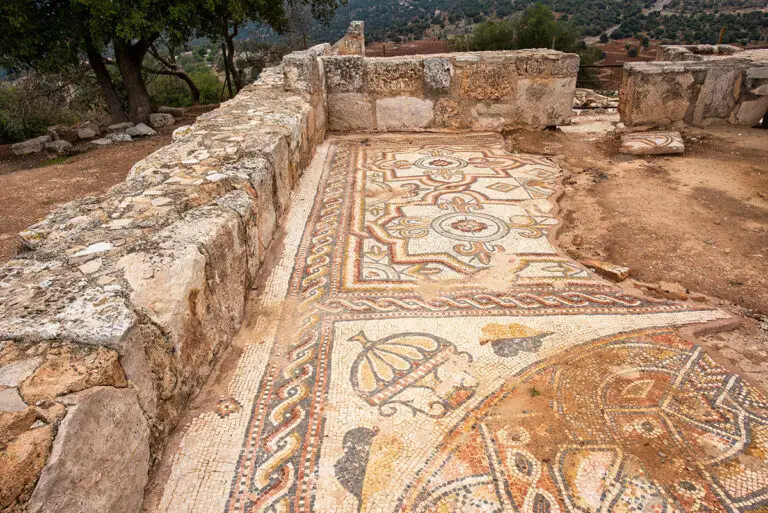


On a forested hilltop in the Ajloun hills, the ruins of a great Byzantine church look out over the land of the Prophet Elijah. Tell Mar Elias — “the hill of Saint Elijah” — has drawn pilgrims for centuries, and its church, dedicated in AD 622, is one of the largest in Jordan.
Where Is Tell Mar Elias?
Tell Mar Elias stands at about 900 m above sea level, some 9–10 km north-west of Ajloun, between the villages of Ashtafina and al-Wahadna. About 1 km to the north-west lie the ruins of Listib, traditionally identified with Tishbe, the home of “Elijah the Tishbite” (1 Kings 17:1), and the deep Wadi al-Yabis below is traditionally identified with the brook Cherith, where Elijah was fed by ravens. Nearby stands the Listeb Mosque.
Historical Context and Origin
Christians honoured this hill as the homeland of Elijah, and in the Byzantine period two churches were built here. A smaller, lower church dates from the 4th–5th century. The large church on the summit was dedicated in AD 622 (or 624), according to its mosaic inscriptions — only a few years before the Islamic conquest of the region.
Architectural Design
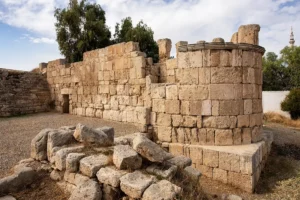
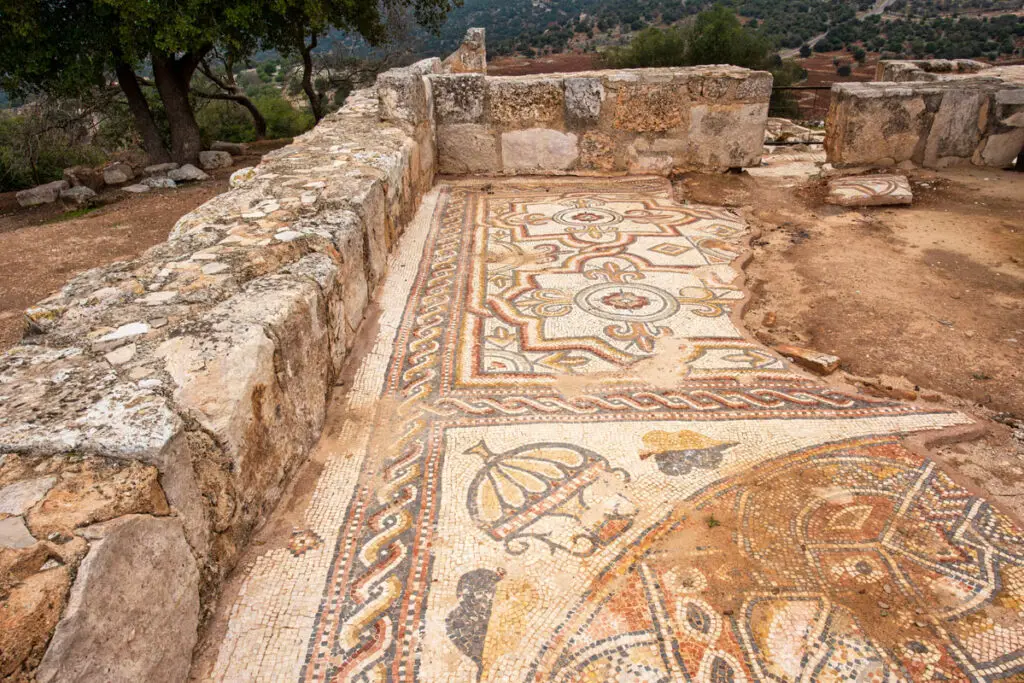
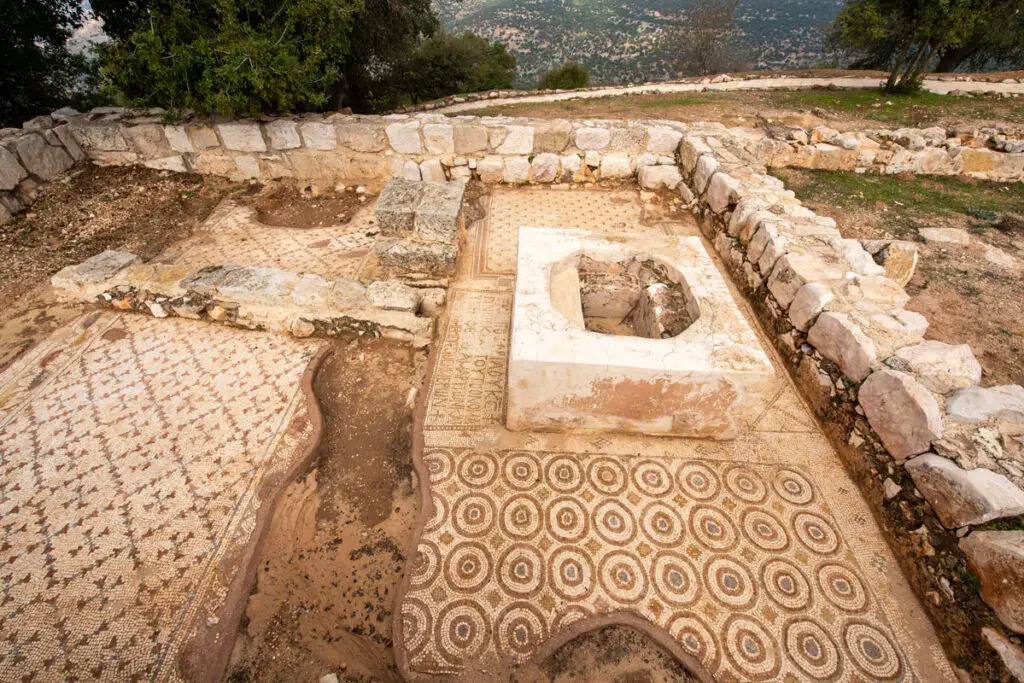
The large church is a basilica with three apses, to the north, east and south, which give it an unusual cross-shaped plan. Its nave measures about 26 × 6 m, flanked by aisles of about 29.5 × 5.5 m. A baptistery of about 8.8 × 7.6 m adjoins the north side, a semicircular atrium lay to the west, and monastery rooms to the south. The floors were laid with mosaics, and a stone font is set into the baptistery floor.
Cross-Shaped Basilica
Three apses to the north, east and south give the church a rare cross plan.
Dated Mosaic
A dedication of AD 622 asks Saint Elijah to bless the priest Saba and his wife.
Baptistery
A baptistery on the north side, with a font set in the mosaic floor.
Jubilee Pilgrimage Site
One of five Jordanian sites approved for the Great Jubilee of 2000.
The Mosaic Inscriptions
Three mosaic inscriptions survive. The dedication, in white letters on a red ground facing the west entrance, asks Saint Elijah to bless the presbyter Saba and his wife, and gives the date of AD 622. Marble carvings and metal objects from the site are displayed in the museum at Ajloun Castle.
Destruction, Rediscovery, and Restoration
Travellers described the ruins from 1890, and Franciscan scholars studied them in the 1940s and 1950s. In 1999 the Department of Antiquities, under Mohammad Abu Abila, excavated the large church, and the smaller church was found in 2001. For the Great Jubilee of 2000, the Catholic Church approved Mar Elias as one of five major pilgrimage sites in Jordan. Since 2023 a Greek–Jordanian project has been preparing a management plan and conserving the mosaics, with the first phase completed in 2025.
Visiting Tell Mar Elias Today
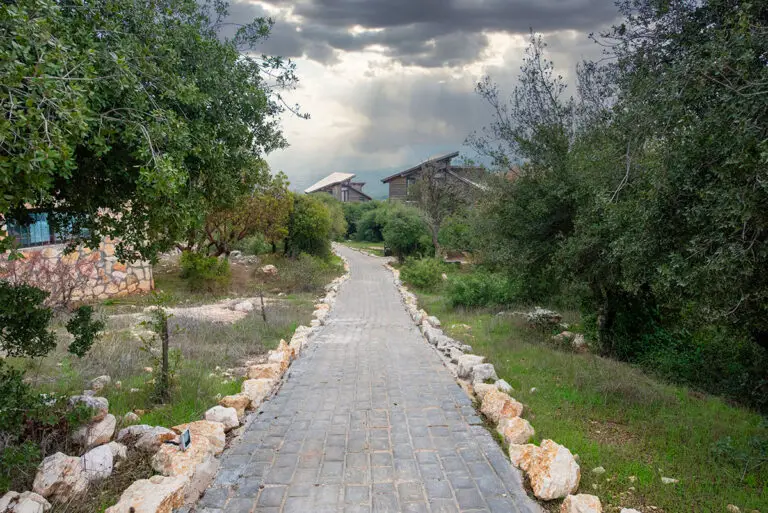
A path climbs to the summit; information panels explain the ruins. Admission is 3 JOD for foreign visitors. Every year around 20 July, the feast of Elijah, Greek Orthodox pilgrims gather here. Combine the visit with Ajloun Castle and the Listeb Mosque. See our photo album and 360° panorama.
Further reading: Visit Jordan — Tell Mar Elias; ACOR archive — Mar Elias church.