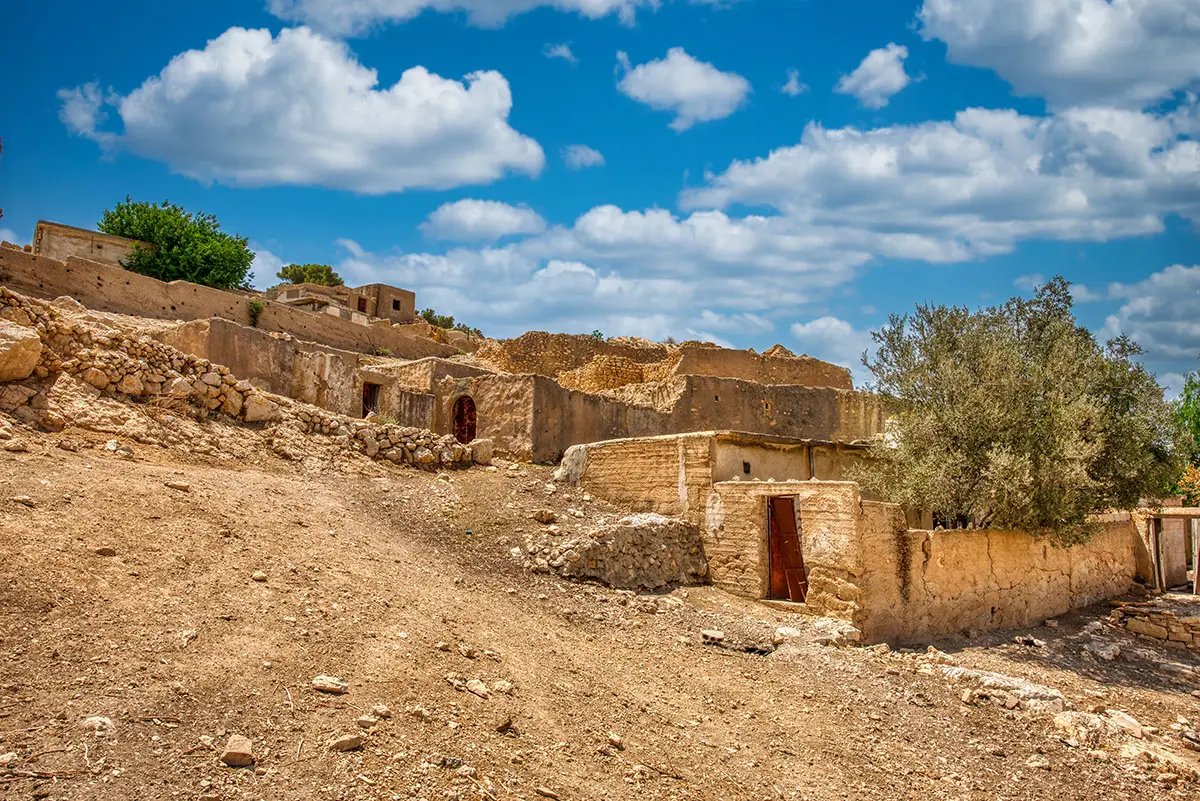

Below the great sandstone rock of Sela, in the hills south of Tafila, a cluster of old stone houses climbs the slope. As-Sila’ — also written As Sala or Sela — was a farming village until its people moved away in the 1990s; today part of it has been restored as a heritage village where visitors can stay.

Where Is As Sala Heritage Village?
The village lies about 16 km south of Tafila, in the hills around Busayra, next to the village of al-Ma’tan. It sits at the foot of the rock of Sela, between Tafila and Busayra, about 4 km from the King’s Highway and some 50 km north of Petra.
Historical Context and Origin
Families settled here for the water and fertile soil below the rock. According to local tradition the first houses were lived in about two centuries ago, in the late Ottoman period, and the village school is more than a hundred years old. In the early 1990s the residents moved to a neighbouring village, and the old houses and school stood empty.
Architectural Design
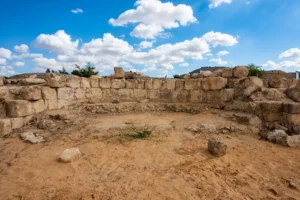
The houses are built of local stone and packed tightly together on the slope, their walls leaning on one another, with narrow passages between them. About a hundred houses remain unrestored.
Close-Packed Houses
Stone houses built so close together that their walls lean on one another.
Old School
The village school, over a century old, now the visitor reception centre.
Heritage Guesthouse
Restored houses with 13 guestrooms, a restaurant and a small museum.
Below Sela
The Edomite rock fortress and the Nabonidus relief rise above the village.
Sela: The Rock Above the Village
The sandstone massif of Sela rises some 190 m above the wadi and is climbed by a rock-cut staircase. On its summit are the remains of an Edomite (Iron Age) settlement with more than a hundred water installations, and on its face, about 100 m up, is a relief of the Babylonian king Nabonidus (556–539 BC), discovered in 1994. The fortress and its relief are described in our Sela travel guide.
Abandonment and Restoration
In 2001 the old school became a visitor reception centre, and around 2004 the villagers founded the Sela Tourism Cooperative Society. The village now belongs to the Ministry of Tourism and Antiquities. With the ministry’s support, houses were restored to provide 13 guestrooms, an activities hall, a heritage restaurant, a museum of traditional objects and a shop for local products, run by a local association. In 2023 UN Tourism named Al Sela one of the Best Tourism Villages.
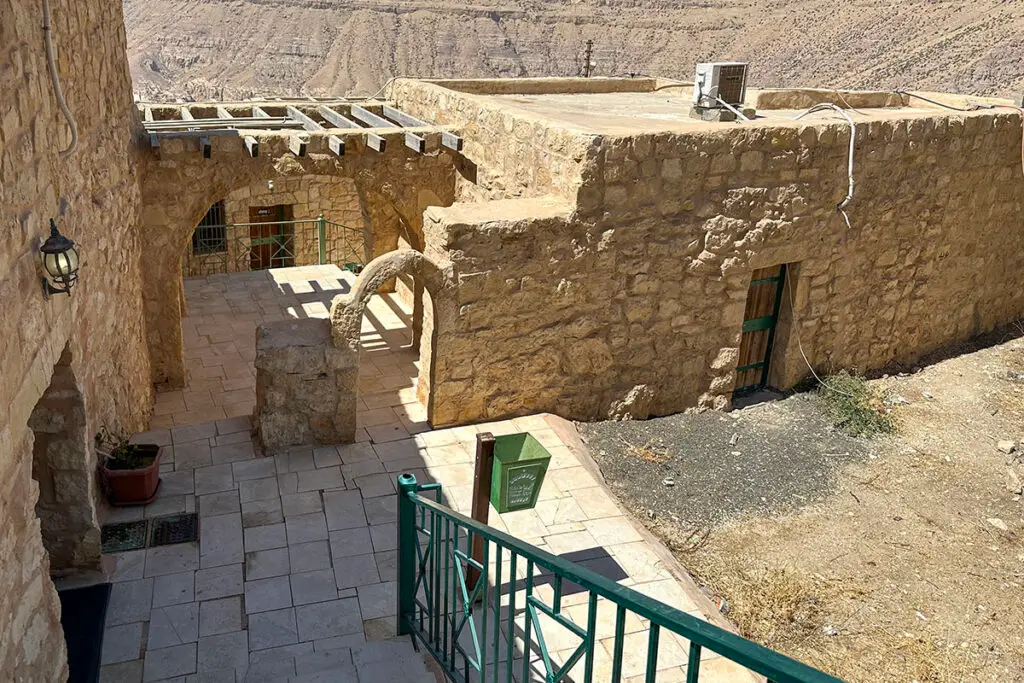
Visiting As Sala Heritage Village Today
Entry to the village is free. Walk through the restored lanes and the ruined houses around them, then climb Sela if you have the time and a head for heights. You can stay overnight in the guesthouse, eat traditional food and join cooking, craft and farming activities — read about our stay in Tafileh-Sila’a Heritage Village Hotel. The sunset over the mountains is reason enough to stay.
Further reading: UN Tourism — Best Tourism Villages: Al Sela.