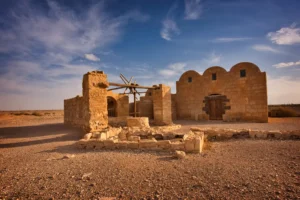
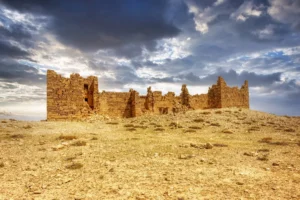
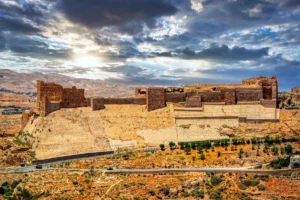
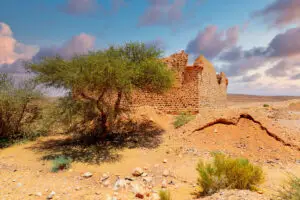
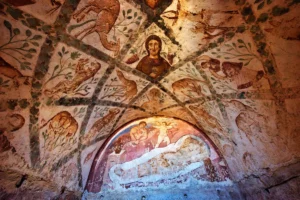
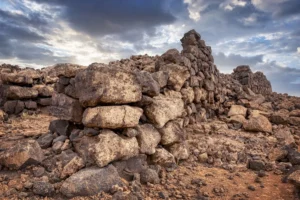
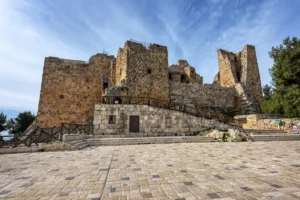
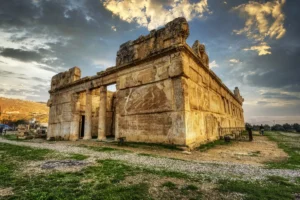
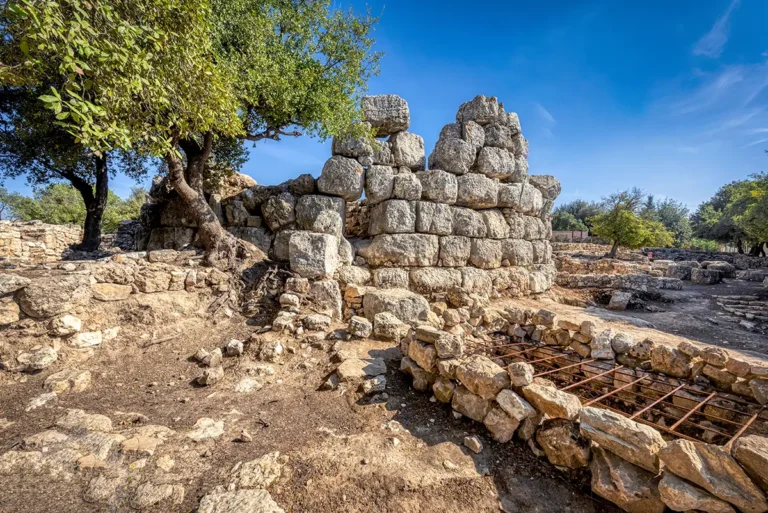
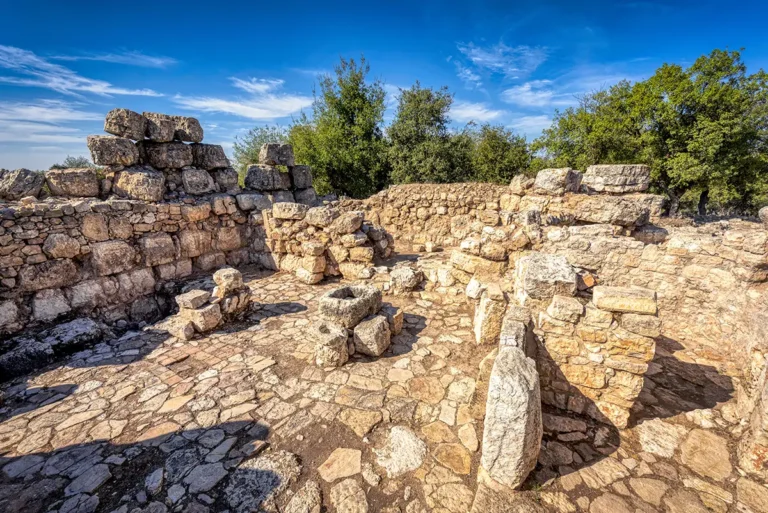
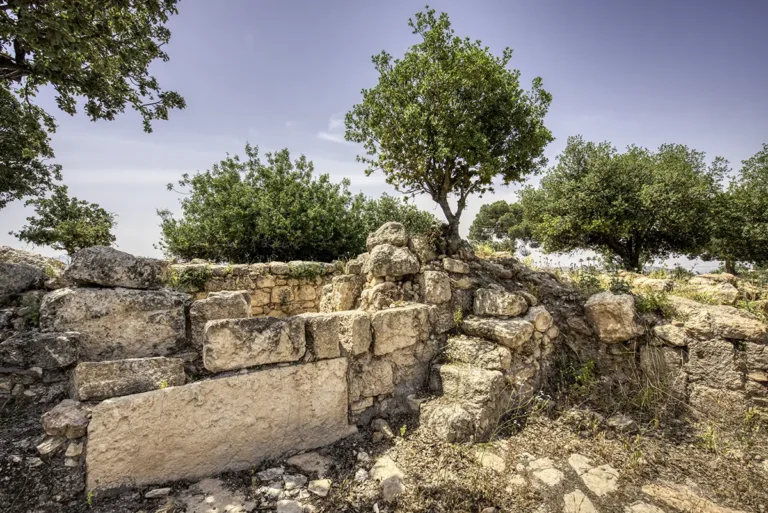
Khirbet Al-Deir Heritage Site is a multi-period archaeological park set on a forested hill between Amman’s Dabouq district and the historic town of Fuheis. Occupied from the Ammonite Iron Age through the Roman, Byzantine, and Ayyubid/Mamluk periods, the site preserves an open-air complex that reflects both the defensive and agricultural heritage of ancient Jordan. Its most prominent landmark is a massive circular watchtower, originally built by the Ammonites and later reinforced by the Romans to oversee trade routes and the surrounding landscape. During the Byzantine era, the tower was transformed into a Christian monastery and church, giving the site its modern name, Al-Deir (“The Monastery”), while excavations have revealed engraved stone crosses, bronze liturgical lamps, and other Christian remains.
Beyond its religious and military significance, Khirbet Al-Deir showcases remarkable agricultural and engineering achievements. Rock-cut wine and olive presses, together with an advanced system of cisterns, reservoirs, and water channels, demonstrate how ancient communities supported farming on the hillside. Archaeological discoveries from the Ayyubid and Mamluk periods, including pottery and coins, confirm the site’s continued use as a rural settlement and regional outpost, with local tradition also linking it to a Mamluk-era homing pigeon postal network. Today, surrounded by oak, pine, and wild pistachio trees, Khirbet Al-Deir remains a peaceful heritage destination where visitors can explore its archaeological remains while enjoying the tranquillity of one of the greenest landscapes near Amman.