

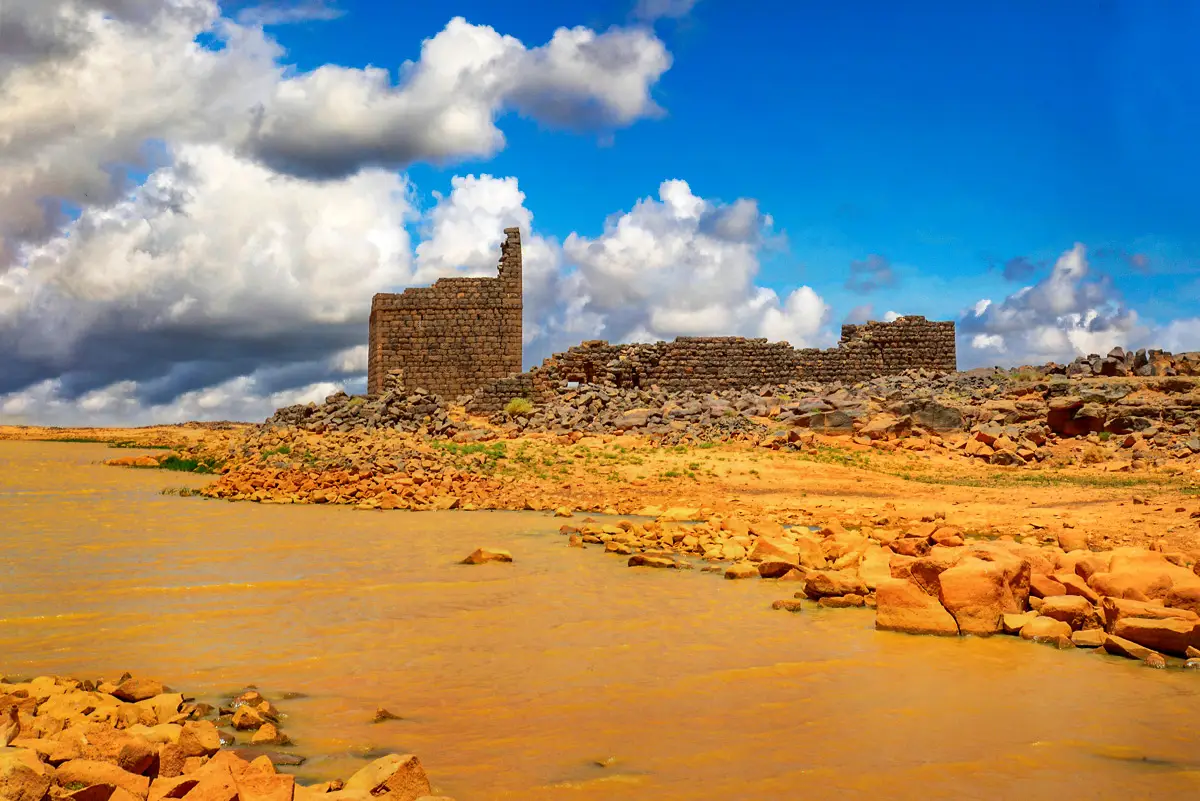
Burqu Nature Reserve
A remote nature reserve in the basalt desert, with a Roman and Umayyad tower beside a seasonal lake
Established2018, opened 2020
AreaAbout 2,980 km² (proposed)
LocationEastern Badia, near Ruwaished
Qasr BurquLate Roman tower, rebuilt AD 700
Introduction
Neither a castle, nor in the desert. – Svend Helms
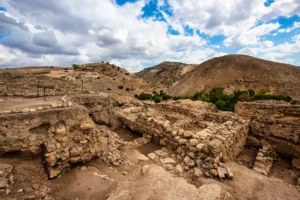
Burqu Nature Reserve protects a vast stretch of Jordan’s north-eastern Badia, where the black basalt desert meets the flint plain. At its heart, beside a seasonal lake, stands Qasr Burqu: a square basalt tower of the late Roman or Byzantine period, to which the Umayyad prince al-Walid added rooms and a courtyard around AD 700, as an inscription dated AH 81 records.
In wet years a shallow lake fills the basin beside the ruins, held back by a modern dam with an older dam nearby. The lake draws birds and Bedouin herds. Jordan approved the area as a nature reserve in 2018 and the RSCN opened it in 2020; its proposed area covers nearly 3,000 km². Getting there takes a 4x4, a guide and a long day.
Best timeMar–Apr
Time needed40 min
TicketFree
From Amman280 km · 4 hr
Combine withQasr Usaykhim · 3 hr
Google rating4.5 · Reviews
Highlights · A desert reserve
A reserve, a tower and a lake
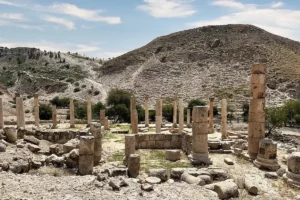
Basalt desert, a seasonal lake and a ruined tower
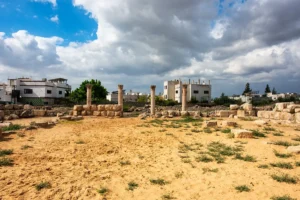
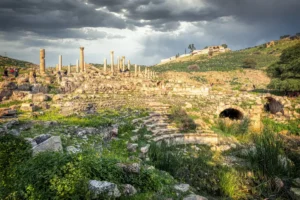
Burqu Nature Reserve is a remote protected area in the north-eastern desert. A single ancient tower beside one of the few bodies of water in the Badia is as much a reason to go as the birds and the landscape.
 01 / 05
01 · Architecture
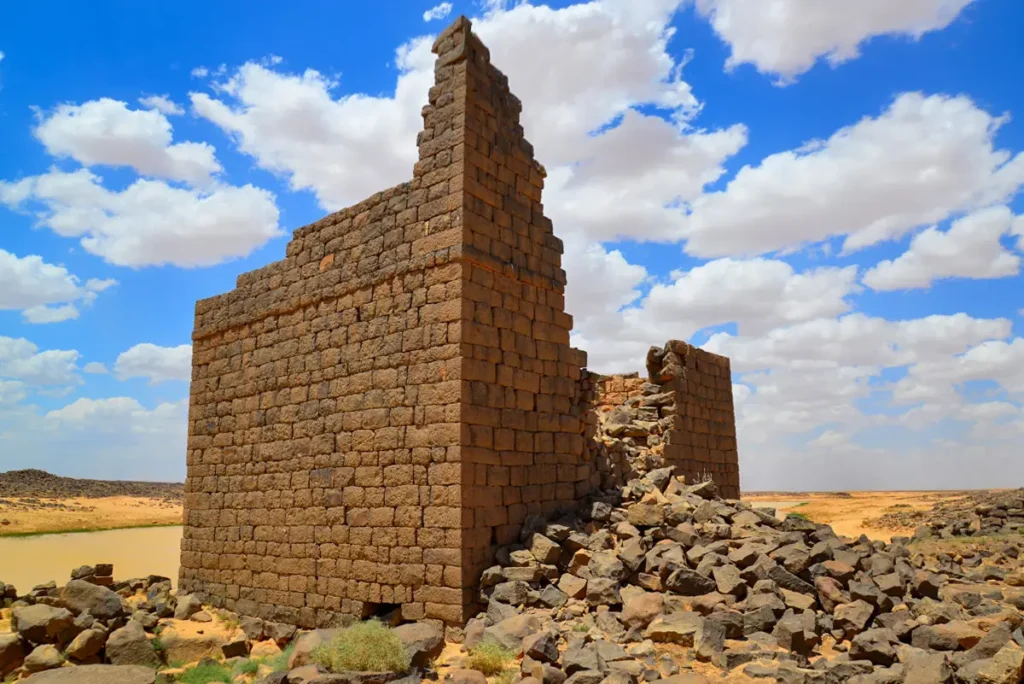
The basalt tower
The tower
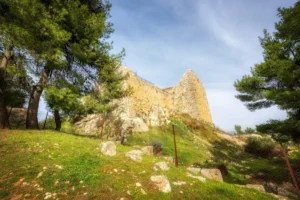
The oldest part of the site, probably a late Roman or Byzantine watch post. Part of its upper wall still rises close to its original height.
Look closely
The fine coursing of the basalt blocks.
1 of 5
Explore the reserve
What to see
Three stops: the lake and the approach, the old tower, and the rooms and courtyard around it. Pick a stop to see what to look for.
 1 / 5
01 · Approach
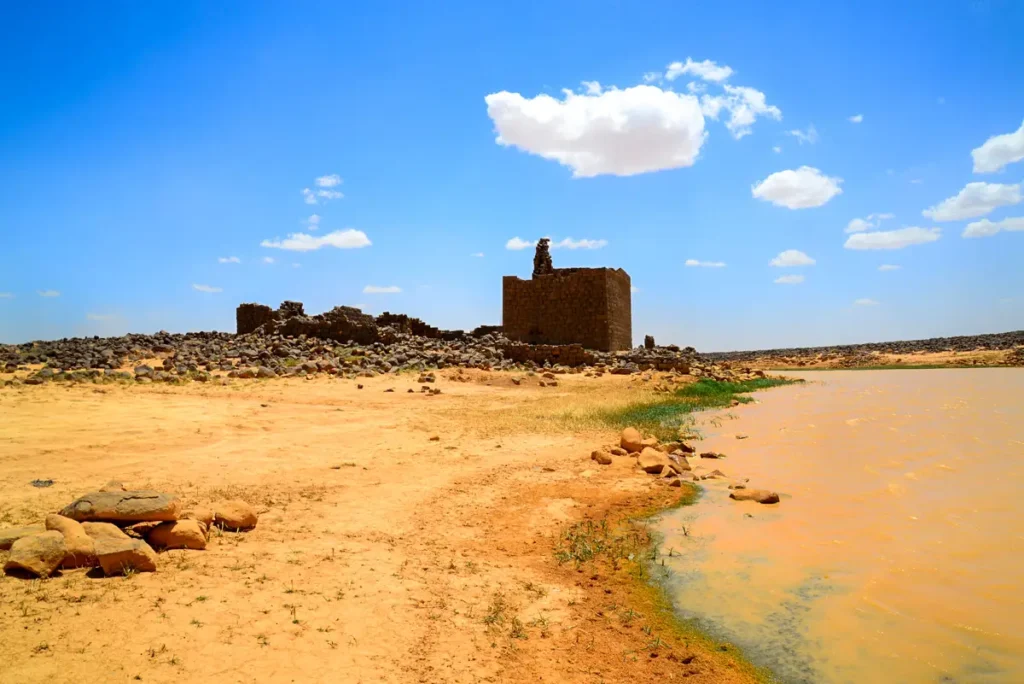
Arrive by the lake
As you come over the last rise, the tower appears beside a shallow basin. Winter run-off from the drainage of Wadi Minqat collects here, held today by a modern earth dam to the north. A stretch of an older dam survives north of the qasr; its date is uncertain, but probably late antique.
In wet years the water reaches the walls, and in summer the basin can be dry.
Seasonal lakeModern damOlder damBirds
Look for
- The line of the old dam
- Birds at the water’s edge
- The tower reflected in the water
Dig deeperA nature reserve
The basin is a BirdLife Important Bird Area. Long-legged buzzards and golden eagles breed here, Montagu’s harriers pass through in autumn, and common cranes winter on the lake. Wolves live in the area.
Jordan approved Burqu as a nature reserve in 2018, and RSCN opened it in 2020, with a lodge for overnight stays.
1 / 402 · The oldest part
Stand under the tower
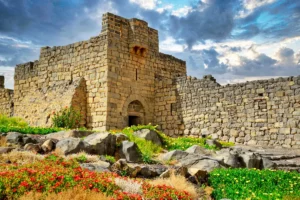
The square tower is the earliest building at Burqu, generally dated to the late Roman or Byzantine period, perhaps the 3rd–5th centuries AD. It was probably a watch post on routes across the basalt desert, and it may later have housed a small monastic community.
Part of its upper wall still stands close to its original height, like a wide chimney. Don’t climb on it: the walls are unstable.
Square towerLate Roman or ByzantineWatch postBasalt
Look for
- The well-fitted basalt courses
- The blocked doorway
- The height of the surviving wall
 1 / 4
03 · Umayyad additions
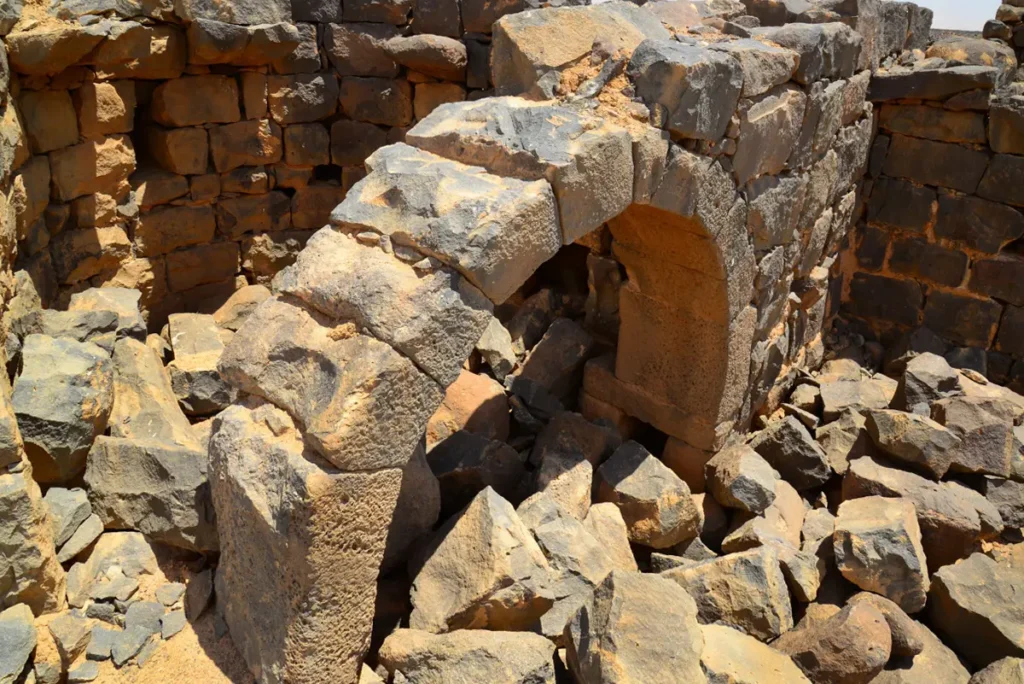
Walk round the courtyard
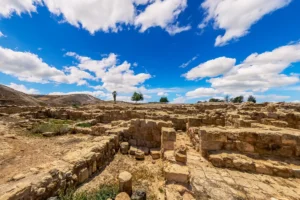
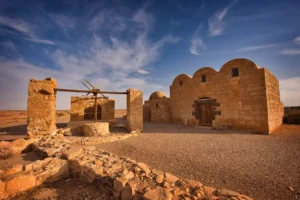
Around the tower, the Umayyads built a courtyard ringed by rooms, with a cistern in the courtyard. A long room on the north-east side and a small room with an apse, pointed arch and niches stand out. The apse room may have been a reception hall or a chapel.
Bedouin camped here in spring for centuries after the Umayyads, and left their own inscriptions on the stones.
CourtyardApse roomArchesCistern
Look for
- Arches still standing
- The small apse room
- Inscriptions on loose stones
Dig deeperAl-Walid’s inscription
A three-line Kufic inscription dated AH 81 (AD 700) records that the amir al-Walid, son of the Commander of the Faithful ‘Abd al-Malik, built these houses. Al-Walid became caliph five years later and reigned until 715.
Henry Field photographed the inscription in the 1920s. It was found loose, and may have come from the doorway of the apse room.
History & significance
A watch post that became a prince’s retreat
Burqu began as a late Roman or Byzantine tower. In AD 700 the Umayyad prince al-Walid built rooms around it, and Bedouin kept using the site as a spring camp for centuries.
- c. 3rd–5th c.The basalt tower is built
- 700Al-Walid builds “these houses” (AH 81)
- 1991Svend Helms publishes a new survey
- 2020Burqu Nature Reserve opens
 ProfileBurqu Nature Reserve: the full storyHistory, the al-Walid inscription, the reserve and the timeline. About 3 min read.Read the profile →
Plan your visit
Everything you need to know before you go
Burqu Nature Reserve is in the far north-east of Jordan, beyond Safawi on the road towards Iraq. From the highway near Ruwaished, Qasr Burqu and the lake are about 18 km north on desert tracks. Plan a very long day, or stay overnight at the RSCN lodge. Stays and guided activities are booked through the RSCN.
Good to know: there are no facilities at the qasr and no mobile signal on parts of the route. Carry plenty of water and fuel, and don’t continue north: the Syrian border is not far.
Opening hoursOpen accessUnstaffed site · visit in daylight
Entry ticketFreeNo ticket office or permit needed
Time to visit40 minPlus about 4 hours each way from Amman
From Amman280 kmAbout 280 km via Safawi, the last 18 km on desert tracks
LocationBurqu Nature Reserve32.6084° N, 37.9623° EGet directions
Opening hours and prices checked October 2026. Spotted a change? Let us know
On site
What you’ll find at Burqu Nature Reserve
- Food & drinks
- Viewpoint
- Hotels
Not on site: visitor centre, ticket office, toilets, designated parking, museum, guide, market / shop
Access: 4x4 needed
Activities
With the RSCN at Burqu
Desert safari by 4x42–3 hours, up to 4 people per vehicle
Jarjour safari by 4x41.5 hours, up to 4 people per vehicle
Dam and castle trailWalk to the dam and the qasr
Overnight at Burqu Lodge10 rooms inside the reserve
Book with the RSCN before you travel, as the reserve is remote. Prices and availability are on the RSCN site.
All activities and pricesWhen to go
Spring is best, when the lake is fullest and birds and flowers are around. After heavy rain the tracks can be impassable.
J
F
M
A
M
J
J
A
S
O
N
D
BestGood, cooler or warmVery hot
Tip: stay a night at the RSCN Burqu Lodge to see the lake at sunset and sunrise, when the birds are most active.
Before you go
Services are limited out in the desert.
- Water and snacksNothing after Safawi
- Sun hat and sunscreenVery little shade outside
- Comfortable shoesUneven, stony ground
- A 4x4 and a guideThe tracks are unmarked
- Toilet paperBring your own, just in case
Common questions
Quick answers before you set off.
Do I need a permit or an escort?
No. You can drive to the qasr independently, but you need a 4x4 and someone who knows the tracks.
Is there an entrance fee?
No. There is no ticket office at the qasr. RSCN charges for stays and guided trails in the reserve.
Is there always water in the lake?
No. The lake fills after winter rain and is fullest in spring. In dry years and late summer it can disappear.
Was it a Roman fort?
Not a fort. The oldest part is a single tower, probably a late Roman or Byzantine watch post. The rooms around it were added around AD 700.
How long does the trip take?
About 4 hours each way from Amman, including the track. Plan a very long day, or stay overnight.
What should I wear?
Comfortable, closed shoes for uneven ground, and light clothing that covers your shoulders and knees, which is respectful in rural Jordan and protects you from the sun.
Combine with
Burqu is a day out on its own, but the Azraq sites lie on the way back. Drive times are from Qasr Burqu inside the reserve and include the track.
Explore this site
More from Burqu Nature Reserve
Panoramas, walk-throughs, photos and stories about this site.
From guide to visit
See Burqu Nature Reserve with a private guide
Burqu isn’t part of our regular tours, but we can arrange a private 4x4 day or an overnight trip with an experienced driver. Tell us when you’d like to go.