













Jawa
A fortified town of the 4th millennium BC in the black basalt desert, with some of the world’s oldest known dams
Builtc. 3600 BC
MaterialBlack basalt
Location25 km from Safawi
Access4x4 · local guide
Introduction
More than five thousand years ago, its people tamed the floods of the desert.
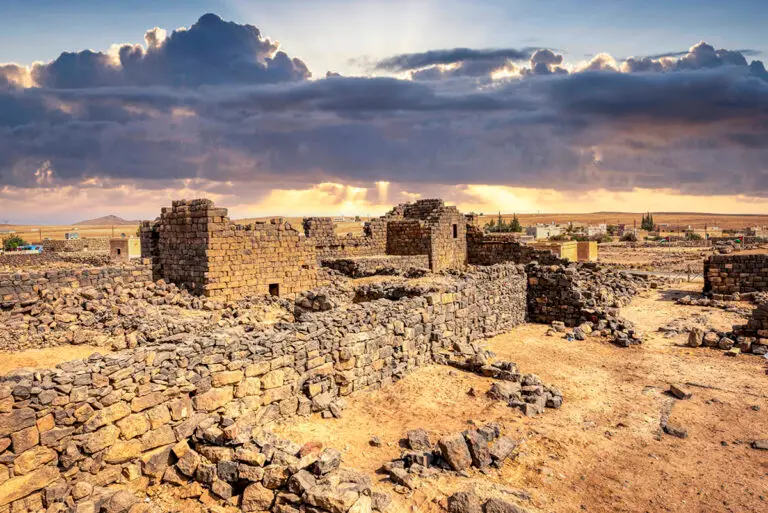
On a low hill in the black basalt desert of north-eastern Jordan, a few kilometres from the Syrian border, stand the walls of Jawa, a town built around 3600 BC. Its people dammed the winter floods of Wadi Rajil and farmed terraced gardens in a land that today supports only herders.
There is no paved road: a 4x4 is needed, and a local guide is recommended. The site is unfenced and free, with no facilities. Walk the upper town, its gates and walls, and look for the dams and pools of one of the oldest known water systems in the world.
Best timeOct–Apr
Time needed1 hr
TicketFree
From Amman170 km · 2 hr 45 min
Combine withQasr Deir Al-Kinn · 40 min
Google rating5 · Reviews
Highlights · A town of the 4th millennium BC
Five things not to miss at Jawa
Gates, walls, houses and an ancient dam
Jawa is a field of black stones at first sight. These are the places that bring it to life.
 01 / 05
01 · Defence
The gates
Gates
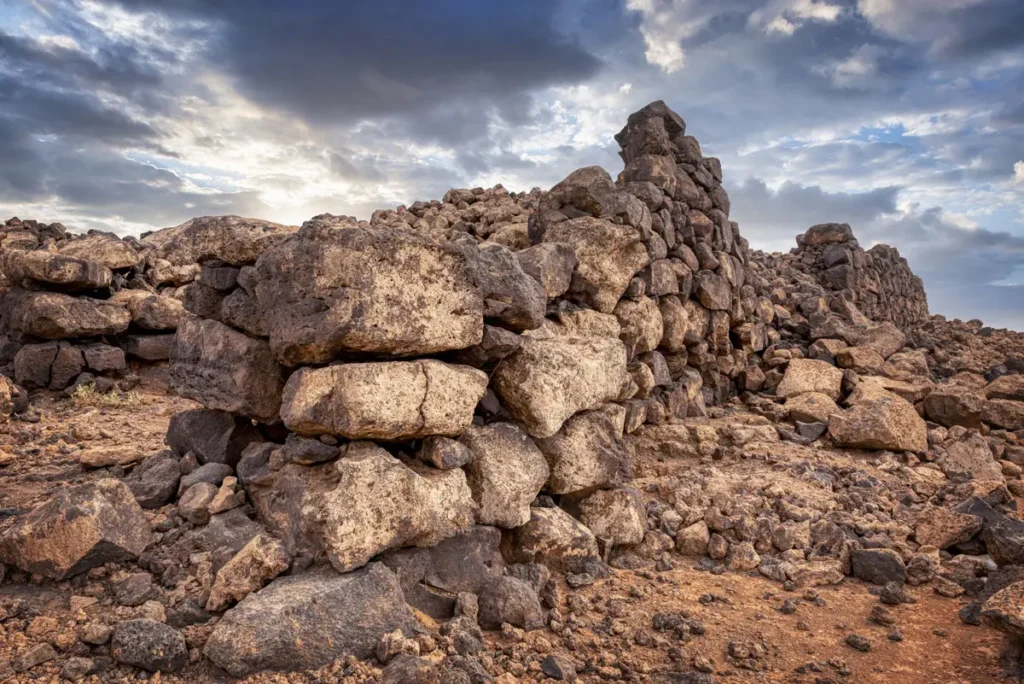
Five main gates and smaller side gates led through the walls of the upper town.
Look closely
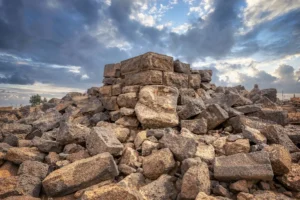
The huge basalt blocks of the gateways.
1 of 5
Part by part
What to see
Five parts of the visit: the upper town, the gates, the town wall, the water works and the desert around them. Pick one to see what to look for.
 1 / 16
01 · Inside the walls
Walk the upper town
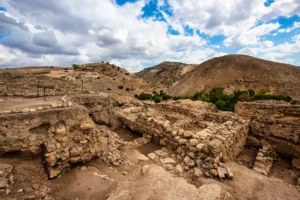
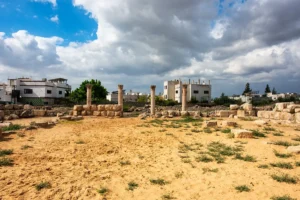
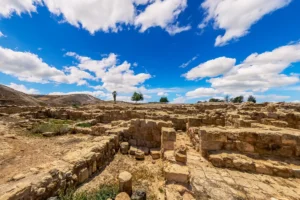
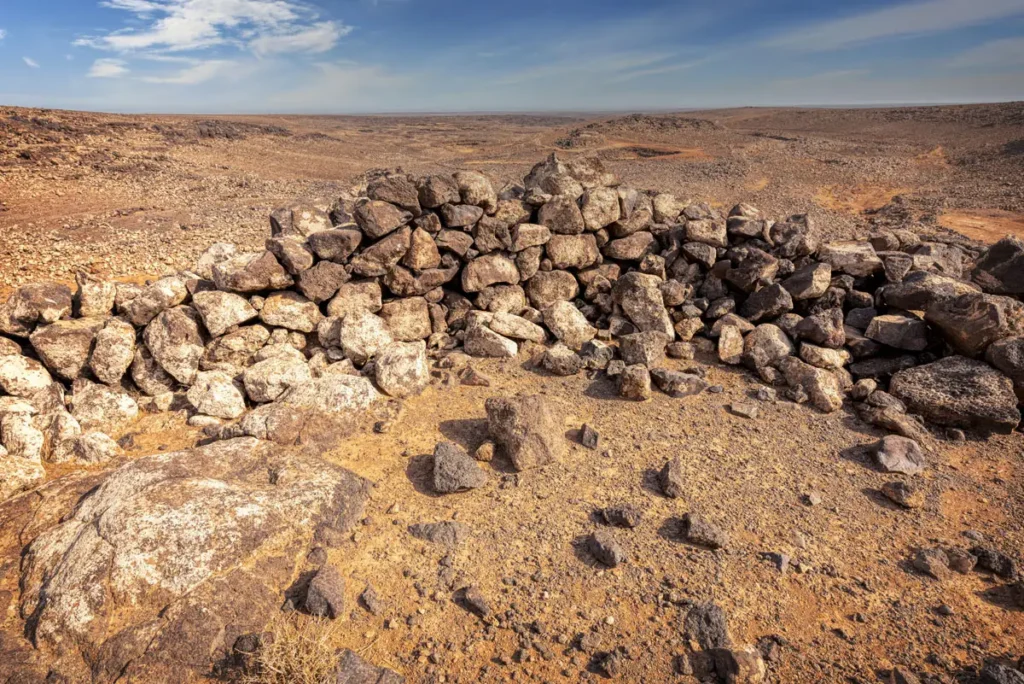
The town covers about 8.3 ha, and the walled upper town about 5.3 ha. Its houses were small and rounded, built of unworked basalt, with stone pillars carrying roof slabs. On the summit stands a multi-room building of about 2000 BC, when a small group reoccupied the hill.
Looting pits have been cut into the upper town, so watch your step.
c. 3600 BCBasalt housesSummit citadel
Look for
- The rounded outlines of the houses
- Stone pillars and roof slabs
- The citadel on the summit
Dig deeperA short-lived town
Radiocarbon dates place the main town at about 3640–3330 BC, with occupation ending around 3380 BC, after perhaps two or three centuries.
1 / 502 · Into the town
Find the gates
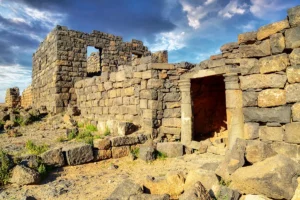
The upper town had five main gates and several smaller side gates. Their passages are lined with some of the largest basalt blocks on the site.
The gates are easiest to recognise where the wall still stands to several courses.
Five main gatesSide gates
Look for
- Large blocks lining the passages
- The thickness of the wall at the gates
 1 / 6
03 · The defences
Follow the town wall
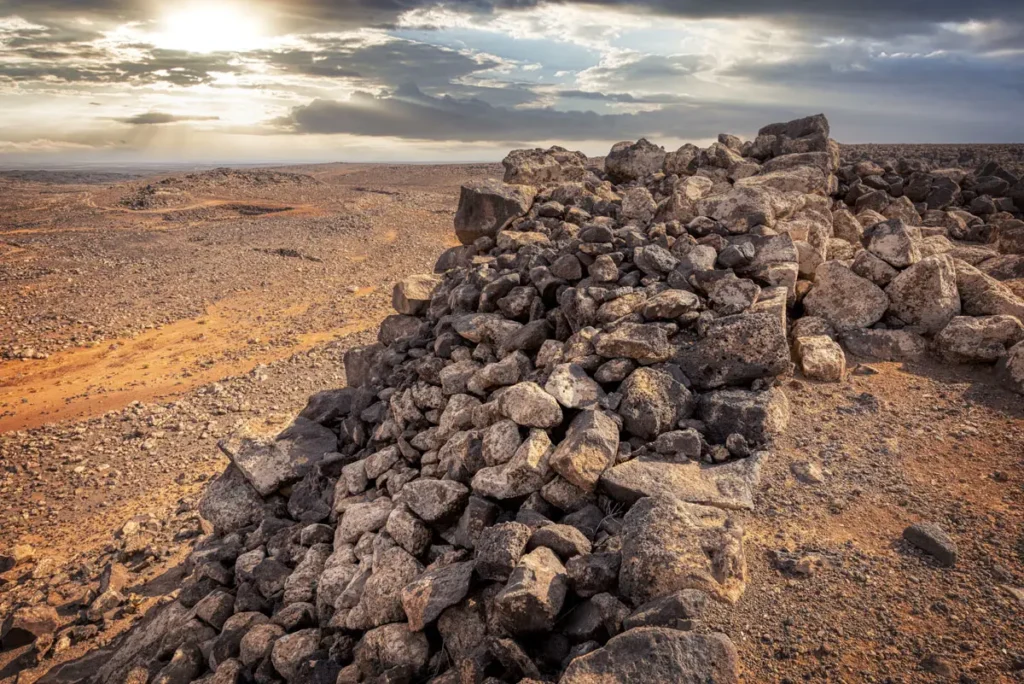
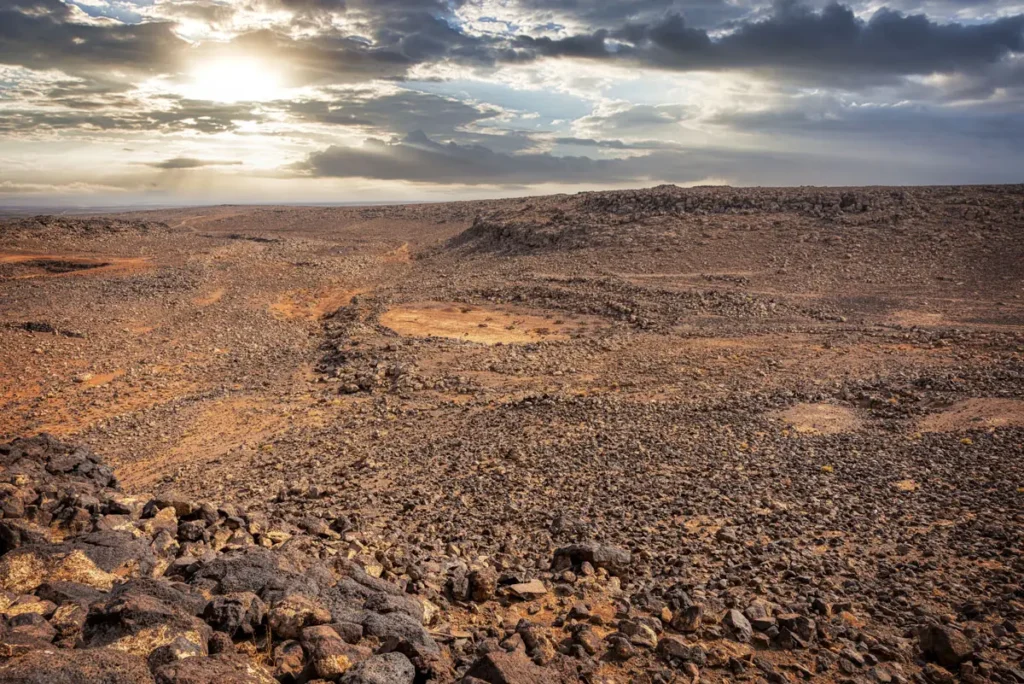
A double-faced wall of basalt boulders with a rubble core enclosed the upper town. It is up to 4 m thick and still over 4 m high in places. A second walled area, the lower town, spreads over the slopes below.
Walk along the wall for the best views of the site and the desert.
Up to 4 m thickUpper and lower town
Look for
- The two faces of the wall
- The rubble core between them
- The lower town on the slopes
Dig deeperFound from the air
The French pilot Antoine Poidebard spotted Jawa from the air in 1931 and took it for Roman. Svend Helms reached it in 1966 and excavated it from 1972 to 1976.
 1 / 3
04 · Taming the floods
See the water works
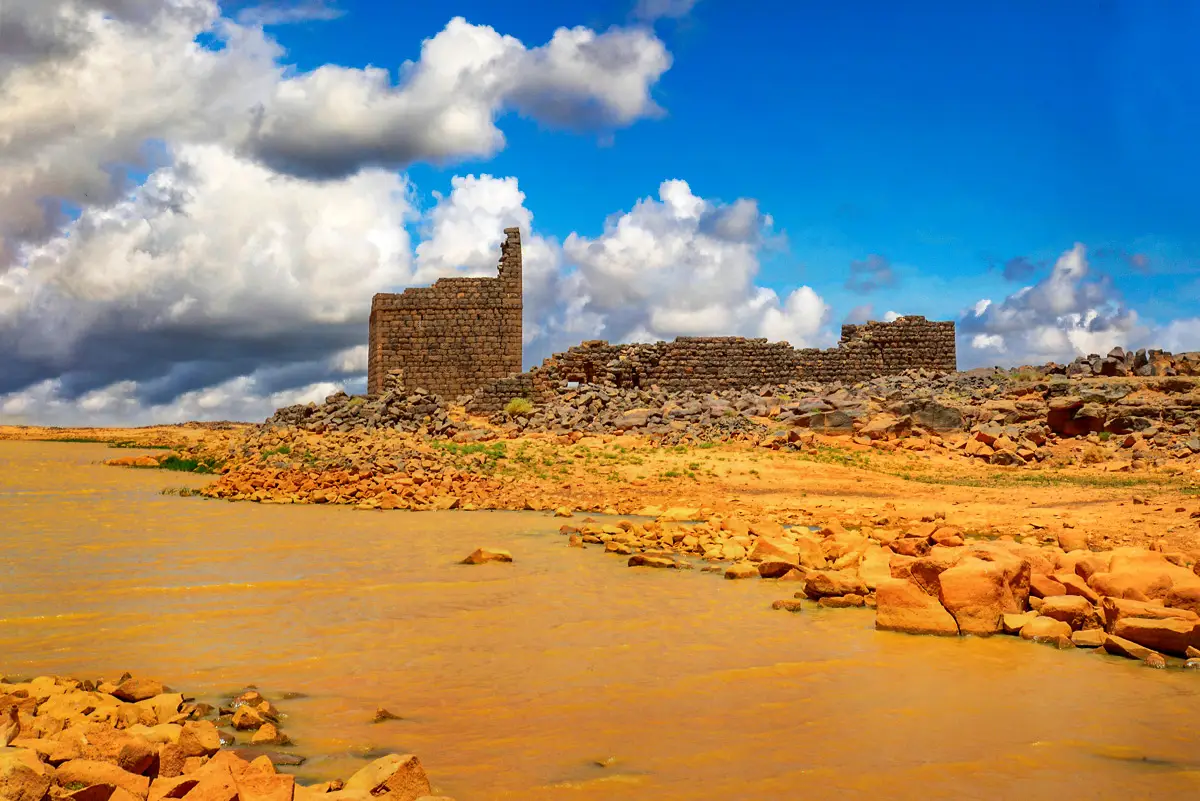
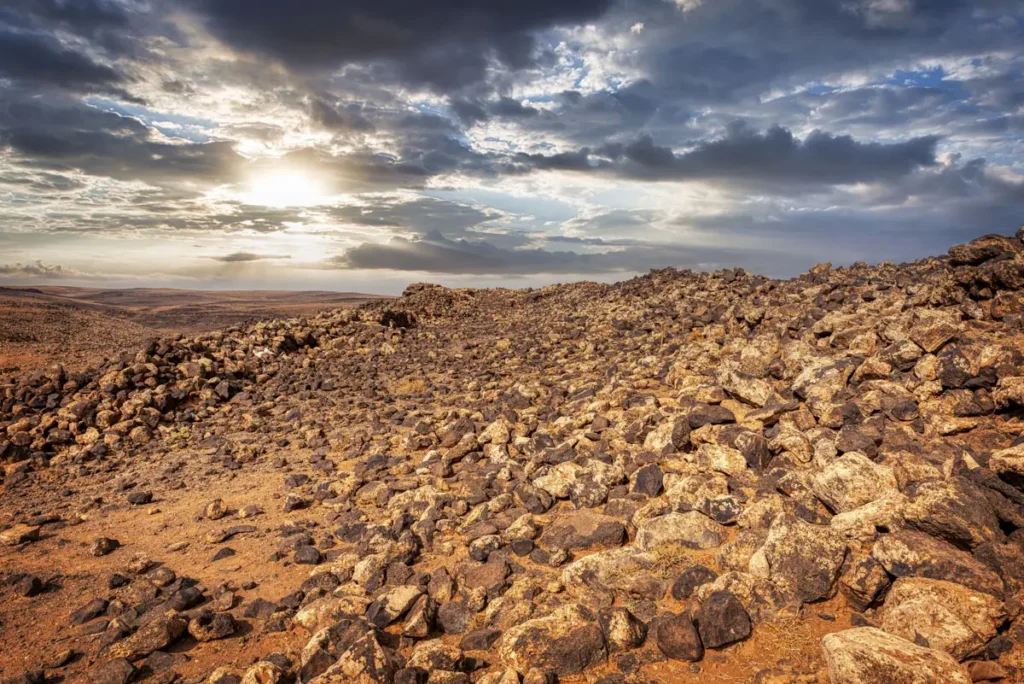
Jawa’s builders dammed Wadi Rajil and diverted its winter floods through channels into pools and reservoirs west of the town. The dam has been radiocarbon dated to about 3600 BC, one of the oldest known dams in the world.
Opposite the town, about 36 ha of terraced gardens were watered by runoff. Modern concrete added to some of the water works has damaged them.
c. 3600 BCDamsTerraced gardens
Look for
- The line of the dam
- The pools west of the town
- Terraces on the slope opposite
Dig deeperWhy here?
Wadi Rajil drains about 300 km² of the Jebel Druze and brings winter floods to a region with far too little rain for farming.
 1 / 7
05 · The black desert
Look over the basalt desert
From the hill, the black basalt desert stretches in every direction. Since 2010 the German Archaeological Institute has found further hillforts of the same age in this landscape.
The Syrian border is close: stay on the tracks and go with a local guide.
Black desertNear the Syrian border
Look for
- The basalt plain around the hill
- The course of Wadi Rajil
History & significance
A town in the black desert
Jawa was founded in the Late Chalcolithic or Early Bronze Age I, more than five thousand years ago, and abandoned after perhaps two or three centuries.
- c. 3600 BCJawa is founded and Wadi Rajil is dammed
- c. 3380 BCOccupation of the main town ends
- c. 2000 BCA multi-room building is built on the summit
- AD 1931Antoine Poidebard spots the site from the air
- AD 1972–1976Svend Helms excavates the town
- AD 2010The German Archaeological Institute begins new research
 ProfileJawa: the full storyThe history, the water system and the research at Jawa.Read the profile →
Plan your visit
Everything you need to know before you go
Jawa lies in the basalt desert of Mafraq Governorate, about 25 km from Safawi and a few kilometres from the Syrian border. From the village of Deir al-Kinn a sign points east, and dirt tracks lead on to the site.
Good to know: a 4x4 is needed and a local guide recommended; the ground is rough basalt with looting pits.
Opening hoursOpen siteUnfenced · no facilities · visit in daylight
Entry ticketFreeNo ticket needed
Time to visit1 hrAbout 1 hour on site
From Amman170 kmAbout 2 hours 30 min to 3 hours by road
LocationNear Safawi32.3397° N, 36.9929° EGet directions
Opening hours and prices checked October 2026. Spotted a change? Let us know
On site
What you’ll find at Jawa
- Viewpoint
Not on site: visitor centre, ticket office, toilets, designated parking, museum, guide, food & drinks, market / shop, hotels
Access: 4x4 needed
When to go
October to April is best. In summer the black basalt is very hot, and there is no shade.
J
F
M
A
M
J
J
A
S
O
N
D
BestGood, cooler or warmVery hot
Tip: go with a local guide: the tracks are unmarked and the Syrian border is close.
Before you go
There are no facilities at Jawa. Safawi is the nearest town.
- Sturdy shoesRough, loose basalt
- Plenty of waterNo shops or shade
- A hatStrong sun on the black stone
- Passport or IDYou are close to the border
Common questions
Quick answers before you set off.
Do I need a 4x4 to reach Jawa?
Yes. There is no paved road; from Deir al-Kinn dirt tracks lead east to the site. A local guide is recommended.
Is there a ticket or a guard?
No. Jawa is an unfenced, free site with no facilities.
How old is Jawa?
The town was built around 3600 BC, in the Late Chalcolithic or Early Bronze Age I. Its dam is one of the oldest known in the world.
Can I visit Jawa on a tour?
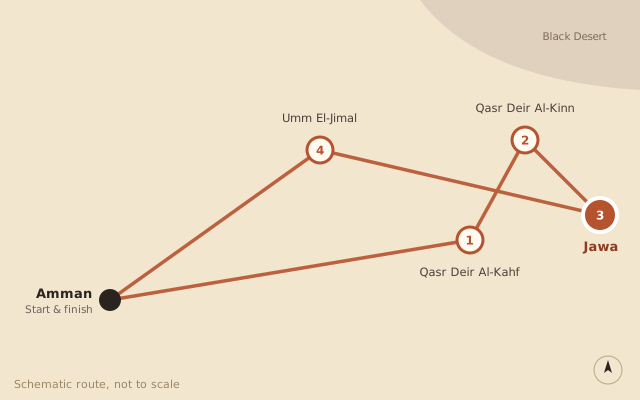
Yes. Our private expedition to Jawa and Umm el-Jimal visits Jawa with Qasr Deir Al-Kahf and Qasr Deir Al-Kinn.
Combine with
Jawa combines with the basalt forts of the north-eastern desert. Drive times are from Jawa.
Private tours
A private day tour that includes Jawa
The tour is just for you: your own vehicle and driver, hotel pickup in Amman, entry tickets included, and one fixed price for up to three travellers.
Private: only your group
Your own vehicle & driver
Hotel pick-up in Amman
Entry tickets included
 from$250per group (1–3) · 178 JOD
Tour 1 · Full day · Private
Expedition to JAWA and Umm El-Jimal
Venture far beyond the usual tourist routes on this exclusive full-day expedition into Jordan’s remote northern desert. This private journey takes you to some of the country’s most ancient and least-visited archaeological sites, where history, landscape, and isolation combine to create a truly unique experience.
HistoryArchitectureBlack DesertBasalt towns4 stops
Duration7–8 hr
Pick-up8 or 9 AM
Group1–3, private
Included
- Private luxury transfer
- Entrance fees
- Bottled water, soft drinks, snacks
- Coffee/tea (on request)
- WiFi, Phone charger
Not included
- Professional on-site (local) guide
- Personal expenses
- Lunch
CancellationFull refund if you cancel at least 24 hours before the start. No refunds or changes within 24 hours.
Pick-upFrom your hotel lobby or home in Amman, 5 minutes before your chosen start time.
BringComfortable shoes, sun hat, sunblock and sunglasses. Tours run in English.
Explore this site
More from Jawa
Panoramas, walk-throughs, photos and stories about this site.
ProfileJawa: history & architecture Photo albumJawa: A Town of the Black Desert in Photos
 360°360° panoramaAncient City of Jawa: 360° Panorama
 Travel articleJawa – the Oldest Settlement in Jordan
Nearby