


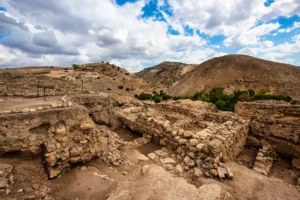
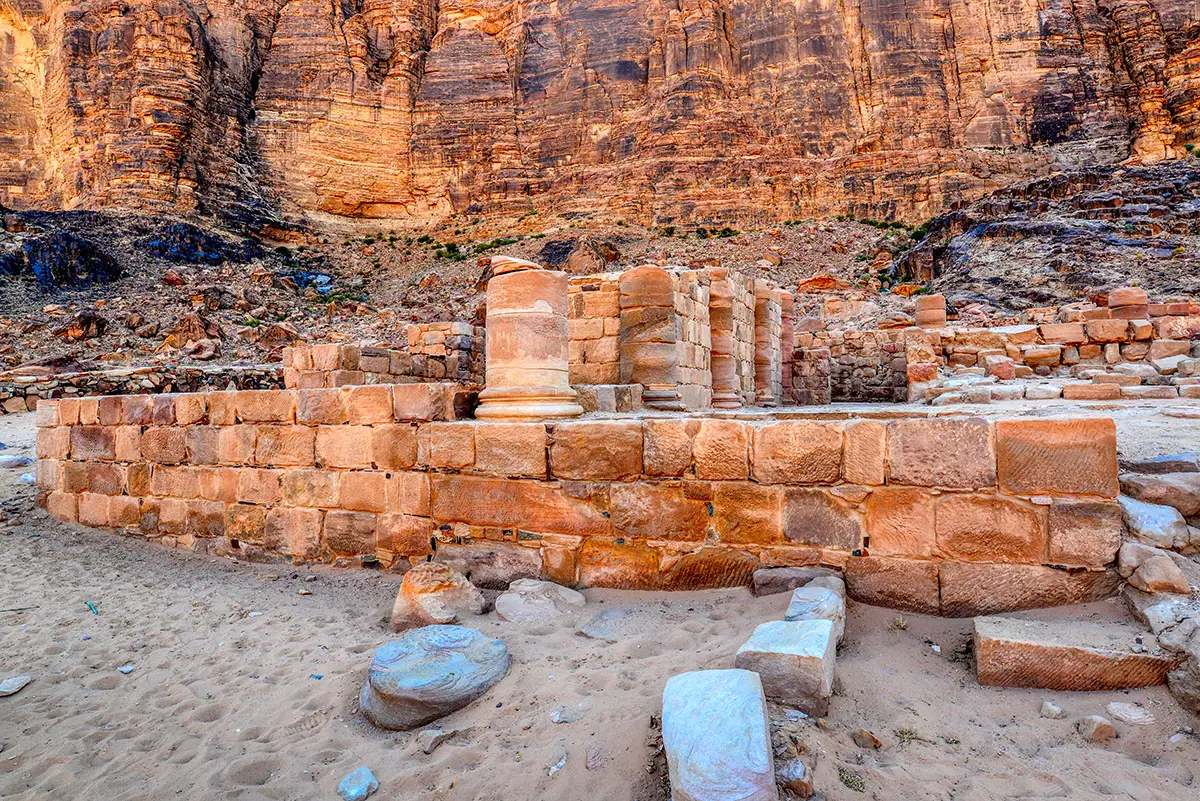
Temple of Allat in Wadi Rum
A Nabataean temple of the goddess Allat at the foot of Jebel Rum, near Rum village
BuiltLate 1st c. BC–1st c. AD
InscriptionsNabataean · Greek · Latin
LocationRum village
Access400 m walk · no 4x4 needed
Introduction
“The great goddess who is in Iram.”
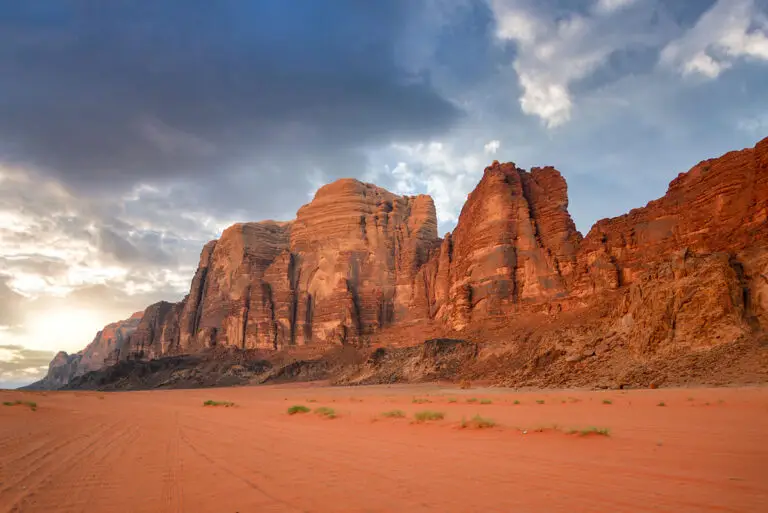
At the foot of the great cliffs of Jebel Rum, beside the springs that made Wadi Rum a stopping place in the desert, the Nabataeans built a temple to Allat, “the great goddess who is in Iram”. Its low walls and column drums are the most important ancient building in Wadi Rum.
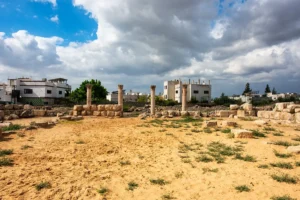
The temple stands on a small rise beside Rum village, about 400 m on foot from the village car park and about 7 km past the Wadi Rum Visitor Centre. There is no paved road to the temple gate, but the short walk from the car park is easy. Most 4x4 tours inside Wadi Rum also include a stop here. It is included in the Wadi Rum entrance ticket. The site is fenced, but the gate is open and there is no guard.
Best timeOct–Apr · mornings
Time needed30 min
TicketWadi Rum ticket
From Amman320 km · 4 hr
Combine withWadi Rum Protected Area
Google rating4 · Reviews
Highlights · A desert temple
A temple below Jebel Rum
Four things to look for at the Temple of Allat
The temple is small and quick to see. These are the details that make the visit.
 01 / 04
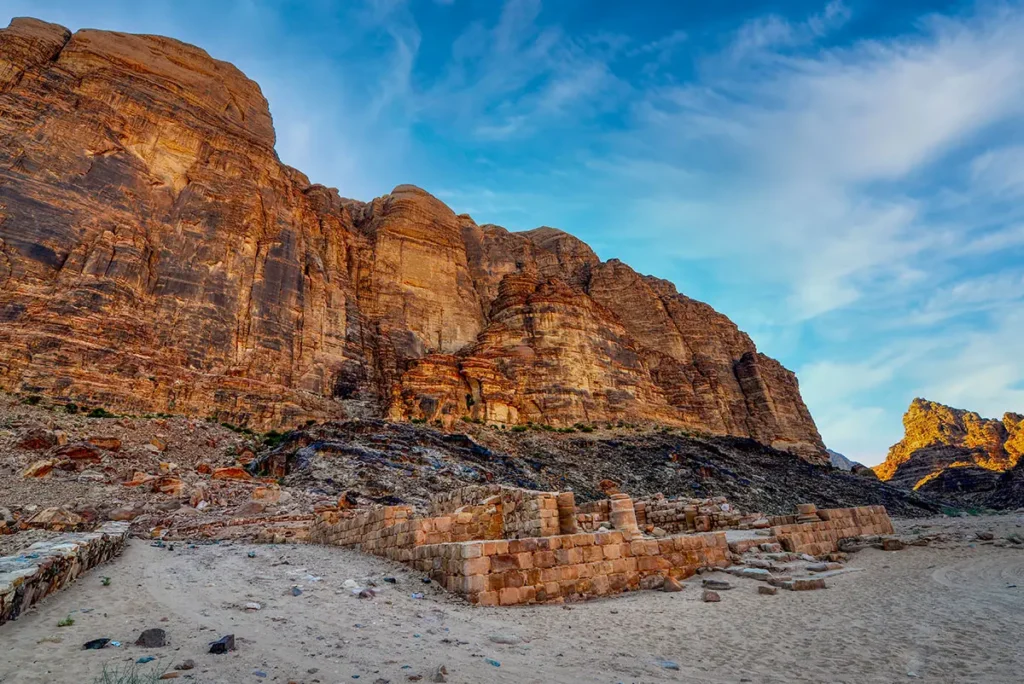
01 · Landscape
Below Jebel Rum
The setting
The temple stands at the foot of the great cliffs of Jebel Rum.
Look closely
The cliffs above the temple.
1 of 4
Part by part
What to see
Three parts of a short visit: the setting, the temple and the later rooms. Pick one to see what to look for.
1 / 301 · At the foot of Jebel Rum
Arrive at the temple
The temple stands on a small rise near Rum village, about 400 m on foot from the village car park. Inscriptions call the place Iram, the ancient name behind modern Rum, probably a station on the caravan routes of the incense trade.
A path leads on to the spring of ‘Ain Shallaleh, where a smaller sanctuary of Allat and Nabataean inscriptions are carved in the rock.
Rum villageIramSpring sanctuary
Look for
- The cliffs of Jebel Rum
- The path to ‘Ain Shallaleh
- The fenced temple site
 1 / 4
02 · The podium and cella
Explore the temple
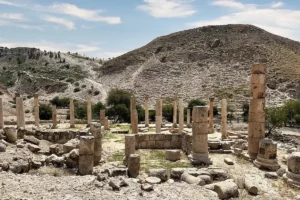
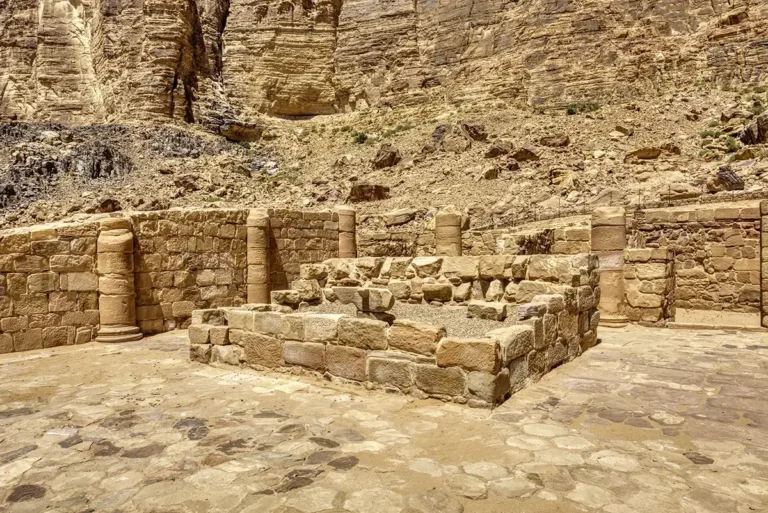
The temple stood on a podium paved with hexagonal sandstone tiles, with a central cella surrounded by columns covered in moulded and painted stucco.
Visitors can see the surviving low walls, steps and column remains.
PodiumHexagonal tilesStucco columns
Look for
- The steps up to the podium
- The column drums
- The hexagonal paving
Dig deeperThe goddess Allat
Allat was one of the chief deities of the Nabataeans and other Arabs, equated by Greeks and Romans with Athena. A Greek and Nabataean inscription asks Allat to remember the architect, Ouaballas son of Abdomanos.
 1 / 4
03 · Walls and stairs
See the added rooms
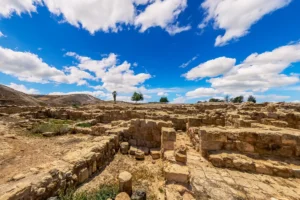
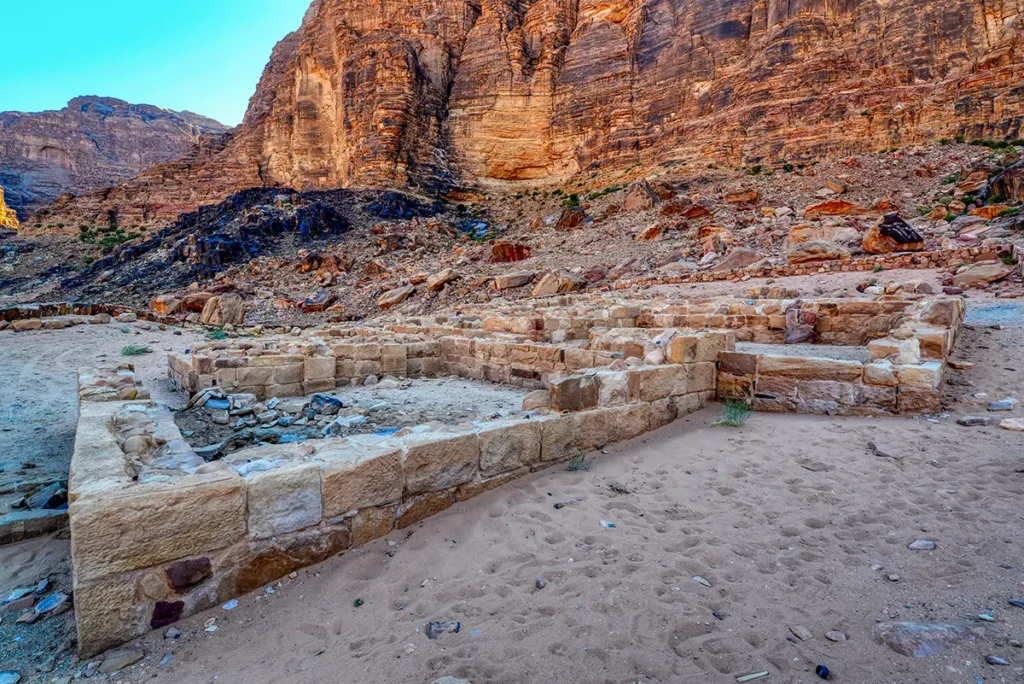
Later the spaces between the columns were walled up, the inner walls were plastered and painted with geometric and floral designs, and rooms were added around the podium, with two narrow corner rooms holding stairs to the roof.
Nearby, excavators found a house and a bath building of the Nabataean–Roman period.
Painted wallsCorner stairsBath building
Look for
- The walls between the columns
- The corner stair rooms
- Traces of painted plaster
History & significance
The goddess of Iram
An earlier shrine of Allat stood here before the temple of the turn of the era. The temple was enlarged in the late 1st century AD and still honoured under Roman rule, into the 3rd century.
- Late 1st c. BC–early 1st c. ADThe temple is built
- Late 1st c. ADThe temple is enlarged
- About AD 147A painted Nabataean text honours the goddess
- 3rd c. ADA Roman governor dedicates a Latin altar
- AD 1932–34Found and excavated by Horsfield and Savignac
 ProfileTemple of Allat: the full storyThe history, the inscriptions and the goddess of the Temple of Allat.Read the profile →
Plan your visit
Everything you need to know before you go
The temple is near Rum village, about 400 m on foot from the village car park and about 7 km past the Wadi Rum Visitor Centre. There is no paved road to the temple gate, but you can easily walk from the car park; no 4x4 is needed. Most 4x4 tours inside Wadi Rum also stop at the temple. Pay the Wadi Rum entrance ticket at the Visitor Centre.
Good to know: the site is fenced, but the gate is open and there is no guard. It has not been restored.
Opening hoursOpen accessGate open · no guard · visit in daylight
Entry ticketWadi Rum ticketVisitors 5 JOD · Residents 1 JOD · Jordan Pass
Time to visit30 minAbout 30 minutes
From Amman320 kmAbout 4 hours by the Desert Highway
LocationRum village29.5779° N, 35.4145° EGet directions
Opening hours and prices checked October 2026. Spotted a change? Let us know
On site
What you’ll find at Temple of Allat in Wadi Rum
- Visitor centre
- Ticket office
- Toilets
- Museum
- Guide available
- Food & drinks
- Market / shop
- Viewpoint
Not on site: designated parking · Nearby: hotels
Access: no 4x4 needed
Details by location
At the monument: No visitor centre, ticket office, toilets, shops or accommodation at the temple.
Near the entrance: The Wadi Rum Visitor Centre and ticket office are at the protected-area entrance, about 7 km before Rum village. The village designated parking is about 400 m on foot from the temple.
In the surrounding town: Toilets, food, shops, local tour operators and accommodation are in nearby Rum village and the surrounding Wadi Rum area.
When to go
October to April is best. In summer, visit early or late in the day.
J
F
M
A
M
J
J
A
S
O
N
D
BestGood, cooler or warmVery hot
Tip: walk on from the temple to the spring of ‘Ain Shallaleh and its Nabataean inscriptions.
Before you go
Shops, the Rest House and camps are in nearby Rum village.
- Wadi Rum ticket or Jordan PassPaid at the Visitor Centre
- WaterLittle shade
- Sun hat and sunscreenThe desert sun is strong
Common questions
Quick answers before you set off.
Do I need a separate ticket?
No. The temple is included in the Wadi Rum entrance ticket, paid at the Visitor Centre: 5 JOD for foreign visitors and 1 JOD for residents, or covered by the Jordan Pass.
Do I need a 4x4?
No. There is no paved road to the temple gate, but it is an easy 400 m walk from the village car park. Most 4x4 tours inside Wadi Rum also include a stop at the temple.
How long do I need?
About 30 minutes, more if you walk on to the spring of ‘Ain Shallaleh.
Combine with
The temple is in the heart of Wadi Rum. Drive times are from Rum village.
Explore this site
More from Temple of Allat in Wadi Rum
Panoramas, walk-throughs, photos and stories about this site.
ProfileTemple of Allat: history & architecture Photo albumThe Temple of Allat in Wadi Rum in Photos
 360°360° panorama360° Panorama of the Temple of Allat, Wadi Rum
Nearby
Also in the south
From guide to visit
Explore the Nabataean sites with a private guide
Tell us when you’d like to go, and we’ll plan a private trip to Wadi Rum and Petra.