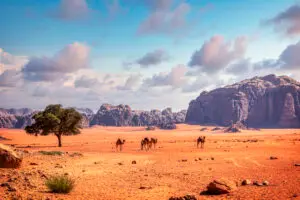
From the edge of the Jordanian plateau, Dana Biosphere Reserve falls more than 1,600 m through cliffs and canyons to the sandy plains of Wadi Araba. In a single day’s walk the landscape changes from Mediterranean woodland to desert, and at the bottom lie the copper mines of Feynan, worked since prehistoric times.
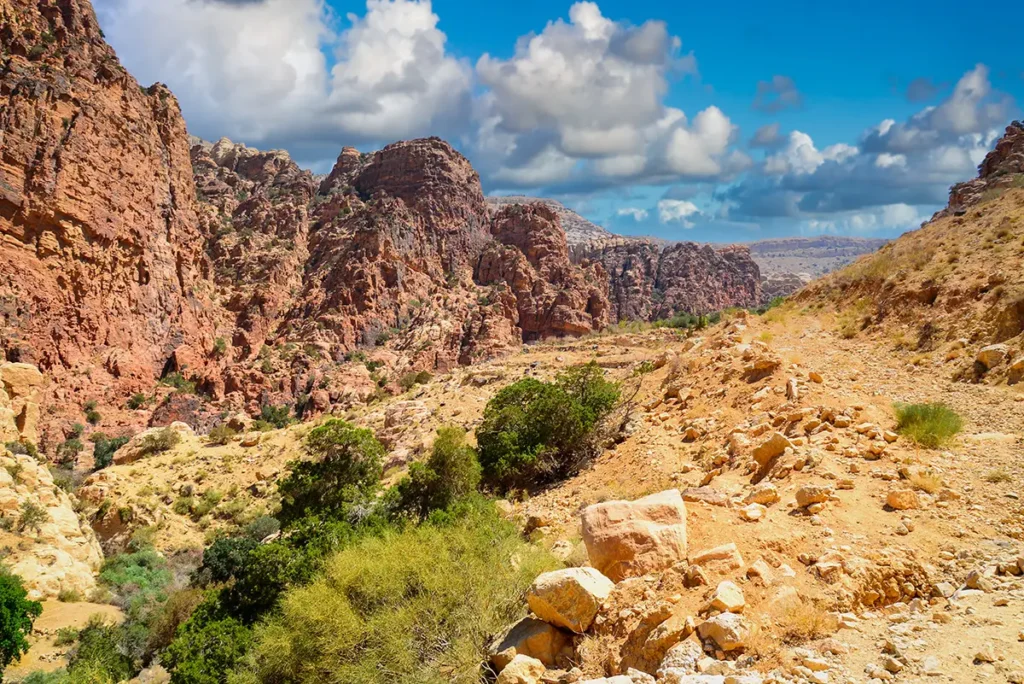
Where Is Dana?
The reserve lies in the Tafila governorate, about 200 km south-west of Amman, between the King’s Highway and Wadi Araba. Dana village sits on its eastern rim, and Feynan Ecolodge at its western edge. The reserve covers about 300 km²; the RSCN gives 292 km².
History of the Reserve
The Royal Society for the Conservation of Nature established the reserve in 1989, and in 1994 it drew up Jordan’s first integrated management plan, setting aside areas for grazing, protection and tourism. In 1998 Dana became Jordan’s first UNESCO biosphere reserve, and in 2007 it was placed on Jordan’s World Heritage Tentative List. The RSCN worked with the people of Dana village to create jobs in guiding, crafts and the Guest House, opened in 1996. A controversial 2021 proposal sought to redraw Dana’s boundaries for copper mining. Exploration subsequently continued, but the RSCN stated in October 2026 that no land would be excised and no open-pit mining permitted.
Habitats and Wildlife
The reserve brings together Mediterranean, Irano-Turanian and Sudanian landscapes, with a Saharo-Arabian zone often added as a fourth. The RSCN has recorded more than 890 plant species, about a third of Jordan’s flora, as well as about 250 birds and 39 mammals, including Nubian ibex, sand cat, wolf and caracal. Dana holds the world’s largest breeding colony of the Syrian serin, a vulnerable finch, and the oldest natural stand of cypress in Jordan.
Dana Village
An Ottoman-period stone village on the edge of the gorge.
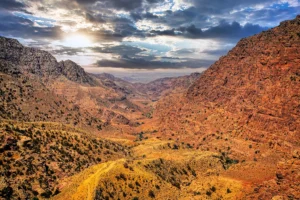
Wadi Dana
A great canyon falling more than 1,600 m to Wadi Araba.
Wildlife
Nubian ibex, sand cats and the Syrian serin.
Feynan Copper Mines
Mines and smelting sites used for more than 6,000 years.
Ancient Copper Mines of Feynan
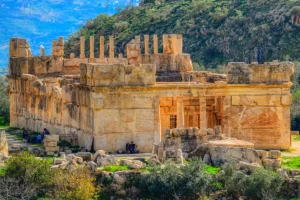
Copper was smelted in Wadi Faynan from the Chalcolithic period, more than 6,000 years ago. At Khirbat en-Nahas, slag heaps several metres deep record industrial production in the 10th–9th centuries BC, in the time of Edom. In the Roman period Phaino was a major mining centre, where, according to Eusebius, Christians were condemned to labour in the early 4th century. About 100 archaeological sites are recorded in the reserve.
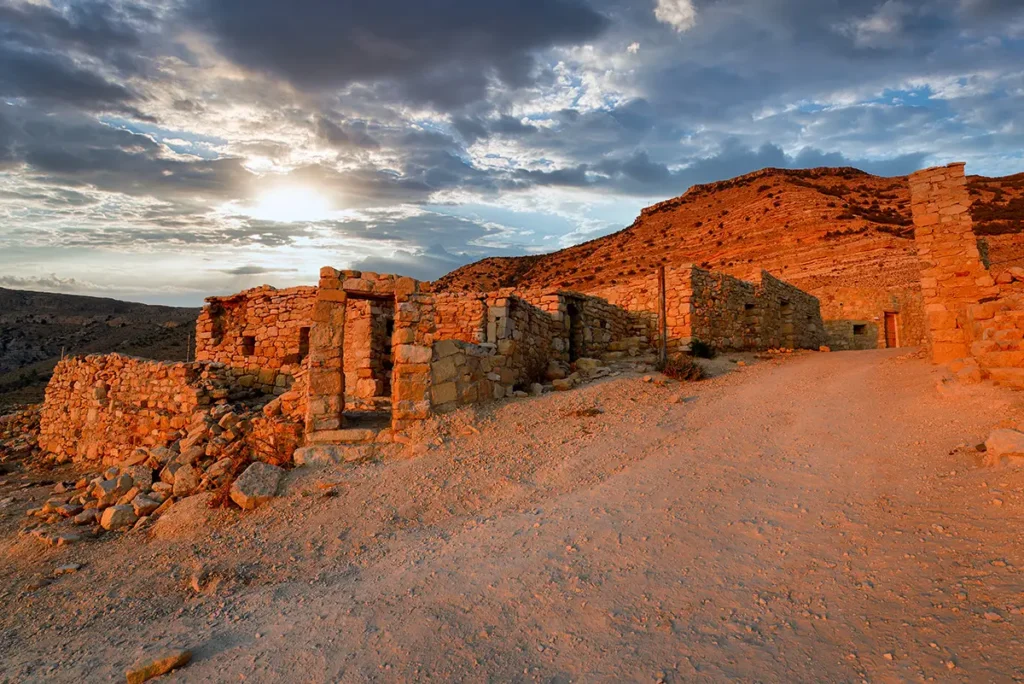
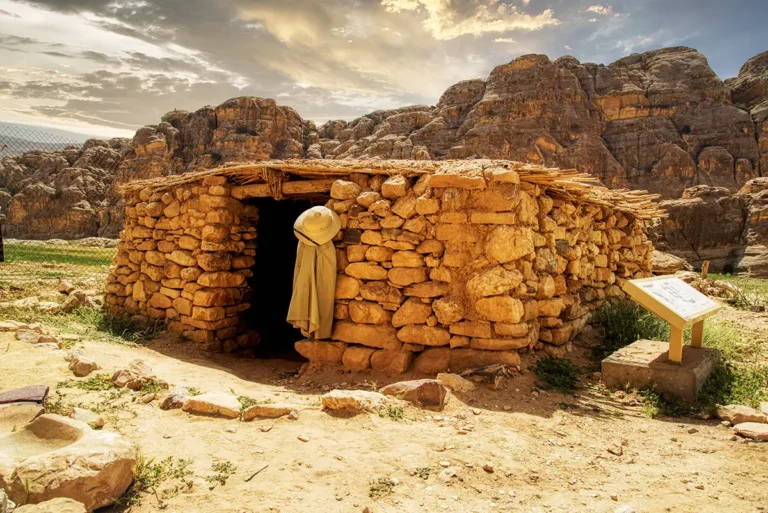
Dana Village
The stone village on the edge of the gorge dates from the Ottoman period. Most families moved away from the 1960s to the 1980s, and the RSCN and local partners restored its cottages from the 1990s, most recently in 2011–2014.
Visiting Dana Today
Entrance is 10 JOD for foreign visitors, 5 JOD for residents and 2 JOD for Jordanians (RSCN, 2025). The RSCN offers ten trails, some guided, some seasonal; guided packages include entrance. The 14 km Wadi Dana trail from the village to Feynan takes 5–7 hours and can be walked with a guide or alone, but it closes in winter because of the risk of flash floods. Stay at the Dana Guest House, the Rummana campsite (March to October) or Feynan Ecolodge. Allow a full day or more. See our Dana travel guide for practical details.
Further reading: RSCN — Dana Biosphere Reserve; UNESCO Tentative List — Dana Biosphere Reserve; Wadi Faynan copper mines (Current World Archaeology).