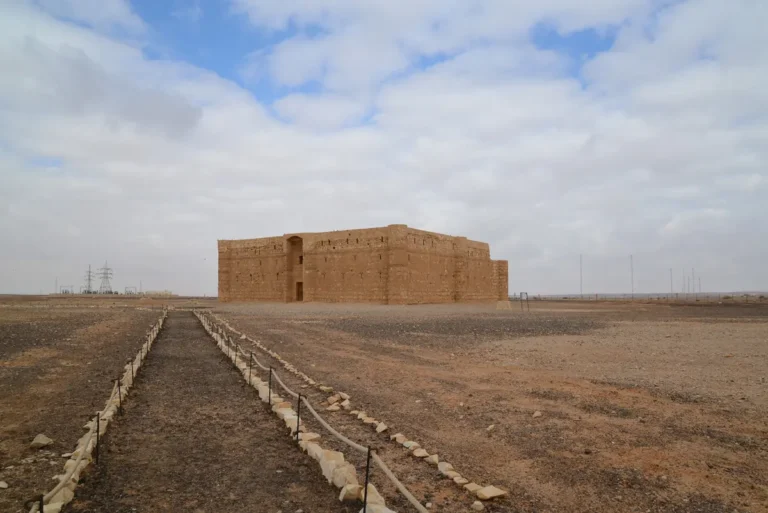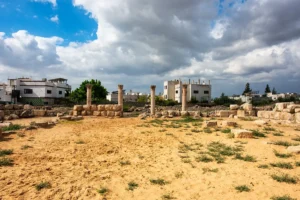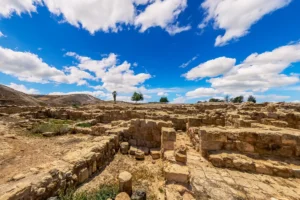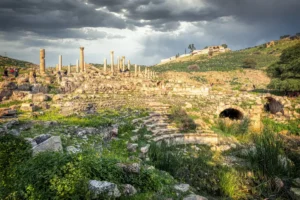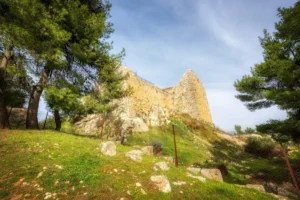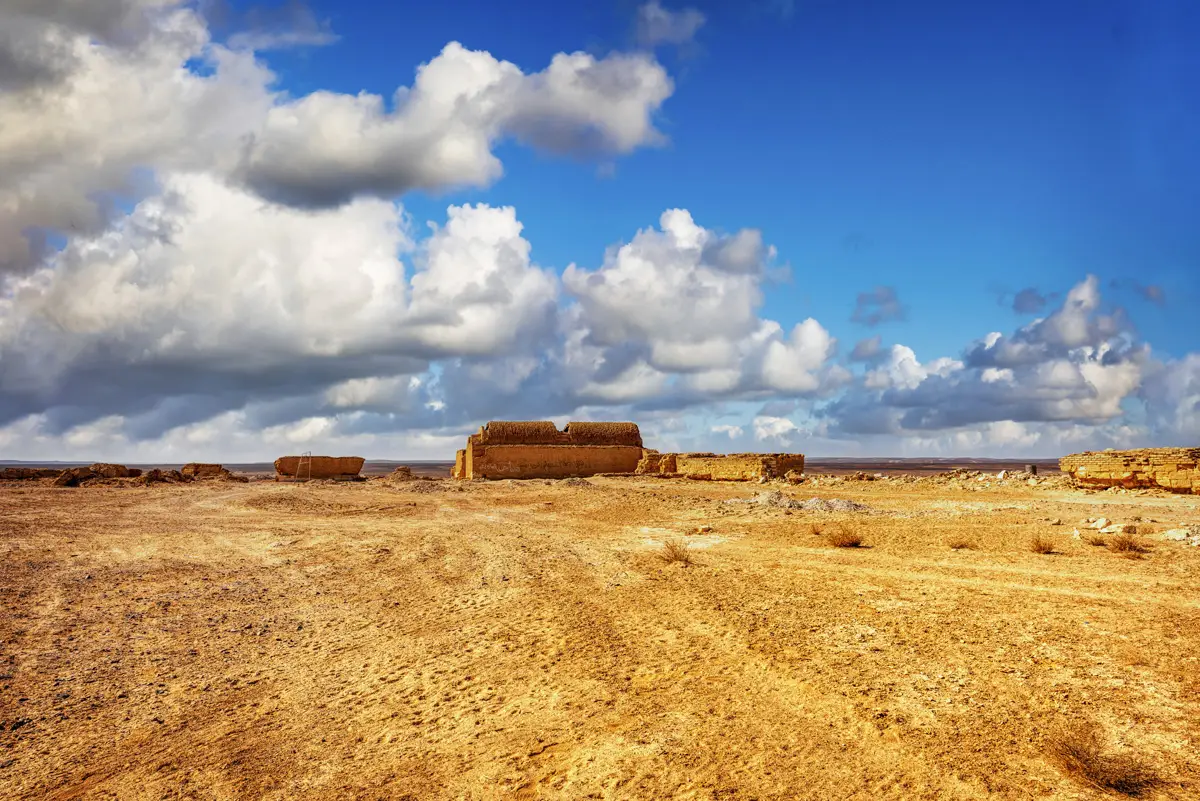
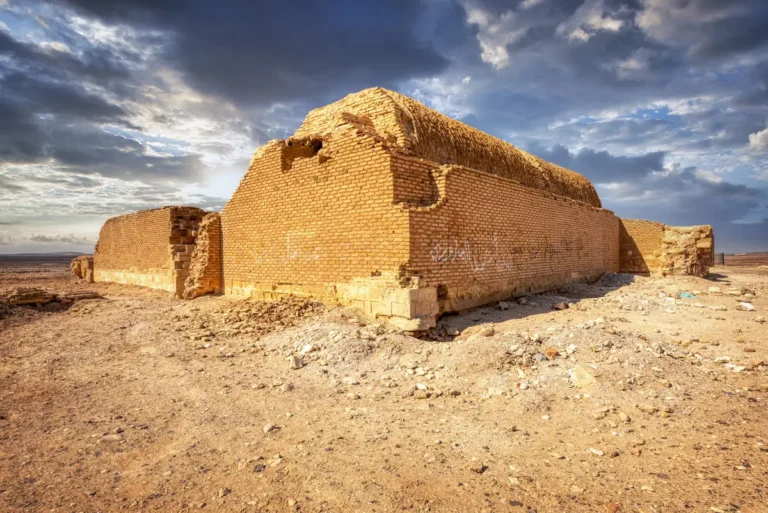


Deep in the south-eastern desert, far from any road, stand the brick walls of Qasr Tuba. It was planned as a great double palace, like Mushatta, but work stopped around AD 744 and never resumed. Reaching it is an expedition; the reward is a silent, unfinished Umayyad palace in an empty valley.
Where Is Qasr Tuba?
Qasr Tuba lies in Wadi al-Ghadaf, about 120 km south-east of Amman. The usual route is a desert track of about 50 km south from Qasr Amra on the Azraq road; another track turns east off the Desert Highway near Qatrana. The site sits low in the valley and is hard to find, so a 4×4 and a guide who knows the way are essential.
Historical Context and Origin
No inscription names the builder, but Qasr Tuba is attributed to the Umayyad caliph al-Walid II (743–744), because its plan, materials and carved doorways closely match Mushatta, and the pottery found here dates to the late Umayyad period. Building stopped, probably when the caliph was killed in 744, and was never resumed. Its intended use is uncertain: a residence, a hunting retreat and a halt on routes to the Hijaz have all been suggested.
Architectural Design
Tuba was planned as an oblong about 140 × 73 m, made of two identical square enclosures about 70 m across sharing a wall, with 14 semicircular towers. Each half was to have a gate in the north side, a long hall, a courtyard and suites of rooms (bayts). Only the western half was partly built; the eastern half never rose above its foundations.
A Palace of Brick
Walls of fired mud brick on stone footings — tuba means brick in Arabic.
Twin Enclosures
Planned as two 70 m squares side by side; only the western half was partly built.
Brick Vaults
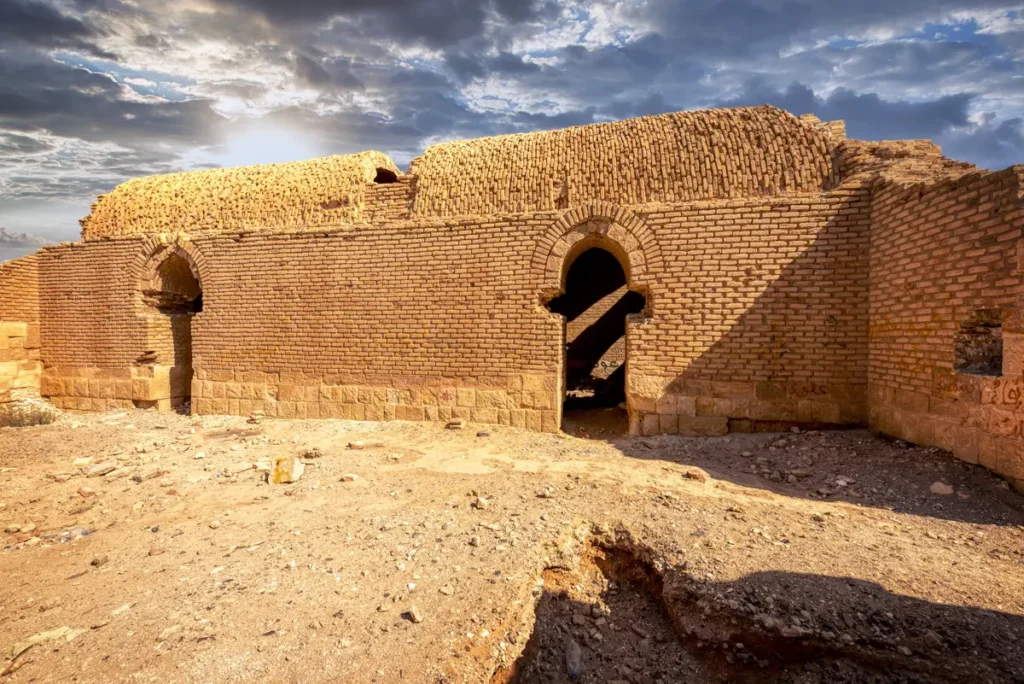
Tall brick barrel vaults still roof some of the rooms.
Wells in the Wadi
Three deep wells and two stone dams lie in the dry valley nearby.
A Palace of Brick
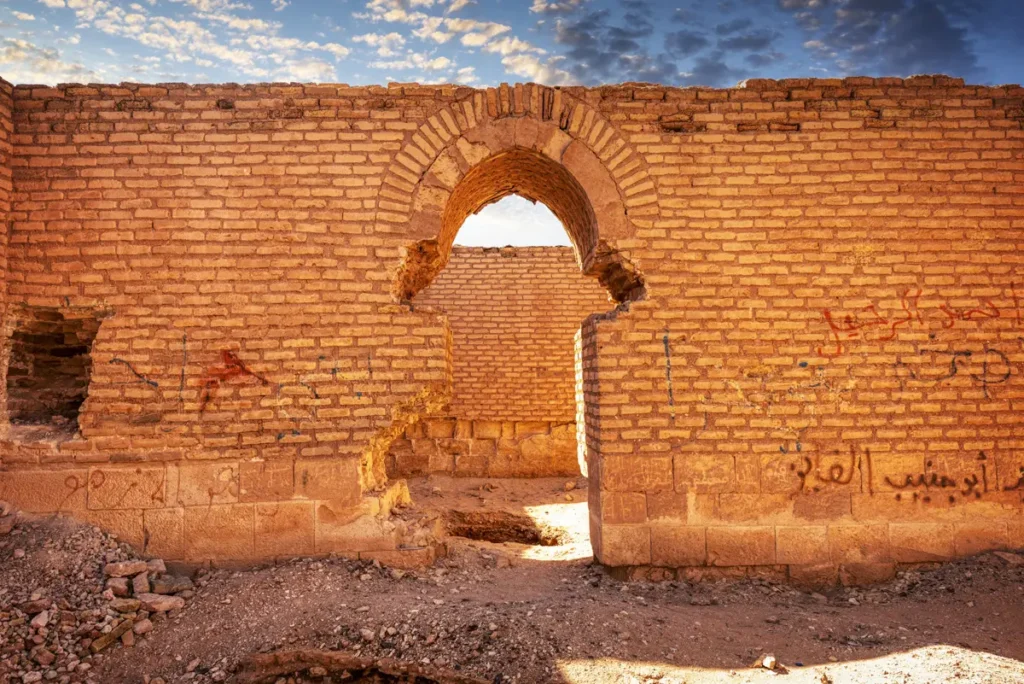
Its name comes from tub, Arabic for brick. Above limestone footings, the walls are built of square fired mud bricks, a rarity in stone-rich Jordan shared only with Mushatta. Brick barrel vaults about 9 m high still roof some rooms, and the masons’ finger marks remain in the mortar. The doorways once had carved stone posts and lintels with rosettes and pine cones; the best lintel is now in The Jordan Museum in Amman, and two fragments are in Berlin. In the wadi to the north are three wells over 30 m deep and two stone dams.
Destruction, Rediscovery, and Restoration
Alois Musil reached Tuba in 1898, the first modern explorer to do so; by then most of the carved door stones had already been taken. The Department of Antiquities restored the gate in the 1970s, protected the site against floods in 2007 and surveyed and excavated it in 2009. Erosion, flash floods and treasure hunters remain a threat.
Visiting Qasr Tuba Today
Entry is free, but there are no facilities or shade at the site, so bring water, food and fuel and plan a full day. Allow about 40 minutes at the palace and the wells. See our Qasr Tuba travel guide for access details.
Further reading: Archnet — Qasr al-Tuba; AramcoWorld — Qasr Tuba (1990); ADAJ 56 (2012) — Qasr al-Tuba survey 2009 (Arabic).