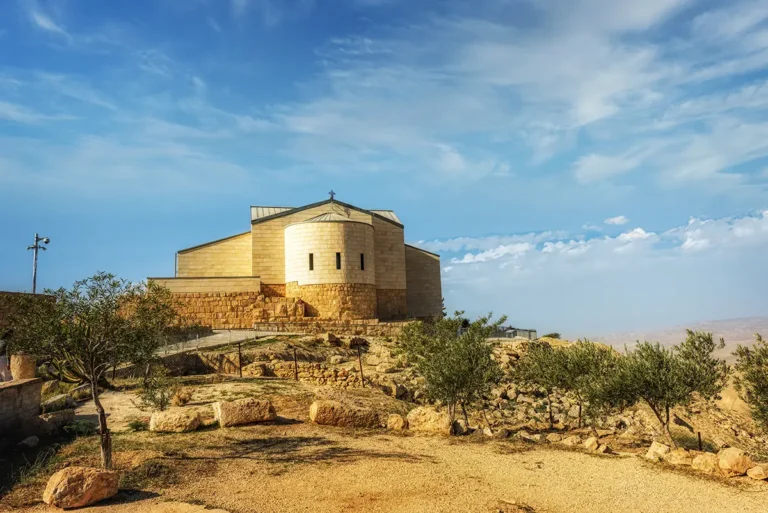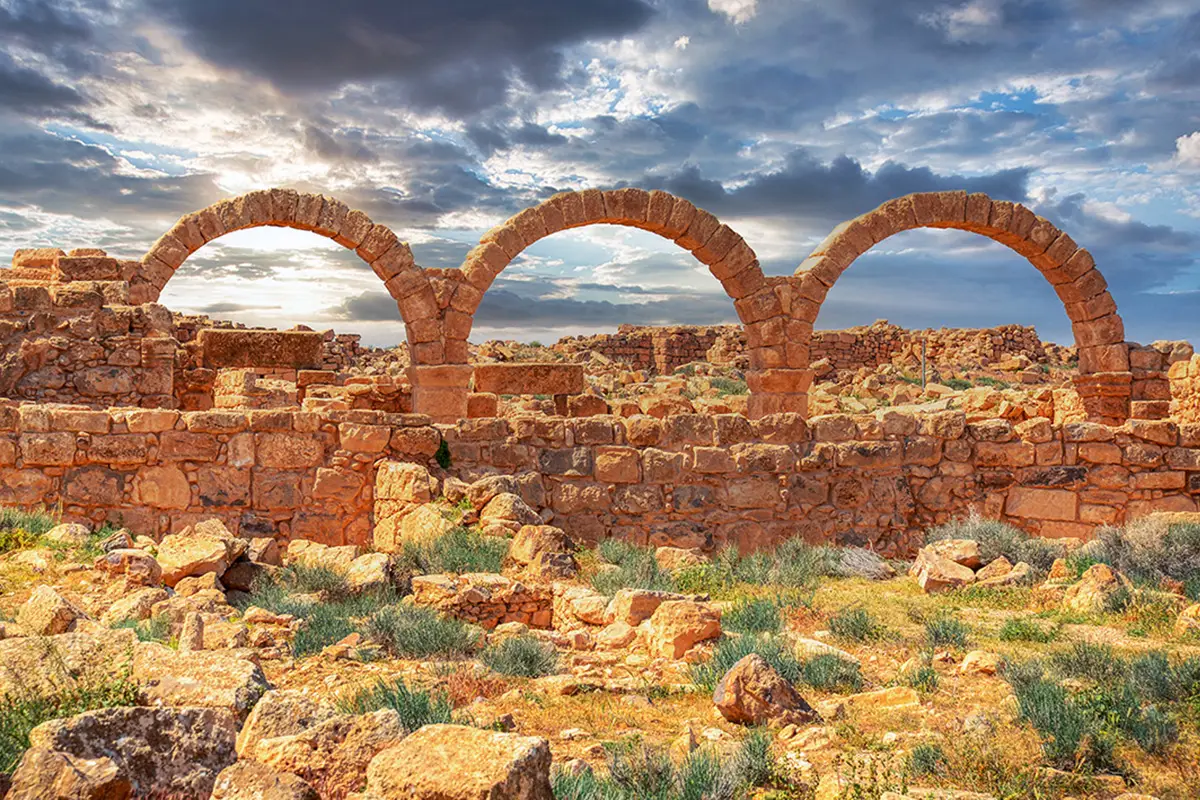

On the edge of the steppe south-east of Madaba, Umm ar-Rasas began as a Roman army camp and grew into a Byzantine and early Islamic town of churches. Its ancient name, Kastron Mefa’a, is written in its mosaics — and the floor of the Church of St Stephen, framed by views of the cities of the Holy Land and Egypt, is one of the finest in Jordan. The site has been a UNESCO World Heritage Site since 2004.
Where Is Umm ar-Rasas?
The site lies about 30 km south-east of Madaba and about 60 km south of Amman, north of Wadi Mujib and roughly halfway between the King’s Highway and the Desert Highway. About 1.5 km to the north stands the Stylite Tower.
It sits where farmland gives way to the semi-arid steppe — a frontier position that explains why the Romans built a camp here.
Historical Context and Origin
Mephaath is named in the Bible among the towns of Moab, and the 4th-century writer Eusebius records a Roman army unit stationed at Mefaat on the edge of the desert. The walled camp was built at the end of the 3rd or start of the 4th century AD.
In the Byzantine period the town spread outside the walls, and its people built church after church — 16 have been found. The Church of Bishop Sergius was paved in AD 587. Remarkably, building and mosaic work continued after the Islamic conquest: St Stephen’s presbytery was repaved in AD 756, under Abbasid rule. The town was probably abandoned in the 9th century.
Architectural Design
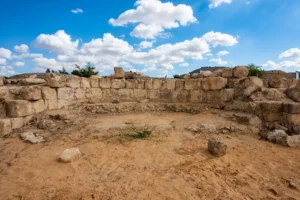
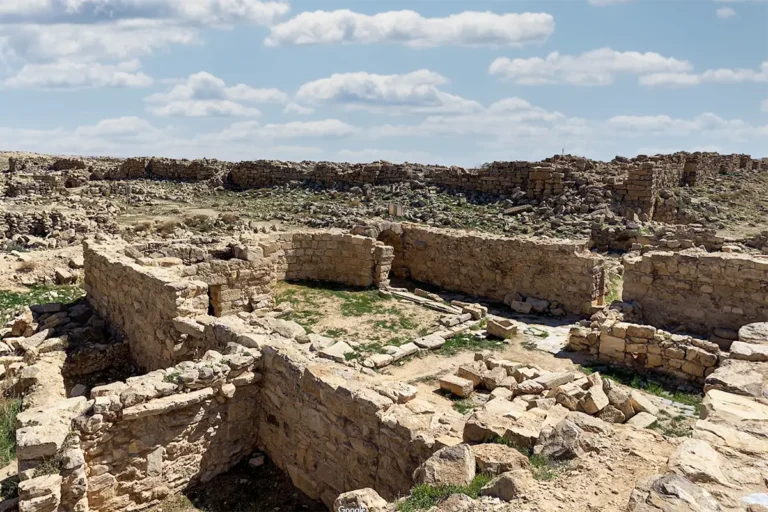
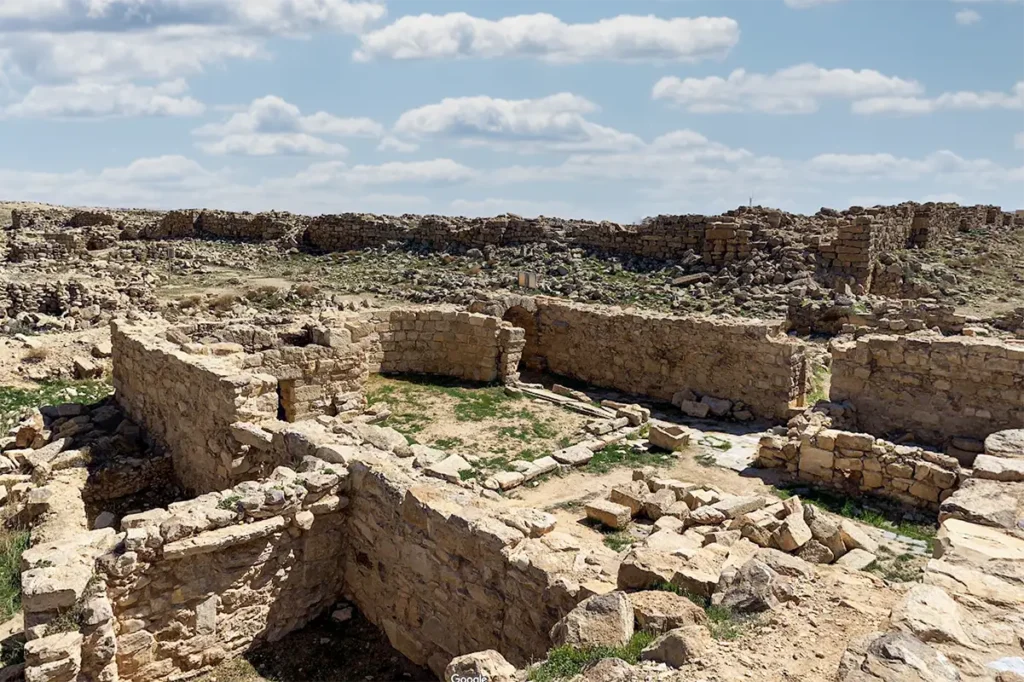
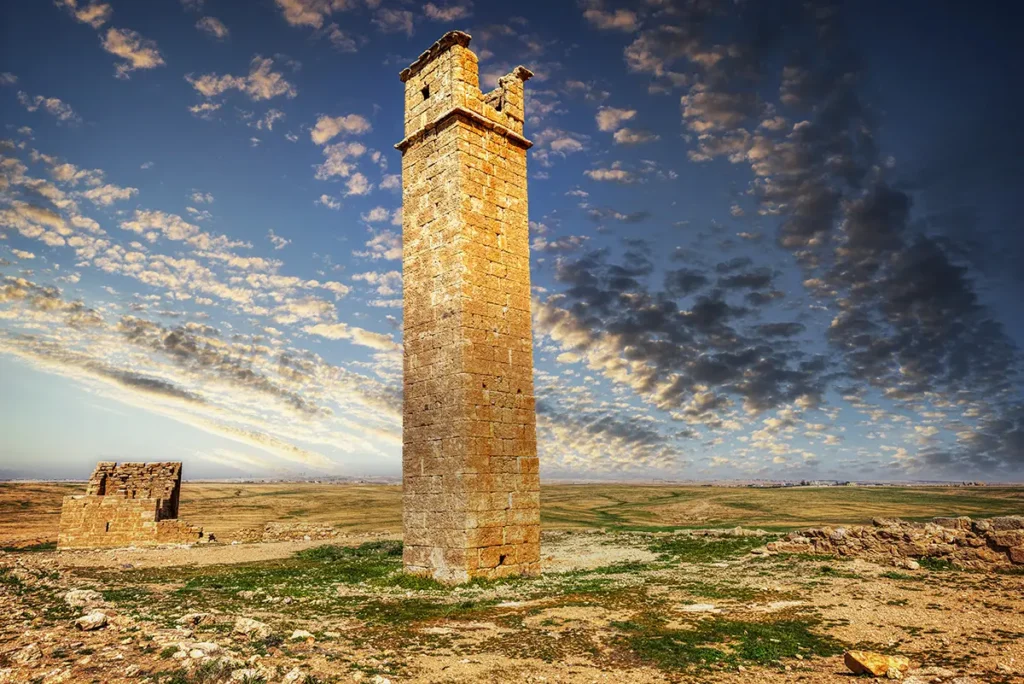
The castrum, about 158 by 139 metres with walls some 2 metres thick, was later filled with houses and four churches. North of it, a larger unwalled town grew up, with the complex of St Stephen and Bishop Sergius among its many churches. The stylite tower, about 14 metres high, stands in a courtyard beside a small church, with no stairs inside — the hermit who lived on top was supplied from below.
The Walled Camp
A Roman castrum of about 158 × 139 m, its 2 m-thick walls later filled with houses and four churches.
St Stephen’s Mosaic
An 8th-century floor framed by vignettes of the towns of Palestine, Transjordan and the Nile Delta.
Sixteen Churches
UNESCO counts 16 churches and chapels, inside the walls and in the town that grew to the north.
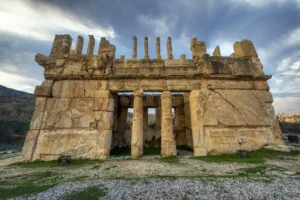
The Stylite Tower
A tower about 14 m high, where a hermit lived on the top, beside the small Church of the Tower.
The Mosaic of St Stephen
The floor of St Stephen is a record of a whole region. A frame of vignettes shows the towns of Palestine — Jerusalem, Nablus, Gaza and others — and of Transjordan, including Kastron Mefa’a itself, while the outer border shows the cities of the Nile Delta. Inscriptions name the donors, the deacon John who cared for the work, and the mosaicists Staurachios of Esbounta (Hesban) and Euremios, who repaved the presbytery in March AD 756.
The nave’s own date is debated: its inscription is usually read as AD 785, but some scholars argue for AD 718. Human and animal figures were later deliberately altered by replacing their tesserae, while the towns were left untouched.
Destruction, Rediscovery, and Restoration
Travellers recorded the ruins from 1807, when Ulrich Seetzen passed through, but the town remained unexplored until 1986, when the Studium Biblicum Franciscanum under Michele Piccirillo began excavating with the Department of Antiquities; a Swiss team joined from 1988. In 2004 UNESCO inscribed the site, and a shelter, paths and a visitor centre were later built to protect it.
Visiting Umm ar-Rasas Today
Begin at the visitor centre, then walk to the shelter over St Stephen and take time to find the towns along the border — Kastron Mefa’a is among them. Continue through the walled camp, then drive or walk the 1.5 km north to the Stylite Tower.
The site is open and exposed, so morning or late afternoon is best, with water and a hat.
Further reading: UNESCO World Heritage: Um er-Rasas.