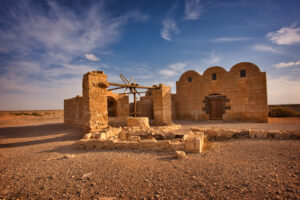
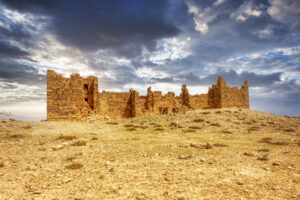
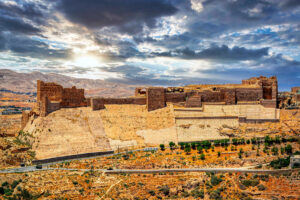
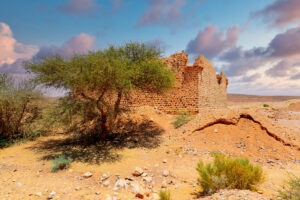
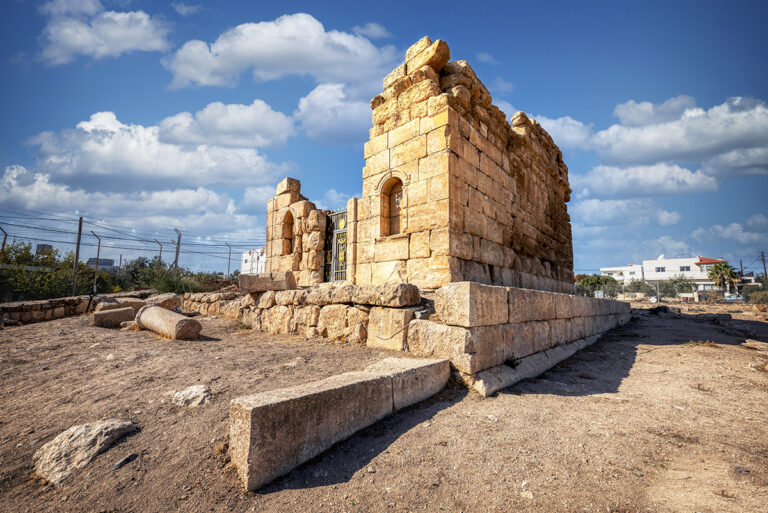
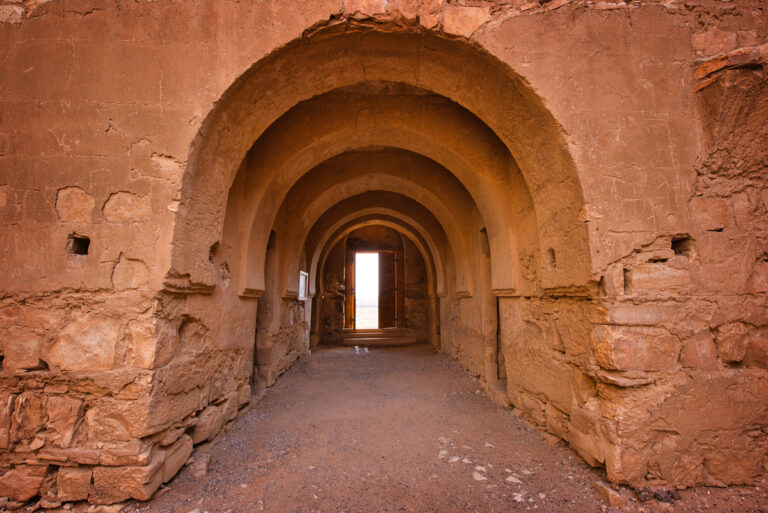
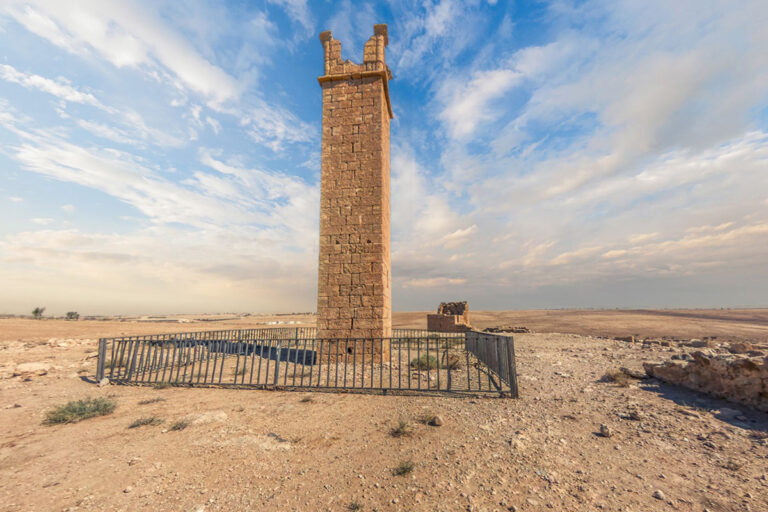
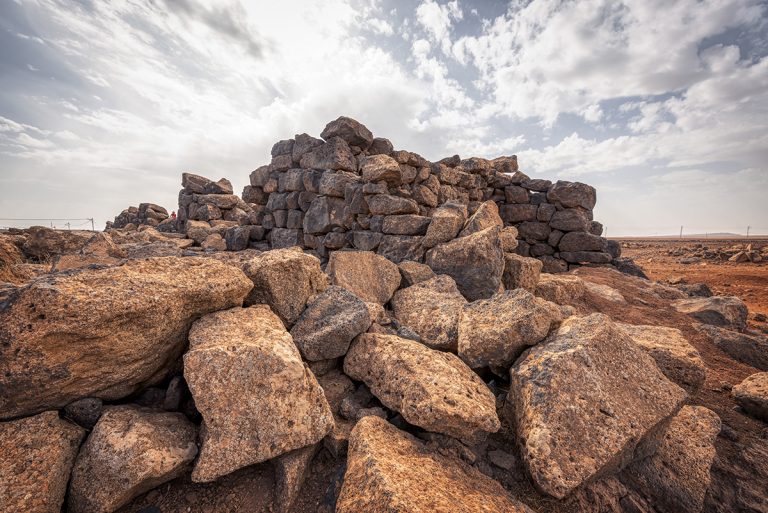
Dhat Ras Temple is a fine example of Nabataean religious architecture from the early 1st–2nd century CE, located on a raised hilltop platform in central Jordan’s Karak region. The temple rests on a substantial rectangular podium (≈ 19 × 14 m) built of dressed ashlar limestone. The temple itself measures about 13.9 × 9.9 m and features robust walls almost 1.8 m thick, rising to approximately 8.75 m at the northeast corner. Decorated with corner pilasters—whose capitals show a modified Corinthian or foliated design—and a continuous frieze beneath the cornice, the exterior reflects a harmonious blend of Nabataean craftsmanship influenced by Hellenistic styles.
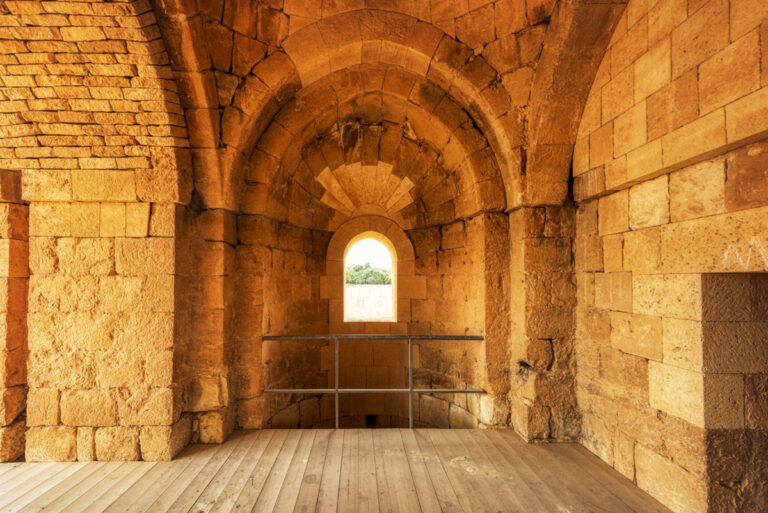
Inside, visitors can explore three distinct levels: a ground floor, a subterranean chamber likely used for storage or ritual purposes, and a small attic space accessible via internal stairways . The south-facing façade contains a central doorway flanked by deep, arched niches—approximately 1.9 m high—each framed by pilasters and topped by molded pediments and acroteria, possibly representing flames or pomegranates . A cleverly integrated cistern access point beside the doorway reveals local water management techniques. Altogether, the site offers a rare and well-preserved glimpse into Nabataean sacred architecture beyond Petra, emphasizing ceremonial spaces, monumental building methods, and harmonious integration with the landscape.